Gothic butterfly tattoos work best when scale, placement, and line weight are planned together. I learned that after choosing a delicate shoulder piece that disappeared under clothing. These ideas keep the wings readable, the symbolism personal, and the design easy to conceal when you need to. Start with the placement, then choose your darkness!
- Gothic Butterfly Tattoo With Skull Details
- Blackwork Butterfly: The Gothic Weight Test
- Should a Sternum Butterfly Stay Minimal?
- Dark Moth Wings for a Haunting Hybrid
- Fine Line or Bold Structure?
- Let Thorned Edges Carry the Drama
- Behind-the-Ear Butterfly With a Quiet Edge
- Victorian Ornament, Kept Crisp
- Gothic Butterfly Across the Shoulder Blade
- Red or Black Accents?
- Let Transformation Stay Personal
1Gothic Butterfly Tattoo With Skull Details
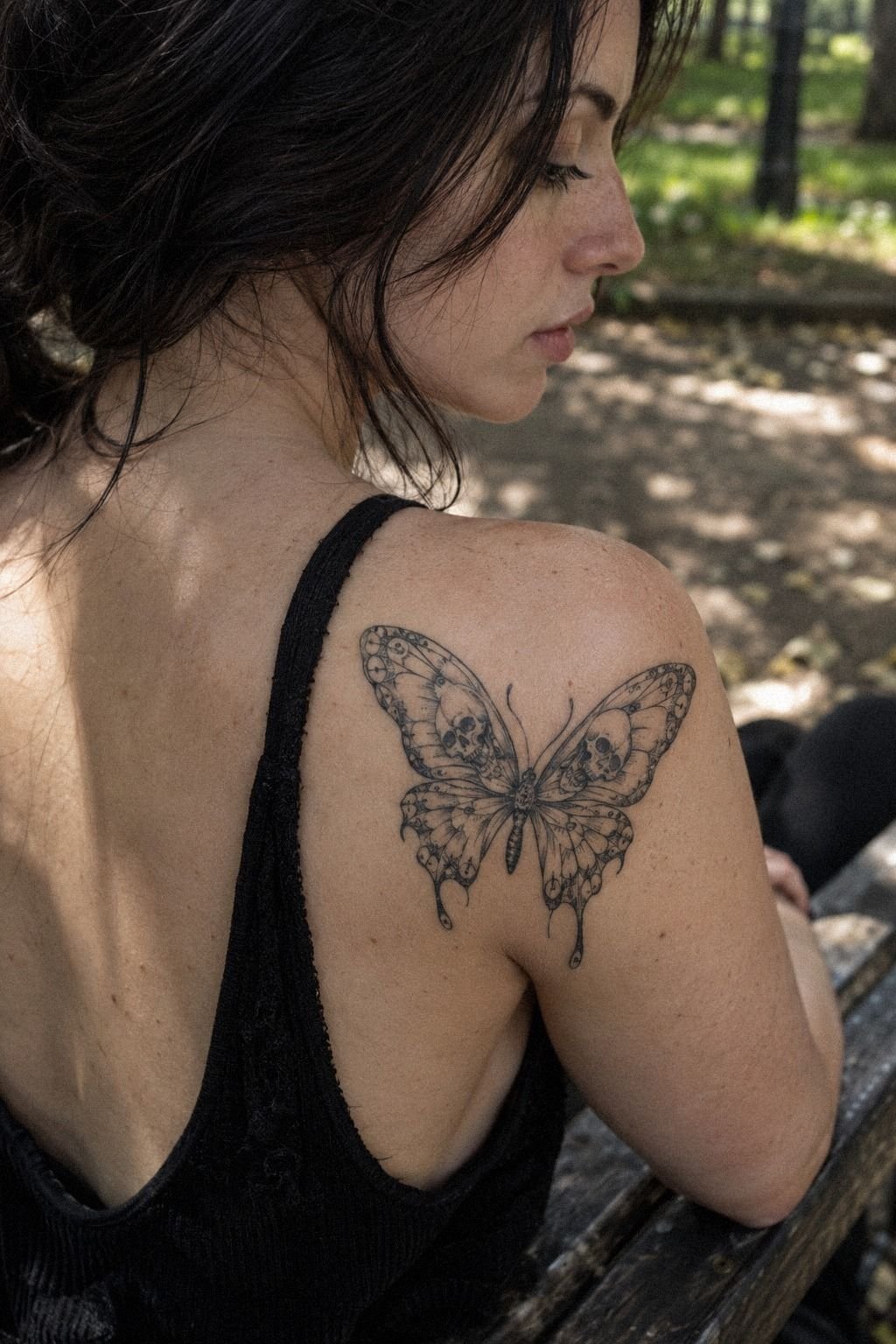
A butterfly with a small skull tucked into the body creates a striking contrast without making the whole piece feel crowded. The open wings can stay delicate, while the central skull gives your design a fierce anchor. I’d keep the skull smaller than the thorax so the butterfly still reads first.
For fair cool-pink skin, crisp black lines usually create clear separation between the skull, wing veins, and negative space. Your artist can use fine single-needle work for the wing structure and a slightly heavier outline around the skull. That contrast keeps the design readable beneath a sleeve.
The most meaningful version isn’t necessarily the largest one. A palm-sized design on the upper shoulder can hide under a short sleeve, while the wing tips may peek out when you move your arm. If you’re comparing symbolism, this butterfly tattoo meaning guide can help you decide whether the skull represents mortality, survival, or change.
I’d skip roses, lettering, and extra stars here. Too many symbols compete with the skull and make the wings look muddy after healing. Your strongest option is black ink, restrained shading, and two or three intentional areas of skin showing through.
A short consultation matters. Bring your sleeve length, show your artist the exact shoulder position, and ask to see the stencil from the front and side. If you want the design to remain discreet, keep the lowest wing edge above the sleeve line.
2Blackwork Butterfly: The Gothic Weight Test
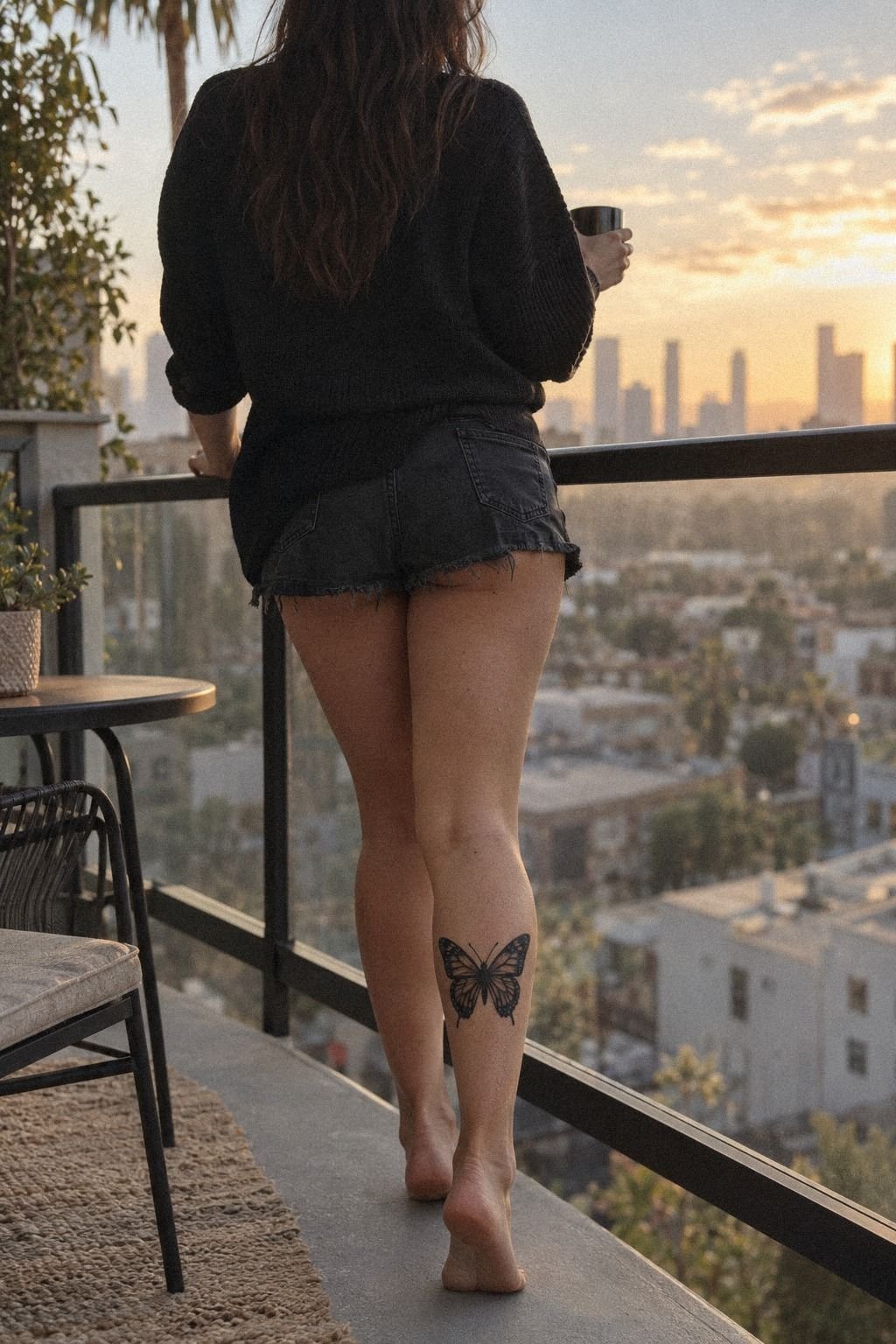
Bold blackwork gives a butterfly immediate visual weight. The wings can be symmetrical and dramatic, but your artist should balance solid fills with clean skin breaks. That negative space is what stops a blackwork butterfly from becoming one dark shape.
Medium warm ivory skin can carry deep black beautifully, though you’ll still want to discuss saturation and healing. A fierce wing silhouette with smooth grey shading often feels more polished than dense black everywhere. I’d choose one dominant fill area per wing rather than filling every vein.
This is where the Two-Wing Balance works well: one visual mass near the upper wing, one near the lower wing, and open space between them. Your eye gets a clear path across the design. For more examples of dark symbolism, browse these gothic tattoo ideas before your appointment.
Blackwork is powerful, but it isn’t automatically low maintenance. UV exposure can soften contrast, and very fine details may spread as your skin changes. Your artist should leave enough room between black sections for the pattern to remain legible over time.
I’d avoid putting this exact style on your fingers or hands if discretion matters. The calf gives you more control over visibility, and a trouser leg can cover it quickly. But if you want a more visible statement, the same motif can scale cleanly toward the outer thigh.
3Should a Sternum Butterfly Stay Minimal?
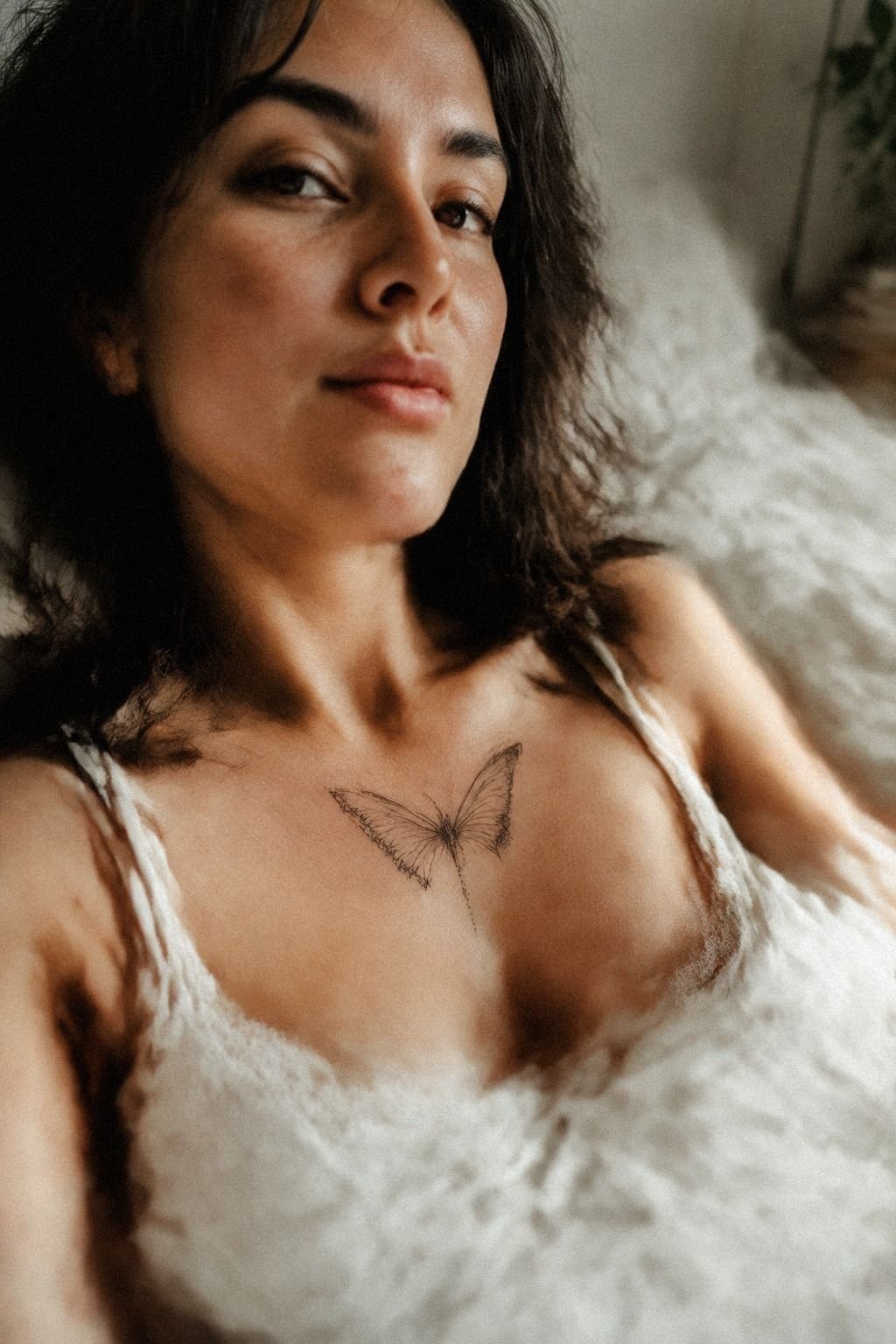
A sternum butterfly feels intimate because the design follows the center of your body rather than sitting beside it.
4Dark Moth Wings for a Haunting Hybrid
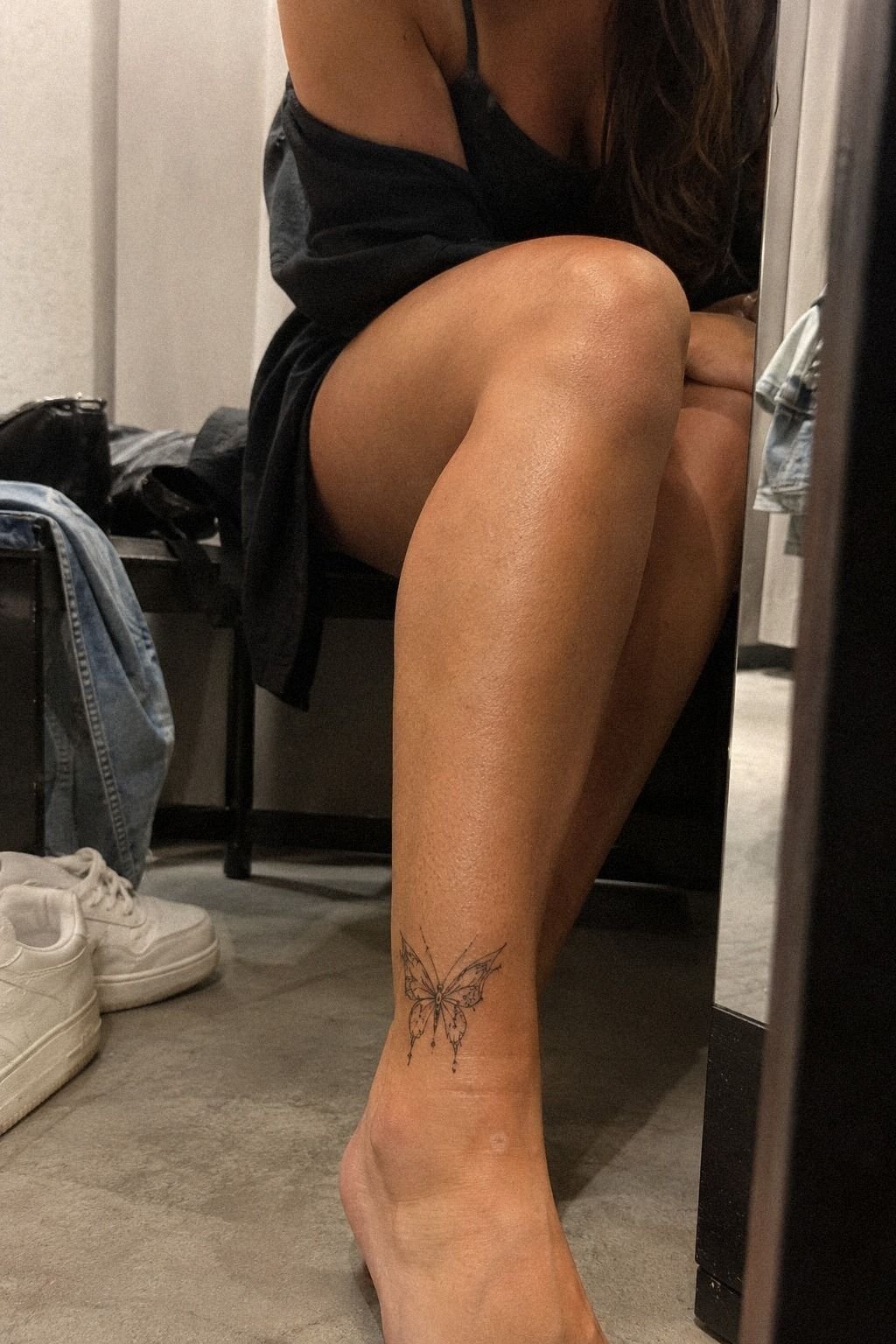
Dark moth wings give the butterfly a haunting shape without abandoning the butterfly’s central structure. On a golden tan ankle, the design can feel ethereal and raw at the same time. I’d use wide upper wings, tapered lower wings, and a narrow body so the ankle doesn’t look visually compressed.
The ankle is a compact canvas, so your artist needs to simplify the smallest veins. A few sharp lines will age better than dozens of tiny marks packed into the same space. Your design can still feel ornate when the outer silhouette does most of the work.
A Dark Moth Tattoo reference can help you compare wing shapes before choosing your final stencil. If you want a related idea, this realistic butterfly tattoo guide shows how anatomy changes when the design becomes more naturalistic.
I’d skip heavy black wrapping around the entire ankle. It can make the tattoo look like a band from a distance, and that may reduce the butterfly effect you’re after. Instead, keep the darkest areas near the wing roots and let the edges fade into skin.
Your footwear matters more than people expect. High socks and firm ankle straps can rub fresh ink, especially during the first surface-healing stage. Plan for gentle clothing, clean skin, and no swimming while the area settles.
The best version feels bold but not bulky. A compact moth-butterfly hybrid can stay hidden under a sock, then reveal itself when you choose. That small reveal is part of the appeal, particularly if your style is personal rather than performative.
5Fine Line or Bold Structure?
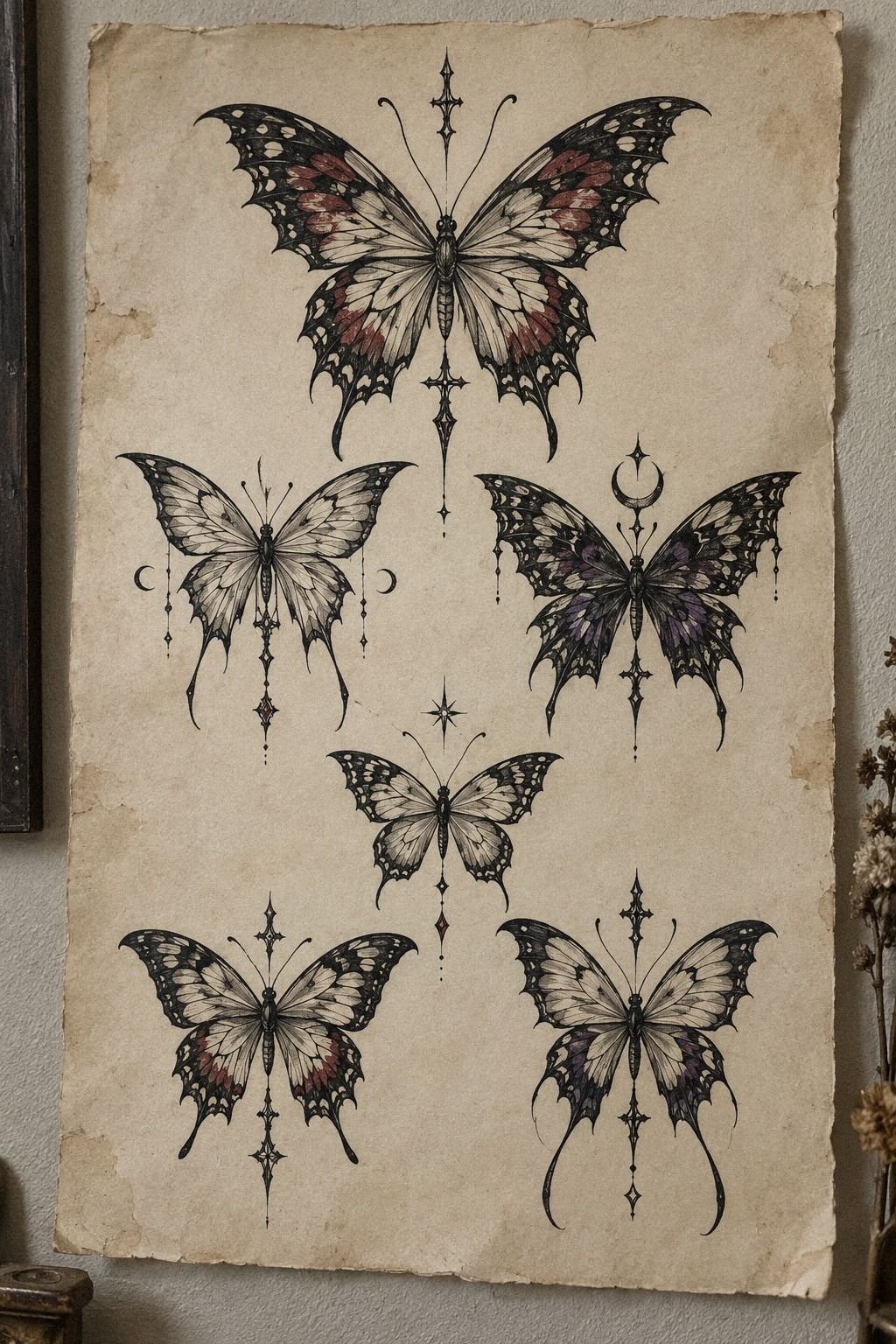
Fine linework gives this concept a crisp, vintage quality. Look for fine-line detailing where the spaces between veins remain generous. If every mark is squeezed together, the tattoo may lose its delicate character as it settles.
The most delicate design on paper may not be right for your skin or placement. Your artist should adapt the stencil to your body instead of copying it at the same size. A graceful curve can look cramped when reduced.
If you’re collecting references, save the butterfly tattoo stencil page alongside your notes. It can help you notice whether a design depends on perfect symmetry or still works when your anatomy creates small changes.
Fine lines can broaden over years, particularly with sun exposure and constant friction. That doesn’t mean you need to avoid them. It means your artist should leave breathing room, use an appropriate needle configuration, and keep details readable at the chosen scale.
I’d choose a classic black outline with selective grey wash rather than forcing every part into the thinnest possible line. The result can feel elegant, polished, and still distinctly gothic. Your tattoo doesn’t need maximum detail to look intentional.
Don’t judge the healed result too quickly. Surface healing often takes about two to three weeks, while the tattoo can continue settling for roughly two to three months. Your aftercare routine should include gentle washing, light hydration, and avoiding direct sun or swimming during healing.
6Let Thorned Edges Carry the Drama

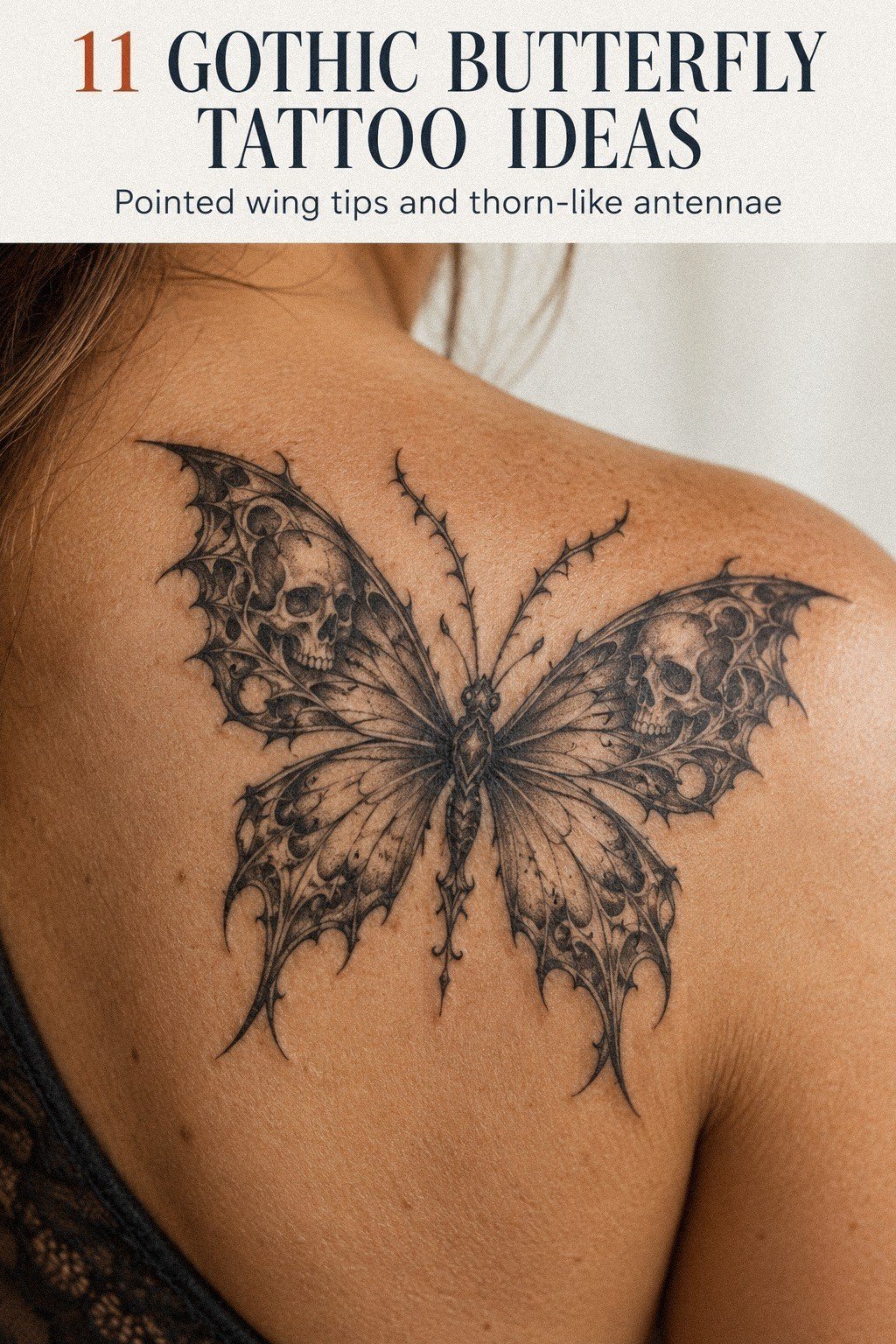
Thorned wing edges make a butterfly feel daring without adding a separate object to the design.
7Behind-the-Ear Butterfly With a Quiet Edge
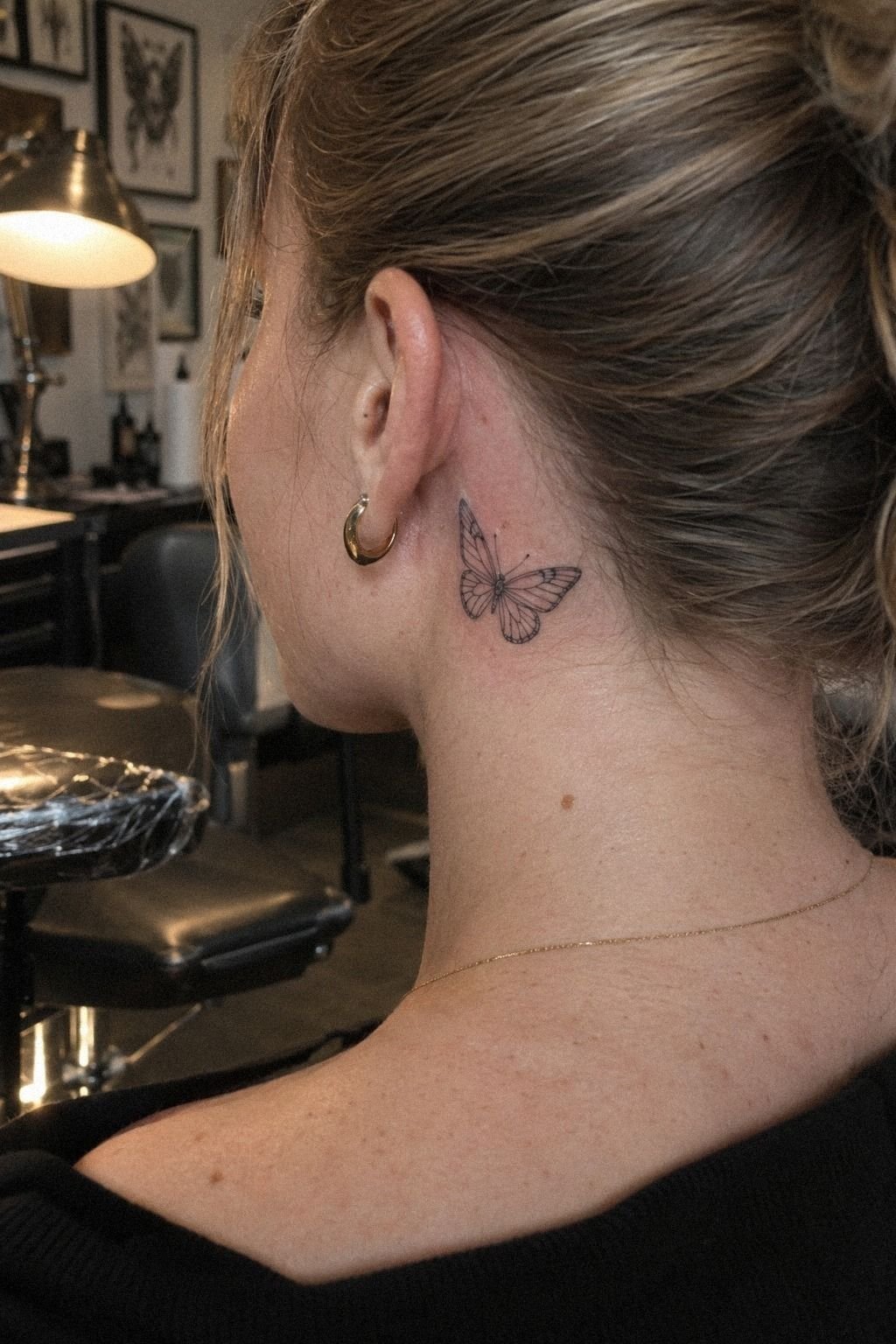
Behind-the-ear placement turns a gothic butterfly into a dainty detail you can reveal with a hairstyle change. Your artist can keep the design minimal while preserving the central shape. A tiny body and open wings will read better than dense shading.
This area doesn’t offer much space, and the skin moves with your jaw and neck. Your artist should simplify the wing veins and avoid placing fine details directly into the hairline. A single-needle approach can look delicate, but it needs enough spacing to age gracefully.
If you want to compare small placement options, this purple butterfly tattoo meaning article has useful symbolism to consider before you reduce the design. Your final tattoo doesn’t need color to feel romantic or expressive.
I’d skip red accents behind the ear because the area can become visually busy once hair overlaps it. Clean black lines give you a more understated result and make the butterfly easier to identify at a glance. The placement is already playful, so restraint helps.
Aftercare can be slightly annoying here because hair products, headphones, and pillowcases all touch the area. You’ll need to keep the skin clean and avoid picking at flakes. Ask your artist how to protect the design without applying too much product.
The best behind-the-ear butterfly is small, sharp, and intentional. It won’t carry the same detail as a shoulder piece, but it can carry more intimacy. If you want a quiet mark with a personal meaning, this is one of the most charming options in the set.
8Victorian Ornament, Kept Crisp
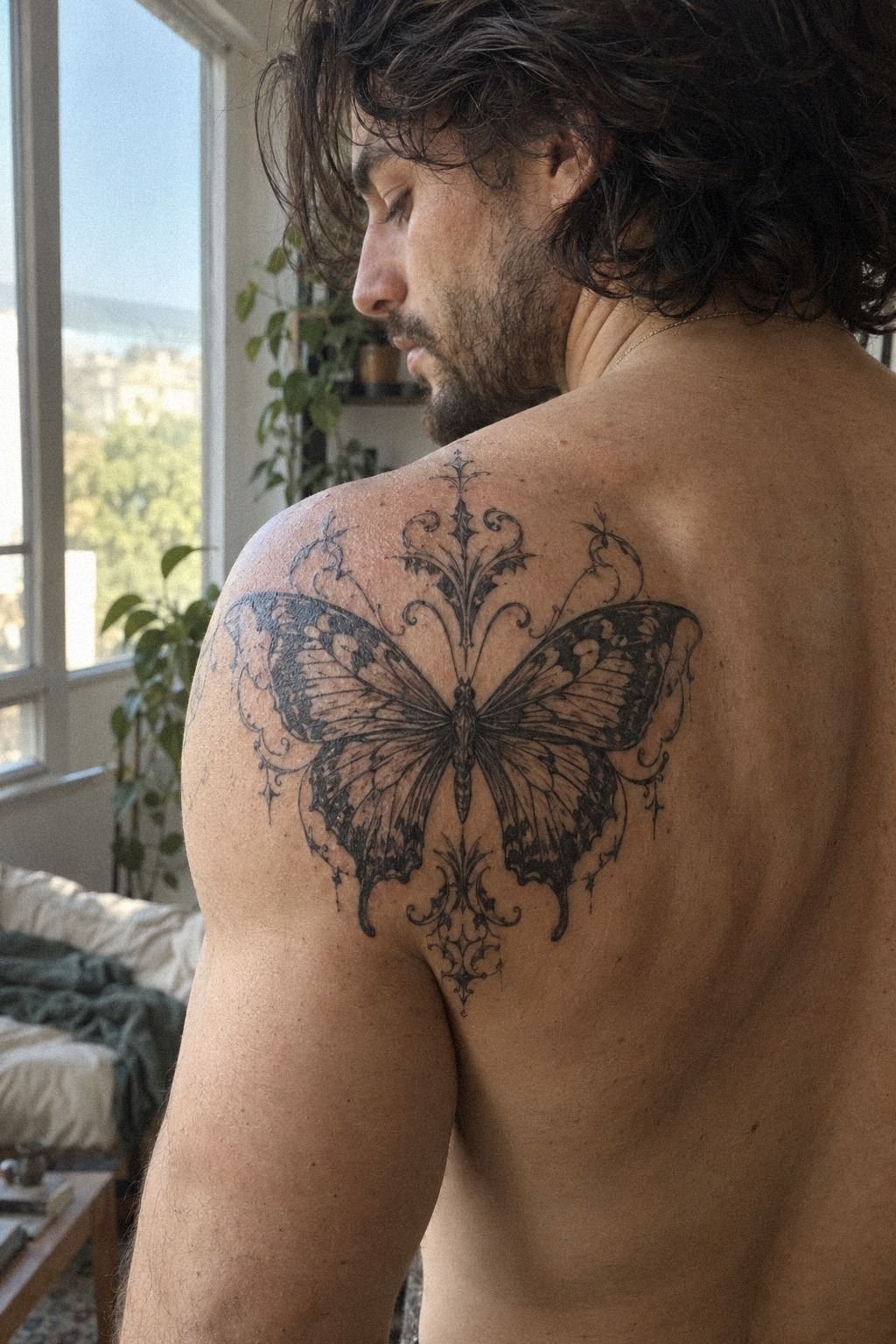
Victorian ornament can give your butterfly a romantic, vintage identity without making it look like a costume emblem. You could frame the wings with small flourishes or add a short word beneath them. Keep the lettering crisp and readable.
I’d choose one ornamental language, such as pointed arches, antique filigree, or narrow serif lettering. Mixing all three can make the design feel crowded. Your artist can use ornamental lettering to create a refined structure while keeping the butterfly as the main subject.
Before you add text, consider whether the phrase will still feel personal in five years. A symbol may age with you more gracefully than a trend phrase. If you’re drawn to older visual references, browse these Victorian gothic tattoo ideas and save only the shapes you genuinely want.
A shoulder placement gives you more space than behind the ear, but the sleeve line still matters. Ask your artist to position the lowest flourish where your clothing will cover it. Your tattoo can be ornate and visible in a tank top, then disappear beneath a regular sleeve.
I’d avoid ultra-thin decorative curls around every wing vein. They may look exquisite in a stencil and turn muddy after healing. One strong border and a few crisp interior marks will give you a more timeless result.
The finished piece can feel elegant, feminine, masculine, or neutral depending on the lettering and scale. That flexibility is useful if your identity shifts. A Victorian frame doesn’t have to mean fragile ink; solid structure can make the design surprisingly durable.
9Gothic Butterfly Across the Shoulder Blade
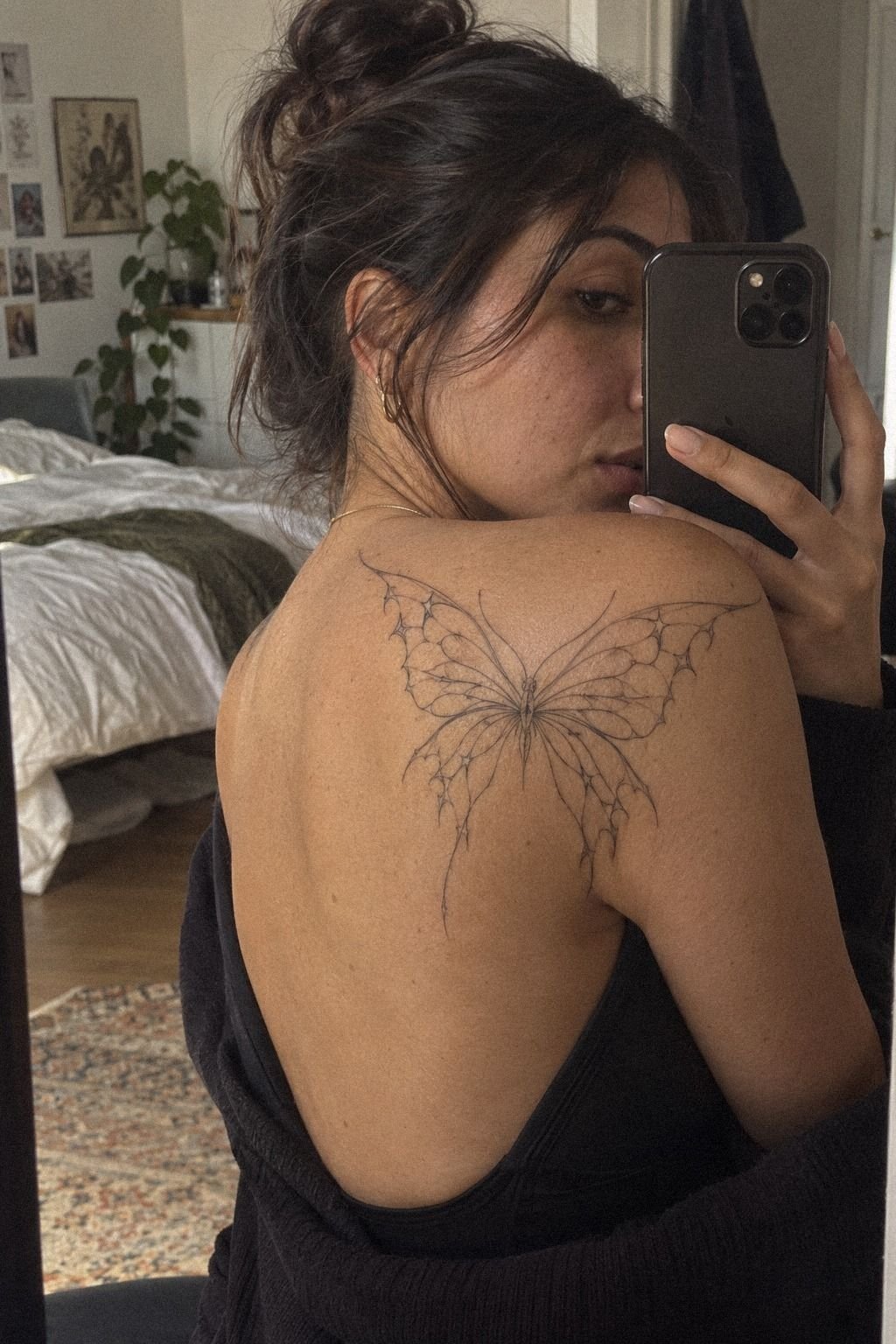
A butterfly across the shoulder blade gives the wings room to stretch horizontally, which makes the open symmetry especially effective.
10Red or Black Accents?
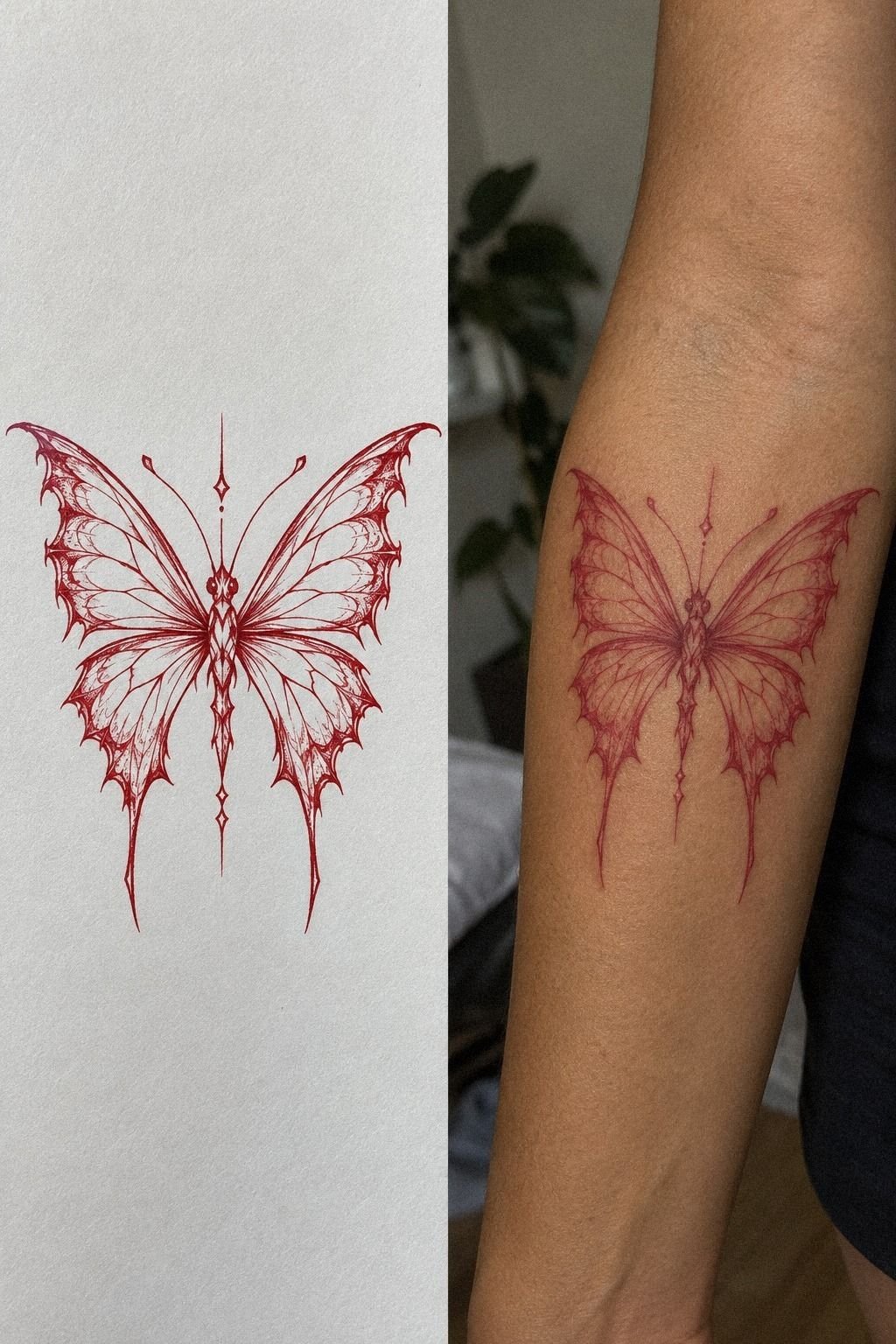
A red accent can make a gothic butterfly feel vibrant without turning the entire design colorful. Red works best when it has a clear purpose, such as a thin wing vein, a small central mark, or two restrained ornamental details.
A deep crimson pigment often feels more gothic than bright scarlet, especially beside black. Your final choice should suit your undertone and the artist’s healed color portfolio. Fresh color can look dramatically different after it settles.
If you’re comparing red and purple symbolism, this purple butterfly tattoo meaning guide may help you decide what emotion you want the color to carry. Red can suggest desire, danger, memory, or blood, but the meaning belongs to you.
I’d avoid red shading across the full wings. It can compete with the black structure and make the butterfly look less refined. One or two small accents create a sharper effect, and they’re easier to maintain if the color softens over time.
Color placement also affects discretion. A black outline with a small red center can disappear under a sleeve, while a large red wing remains noticeable through thin fabric. Tell your artist how often you need the tattoo covered before choosing the final scale.
Ask to see healed color work after several months, not only fresh photographs. Protect the finished tattoo from direct UV exposure, because sunlight can gradually soften both black and red pigment. That follow-up matters!
11Let Transformation Stay Personal
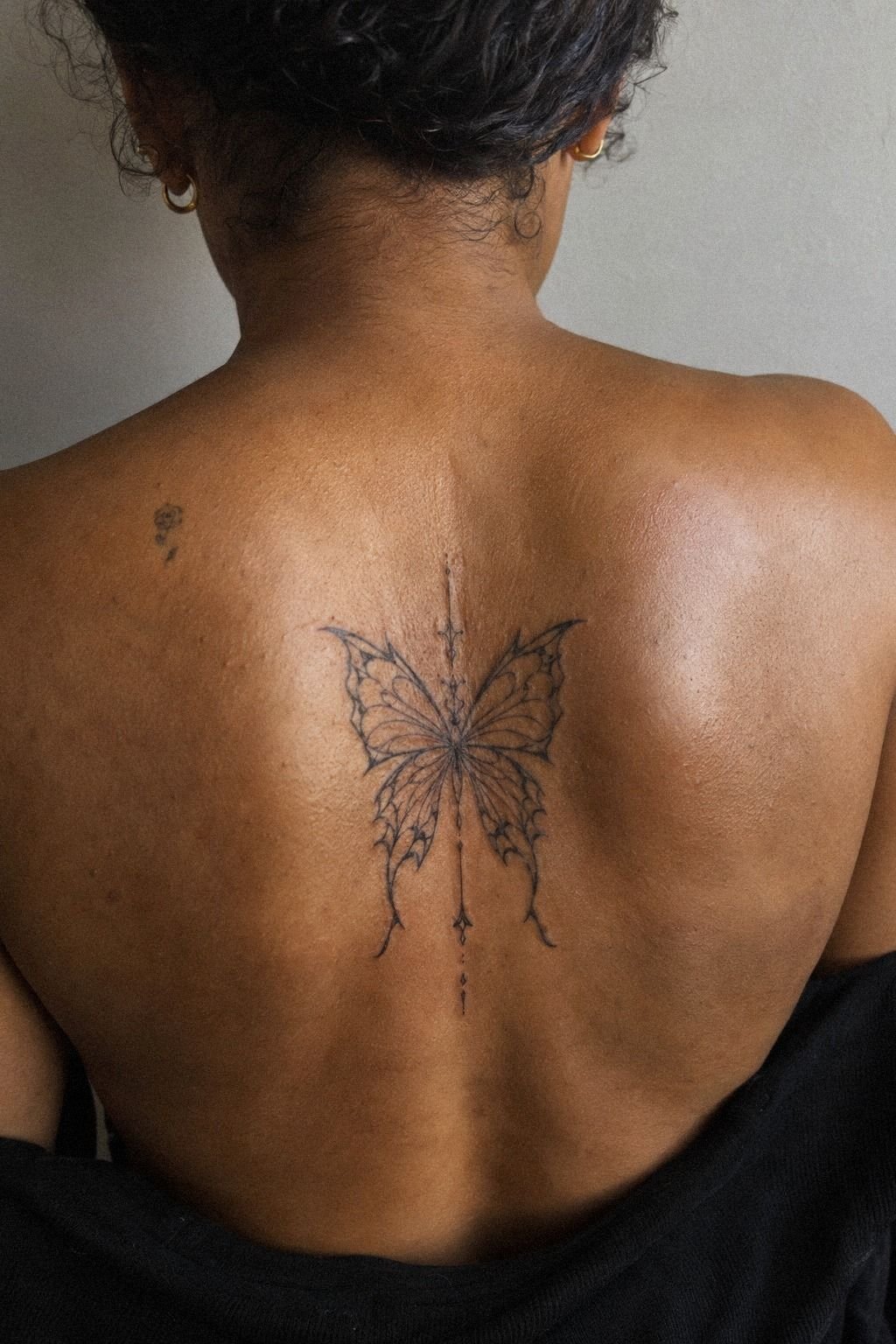
A spine butterfly can symbolize transformation in a direct, personal way without relying on extra text.
The Design Rule I’d Use Before Booking
I’ve changed my mind about gothic butterfly tattoos more than once. At first, I thought the darkest design would always look the most convincing.
Then I saw a heavily packed wing lose its small details after healing, while a cleaner design still looked crisp months later. That shifted my priority from maximum drama to readable structure.
The decision starts with placement. Ribs, feet, hands, and sternum can feel more painful, while the forearm, thigh, and shoulder are often more tolerable. Your choice should also account for clothing, sun exposure, and how much movement the skin gets.
I’d ask whether your design depends on fragile details. Fine lines can widen over time, especially without sun protection. Solid black with thoughtful spacing tends to hold its shape better, but that doesn’t mean every tattoo needs heavy blackwork.
Your artist’s healed portfolio matters more than a popular label.
The tattoo consultation is where practical questions become clear. Ask about scale, session length, placement, healing, and the final price. If the artist can’t explain how the design will age, I wouldn’t book yet.
Which Placement Keeps a Gothic Butterfly Discreet?
The shoulder blade, upper shoulder, calf, and thigh are strong choices when you need control over visibility. They can support intricate wings while remaining easy to cover with a sleeve, trousers, or a longer hem.
Behind the ear and ankle can feel more dainty, but those areas leave less room for detail. The sternum and spine carry stronger symbolism, though they may feel more intense during the session. Your placement choice should match both your meaning and your daily routine.
Hands, fingers, and the front of the neck are harder to hide. They can create an iconic statement, but they’re less flexible if your work or family life requires discretion. Think about the real cost of constant visibility before choosing them.
For a broader comparison, you can revisit these blackwork butterfly tattoo references and this realistic butterfly tattoo guide. The right placement is the one that preserves the design and still works for your life.
What Makes a Small Butterfly Read Clearly?
A small butterfly needs a recognizable silhouette before it needs intricate decoration. The body, upper wings, lower wings, and outer edge should remain distinguishable at a quick glance. That’s especially important for behind-the-ear, ankle, and wrist placements.
Your artist may need to remove several wing veins to protect the small-scale linework. That isn’t a failure. It’s often the difference between a crisp tattoo and a muddy one.
Use contrast carefully. One black fill, one open area, and one sharp detail can create more visual impact than twenty tiny marks. A minimal design can still feel daring, symbolic, and polished.
If you’re unsure whether a stencil is too busy, compare it with the spacing principles in this butterfly tattoo stencil guide. Ask yourself whether the butterfly still reads when you step back. If it doesn’t, simplify it.
Blackwork or Fine Line: Which Holds Your Meaning Better?
Blackwork usually offers stronger contrast and clearer long-term visibility. Fine linework can feel more delicate and vintage, but it needs generous spacing and thoughtful placement. Neither approach is automatically superior.
Your skin tone, sun exposure, friction, and chosen body area all affect the result. A healed tattoo portfolio tells you more than a fresh close-up because it shows how the artist’s work actually settles.
If you want weight and drama, blackwork may deliver better value. If you want a quiet, intricate mark, fine linework may feel more personal. The best choice is the one that supports your meaning without forcing your artist to overcrowd the design.
You can compare the two directions through these gothic tattoo ideas before your consultation. Save only the designs that still appeal to you after a few days. Trends can be stylish, but your tattoo should feel lasting.
How Should You Budget for the Design?
Cost varies by artist, region, size, placement, color, and session length. A boutique minimum may sit around $50 to $100, while hourly rates can land near $100 to $250. A small-to-medium gothic butterfly may cost roughly $100 to $300, but your consultation is the only reliable estimate.
If you’re comparing options, ask what the quoted tattoo price includes. Some artists include the design time, while others separate consultation, drawing, touch-up, or revision fees. Clear questions protect your budget.
The cheapest option isn’t always the best value. Poor spacing, weak saturation, or rushed linework can create a larger repair cost later. Paying for an experienced artist with healed examples may be worth it.
Your aftercare should stay simple: wash gently, moisturize lightly, avoid swimming, and keep direct sun away while the tattoo heals. You don’t need to panic over every small change, but you should contact your artist if something looks unusual. Consistency gives you the best value after you’ve paid for the work.
What People Always Want to Know
How much does a Gothic Butterfly Tattoo usually cost?
A Gothic Butterfly Tattoo commonly costs about $100 to $300 in the US, depending on size, placement, artist, and region. Boutique minimums may sit around $50 to $100, while hourly rates often fall near $100 to $250. Ask for a quote after the stencil consultation.
Are Gothic Butterfly Tattoos a good idea for a first tattoo?
Yes, they can be a strong first tattoo if you choose a manageable placement and clear linework. The shoulder, thigh, or forearm may feel more tolerable than ribs, feet, hands, or sternum. Your subject can carry personal meaning without requiring a large design.
How do I choose a tattoo artist for Gothic Butterfly Tattoos?
Choose an artist with clean linework, healed portfolio photos, and experience with gothic or fine-line designs. Check hygiene standards, ask how they approach your skin tone, and make sure you feel comfortable discussing scale, placement, and aftercare instructions before booking.
How much do Gothic Butterfly Tattoos hurt?
Pain depends on your body and placement. Ribs, feet, hands, and sternum are often more painful because they have less padding, while the forearm, thigh, and shoulder can be more tolerable.
Tell your artist if you need breaks. There’s no prize for pretending otherwise!
How long does a Gothic Butterfly Tattoo take to heal?
The surface usually heals in about two to three weeks, while complete settling may take around two to three months. Wash gently, moisturize lightly, avoid swimming, and protect the tattoo from direct sun. Follow your artist’s specific healing guidance if it differs.
What’s the best placement for a Gothic Butterfly Tattoo?
The shoulder blade, upper shoulder, calf, and thigh offer useful space and easier concealment beneath clothing. The sternum and spine create stronger personal symbolism but may feel more intense. Choose based on visibility, movement, pain tolerance, and how your lines may age.
Where I’d Start First
If I had to pick one, I’d start with the blackwork butterfly on the calf. It gives your artist enough space for clean negative areas, stays hidden under trousers, and won’t rely on fragile micro-details.
Pin the idea for later and compare it with these blackwork butterfly tattoo references before booking. You can also revisit the purple butterfly tattoo meaning article if you want the symbolism to feel more romantic.
My second choice would be the shoulder blade. It’s discreet, flexible, and large enough for a bold silhouette without demanding excessive shading. Choose the design that still feels meaningful after the first excitement fades.
That’s the one worth keeping!