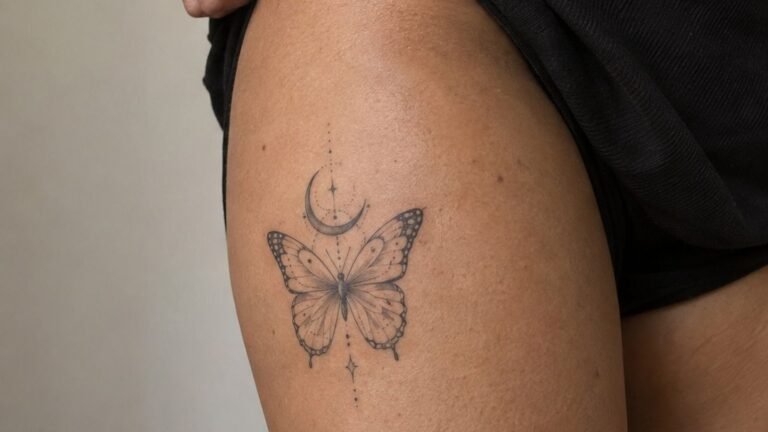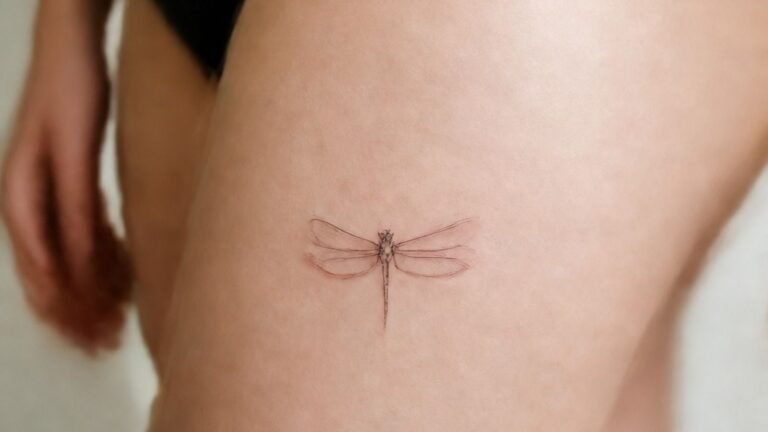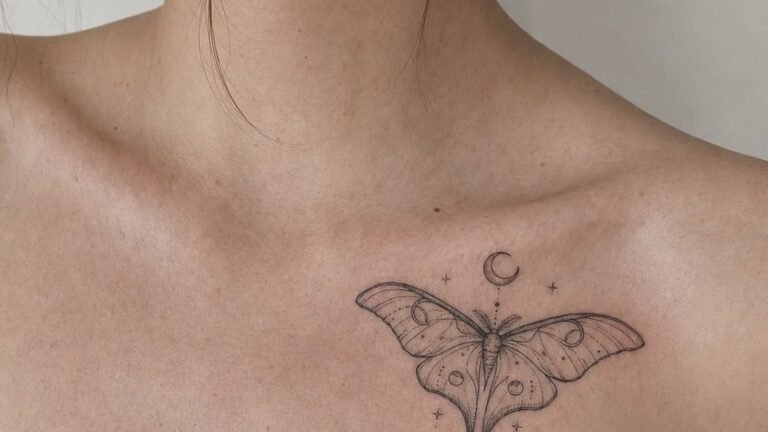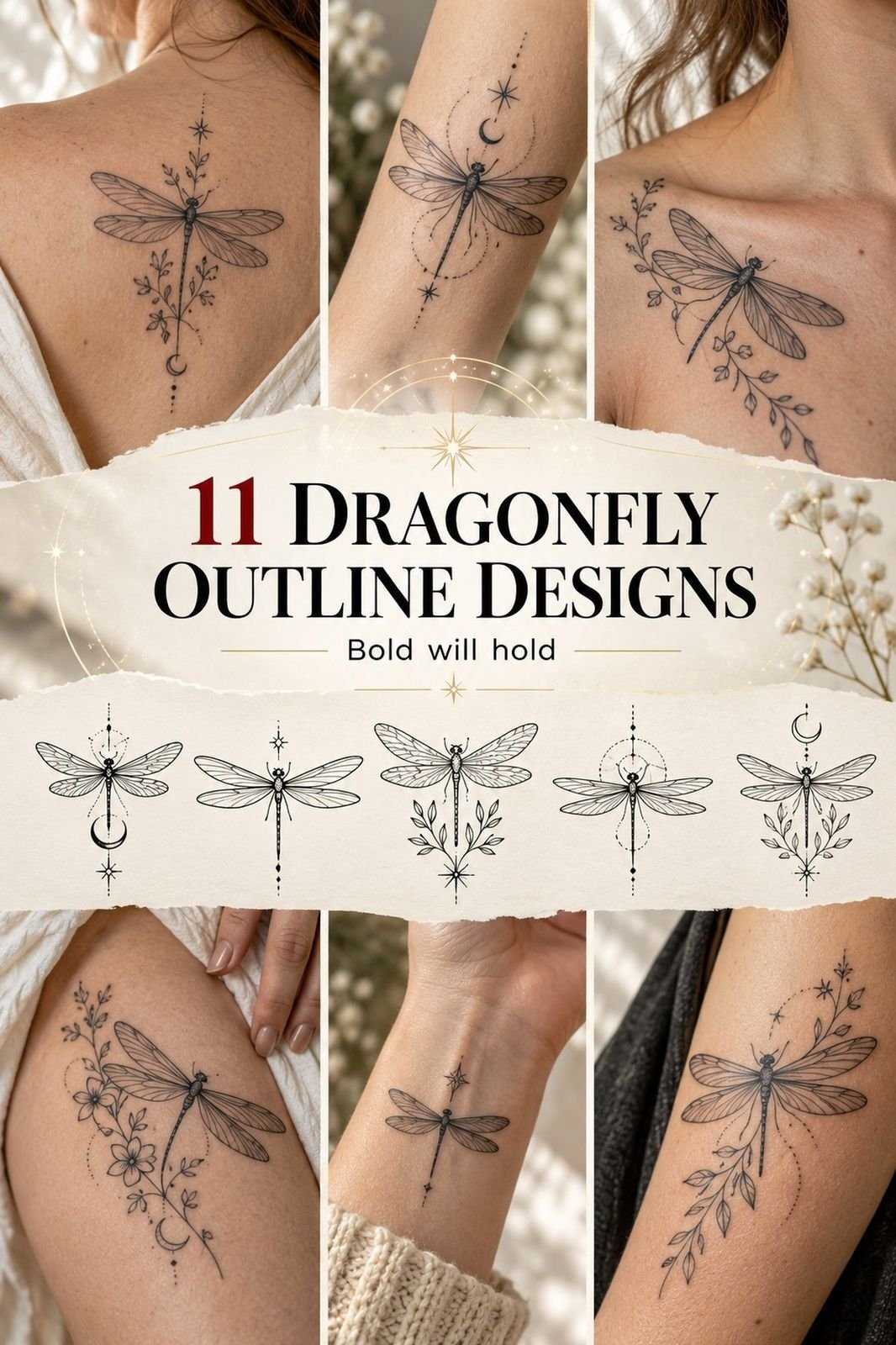
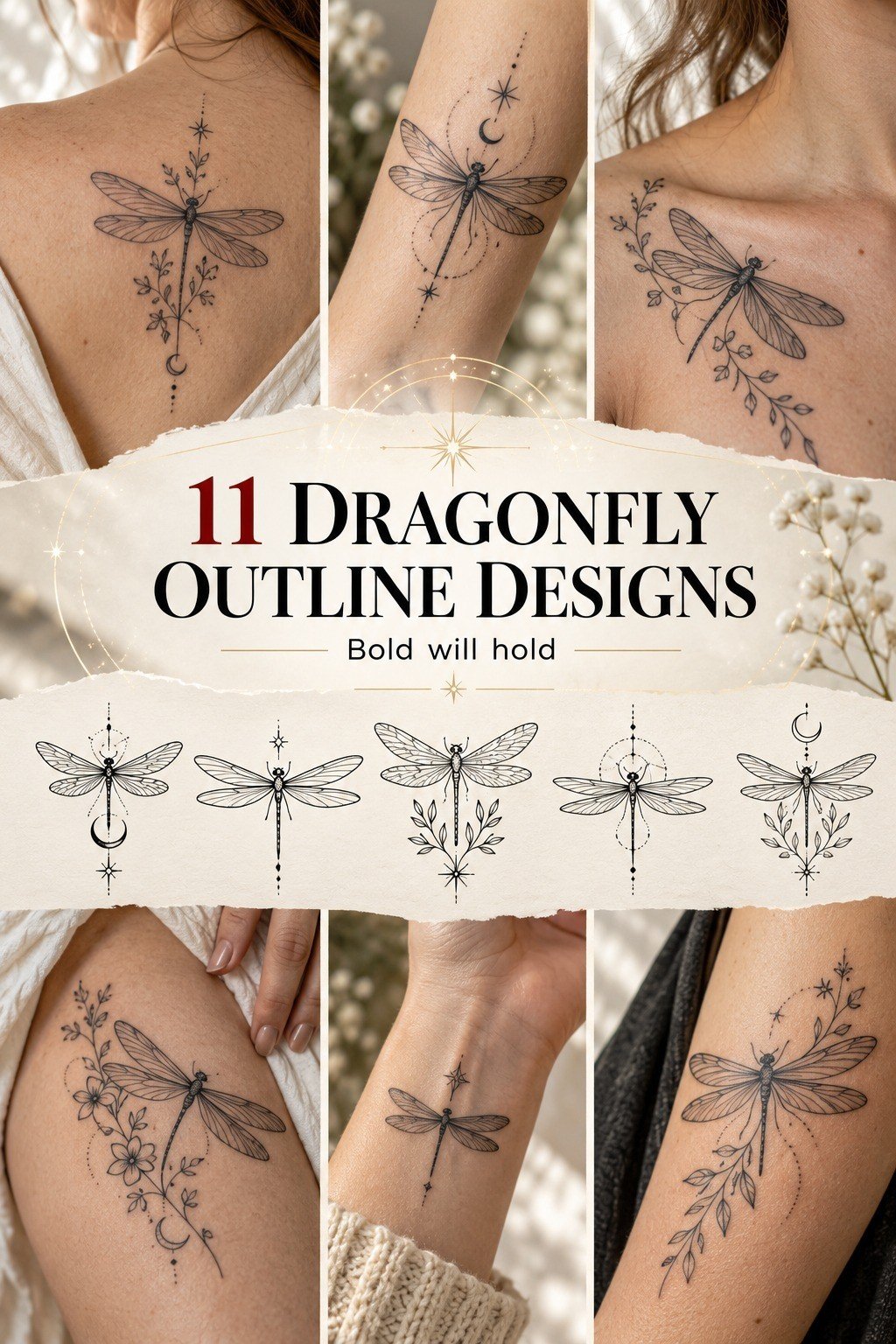
Dragonfly outline tattoos can stay under $150 when you control size, placement, and detail before booking. I learned that the hard way after bringing an oversized reference to a short session and leaving with a redesign. Start small, but don’t make it vague. Your artist needs a clear plan!
Before You Start: The Two-Reference Rule
Bring one reference for the body shape and another for the line quality. Your first can show a dragonfly curling along the spine, while your second can show single-needle black ink with open wings. You’ll get a more personal result when you separate the subject from the execution.
Write down your target size, the placement you’re considering, and whether you want a visible or discreet piece. Your artist can then tell you if the design will stay crisp at that scale. I’d skip saving twenty nearly identical images because they’ll blur your opinion before the appointment.
The typical US shop minimum sits around $50 to $100, while hourly rates often fall near $100 to $250. A small outline may fit under $150, but your region, artist, and complexity matter. Use this table as a planning guide, not a promise.
The $150 Plan in Plain English
Your tattoo minimum matters more than the advertised hourly rate when the piece takes less than an hour. Ask whether the quoted price includes drawing time, stencil preparation, and touch-up advice. That small question can prevent a surprise at checkout.
A small dragonfly tattoo usually stays affordable when it has one focal shape, limited interior lines, and a practical placement. If you want more detail, protect the budget by reducing extra symbols first. That keeps the central design readable.
What Should You Bring to the Consultation?
Bring consultation notes with your preferred size, placement, line weight, and maximum budget. A dragonfly tattoo meaning guide can help if you’re still deciding whether the insect represents change, memory, resilience, or admiration.
Your artist should also show healed work, not only fresh tattoos. Fresh ink can look sharp while swollen skin hides how fine lines settle.
Ask what they’d remove if the stencil feels crowded. Their answer will tell you a lot.
- Start With a Crisp Dragonfly Outline
- Pick Simple Wings for Minimal Linework
- Place the Dragonfly Outline on Your Wrist
- Keep Negative Space Between Delicate Veins
- Plan a Flowing Dragonfly Along Your Collarbone
- Choose a Fierce Dragonfly Silhouette
- Trace an Elegant Dragonfly Drawing
- Add Meaningful Symbols Beside the Outline
- Balance Ornate Wings With Fine Lines
- Match the Outline to Your Body Shape
- Protect Sharp Linework During Healing
1Start With a Crisp Dragonfly Outline
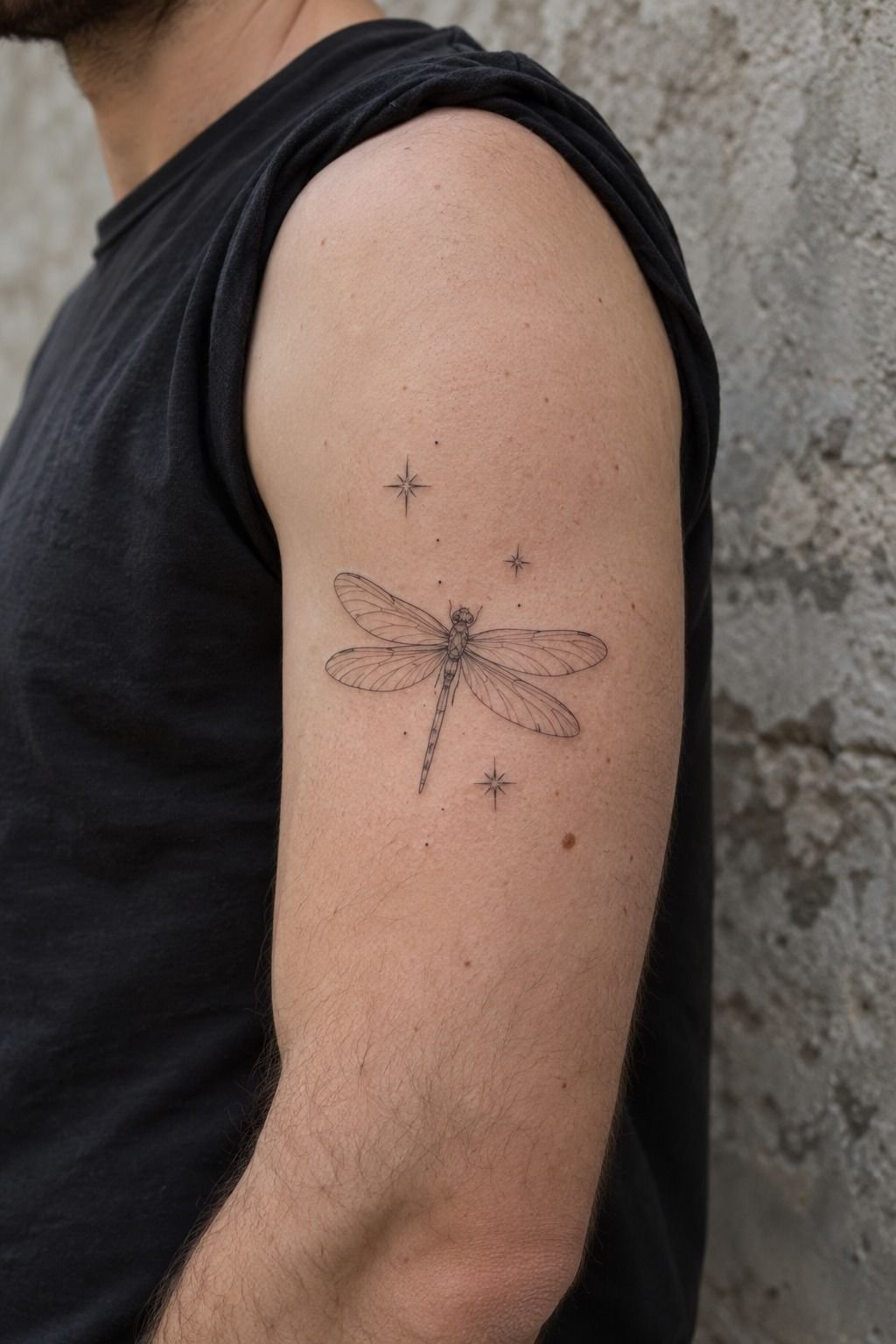
Start with the silhouette before you choose every vein. For the upper-arm concept, your artist can draw a small dragonfly with a fine-line stencil and a few stars of different sizes around it.
Keep the wings open and the body centered, so the image reads clearly from several feet away. The result should feel crisp, striking, and intricate without becoming crowded.
Ask your artist to test the outline at the intended size on paper first. You’ll notice whether the head, thorax, wings, and stars still separate when the drawing is reduced.
I’d choose a clean black contour over gray fuzziness here because your eye needs one strong path through the design. This tattoo outline drawing guide can help you name the line style you want.
Your reference may show a particular skin tone, but you don’t need to match it for the idea to work. Your artist should adjust contrast and stencil visibility for your own skin. A delicate outline can remain legible when the spacing is generous, the ink is solid, and the stars aren’t packed against the wings.
Leave the surrounding constellation quiet. Three or four different sizes will feel intentional, while a full constellation may compete with the dragonfly.
You’ll want the central shape to carry the meaning, especially if this is your first tattoo. I’d call this a safe starting point for a meaningful, understated design.
2Pick Simple Wings for Minimal Linework
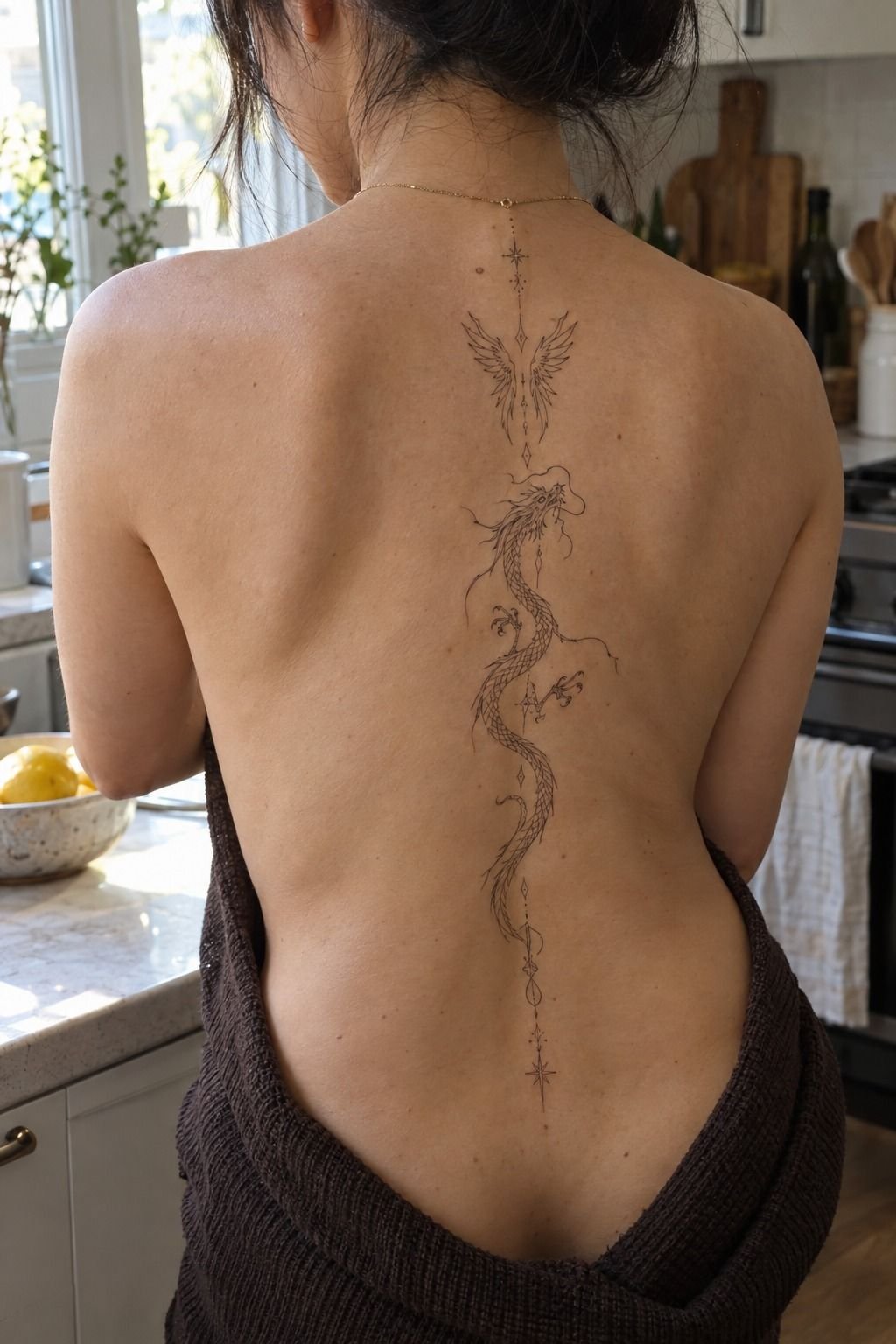
For a spine placement, let the body create the movement and keep the wings simple. The dragonfly version should use open wing linework rather than dense filling. That keeps the piece minimal, flowing, graceful, and dainty.
Ask for two wing pairs with a consistent angle, then decide whether the body points upward or downward. Your spine placement gives you a natural vertical guide, so you’ll want the central body to follow it instead of drifting sideways. I’ve seen designs lose their elegance when every wing bends in a different direction.
If you like this approach, compare it with small dragonfly tattoo ideas before your consultation. Bring one image that shows the scale you want and one that shows the exact wing pattern. Your artist can combine those references without copying either one.
Keep the smallest internal veins visible on paper before you approve them. You don’t need every vein to make the wings readable.
A few longer lines, balanced by open skin, will age more gracefully than a tight web. If your artist recommends removing a detail, listen carefully.
3Place the Dragonfly Outline on Your Wrist
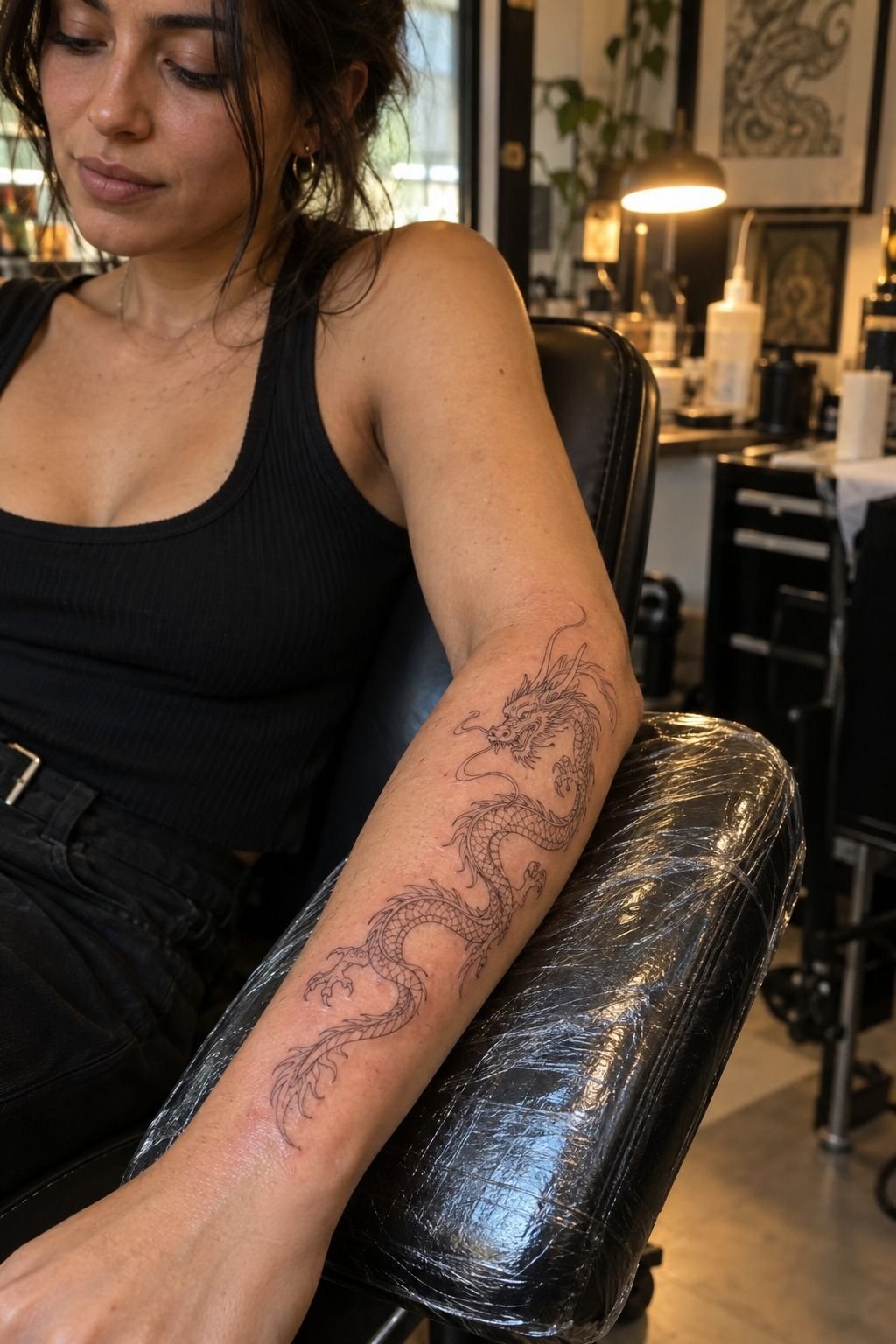
The wrist gives your dragonfly outline an intimate, visible position, but it also demands restraint.
4Keep Negative Space Between Delicate Veins
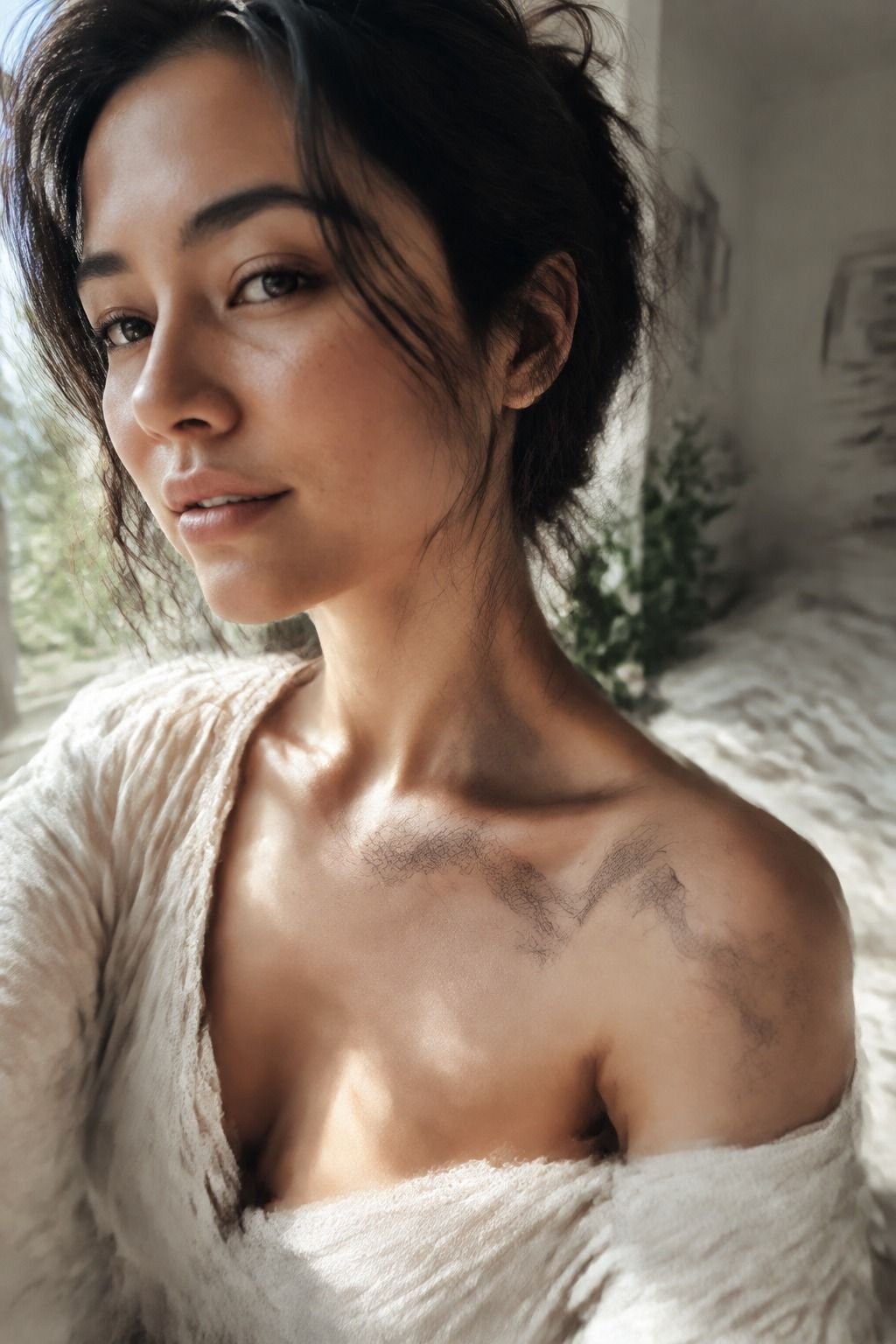
Negative space is the open skin between the wing veins, not an empty area your artist forgot to finish. For the collarbone reference, use open-skin spacing so each delicate line has room around it. This creates an ornate but controlled image and keeps the result powerful rather than muddy.
Ask your artist to draw the largest wing lines first, then place smaller veins only where they improve the shape. Your collarbone curve rises naturally, so the wings should follow that structure instead of sitting like a flat sticker.
I made the mistake of asking for too many tiny marks once. The sketch looked impressive, but the skin needed fewer lines.
Use dragonfly tattoo design ideas to compare open wings, folded wings, and side profiles. You’ll notice that designs with more open wings often read faster. That matters when your tattoo is viewed from an angle.
Skip gray shading if your budget and goal are both modest. Black outline ink, clean gaps, and one carefully placed accent can give you a timeless result without extending the session. Your tattoo should have a clear rhythm: line, skin, line, skin.
5Plan a Flowing Dragonfly Along Your Collarbone
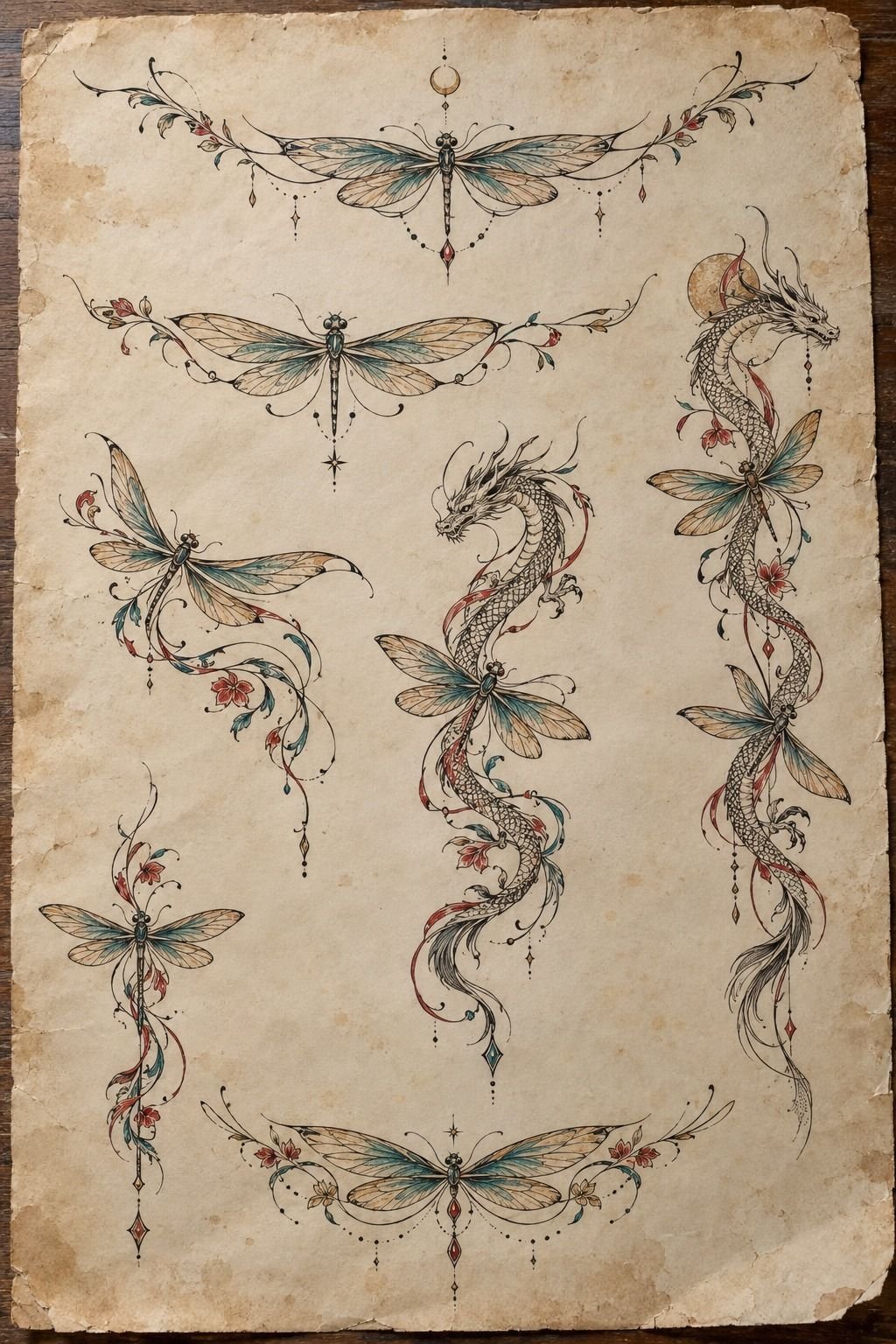
A collarbone design should follow your body rather than fight it. Start with a paper flash sheet showing several hand-drawn dragonfly options, then choose the one whose body travels most naturally across the curve. A flowing outline can feel ethereal, romantic, expressive, and personal without needing heavy fill.
Lay the design on your skin while you stand normally, not only while you look down at it. Your shoulder position changes the angle, and your artist can rotate the stencil angle until the wings sit evenly. You’ll want the head, body, and tail to follow one direction instead of creating a stiff horizontal bar.
For more reference, compare this idea with traditional tattoo outline examples. You don’t have to copy a traditional style, but those examples can show how a strong outer contour survives when small details are reduced. I’d borrow the confidence of the silhouette, not the heavier shading.
Keep the budget focused on drawing time. A simple outline with a thoughtful curve will usually serve you better than extra stars, flowers, or script added at the last minute.
Your collarbone already supplies visual movement. Let the body placement do some of the work.
More Line, Less Clutter
The main tradeoff is line density. More marks can look impressive on paper, but they may merge as the tattoo settles. If your budget is fixed, spend it on a confident silhouette and a stencil that fits your body.
Ask for a comparison between a full vein pattern and a reduced version. The simpler draft often feels more polished once it’s placed on skin. That restraint matters!
6Choose a Fierce Dragonfly Silhouette
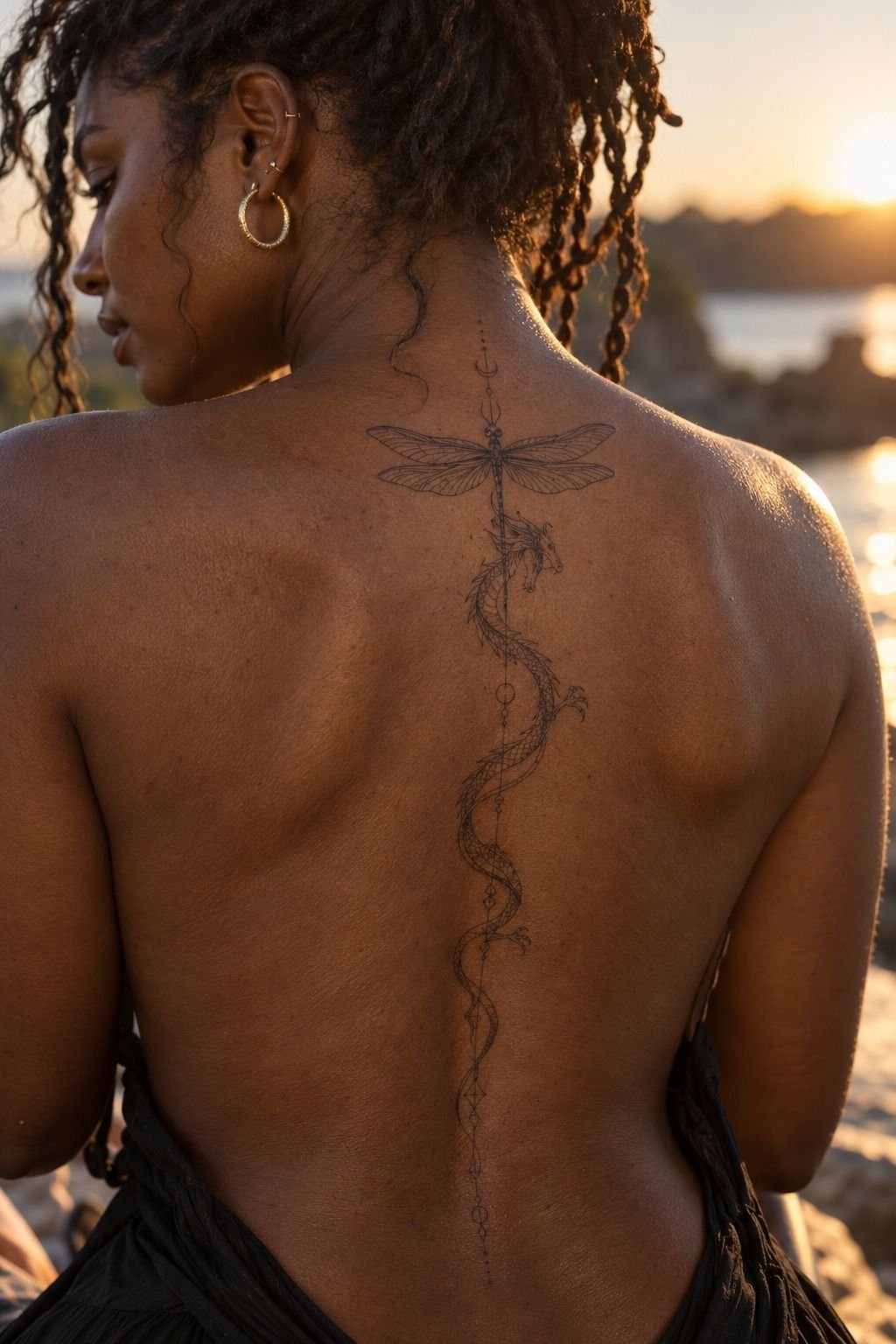
A silhouette works when you want the dragonfly to read from a distance. Ask your artist to make the dragonfly silhouette recognizable through the body angle, wing span, and tail shape rather than interior shading.
Leave enough negative space between the wings and body so the outline doesn’t become one dark shape. A fierce silhouette can still feel delicate when the edges stay controlled. I’d use this approach for a bold, iconic piece with very little appointment time.
Try a simple distance test before booking. Look at the stencil from across the room, then from arm’s length. If the wings disappear at either distance, adjust the scale or remove distracting details.
A compact dragonfly body can carry the design by itself. You don’t need stars, script, or a second insect to make the tattoo memorable. One daring curve may say more than a crowded collection of symbols.
7Trace an Elegant Dragonfly Drawing
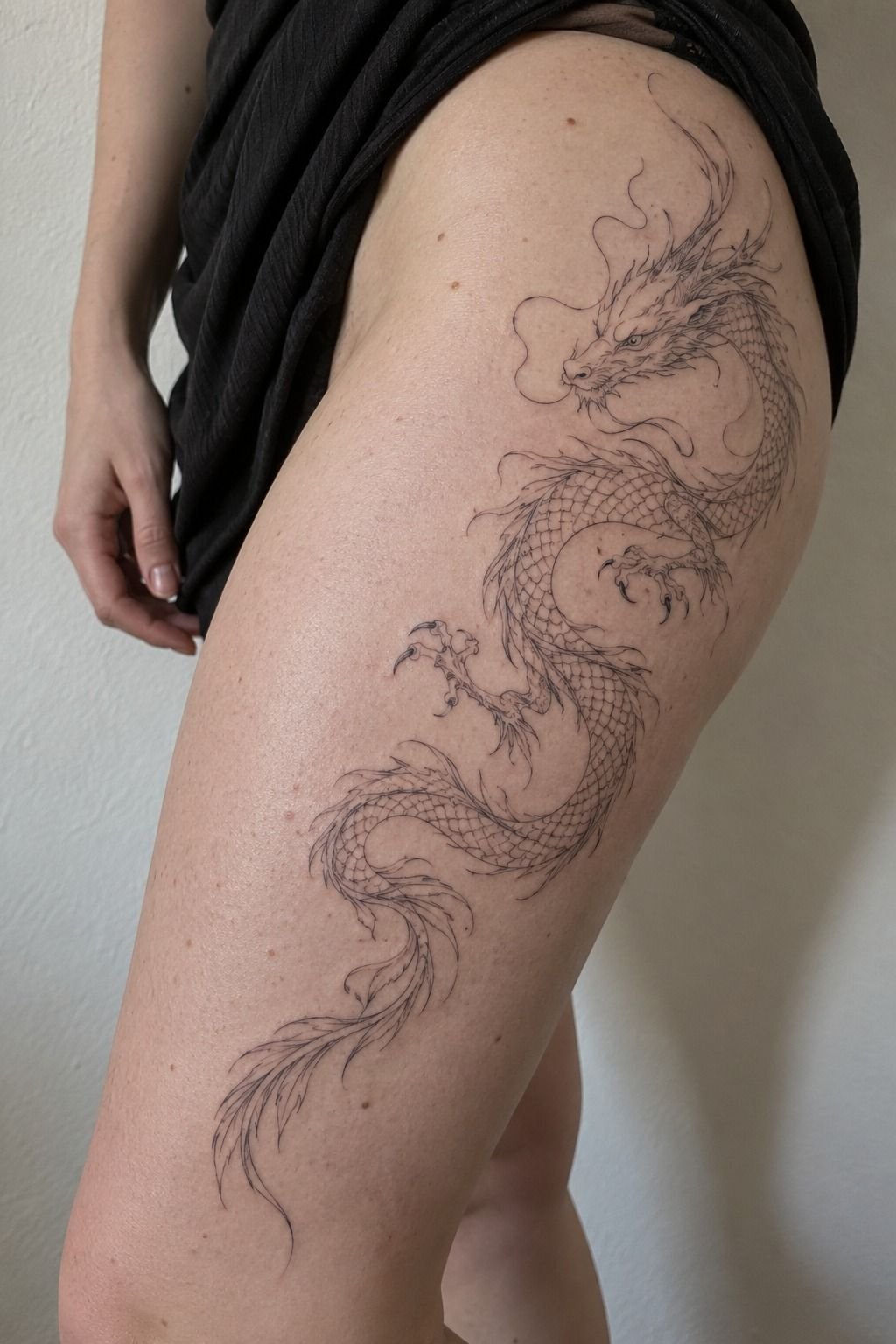
For a thigh placement, your artist has more skin area to create an elegant drawing with a longer body and extended wings.
8Add Meaningful Symbols Beside the Outline
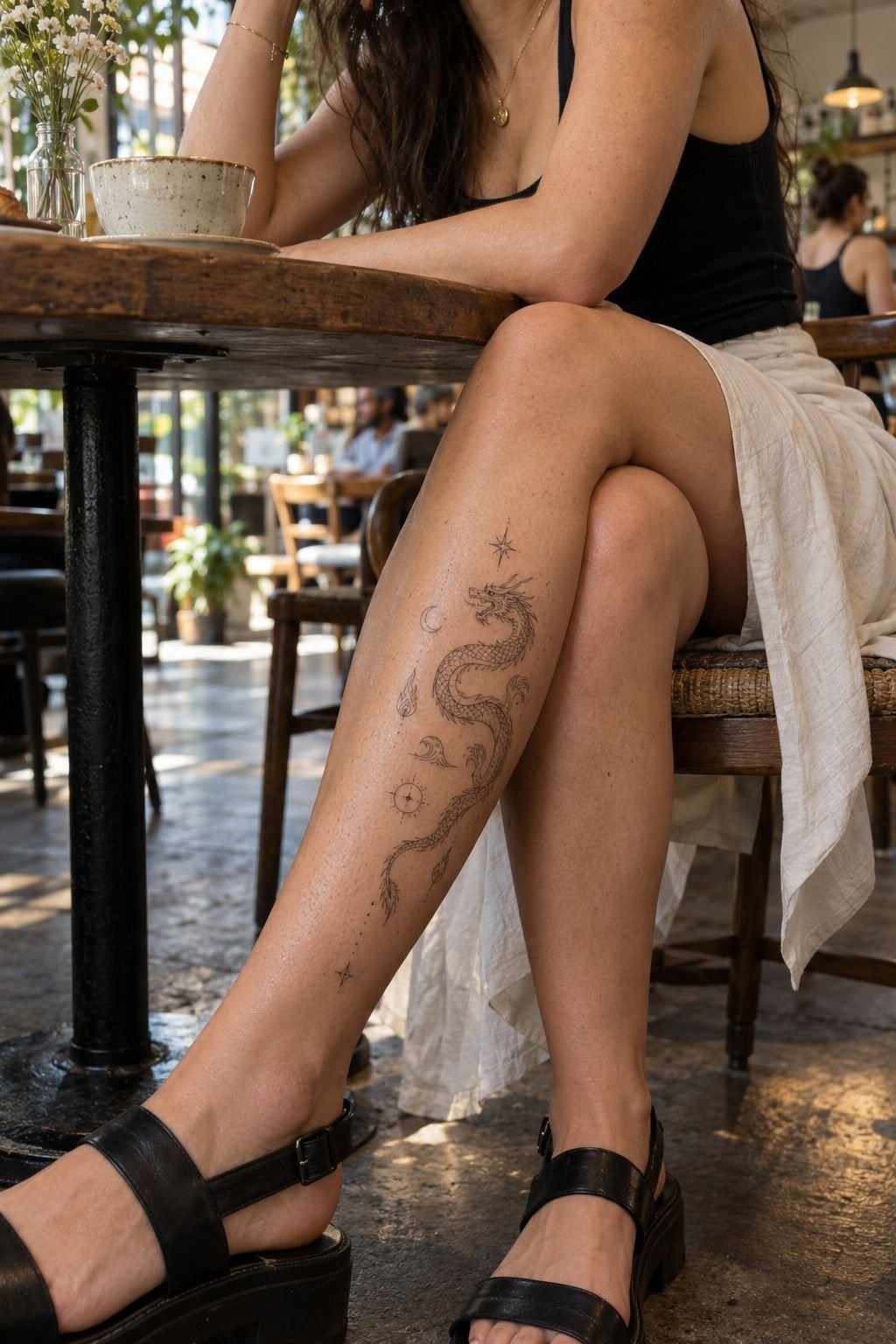
A dragonfly can stand alone, but small symbols can make the story more meaningful. Start with one meaningful symbol, such as a crescent, initial, star, or tiny botanical mark. Give it enough separation that it supports the dragonfly instead of competing with it.
A crescent mark can suggest cycles or renewal, while a small star can point toward memory or direction. Choose the symbol because it connects to your life, not because it fills an empty patch of skin. That keeps the composition personal.
You can also use a personal story as the design brief. Tell your artist what the dragonfly means, then let them translate that feeling into scale, motion, and line weight. Their interpretation may be more original than combining several saved designs.
If you want more starting points, browse Dragon Fly Tattoo Designs and save only the references that share your preferred line quality. A playful or whimsical detail can work, but it should still belong to the main silhouette.
9Balance Ornate Wings With Fine Lines
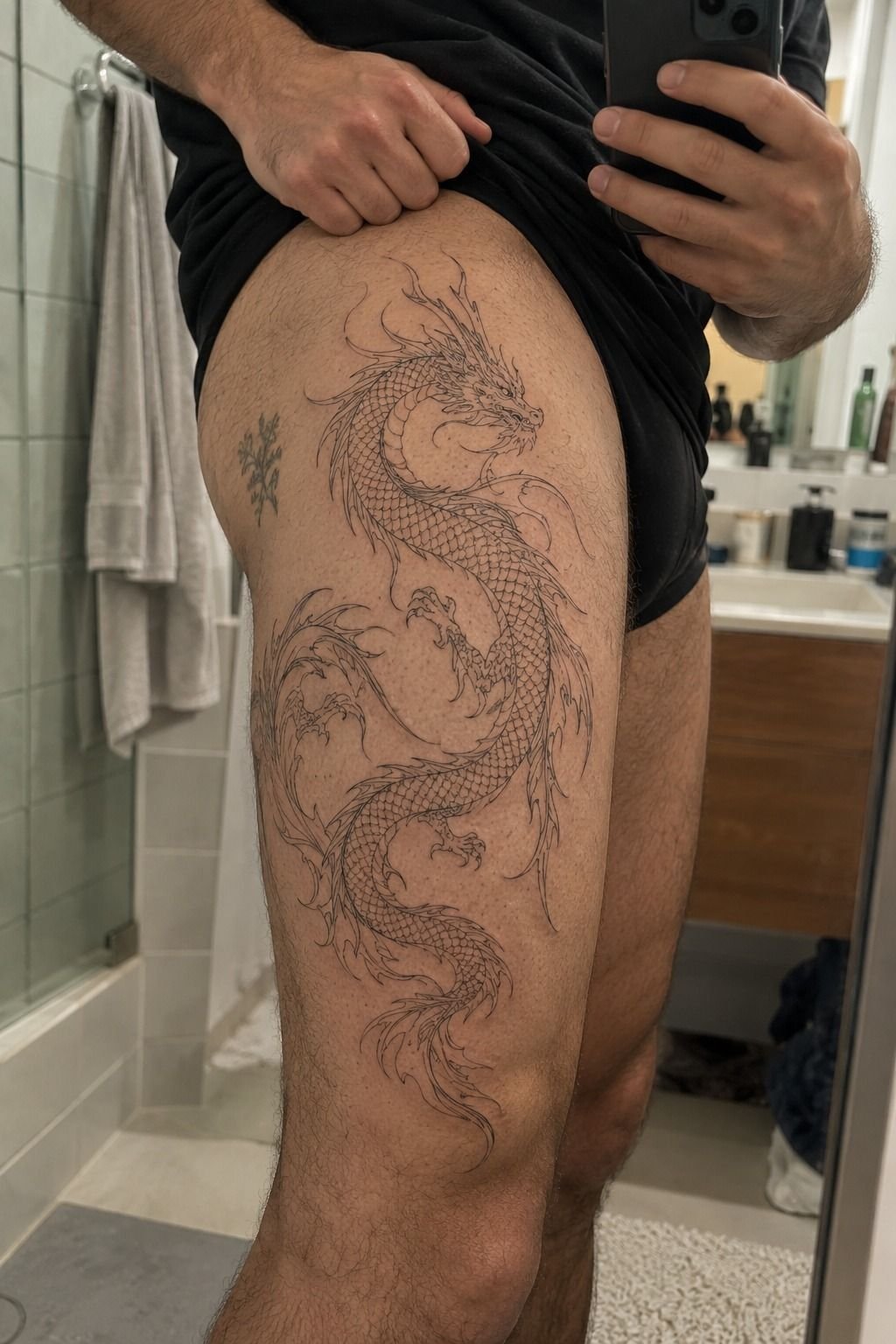
An ornate wing can look vibrant on the thigh, but ornament needs structure.
10Match the Outline to Your Body Shape
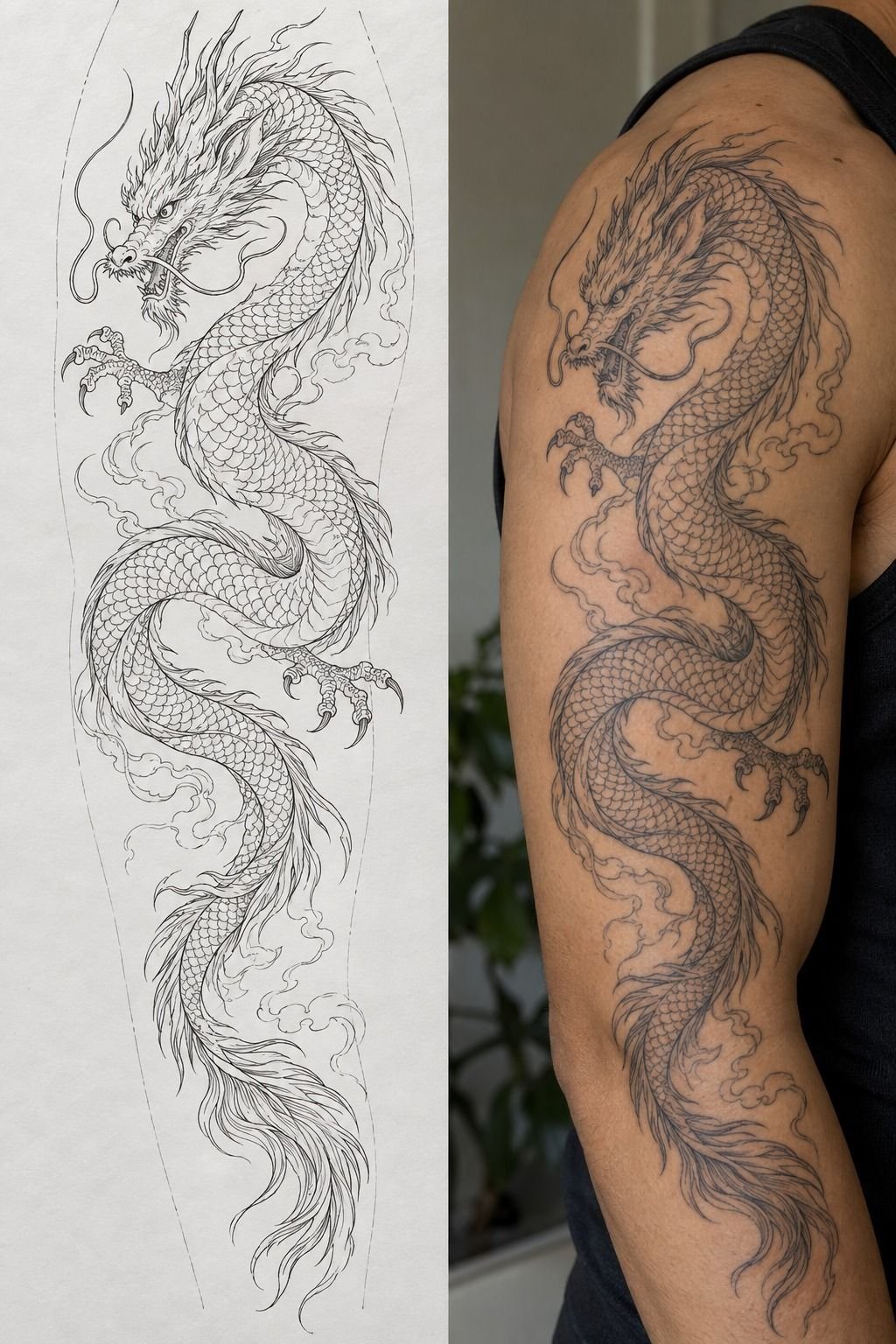
Your stencil should match the healed tattoo’s placement, not just the paper drawing. Use a healed-line comparison to check how the dragonfly sits on the shoulder or upper arm. Your body shape changes the curve, scale, and direction.
Ask for the stencil on clean skin, then move naturally while you inspect it. Lift your arm, relax it, and turn sideways.
You’ll notice whether the wings flatten, tilt, or stretch visually. A stylish design should still feel balanced when your posture changes.
If you’re comparing silhouettes, review small dragonfly tattoo references. You’ll see how a compact small outline can look sharp when its proportions stay clear. Your artist may recommend a slightly larger body or wider wing gap.
Think about visibility, clothing, sun exposure, and future tattoos. A feminine, masculine, or neutral concept can all work here, but the placement should serve your life. The best fit looks intentional when you’re still and natural when you move.
11Protect Sharp Linework During Healing
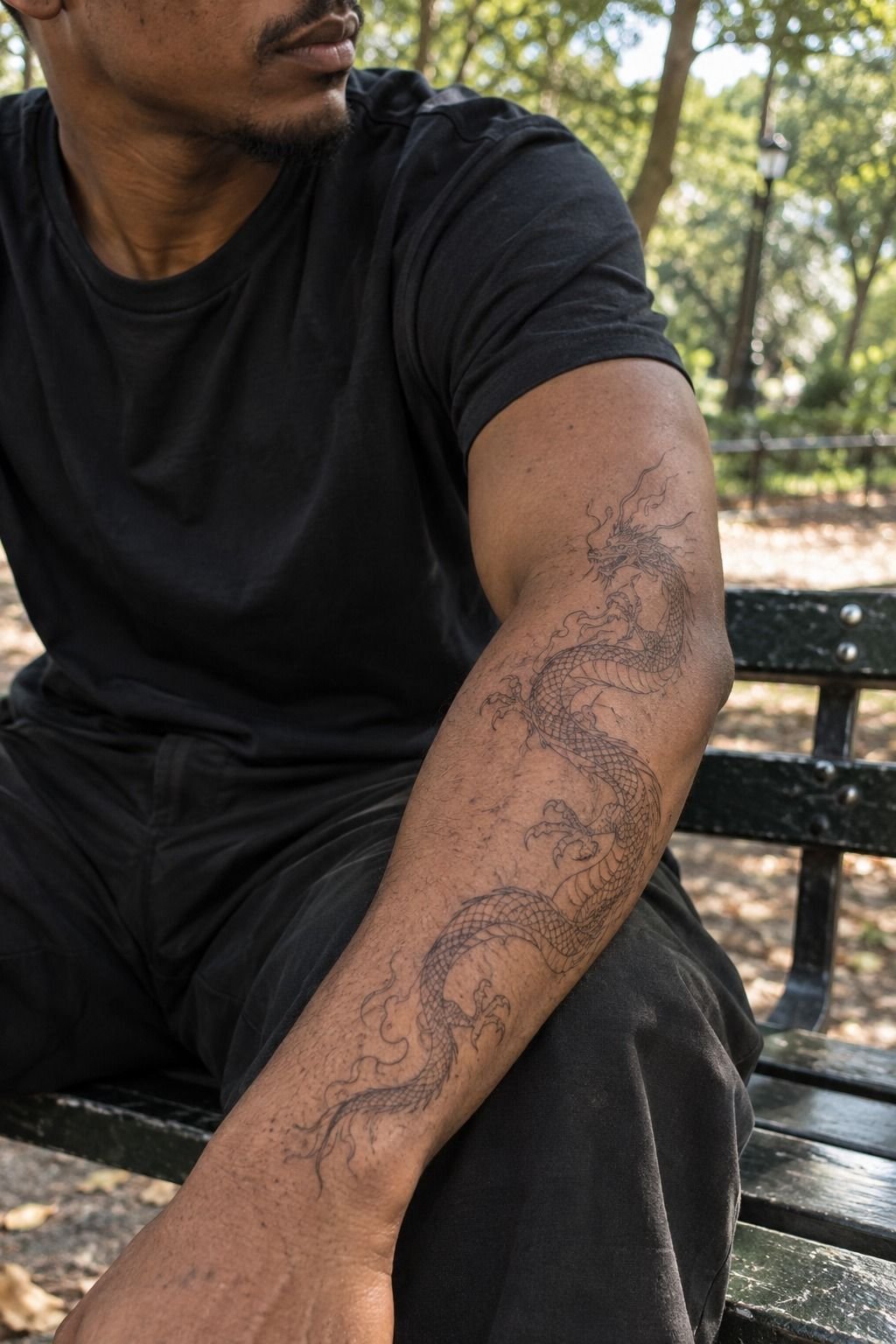
The final step is aftercare because sharp linework needs calm healing. For the inner forearm, follow your artist’s instructions for the healing film and gentle cleaning. Wash softly, moisturize as directed, and avoid sun and swimming while the surface recovers.
Surface healing usually takes about 2 to 3 weeks, while complete settling can take about 2 to 3 months. You’ll want patience during that period. I’d never judge the final line quality during the first few days because swelling, dryness, and peeling can change the appearance.
Avoid picking, scratching, or applying a heavy product your artist didn’t approve. Your forearm gets frequent sun exposure, so use sunscreen once the skin has fully healed. UV can soften fine lines over time, while solid black structure and sensible placement tend to age better.
Keep your aftercare notes written down before you leave the studio. A small outline may feel easy, but small doesn’t mean maintenance-free. If you treat the healing period seriously, your crisp, personal dragonfly has a better chance of staying readable and polished.
How Do You Protect the Design After Booking?
Follow the written aftercare instructions from your artist, even if another tattoo healed differently. Ink depth, placement, skin response, and covering methods can vary. When something looks unusual, contact the studio instead of guessing.
Plan a short swimming break and keep direct sun away from fresh skin. Don’t pick flakes or test the tattoo with unnecessary products. A calm healing period protects the delicate lines you paid to place carefully.
The Single-Needle Decision I’d Make
I’ve changed my opinion about tiny dragonfly tattoos. I used to think the smallest version was automatically the smartest choice for a budget under $150, but size alone doesn’t protect a design. A cramped wing can lose its identity faster than a slightly larger outline with open skin.
If you’re choosing between more detail and better spacing, I’d choose spacing every time. Your artist can remove a vein from a sketch before it becomes permanent, but your skin can’t give that line room after the appointment. That’s why I’d bring two references and request a stencil.
The placement matters just as much. Your forearm, thigh, or shoulder may be more tolerable than ribs, feet, hands, or sternum, but visibility changes your daily relationship with the tattoo. Read small dragonfly tattoo ideas if you’re comparing discreet and visible options.
My strongest recommendation is simple: spend your money on a clean drawing and an artist whose healed work you can inspect. I’d skip an artist who only shows fresh tattoos, even if the price looks tempting. A dragonfly tattoo design guide can help you prepare questions before the consultation.
You don’t need a complicated concept to make the tattoo memorable. A dragonfly body, two open wings, one meaningful symbol, and enough breathing room can carry a lot of emotion. That kind of restraint feels timeless instead of unfinished.
A Few Things Worth Answering
How much does a Dragonfly Outline usually cost?
A Dragonfly Outline usually costs about $100 to $300 in the US, though a shop minimum may be closer to $50 to $100. Hourly rates often sit near $100 to $250. Your artist, region, placement, and detail level will decide the final quote.
– Small outline – Simple placement – One-session design – Clear budget control
Is a Dragonfly Outline a good idea for a first tattoo?
Yes, Dragonfly Outline tattoos can work well for a first tattoo because the design is readable, adaptable, and available in several placements. Your forearm, thigh, or shoulder may feel more tolerable than ribs or feet. Choose an artist with clean healed linework and a portfolio you trust.
– Moderate detail – Flexible scale – Visible symbolism – Straightforward consultation
How do I choose a tattoo artist for Dragonfly Outline?
Choose an artist who shows healed photos, consistent linework, and clear hygiene practices. Your artist should explain how fine lines may soften and should welcome a stencil discussion. Look for someone experienced with outline work, not simply someone with one dragonfly photo.
– Healed portfolio – Clear stencil process – Clean studio – Style-specific experience
How much does a Dragonfly Outline hurt?
Pain varies by person and placement. Ribs, feet, hands, and sternum are often more sensitive, while the forearm, thigh, and shoulder are commonly more tolerable. Your session may still feel intense in thin-skinned areas, so eat beforehand and follow your artist’s preparation advice.
– Sensitive zones – More tolerable zones – Personal pain range – Honest placement choice
How long does a Dragonfly Outline take to heal?
The surface healing stage usually lasts about 2 to 3 weeks, while the tattoo can take about 2 to 3 months to settle completely. Your aftercare should include gentle washing, approved moisturizer, and avoiding sun and swimming until the skin has healed.
– Surface healing – Complete settling – Gentle washing – Patient aftercare
What’s the best placement for Dragonfly Outline?
The forearm and thigh are strong starting points because they offer readable surfaces and are often more tolerable than bony areas. Your wrist gives higher visibility, while the shoulder or calf offers more discretion. Choose the placement that suits your daily life and future tattoo plans.
– Forearm visibility – Thigh flexibility – Wrist intimacy – Placement that fits you
Where I’d Start First: The Crisp-Line Rule
If I had to pick one step, I’d start with the stencil. Your dragonfly’s spacing decides whether the wings stay readable, and no extra symbol can rescue cramped linework. Pin your favorite reference, ask for a healed portfolio, and book only after the placement feels right on your moving body.
That process can still feel empowering when you’re nervous. Take your time, ask direct questions, and choose the version that feels sharp without becoming overworked. Your healed portfolio is the real proof!