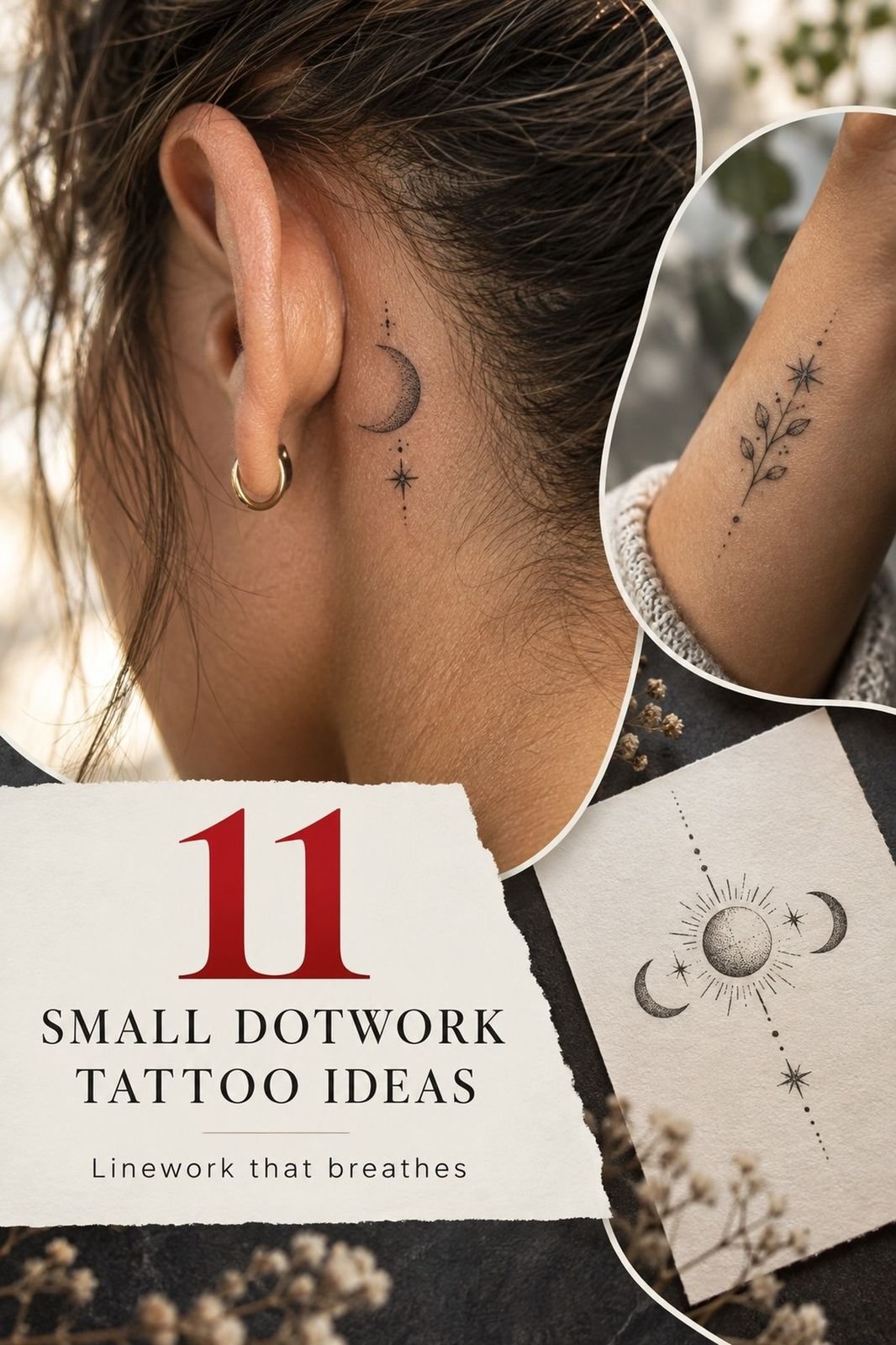
Small dotwork tattoos can stay crisp for years when the design has breathing room, the placement suits the linework, and your artist understands stippled shading. I learned that after one tiny piece blurred faster than expected. These ideas keep the ink delicate and meaningful without crowding your skin. Start with placement, then choose your symbol!
Editor’s note: The best small tattoo isn’t the most intricate one. It’s the design that still feels personal when the dots soften slightly, your skin moves, and your daily routine gets involved.
- Tiny Dotwork Moon Behind the Ear
- How Can an Ornamental Dotwork Finger Tattoo Stay Legible?
- Let the Wildflower Follow Your Wrist
- Geometric Dotwork Triangle on the Forearm
- Sun or Symbol? A Line-and-Dotwork Ankle Design
- What Makes a Symbolic Dotwork Eye Work on the Ribcage?
- A Collarbone Constellation With Uneven Rhythm
- The Shoulder Mandala: Intricate, But Not Crowded
- Snake or Symbol? A Small Dotwork Finger Tattoo
- Behind the Neck, a Fine Dotwork Heart
- Choose the Bold Crescent for the Inner Arm
1Tiny Dotwork Moon Behind the Ear
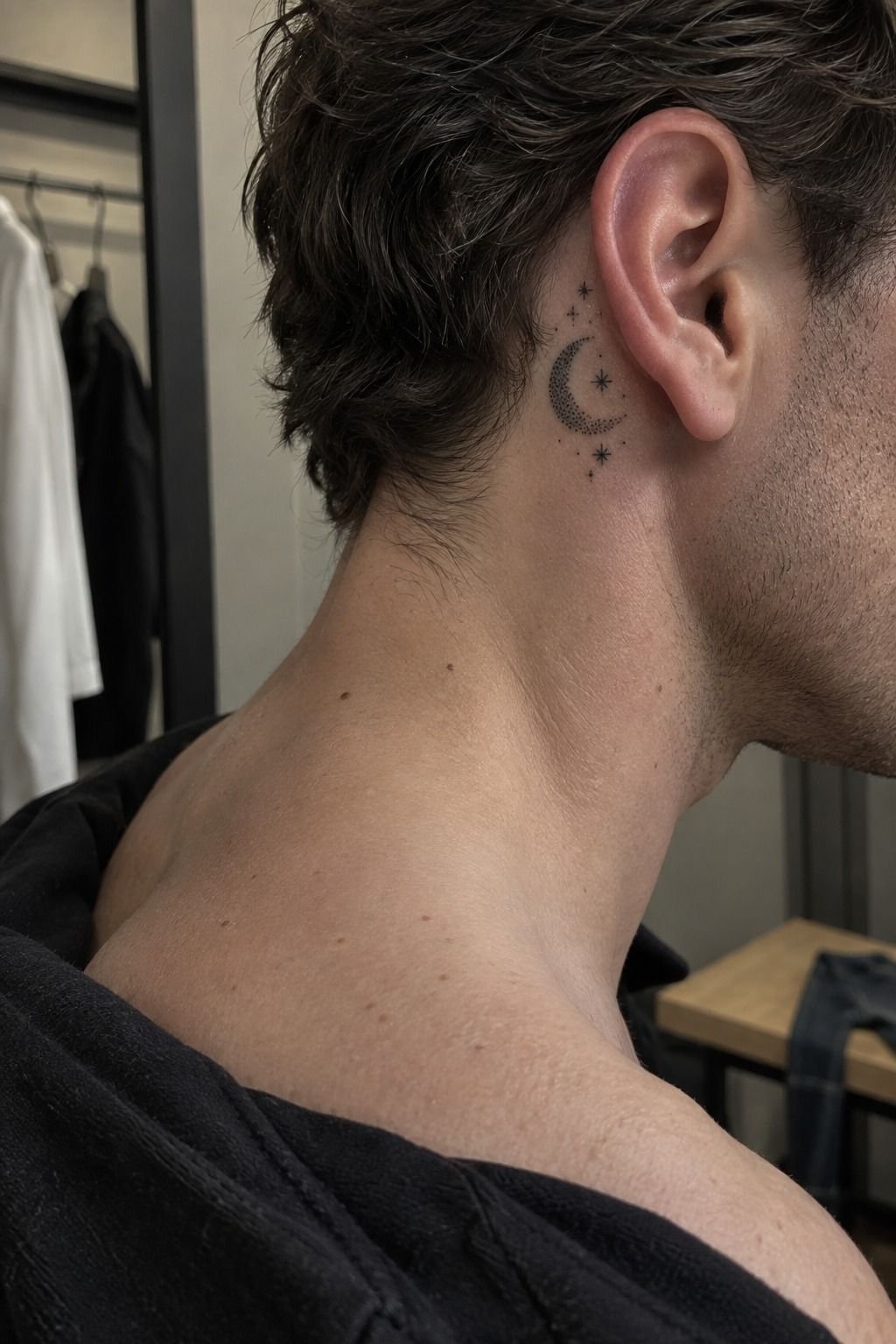
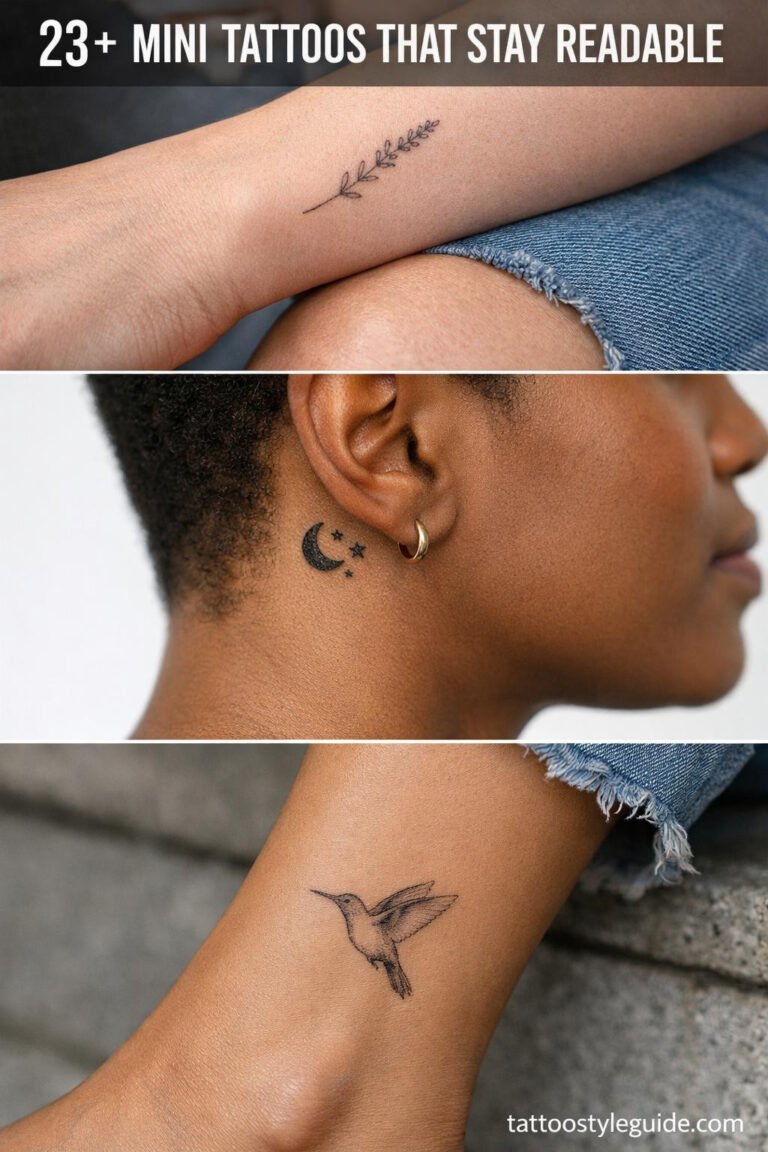
A crescent moon behind the ear gives you a symbolic moon tattoo that stays discreet until you turn your head. The shape feels ethereal and delicate, especially when a few tiny stars create a graceful trail without crowding your skin. It’s a striking choice for someone who wants a personal symbol with an understated finish.
I’d keep the crescent narrow and let the negative space carry part of the design. A soft field of stippled moon shading will age better than a solid black shape.
You’ll still get that elegant, dainty effect. The ear moves constantly, so your artist needs a crisp silhouette rather than a crowded cluster of marks.
You’ll want an artist who shows healed work, not only fresh work. Before booking, compare line weight, spacing, and healed contrast in this dotwork tattoo guide and these geometric tattoo pattern ideas. That research can help you recognize a strong stencil before the needle starts.
– Fine crescent outline – Three or four small stars – Black ink with soft stippling – Discreet placement behind the ear
2How Can an Ornamental Dotwork Finger Tattoo Stay Legible?
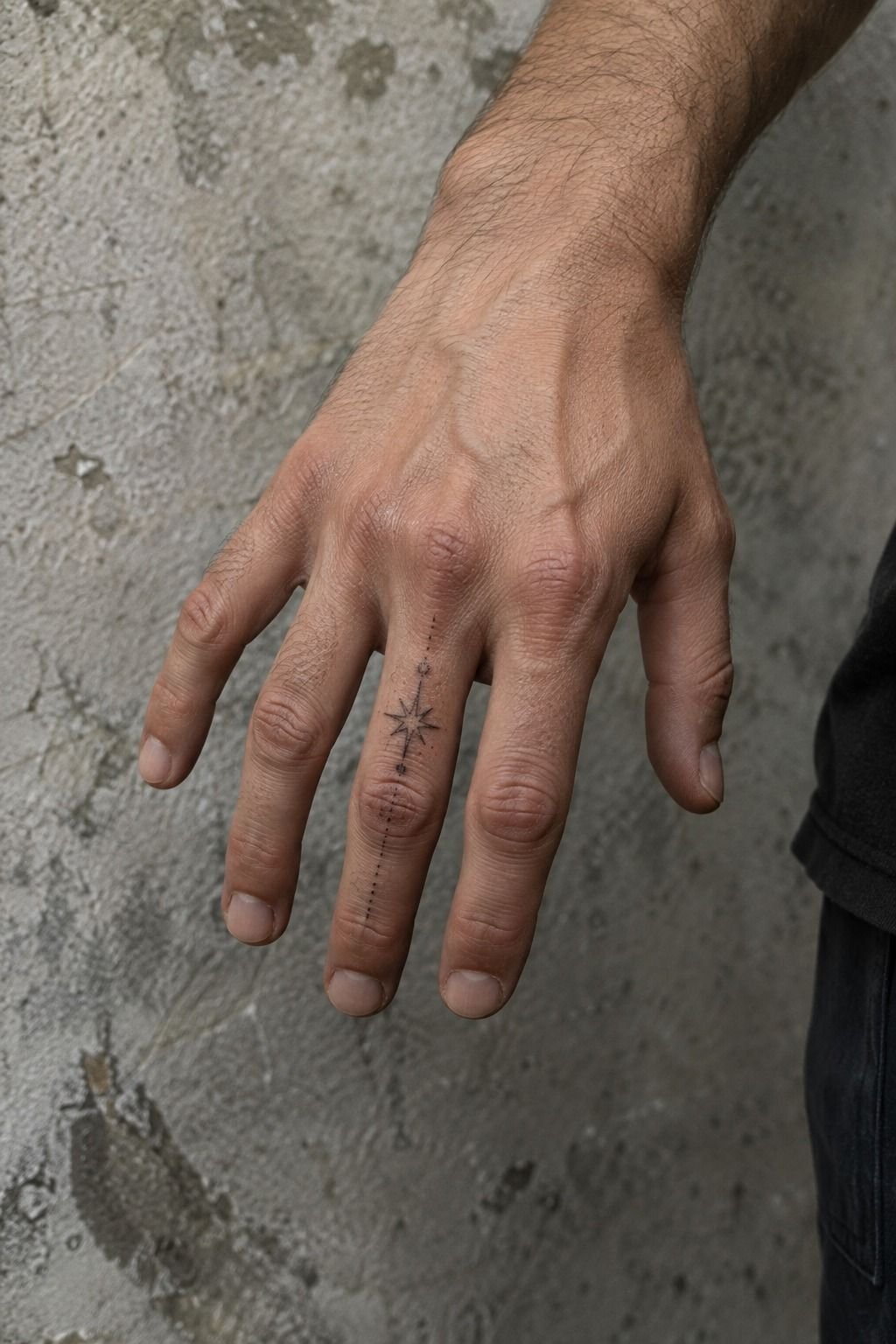
This small ornamental finger tattoo uses ornamental finger linework to create a bold pattern without heavy fill. It can feel ornate, sharp, and surprisingly personal when the shape connects to your story. The result is stylish without needing a large area to make an impression!
Finger tattoos need restraint. You’re dealing with friction, movement, and frequent washing, so I’d skip an overly intricate centerpiece. Your artist can build the design from a few dark anchor points.
Then the surrounding dots can soften while the small ornamental tattoo still reads clearly.
If you’re tempted to copy a design exactly, ask your artist to adjust the width to your finger. These dotwork pattern tattoo ideas can help you find a pattern language. The dotwork tattoo guide gives you another way to compare spacing and line density.
– Symmetrical ornamental frame – Dark central dot cluster – Open negative-space edges – Black ink with graduated stippling
3Let the Wildflower Follow Your Wrist
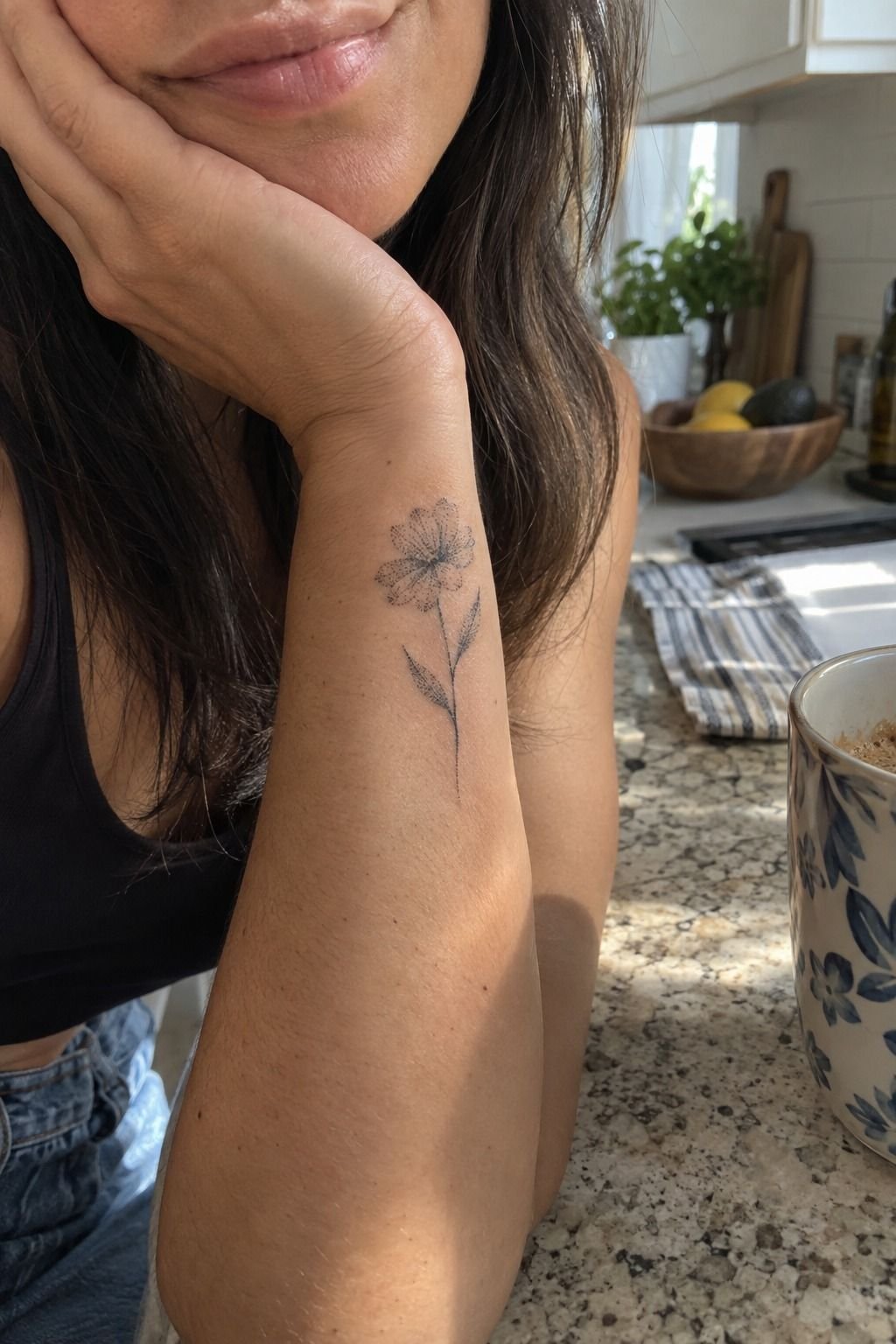
A single stemmed wildflower on the wrist feels graceful because the design has one clear direction.
4Geometric Dotwork Triangle on the Forearm
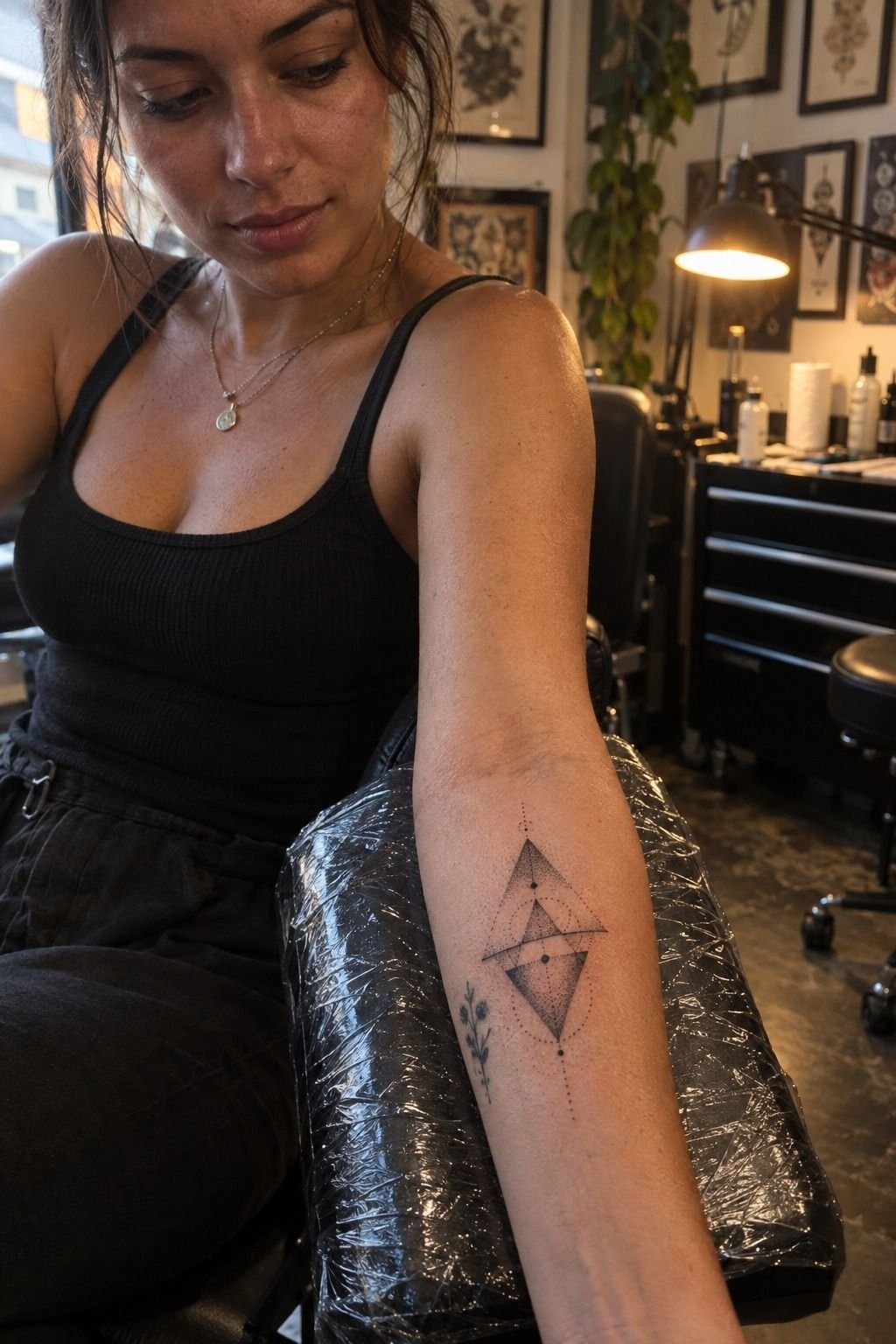
A geometric triangle gives you a striking geometric tattoo because every edge has a job. Stippled gradients inside the shape can feel powerful and symbolic, while an open center keeps the design from becoming visually heavy. It’s a crisp option if you want something meaningful that reads clearly from across the room.
Your artist can make the triangle feel daring by varying dot density from one corner to the next. I’d skip a perfectly filled interior.
A controlled gradient gives your eye somewhere to rest. A dotwork triangle design also benefits from forearm placement, where the surface is fairly stable.
Symmetry only works when the stencil follows your arm instead of fighting it. Ask to see the placement from several angles.
Then compare this dotwork pattern tattoo guide with the related geometric references. The planning adds value to a permanent piece.
– Crisp triangular outline – Concentrated corner dots – Open central negative space – Balanced black ink shading
5Sun or Symbol? A Line-and-Dotwork Ankle Design
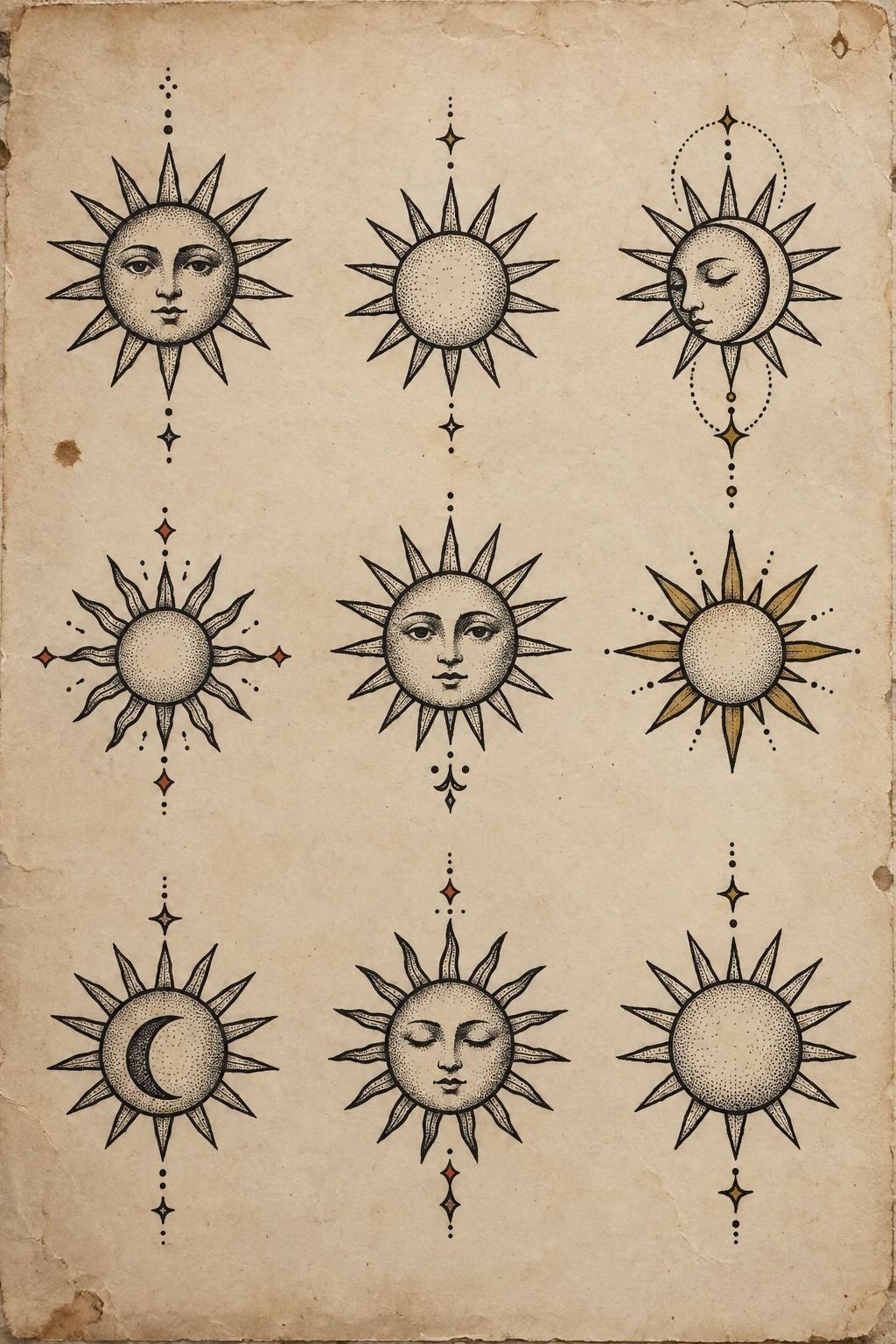
A line and dotwork sun can feel vibrant and classic without becoming loud. A clean circle, directional rays, and a stippled center create an expressive design that feels collected rather than overly polished. The symbol can be cheerful, romantic, or empowering depending on the ray shape.
Ankle designs need a strong outer shape because the skin sits close to bone. I’d choose a clean sun motif instead of squeezing in tiny facial details. This classic tattoo can feel bold when the dots vary in size, but you’ll want the outer rays to remain separate.
Use a flash-inspired idea as a starting point, then ask for one sun customized to your ankle. Don’t treat every mark as mandatory. These small traditional tattoo ideas can help you compare a traditional outline with a delicate dotwork approach.
– Hand-drawn sun outline – Black ink ray structure – Small stippled center – Restrained accent color, if desired
6What Makes a Symbolic Dotwork Eye Work on the Ribcage?
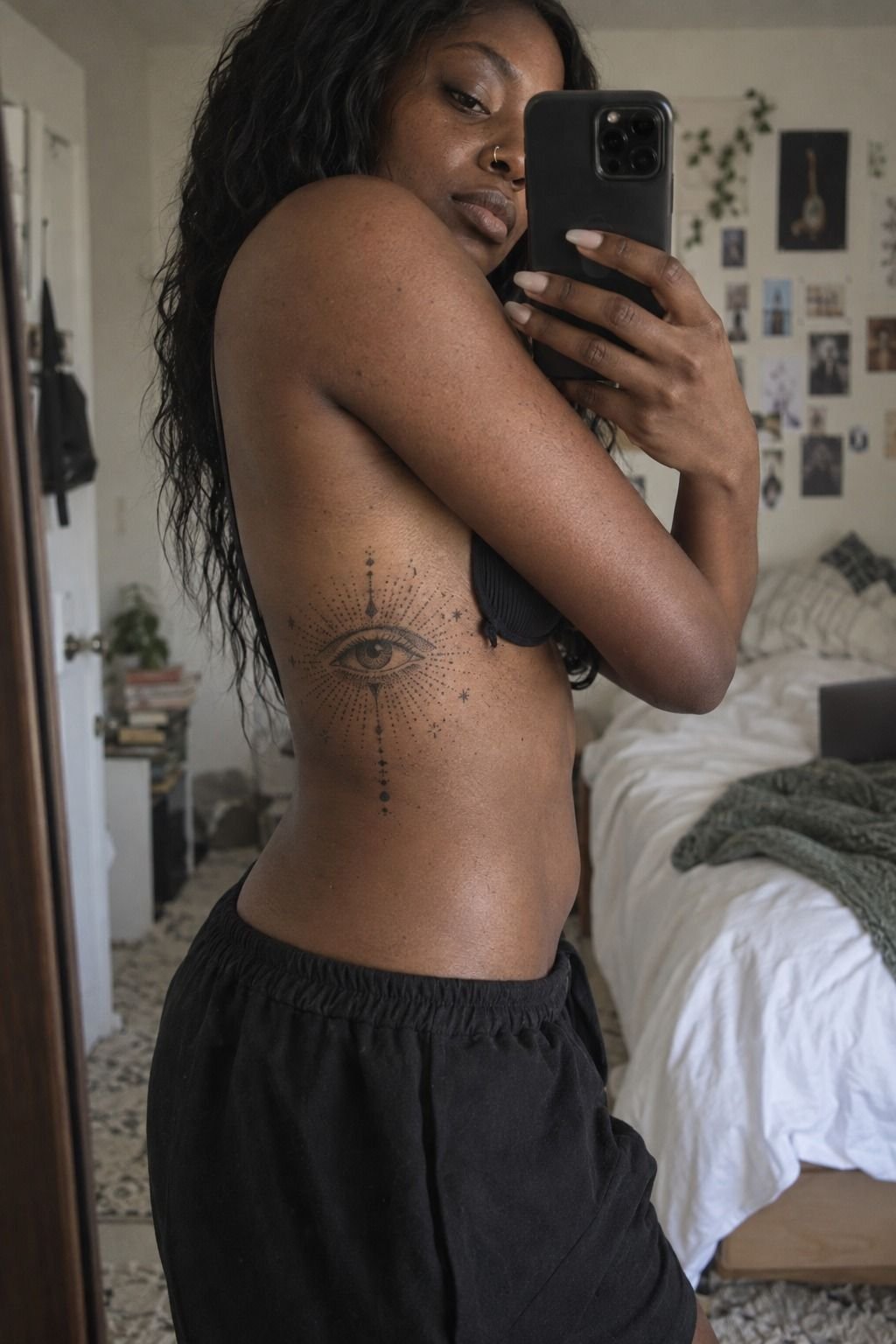
A dotwork eye on deep ebony skin can look haunting and meaningful when the artist respects contrast and scale. The ribcage gives the symbol a private quality, while surrounding stippling adds a sacred, almost talismanic feeling. It can be a fierce choice when you want one focal point to carry the tattoo.
I’d choose a clear iris shape with a controlled halo of dots instead of a crowded border. Rib tattoos can hurt more than forearm, thigh, or shoulder placements, especially close to bone.
That doesn’t make the placement wrong. You’ll simply want a manageable session and a patient artist.
For more symbolic references, browse these small tattoo ideas for women and compare them with small watercolor tattoo ideas, even if you stay with black ink. Ask about healed results, session length, and price before committing.
– Defined almond-shaped eye – Dense iris center – Light stippled halo – Deep black focal points
7A Collarbone Constellation With Uneven Rhythm

A constellation along the collarbone has a minimal celestial structure but still feels ethereal. Each dot and connecting mark can remain visible without a heavy border.
The design follows your body instead of sitting like a sticker. It can be personal without spelling out the meaning!
Keep the constellation irregular. Perfectly even dots can make the design feel mechanical, while small changes in spacing give it a more natural rhythm. I’d use one slightly larger star as the visual anchor.
Then smaller points can trail toward your shoulder.
Your artist should stencil the constellation while you’re standing, since posture changes the curve of the collarbone. Compare these small watercolor tattoo ideas with the dotwork tattoo guide if you’re choosing between color and black ink.
– One larger star point – Uneven constellation spacing – Fine connecting lines – Open collarbone placement
8The Shoulder Mandala: Intricate, But Not Crowded
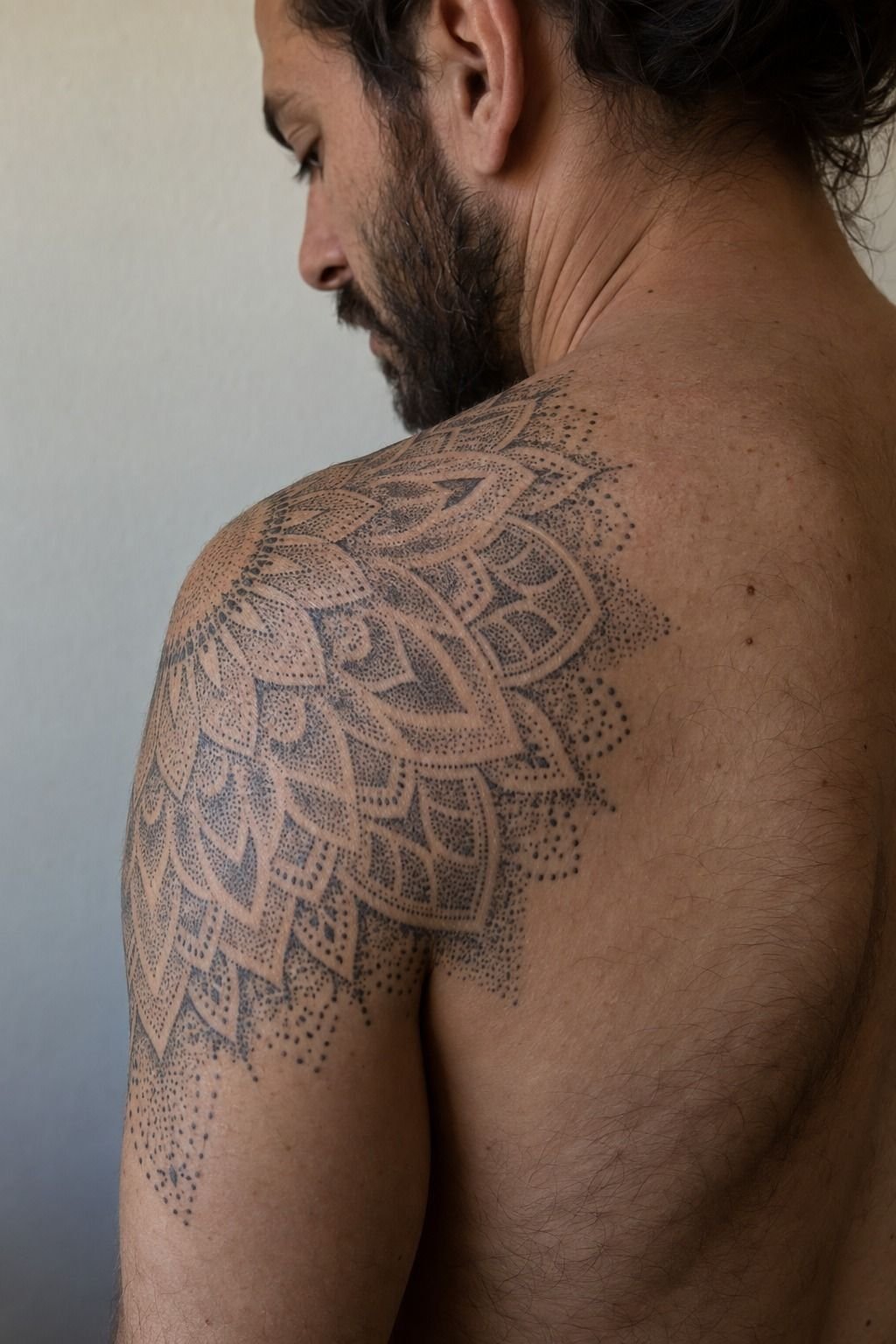
This shoulder mandala uses ornate circular dotwork to create a powerful shape without filling every gap.
9Snake or Symbol? A Small Dotwork Finger Tattoo
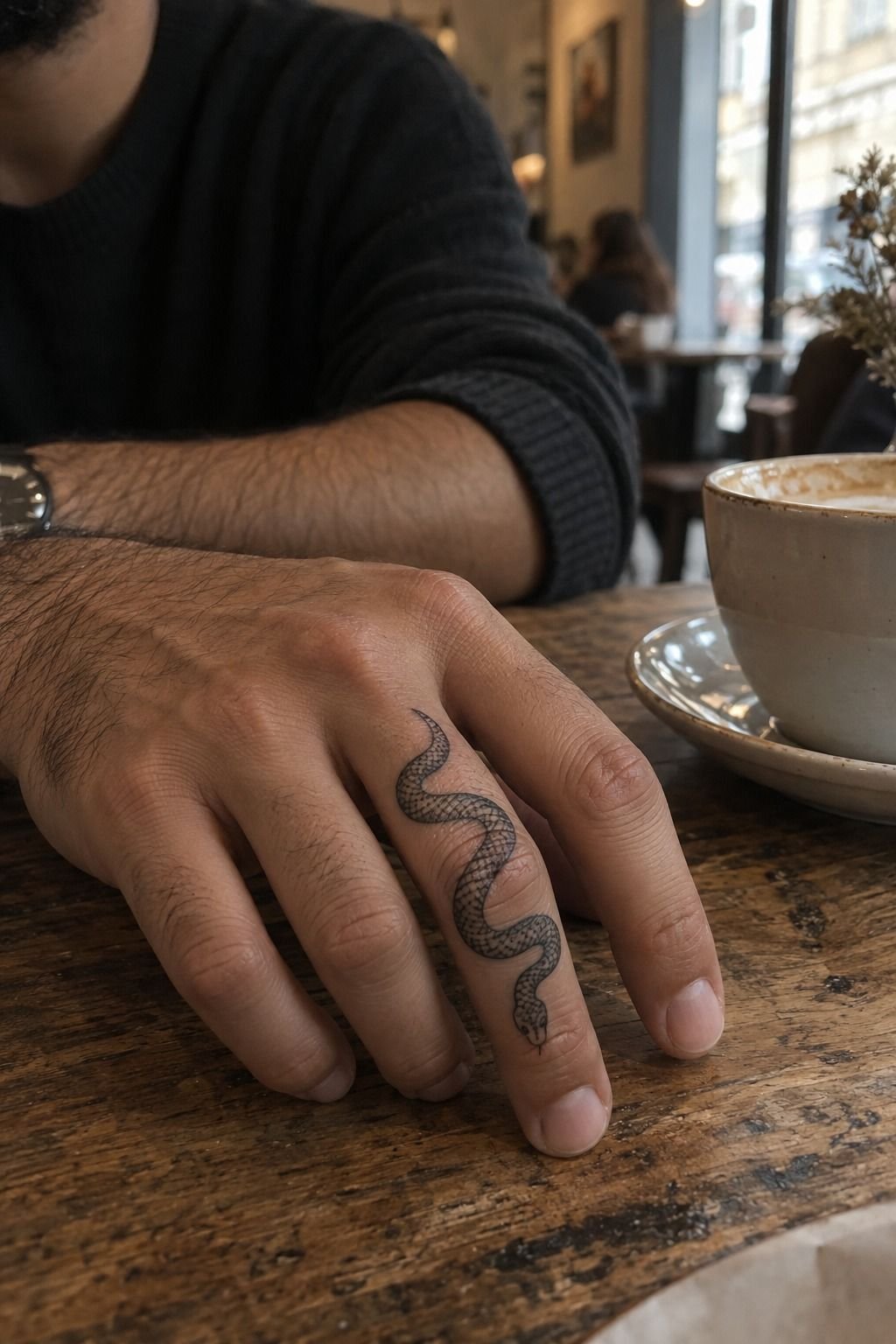
A slim serpent coiling around the finger gives you a fierce snake tattoo with natural movement. Instead of drawing every scale, your artist can suggest texture with a few repeated marks along the body. The result can feel edgy and raw without turning into an overcrowded band.
Finger placement is demanding, so I’d keep the snake’s head simple and let the curve carry the personality. A crowded face may lose its expression over time.
A clean profile will stay recognizable. This dotwork serpent design can feel daring without becoming harsh if the tail tapers into open skin.
Your artist should wrap the stencil around your finger before you approve it. Compare this small dragonfly tattoo collection with the dotwork pattern tattoo references to judge how compact animals translate into linework.
– Slim coiling body – Fine suggested scales – Simple serpent head – Tapered tail with negative space
10Behind the Neck, a Fine Dotwork Heart
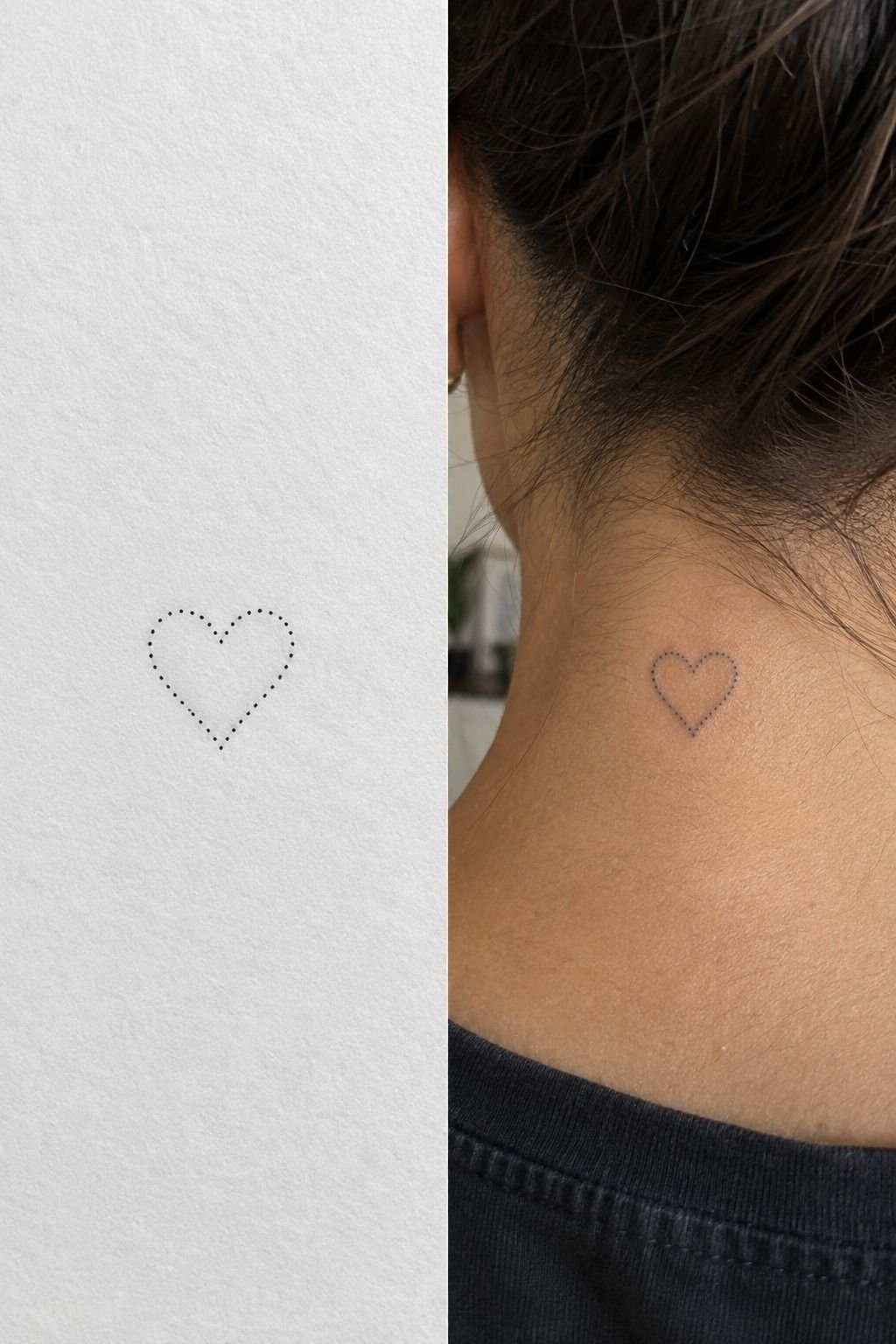
A heart behind the neck can feel romantic and delicate without needing text.
11Choose the Bold Crescent for the Inner Arm
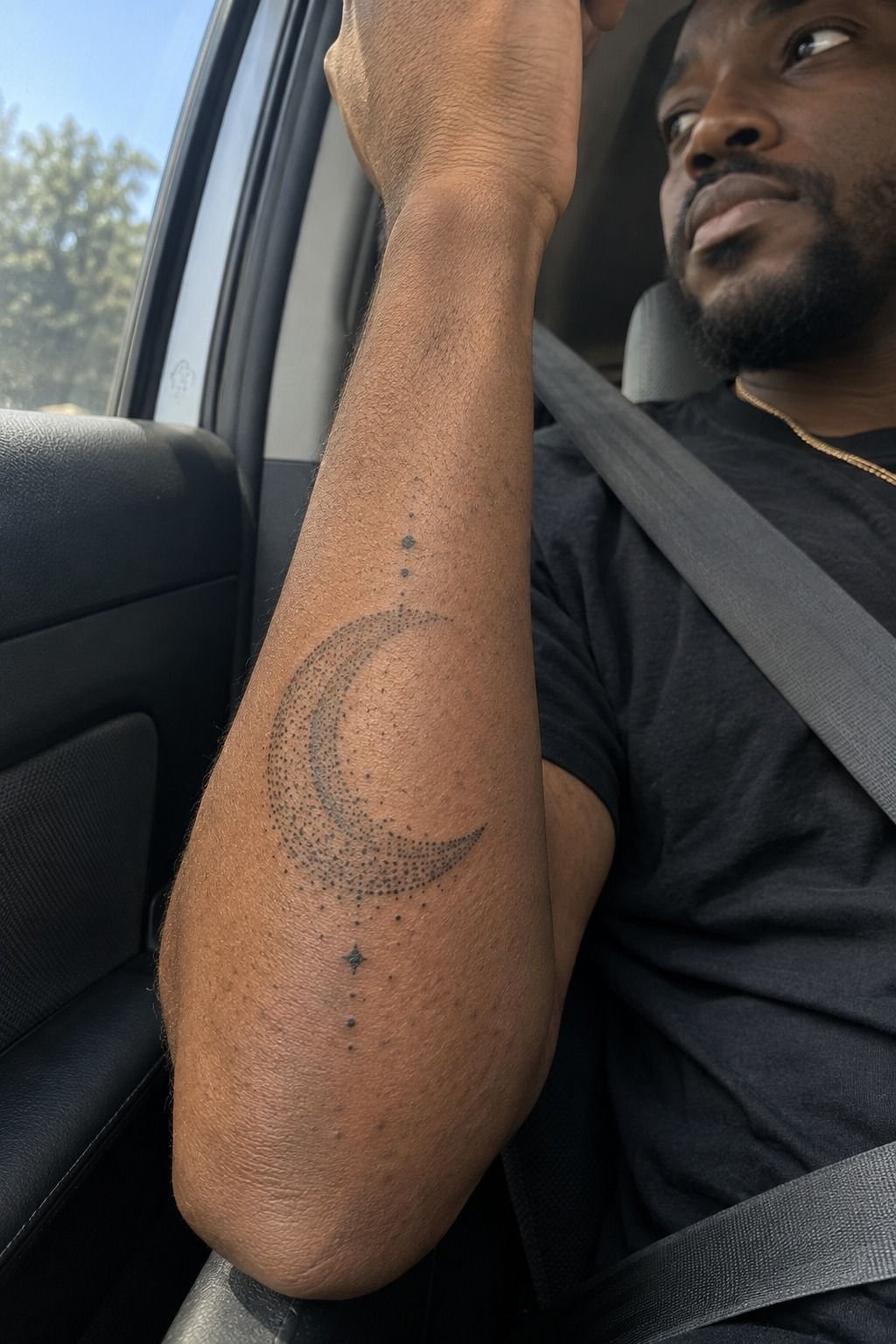
A bold crescent on the inner arm gives you an iconic crescent tattoo with strong contrast. Confident black placement and carefully spaced stippling create a sharp design that can still feel understated when the outer edge stays clean. It’s a timeless symbol with a sleek finish.
I’d choose this over an overcrowded celestial sleeve if you want one symbol to carry the entire tattoo. The inner arm is often more tolerable than ribs, feet, hands, or sternum, but you’ll still want to discuss sensitivity. A graduated crescent interior can remain compact while giving your eye a clear dark-to-light movement.
Protect healed ink from ultraviolet exposure, since sun can soften contrast over time. Ask your artist how they’d adjust dot density for your skin tone. Save this colored small tattoo ideas guide if you’re considering a tiny accent later.
That conversation helps you decide before you commit!
– Solid outer crescent edge – Graduated dotwork interior – Open inner-arm placement – Strong black focal area
Before You Choose a Symbol
You don’t need to pick the most meaningful symbol on the first day. Start with the shape you keep returning to.
Then ask why it holds your attention. That answer can guide the personal tattoo concept better than a trend.
Your symbol should also work at a small scale. If the design needs text, many rings, or tiny faces, you may need to simplify it. I’d rather see one clear mark than a crowded piece that loses its character.
Placement Changes the Read
Placement changes how you see your tattoo and how often other people see it. Your wrist and forearm make a piece easy to check. Your ribs, neck, or inner arm can keep it more private.
You should also think about movement. Fingers bend.
Ankles flex. Collarbones shift with posture.
A placement check can show you whether the stencil still looks balanced in motion.
Dots Need Room to Age
Dotwork needs open skin because the marks can soften and spread slightly over time. Your artist should avoid packing every gap with ink. A little restraint gives the tattoo a better chance of staying crisp.
I’d pay attention to the distance between dots, not only the shape they create. You’ll want each area to have a clear visual job. If two shaded sections touch too soon, the design may lose its negative-space structure.
How I Check Healed Work
I ask to see healed work whenever I can. Fresh ink shows color and contrast, but settled ink shows spacing. You’re looking for clean edges, readable shapes, and dots that haven’t formed one dark mass.
I also ask how long the work has healed. A piece from a few days ago can’t tell you much. Healed dotwork examples give you a clearer sense of the artist’s control.
What Your Budget Should Cover
A small tattoo may cost about $100 to $300 in the United States. Some studios have a minimum around $50 to $100. Hourly rates may run from roughly $100 to $250.
Your final cost depends on the artist, region, placement, and detail. Ask whether the quote includes the consultation and any redesign time. A clear tattoo price estimate helps you plan without guessing.
Questions I’d Ask Before Booking
I’d ask how the artist handles small spaces, moving skin, and soft shading. You can also ask to see healed pieces in the same style. Their answer should feel clear, calm, and specific.
Ask about aftercare, touch-ups, and the expected session length. You don’t need to sound difficult. Artist consultation questions protect your time and your skin.
How I’d Narrow the Shortlist
I’d begin with three designs, not twenty. Then I’d remove any option that needs too much detail to remain readable. The strongest choice is often the one that still works as a simple outline.
You can save references from this dotwork tattoo guide and compare them with geometric tattoo pattern ideas. Your final shortlist should show a clear preference, not just a collection of attractive marks.
What I’ve Learned About Keeping Small Dotwork Personal
I’ve made the mistake of choosing a small tattoo because the reference looked impressive on someone else’s body. The symbol wasn’t wrong, but the scale and placement belonged to that person. Now I start with what feels meaningful to me, then I ask whether the design can survive being reduced.
I’m also less interested in fresh-ink drama than I used to be. A tattoo can look bold in the first week and lose its character if every gap is packed with deliberate blackwork. I’d rather see a crisp outline, a controlled patch of ink, and enough untouched skin to let the shape breathe.
Your artist’s healed portfolio matters more than a polished social feed. Ask to see work after the surface has settled, especially for fingers, ribs, ankles, and areas that see regular sun. You’re not being difficult by asking about healed tattoo examples, line weight, spacing, or aftercare.
The numbers are useful, too. A small tattoo may cost about $100 to $300 in the United States, while some studios have a minimum around $50 to $100. Healing usually takes about 2 to 3 weeks on the surface and 2 to 3 months to finish fully.
Those ranges can help you plan your tattoo budget without guessing.
The Questions Worth Answering First
How much does a Small Dotwork Tattoo usually cost?
A Small Dotwork Tattoo usually costs about $100 to $300 in the United States. Some studios charge a $50 to $100 minimum, while hourly rates often sit around $100 to $250. Your artist, region, placement, and detail level can shift the total, so request a clear tattoo price estimate before booking.
– Studio minimum – Hourly rate – Artist experience – Regional pricing
Are Small Dotwork Tattoos a good idea for a first tattoo?
Yes, Small Dotwork Tattoos can suit a first tattoo because you can choose a manageable placement and a clear symbol. Forearm, shoulder, and thigh areas are often more tolerable than ribs, feet, hands, or sternum. Choose an artist with healed dotwork results and a clear aftercare process.
– Simple symbol – Manageable placement – Healed portfolio – Clear aftercare plan
How do I choose a tattoo artist for Small Dotwork Tattoos?
Choose an artist by reviewing healed work, clean linework, and real examples of stippled shading. You’ll also want a hygienic studio and a style match. Ask how they’d adapt the design to your skin tone, movement, and chosen placement before paying a tattoo consultation fee.
– Healed work – Dotwork specialization – Studio hygiene – Placement discussion
How much do Small Dotwork Tattoos hurt?
Pain varies by placement, but ribs, feet, hands, and sternum are often more sensitive than the forearm, thigh, or shoulder. Your session may feel sharper near bone. Tell your artist if you need a pause, and don’t treat discomfort as a test of toughness.
A shorter session may offer better comfort value than forcing too much detail at once.
– Rib sensitivity – Hand and foot friction – Forearm tolerance – Short breaks
How long does a Small Dotwork Tattoo take to heal?
The surface usually heals in about 2 to 3 weeks, while complete healing can take about 2 to 3 months. Wash gently, moisturize as directed, and avoid sun and swimming during the early stage. Your artist’s instructions should guide your routine, especially if you’ve paid for fine stippled detail.
– Gentle washing – Light moisturizing – No swimming early on – Sun protection after healing
What’s the best placement for Small Dotwork Tattoos?
The forearm, shoulder, and thigh give you relatively stable areas with useful visibility and generally more tolerable sessions. Hands, feet, ribs, and sternum can hurt more and may experience extra friction. Your final choice should balance meaning, visibility, aging, and comfort, not just the lowest tattoo cost.
– Forearm visibility – Shoulder flexibility – Thigh privacy – Inner-arm contrast
Where I’d Start First
If I had to pick one, I’d start with the dotwork wildflower on the wrist. Its single stem and open petals leave room for the ink to breathe, so it won’t turn into a dark patch as it settles. Pin the small wrist tattoo guide for later and take that wrist tattoo concept to your artist.