Most people who want a tattoo with meaning arrive at the same problem: they know they want something personal, but the gap between a feeling and an image is harder to cross than it looks. This article covers the main symbolic categories people reach for, what the symbols actually carry historically, and how to make the design yours rather than just borrowing something that sounds right.
Why Symbolic Tattoos Work
A symbol does something a literal image cannot. It compresses a complex idea into something that reads instantly. The anchor does not need a caption explaining it stands for stability. The semicolon does not need an explanation for anyone who has been through a mental health crisis. That compression is the point. You are not describing your experience; you are marking it.
The other thing symbols do is allow two people to look at the same tattoo and see different things. Two people wearing a phoenix may have completely different reasons. One survived addiction, one rebuilt a career after failure, one is honoring a parent who came through cancer. The symbol holds all of those readings without contradiction. That flexibility is useful when you want the tattoo to communicate to people who know you while staying opaque to people who do not.
Common Symbols and What They Mean
These are the symbols that come up most consistently in consultations, and what they actually carry in terms of history and meaning:
- Phoenix: Rebirth after destruction. The image comes from Greek and later Egyptian mythology, filtered through medieval European bestiaries, and landed in modern tattoo culture as a broadly understood marker of survival and starting over.
- Anchor: Stability, hope, and steadfastness under pressure. Originally a sailor symbol, now used by anyone who wants to mark something that keeps them grounded.
- Compass: Direction and guidance. Navigation without GPS meant reading stars and wind. The compass as a tattoo usually signals a commitment to finding your own path or a memory of getting oriented after being lost.
- Semicolon: Continuation of a life story, specifically tied to the mental health awareness movement that started gaining traction in the early 2010s. The punctuation means the sentence does not end here.
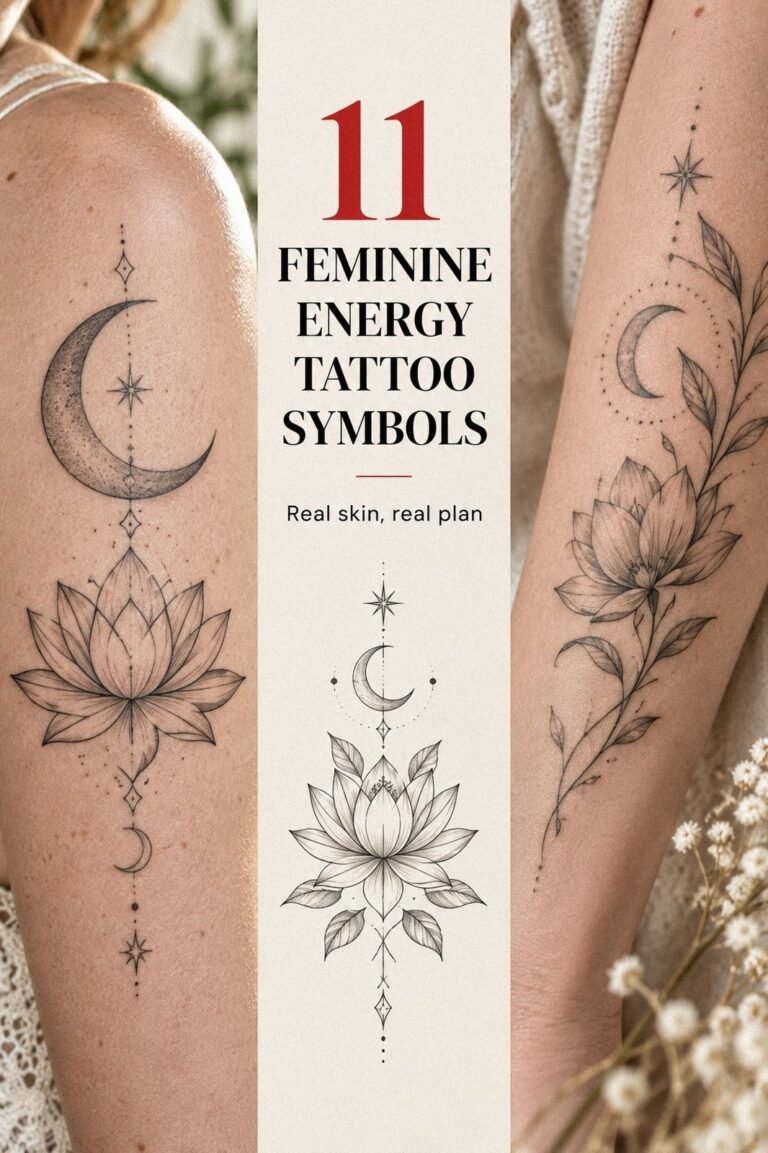
- Lotus: Purity and clarity emerging from murky conditions. The flower grows in muddy water and surfaces clean. Common across Buddhist and Hindu traditions as a symbol of spiritual development.
- Wolf: Loyalty, family bonds, and the ability to work alone when necessary. The lone wolf and the pack wolf carry different meanings. Which one you choose matters.
- Tree of life: Growth, interconnectedness, and ancestral roots. Appears across Norse, Celtic, and various indigenous traditions in different forms. The general concept translates widely.
- Feather: Freedom and lightness. In several Native American traditions, specific feathers from specific birds carry specific meanings related to spiritual communication. Generic feather tattoos usually do not reference those traditions directly.
- Hourglass: The preciousness of time and awareness of mortality. Paired with flowers, skulls, or clocks to specify the emotional register.
- Mandala: Balance and meditative focus. The word means circle in Sanskrit; the form appears in Hindu and Buddhist ritual contexts as a tool for concentration.
Artistic Styles and What They Add
The style changes the emotional read of a symbol as much as the symbol itself does. A wolf in blackwork realism hits differently than the same wolf in watercolor. Matching style to meaning matters.
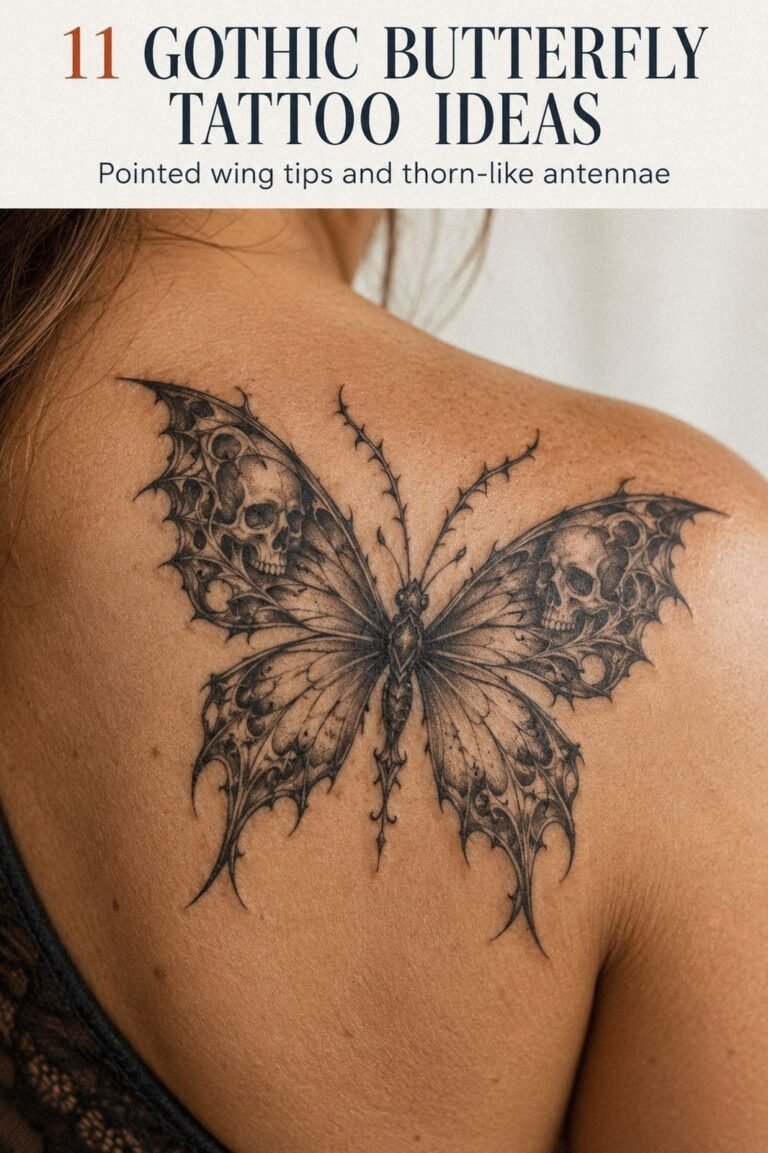
- Blackwork and linework: Clarity and permanence. The symbol dominates without decoration. Works well for concepts that are already emotionally heavy, where you do not want visual noise competing with the meaning.
- Watercolor: Fluidity and emotional openness. The color bleeds beyond the outline, suggesting the experience does not have clean borders. Worth knowing that some watercolor pigments fade faster than black.
- Neo-traditional: Bold symbolic imagery with dimensional shading and strong color. Visual impact from across a room. Good for symbols you want to announce rather than keep quiet.
- Minimalist single-needle: Intimacy and restraint. The symbol is reduced to its essential line, small and precise. Works well for something you want to see yourself more than show others.
- Geometric: Mathematical precision applied to organic symbols. A geometric wolf or lotus suggests order and intention rather than raw emotion.
- Realism: The symbol grounded in the physical world. A photorealistic phoenix reads differently than an abstracted one. More literal, more immediate.
Placement and What It Means
Where a tattoo lives on your body adds another layer of meaning that most people underestimate. Placement is not just practical.
- Forearm and wrist: You see it every day. It functions as a daily reminder. It is also immediately visible to others, which invites conversation you may or may not want.
- Behind the ear and neck: More selective. Visible when you choose to reveal it. The tattoo is more talisman than declaration.
- Over the heart or ribcage: Emotional core connection. These placements say the meaning is protected, held close, private.
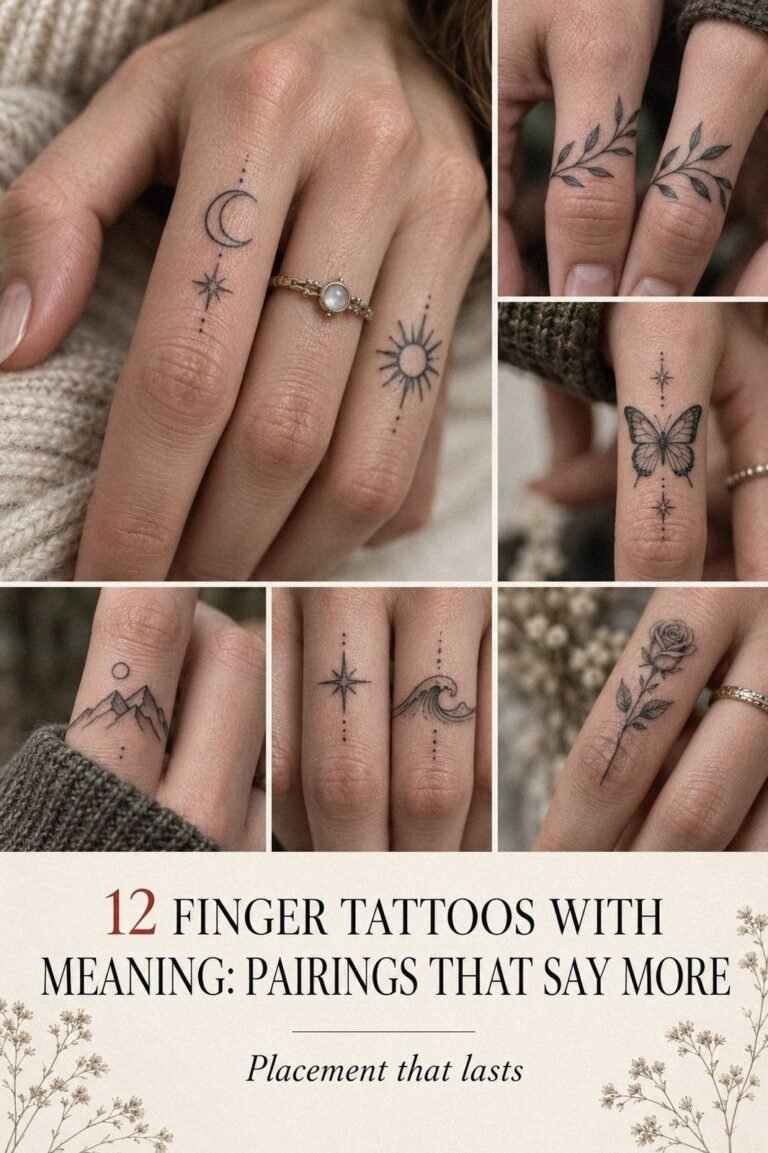
- Hand and fingers: Unavoidable visibility. You are committing to carrying this publicly, all the time. Symbols in this position need to be things you want to explain to strangers on a regular basis.
- Thigh and hip: Personal and grounded. Revealed by choice. These placements suggest the symbol is for you more than anyone else.
- Back and shoulders: Carrying something. The metaphor is built into the placement. Good for symbols related to burdens, support, or things that happened behind you.
Making the Symbol Yours
The most common mistake people make with symbolic tattoos is choosing the symbol before understanding what they need it to say. Start with the experience or the quality you want to mark. Then find the image that matches, not the other way around.
Two people wearing the same symbol carry different weight in it. That is fine. But the specificity of your connection to the image is what makes the tattoo work over time. Twenty years from now, you want to be able to explain exactly why you chose this particular anchor or this particular version of the lotus. If you cannot explain that now, it is worth sitting with it longer.
Work with an artist who asks questions. The best symbolic tattoo consultations I have been part of are the ones where the artist wants to know the story before they sketch anything. That conversation shapes the design in ways that a reference photo alone cannot.
Final Thoughts
Symbols work because they compress meaning into a form that travels. That compression is also the risk. A symbol that means something specific to you can mean something completely different to someone looking at it. Sometimes that gap is the point. Sometimes it is a problem worth thinking through before the needle touches skin.
The permanence is real. So is the meaning. Choose symbols that can carry both for as long as you need them to.
Frequently Asked Questions
How do I pick a symbol that won’t feel generic?
Start with your specific experience rather than a symbol category. If you are trying to mark a period of rebuilding, research how different cultures have represented that idea and find the version that fits your actual background and the aesthetic of the artist you want to work with. The specificity of that process usually produces something less generic than going straight to “phoenix.”
Should I get a symbol from a culture that is not mine?
It depends on the symbol. Some symbols are widely shared cultural heritage, open to anyone who engages with them respectfully. Others carry specific ritual or community significance that requires either cultural connection or explicit permission from within that community. Do the research for the specific symbol you are considering, not just general rules.
How important is the artist’s understanding of the symbol?
Very. An artist who has tattooed a symbol multiple times has usually had the conversations that teach them what different versions mean to different people. That knowledge shapes the design choices they suggest. Ask to see examples of the specific symbol in their portfolio.
What if the meaning of my tattoo changes over time?
It probably will. Most people report that their symbolic tattoos evolve in meaning over the years without losing validity. The anchor that marked a specific stabilizing relationship can later represent a broader practice of staying grounded. Symbols are containers. They can hold more than one thing at once.