
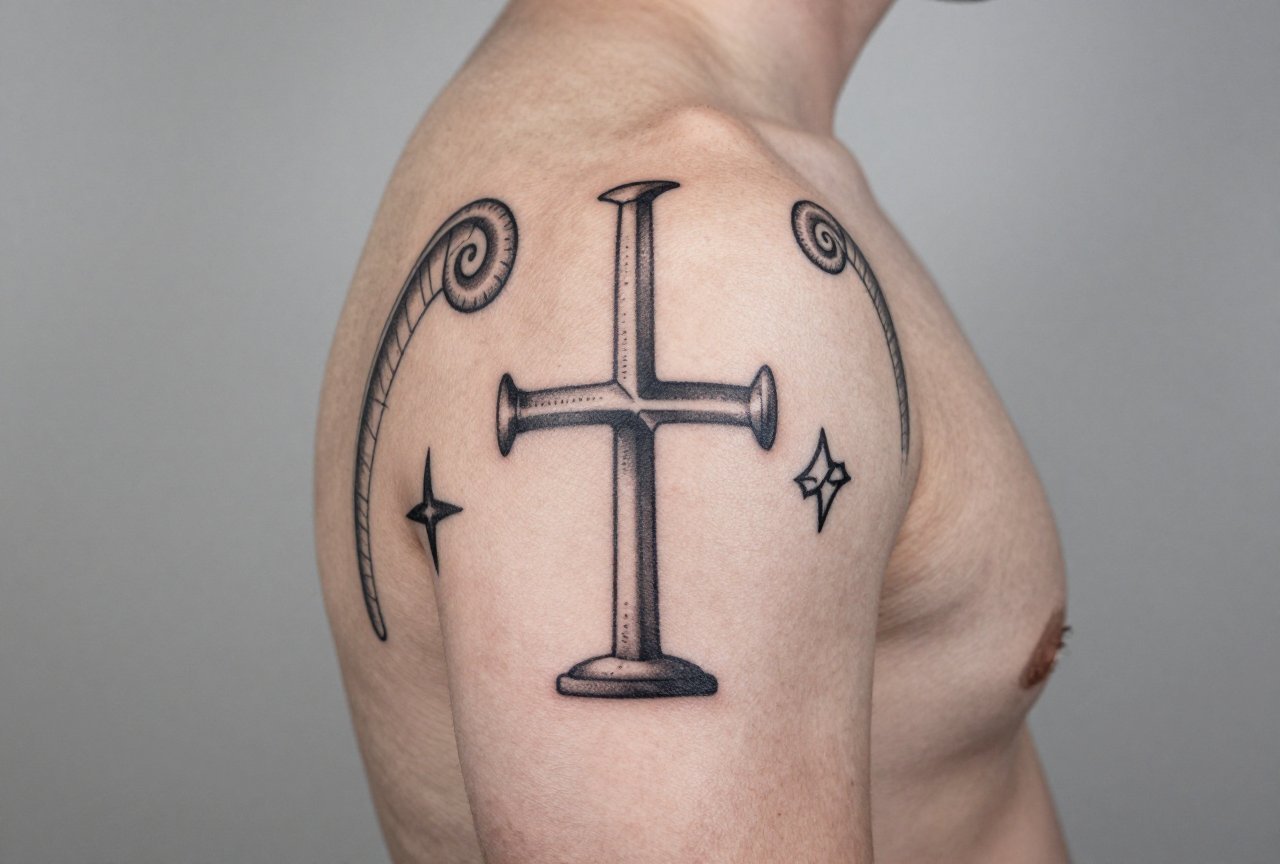
Tattoo symbols that mean strength are visual declarations of resilience, inner power, and the capacity to endure hardship. These designs serve as permanent reminders of personal battles won, obstacles overcome, and the unyielding spirit that carries people forward. Whether rooted in ancient mythology, cultural tradition, or personal experience, strength tattoos transform abstract courage into tangible art worn on the skin.
Symbolism & History
Strength symbols have adorned human bodies for millennia across virtually every civilization. The lion has dominated as a strength emblem since ancient Mesopotamia and Egypt, where rulers associated themselves with the beast’s commanding presence and protective instincts. In Norse tradition, the Valknut and bear symbols channeled warrior ferocity, while Japanese culture developed the koi fish as an emblem of perseverance against adversity, drawn from the legend of koi swimming upstream to become dragons.
Celtic warriors wore the Ailm symbol, a cross-like figure representing strength, endurance, and resilience derived from the pine tree’s ability to thrive in harsh conditions. The phoenix rising from ashes emerged from Greek and Egyptian mythology as perhaps the most dramatic strength metaphor, death and rebirth cyclically intertwined. These historical layers give modern strength tattoos remarkable depth, connecting wearers to ancestral narratives of human endurance.
- Lion: Royal authority, protective courage, heart of a fighter
- Koi fish: Perseverance through adversity, transformation through struggle
- Phoenix: Rebirth after destruction, rising stronger from failure
- Ailm/Celtic knots: Endurance, resilience, connection to natural persistence
- Thor’s hammer (Mjolnir): Protection, sacred power, unbreakable will
- Dragon: Mastery over chaos, potent life force, Eastern wisdom combined with Western ferocity
Common Variations & Styles
Strength tattoos adapt remarkably across artistic approaches, each style amplifying different facets of the meaning. Traditional American tattooing renders lions and eagles with bold outlines and saturated colors, emphasizing heroic, almost propaganda-poster confidence. Blackwork and tribal interpretations strip these symbols to essential geometric forms, suggesting strength as something primal and universal rather than culturally specific.
Realistic portraiture of animals captures individual character, the specific snarl of a lion or the weathered texture of ancient stone runes. Fine-line and minimalist approaches reduce strength symbols to single continuous lines or delicate botanical forms, redefining power as quiet persistence rather than dramatic display. Watercolor techniques allow phoenixes to literally dissolve and reconstitute in pigment, visualizing transformation directly. Lettering integrations pair symbols with words like “fortitude,” “unbroken,” or personal mantras in scripts ranging from gothic blackletter to handwritten intimacy.
- Traditional bold style: Heroic, timeless, immediately readable
- Blackwork/dotwork: Meditative, elemental, connects to ritual scarification traditions
- Realistic: Emotional immediacy, specific narrative moment captured
- Minimalist: Strength as understatement, confidence without performance
- Biomechanical: Strength merged with machinery, overcoming physical limitation
- Sacred geometry: Universal patterns suggesting strength as cosmic principle
Best Placements
Strength symbol placement significantly affects how the tattoo functions in daily life. The chest positions strength over the heart, making it viscerally personal and visible in moments of vulnerability like swimming or intimate connection. The upper arm and shoulder, historically associated with armor and shield-bearing, frame strength as active and outward-facing. These areas accommodate substantial detail and flow naturally with muscular structure.
Forearms place strength symbols in the wearer’s own sightline, creating a constant reminder during difficult tasks or decisions. The back offers expansive canvas for complex narratives like phoenix rebirth or koi swimming upstream. Ribs and sternum locations intensify the meaning through the tattooing process itself, the physical endurance required becoming part of the symbol’s story. Smaller symbols behind ears, on wrists, or along fingers function as private talismans, strength held close rather than displayed.
- Chest: Heart-centered courage, vulnerability as strength
- Upper arm/shoulder: Active power, protective capability
- Forearm: Visible self-reminder, strength in daily action
- Back: Large narrative scope, private contemplation
- Ribs/sternum: Physical endurance ritualized, core strength
- Ankle/calf: Grounded stability, carrying weight forward
Who Chooses This Tattoo / Personal Meanings
Strength tattoos attract remarkably diverse wearers united by transformational experience. Survivors of illness, abuse, addiction, or loss frequently choose these symbols to mark passage through darkness and emergence changed but unbroken. The meaning often evolves, a tattoo acquired during crisis becoming in retrospect a map of who that person has become. Athletes and physical performers select strength symbols to honor bodily capability and discipline, while activists and community workers may wear them as emblems of sustained commitment to difficult causes.
Parents sometimes choose strength symbols representing protective ferocity, the lioness defending cubs. Military personnel and first responders connect to historical warrior traditions, though increasingly these are reinterpreted through trauma-informed lenses emphasizing survival rather than aggression. The most compelling strength tattoos often subvert expectations, delicate flowers rendered in iron, or broken chains reforged into ornamental patterns, suggesting that true strength incorporates rather than denies vulnerability.
- Survivors of trauma or illness: Marking survival, honoring transformation
- People in recovery: Daily commitment, rewriting personal narrative
- Caregivers: Sustained endurance, love as labor
- Career transitioners: Courage to begin again, identity reconstruction
- Young adults: Claiming autonomy, stepping into self-defined power
- Older adults: Accumulated wisdom, strength redefined beyond physicality
Similar Symbols
Strength tattoos frequently overlap with related symbolic territories, and understanding these distinctions helps refine personal choice. Courage symbols emphasize the moment of decisive action, the leap taken despite fear, where strength emphasizes sustained capacity over time. Protection tattoos create boundaries against external threat, while strength tattoos often address internal resources. Warrior symbols carry specific martial or combative connotations that strength can transcend.
Resilience tattoos specifically emphasize recovery and return to form after pressure, overlapping closely with strength but more explicitly referencing past damage. Empowerment symbols frequently carry political or social dimensions, collective strength rather than individual. Anchor tattoos suggest stability and steadfastness, a related but distinct virtue. Many wearers deliberately combine symbols, lions with lotus flowers merging ferocity with spiritual growth, or phoenixes with unalome paths tracing the messy reality of rising again.
- Courage: The decisive moment versus sustained capacity
- Protection: External boundary versus internal resource
- Resilience: Explicit recovery narrative, damage acknowledged
- Warrior: Martial tradition, specific combat or service context
- Empowerment: Collective or social dimensions of power
- Anchor/stability: Steadfastness without necessarily implying struggle overcome
Final Thoughts
Tattoo symbols that mean strength ultimately succeed when they resist becoming generic badges of toughness. The most powerful examples acknowledge that strength manifests uniquely, through quiet persistence as much as dramatic triumph, through integration of wounds rather than denial of them. Working closely with a tattoo artist to adapt historical symbols to personal narrative transforms stock imagery into genuine autobiography. The permanence of these tattoos becomes part of their meaning, a commitment to remembering who you have been and who you are still becoming, carrying your particular strength forward into unknown days.









