
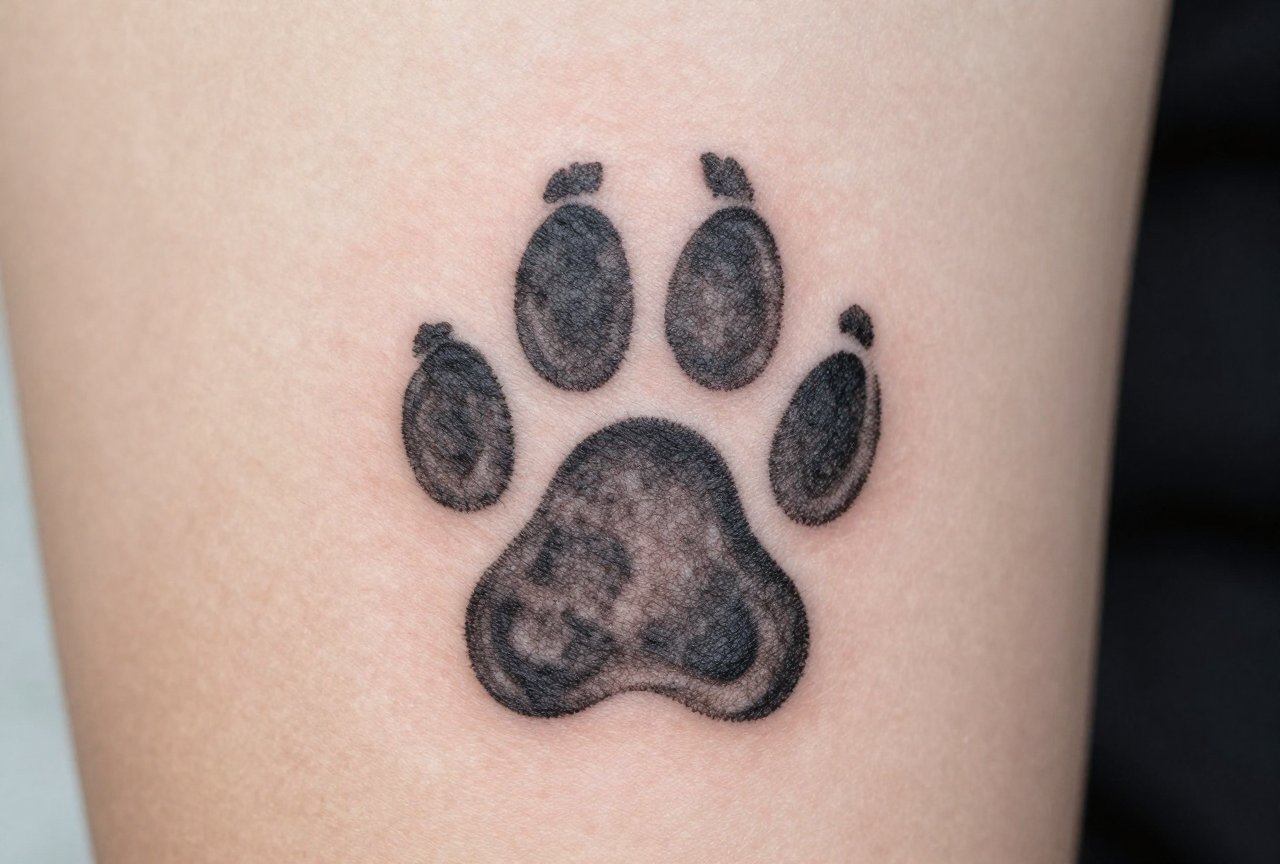
Paw Print Tattoo Meaning: Symbolism, Styles & Personal Significance
Few tattoo motifs carry the immediate emotional weight of a paw print. Small enough to hide, bold enough to declare, this design occupies a rare space between simplicity and depth. Whether etched in memory of a companion, claimed as a spirit symbol, or chosen for its stark graphic power, the paw print rewards those who think carefully about placement, style, and what they actually want to carry forward.
What Paw Prints Actually Symbolize
Meaning in tattooing is never fixed. A paw print gathers its significance from context, style, and the life behind the choice. Still, certain associations recur with enough frequency to map out.
Animal Companions and Grief
The most common reading centers on pets, living or departed. A single print often represents one specific animal, the name sometimes incorporated nearby. Multiple prints trace a timeline of companions across years. Some choose the exact size of their pet’s actual paw, taken from a clay impression or measured tracing. This precision matters; generic clip-art paws feel hollow beside something dimensionally true.
Grief tattoos carry particular pressure. The paw print offers a contained, recognizable form for loss that society often dismisses. It says: this absence has shape. This matters. The permanence of ink mirrors the permanence of attachment, even after death.
Wild Identity and Spiritual Connection
Beyond domestic animals, specific paw prints signal affinity with wild creatures. Bear prints suggest strength and solitude. Wolf prints invoke pack loyalty and instinct. Lynx or bobcat prints, rarer, mark independence and elusiveness. These choices often link to heritage, personal transformation, or repeated encounters with a particular species.
Native American and Indigenous traditions across North America have long associated specific animals with clan identity, medicine, and guidance. Paw prints in this context function as lineage markers rather than mere aesthetic preference. Appropriation concerns arise when outsiders borrow symbols without understanding their ceremonial weight. Research and respect matter here.
Style Decisions That Change Everything
A paw print is not a paw print is not a paw print. Execution transforms meaning as surely as subject does.
Minimalist and Single-Line Approaches
Thin black outlines, negative space, or single-needle work produce quiet, enduring designs. These suit placement on fingers, behind ears, along the collarbone, or anywhere the body moves subtly. The restraint reads as confidence, not lack of imagination. Aging tends to favor simplicity; heavy detail in small spaces blurs faster than many anticipate.
- Single continuous line: meditative, contemporary, often associated with unbroken connection
- Stippled or dotwork: texture without weight, soft edges that age gracefully
- Outline only: classic, versatile, easy to build upon later
Realistic and Memorial Styles
Some artists specialize in hyper-detailed paw pads, fur texture around the edges, or three-dimensional effects that seem to press into skin. These demand larger scale and skilled hands. Watercolor backgrounds, popular since the mid-2010s, can frame a realistic print with splashes of color meaningful to the animal or owner. The risk is trendiness; watercolor without structural linework fades unpredictably.
Photorealistic ink-jet style prints, taken from actual paw pad photographs, represent a distinct memorial category. These require exceptional technical execution and heal with some loss of fine detail. Consult portfolios extensively before committing.
Geometric and Abstract Variations
Breaking the paw into triangles, incorporating sacred geometry, or dissolving the edges into mandala patterns creates something between symbol and pure form. These appeal to those who want the reference without literal representation. The paw becomes pattern, memory becomes mathematics. Placement on larger canvas areas, back, thigh, or upper arm, allows the geometry room to breathe.
Placement and Scale Considerations
Where you put it shapes how you live with it.
Visible and Social Placements
Wrist, forearm, ankle, and collarbone placements invite conversation. They function as identity markers, signals to fellow animal people, quiet flags of allegiance. Consider whether you want to explain this tattoo repeatedly, or whether its meaning feels private enough to protect.
Hand and finger placements have grown more common with improved tattooing techniques, though they fade faster and carry professional implications in conservative fields. The paw print’s small scale suits these areas, but the commitment is outsized relative to the space.
Concealed and Intimate Locations
Ribcage, hip, upper thigh, behind the ear, or along the spine keep meaning close. These placements often accompany deeper grief, more personal spirituality, or simply preference for privacy. The ribcage in particular moves with breath, creating a living quality that suits memorial work.
Scale should match location and intention. A tiny paw behind the ear reads as whispered secret. A full forearm composition of multiple prints, perhaps with names and dates, becomes public monument. Neither is better. Both demand honest assessment of what you need this tattoo to do.
Color, Composition, and Combination Elements
Black and grey dominates paw print work for good reason. It ages cleanly, maintains legibility at small sizes, and carries somber weight appropriate to memorial contexts. Color introduces complexity worth examining.
Red pads against black fur, green forest backgrounds, blue sky gradients, or rainbow watercolor all exist. Each choice carries associations. Red suggests vitality, sometimes blood, sometimes love. Green grounds the animal in habitat. Rainbow colors often signal LGBTQ+ identity combined with animal advocacy, or simply joy in contrast to grief.
Common combination elements include:
- Names and dates: straightforward memorial anchoring
- Heart shapes integrated with or replacing pads: direct emotional statement
- Infinity symbols: continuity, often overused to the point of cliché
- Floral elements: life-death cycles, specific flower meanings (lilies for restored innocence, rosemary for remembrance)
- Constellations or celestial bodies: spiritual continuation, cosmic scale
Each addition should earn its place. Overloading a small symbol dilutes rather than deepens.
Before You Commit: Practical Considerations
Tattooing is permanent modification of your body. The paw print’s apparent simplicity can mask this reality.
Artist Selection and Technical Quality
Not every artist who can execute large-scale realism handles small work with equal care. Paw prints require precise pad spacing, correct proportion, and clean edges that will hold. Ask specifically about healed photos of similar work, not just fresh portfolio shots. Lines spread; pads that touch when fresh may merge into blobs within years.
Style alignment matters more than proximity or price. An artist specializing in bold traditional work may not be your choice for delicate single-line memorials. Travel for the right hand if local options fall short.
Personal Readiness
Memorial tattoos made in acute grief sometimes resolve differently as mourning shifts. This is not argument against them, only invitation to pause. The paw print you need at three months may differ from what serves at three years. Some mark anniversaries specifically to allow this settling. Others need immediate physical marking of loss. Both approaches are valid; neither should be automatic.
Consider also whether the tattoo serves your relationship with the animal, or with others’ perception of that relationship. The best memorial work remains legible to you when explanation feels impossible.
Final Thoughts
The paw print endures in tattoo culture because it compresses vast feeling into essential form. Its power lies not in complexity but in recognition, the instant human response to marks of animal presence. Whether you choose literal representation or abstracted reference, visible declaration or hidden keepsake, the quality of your tattoo will reflect the quality of your consideration.
Take time with style research. Sit with placement possibilities. Find an artist whose healed work moves you. The paw print you carry should feel as specific as the bond it honors, as considered as any larger, more elaborate piece. Small tattoos deserve the same gravity as sleeves. Your skin, and whatever memory or identity you inscribe there, warrants nothing less.
Frequently Asked Questions
What does a single paw print tattoo usually mean?
Most often, a single paw print represents one specific animal companion, either living or deceased. The simplicity can indicate a direct, uncluttered bond, and some people choose the exact dimensions of their pet’s actual paw for added personal significance.
Do paw print tattoos have to be black, or can they use color?
Color works well, though black and grey remains most common for longevity and memorial gravity. Red, green, blue, and watercolor backgrounds all appear regularly, but each addition should serve a specific purpose rather than defaulting to trend.
Where do paw print tattoos typically fade fastest?
Hands, fingers, and feet experience the most friction and sun exposure, causing faster fading. Areas with thinner skin or frequent movement, like the ankle or collarbone, also require more attentive aftercare and potential future touch-ups.
How do I avoid a generic or clip-art look for my paw print tattoo?
Commission custom artwork based on your actual pet’s paw impression or photograph, research artists who specialize in your preferred style, and avoid overused combination elements like infinity symbols unless they carry genuine personal relevance.









