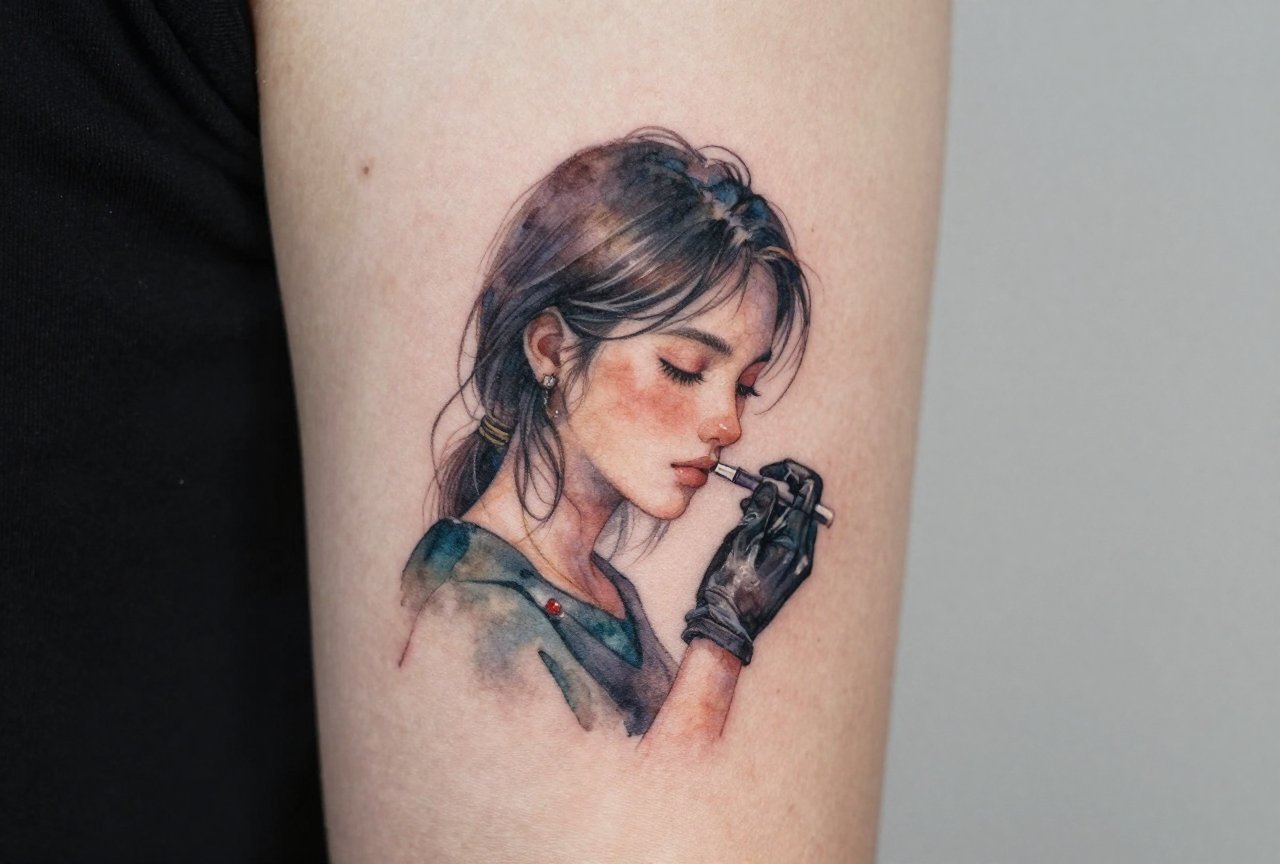
Watercolor tattoos look like someone spilled pigment on your skin and it somehow stayed perfect, splashes bleeding into soft gradients, no black outlines holding anything in. I’ve watched this style explode since maybe 2012, when clients started walking in with screenshots from Instagram instead of flash off the wall. The technique borrows from actual watercolor painting: wet-on-wet blending, negative space, color pooling at edges. But skin isn’t paper. What looks breathtaking fresh can turn muddy if the artist doesn’t understand how pigment settles in dermis versus how it sits on canvas. I’ve done watercolor pieces that still pop after eight years, and I’ve covered up ones that went to bad artists who treated it like a coloring book page.
Origins & History
The style didn’t come from traditional tattooing. It crawled in from fine art galleries and illustration studios. Amanda Wachob gets credit for pushing it mainstream around 2010, she’d been doing painterly abstract pieces in Brooklyn that made old-school guys nervous. They’d look at her work and mutter about “how it’ll hold up,” which is fair. Traditional tattooing built its rules on what lasts: bold lines, limited color palette, high contrast. Watercolor broke almost every rule.
From Rebel Niche to Shop Staple
By 2015, every shop had someone trying it. Some learned color theory first. Others just bought cheap inks and went for it. I remember a guy in my town who’d been doing solid American traditional for fifteen years, suddenly he’s posting these washed-out flower blobs that all turned grey-green in six months. The style got a bad reputation because too many artists jumped in without understanding the medium. Now it’s settled. The ones still doing it well are specialists, not tourists.
Key Characteristics & Motifs
Real watercolor tattoos share DNA that separates them from just “colorful tattoos.” Here’s what I look for:
- No hard outlines: Edges dissolve into skin tone or bleed into other colors. Sometimes there’s a whisper-thin grey line suggesting form, but never a black border.
- Visible brushstroke texture: The best artists mimic dry-brush effects, splatter, and pooling. I use a whip-shading technique with a loose hand, almost bouncing the needle, to get that streaky quality.
- Negative space as shape: The skin itself becomes part of the image. A butterfly might exist only where color isn’t, your body completes the form.
- Color bleeding and backruns: That bloom effect where wet pigment pushes into damp color? We fake it with dilution and specific needle groupings. I use a 3-round liner at low voltage, almost dripping ink.
Popular subjects shift but stay organic: florals, animals dissolving into abstraction, celestial bodies, feathers that become color clouds. Geometric watercolor hybrids emerged around 2018, hard black lines framing chaotic color bursts. I do those on forearms a lot. The contrast gives the watercolor something to fight against, which actually helps longevity.
Color vs Black and Grey
This is where I get honest with clients in my chair. Color watercolor fades. Not might, will. Reds and yellows go first. Blues and purples hang longer but muddy. I’ve got a peacock back-piece on a client from 2016 that’s still readable because we used concentrated teal and violet in the dense areas, let the yellow-green wash fade intentionally to background haze.
The Black and Grey Alternative
Black and grey watercolor exists, and it’s more forgiving. I use greywash dilutions to create that same bleeding, atmospheric quality without the color commitment. Healing tends cleaner too, less scabbing, less pigment loss. The trade-off is impact. A grey wash splatter doesn’t grab eyeballs across a room like magenta bleeding into tangerine. I tell clients: if you want watercolor and you’re nervous about aging, go black and grey with one accent color. Anchors the piece, gives it a focal point that won’t disappear.
Best Placements
Skin quality matters enormously for watercolor. I won’t do large color watercolor on lower legs below the knee, too much friction from pants, too much sun exposure, and the skin there is thinner, heals patchy. Same with hands and feet for anything detailed. The color falls out, the soft edges become blurry nothing.
Where it thrives:
- Upper outer arm/shoulder: Protected from sun, stable skin, enough flat real estate for the composition to breathe. I’ve done full watercolor sleeves starting here, working down.
- Ribcage: Painful, but the skin holds color well and the curvature lets color pools look natural, like they’re settling into gravity.
- Thigh: My favorite large-scale placement. Room for big splashes, easy to show or hide, heals consistently if the client isn’t rubbing thighs together constantly.
- Upper back: Between shoulder blades, especially for pieces that need horizontal flow. I’ve done herons becoming color mist there that still look like gallery pieces.
Small watercolor, wrists, ankles, behind ears, can work but needs to be simpler. Less detail, more impact through color shock. I did a tiny behind-ear piece last month: just three dots of saturated color bleeding into each other. Minimal needle time, minimal trauma, maximum effect.
Who It Suits
Not everyone. I say this directly when someone sits down. Watercolor tattoos read feminine in the public eye, though that’s nonsense, I’ve done them on construction workers, Marines, grandfathers. The real question is personality and maintenance commitment. You can’t get this style and bake in tanning beds. You can’t ignore sunscreen and expect those soft pinks to survive. The people who love watercolor long-term are the ones who treat their skin like it carries art, not like it’s indestructible.
It also suits people who want tattoos that feel contemporary, art-collector rather than tribe-member. Traditional collectors often build cohesive bodies of work. Watercolor clients tend to want one or two statement pieces. That’s fine. I just want them knowing the difference before the needle starts.
Modern Variations
The style keeps mutating. Here’s what I’m seeing and doing in 2024:
- Watercolor realism: A portrait or animal rendered in full detail, but the background or edges dissolve into pure color abstraction. Technical nightmare, gorgeous when it works. I spend more time planning than tattooing.
- Trash polka watercolor: German influence, black graphic elements, typography, mechanical fragments colliding with organic color splashes. High contrast, very current.
- Minimalist watercolor: Single thin lines suggesting a form, with one burst of color. Delicate, fast to tattoo, but requires perfect execution. No room to hide mistakes.
- Cover-up watercolor: Using dense dark color areas to swallow old tattoos, then bleeding out into lighter washes. I’ve salvaged some bad decisions this way, but it needs enough blank skin around the old piece to work.
Choosing an Artist
This matters more for watercolor than almost any style. A mediocre traditional tattoo still reads as a tattoo. A mediocre watercolor becomes a bruise-shaped regret.
What to Look For
Check their healed work, not just fresh photos. I show clients pieces at one week, one year, five years. If an artist only has studio lighting, fresh-skin shots, be suspicious. Ask about their color theory background, do they understand complementary colors, temperature, how to make something recede versus advance? I came from painting before tattooing, and that foundation saves me weekly.
Look at their line work too. Paradoxically, the best watercolor artists often have clean, precise traditional skills they choose not to use. That control means their “loose” work is intentional, not accidental.
Red Flags
- Every piece looks the same palette, copying instead of creating.
- No healed photos at all.
- Pricing way below market. Watercolor takes time, layering, planning. Rush jobs bleed together literally and figuratively.
- They say “I can do anything” when you show reference. Specialization shows respect for the craft.
I turn down watercolor requests sometimes. Wrong placement, unrealistic expectations, or just a design that wants black lines to survive. Better a disappointed client now than a cover-up in three years.
Final Thoughts
Watercolor tattoos sit at this tension between ephemeral beauty and permanent commitment. I love them for that. Every time I mix a wash on my ink cap, every time I watch color settle into skin and bloom outward, I’m reminded why I left painting for this. The body moves. It ages. The tattoo changes with it, and watercolor embraces that flux more honestly than styles pretending to stay frozen. Find the right artist, care for it like art deserves, and you’ll carry something that doesn’t just decorate but actually breathes.
Frequently Asked Questions
Do watercolor tattoos fade faster than traditional ones?
They can, especially the lighter washes and yellows. I always tell clients to expect some softening, which is part of the style’s character. The dense color areas hold better, and proper sun protection makes a massive difference over years.
Can you add watercolor effects to an existing black tattoo?
Sometimes, depending on the existing work’s density and placement. I need blank skin around or between the black to create those flowing washes. Heavy black fill limits options, but strategic color bursts around old pieces can work beautifully.
Why do some watercolor tattoos look muddy after healing?
Usually the artist overworked the skin, put too many similar colors too close together, or didn’t understand how pigments interact. Wet-on-wet in skin isn’t like paper, colors can muddy fast if you don’t plan the sequence and saturation levels.
How much should I expect to pay for a quality watercolor piece?
Experienced watercolor artists typically charge similarly to other specialists, often $150-300 hourly or flat rates for smaller work. Large pieces run into thousands. The planning time alone justifies it; I spend hours on composition before touching skin.
Related Style Guides
- Small Arm Tattoos for Ladies: Real Shop Advice
- Small Trad Tattoo Ideas
- Men s Traditional Tattoos: A Working Artist s Guide
- Explore more