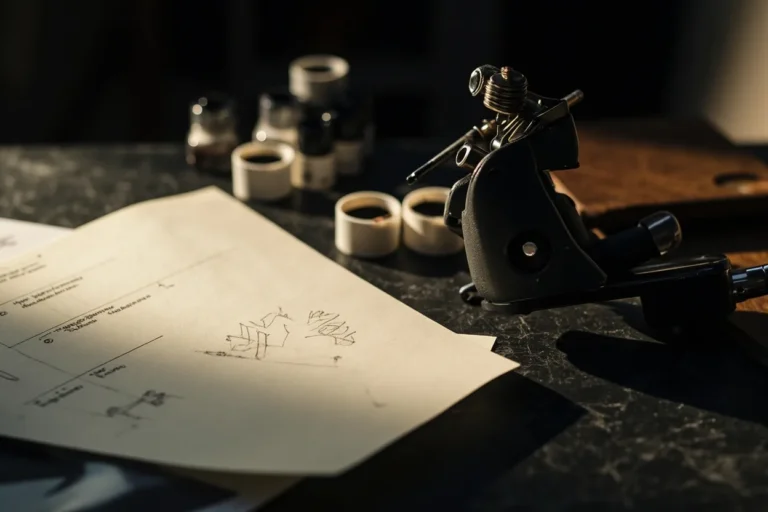
A decent tattoo usually costs between $150 and $400 per hour in most US shops, with minimums around $50-$100 even for tiny pieces. I’ve tattooed in shops from Portland to Austin, and the question I hear first, before pain, before healing, before style, is always “how much?” The honest answer: it depends on what you want, where you want it, and who’s doing it. A walk-in flash rose on your forearm might run you $80. A full custom sleeve from an artist with a three-month waitlist? That could hit $5,000 or more. Let’s break down what actually drives the numbers so you can walk in prepared and avoid sticker shock, or worse, the red flag of a shop that seems too cheap.
How Artists Actually Price Their Work
Hourly Rates vs. Flat Rates
Most experienced artists charge by the hour. I’ve seen rates from $80 in smaller Midwest cities to $400+ in Brooklyn or LA. The artist sets their rate based on speed, demand, and skill, not ego, usually. A faster artist isn’t necessarily cheaper; they often charge more because they can pack more detail into less time. Some artists quote flat rates for pieces they can estimate clearly: a palm-sized blackwork design, a standard name banner, a simple flash sheet piece. I tell clients that flat rates protect both of us. You know what you’re paying, and I know I won’t lose money if you need three breaks.
Minimums and Why They Exist
Every shop has a minimum, typically $50 to $100. That tiny infinity symbol on your wrist? It takes 20 minutes, but you’re still paying the minimum. Here’s why: setup time, sterilization, new needles, ink caps, stencil paper, and the artist’s prep don’t shrink for small jobs. I’ve had people argue that a dot should cost less. I get it. But in my chair, that dot gets the same new grip, the same machine breakdown, the same cleaning protocol as a three-hour piece. The minimum covers the floor cost of you being there.
- Small shops or newer artists: $50-$80 minimum
- Established city shops: $80-$150 minimum
- High-demand or specialty artists: $150-$300 minimum
What Size and Placement Actually Cost
Small Tattoos: The Hidden Complexity
Palm-sized or smaller pieces seem like they’d be cheap. Sometimes they are. But fine lines on fingers? That’s detail work that takes steady hands and specific needle groupings. I’ve done tiny finger tattoos that cost $120 because the placement is finicky, the skin sheds ink fast, and touch-ups are almost guaranteed. Behind the ear, the ribs, the inner lip, these spots command more not because of size, but because they’re hard to tattoo well and hard to heal.
Large-Scale Work: Sleeves, Back Pieces, and Sessions
A full sleeve typically runs 15-25 hours. At $150/hour, that’s $2,250-$3,750. A full back piece? 30-50 hours easy. Some artists offer day rates for big projects, $800-$1,500 for a full day, which can save you money if you can sit. I’ve had clients tap out after four hours. We see this a lot. The body stops cooperating. Budget for more sessions than you think, especially if it’s your first big piece. Skin swells, endorphins crash, and what felt doable in hour one feels like surgery in hour five.
- Single session (2-4 hours): $300-$800
- Half sleeve (8-12 hours): $1,200-$2,400
- Full sleeve (15-25 hours): $2,250-$5,000+
- Full back or chest: $4,000-$10,000+
Style and Detail: Why Some Tattoos Cost More
Blackwork tribal fills fast. Solid, bold lines. The machine hums, the ink goes in, and we’re done. But photorealistic portraits? Color gradients? Watercolor-style pieces with no black outline? These eat time. I’ve spent six hours on a palm-sized color piece that a blackwork design of the same size would have taken two. The needle changes, the technique shifts, the skin gets worked harder. Japanese traditional with full backgrounds? That’s multiple sessions, specific imagery rules, and dense saturation. The style you choose directly hits your wallet.
Line weight matters too. Fine line tattoos are trendy right now, but they require single needles or tight groupings, slower hand speed, and perfect stretch. They also fade faster and need more frequent touch-ups. I warn clients about this, not to upsell, but because I’ve seen too many people return confused that their $200 delicate wrist piece looks washed out in two years. Bold holds. Fine fades. That’s just skin biology.
Location, Location, Location: Geography Matters
Coastal Cities vs. Smaller Markets
Manhattan and San Francisco artists charge what they charge because rent is brutal and demand is endless. I know artists in Ohio doing beautiful work at $100/hour who’d be $250 in Seattle. That doesn’t make the Midwest artist worse. It makes them geographically different. Travel for conventions, and you’ll see price fluctuations even from the same artist. Shop overhead, rent, utilities, insurance, front desk staff, gets baked into what you pay.
Shop Culture and What You’re Paying For
Walk into a shop with polished floors, curated flash walls, and a coffee bar vibe, and you’re paying for that atmosphere. Some clients want it. Others want the gritty spot where the artist has 30 years and no Instagram. Both can produce great tattoos. Both have different cost structures. I started in a shop with wood paneling and a barking shop dog. Rates were lower. Now I’m in a cleaner, brighter space. My rate went up. The work didn’t change; the context did.
The Extras: Tips, Touch-Ups, and Aftercare
Tipping is standard. Twenty percent is the baseline in US shops. I’ve had clients tip nothing and others tip fifty percent on big sessions. It matters. Artists remember. Good tippers sometimes get squeezed in for that urgent touch-up before a wedding. Beyond tips, budget for aftercare. Quality unscented lotion, maybe a dedicated aftercare balm if your artist recommends one. Don’t go cheap here. I’ve watched people ruin $500 tattoos with scented CVS lotion because they didn’t want to spend $12 on the right product.
Touch-ups are often free within a few months if you followed care instructions. But come back six years later expecting a freebie? That’s a new tattoo, essentially. Fading from sun, poor healing, or just time, that’s on you. Some artists include one touch-up in the original price. Ask upfront. It’s not awkward; it’s expected.
- Standard tip: 15-20% minimum
- Aftercare supplies: $10-$30
- Touch-up policy: ask during consultation
- Future maintenance: sunscreen, moisturizer, long-term care
Red Flags: When Cheap Costs More
$30 tattoos exist. I’ve seen the flyers. I’ve also seen the cover-ups. Bad linework, infection scarring, blown-out shading that looks like a bruise, fixing these costs triple what a decent original would have. In my chair, I’ve spent hours laser-fading someone’s “deal” so we could actually tattoo over it. The skin was damaged, the options limited. If an artist’s rate seems wildly low, ask yourself why. Apprentices work cheap or free under supervision, that’s legitimate. But a “professional” charging $40/hour? That’s not savings. That’s risk.
Shop minimums exist partly to filter out people who aren’t serious. They also keep the lights on. Respect the number. If you can’t afford the minimum now, wait. Good tattoos are permanent. Bad ones are permanent too, just not in the way you wanted.
Key Takeaways
Expect to pay $50-$100 minimum for any tattoo, $150-$400 per hour for custom work, and significantly more for large or complex pieces. Size, placement, style, artist experience, and geography all shift the number. Tipping is part of the cost. Aftercare is part of the cost. The cheapest option is rarely the smartest one. Walk into consultations with a clear idea, a flexible budget, and respect for the artist’s time. The best tattoos come from collaboration, not bargaining. Save up if you need to. Your skin has to wear this forever. Make it worth wearing.
Frequently Asked Questions
Do tattoo artists charge for consultations?
Most artists offer free consultations for straightforward projects. For large custom work, some charge a small deposit that gets applied to the tattoo. Always ask upfront so you’re not surprised.
Why did my friend pay less for the same size tattoo?
Different artists, different rates, different styles. A dense blackwork piece fills faster than a detailed color portrait. Placement matters too, some spots are quicker to tattoo than others.
Is it rude to ask about price before booking?
Not at all. Artists expect it. What helps is having a clear reference image, approximate size in inches, and placement in mind. Vague questions get vague answers.
Can I negotiate tattoo prices?
Generally no. Established artists set rates based on experience and demand. Some flexibility exists on large multi-session pieces, but haggling over a minimum is considered disrespectful in most shops.
Related Tattoo Guides
- Nose Piercing Cost at Tattoo Shops: A Real Shop Guide
- How Much Should a Tattoo Cost? A Real Shop Guide
- How to Create a Sleeve Tattoo Design: A Working Artist s Guide
- Explore more