
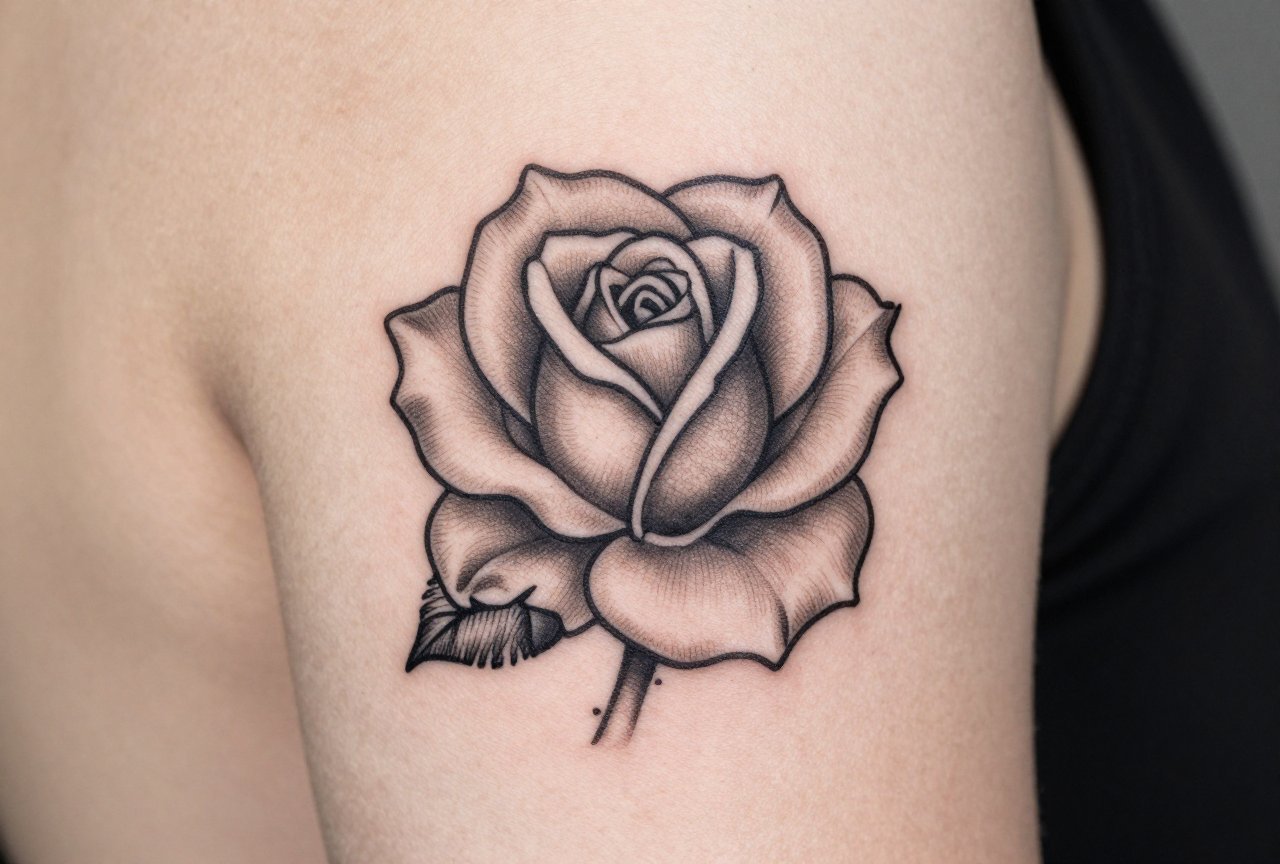
A money rose tattoo is exactly what it sounds like: a rose rendered in folded dollar bills, or a hybrid where petals become cash and stems stay botanical. it means prosperity, ambition, and the hustle required to grow something beautiful from nothing. But I’ve tattooed enough of these to know the meaning runs deeper than “I want to be rich”, it’s usually about transformation, survival, and pride in what someone’s built.
Symbolism & History
The money rose didn’t crawl out of some ancient tradition. It’s a modern American tattoo, born from hip-hop culture, street art, and the visual language of the grind. I’ve been doing these since the mid-2010s when they started blowing up in Atlanta and Houston shops. Back then, clients wanted them big and bold, full forearms, chest pieces. Now I see them everywhere, scaled down, refined, sometimes hidden.
Wealth as Growth, Not Greed
Here’s what I tell clients who worry about looking materialistic: the rose part matters. A rose grows from dirt. It takes time, thorns, patience. Folding that into currency says something different than a straight stack of bills. It says money is a tool, a harvest, something cultivated. I’ve had teachers, nurses, small business owners get this tattoo, not just rappers and dealers. One guy in my chair last year was a landscaper who’d finally paid off his mother’s house. He wanted the rose because, in his words, “it grew slow and it hurt.”
The Hustle Narrative
There’s also the street interpretation. In some communities, the money rose is shorthand for “I came up.” Not inherited, not handed, built. The folded bills reference the origami skill of making roses from singles, something people do in jail, in waiting rooms, in broke apartments to pass time and show craft. When that becomes permanent skin, it’s claiming that resourcefulness as identity. I’ve had clients get teary explaining this. It’s never just about the money.
Common Variations & Styles
Not all money roses look the same, and the style changes the meaning more than people expect.
- Realistic folded cash: Every crease, every serial number, shadowed like a photograph. This reads as serious, almost documentary. I’ve done these for people who want to memorialize a specific amount, exactly what they had when they turned their life around.
- Traditional/neo-traditional: Bold outlines, limited color palette, the rose shape more stylized. Faster to tattoo, heals cleaner, reads clearer from a distance. Good for hands and necks.
- Black and grey: Most common. Cash is already green, but without color, the focus stays on form and texture. I do a lot of these on darker skin tones where grey wash pops beautifully.
- Color realism: Full green bills, pink or red petals bleeding through, gold accents. Flashy. Clients who want this usually want it seen.
- With extras: Clocks, birthdates, names in the leaves, butterflies landing on the bloom. The add-ons personalize the hustle narrative, time invested, people protected, transformation complete.
Line weight matters more than people think. Thin lines on folded bills blur together in two years. I always push for bolder outlines on the money edges, softer shading inside. Otherwise, in five years, you’ve got a green blob with a stem.
Best Placements
Where you put it changes how it’s read.
Visible Power Placements
Hands, fingers, forearms, neck. These say the hustle is public, unashamed. I’ve tattooed money roses on the sides of hands where the stem runs down the finger. It looks incredible fresh. It also hurts like hell and fades fast, hands go through everything, sanitizer, sun, friction. I warn every client: you’ll be back for touch-ups. Some want that. The maintenance becomes part of the ritual.
Private or Semi-Hidden
Ribs, upper arm under a sleeve, thigh, calf. These are more personal. The tattoo exists for the wearer, not the viewer. I did one on a woman’s ribs, large, detailed, completely hidden by work clothes. She was a financial advisor who’d escaped poverty. She didn’t want her clients knowing her business. The placement was the whole point.
One placement I discourage: the face. Not for meaning reasons, but because money roses need detail to read, and faces don’t hold fine lines well long-term. Plus, the job market still exists, whether we like it or not.
Who Chooses This Tattoo / Personal Meanings
After fifteen years, I can tell you the “type” doesn’t exist. I’ve tattooed money roses on:
- A 19-year-old who’d saved his first ten thousand and wanted to mark it before he spent it
- A 60-year-old grandmother whose rose had eleven petals, one for each grandchild, with their initials in the bill numbers
- A guy who got out of federal prison and wanted the origami rose he’d learned to fold in his cell, permanent, so he’d never forget
- A couple who got matching small ones on their wrists when they finally paid off their debt together
The common thread isn’t wealth. It’s milestone. It’s “this period of my life mattered.” The money is the language, not the point. I always ask clients: what was growing while you were grinding? That’s the real tattoo.
Similar Symbols
Clients often pair money roses with related imagery, or come in debating between options.
- Plain money stacks: More aggressive, less poetic. Reads as pure acquisition. Some want that. Most don’t, once they see the rose alternative.
- Gold roses: Similar meaning but different tone, permanence, luxury, less hustle narrative. More “I arrived” than “I grew.”
- Hourglass with money: Time is money, mortality of wealth. Heavier, more philosophical. Less celebratory.
- Tree with dollar bill leaves: Related growth metaphor, but bulkier, harder to place well on smaller bodies.
I usually suggest the money rose over these if the client wants something that balances pride with vulnerability. The flower form softens the cash. It makes it human.
Final Thoughts
I’ve watched money rose tattoos shift from a niche hip-hop motif to something I do monthly in a middle-class suburban shop. That spread says something about American culture, maybe not flattering, maybe just honest. We think about money constantly. We judge people for displaying that, then judge them for hiding it. The money rose walks that line, it’s beautiful enough to be art, obvious enough to be declaration.
If you’re considering one, spend time on the why, not just the what. The best money roses I’ve done weren’t the most technically perfect. They were the ones where the client knew exactly what grew from their dirt. Bring that story to your artist. Let them fold it into the design. That’s when this tattoo stops being trendy and becomes yours.
Frequently Asked Questions
Does a money rose tattoo mean someone is materialistic?
Not usually. Most clients I talk to see it as celebrating growth, survival, or a specific milestone. The rose element matters, it transforms pure cash symbolism into something about cultivation and patience.
How well do money rose tattoos age over time?
They hold up fine if done with bold enough lines and proper aftercare. The fine crease details in folded bills will soften over years, which is why I always push for strong outlines and strategic shading rather than micro-detail.
Can a money rose tattoo be small, or does it need to be big?
They work at various sizes, but too small loses the bill detail. I generally won’t go smaller than palm-sized for a full money rose. For smaller placements, I suggest simplifying to a single folded bill with minimal rose elements.
Is it disrespectful to get a money rose if I haven’t struggled financially?
Tattoo meaning is personal, but I’d encourage honesty with yourself. If the symbol resonates with your actual story, ambition, growth, gratitude, it’s yours. If you’re borrowing a struggle narrative that isn’t yours, most artists will sense that disconnect in the consultation.
Related Tattoo Meanings
- MS-13 Tattoos and Meanings: A Shop-Level Guide
- Resilient Tattoo Meaning: Strength, Survival Bouncing Back
- Tren Aragua Tattoo Meaning: Symbols, Origins Shop Reality
- Explore more









