I’ve tattooed the Deathly Hallows symbol on more wrists than I can count, and I’ve done full portrait sleeves of Tarantino characters that took forty hours. Film tattoos are everywhere in my shop, and honestly? They’re some of my favorite pieces to work on because people come in with real passion, not just Pinterest panic. But here’s the thing: what looks incredible on a movie poster doesn’t always translate to skin. I’ve seen clients bring in screenshots of neon-soaked Blade Runner frames and had to gently explain that those colors will blur into mud in five years. This guide comes from actual chair time, what works, what doesn’t, and how to get a film tattoo you’ll still love when you’re rewatching that movie for the hundredth time.
Popular Styles That Actually Work
Not every tattoo style fits every movie. I’ve learned this the hard way after trying to force photorealistic portraits of cartoon characters and watching them look unsettling for the rest of eternity. Here’s what we actually do in shops when someone wants cinema on their skin.
Black and Grey Realism
This is what people ask for when they want Heath Ledger’s Joker staring back from their bicep. I’ve done De Niro’s Taxi Driver mohawk, I’ve done the Bride from Kill Bill in her yellow tracksuit rendered in greyscale. The key is contrast. Film stills have soft lighting; tattoos need punch. I always push clients toward high-contrast reference images, not moody silhouettes. A portrait I did of Anthony Hopkins as Hannibal Lecter worked because the lighting in that cell scene was already dramatic, already defined. Soft romantic lighting? That becomes a grey blob in five years.
Linework and Illustrative
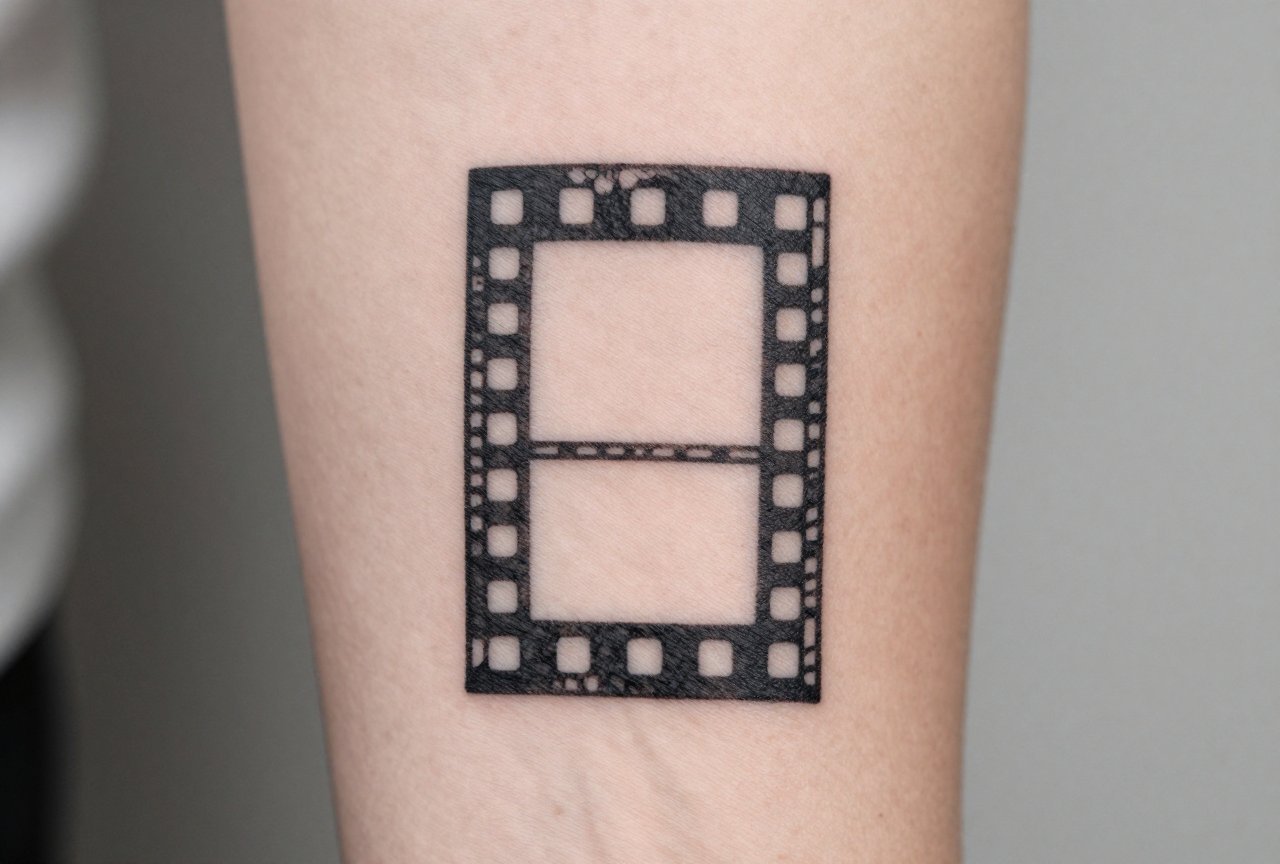
This is where film tattoos get fun and actually age better. I did a single-needle Totoro on a girl’s ankle last month, just clean lines, no shading. Ten years from now it’ll still read as Totoro. Same with minimalist film symbols: the Jurassic Park logo, the Ghostbusters no-ghost, the Pixar lamp. These are the tattoos I see holding up best over time. In my chair, I tell people: if you love the movie, you don’t need the whole frame. You need the thing that makes you feel it.
- Single needle line art for subtle, timeless pieces
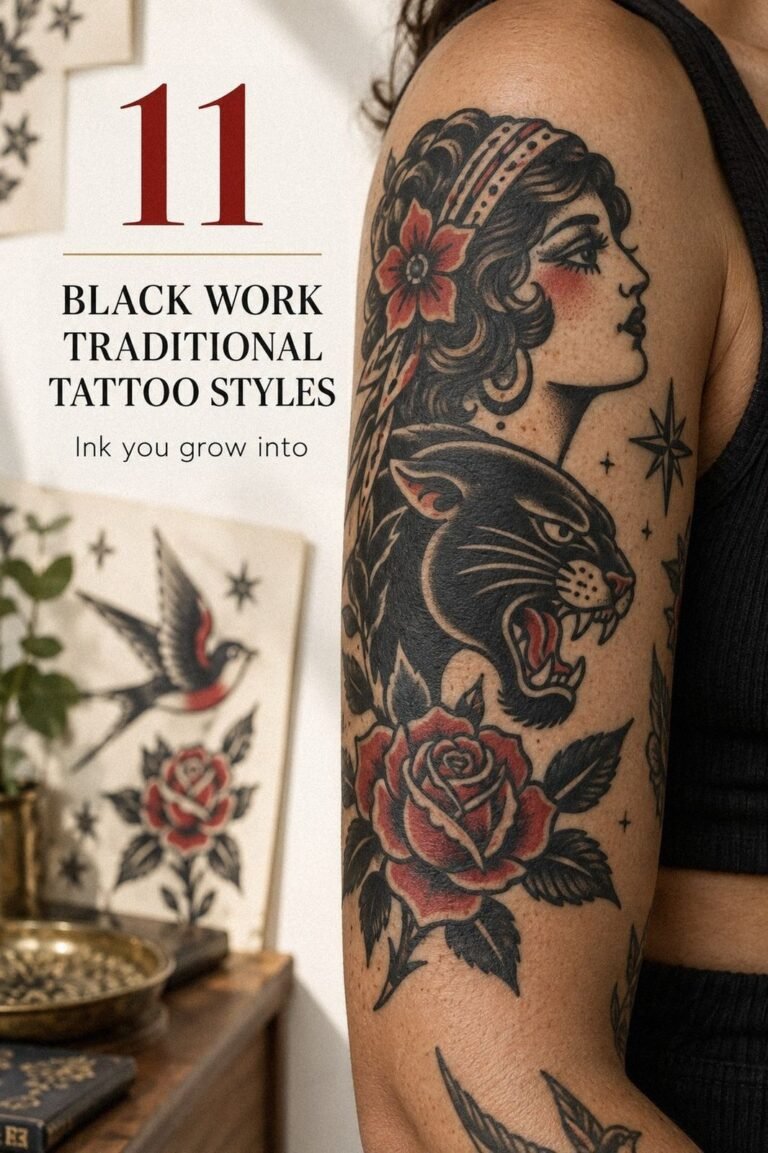
- Traditional or neo-traditional for cult classics and horror
- Japanese-inspired for samurai films and anime adaptations
- Dotwork and stipple for atmospheric, moody scenes
Design Ideas Beyond the Obvious
Everyone wants the same ten images. I’ve tattooed the Pulp Fiction dance scene silhouette probably fifteen times. It’s a good tattoo, but if you want something that feels personal, dig deeper.
Props and Objects
Some of my favorite film tattoos have been objects that carry the whole story. I tattooed the red balloon from It on a guy’s forearm, just the balloon, the string, nothing else. Perfect. I’ve done the spinning top from Inception, the briefcase from Pulp Fiction (just the glowing contents, abstract), the sled from Citizen Kane. These pieces work because they’re conversation starters. Someone asks, you get to talk about the movie. That’s the point.
Quotes and Typography
Be careful here. I’ve seen too many quote tattoos with fonts that looked cool in 2014 and now look like generic WordArt. If you’re doing text, commit to a custom typeface or something with real structure. I did “Here’s looking at you, kid” in a 1940s script on a woman’s collarbone, and it felt like a love letter, not a bumper sticker. Placement matters too, ribs move, chest stretches, fingers fade. I always steer text toward the inner forearm or upper arm where skin stays relatively stable.
- Single iconic objects instead of busy scenes
- Quote tattoos with custom lettering, not downloaded fonts
- Alternative film posters and Mondo-style reimaginings
- Behind-the-scenes moments: director’s chairs, film reels, clapperboards
Best Placements for Film Tattoos
Where you put it changes everything. I’ve watched a gorgeous Back to the Future DeLorean tattoo warp because the guy got it across his stomach and then gained thirty pounds. Skin moves, stretches, sun hits different areas. Here’s what I actually see working.
The outer forearm is the sweet spot for film tattoos. Flat surface, easy to show off, doesn’t distort much with age. I did a full-color Studio Ghibli sleeve that started there and wrapped to the inner arm. The outer forearm portions still look crisp; the inner elbow and wrist have softened. That’s just anatomy.
Calves are underrated for vertical movie posters. I tattooed the Jaws poster on a guy’s calf, shark coming up, swimmer on top, and the vertical composition fit perfectly. Thighs work for bigger pieces if you want detail. Chest and back give you a canvas for scenes, but I warn people: you’ll almost never see your own back piece. It’s for other people.
- Forearm: best for visibility and aging
- Calf: great for vertical compositions and poster-style designs
- Upper arm/shoulder: traditional spot for portraits
- Ribs: only for masochists and small, simple designs
Color Choices and Aging Reality
This is where I get real with clients. That neon pink from Drive? That teal from The Grand Budapest Hotel? Gorgeous on screen. On skin, it’s a different equation.
What Fades and What Holds
I’ve been doing this long enough to see my early work age. Black and dark grey hold. Red holds reasonably well if it’s saturated. Yellow? Light blue? Pastel purple? They fade to nothing, and they fade fast. I did a Wes Anderson-inspired piece with pale pink and mint green once. The client came back in two years and we basically had to redo it as a black and grey piece with just hints of color.
That doesn’t mean no color. I just did a Spirited Away piece with deep crimson, forest green, and black outlines. Those pigments will hold. The no-face character in soft lavender? That needed to be bolder than the reference, or it would disappear. I always tell people: trust your artist to adjust the reference. We’re not ruining your vision. We’re making sure you still have one in a decade.
- Black and grey: timeless, holds detail longest
- Deep saturated colors: crimson, navy, emerald, black-backed purple
- Neons and pastels: expect significant fading, plan for touch-ups
- White ink: almost always yellows or disappears; use sparingly
Tips for Choosing Your Film Tattoo
After all these years, I’ve noticed the clients who love their film tattoos forever share some traits. They didn’t rush. They didn’t just pick the most popular image. They thought about what the movie actually means to them.
Live With the Reference
I tell people to print the image and tape it where they’ll see it daily. Bathroom mirror, fridge, whatever. If you’re not sick of it in three months, that’s a good sign. I’ve had clients bring in references they found that morning, and I turn them away gently. Come back when you’ve sat with it. A film tattoo should feel like owning a piece of that story, not wearing a brand.
Trust the Adaptation
The best film tattoo I did last year was a Star Wars piece where we didn’t use a single movie still. The client loved the feeling of the binary sunset scene. We did twin suns as geometric circles, desert as negative space, silhouette of Luke as a simple line. It was abstract, it was clean, and it captured the feeling without fighting the limitations of skin. That’s the collaboration I live for in this job.
- Choose personal meaning over popularity
- Work with your artist to adapt, not just copy
- Consider the movie’s entire aesthetic, not one frame
- Plan for aging, not just the fresh tattoo photo
Final Thoughts
Film tattoos are about keeping the stories that shaped you, literally under your skin. I’ve watched clients cry in my chair getting pieces from movies they watched with parents who are gone now. I’ve done matching tattoos for couples who bonded over weird cult horror. I’ve covered up film tattoos too, when someone outgrew their teenage obsession. That’s all part of it.
The ones that last, in every sense, come from real connection. Not the movie everyone loves this year. The movie you rewatch at 2am when you can’t sleep. The one you quote without thinking. Bring that energy into the shop, find an artist who gets it, and let them help you translate screen to skin. It won’t be identical to the frame. It’ll be better. It’ll be yours.
Frequently Asked Questions
Will a detailed movie scene tattoo look blurry in a few years?
Small details do soften over time, especially in crowded compositions. I always advise simplifying busy scenes and prioritizing strong contrast over tiny elements that won’t hold. A good artist will adapt the reference specifically for how ink ages in skin.
Is it okay to get a tattoo of a movie character that’s technically copyrighted?
Tattoo shops operate in a grey area with this, and most artists will do character work. That said, bringing original art or asking your artist to create their own interpretation often yields a more unique piece and sidesteps direct copying entirely.
Can you tattoo a specific frame from a movie exactly as it appears?
Technically yes, but I rarely recommend it. Film lighting and resolution don’t translate directly to tattoo pigment. I always adjust contrast, simplify backgrounds, and sometimes change proportions so the tattoo reads clearly on skin rather than looking like a muddy screenshot.
What’s the most requested film tattoo you’ve seen lately?
Studio Ghibli has been huge for years and shows no sign of slowing. Beyond that, horror classics from the 80s, anything Tarantino, and surprisingly, The Lighthouse with its stark black and white aesthetic. The common thread is strong visual identity that works in tattoo form.
More Tattoo Ideas
- Scarface Tattoo Designs That Actually Work
- Cherry Blossom Realistic Tattoos: Style Guide
- Cowboy Traditional Tattoos: Complete Style Guide
- Explore more