
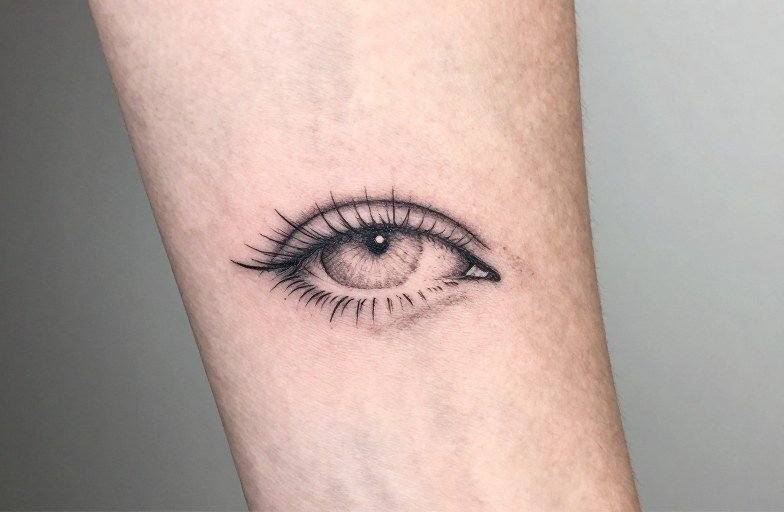
The “just breathe” tattoo is a personal reminder to pause, reset, and return to the present moment. For most people who get it, the phrase marks a struggle with anxiety, panic, grief, or depression, and the deliberate choice to keep going. It functions as a private anchor, something visible only to the wearer or shared openly depending on placement.
Symbolism & History
Breath as a symbol of life and control spans multiple traditions. In yoga and pranayama practices, conscious breathing is the bridge between body and mind. Some trace the phrase “just breathe” to contemporary mindfulness movements, though its exact origin as a tattoo motif is diffuse. What matters is how it functions: as a behavioral trigger. When someone feels their chest tighten, seeing those words on their wrist or ribs can interrupt the spiral.
The tattoo often carries dual meaning. “Breathe” is survival, autonomic, involuntary. “Just” adds intention. The two words together create a command that sounds gentle but is actually urgent. That tension is why the design resonates across age groups and backgrounds.
Religious and Spiritual Overlaps
Some connect the phrase to the Hebrew concept of ruach (spirit/breath) or the Christian Genesis account where life begins with divine breath. Others align it with Buddhist anapanasati, breath meditation. The tattoo itself rarely carries explicit religious imagery unless the wearer adds it, crosses, lotus flowers, or om symbols sometimes accompany the text, but the core phrase remains secular and adaptable.
Common Variations & Styles
The typography choices dramatically shift the tattoo’s feel. All-lowercase lettering reads softer, more whispered. Uppercase feels declarative, almost defiant. Script fonts suggest intimacy; sans-serif block letters feel modern and clinical in a useful way, like a prescription.
- Minimalist line work: Single-needle or fine-line text, often without embellishment. Ages well if sized appropriately, letters below 5mm tall tend to blur within 5-10 years.
- With lung or rib imagery: Anatomical line drawings of lungs framing the text, or ribcage silhouettes. More common since 2020, often linked to respiratory illness survival.
- With semicolon: The semicolon tattoo (often linked to Project Semicolon and suicide prevention) pairs naturally with “just breathe,” creating a layered statement about continuation.
- With wave or mountain motifs: Waves reference the rhythmic nature of breathing; mountains suggest the climb of managing mental health.
- Coordinates or dates: Small numbers beneath the text marking a specific panic attack survived, a diagnosis date, or a loved one’s death anniversary.
Language Variations
Spanish (respira), French (respire), and Sanskrit (prana) appear regularly. The choice usually reflects heritage, a specific trip, or a therapeutic context where that language mattered. Hebrew and Arabic scripts are less common due to the religious weight of those writing systems, though they do appear.
Best Placements
Where this tattoo sits changes how often the wearer sees it, and who else does.
- Inner wrist: The classic spot. Visible during typing, driving, writing. The downside: high sun exposure and friction from watch bands and sleeves accelerate fading. Expect touch-ups every 7-10 years.
- Ribs or side: Hidden, intimate. The pain is significant, ribs have thin skin over bone with little muscle padding. Healing is awkward due to torso movement and bra straps.
- Collarbone: Elegant, readable, but prone to sun damage. SPF is non-negotiable here.
- Forearm: Slightly more public than inner wrist. Good for longer phrases or added imagery.
- Behind the ear: Tiny, discreet. Requires extremely simple lettering, detail gets lost at this scale.
- Foot or ankle: Popular in the 2010s, less so now. Ink fades faster here due to skin thickness and friction from shoes.
Font size matters more than people expect. Text tattoos need to be large enough that individual letter strokes maintain definition as ink spreads slightly under the skin over decades. A reputable artist will refuse to go too small and will explain why.
Who Chooses This Tattoo / Personal Meanings
There’s no single profile. Teenagers getting their first tattoo choose it alongside forty-year-olds marking a divorce or sobriety milestone. Parents get it after children’s mental health crises. Nurses and therapists get it as occupational armor, reminders to protect their own nervous systems while holding others’ pain.
The meaning clusters around several lived experiences:
- Anxiety and panic disorders: The most common association. The tattoo externalizes an internal coping strategy.
- Grief: A sibling’s overdose, a parent’s sudden death. The phrase becomes a way to manage the physical sensation of loss.
- Postpartum: The transition to parenthood includes intrusive thoughts and identity rupture; the tattoo marks survival.
- Substance recovery: Breath as the alternative to the held-breath of hiding, or the first conscious inhale after withdrawal.
- Chronic illness: Asthma, COPD, long COVID. Here the phrase becomes literal as well as metaphorical.
Some people worry the tattoo will seem trendy or diminish in significance. The reality: most people who get it have already been using the phrase internally for months or years. The skin commitment follows the mental one.
Similar Symbols
People considering “just breathe” often weigh related options:
- “This too shall pass”: Broader temporal perspective, less immediate behavioral instruction.
- Om or unalome: More explicitly spiritual, less legible to strangers.
- Semicolon alone: More specific to suicide prevention narrative; less flexible in meaning.
- Lotus flower: Growth through difficulty, but without the active, ongoing reminder quality.
- Heartbeat line (EKG): Often reads as generic medical imagery; harder to personalize.
The advantage of “just breathe” is its actionability. It is a verb phrase. Unlike passive symbols, it instructs the body in real time.
Final Thoughts
The “just breathe” tattoo works because it is both universal and private. Everyone breathes; not everyone has needed a reminder to keep doing so. If you are considering this design, spend time with the typography, how the letters look, how they flow, whether you want the phrase to whisper or to insist. Talk to your artist about minimum sizing for your chosen font. Consider placement based on when you most need the reminder: morning mirror, stressful commute, middle of the night.
Over decades, the ink will soften. The edges will fuzz slightly. The meaning, if it was real to begin with, typically sharpens.
Frequently Asked Questions
Does a ‘just breathe’ tattoo have to be about mental illness?
No. Some people get it after respiratory illness, as a meditation anchor, or simply as a reminder to slow down in a hectic life. The meaning depends entirely on your context.
What’s the smallest font size that will still look good in ten years?
Most artists recommend lettering no smaller than 6-8mm tall for longevity. Below that, fine details like the dot on an ‘i’ or the crossbar on a ‘t’ can blur into indistinct blobs.
Can I add color to a ‘just breathe’ text tattoo?
You can, but black and grey ages more predictably. Watercolor backgrounds or subtle blue gradients are common additions, though they typically fade faster than the text itself and may need refreshing.
Is the wrist placement too common or overdone?
Common placements are common because they work. The inner wrist puts the phrase in your direct sightline during daily tasks. If originality matters more than function, consider ribs, side of the torso, or upper inner arm.
Related Tattoo Meanings
- Kaizen Tattoo Meaning: Continuous Growth in Ink
- Khmer Tattoo Meaning: Sacred Symbols Modern Ink
- Kiss Tattoo Meaning: Romance, Rebellion, and Rock History
- Explore more









