Abstract geometric tattoos stay crisp for years when you give the lines enough breathing room. I nearly made my first design too small, and it would’ve turned into soup on my wrist. You don’t need a huge piece. You need clean structure, solid contrast, and a placement that lets your skin move without chewing it up.
- Abstract Geometric Tattoo With Interlocking Circles
- Minimalist Geometric Tattoo On The Inner Forearm
- Abstract Line Art Tattoo With Sharp Angles
- Geometric Fish Tattoo With Flowing Black Lines
- Abstract Geometric Tattoo Across The Shoulder Blade
- Negative Space Geometric Tattoo In Blackwork
- Fine Line Geometric Tattoo With Asymmetrical Shapes
- Abstract Geometric Tattoo Wrapped Around The Upper Arm
- Geometric Mandala Tattoo With Broken Symmetry
- Abstract Lines Tattoo Design For The Ribcage
- Geometric Tattoo Combining Dots And Thin Arcs
- Abstract Geometric Tattoo With A Central Eye
- Blackwork Geometric Tattoo On The Calf
- Small Abstract Geometric Tattoo Behind The Ear
- Geometric Fish Skeleton Tattoo With Minimal Linework
- Abstract Geometric Tattoo Along The Spine
- Layered Triangle Tattoo With Organic Linework
- Abstract Line Art Tattoo With Red Ink Accents
- Geometric Patchwork Tattoo Across The Forearm
1Abstract Geometric Tattoo With Interlocking Circles
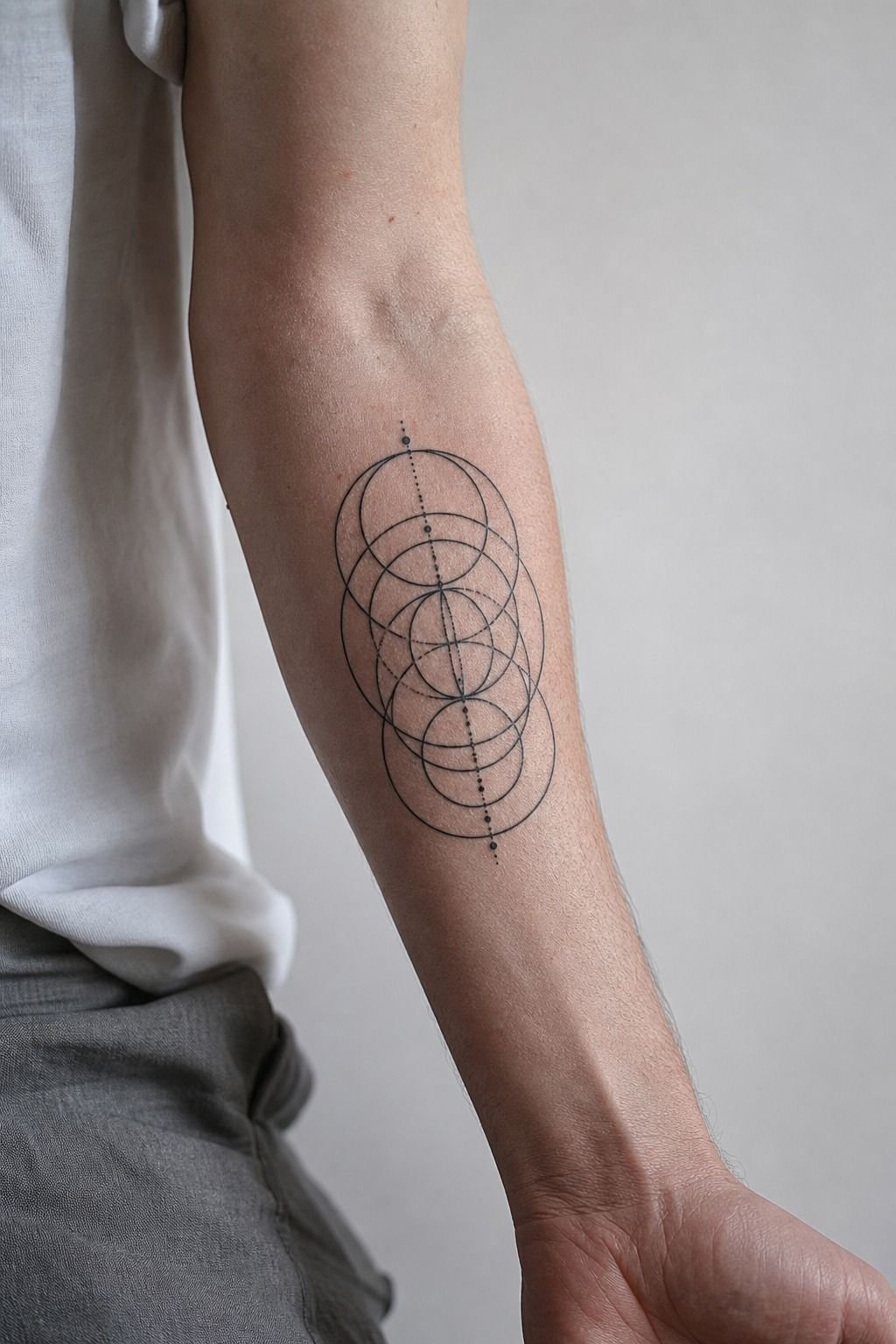
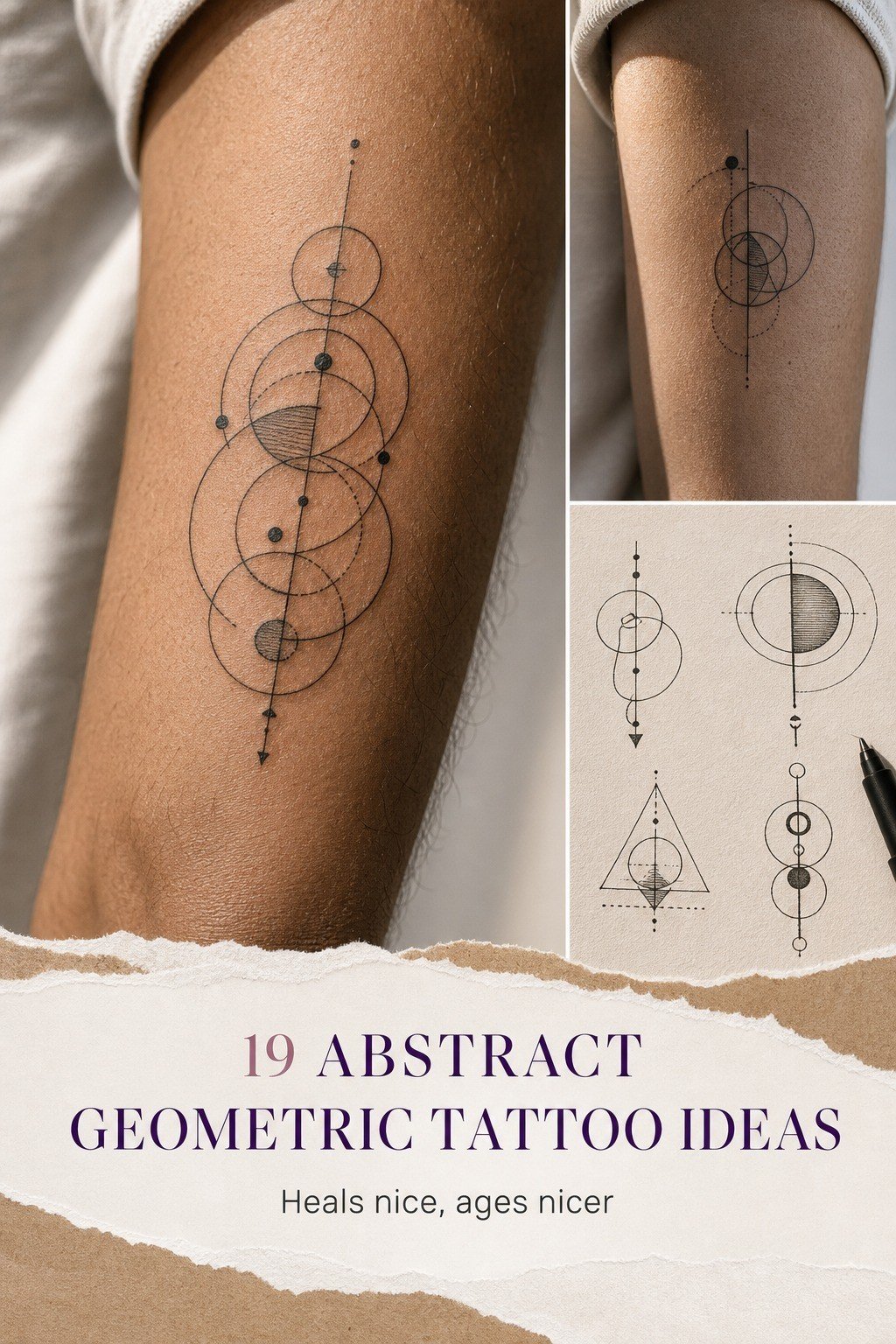
Build interlocking circles with enough overlap to look intentional from across the room. On a fair, cool-pink forearm, crisp black circles read soft but still graphic. I’d keep the smallest circle at least 1/2 inch wide, because tiny rings packed together blur first.
Ask for black pigment and single-pass linework, not repeated fuzzy tracing. Your artist should pull each curve cleanly, then leave the skin alone. You can browse more geometric tattoo patterns before settling on the circle count.
2Minimalist Geometric Tattoo On The Inner Forearm
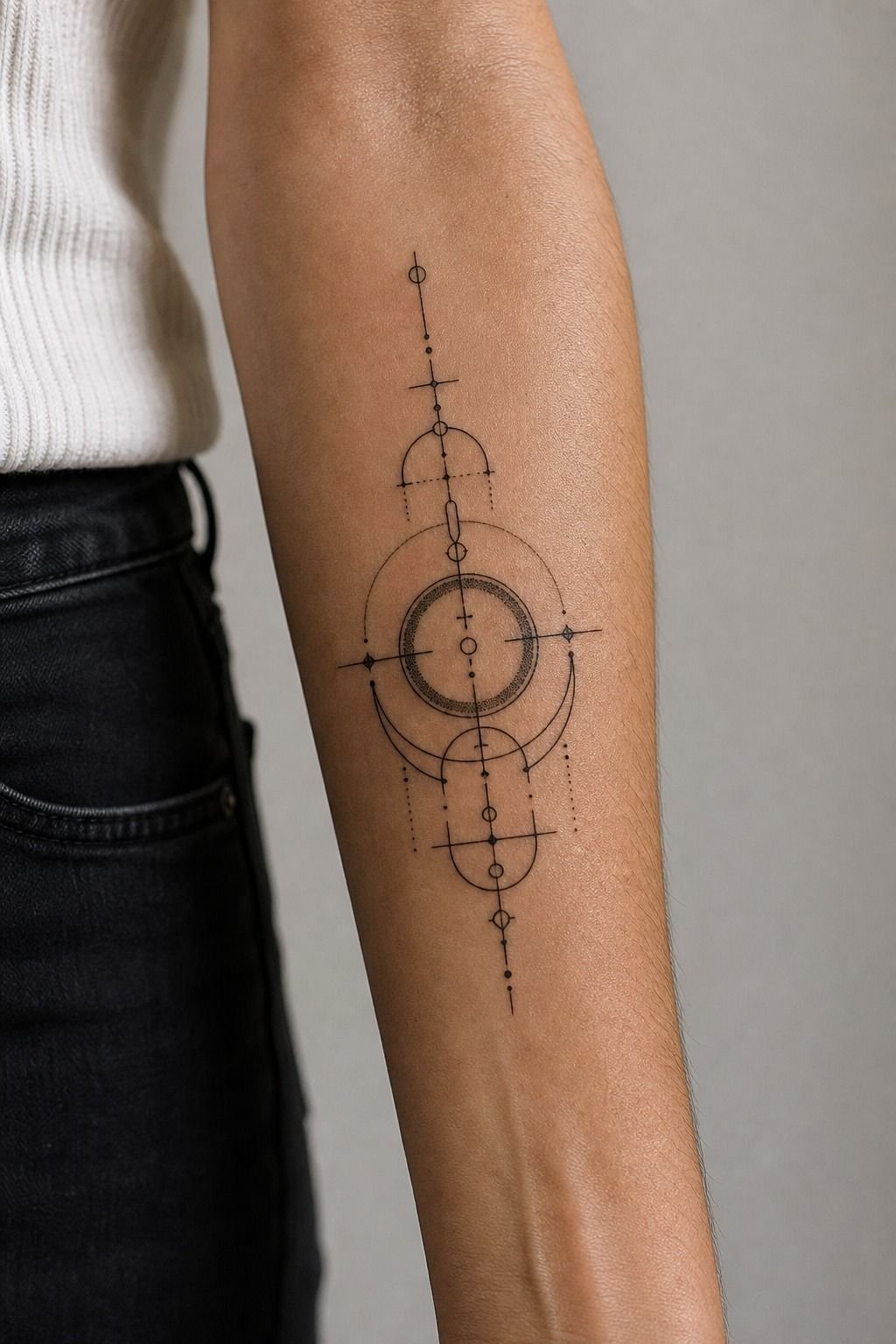
Keep a minimalist geometric tattoo open on the inner forearm. That placement is fairly chill, visible when you want it, and low-wear compared with fingers or hands. You’ll get a calming, airy look if the shapes sit vertically with your arm instead of cutting straight across it.
Skip hairline details inside every triangle. Single needle cartridges can make delicate marks, but they aren’t magic.
Your lines will soften over time, so give each shape a little gap. Clean negative space is what keeps this one readable.
3Abstract Line Art Tattoo With Sharp Angles
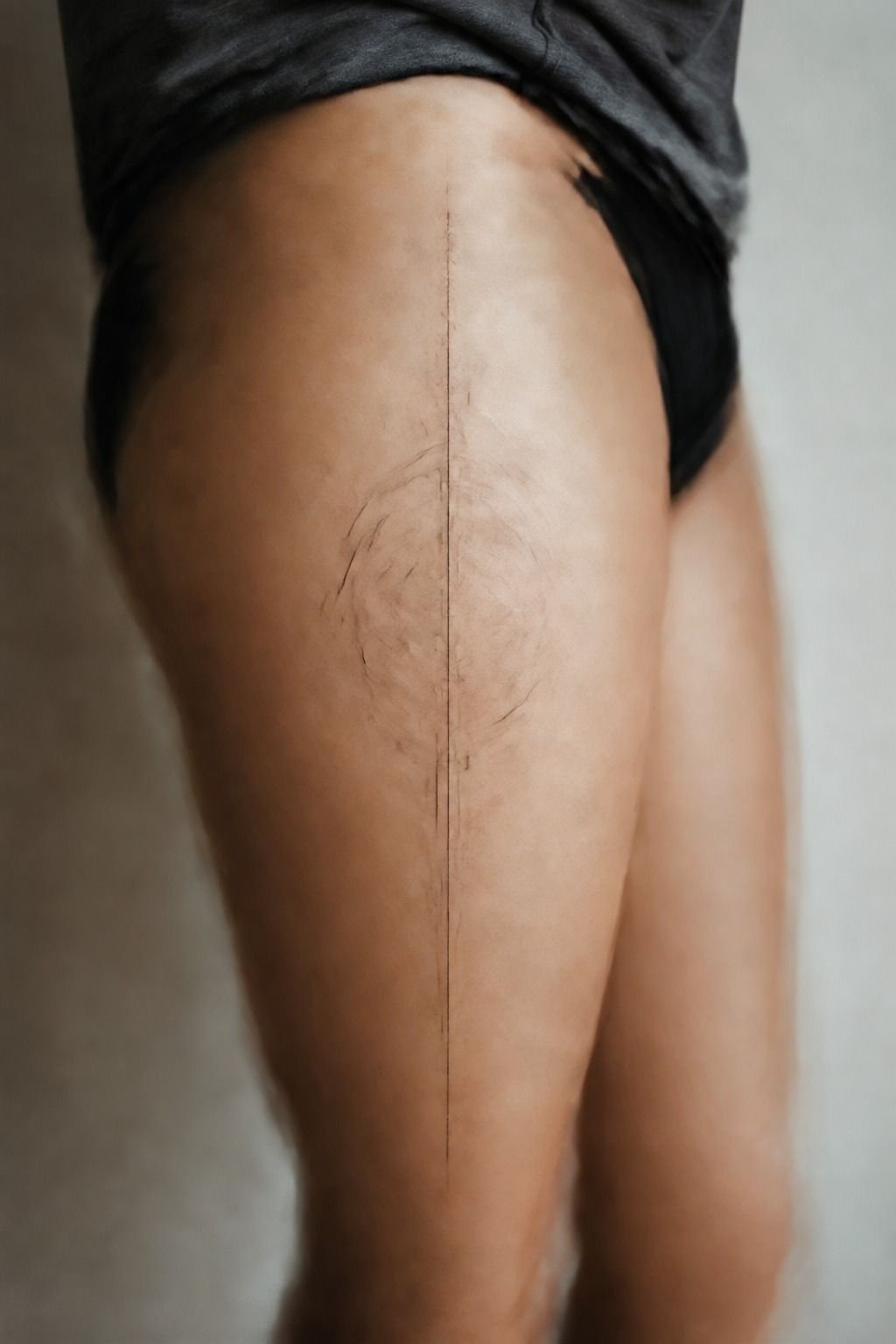
Anchor sharp angles along the thigh’s natural length, especially if you want an abstract line art tattoo that feels bold without being heavy.
4Geometric Fish Tattoo With Flowing Black Lines
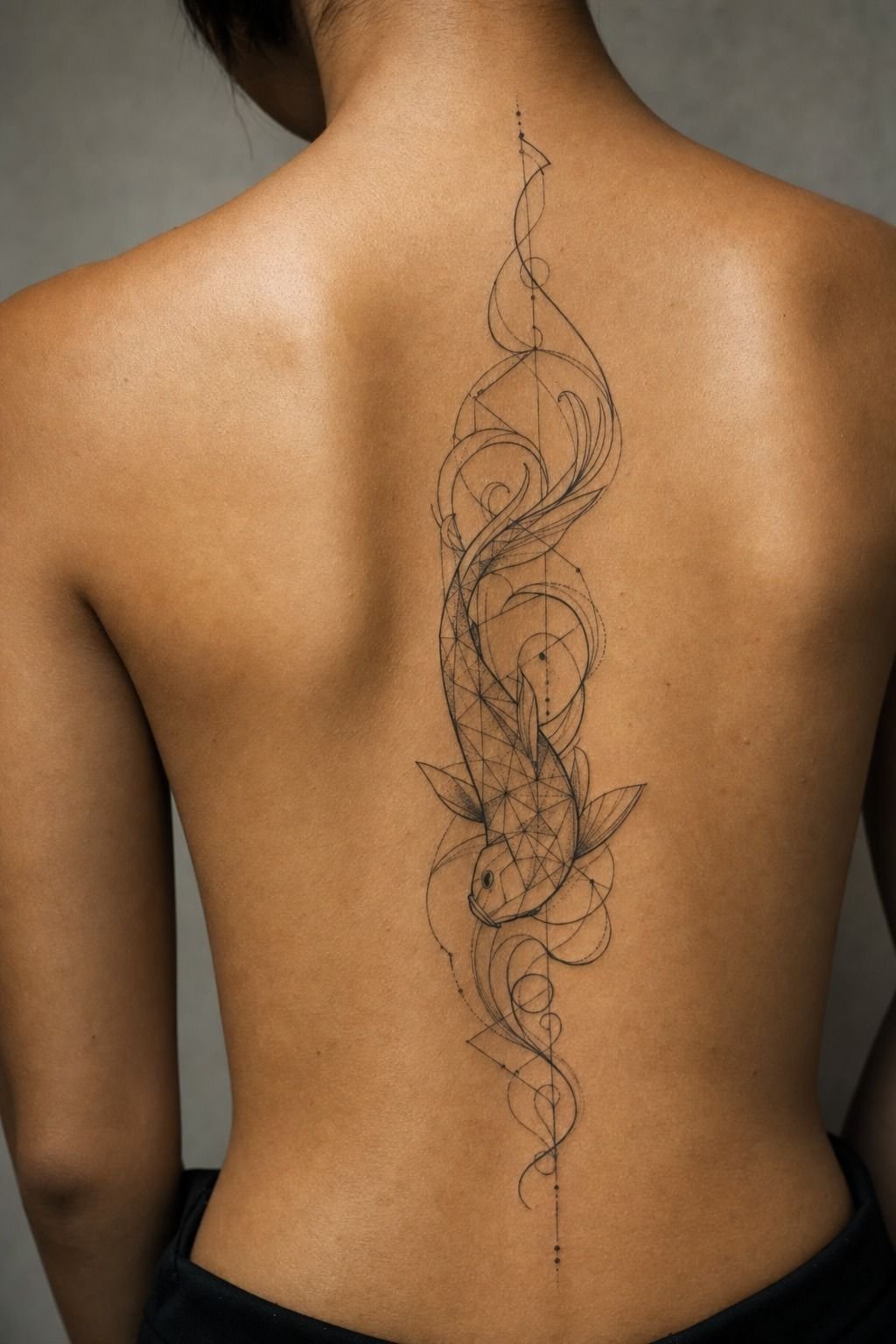
Let the fish follow your spine instead of placing it like a sticker down the middle. Flowing black lines can echo fins, ribs, and water movement while still holding a clear geometric silhouette. It’s captivating when it fits the body.
Your spine is spicy. Lines feel sharper there, and color packing would be worse, so I’d keep this black-and-grey ink design line-led.
Take breaks if you need them. Tap out for five rather than pass out on your artist.
5Abstract Geometric Tattoo Across The Shoulder Blade
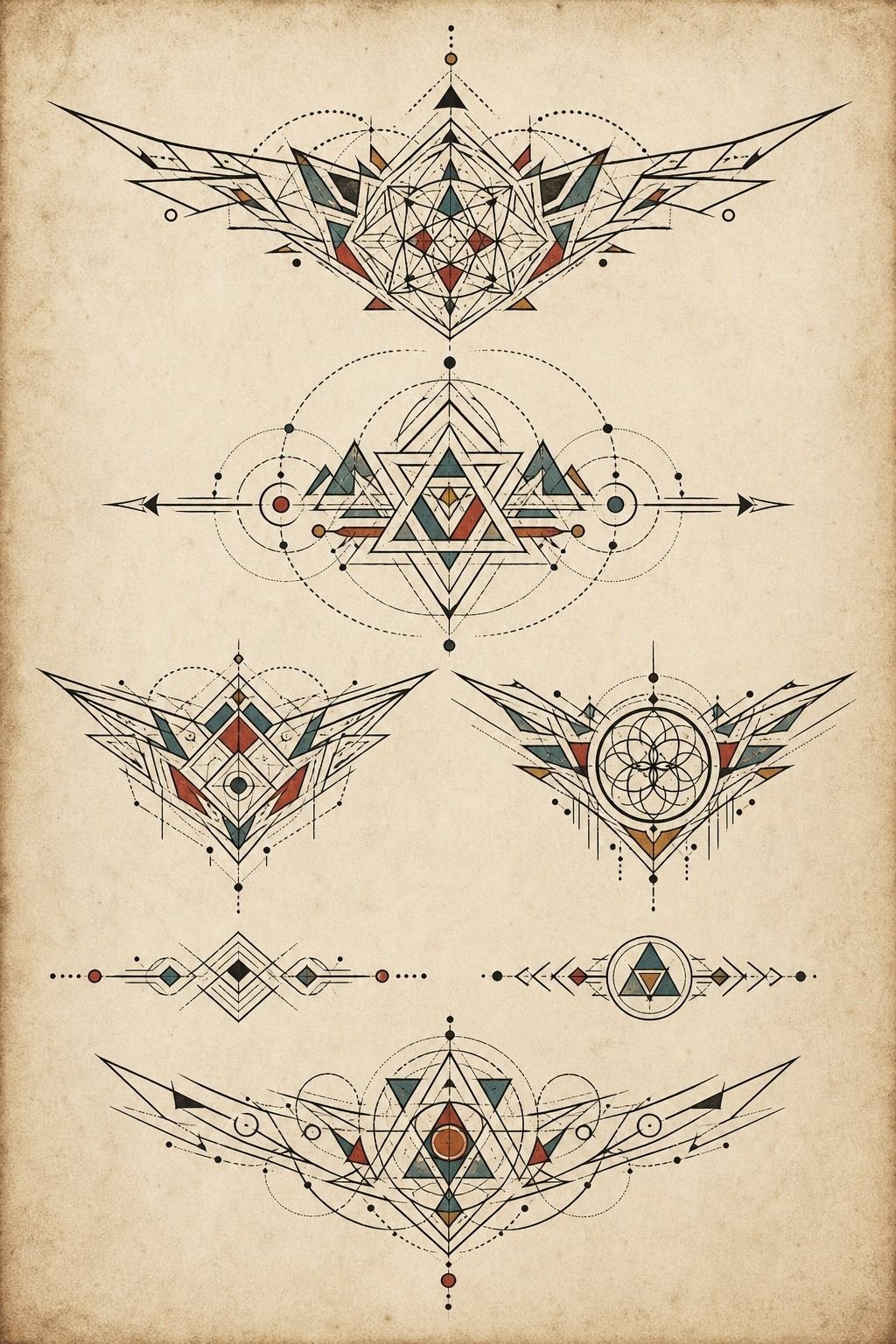
Use a flash-sheet approach across the shoulder blade: one main diamond, offset circles, then a few small stars or arcs. Your artist can redraw the arrangement to match your scapula, which matters more than copying a paper design exactly.
I’d skip a perfectly centered stamp. Your shoulder blade shifts when you move, and a slightly offset tattoo stencil usually looks more organic on skin. Save a few geometric tattoo ideas for vibe, then let the artist build the final flow.
6Negative Space Geometric Tattoo In Blackwork
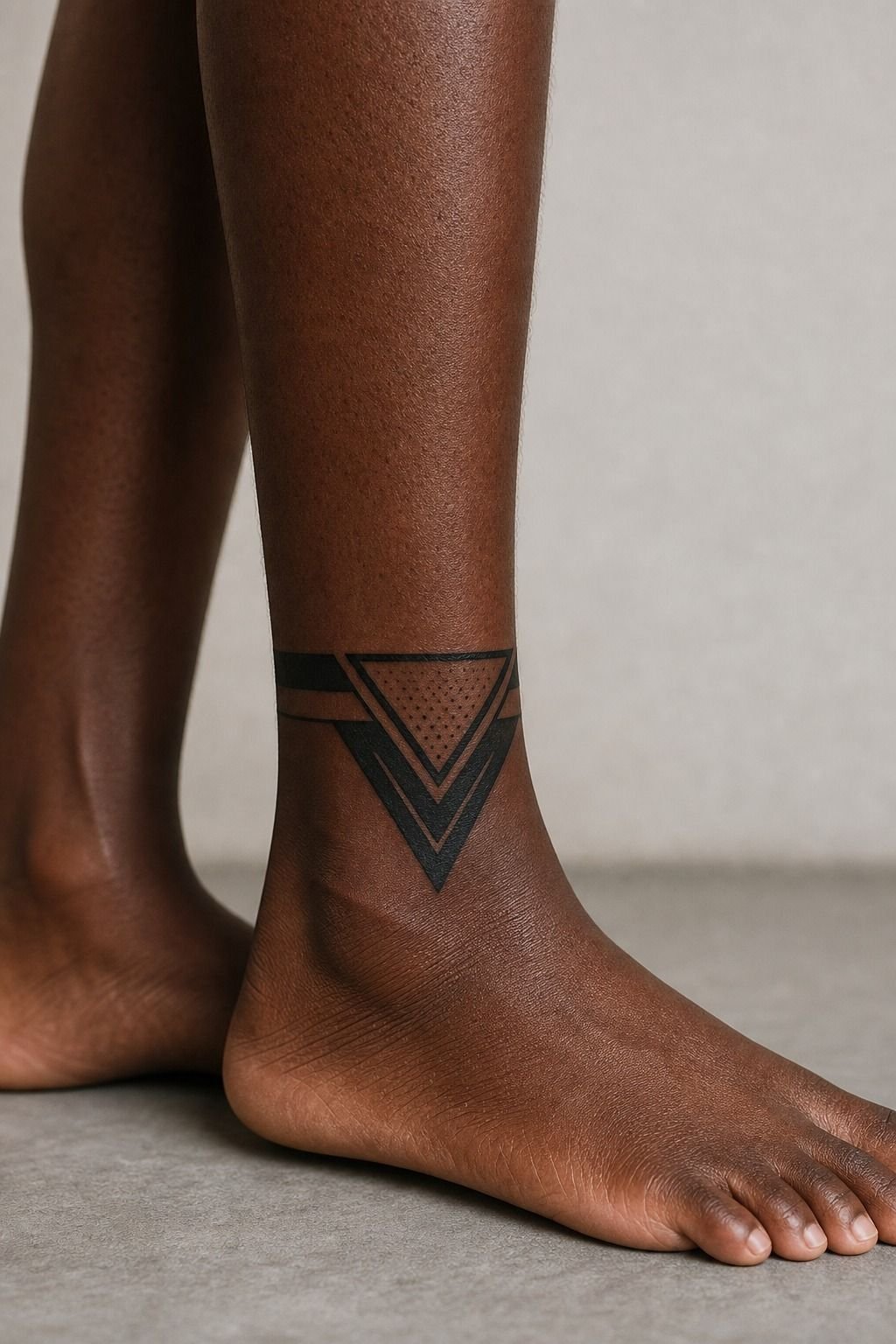
Make negative space do the loud work. On deep ebony skin, a blackwork geometric tattoo needs saturated fill and clear skin gaps, not timid grey shading that disappears. Bold will hold.
Your ankle is high-wear and bony, so don’t crowd it with ten tiny cuts. Use larger blocks of solid blackwork and a simple crescent or angled panel. It’ll heal more refined than a busy maze, and you’ll accept that touch-ups may be part of the deal.
7Fine Line Geometric Tattoo With Asymmetrical Shapes
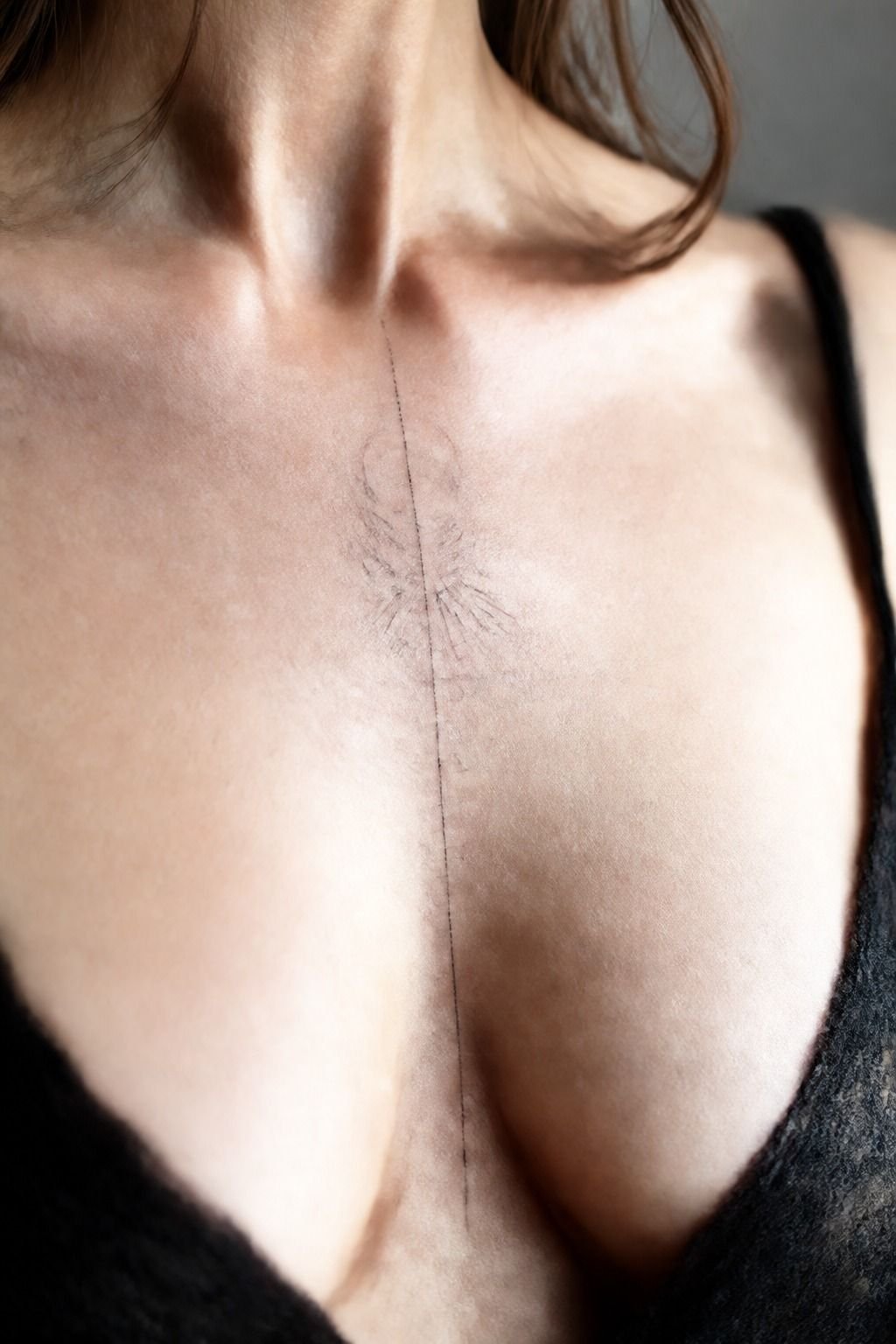
Float asymmetrical fine-line shapes along the sternum only if you’re ready for a spicy appointment.
8Abstract Geometric Tattoo Wrapped Around The Upper Arm
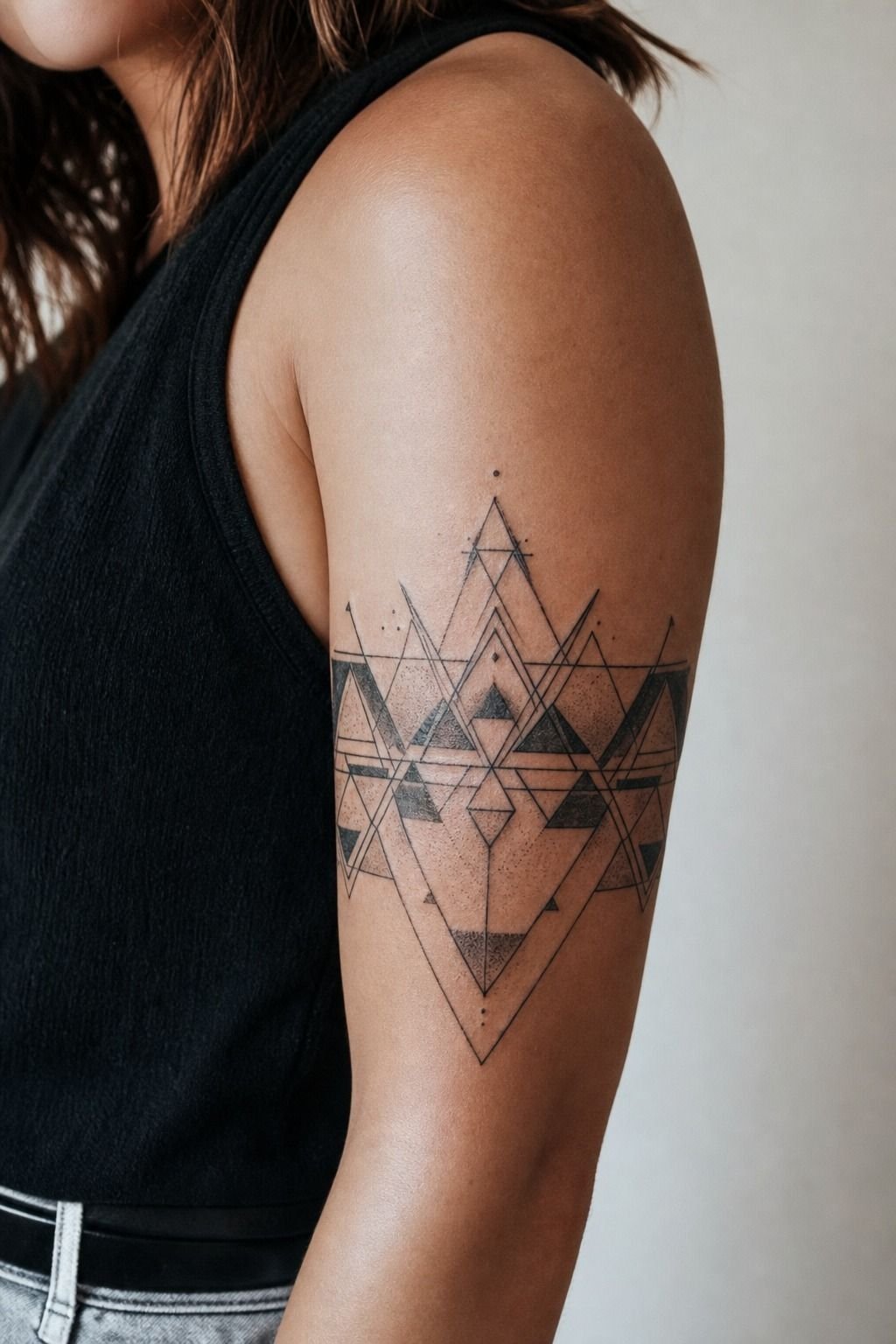
Wrap the upper arm with a band that breaks rather than closes like a bracelet. Your arm has a natural cylinder shape, so staggered triangles and open arcs look modern from every angle instead of becoming one dark stripe.
Choose black ink with a small amount of whip shade behind one panel. I’ve seen full grey bands turn muddy when the contrast is too polite. A 2-inch-tall wrap usually gives you enough room for movement while keeping the upper arm relaxed and wearable.
9Geometric Mandala Tattoo With Broken Symmetry
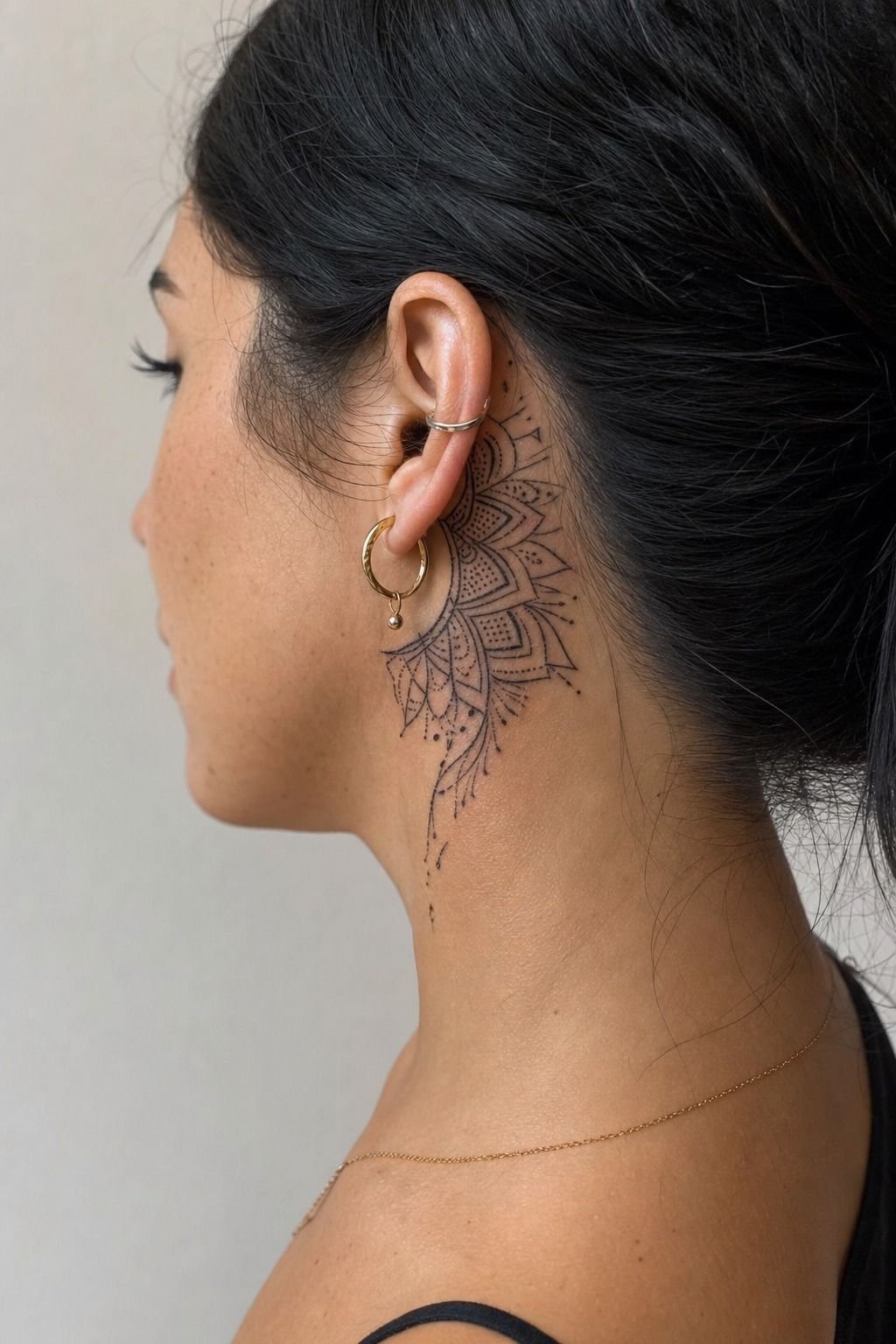
Why force a mandala to be perfectly symmetrical when the placement is behind your ear? Broken symmetry is the whole point here. Let one arc trail toward the neck and keep the other side short, so your tattoo follows the ear instead of fighting it.
Your artist should use dotwork shading sparingly. Behind-the-ear skin is small, curved, and exposed to sun, hair products, and friction. I’d rather see three clean dots than a dense dot cloud.
For more structure, check this geometric mandala tattoo guide.
10Abstract Lines Tattoo Design For The Ribcage
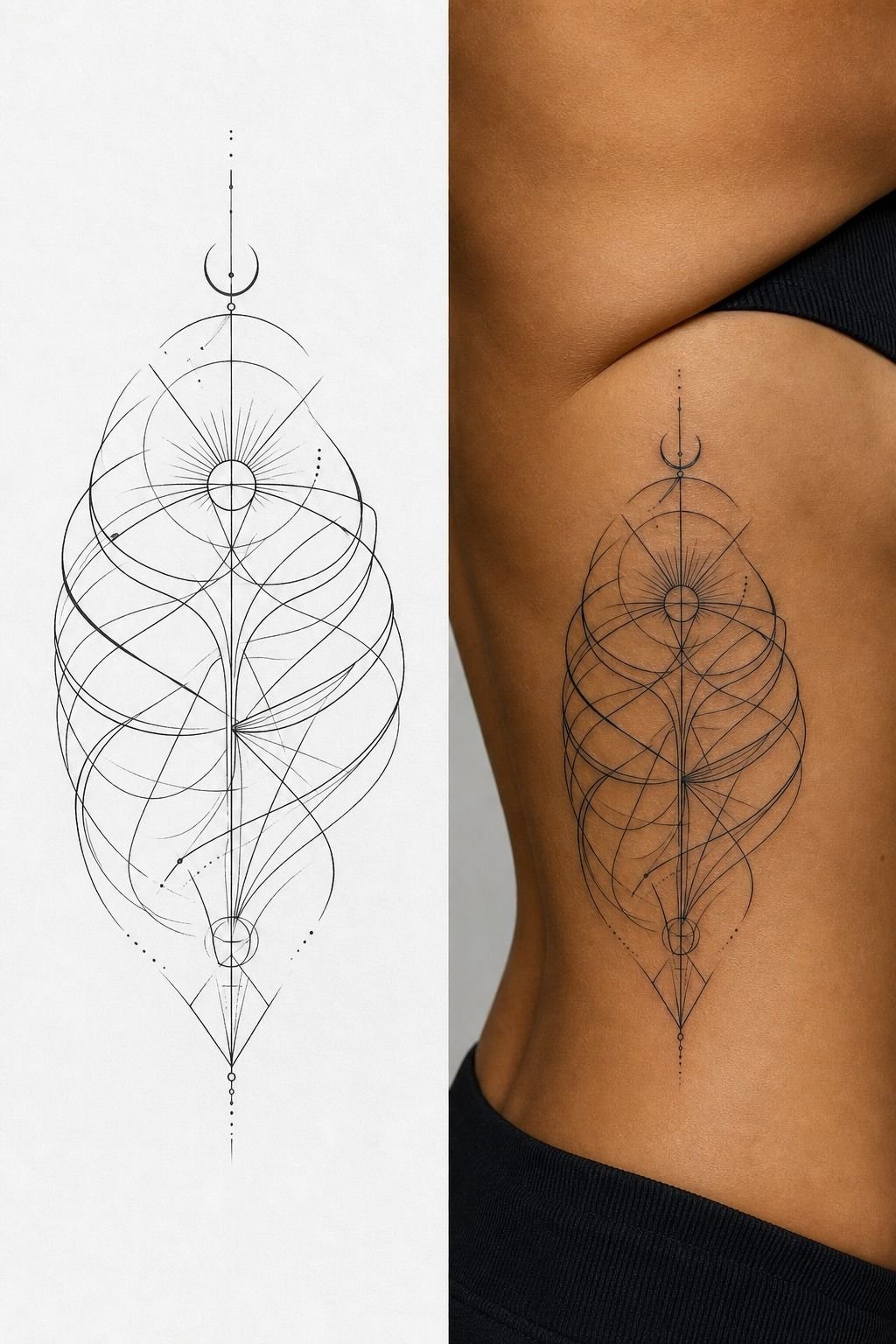
Compare the stencil against the healed version before committing to ribcage lines.
11Geometric Tattoo Combining Dots And Thin Arcs
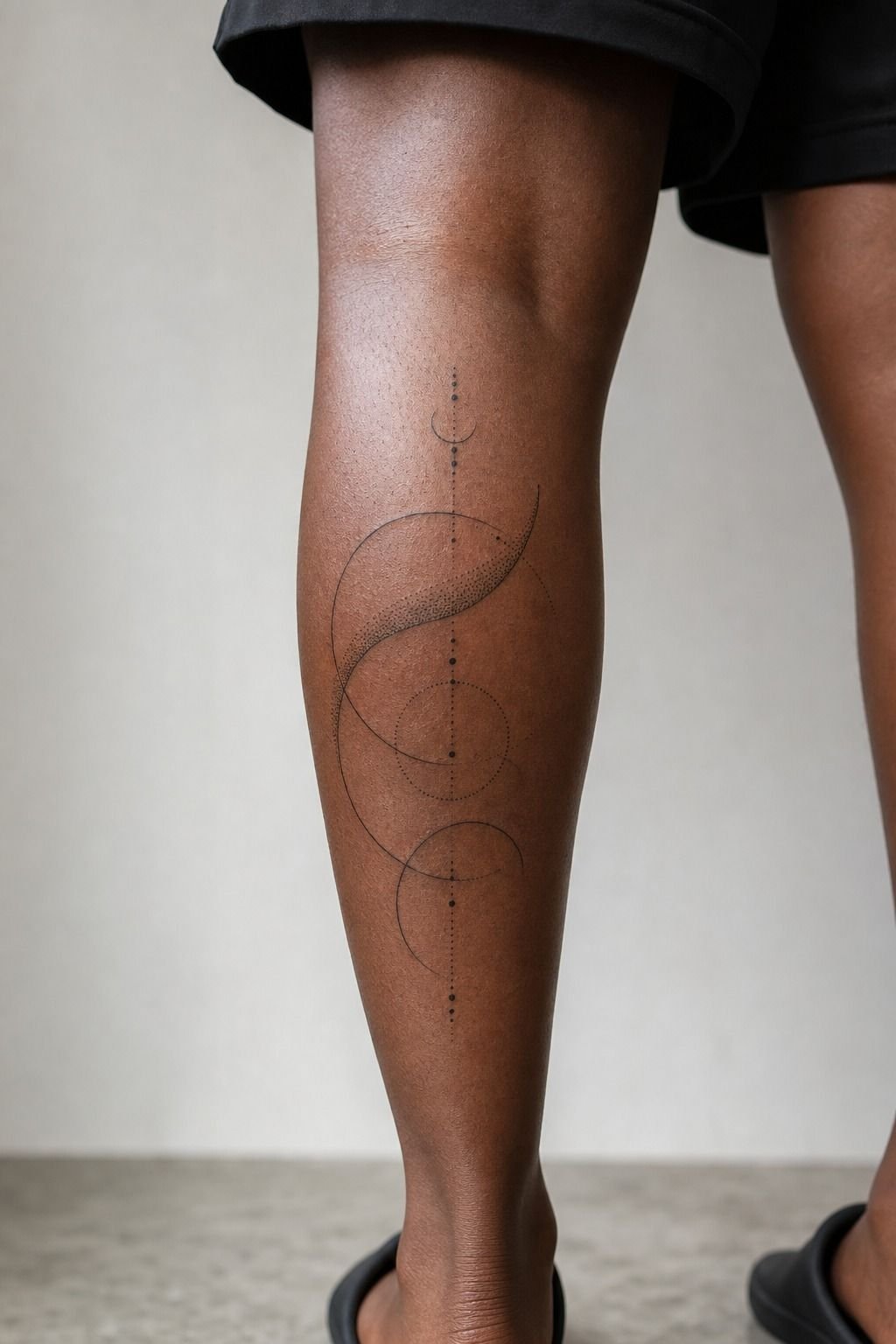
Mix dots and thin arcs on the calf when you want movement without a full blackwork piece. Your calf gives you a low-wear surface, and it’s forgiving enough for a design that needs a little scale.
Use grey wash only as a quiet backdrop. The arcs need black line anchors, or they’ll fade into each other over years of sun and body lotion.
And yes, sunscreen matters. UV is one of the fastest ways to make a crisp tattoo look tired.
12Abstract Geometric Tattoo With A Central Eye
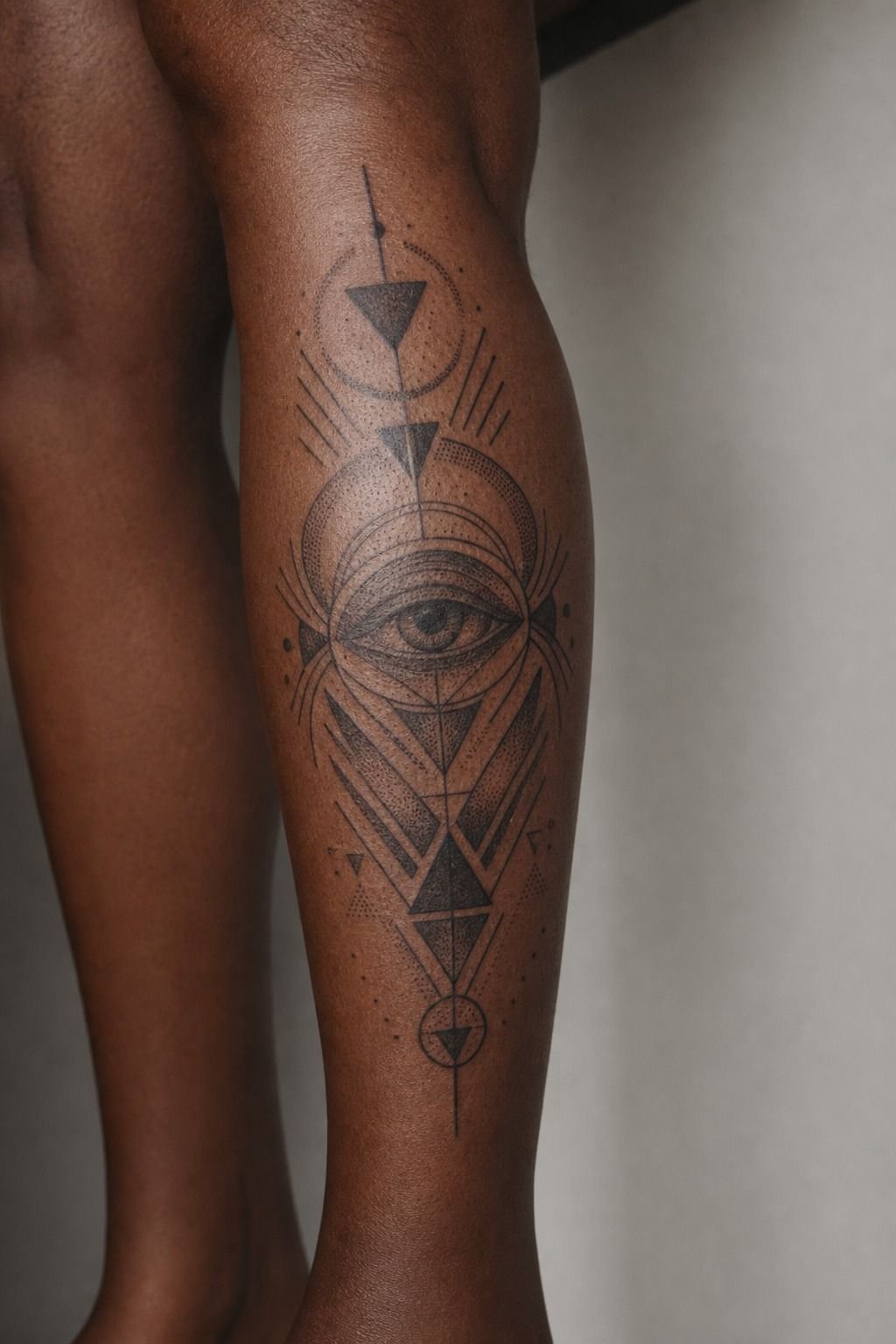
Frame a central eye with triangles and radiating lines, but keep the eye simple.
13Blackwork Geometric Tattoo On The Calf
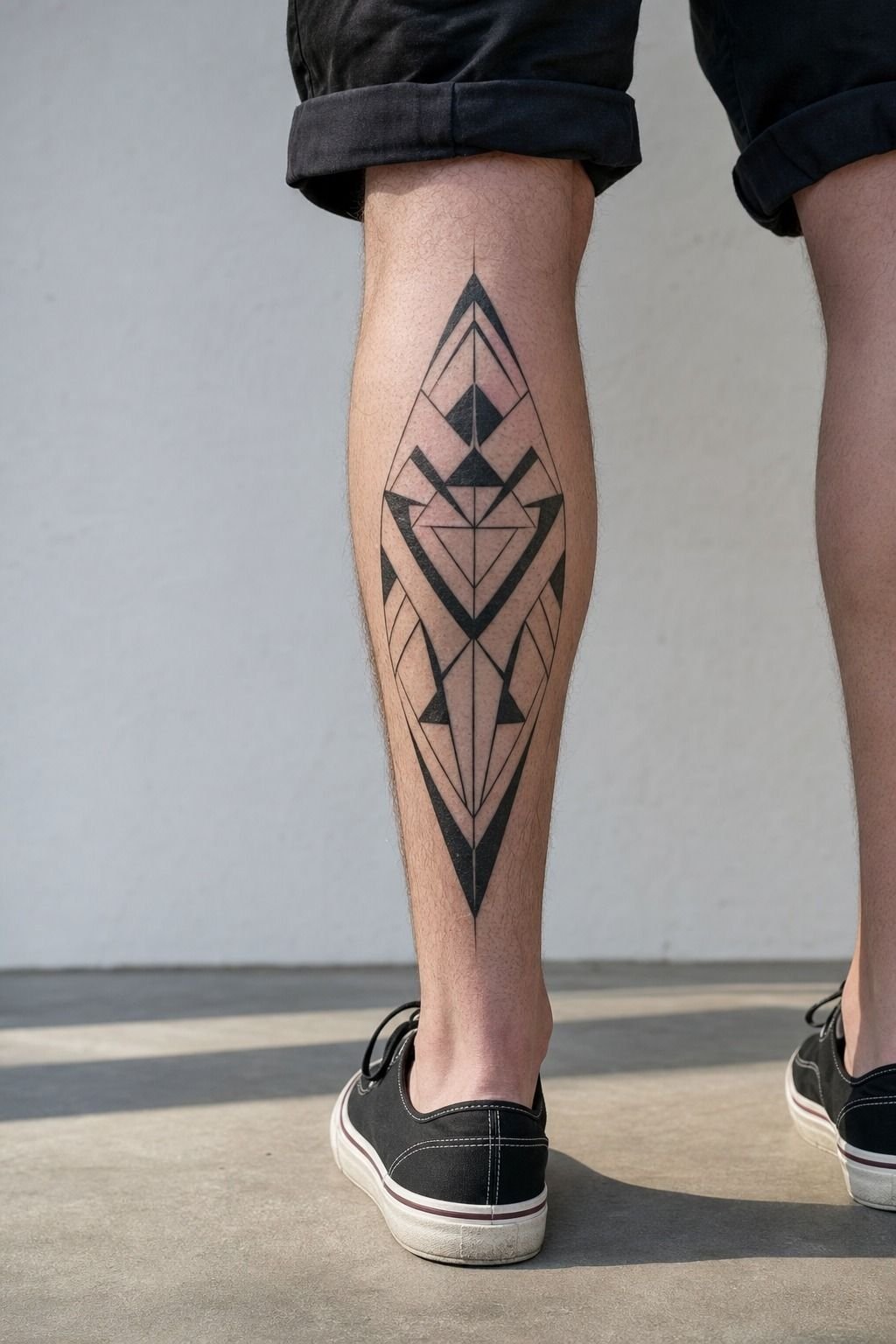
Push contrast on a calf blackwork piece with broad panels, clean cutouts, and one simple angular motif. Your calf can handle a substantial design, and the back of the leg gives you a solid vertical canvas.
But don’t let an artist scratch at the fill fifty times. Magnum needles should pack black in a solid pass without overworking your skin. It may feel like a dull burn, especially during fill, but saturated black heals far more timeless than patchy charcoal.
14Small Abstract Geometric Tattoo Behind The Ear
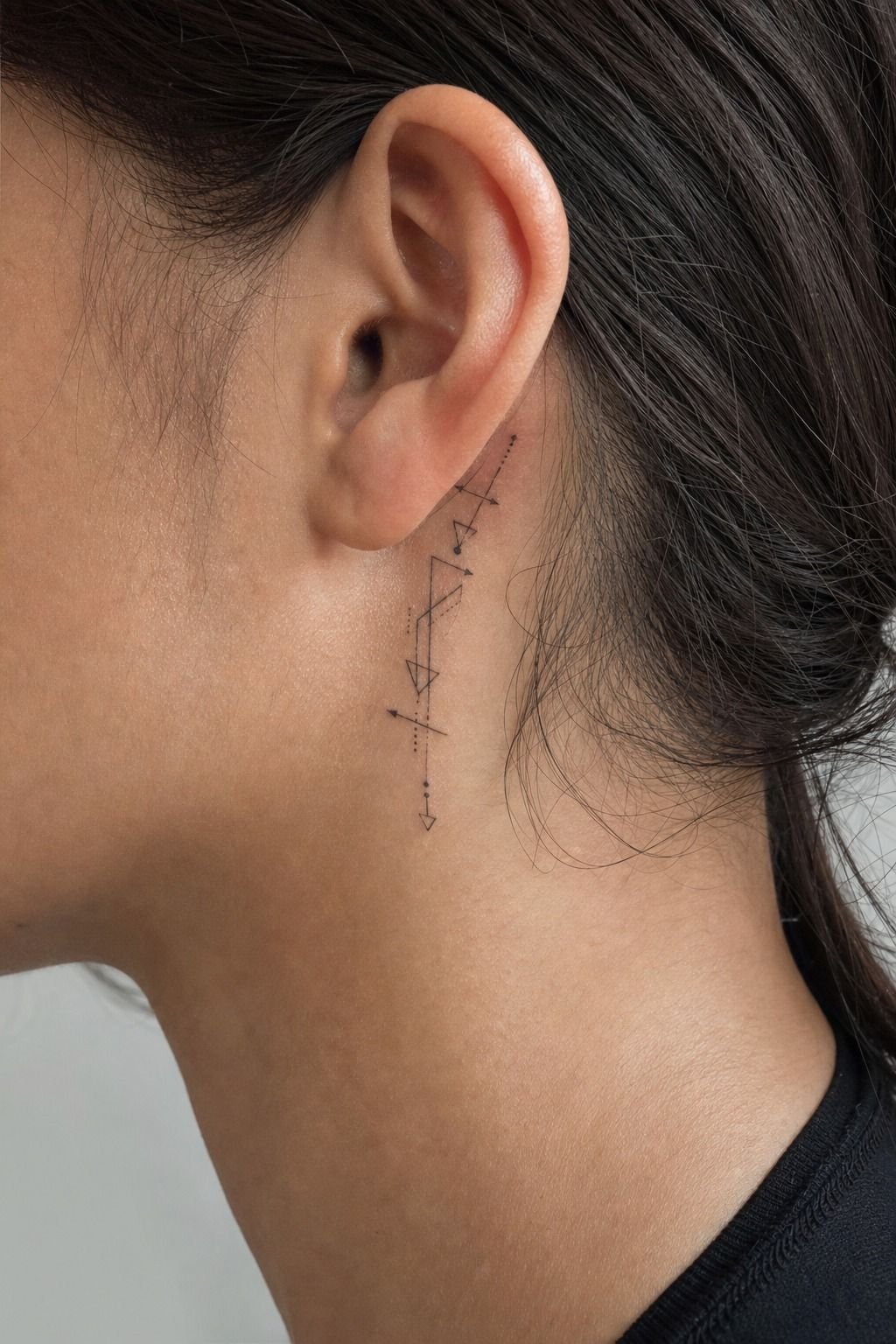
Keep a behind-the-ear tattoo small, but not precious. One triangle, two orbiting dots, and an open curve can look sophisticated without becoming unreadable.
Your hair can hide it, or you can show it off with an updo. Nice flexibility.
That said, hands, feet, and behind-the-ear placements need realistic expectations. Fine black linework may need a touch-up because of sun and friction.
I’d choose a 1-inch design over a tiny 1/4-inch symbol every time. Small doesn’t mean cramped.
15Geometric Fish Skeleton Tattoo With Minimal Linework
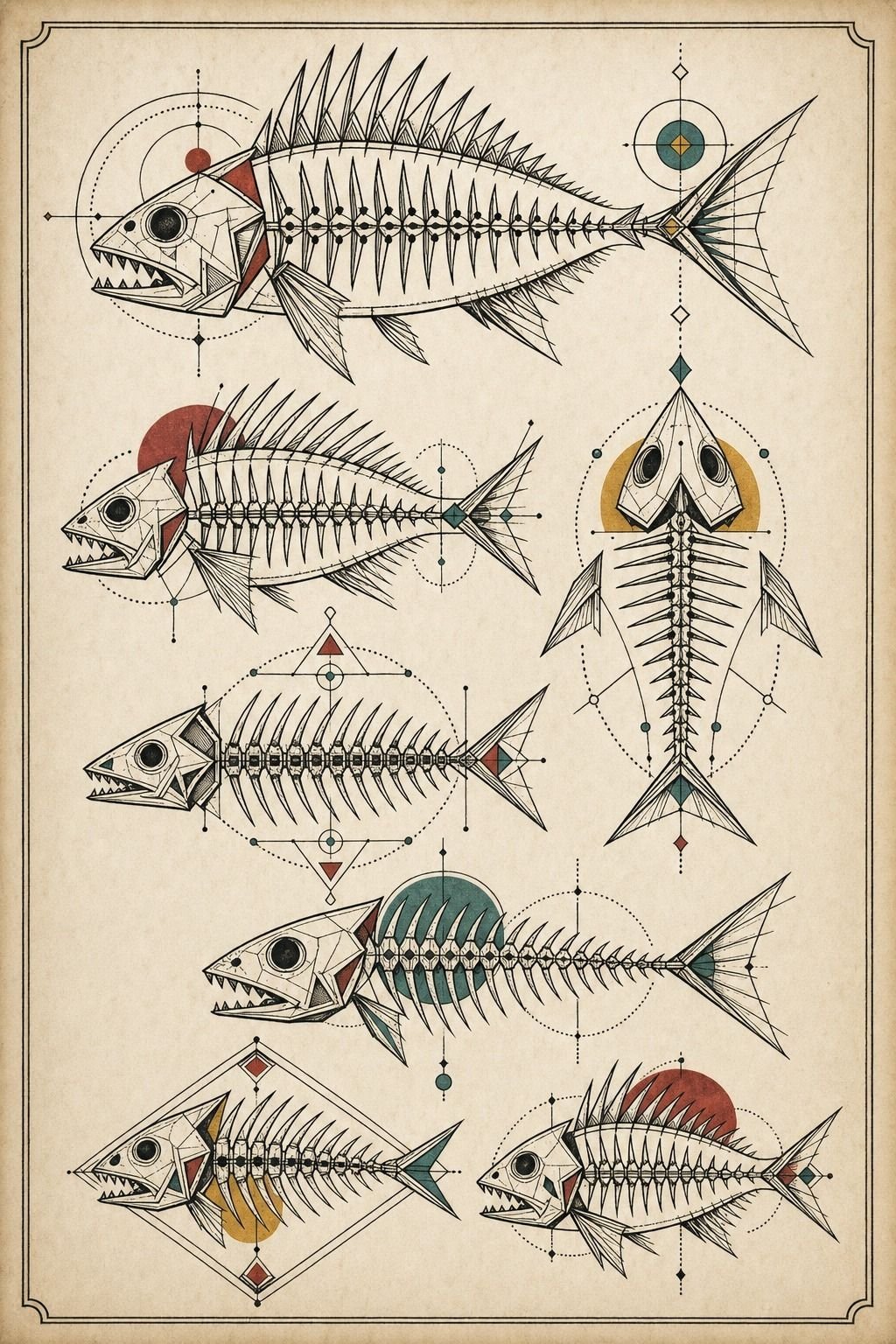
Turn a fish skeleton into an abstract flash design by using angular bones and a clean spine line.
16Abstract Geometric Tattoo Along The Spine
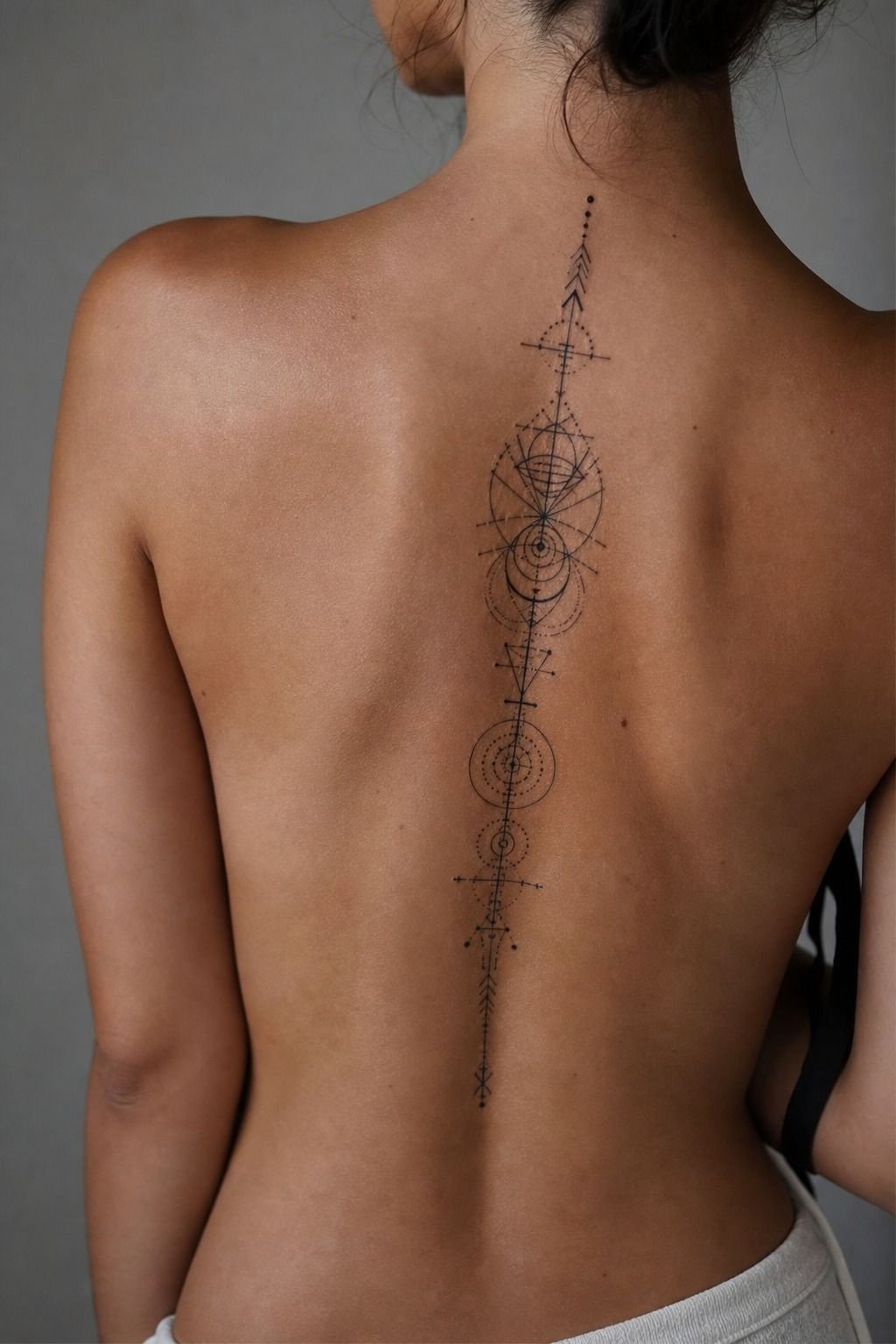
Layer an abstract geometric tattoo down the spine with repeating shapes that get slightly larger through the middle back. Your body gives the design a strong center line, and the gradual sizing keeps it from looking like a ruler mark.
The Two-Anchor Rule works here: one bold shape near the shoulder blades, another at the lower back, then lighter geometry between them. Black-and-grey shading can soften the transition. But keep the central lines clean, because your spine already supplies the drama.
17Layered Triangle Tattoo With Organic Linework
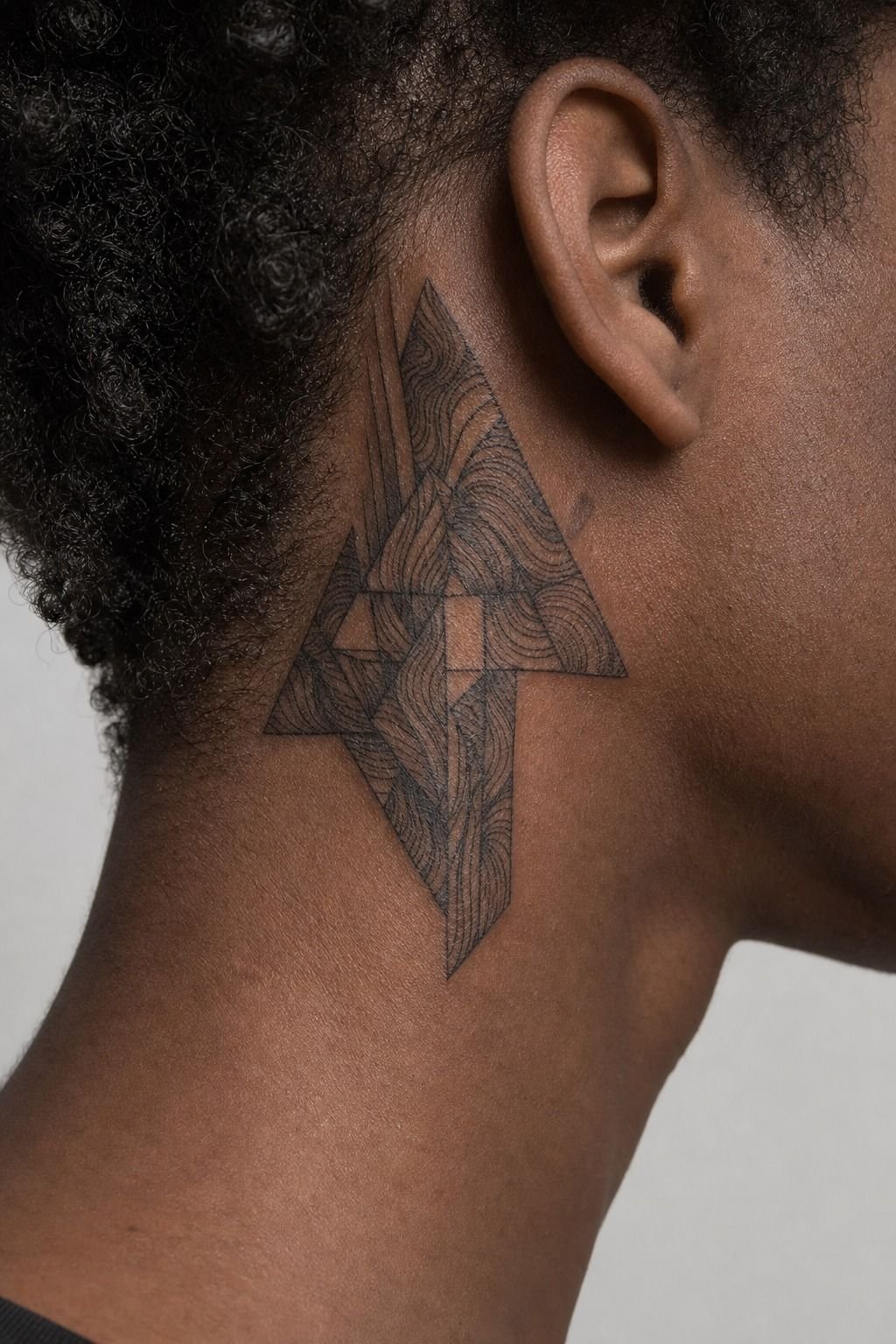
Swap rigid stacked triangles for a layered triangle tattoo with one loose organic line cutting through it.
18Abstract Line Art Tattoo With Red Ink Accents
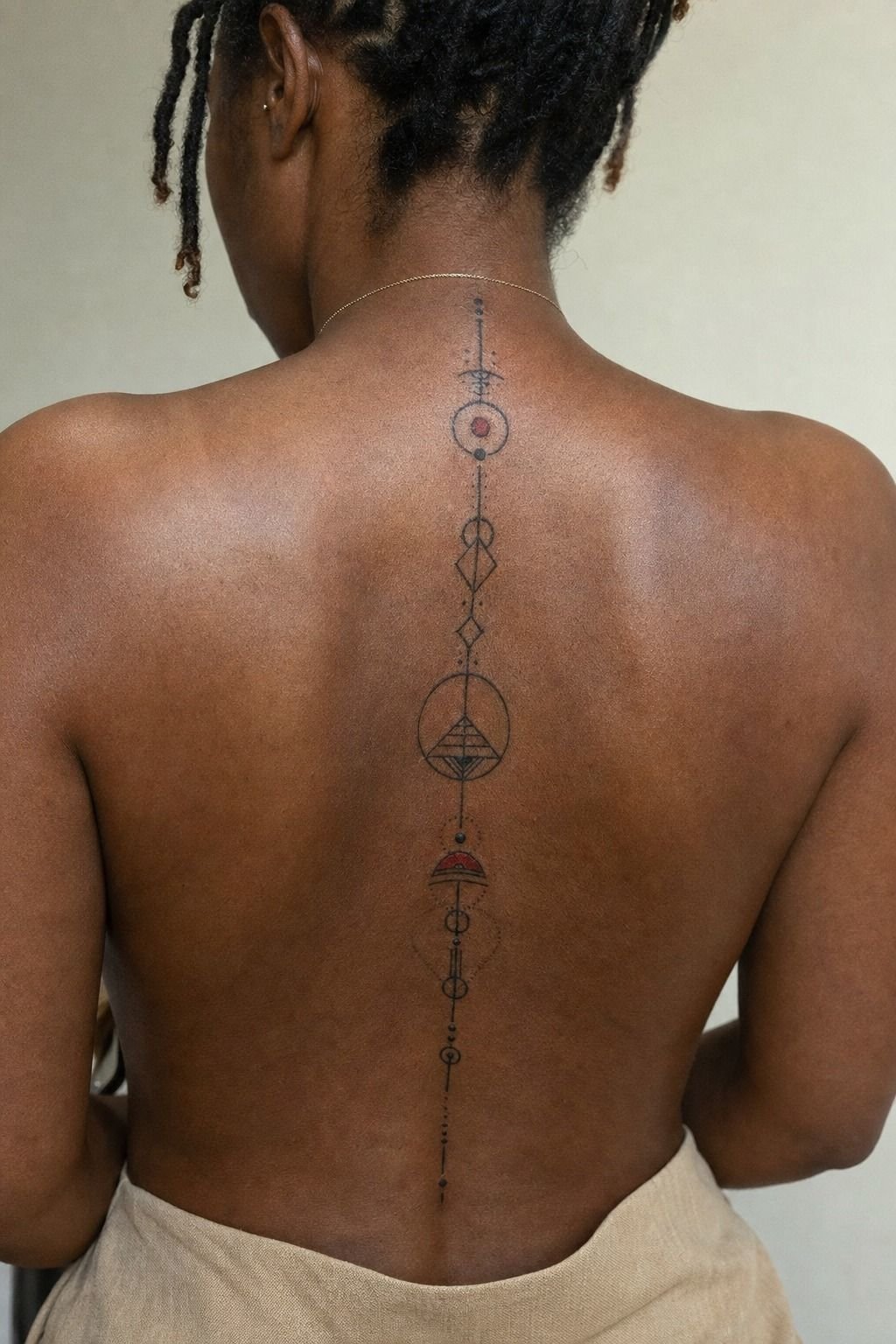
Use red ink as spice, not the whole meal. Along the spine, a few red accents can make black abstract line art feel bright and personal, especially against deep ebony skin. It’s a sharp contrast, and it photographs beautifully.
Your artist should start with red tattoo pigment only after the black lines are settled. Red can be saturated, but it needs careful packing so the skin doesn’t get overworked.
And give it sun protection after healing. Fresh red plus UV is a rough combo.
19Geometric Patchwork Tattoo Across The Forearm
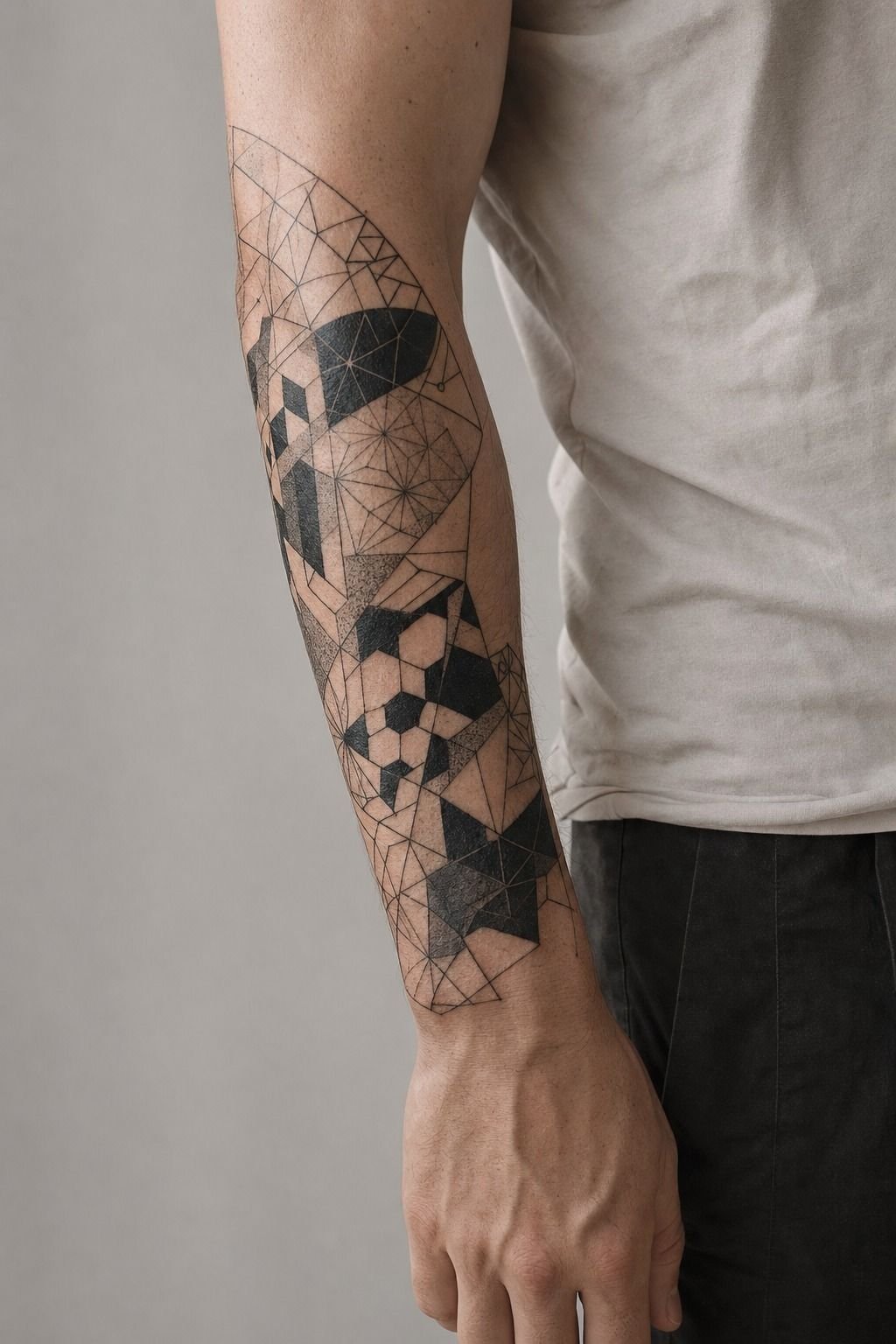
Build a forearm patchwork tattoo one clean piece at a time. A circle, an angular fish, a central eye, and a few dots can connect through spacing instead of matching line-for-line. Your collection will look intentional without becoming a sleeve overnight.
The Three-Shape Method is simple: repeat only three visual languages, such as circles, triangles, and thin arcs. Tattoo reference photos help your artist understand the mood, but Pinterest-exact copying is a bad call. For artist research, start with a geometric tattoo artist near you.
What I’d Tell You Before Booking
I’ve tattooed plenty of people who came in with a folder full of geometric references and one impossible request: make it tiny, delicate, detailed, cheap, and permanent. You can usually have three of those things. Not all five.
Here’s my honest decision frame. If you want the tattoo to read clearly in ten years, choose contrast first.
Black is your best friend for longevity, while color is spice. If you want ultra-fine lines, choose a low-wear area like the outer arm, thigh, calf, or upper back.
Don’t put a dense little constellation on a wrist and expect it to stay crispy forever. That size on a wrist is gonna mush out, so bump it up the forearm where it breathes and ages nicer.
I also want you to choose an artist for healed work, not just fresh photos. Fresh tattoos are shiny, swollen, and flattering almost by default. Healed work tells you whether their circles stay round, whether their black fill stays solid, and whether their lines were one clean pull instead of ten fuzzy ones.
A good geometric tattoo artist can explain why they’d change your reference. That conversation is a green flag.
And don’t cheap out on the part that stays in your skin. A shop minimum can run about $50 to $100, while typical U.S. hourly rates sit around $100 to $250 depending on the artist and region. You don’t need the most expensive artist in town.
You need someone whose healed portfolio matches your plan.
The Questions I Get Asked Most
How much does a Abstract Geometric Tattoo usually cost?
A small abstract geometric tattoo usually costs about $100 to $300, though shop minimums can start around $50 to $100 and hourly work often runs $100 to $250. Healed quality matters more than bargain pricing. Your placement, size, and artist’s linework specialty will change the final number.
Are Abstract Geometric Tattoo a good idea for a first tattoo?
Yes, especially if you choose an outer forearm, thigh, calf, or shoulder placement. Simple black geometry ages well when you avoid overcrowding it. You’ll want a design that means something to you, but don’t force symbolism into every empty gap.
How do I choose a tattoo artist for Abstract Geometric Tattoo?
Look for healed photos with clean circles, confident straight lines, and smooth black fill. A healed portfolio is your best filter. Ask whether they specialize in geometric work, inspect the studio’s hygiene standards, and compare their style with this blackwork geometric tattoo dotwork mandala guide.
How much do Abstract Geometric Tattoo hurt?
Pain depends on placement. Forearms, thighs, calves, and outer shoulders are usually more tolerable, while ribs, feet, hands, and sternums are spicy. Lines feel sharper than shading. Your artist can pace the appointment, and you can take short breaks when your body needs one.
How long does a Abstract Geometric Tattoo take to heal?
The surface usually heals in 2 to 3 weeks, while the tattoo can take 2 to 3 months to fully settle. Gentle aftercare protects the lines. Wash with unscented soap, apply a thin layer of moisturizer, avoid pools and sun, and don’t pick flakes.
What’s the best placement for Abstract Geometric Tattoo?
The outer forearm and calf are strong picks because they’re visible, lower-wear, and give your lines room to breathe. Scale is easier to control there. For a more hidden option, choose your upper arm or thigh and let the design follow muscle flow.
Where I’d Start First
If I had to pick one, I’d start with interlocking circles on the outer forearm. Curves forgive tiny body movement better than a packed grid, so they stay readable longer. Pin that shape for later and compare it with these geometric tattoo ideas.