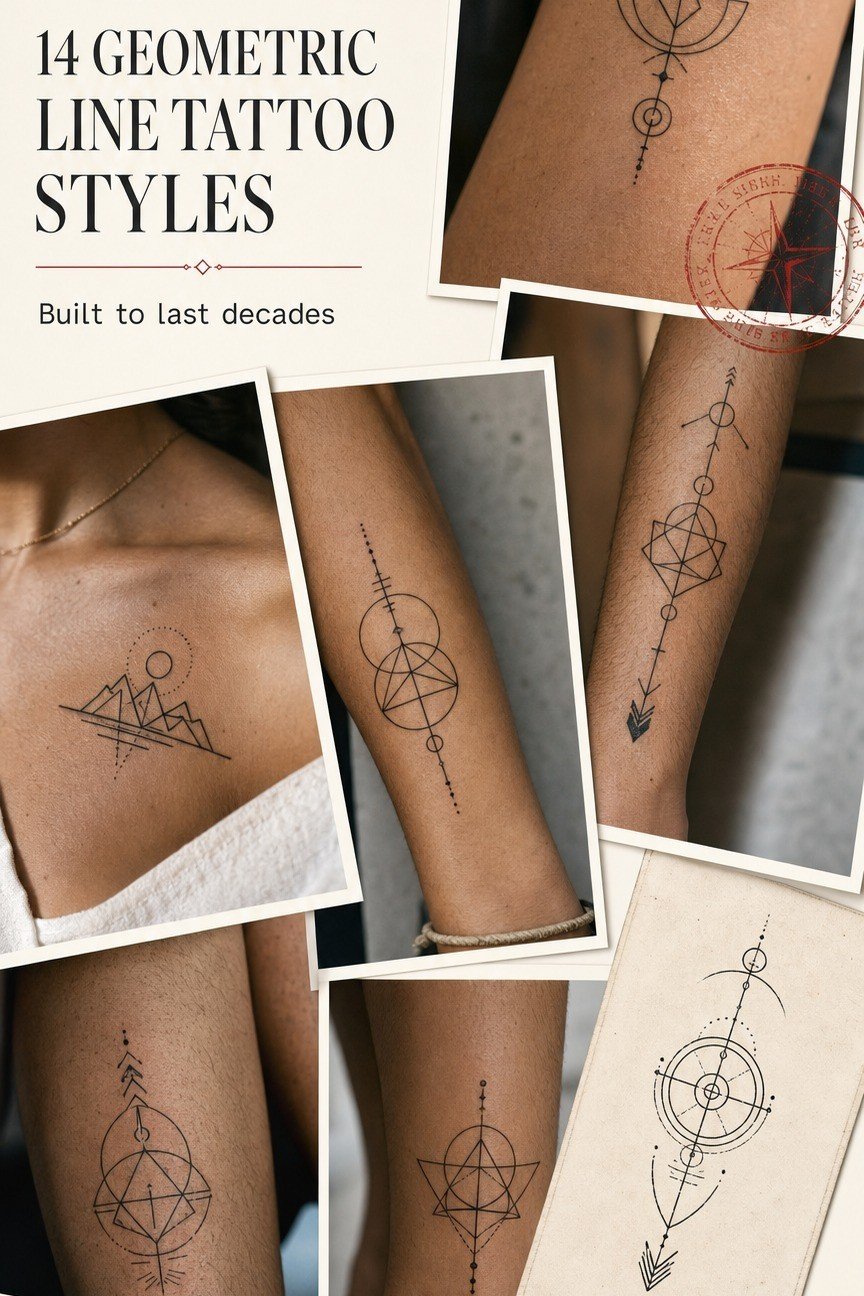
A geometric line tattoo stays crisp when you give the design enough skin, contrast, and a placement that can wear it well. Tiny detail is where people get chewed up. I’d rather bump your design up half an inch than watch it turn to soup in five years.
- Start With a Single Continuous Geometric Line
- Pick a Minimalist Geometric Mountain Line Tattoo
- Place Fine Geometric Lines Along Your Forearm
- Choose Interlocking Circles With Clean Linework
- Plan a Geometric Fish Tattoo in Profile
- Build a Symmetrical Geometric Linework Design
- Add Meaning Through Sacred Geometric Symbols
- Match Line Weight to Your Body Placement
- Test Geometric Line Density Before Tattooing
- Keep Fine Lines Clear With Proper Spacing
- Choose Black Ink for Crisp Geometric Contrast
- Plan Pain Around Bony Tattoo Placements
- Protect Healing Lines With Simple Aftercare
- Find an Artist Skilled in Geometric Linework
1Start With a Single Continuous Geometric Line
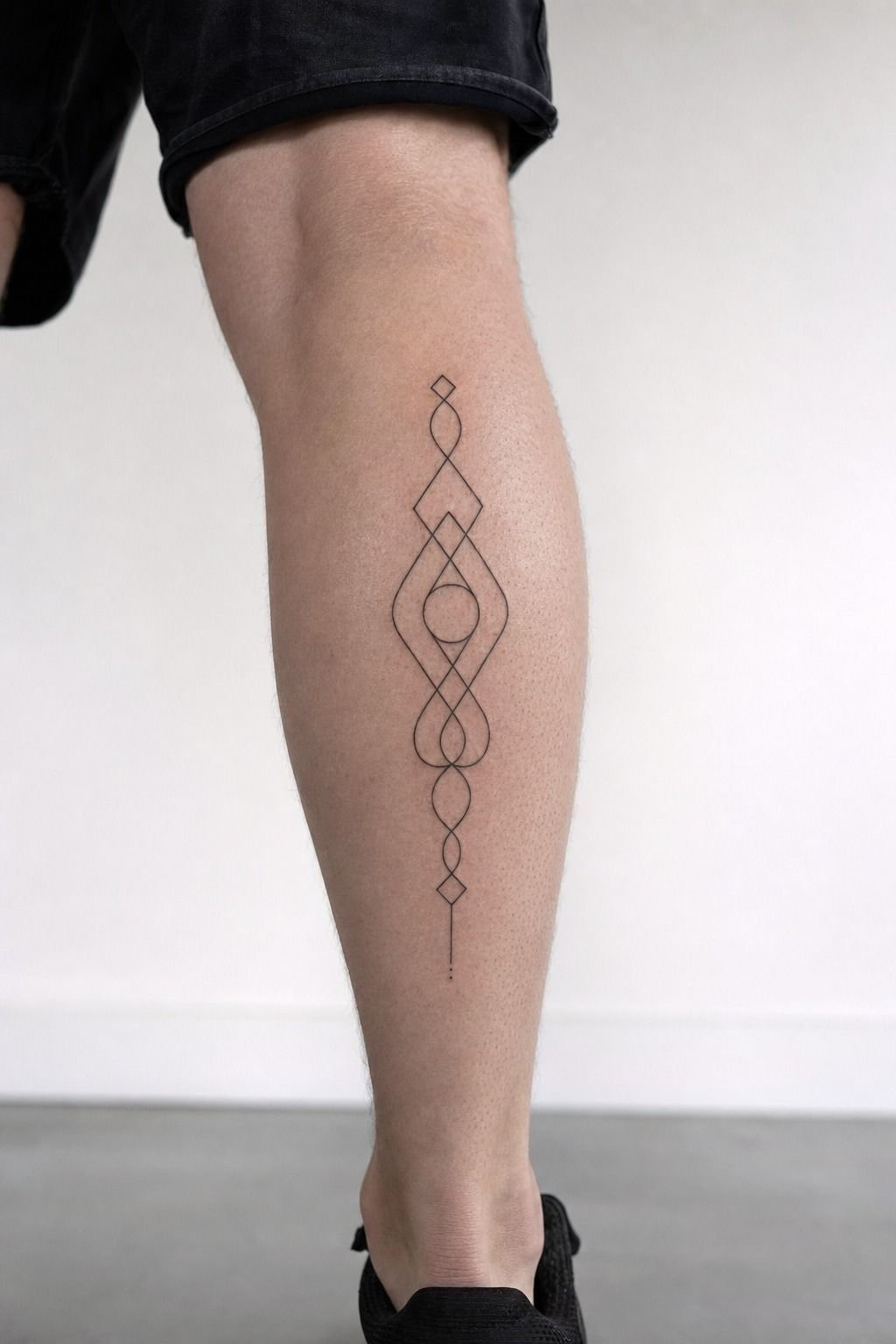
Start with one clean route through the design. A continuous line gives your linework tattoo design a clear rhythm, whether it becomes an abstract shape, a mountain, or a small symbol on your calf. You want one confident pull, not a maze of fussy stops that makes the eye work too hard.
Bring your artist a rough reference, then let them redraw it for your anatomy. On a calf, a 3-to-5-inch vertical design usually has room to breathe, especially on fair or cool-pink skin where black ink reads sharply.
I’d skip hairline-thin loops here. A slightly firmer black pigment line will heal cleaner and look more refined from across the room.
Use the Continuous-Path Rule: every turn should have a reason. If you can’t trace it with your finger without getting lost, your tattoo probably needs editing. For symbolism ideas, see this guide to straight line tattoo meaning.
2Pick a Minimalist Geometric Mountain Line Tattoo
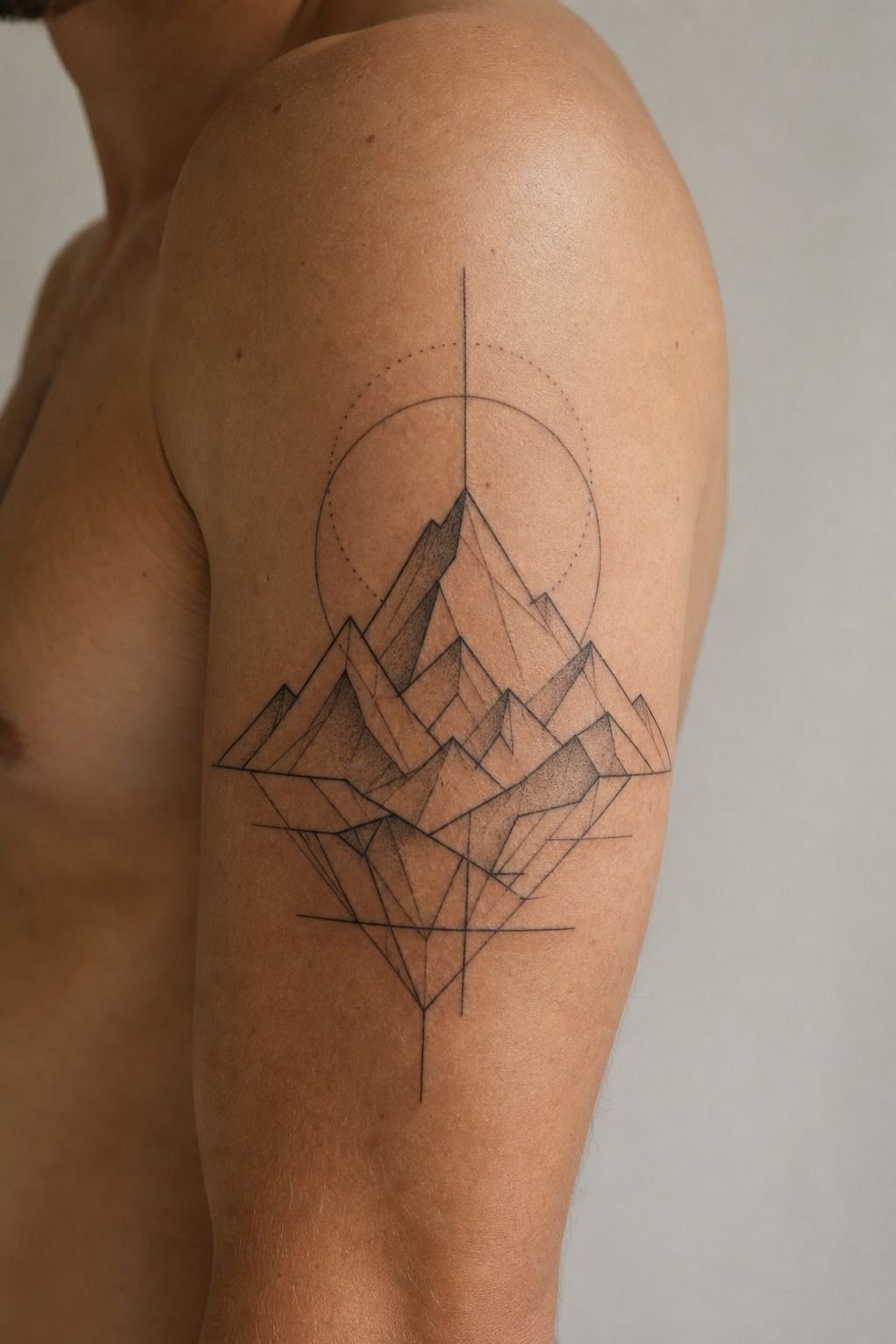
Pick a mountain only if you’re okay keeping it simple.
3Place Fine Geometric Lines Along Your Forearm
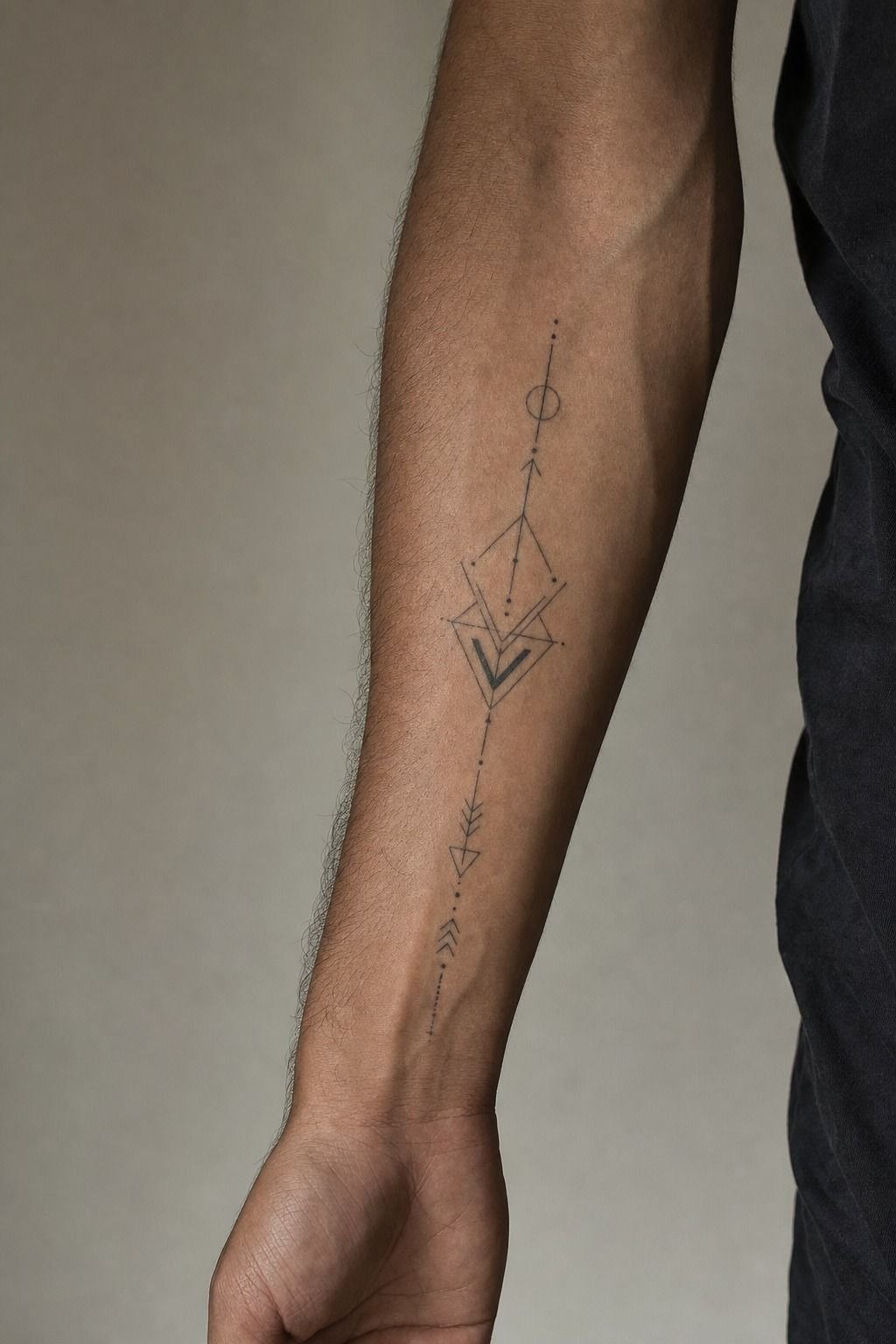
Place long geometric lines with the forearm’s flow, not straight across it like a ruler got dropped on you. Your forearm naturally tapers from elbow to wrist, so a design with a wider upper section and a calmer lower finish tends to read more intentional.
A 4-to-6-inch piece on the outer forearm is a low-wear move. You’ll see it, it heals nice, and it’s less spicy than ribs or feet. Keep the smallest gaps open enough that your artist can make crispy, confident lines with a single-needle cartridge or a small round liner.
I’ve seen people force a big mandala into a wrist-sized area. Bad call.
That size on a wrist is gonna mush out, so bump it up the forearm where it can breathe and age nicer. Check the placement notes in this fine line tattoo needles and longevity guide.
4Choose Interlocking Circles With Clean Linework
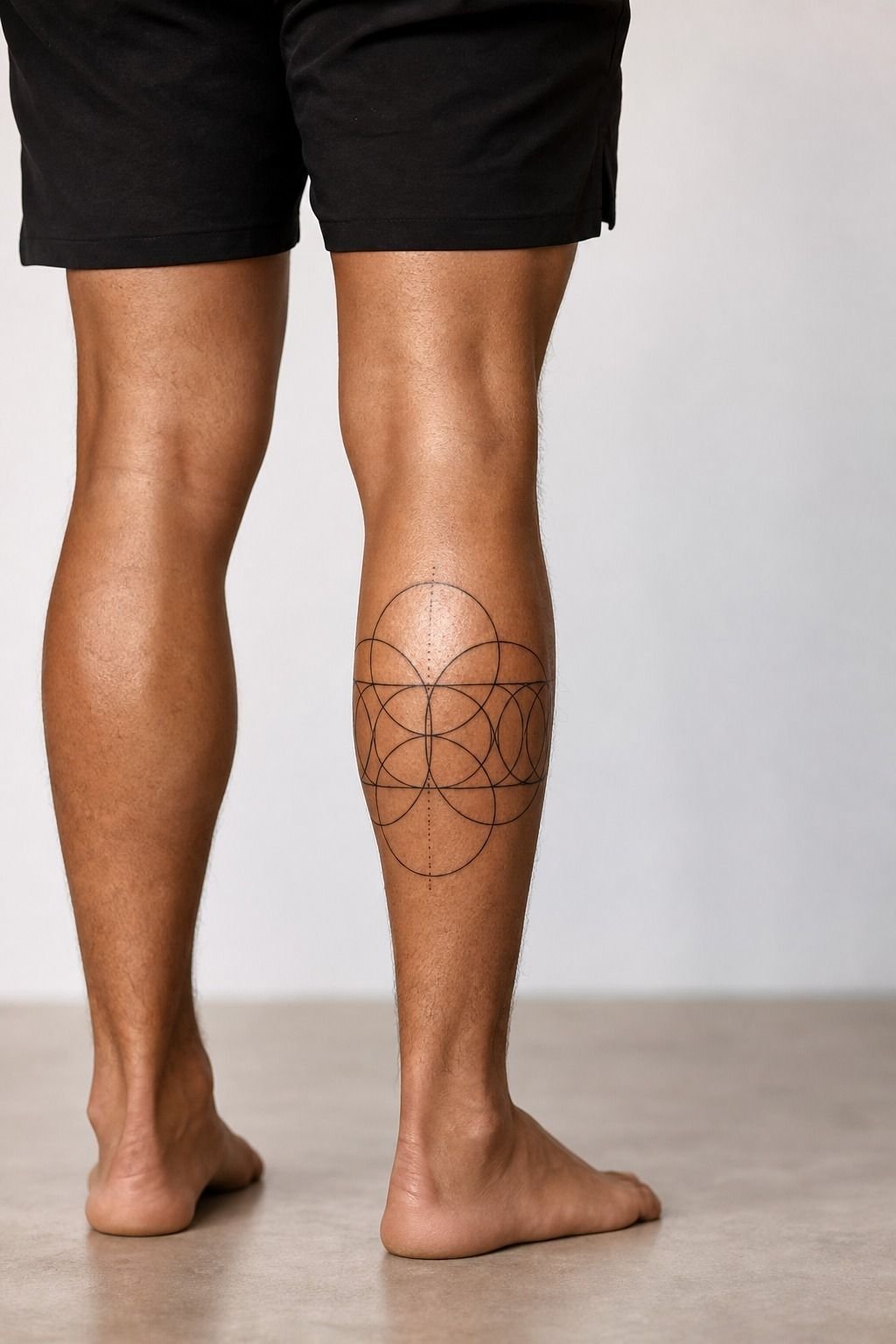
Choose interlocking circles when you want geometry that moves with the body.
5Plan a Geometric Fish Tattoo in Profile
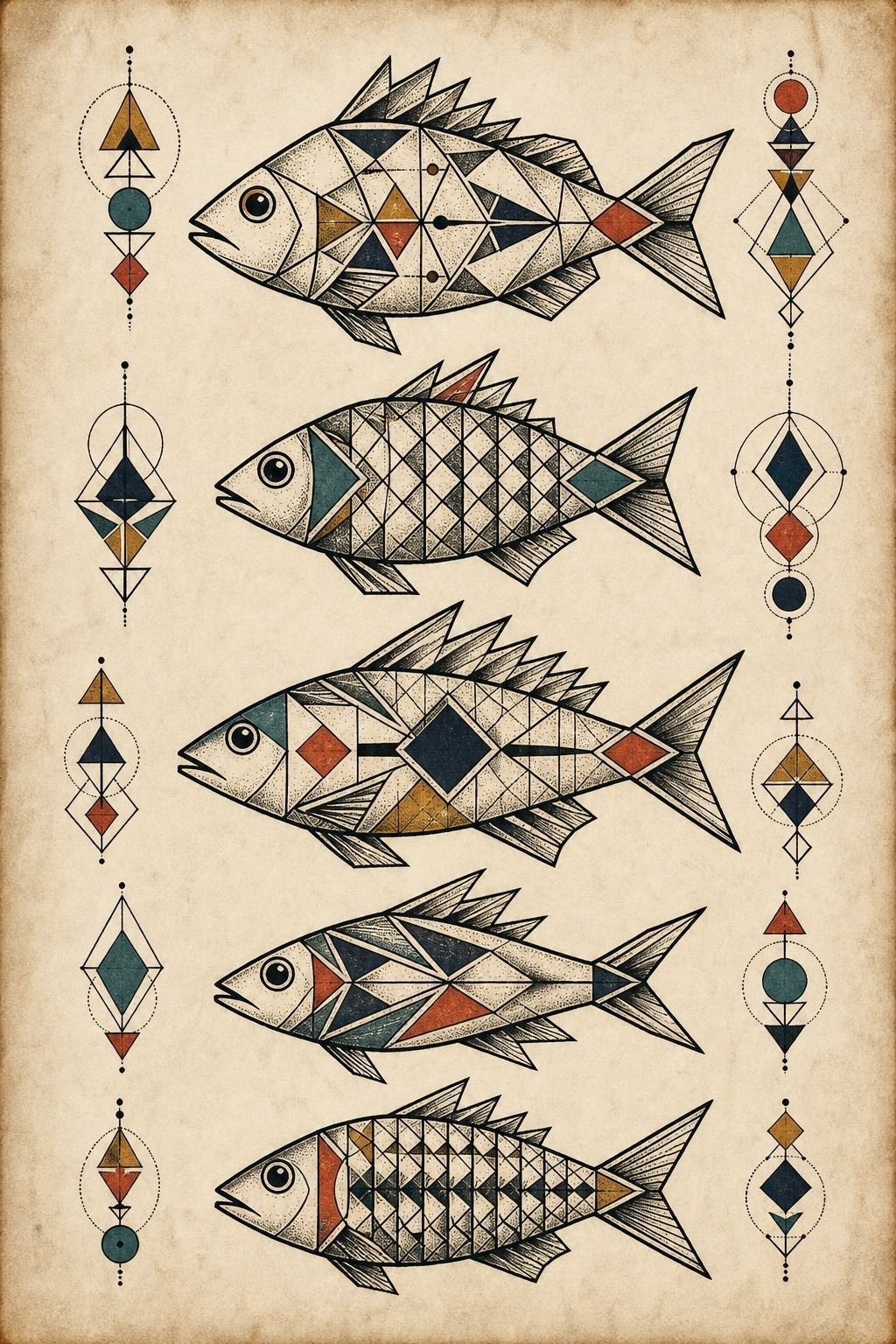
Plan a geometric fish tattoo in profile before you worry about shading. A fish’s spine, fins, and tail already give you a natural direction, so the geometry should support that shape instead of chopping it into random triangles. On a flash sheet, look for a clean profile with one readable eye and a tail that still makes sense at arm’s length.
Give your artist a 3-to-5-inch minimum if you want scales suggested with linework. Smaller than that, individual scale patterns can become visual noise. Eternal Ink Maxx Black holds a strong outline, while a light grey wash can keep the body soft without overworking the skin.
Your fish tattoo doesn’t need to be literal. An abstract geometric tattoo with a recognizable silhouette usually ages better than micro-realism crammed into a tiny fin. For a different animal route, this geometric cat tattoo guide shows how silhouette does the work.
6Build a Symmetrical Geometric Linework Design
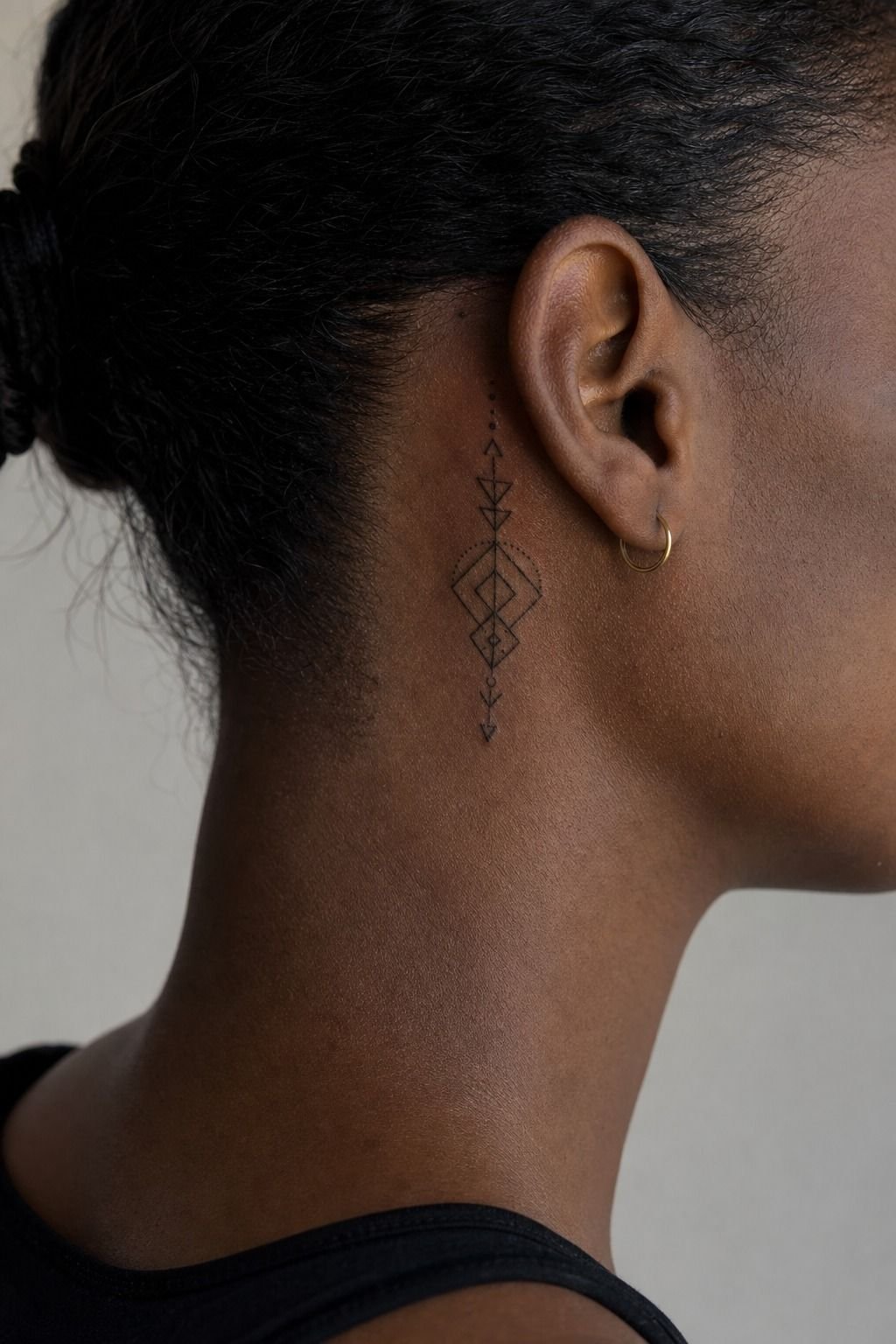
Build symmetry around one body landmark. Behind the ear, that might be the curve where your ear meets your neck.
On the sternum, it’s the centerline. If you ignore that anchor, even a mathematically balanced design can look crooked once it’s on skin.
For deep ebony skin, clean contrast matters more than ultra-fine detail. Ask for a slightly bolder round liner grouping and a simple mirrored shape that reads in normal daylight. Black is your best friend for longevity, and a clear outline will show better than pale grey details that disappear after healing.
The Anchor-Point Rule is simple: your design should look centered when you move, not only when you hold still for a photo. But behind-the-ear skin is high-wear and curved, so accept that touch-ups can be part of the deal.
That’s not failure. It’s placement.
7Add Meaning Through Sacred Geometric Symbols
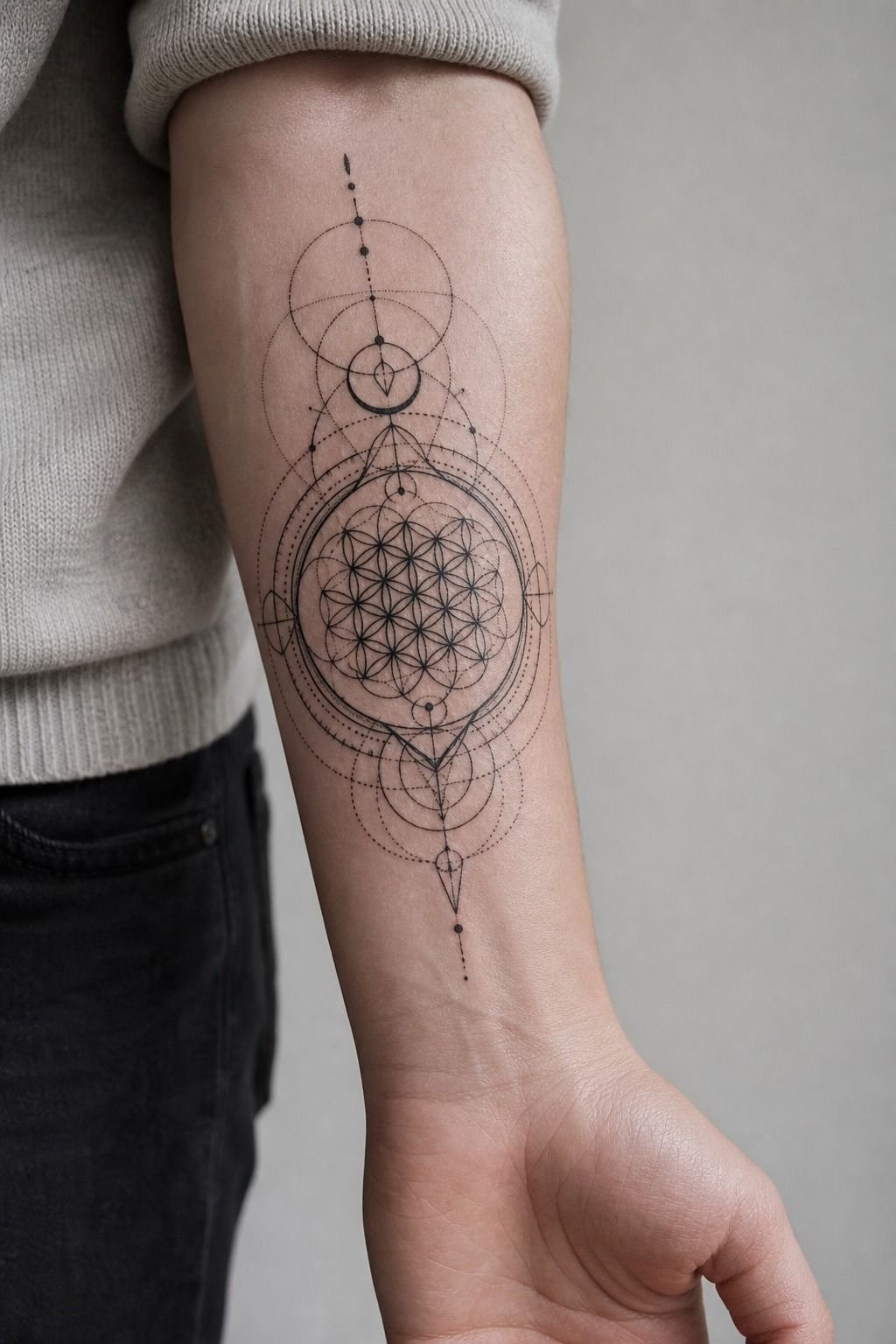
Add meaning through sacred geometric symbols only after you know what you want the symbol to say. A circle can mean continuity. A triangle can point to change, balance, or a personal memory.
The meaning doesn’t need a textbook lecture if it’s clear to you.
A flower-of-life-style pattern on the inner forearm needs enough open skin between rings. I’d keep the core design at least 3 inches wide, then let the outer circles stay airy instead of packing them tight. Kuro Sumi Imperial Black can make those repeated shapes look soft but still solid once healed.
What’s the point of a meaningful tattoo if the details blur into each other? Pick one symbol and give it room. If you’re considering a facial placement, read about line chin tattoo meaning before treating it like a casual experiment.
8Match Line Weight to Your Body Placement
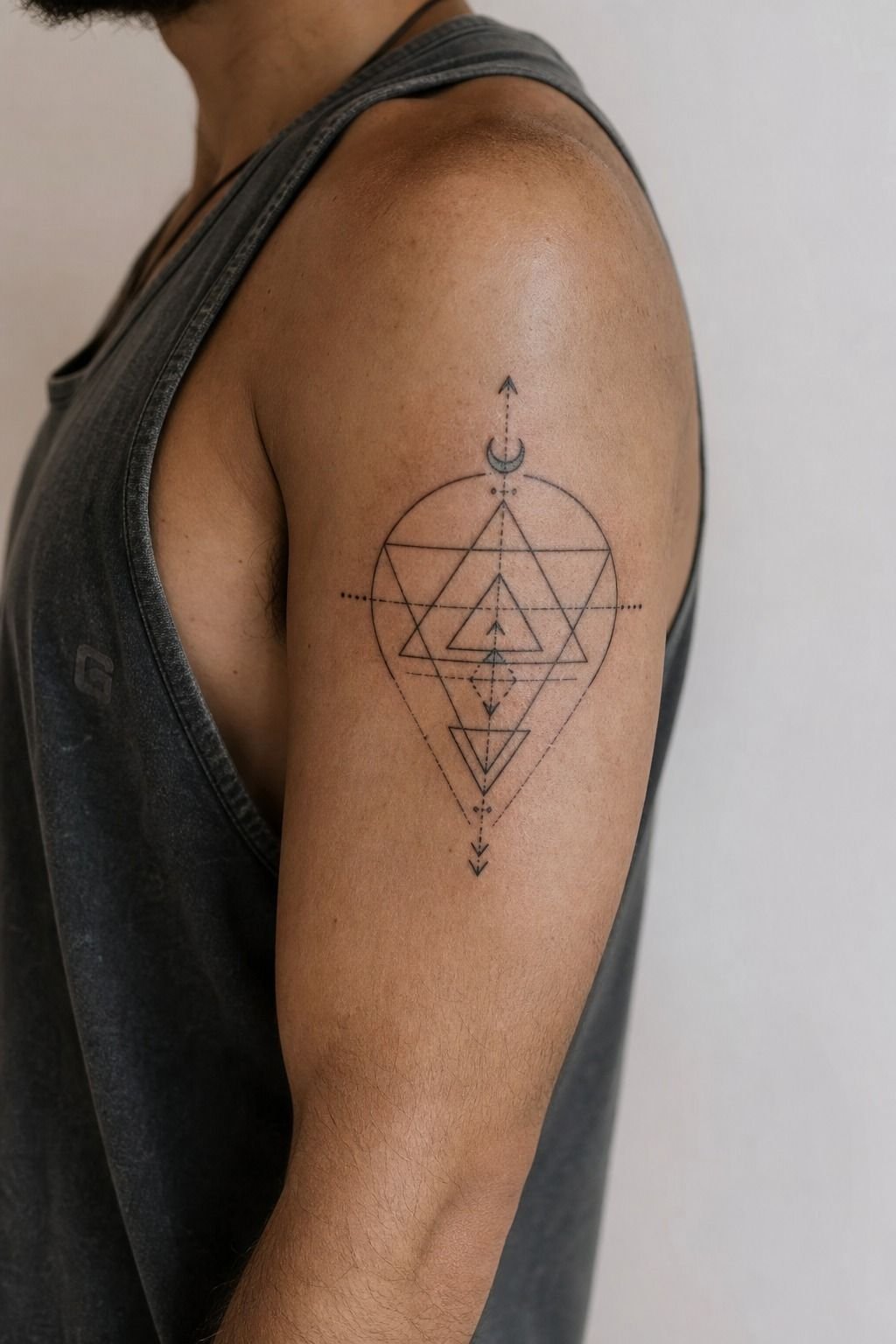
Match line weight to where the tattoo lives. Your upper arm can handle finer geometric lines than your fingers, feet, or elbow ditch because it gets less friction and less constant movement. Low-wear zones usually give you the calmest long-term result.
For an upper-arm design, ask your artist to balance a crisp outer line with softer interior detail. A 3RL needle may suit small accents, while a larger liner can hold the main framework.
You don’t need the same needle for every part. Good linework is built in layers.
I’d skip super-thin perimeter lines on a high-wear spot just because they look delicate in a fresh photo. Fresh tattoos lie a little.
Healed tattoos tell the truth. Your artist should show you healed portfolio shots, not only day-one work.
9Test Geometric Line Density Before Tattooing
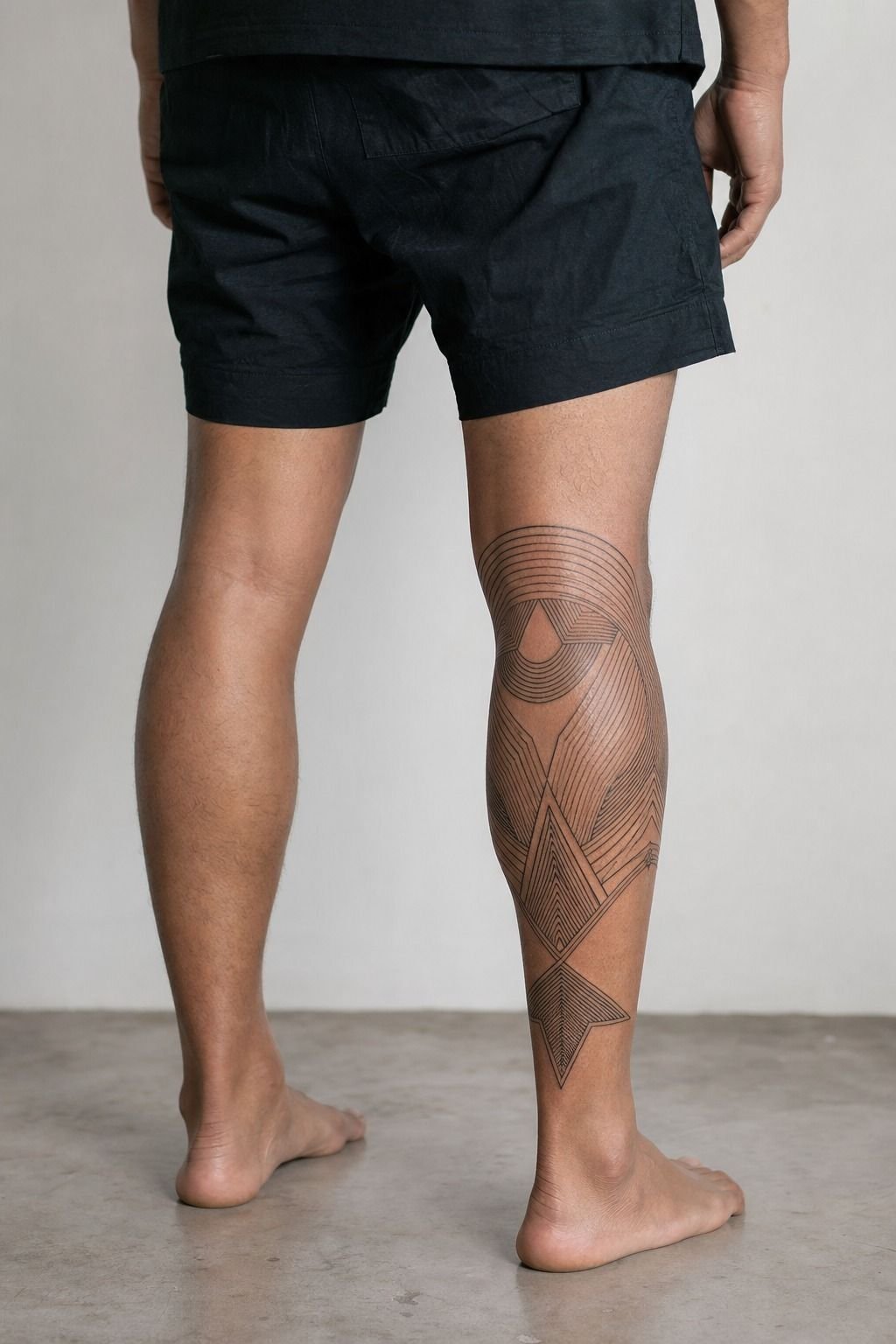
Test density before the needle touches skin. Print the design at the actual size, tape it to your calf, and look at it from a few feet away. If the negative space vanishes at that distance, your tattoo needs fewer lines or more room.
The Skin-Breathing Grid works best when the tiniest gaps aren’t all stacked in one area. Break up tight clusters with an open circle, a larger triangle, or a clean strip of untouched skin. A thermal stencil transfer can look sharp, but it doesn’t show how ink will spread slightly during healing.
But don’t confuse detail with quality. A bold, controlled design usually holds longer than a packed technical drawing.
Your body isn’t paper, and it won’t stay perfectly still. Find more wearable references in these fine line tattoo ideas.
10Keep Fine Lines Clear With Proper Spacing
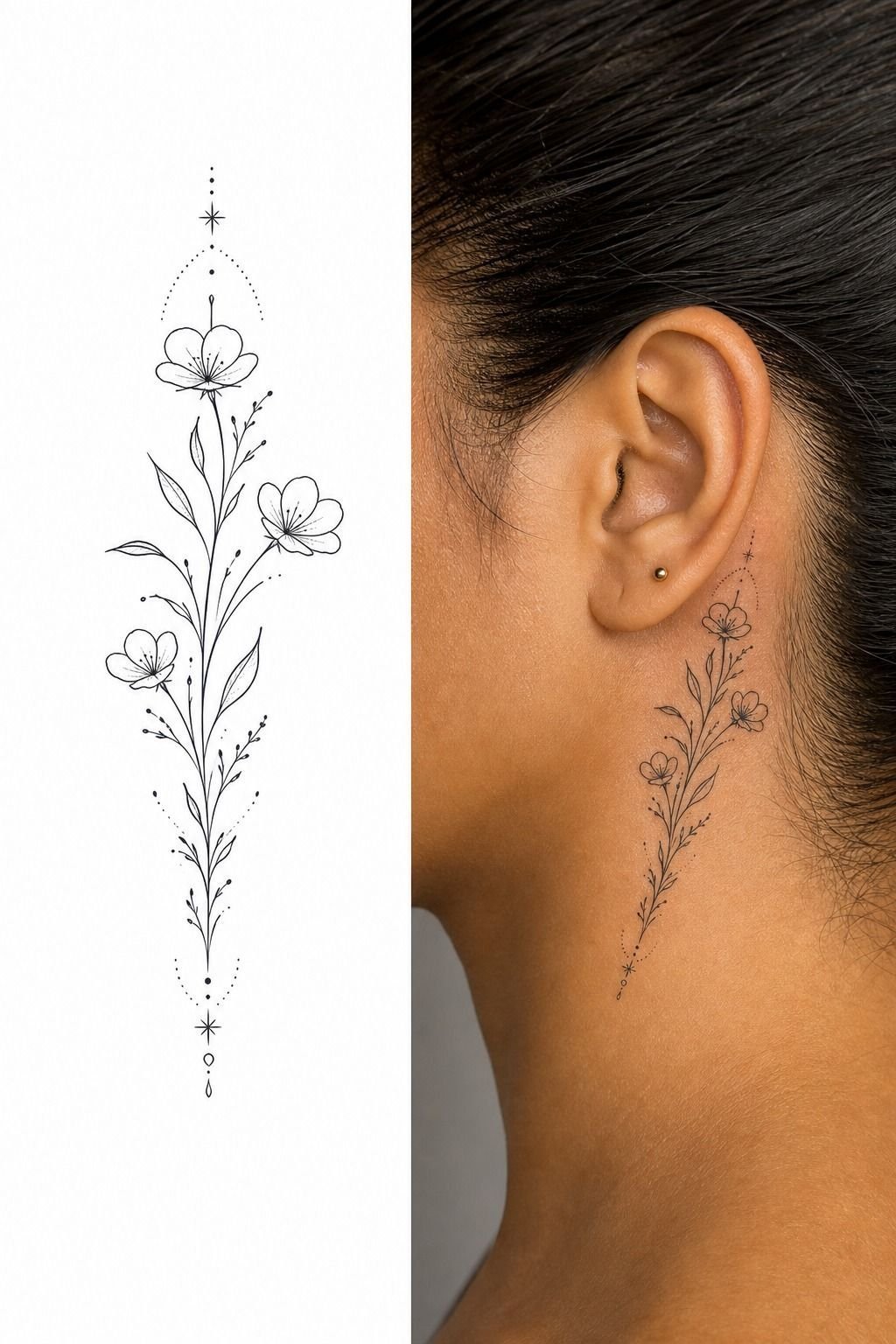
Keep fine lines clear by treating every gap like it needs a future.
11Choose Black Ink for Crisp Geometric Contrast
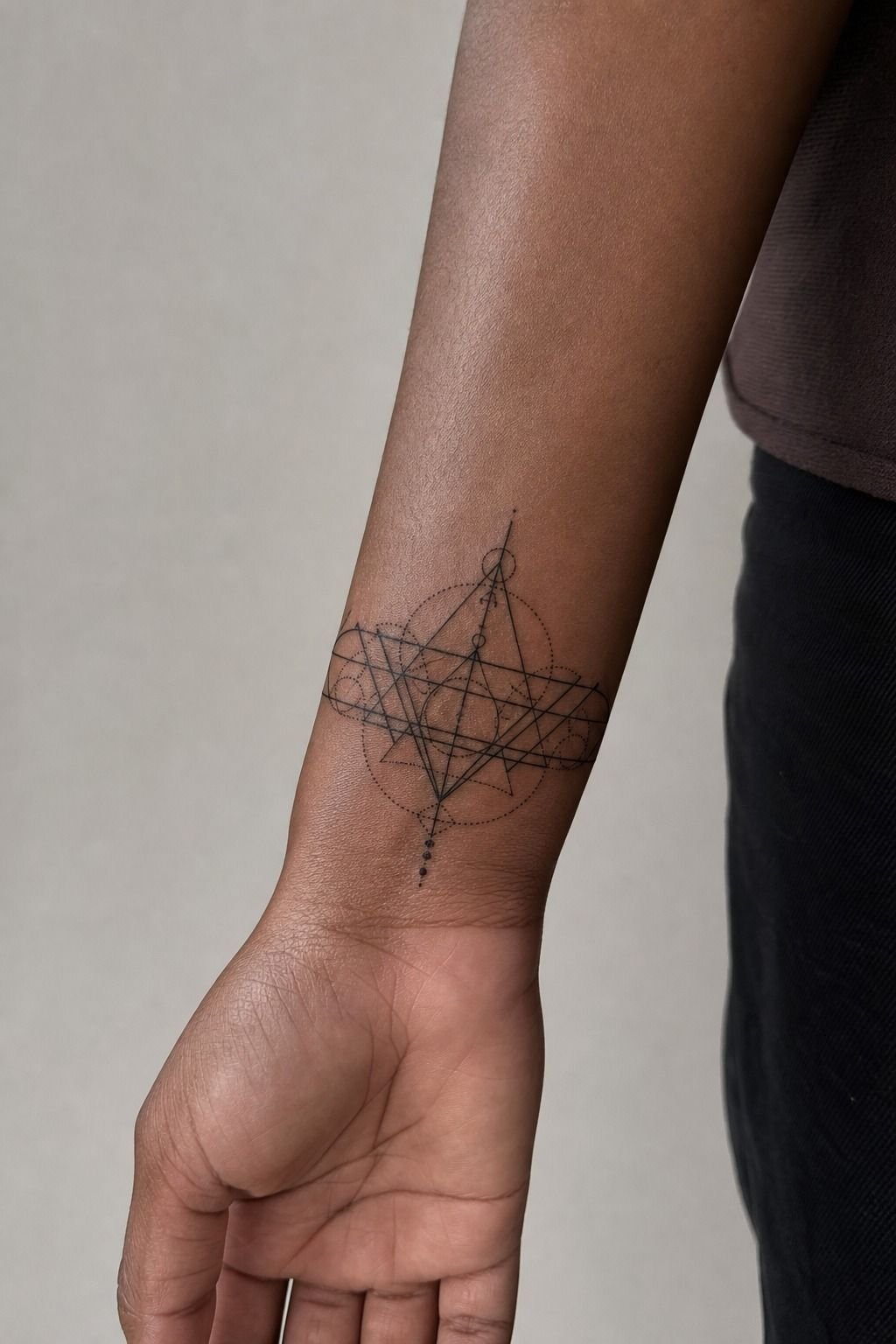
Choose black ink if longevity is the priority. Color can be spice, but black linework gives geometric art tattoo designs the clearest contrast across many skin tones and holds its structure well with decent sun care. It’s the no-bullshit choice.
On a wrist with deep brown skin and a warm undertone, a saturated black design can look especially clean if the linework is bold enough. Your artist may use Dynamic Triple Black for solid contrast, then leave the negative space untouched. That clean skin break is part of the design.
And please use sunscreen after it’s fully healed. UV dulls tattoos, especially pieces that live in the open all summer. I’d take a black geometric mark with good spacing over pale ornamental detail that fades into the background.
12Plan Pain Around Bony Tattoo Placements
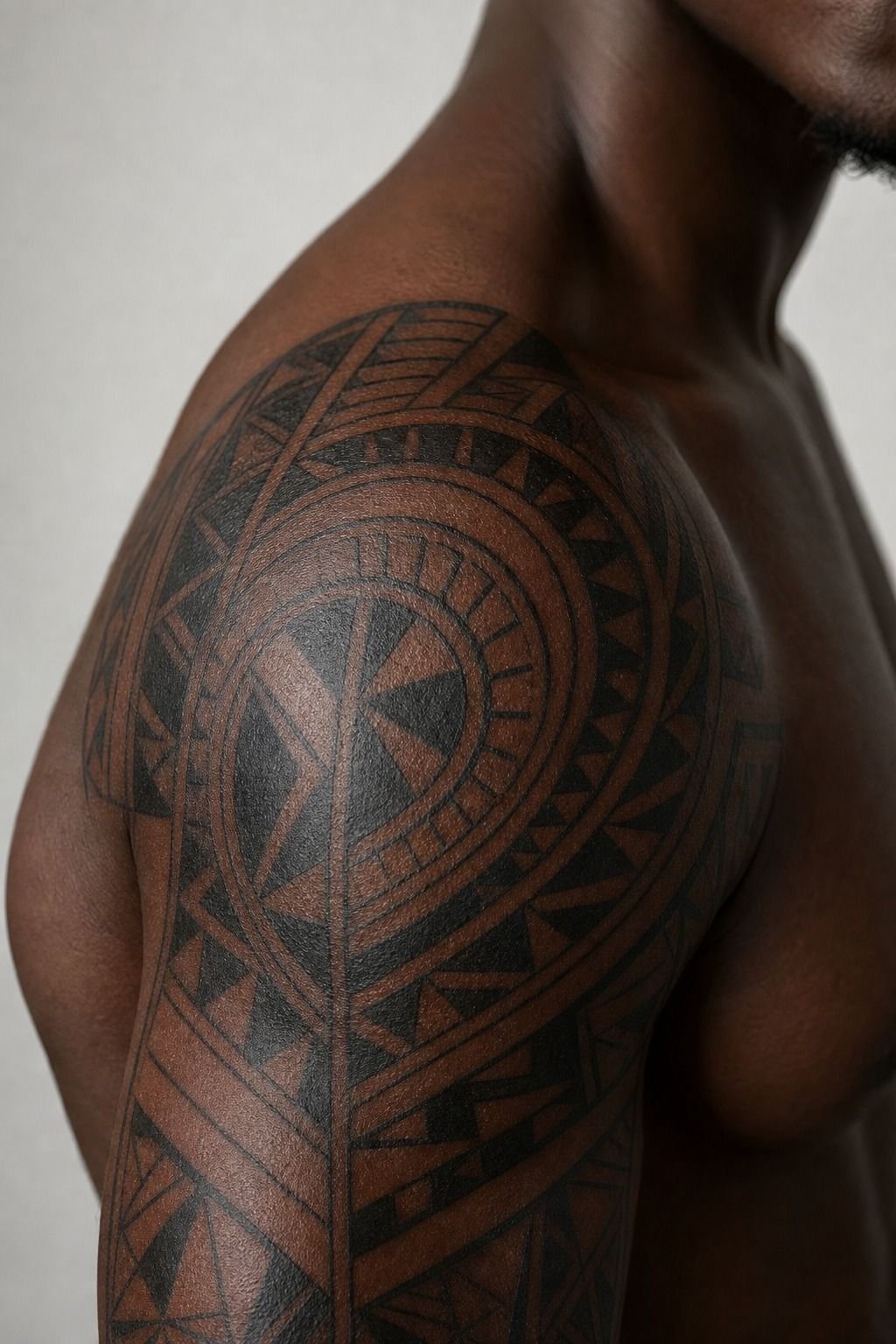
Plan pain around the placement before you fall in love with the mockup. Lines feel sharper, shading is a dull burn, and color packing is usually the spiciest part. Geometric tattoos are often line-heavy, so the sensation can be very focused.
A shoulder piece can be manageable, but the closer it moves onto bone, the more you’ll feel each pass. Eat first, hydrate, and wear clothing that gives access to the area. Tap out for five rather than pass out on me.
Your artist would rather pause than tattoo a shaky client.
13Protect Healing Lines With Simple Aftercare
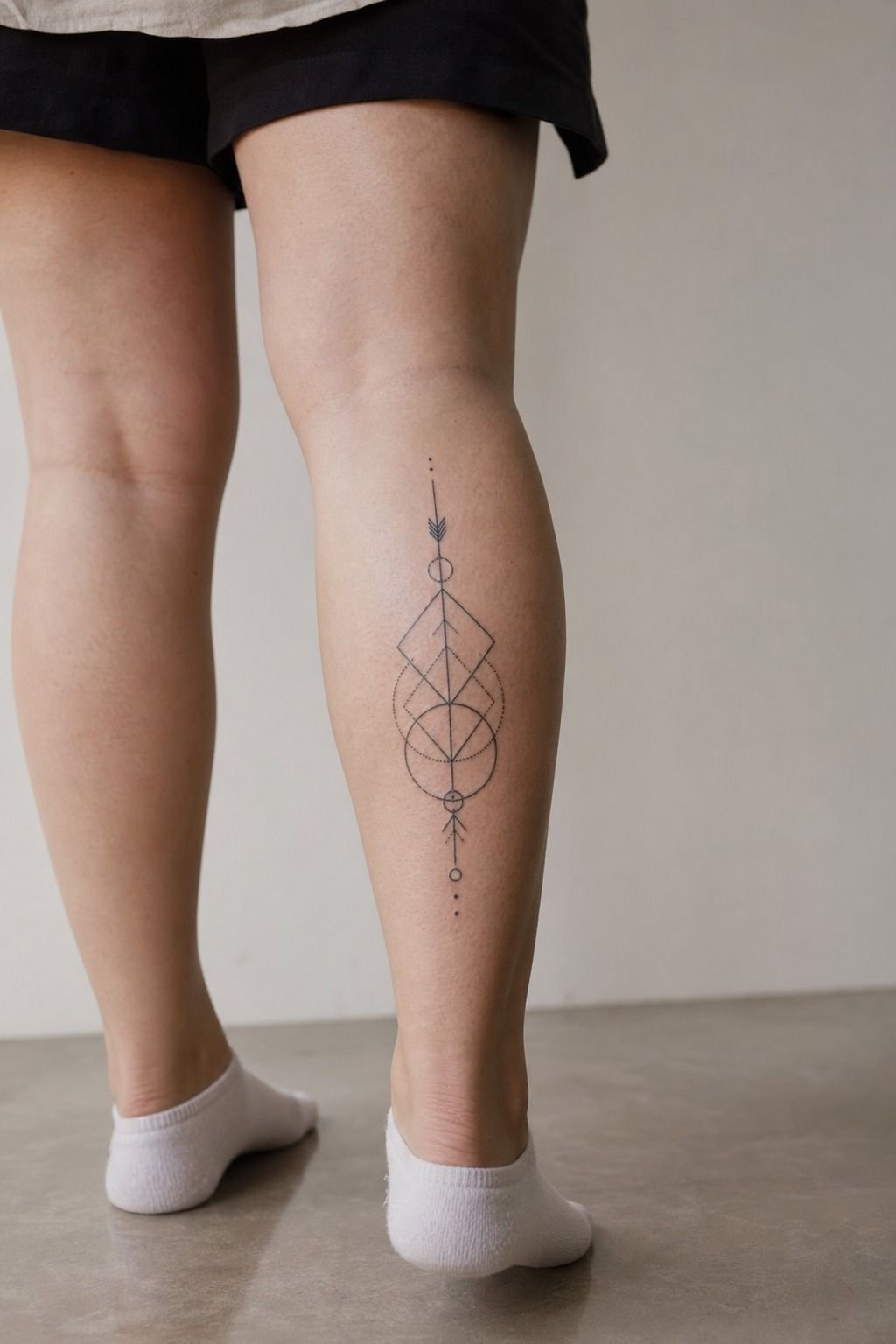
Protect healing lines like they’re an open wound, because for the first few days, they are. Wash with gentle unscented soap, pat dry with a clean paper towel, then use a thin layer of Aquaphor Healing Ointment or your artist’s preferred ointment. Don’t suffocate it.
Surface healing usually takes about 2 to 3 weeks. Full settling can take 2 to 3 months, and that shiny silver-skin stage can make lines look dull before they sharpen back up. No pools, no long soaks, no gym friction rubbing the spot raw.
It’ll peel like a sunburn. Don’t pick the flakes or you can pull color out and leave patchy sections behind.
Your calf tattoo will thank you for loose pants, clean sheets, and a little patience. Boring aftercare wins every time.
14Find an Artist Skilled in Geometric Linework
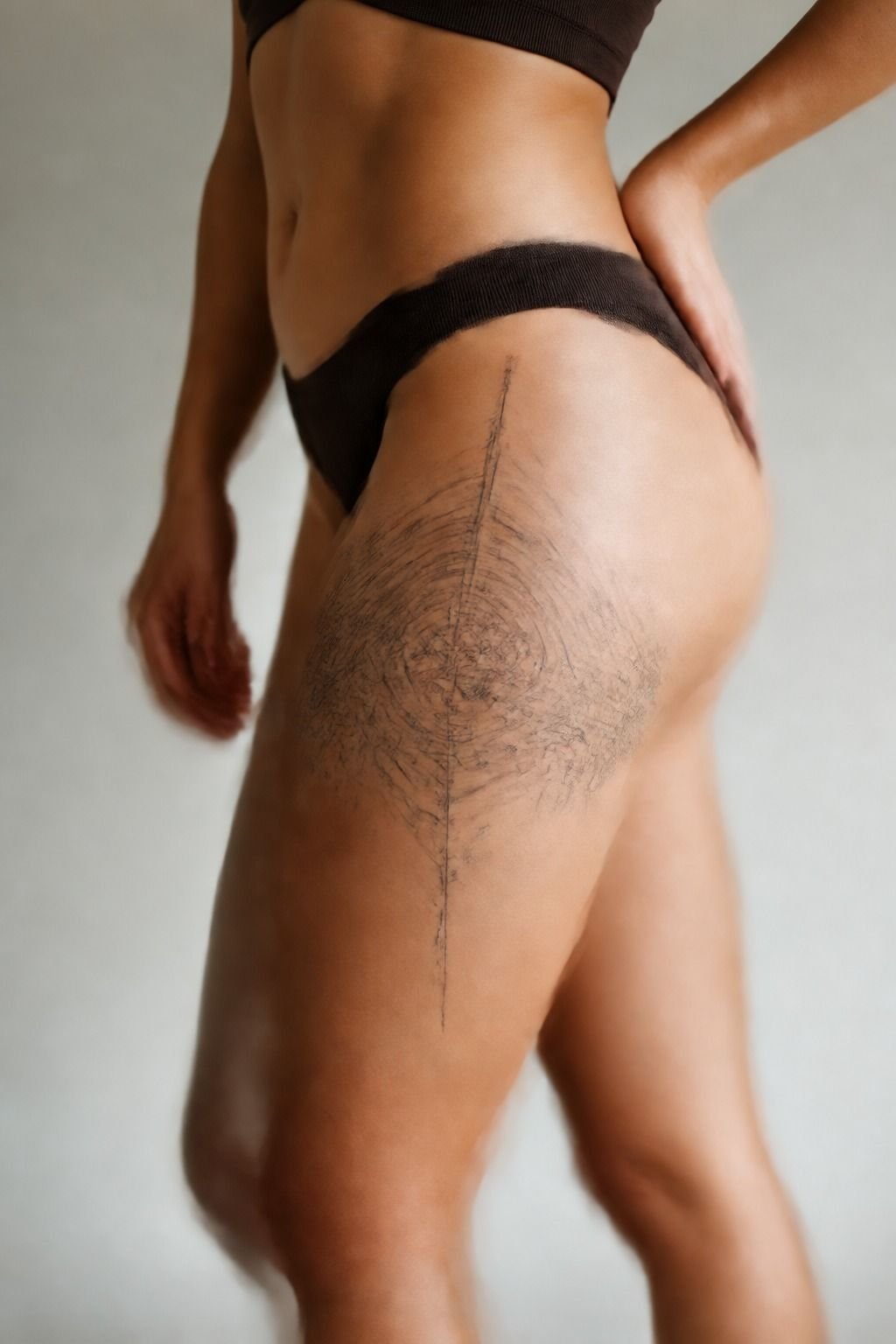
Find an artist whose healed work proves they can pull straight, smooth geometry on real bodies. Search their portfolio for circles that stay round on calves, symmetry that follows thighs, and lines that don’t look scratchy under close-up photos. Fresh work alone isn’t enough.
Ask whether they build designs around anatomy, how they choose line weight, and whether they’ll adjust a reference that’s too dense. A typical US shop minimum runs around $50 to $100, while hourly rates often sit around $100 to $250 depending on the artist and region. Good work costs, but a cover-up costs more.
I’d pass on an artist who promises an exact Pinterest clone. You want their hand, their technical judgment, and a design that fits your thigh rather than somebody else’s photo. Start your search with a geometric tattoo artist near me guide, then study healed results.
Why I Push Back on Tiny Perfect Geometry
I’m Hazel, and I push back on tiny, ultra-detailed geometry more than almost anything else in a consult. Not because I hate delicate work. I love fine line when it has a job to do.
But people arrive with a phone full of perfect close-ups, then ask for that same design shrunk to the side of a finger or squeezed onto a wrist. The photo is fresh, edited, and taken from six inches away.
Your tattoo has to live through handwashing, sunlight, movement, and normal skin changes.
I’ve watched well-planned simple designs heal velvety and clean, while overstuffed ones lose their crispness fast. The issue isn’t that the artist “failed” or that fine line is bad.
It’s physics. Ink sits in skin, skin moves, and microscopic gaps don’t stay microscopic forever.
So I’ll redraw a pattern, remove a ring, or widen a line if that gives you something that still reads from across the room later.
That can feel like I’m taking away the fun part. I get it.
You wanted every tiny detail. But I’d rather give you a tattoo that ages cute on you than a fresh stencil that only looks good for two weeks. Geometry rewards restraint.
A strong circle, a balanced triangle, one clear animal silhouette. Those are the pieces that keep their shape.
And there’s another thing: you should like the artist’s version. Your references tell me what you’re drawn to, but your body and their hand should decide the final drawing. That’s how you get a solid tattoo, not a copy that feels borrowed.
The Questions I Get Asked Most
How much does a Geometric Line Tattoo usually cost?
Most geometric line tattoos cost about $100 to $300 for a small-to-medium piece, depending on placement and complexity. Shop minimums often run $50 to $100, while hourly work commonly sits around $100 to $250.
– Clear budgeting – Small forearm pieces – Larger calf sessions
Are Geometric Line Tattoo a good idea for a first tattoo?
Yes, they can be a strong first tattoo if you choose a readable design and a tolerable placement like your outer forearm, upper arm, or calf. Simple geometry ages better than tiny packed detail.
– Open negative space – Solid black linework – Personal symbolism
How do I choose a tattoo artist for Geometric Line Tattoo?
Choose an artist with healed geometric work, clean circles, and confident straight lines. A healed portfolio matters most, because it shows how their ink settles after the fresh-photo stage.
– Healed tattoo photos – Clean, licensed studio – Anatomy-aware redraws
How much do Geometric Line Tattoo hurt?
They can feel spicy on ribs, feet, hands, and sternum, while forearms, thighs, and shoulders are usually more tolerable. Placement changes the experience more than the design itself.
– Sharp line sensation – Breaks when needed – Food and hydration
How long does a Geometric Line Tattoo take to heal?
Surface healing usually takes 2 to 3 weeks, while full healing can take 2 to 3 months. Gentle aftercare protects the lines while your skin settles.
– Unscented soap – Thin ointment layer – No pools or sun
What’s the best placement for Geometric Line Tattoo?
The outer forearm and calf are two reliable choices because they offer room, visibility, and lower wear than fingers or feet. More breathing room means clearer lines over time.
– Outer forearm flow – Calf wrap potential – Upper-arm longevity
Where I’d Start First
If I had to pick one step, I’d start with testing the design at its real size. Tiny gaps look clever on a screen, then blur on living skin. Print it, tape it on, and make it bigger if it feels crowded.