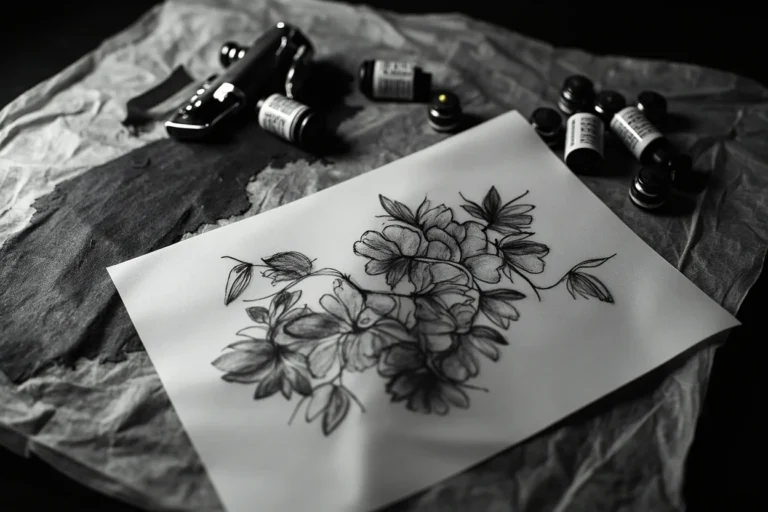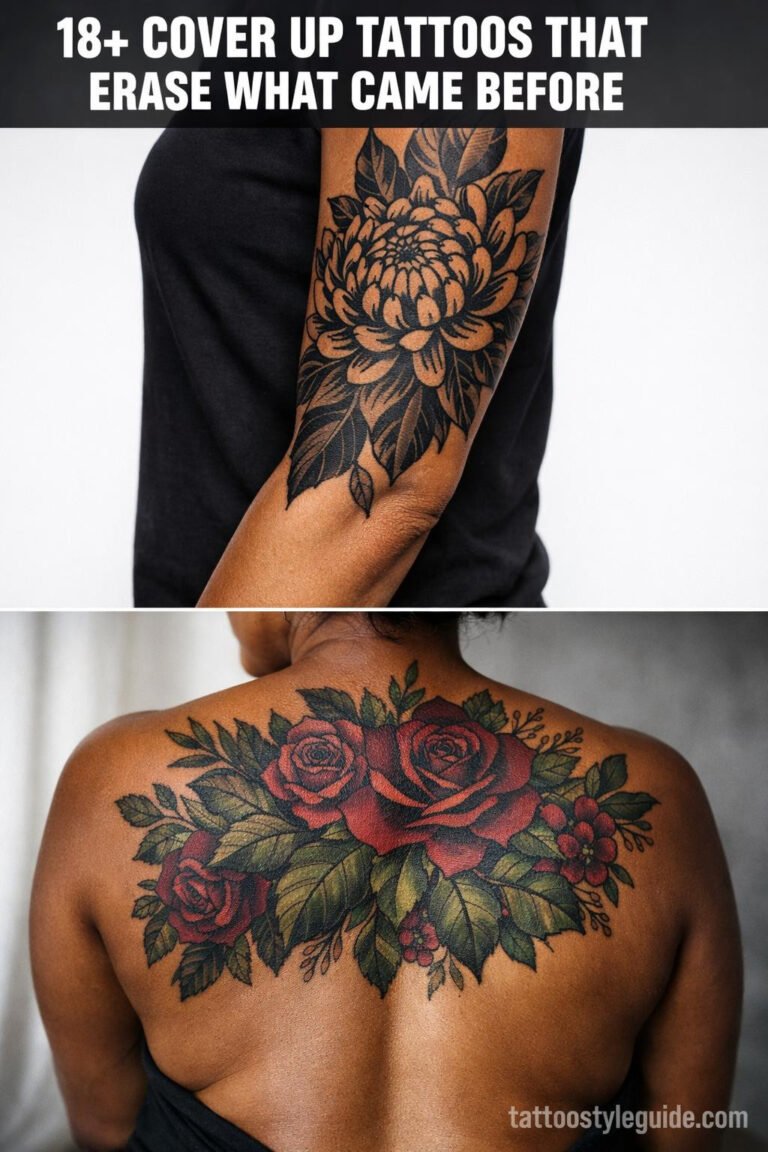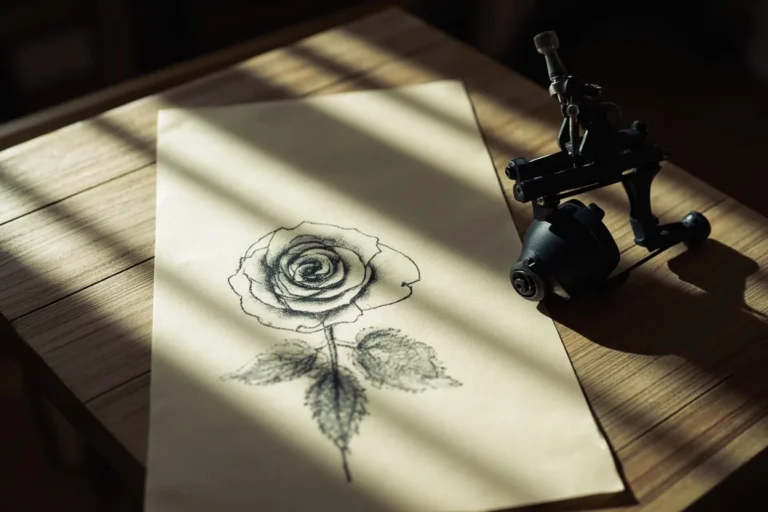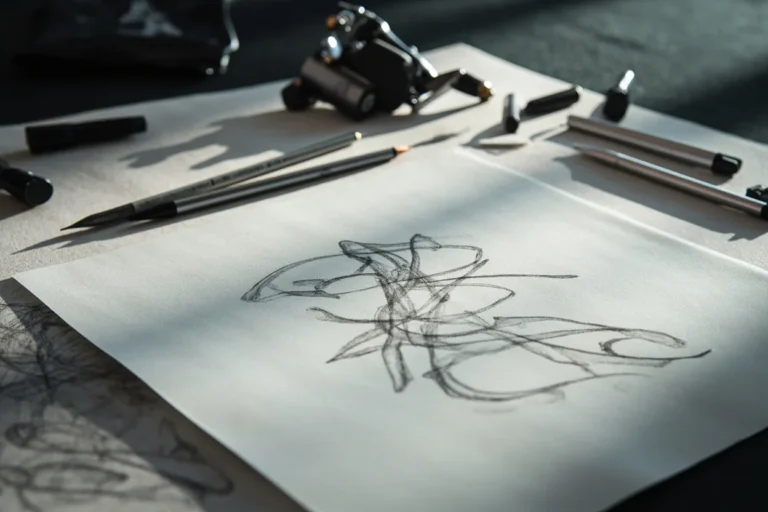
Fine line tattoo ideas look effortless when they are fresh. The real question is whether the lines have enough strength, spacing, and placement support to stay readable after healing.
Quick answer: The best fine line tattoo ideas are single flowers, small animals, script, birth flowers, moons, tiny symbolic objects, minimalist butterflies, and light ornamental work placed on lower-friction skin with enough size to breathe.
Fine line ideas that make sense
Fine line is a technique, not a promise that every design can be tiny.
| Idea | Best use | Watch-out |
|---|---|---|
| Single flower | Personal and clean | Petals need air |
| Small animal | Readable silhouette | Avoid fur texture |
| One-word script | Quiet text | Loops can close |
| Moon phase | Simple rhythm | Needs enough length |
| Fine line butterfly | Soft transformation symbol | Wing detail must be limited |
Placement does most of the heavy lifting with fine line work. Inner wrist, sternum, behind the ear, and outer forearm all tend to heal clean and hold detail longer because the skin is relatively flat and doesn’t flex constantly. Ribcage and fingers are trickier. Fingers especially, because that skin sheds fast and lines can spread into a blur within a year. Go in knowing that.
Design scale matters just as much as placement. A botanicals piece with delicate stems reads crisp at two inches on the inner arm. That same design crammed onto a knuckle or a toe turns into a smudge by year two. If your artist is suggesting you scale up even slightly, listen. They’re not upselling you, they’re keeping the piece readable from across the room.
Fading is about more than ink
Fine line is the most unforgiving style, the needle doesn't lie.
Fine line tattoos can heal beautifully, but the margin for error is smaller. Too little depth, too much sun, too much friction, or lines placed too close together can make the design soften quickly.
Outer forearm, upper arm, shoulder, rib, and calf are often safer than fingers, palms, feet, or the side of the hand. If you want a fine line hand tattoo, expect more maintenance.
Sun exposure is the number one killer of fine line work, full stop. UV breaks down ink faster than almost anything else, and fine line has no bold backup to hide behind. High-wear zones like the forearm, collarbone, and back of the neck see constant light. SPF 50 after it’s healed isn’t optional, it’s maintenance. Skip it and you’re looking at a touch-up inside two years.
Skin type plays a real role too. Oilier skin tends to soften fine lines faster during healing because the skin pushes back against hairline-thin needle passes. Drier, tighter skin usually holds detail sharper. Aftercare in weeks one and two sets the baseline. Over-moisturizing can actually blur fresh lines before they’re locked in, so follow your artist’s specific instructions rather than drowning it in lotion.
Portfolio checks before you book
Fine line work should be judged by healed photos first.
- Look for healed work at one year or more.
- Check whether lines stayed even after healing.
- Ask how often their fine line clients need touch-ups.
- Ask what they would make bolder for your placement.
Look at healed work, not fresh photos. Fresh tattoos look incredible on everyone. What you need to see is how an artist’s fine line looks six months or a year out. Ask them directly for healed shots. Any experienced fine line artist has them. If they can’t produce any, that tells you something important about how their work holds up.
Check line consistency through the full piece, not just the focal point. Shaky linework on background stems or secondary elements shows up when an artist is rushing or working outside their confident range. You also want to see how they handle transitions where fine line meets any whip shading or black and grey fill. Clean edges there take real skill. If those transitions look muddy in their portfolio, they’ll look muddy on your skin.
When fine line is the wrong choice
Fine line is not the best answer for every idea. Dense portraits, tiny pets, detailed mandalas, and long quotes often need more structure.
The better artist will sometimes say no to the smallest version. That is not gatekeeping. That is protecting the tattoo.
Certain spots on the body just don’t hold fine line well, and no amount of skill changes anatomy. Palms, the sides of fingers, feet, and inner lips are high-wear, high-moisture areas that eat ink. Artists who are honest with you will say no or strongly redirect you. The ones who take the booking anyway are chasing your money, not your long-term satisfaction.
Fine line is also the wrong call if you want something that reads bold from a distance. A sleeve you want people to notice at a party, a back piece meant to command attention, a memorial piece that needs to feel heavy and permanent. Those calls for bold lines, solid black fill, saturated color. Fine line is quiet and intimate by nature. If you want impact, you want a different style.