
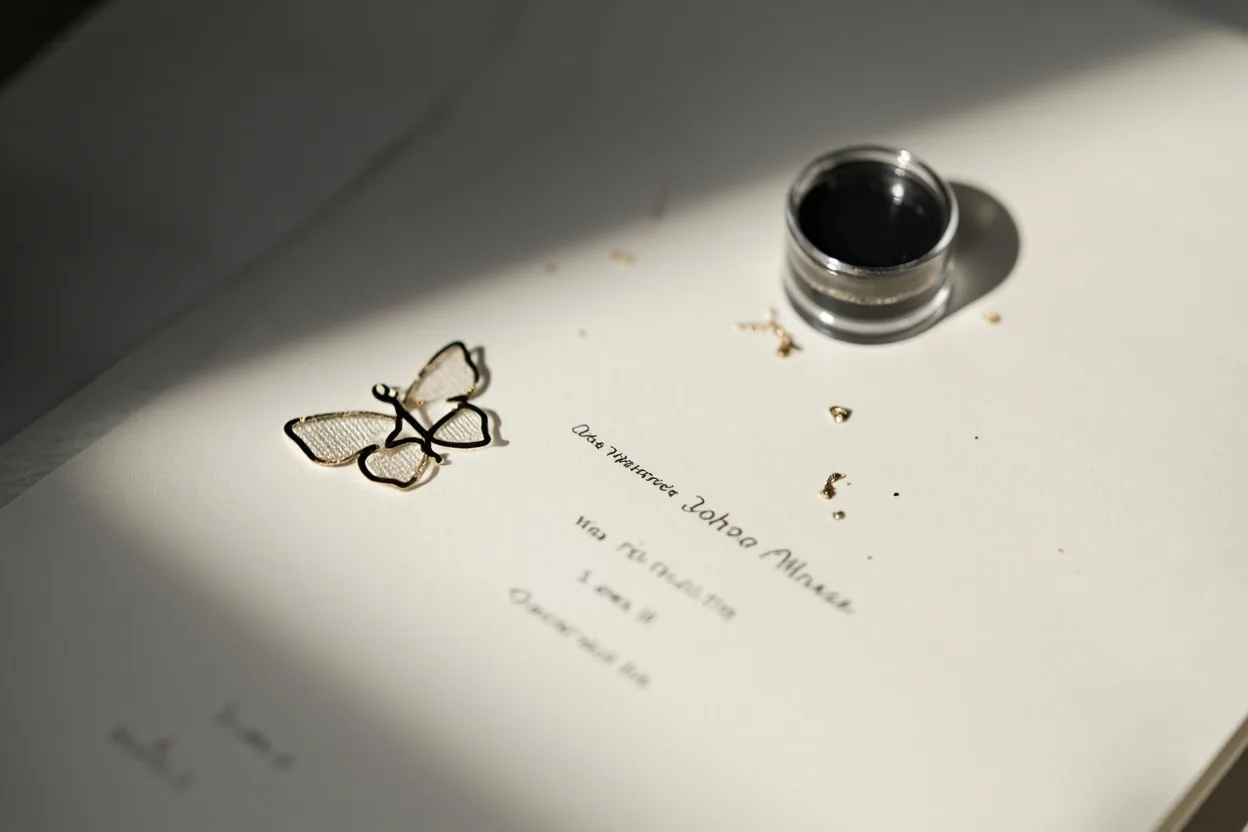
A semicolon tattoo is one of the smallest designs with one of the heaviest meanings. It is usually connected to survival, mental health awareness, grief, self-harm recovery, suicide prevention, and the decision to continue a story that could have ended.
Quick answer: A semicolon tattoo usually means continuation: the sentence is not over, and neither is the person wearing it. It can be personal, memorial, supportive, or connected to mental health advocacy.
What the Semicolon Actually Means
In grammar, a semicolon joins two related thoughts when the sentence could have stopped but continues. That function became a metaphor for living through a chapter that might have ended: depression, suicidal thoughts, self-harm, addiction, grief, or any season that redefined the person who came through it.
The symbol is often linked to Project Semicolon, a mental health awareness effort that encouraged people to draw or tattoo the mark as a sign of survival. The exact timeline and founder details are less important than what the symbol gathered in practice: a quiet, visible way to say that a difficult chapter was not the final one.
Not everyone who wears a semicolon tattoo has experienced crisis directly. Some choose it for a friend, family member, or partner. Some wear it as solidarity with a community. The meaning depends on the wearer, not on proving a story to strangers.
Common meaning angles
- Continuation. The simplest reading: the story keeps going. Works as a private wrist mark or behind-the-ear tattoo.
- Mental health survival. Often paired with flowers, butterflies, or linework that signals growth rather than only struggle.
- Memorial or solidarity. Small paired symbols, dates nearby, or matching tattoos with someone who shared the experience.
- Faith or hope. Combined with crosses, light, sun, or short script phrases that point forward.
- Private reminder. Hidden placement where the wearer sees it but controls who else does.
Design Choices That Keep the Meaning Clear
A plain semicolon is the most direct version. It works on the wrist, inner arm, ankle, collarbone, behind the ear, or near the ribs. Because the shape is tiny, the artist must make the dot and comma large enough to heal as separate elements. A dot that closes into the comma turns the tattoo into an accidental blur.
A semicolon butterfly adds the idea of transformation. The wings need enough room to read as wings, not as decorative noise. If the butterfly is too small, the symbol becomes a sticker rather than a statement.
A semicolon flower softens the mark and can make it feel personal. The key is keeping the punctuation visually distinct from the petals and stem. If the flower overwhelms the semicolon, the grammar metaphor gets lost.
Script can work, but long quotes wrapped around a tiny mark rarely age well. One short phrase, given room to breathe, is usually better than a paragraph compressed into two inches of skin.
What to ask your artist about scale
- How small can the semicolon be while still healing as two clean shapes?
- Can you show me healed examples of micro symbols or fine-line punctuation?
- Will this placement need a touch-up, and how soon?
Finger and wrist-crease placements are tempting for visibility, but they lose ink faster than almost anywhere else. A semicolon that fades into a smudge six months later defeats its own purpose.
Placement and What It Changes
The wrist is common because the wearer sees it daily. It is also public, which means questions from strangers, comments during handshakes, and visibility in job interviews. Think about who you want to share this story with before committing to a high-exposure spot.
If the meaning is private, the inner arm, ankle, rib, shoulder blade, or behind-the-ear placement gives more control. You see it. Others may not. That choice is valid and sometimes necessary.
For a memorial semicolon, placement can connect to the person remembered: near the heart, near another memorial tattoo, or in a spot that stays covered when grief is not for display.
Finger tattoos look delicate and intentional, but they blur and fade quickly. If the symbol matters emotionally, choose a placement that will keep it legible rather than chasing the smallest possible version.
Visibility and your comfort
- High visibility: wrist, forearm, collarbone. Expect questions. Decide your answer in advance.
- Moderate visibility: inner arm, ankle, behind the ear. Revealed by choice.
- Low visibility: rib, hip, shoulder blade, upper thigh. For you, or for those you choose to tell.
How to Brief Your Artist With Sensitivity
Tell the artist whether the tattoo is for survival, memorial, solidarity, or private reminder. You do not owe details you are not comfortable sharing. But the emotional direction helps the artist avoid the wrong tone: too decorative, too dark, too generic, too loud.
If the tattoo connects to grief or recovery, designs that look like trend stickers usually feel thin. A little restraint gives the symbol more weight. The best semicolon tattoos often look almost too simple in the sketch phase.
If the piece will be visible, decide ahead of time how much you want to explain. Some people welcome the conversation. Others want the symbol to do its work without becoming a talking point. Either choice is fine. Making it consciously is what matters.
Red flags in the consultation
- The artist treats the semicolon as a quick flash sale without asking about placement or scale.
- The design piles on elements (butterfly, flowers, script, watercolor) until the punctuation disappears.
- The artist suggests a finger or palm placement without warning you about fading.
- You feel pushed to share more of your story than you want to.
What to Remember
The semicolon tattoo works because it is small, specific, and layered with meaning that belongs to the wearer. It does not need to be large. It does not need to be explained to everyone who sees it. It needs to be placed with care, drawn with clean spacing, and chosen for a reason that holds up on quiet days.
If you are considering this tattoo during active crisis, the mark on skin is not the only step that matters. Support from people you trust, and professional help when you need it, are part of the same continuation the semicolon represents. In the United States, the 988 Suicide and Crisis Lifeline is available by call or text. Project Semicolon continues to frame the symbol as a reminder that a hard chapter is not the end of the story.
Choose the placement that fits your life, not your social media. Ask your artist about healed results, not just the fresh photo. And let the symbol be enough on its own: a small mark that says something large, kept close to the skin where you can see it and continue.
Frequently Asked Questions
What does a semicolon tattoo mean?
It usually means continuation: the sentence could have ended but did not. For many wearers, it represents survival through depression, suicidal thoughts, self-harm, addiction, or grief. Others wear it in solidarity with someone who lived through those experiences.
Does a semicolon tattoo always mean mental health?
No. While it is often linked to mental health awareness and Project Semicolon, some people choose it for grammatical love, literary identity, or personal metaphor unrelated to crisis. The meaning depends on the wearer.
Where is the best place for a semicolon tattoo?
The wrist is common for visibility, but inner arm, ankle, behind the ear, collarbone, and rib are strong alternatives if you want more control over who sees it. Fingers fade fast. Choose placement based on how much you want to explain the tattoo to strangers.
How much does a semicolon tattoo cost?
A simple semicolon usually runs $80 to $200 in the United States. Added elements like butterflies, flowers, or watercolor can raise it to $150 to $400. Size, artist experience, and city location all affect price.
Do semicolon tattoos fade quickly?
Finger and wrist-crease placements fade faster than most. A clean semicolon with adequate spacing and slightly larger dot and comma shapes will age better than an extremely tiny version. Ask your artist about touch-up timing.









