Yes, A&D ointment works for tattoo aftercare, but only for the first few days, and only if you use it right. I’ve been tattooing for fifteen years, and I’ve watched this little yellow tin go from shop standard to something we warn clients about. The truth is messier than most aftercare sheets let on. A&D is petroleum-based with lanolin and vitamins A and D; it keeps a fresh tattoo moist, prevents scabbing, and creates that protective barrier your open skin needs. But here’s what I tell every person who sits in my chair: it’s a tool, not a religion. Use too much, too long, and you’ll suffocate the thing. Use it right, and it gets you through the most vulnerable phase of healing. This guide breaks down exactly how I instruct clients to use A&D, when to switch, and why some artists have moved away from it entirely.
Why A&D Ointment Works for Fresh Tattoos
That first 24 to 72 hours after a tattoo is basically an open wound wearing art. Your skin is weeping plasma, ink, and lymph fluid. Without something to keep it supple, it dries into hard scabs that pull ink out with them when they flake off. I’ve seen beautiful line work ruined by scabbing that the client let happen because they were “letting it breathe.”
A&D’s petroleum base creates an occlusive layer, fancy word for “keeps the good stuff in and the bad stuff out.” The lanolin adds a bit of moisture, and the vitamins A and D support skin repair. In my early days, every shop I worked at had stacks of those little yellow tubs. We’d send clients home with a dab on their fresh piece and instructions to wash and reapply. It worked. It still works.
What A&D Actually Does on Healing Skin
Here’s the mechanics in plain terms. Fresh tattooed skin has lost its top protective layer. Plasma rises to the surface and, exposed to air, hardens into scabs. A&D slows that hardening by keeping the wound bed moist. The ointment also prevents fabric from sticking to the tattoo, something anyone who’s slept with a fresh back piece will appreciate. I’ve had clients call me panicked at 2 AM because their bedsheet fused to their thigh. A thin layer of A&D prevents that nightmare.
When I Still Recommend It to Clients
I keep A&D in my rotation for specific situations. Large black-and-grey pieces with heavy saturation need that moisture lock. Areas that flex and bend, elbows, knees, inner biceps, benefit from the flexibility A&D provides. And clients with dry skin or who work in dusty, dirty environments get the barrier protection they need. I tattooed a pipeline welder last year; his forearms lived in grease and metal shavings. A&D for three days, no exceptions.
- First 48-72 hours of healing
- Heavy saturation or solid black work
- High-flex areas prone to cracking
- Dirty work environments
- Clients with naturally dry skin
The Problems With Using A&D Too Long
This is where I get passionate. I’ve seen more tattoos compromised by over-ointmenting than by under-ointmenting. A&D is thick. It doesn’t let your skin breathe. Use it past day three or four, and you’re creating a petri dish.
Excess petroleum traps bacteria against the skin. It clogs pores, causes breakouts around the tattoo, and can lead to clogged healing that pushes out ink. The worst case I’ve seen was a client who went two weeks slathering A&D on a rib piece three times daily. By week three, she had raised, bumpy lines and patchy color. Not infected, just suffocated. We had to do a touch-up that cost her another session fee.
Signs You’re Overdoing the A&D
Your skin tells you. The tattoo stays slick and glossy hours after application. You develop small red bumps around the edges, not on the tattoo itself. The area feels constantly warm and never seems to dry out. The skin looks pale and waterlogged under the ointment. These are signals to stop, wash with unscented soap, and switch to a lighter moisturizer.
How to Apply A&D the Right Way
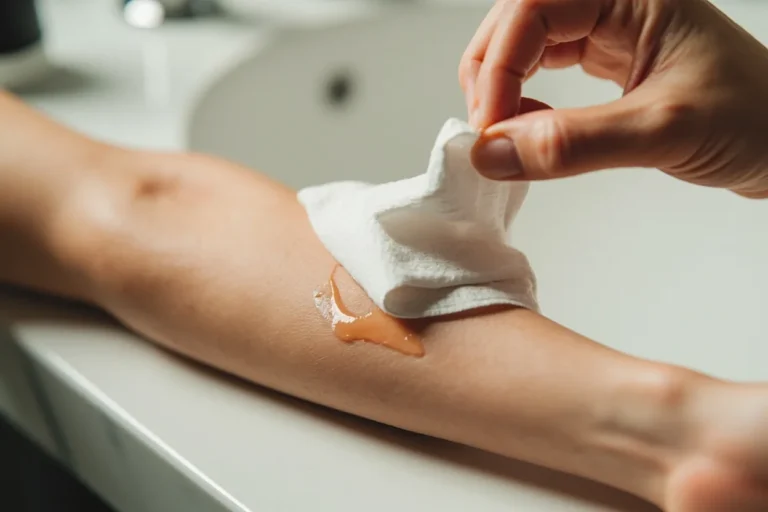
Less is more. I demonstrate this in the shop with every first-timer. Wash your hands thoroughly. Gently wash the tattoo with warm water and fragrance-free soap, Dial gold, Dr. Bronner’s unscented, something simple. Pat dry with a clean paper towel, don’t rub. Let it air dry for a minute. Then apply A&D in a layer so thin it barely looks like you put anything on.
Here’s my test: if you can see your fingerprint in the shine, you’ve used too much. If it looks like you just ate fried chicken and wiped your fingers on your arm, wipe it off. The tattoo should have a slight sheen, not a grease slick. Reapply 2-3 times daily for the first two to three days. That’s it.
- Wash hands before touching the tattoo
- Use warm water and unscented soap
- Pat completely dry, moisture under ointment breeds problems
- Apply a whisper-thin layer
- 2-3 times daily, maximum
- Stop when peeling begins, usually day 3-4
When to Switch to Lotion
The transition moment is when the tattoo starts to flake and peel. This is not the time for A&D. You need something lighter that lets the skin slough naturally. I tell clients to watch for the “dandruff stage”, that dry, white flaking that means the surface layer is ready to come off. Switch to an unscented, dye-free lotion. Lubriderm, Curel, or whatever plain moisturizer you tolerate. Apply sparingly when it feels tight or itchy.
Some artists I respect have moved to recommending lotion from day one. I get it. The petroleum-free approach eliminates the over-ointmenting risk entirely. But in my experience, that first day or two of heavy weeping benefits from the barrier. I’ve tried both approaches on my own tattoos, A&D for two days, then lotion; versus lotion from the start. The A&D start healed cleaner for my saturated pieces. For fine line work, lotion from day one was fine.
What I Personally Use on My Own Tattoos
My last three pieces: A&D for 48 hours, then Lubriderm for two weeks. No aquaphor, no fancy tattoo-specific products. The simplest routine wins. I’ve got fifteen years of healed work on my body, and the pieces I babied with too much product healed worse than the ones I left alone.
Alternatives Artists Actually Recommend
Shop culture varies. Walk into ten shops, get ten aftercare routines. Here’s what I see working in real studios:
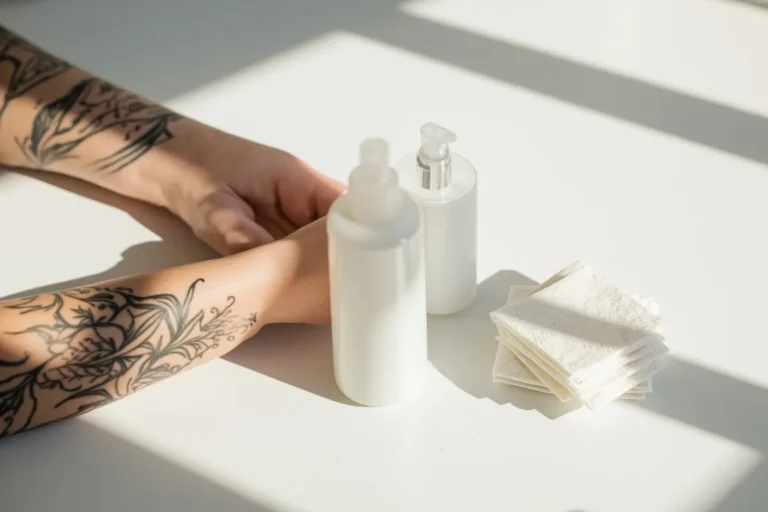
- Aquaphor: Similar to A&D but with added glycerin. Some artists prefer it; I find it greasier and more likely to cause clogged pores. Use it the same way, thin layer, short duration.
- Saniderm/Second Skin: These adhesive bandages have revolutionized aftercare for many artists. I use them for clients who can’t be trusted to keep their hands off. Leave on 3-5 days, no ointment needed underneath. The tattoo heals in its own moisture.
- Lotion only: Growing trend, especially for fine line and delicate work. Less risk of over-moisturizing, but requires more attention to keeping the area clean.
- Tattoo-specific balms: Some are great, some are overpriced marketing. If an artist pushes their own branded product, I’m skeptical. The ingredients matter more than the label.
I don’t get kickbacks from any product. I recommend what keeps my work looking good six months later, because that’s my reputation walking around on your skin.
What A&D Costs and Where to Get It
A&D runs about $4-8 for a 4-ounce tub at any drugstore. Generic equivalents work identically, look for petrolatum and lanolin on the label. Don’t buy the fancy “advanced therapy” versions with added fragrances or botanicals. Plain yellow tub. I’ve had clients show up with A&D diaper rash cream containing zinc oxide; that’s wrong, don’t use it. The zinc creates a white cast and can interfere with how you monitor the healing tattoo.
Some shops include a tiny packet in your aftercare kit. That’s enough for maybe two applications. Buy your own tub so you’re not rationing it.
Key Takeaways
A&D ointment has a real place in tattoo aftercare, but it’s a narrow window. Use it for the first two to three days, in the thinnest possible layer, to protect your fresh tattoo while it weeps and settles. Wash before every application, let the skin dry fully, and stop when peeling begins. Switch to plain, unscented lotion for the remaining heal. Watch for signs of over-moisturizing, glossy skin, bumps around the edges, delayed drying. Every tattoo heals differently, and every body responds to products in its own way. When in doubt, call the artist who did the work. We want your tattoo to look good because our name is attached to it. The best aftercare is the one you’ll actually follow consistently, and for many people, that simple yellow tub is exactly enough to get them through the hardest part.
Frequently Asked Questions
Can I use A&D ointment for my entire tattoo healing process?
No, limit it to the first 2-3 days. After that, switch to an unscented lotion. Using A&D too long traps moisture and bacteria, which can cause clogged pores, breakouts, and patchy healing that requires touch-ups.
Why does my tattoo artist say not to use A&D at all?
Some artists prefer modern alternatives like Saniderm adhesive bandages or lotion-only methods. Others have seen too many clients over-apply petroleum ointments and ruin their healing. Follow your specific artist’s instructions, they know their work best.
Is the A&D with zinc oxide okay for tattoos?
No, stick to the original yellow-labeled A&D with petrolatum and lanolin. Zinc oxide versions create a white barrier that makes it hard to see what’s happening with your healing tattoo, and they’re formulated for diaper rash, not open skin art.
How do I know if I’m putting on too much A&D?
If your tattoo looks glossy hours after application, feels constantly slick, or you can see thick residue on your clothing, you’re using too much. A proper layer is nearly invisible, just enough to prevent the skin from feeling tight.
Related Tattoo Guides
- Does a Back Tattoo Hurt? A Real Pain Guide
- How Long Does an Inkbox Tattoo Last? A Real Guide
- How Long to Keep a Tattoo Cover On: A Shop Artist s Guide
- Explore more