
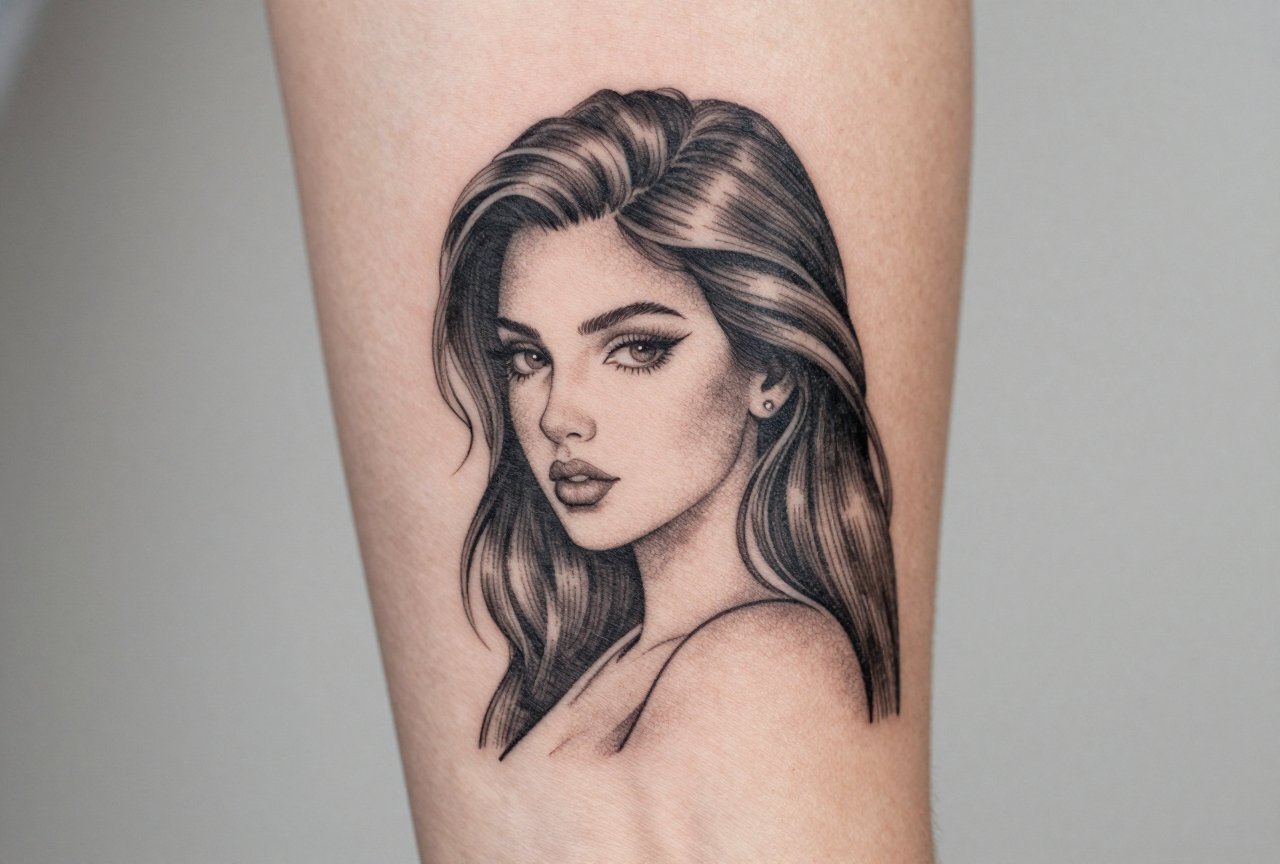
The Aqua Tofana tattoo carries a heavy, specific meaning: it references a legendary poison created in 17th-century Italy, supposedly by a woman named Giulia Tofana, and it has become a symbol of female vengeance, survival against oppression, and the dark lengths people go to when trapped by power. Most people who get this ink aren’t celebrating murder, they’re reclaiming a narrative about women who had no legal voice and found a terrible one. I’ve had this request come across my station a handful of times, and it always starts with a story.
Symbolism & History
The historical Aqua Tofana was a colorless, odorless poison, likely arsenic-based, that Giulia Tofana and her associates allegedly sold to women in unhappy, often abusive marriages. In an era where divorce was impossible and women were property, this substance offered a grim exit. The stories vary. Some accounts say hundreds of men died. Others suggest the numbers were exaggerated by panicked authorities. What matters for the tattoo is the myth that grew around it: a secret network of women protecting each other, a chemical rebellion against patriarchal control.
I’ve tattooed this imagery on two women who both described it as a “survivor’s mark.” One had finally left a decade-long abusive relationship. The other was a historian who studied witch trials and wanted something that acknowledged the women punished for simply existing outside male control. Neither saw it as glorifying violence. Both saw it as honoring resistance.
The Visual Language of Poison
Most Aqua Tofana tattoos incorporate specific visual elements that carry layered meaning:
- Glass vials or apothecary bottles, the vessel itself, often delicate and ornate, representing hidden danger in beautiful packaging
- Skulls merged with flowers, typically roses or belladonna, the classic memento mori updated with feminine imagery
- Handwritten script or aged paper, suggesting secret recipes, forbidden knowledge, and the erasure of women’s history
- Women’s faces in profile, sometimes blindfolded, sometimes with eyes open, representing both justice and vigilance
The color palette tends toward muted greens, aged golds, and deep burgundies. I’ve done one in strictly black and grey that aged beautifully, the fine lines in the vial’s glass reflections held up better than I expected, though I warned the client that those details would soften over time.
Modern Reclamation vs. Dark Aesthetic
There’s a split in how people approach this tattoo. Some come from a genuine place of historical connection or personal survival. Others are drawn to the “dark academia” aesthetic, the romanticized poison girl vibe that’s popular on certain corners of the internet. I don’t judge either motivation, but I do ask questions. A tattoo this loaded with historical weight deserves more than a Pinterest impulse. I’ve talked clients out of adding cute elements that clash with the gravity, sparkles around a skull, cartoonish bubbles in the vial. The image loses its power when it becomes twee.
Common Variations & Styles
After a few years of seeing this design evolve, certain approaches have emerged as the most visually successful and personally meaningful.
Traditional/Americana: Bold lines, limited color, the vial rendered with a banner reading “Aqua Tofana” or simply “Tofana.” This style ages well because the heavy line weight carries the detail even as it spreads slightly. I’ve done one on a forearm where the banner wraps a dagger, classic imagery, but the specific text makes it personal.
Blackwork and ornamental: Dense black patterns surrounding a central vial or skull. This suits clients who want the meaning but prefer abstracted symbolism. The ornamental elements can reference actual 17th-century Italian design, which adds historical authenticity.
Realism with surreal touches: A hyper-detailed glass bottle with something impossible inside, flowers growing from liquid, a tiny landscape, a woman’s face reflected in the poison’s surface. These are technically demanding. I did one where the vial sat on a marble ledge, and we spent three sessions getting the glass refractions right. The client cried when she saw it finished. Worth every hour.
Minimalist text: Just the words, in a delicate script or typewriter font, sometimes with a small vial icon. Placement matters enormously here, wrist, ribcage, behind the ear. The words carry all the weight, so the font choice becomes the entire design.
Best Placements
Where this tattoo lives on the body changes how it’s read by others and felt by the wearer.
The forearm is common for those who want visibility, a statement piece that starts conversations. I’ve placed one there for a bartender who said she wanted “something to talk about with customers who get too comfortable.” The visibility suits the defiance in the image.
Ribs or sternum work for more private meanings. The placement hurts more, which some clients see as part of the ritual. One woman told me she wanted it “where my heart used to be before I rebuilt it.” That placement also allows for larger compositions, vials, flowers, script, all flowing together.
The upper arm or thigh gives space for detail without the constant exposure. These areas heal well, less sun damage over time, and the muscle movement adds life to the image. I’ve noticed thigh placements tend toward more decorative, ornamental versions; arms lean more graphic and bold.
Hands and fingers are rare but not unheard of. A tiny vial on a finger, “Tofana” across knuckles. I generally discourage this, the skin there moves constantly, heals poorly, and the meaning becomes almost aggressive in its visibility. But I’ve done it for clients who understood the trade-offs and still wanted it there.
Who Chooses This Tattoo / Personal Meanings
In my chair, the Aqua Tofana request tends to come from a specific kind of person. Not always women, though mostly. Usually someone who has read the history, who understands that this isn’t a cute witchy aesthetic but a reference to actual death and desperation. They often have a personal threshold they’ve crossed, leaving something, surviving something, choosing themselves over a relationship that was killing them.
A client last year, early thirties, lawyer, got a vial with her mother’s birth flower and her own intertwined. Her mother had escaped an abusive marriage when my client was small. The tattoo was for both of them. “She didn’t use poison,” she told me, “but she did what she had to. This is the same thing, just prettier.”
Another was a trans woman who described her transition as “poisoning the man everyone thought I was, so the real me could live.” She got the vial with a butterfly emerging from it. We cried in the shop. It happens.
There’s also a smaller group drawn to the intellectual darkness, the history buffs, the true crime adjacent crowd, the people who collect macabre imagery. I don’t think their reasons are lesser, just different. The tattoo still functions as a marker of something they’re willing to sit with: the fact that oppression produces desperate solutions, and that women’s history contains violence we rarely acknowledge.
Similar Symbols
Clients considering Aqua Tofana often look at related imagery before deciding. Understanding the differences helps clarify what they actually want.
- La Triviata / Three of Swords, heartbreak and betrayal, but without the historical resistance narrative
- Ophelia imagery, passive suffering, drowning, where Aqua Tofana is active, chosen, weaponized
- Medusa portraits, another reclaimed “monster,” but mythological rather than historical, more about protection than specific survival
- Poison bottles generally, the skull and crossbones, “NOT TO BE TAKEN” labels. These lack the gendered history and community aspect
- Witch trial memorial imagery, nooses, flames, accused women’s names. Closer in historical spirit, but more about victimhood than the secret resistance Aqua Tofana implies
I’ve had clients combine elements, Aqua Tofana vial with Medusa’s face reflected in the glass, or poison flowers with witch trial dates. The tattoo becomes a personal archive. That’s when this work feels most meaningful to me, when the client has done the thinking and the image becomes theirs, not just a trend they’re riding.
Final Thoughts
The Aqua Tofana tattoo isn’t for everyone, and it shouldn’t be. Its power comes from the weight it carries, real history, real suffering, real choices made in impossible circumstances. If you’re drawn to it, sit with why. Read the actual history, not just the aesthetic repackaging. Talk to an artist who will ask you questions rather than just stencil and go. In my experience, the best version of this tattoo comes from clients who understand that they’re marking themselves with something complicated, not just pretty. The poison was real. The women were real. Your reasons for carrying it should be real too. That’s what separates a tattoo that lasts from one you’ll eventually want to cover.
Frequently Asked Questions
Is the Aqua Tofana tattoo only for women?
Not at all. While the history centers women’s resistance, I’ve tattooed this design on men and non-binary clients who connect with themes of survival, hidden strength, or historical injustice. The meaning depends on your personal story, not your gender.
Will people think I’m violent if I get this tattoo?
Some might misread it, which is why placement and context matter. I always suggest clients be ready to explain the historical significance. Most people who recognize the reference understand it’s about resistance, not a threat.
How much detail can realistically fit in a small vial tattoo?
Less than you think. Tiny glass reflections and liquid depth require space to read properly. I generally recommend at least two inches in any direction for the vial alone. Smaller versions work better as simplified silhouettes or ornamental outlines.
Does this tattoo work in color or is black and grey better?
Both work, but they age differently. Color can capture the greenish arsenic tint and aged gold elements beautifully, though it may need touch-ups. Black and grey emphasizes the historical gravitas and typically holds sharper lines longer. I discuss this with each client based on their skin tone and sun exposure habits.
Related Tattoo Meanings
- Betta Fish Tattoo Meaning: Resilience, Beauty Solitude
- Otter Tattoo Meaning: Playfulness, Family Resilience
- Siren Tattoo Meaning: Danger, Desire, and Duality
- Explore more









