Symbolism & Core Meaning
At its simplest, a bobby pin tattoo celebrates the overlooked. This humble hair tool bends and holds, adapts and endures. For many, that function mirrors how we navigate life: keeping things together when they threaten to unravel. The bobby pin asks nothing of attention yet performs essential work, a quality that resonates with anyone who prefers quiet competence over loud display.
Minimalism itself carries weight here. A single line of ink, sometimes no larger than a fingertip, can distill an entire philosophy. The form suggests restraint without deprivation, utility without ugliness. Some choose this symbol after shedding excess in their lives; others arrive at it through appreciation for objects that age gracefully, that serve across decades without becoming obsolete.
What the Shape Communicates
The curved spine and crimped middle create visual tension. That tension translates metaphorically: flexibility anchored by internal structure. Unlike more aggressive symbols of resilience, the bobby pin acknowledges fragility. It works because it can bend, not despite it. For those who have learned that survival sometimes means yielding, this distinction matters profoundly.
Personal & Modern Meanings
Contemporary interpretations of the bobby pin tattoo extend far beyond its original function. Gender expression sits prominently among them. The symbol has been reclaimed by those who refuse rigid categorization, who move between presentation styles or reject them entirely. A bobby pin holds hair in place, but which hair, on which body, in what configuration? The answer belongs to the individual, and the tattoo honors that autonomy.
Professional identity weaves through modern readings as well. Stylists, performers, costume designers, and others who work intimately with appearance sometimes choose this mark. It signals craft knowledge without requiring explanation, a nod to hours spent in preparation rooms and backstage spaces. The tattoo becomes professional shorthand, readable by those who share the vocabulary.
Intimacy and Domestic Life
Less visibly, the bobby pin connects to private rituals. Morning routines, shared bathrooms, the small negotiations of cohabitation. Finding someone else’s bobby pin in a drawer or car cup holder marks relationship territory in the most mundane way possible. Some tattoos commemorate this specifically: not grand romance, but accumulated evidence of another person’s presence.
- Recovery from illness or hardship, the bobby pin as “holding it together”
- Frugality and anti-consumerist values, choosing repair over replacement
- Creative resourcefulness, the tradition of using bobby pins for everything from lock-picking to electronics repair
- Intergenerational connection, grandmother’s vanity table and the tools found there
Religious & Spiritual Angles
Direct religious iconography for the bobby pin does not exist in any established tradition. Yet spiritual resonance emerges through adjacent concepts. The idea of holding space, central to many contemplative practices, finds physical parallel in the pin’s function. Meditation teachers speak of maintaining posture without force; the bobby pin embodies this balance literally.
In some Christian interpretations, particularly among women in ministry, the symbol connects to passages about hair and covering. The bobby pin becomes a quiet assertion of presence within spaces that historically restricted it. Not rebellion exactly, but persistent, practical participation.
Secular Spirituality
For those without formal religious practice, the bobby pin sometimes represents attention itself. Mindfulness teachings emphasize full engagement with ordinary activities. Choosing to mark the body with this object declares that such attention matters, that the unremarkable deserves reverence. It is spirituality stripped of doctrine, rooted in material experience rather than transcendent claim.
Mythology & Folklore
Hair itself carries extensive folklore across cultures, though specific bobby pin mythology remains scarce. What exists clusters around hair tools generally: combs with curse potential, scissors that must never be gifted, brushes that retain something of their owners. The bobby pin, arriving relatively late in material history, missed inclusion in these older traditions.
Some contemporary practitioners of folk magic incorporate bobby pins into spellwork, typically for binding or holding intentions. The metal conducts, the shape loops and secures. A tattooed version extends this permanently, carrying the symbolic function into the wearer’s ongoing life. Whether this constitutes authentic folklore or modern invention depends on one’s definition; the practice exists, regardless of pedigree.
Common Variations & Styles
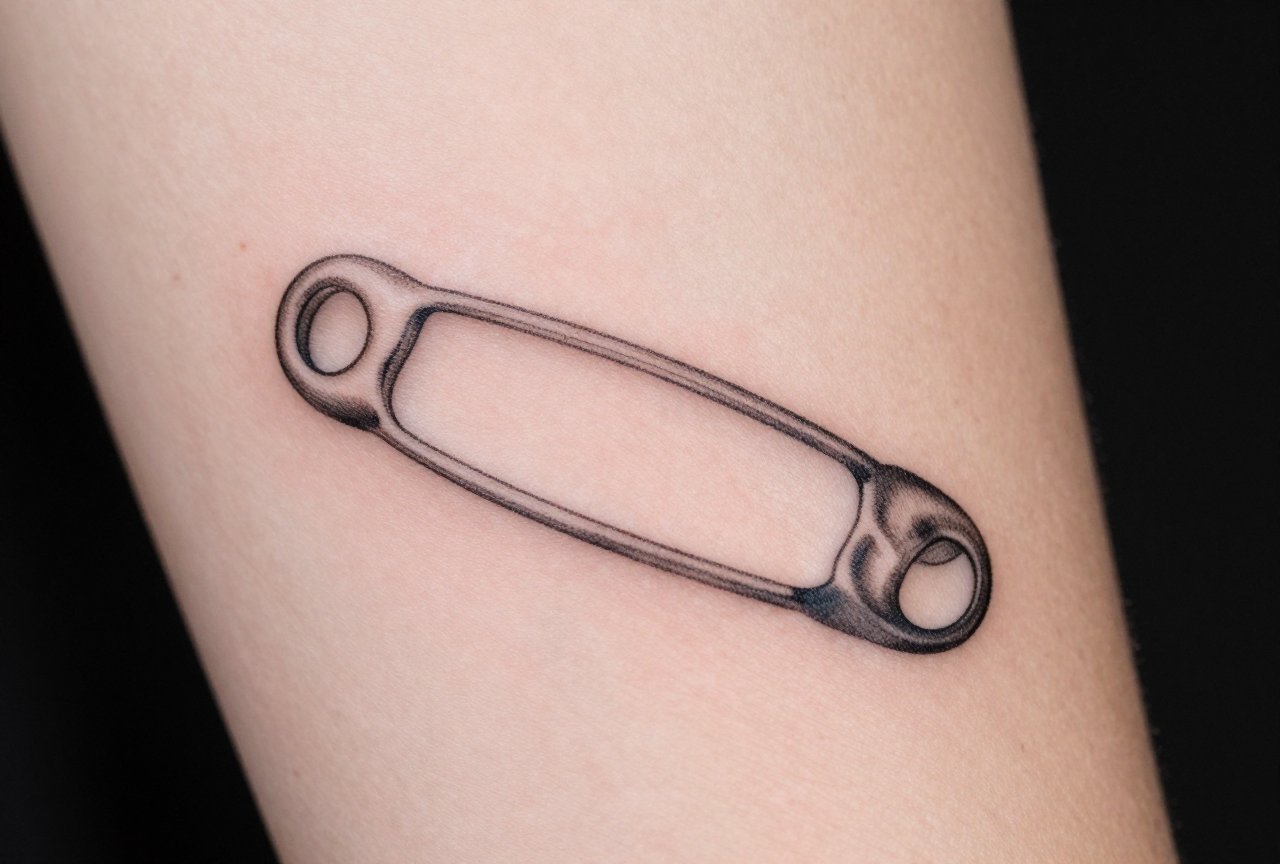
Single line work dominates bobby pin tattoo execution. The object’s simplicity invites this approach, and the result ages cleanly even at small sizes. Black ink suffices; color rarely improves the design. Placement varies enormously: behind the ear, along the collarbone, inner wrist, ribcage, ankle. Each location shifts the viewing context, from public visibility to private knowledge.
Artistic elaboration appears in several directions. Some designs incorporate negative space to suggest the pin’s functional opening. Others add shadow or dimension, transforming the flat graphic into something more sculptural. A smaller cluster shows the bobby pin in use, gripping a strand of hair rendered in flowing line work.
Combinations and Adjacent Symbols
- Scissors, combs, or other hairdressing tools forming professional sets
- Floral elements, particularly those that grow in difficult conditions
- Text fragments, often single words like “hold” or “stay”
- Geometric frames that emphasize the pin’s industrial design origins
Scale matters significantly. At two centimeters, the bobby pin reads as whispered secret. At fifteen, it becomes deliberate statement. Most successful designs occupy the smaller range, trusting the symbol’s recognizability rather than demanding attention through size.
Cost Factors
Minimalist line work typically commands lower rates than complex compositions, but the bobby pin’s simplicity can paradoxically increase cost. Clean execution requires steady hand and precise needle control; there is nowhere to hide imperfection. Expect to pay for the artist’s technical confidence rather than time spent.
Geographic location establishes baseline pricing. Major metropolitan areas generally run higher, with notable exceptions in cities where minimalist tattooing enjoys particular prestige. Artist reputation within specific styles matters more than general prominence. Someone known for single-needle precision may charge premium rates even without mainstream recognition.
What Influences Final Price
- Artist’s hourly rate and estimated session time
- Minimum shop charges, which may exceed actual work time for very small pieces
- Placement difficulty: curved surfaces, thin skin, or areas prone to movement require more skill
- Custom design fees if departing from standard bobby pin form
- Touch-up policies, as fine lines sometimes need refinement after healing
Most bobby pin tattoos fall between sixty and two hundred fifty dollars, with outliers at both ends. The investment correlates poorly with meaningfulness; a seventy-dollar piece behind the ear may carry weight that exceeds elaborate sleeve work costing thousands.
The Bottom Line
The bobby pin tattoo rewards those who value substance without spectacle. Its meanings accumulate through personal association rather than fixed symbolism, making it genuinely adaptable to individual circumstance. The design succeeds when execution matches intention: precise, unshowy, confident in its own sufficiency.
Consider this mark if you respond to objects that serve without demanding recognition. If you have learned that strength often looks like flexibility, that holding together matters more than appearing whole. The bobby pin will not explain itself to strangers, and that reticence is precisely the point. It offers a symbol for those who have outgrown the need for symbols to be universally legible.
Frequently Asked Questions
Does a bobby pin tattoo have to be small and simple?
Not necessarily, though the design’s power usually comes from restraint. Larger or more elaborate versions can work, but they risk losing the very quality that makes the symbol distinctive: its unassuming utility. Discuss scale openly with your artist, as the object’s proportions matter significantly to its readability.
Is this design more common among women?
Historically, yes, given the bobby pin’s association with feminine grooming. Contemporary adoption has broadened considerably. The symbol now attracts anyone drawn to its meanings of quiet resilience, practical skill, or minimalist aesthetics, regardless of gender identity.
How well does fine line work like this age?
Aging depends heavily on placement and aftercare. Areas with frequent movement or sun exposure blur faster. The bobby pin’s simple geometry helps longevity; even slight spreading maintains recognizable form. Choose experienced hands for single-needle work, and commit to sun protection for best results.
Can I combine a bobby pin with other symbols in one tattoo?
Absolutely, though combinations work best with intention rather than accumulation. Consider what relationship you want to establish: professional tools clustered together, domestic objects from a specific memory, or contrasting elements that create new meaning through juxtaposition. Your artist can help refine these relationships visually.