
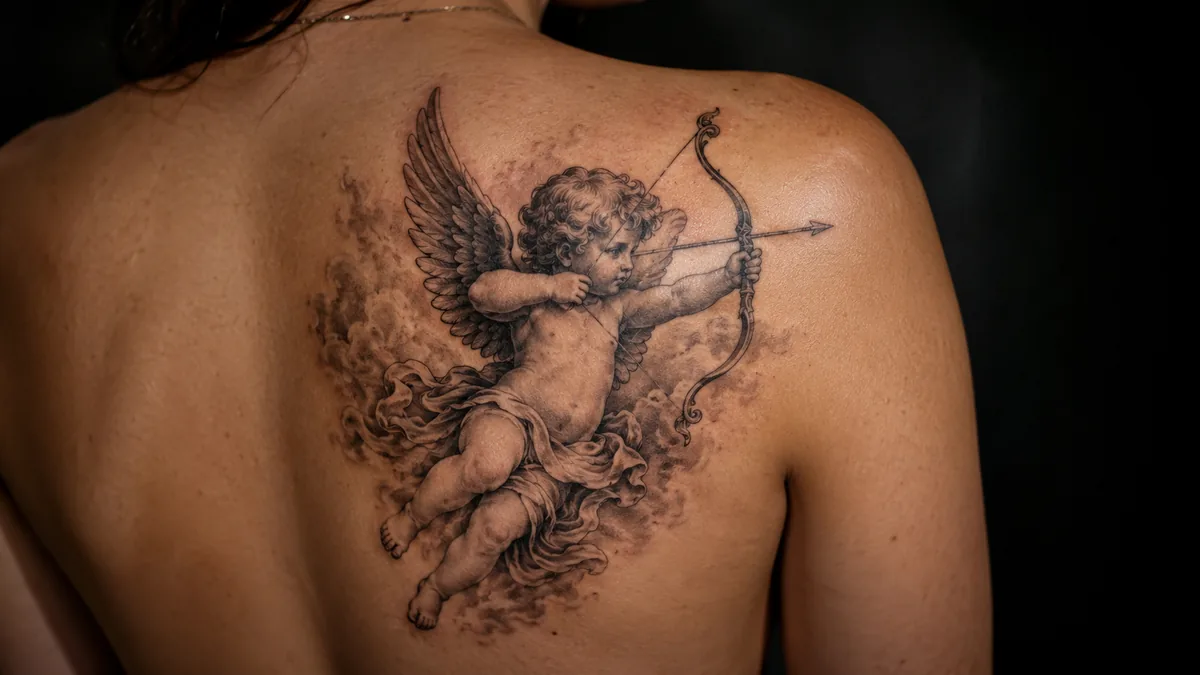
What Cherub Tattoos Actually Mean
A cherub tattoo looks simple at first glance. A soft face, small wings, maybe a bow or a harp. But the meaning shifts dramatically depending on who wears it and why they chose it. The same design can signal devotion, grief, lost childhood, or spiritual protection. Your artist needs to know which one you are carrying before the needle touches skin.
The word itself has traveled. Biblical cherubim were fierce guardians, often linked to the throne of God in Hebrew and later Christian texts. The plump winged infant you see in tattoo shops descends from Renaissance putti, decorative figures that artists like Raphael painted into religious scenes. Over centuries, the two images merged. A tattoo cherub draws from both lineages: the sacred guardian and the innocent child. That tension is where the power lives.
How the Design Changes the Meaning
The Classic Cherub
The traditional version shows a round, soft body with small feathered wings, sometimes holding symbols of love or music. This reads as tender, protected, blessed. It suits parents honoring a child, or anyone who wants to carry a reminder of something pure they have known. The face is the critical element. A skilled artist will keep the proportions infantile: large cranium, small jaw, eyes set lower than an adult’s. Get this wrong and the figure ages into a strange small adult, which destroys the effect entirely.
The Crying or Mourning Cherub
Downcast eyes, a hand to the face, wings drooping. This variation turns the symbol toward loss. It is common in memorial work for someone who died young. The cherub becomes a stand-in for the soul in its innocent state, untroubled by the world it left. The crying version requires restraint. Too much drama and it becomes sentimental in a way that ages poorly on skin. A quiet tear, averted gaze, folded hands: these read as genuine grief rather than theatrical display.
The Fallen or Dark Cherub
Some clients want the opposite of innocence preserved. A fallen cherub might have broken wings, shadowed eyes, or be paired with skulls, snakes, or barbed wire. This signals lost faith, survived trauma, or a reckoning with mortality. It is a harder image to wear and requires a confident artist who understands how to make darkness legible without becoming cartoonish. The best versions keep some softness in the face so the loss registers as real.
Fine Line and Realistic Portraits
Current trends favor single-needle cherubs with photographic detail: every eyelash, every feather barb rendered in hair-thin lines. These are beautiful fresh but demand careful placement. Areas with thin or mobile skin will blur the fine work within a few years. If you want this style, commit to touch-ups and sun protection as a lifelong practice.
Color Choices and What They Signal
Black and Grey
This is the traditional choice for memorial and religious pieces. Soft whip shading gives the figure weight and sculptural presence. It references the old marble carvings and the gravure prints that spread cherub imagery through European culture. Black and grey ages with dignity. The contrast softens gradually rather than breaking down into muddy patches. For a piece you want to read as serious, permanent, and reverent, this palette rarely disappoints.
Color
Warm skin tones, rose cheeks, gold wings, pale blue backgrounds: color turns the cherub celebratory. It reads as present, alive, joyful rather than remembered. Neo-traditional color with bold outlines and saturated reds and greens makes the image assertive from across a room. This suits clients who want their tattoo to function as a banner rather than a whisper. The trade-off is visibility of aging. Color saturation drops over time, and cheaper pigments shift toward blue or grey. Invest in an artist who uses stable, lightfast inks if you choose this path.
Where to Place It
Cherubs need flat, stable skin to preserve facial detail. The chest, especially centered or over the heart, carries obvious symbolic weight and has the surface area for a composed, framed piece. The upper arm and outer thigh offer similar stability with lower sun exposure. The upper back, between the shoulder blades, works well for medium-sized designs that you want to see in mirrors but not study every hour.
I would hesitate before placing a detailed cherub on the ribs unless you have significant tattoo experience and trust your pain tolerance. The skin moves heavily with breath, which complicates the session and the healing. More critically, I would avoid hands, fingers, feet, and the inner arm ditch. These areas destroy fine detail through friction, sun, and simple wear. A cherub’s face, with its subtle shading around the eyes and mouth, becomes unrecognizable within a few years in those spots. If you are drawn to a hand placement, consider a simplified silhouette or bold blackwork version rather than a rendered portrait.
Weight fluctuation matters too. A realistic cherub face on the chest or abdomen will distort as the body changes. If you are young and your weight has not stabilized, or if you plan significant muscle gain or loss, discuss this with your artist. They can adjust proportions or choose a placement that tolerates change better.
Working With Your Artist
The most common failure in cherub tattoos is the adult-looking baby. This happens when an artist freehands proportions from imagination rather than reference. Ask to see their preparatory drawings. The cranium should dominate the face. The eyes should sit lower than halfway down the head. The cheeks should be full enough to suggest baby fat without becoming grotesque. Wings need structural logic: primary feathers, secondary feathers, a visible attachment point to the shoulder blade area. Floating wings with no anchor read as decorative sticker rather than living figure.
Bring reference that matches your emotional intent, not just visual style. A Raphael putto for classical innocence. A Victorian mourning card for grief. A specific photograph if the piece is a portrait memorial. The more precisely you can name the feeling, the better your artist can translate it into line and shadow. Vague requests produce vague results.
Be honest about your pain tolerance and session stamina. A detailed cherub in black and grey might require six to eight hours of needle time. Breaking it into sessions is wiser than tapping out and returning to healed, swollen skin that the artist must work around.
What to Remember
A cherub tattoo carries more weight than its small size suggests. It draws on centuries of religious and artistic tradition, and it announces something personal about your relationship with innocence, loss, or protection. Choose the variation that matches your actual life, not the one that looks prettiest on a Pinterest board. Invest in an artist who understands facial proportions and has healed photos of similar work. Place it where the detail will survive. Protect it from sun once healed. The best cherub tattoos are quiet presences on the skin: watched over, watching back, holding something you needed to carry outside yourself.
Frequently Asked Questions
What is the difference between a cherub and a putto in tattoo art?
In tattooing the terms are often used interchangeably, but historically they are distinct. Cherubim are biblical angelic guardians, described in Hebrew and Christian texts as powerful, multi-winged beings. Putti are the chubby winged infants that Renaissance artists painted as decorative figures. Most tattoo cherubs draw from the putto visual tradition, though some clients want the more formidable biblical imagery. Clarify which lineage you mean when you discuss the design with your artist.
Do cherub tattoos have to be religious?
Not at all. Many people wear cherubs as memorials for lost children or siblings, as symbols of their own childhood innocence, or simply as appreciation for classical art. The religious meaning is available if you want it, but the figure has become broadly cultural. Your personal intent determines the significance.
Why do some cherub tattoos look like small adults instead of babies?
This is a proportion failure. Infant faces have large craniums relative to the jaw, eyes set lower in the face, and fuller cheeks. Artists who work without reference often default to adult proportions scaled down, which produces an uncanny small-adult effect. Ask to see your artist’s preparatory sketches and compare them to photographs of actual infants or classical putti.
How well do fine-line cherub tattoos age?
Fine line work is beautiful but vulnerable. Single-needle lines and subtle shading blur faster than bold outlines and saturated blocks of tone. A fine-line cherub on a stable, low-friction area like the upper arm or chest can age well for years if protected from sun. The same design on a hand or foot will degrade noticeably within two to three years. Plan for touch-ups and choose placement accordingly.
Is a crying cherub too sentimental for a memorial piece?
Sentimentality depends on execution, not subject. A crying cherub with exaggerated tears and theatrical pose can feel maudlin. One with a single quiet tear, averted eyes, and restrained posture reads as genuine grief. The difference lies in your artist’s interpretive skill and your own honesty about what you need the piece to express. Bring reference that matches the emotional register you want, not just the visual style.









