
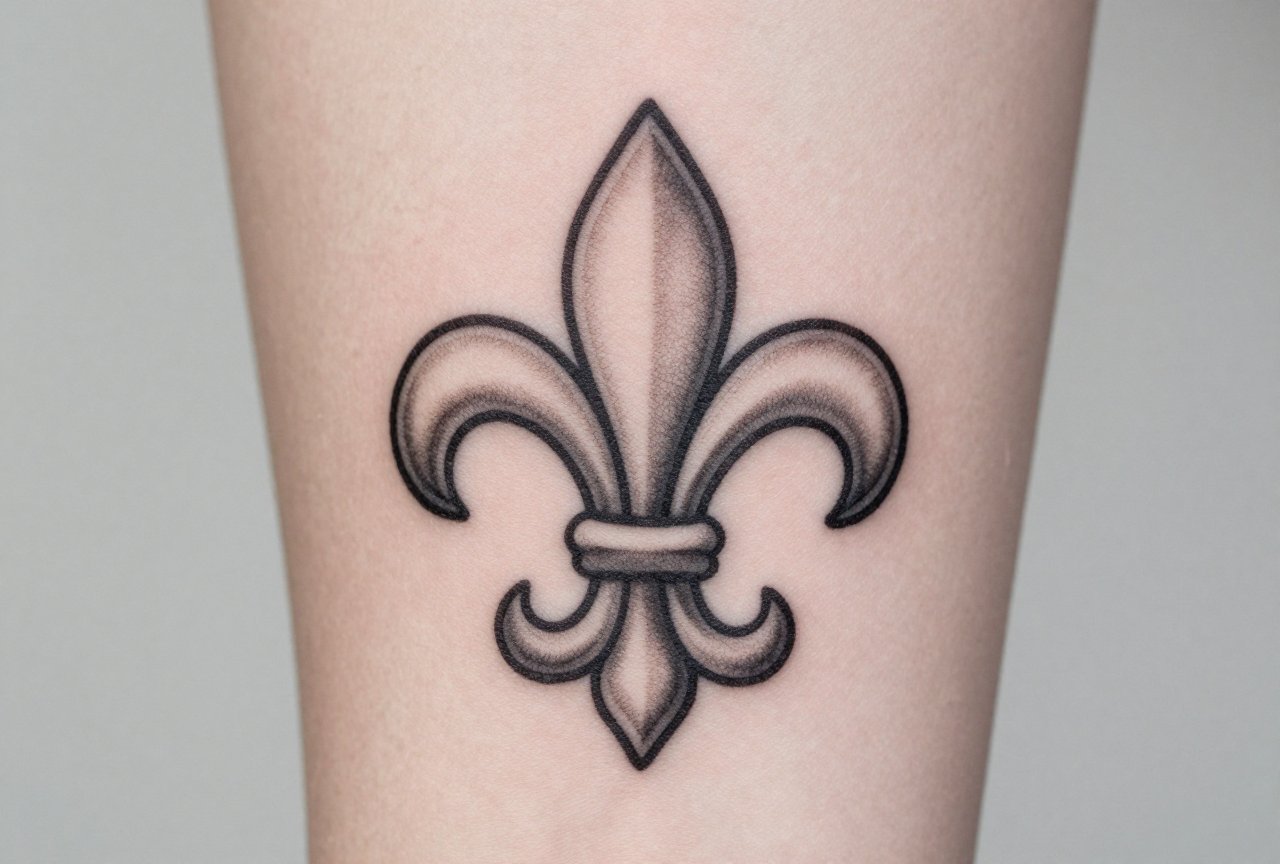
Origins and Historical Weight
The fleur de lis carries centuries of accumulated significance, far beyond its decorative appeal. Derived from the lily or iris form, this three-petaled emblem first appeared in European heraldry during the medieval period. French monarchs adopted it as a dynastic symbol, embedding it into crowns, coats of arms, and architectural details across the kingdom. The association with royalty persists so strongly that even today, the design evokes immediate connections to sovereignty and noble lineage.
Religious interpretations developed alongside secular ones. The three petals were often linked to the Holy Trinity in Catholic tradition, while the band binding them together represented Mary, mother of Jesus. This dual spiritual and temporal identity gave the symbol unusual flexibility, allowing it to serve both church and state without contradiction. In French colonies, particularly Louisiana and Quebec, the fleur de lis traveled with settlers and acquired regional significance that outlasted political regimes.
From Heraldry to Skin
Tattooing the fleur de lis represents a deliberate choice to carry historical weight personally. Unlike flash designs that circulate anonymously, this emblem arrives pre-loaded with associations. You are not merely selecting a shape; you are engaging with a symbol that has marked battle standards, religious processions, and civic identity for roughly a millennium. The tattoo becomes a point of contact between individual intention and collective memory.
Regional Identity and Cultural Claiming
For those with roots in Louisiana, the fleur de lis functions as something close to an ethnic marker. New Orleans adopted it officially in the twentieth century, but unofficial use predates formal recognition by generations. Following Hurricane Katrina in 2005, tattoo requests surged dramatically as displaced residents sought permanent symbols of home and resilience. The design allowed people to assert belonging regardless of physical location.
- Quebecois heritage frequently incorporates the symbol alongside French-language elements
- Detroit’s French colonial history occasionally inspires regional variations
- Scout organizations internationally have used adapted versions for membership identification
- Military units with French connections, including certain Canadian and American regiments, maintain traditional usage
Choosing this tattoo as regional expression requires honest self-assessment. Cultural appropriation concerns arise when the symbol is adopted without genuine connection to the communities that have invested it with meaning. The design works best when it reflects lived heritage rather than aesthetic tourism.
Contemporary Civic Pride
Sports fandom has created additional pathways for fleur de lis tattoo adoption. New Orleans Saints supporters have made the design virtually synonymous with team loyalty, sometimes blending athletic and ancestral meanings in single compositions. This layering demonstrates how symbols accumulate rather than replace significance over time.
Religious and Spiritual Dimensions
Christian interpretations remain relevant for many who choose this design. The trinitarian reading continues to resonate, particularly among Catholics with French or Cajun heritage. Some compositions emphasize this through accompanying elements: crosses, doves, or scriptural references that clarify spiritual intent without requiring explanation.
Beyond formal doctrine, the fleur de lis has served as a Marian symbol in devotional contexts. Pilgrims to French shrines historically received the emblem as a token of completed journey. Translating this into tattoo form creates a permanent pilgrimage marker, a bodily reminder of spiritual commitment or answered petition.
- Combined with rosary imagery for Catholic devotional expression
- Placed near the heart to indicate protected or consecrated status
- Rendered in blue or white, traditional Marian colors, for explicit religious identification
- Paired with dates of confirmation, first communion, or spiritual conversion
Secular Spirituality
Not every fleur de lis tattoo carries doctrinal weight. Some recipients respond to the symbol’s formal qualities: its vertical emphasis, its bilateral symmetry, its capacity to read as both floral and abstract. The design satisfies spiritual needs without theological specificity, functioning as a meditation on growth, purity, or aspiration.
Design Variations and Technical Considerations
The classic fleur de lis offers surprising range for tattoo adaptation. Traditional heraldic versions maintain sharp geometry and clear boundaries, suiting bold line work and limited color palettes. These renditions age well because their readability depends on structure rather than delicate shading.
Organic interpretations soften the edges, allowing the petals to curve and the central band to flow. Watercolor techniques, stippled backgrounds, or integrated botanical elements create contemporary versions that depart significantly from historical precedent while retaining recognizable form. You should consider how stylized you want the result to be, as extreme abstraction risks losing the symbol’s communicative power.
- Black and grey realism suits the symbol’s sculptural qualities
- Gold or yellow ink references royal association directly
- Negative space techniques create elegant, minimalist results
- Geometric framing modernizes the traditional form without distorting it
Placement and Scale
The fleur de lis adapts to nearly any body location, though certain placements carry conventional associations. The upper arm or shoulder echoes heraldic positioning on shields and surcoats. The chest, particularly over the heart, intensifies spiritual or patriotic readings. Smaller versions behind the ear or on the wrist function as discreet identifiers, visible to those who recognize the symbol’s significance.
Scale matters technically. The central band and three petals require sufficient space to remain distinct; miniature versions often blur together within years. Discuss minimum size with your artist based on your skin tone and the detail level you envision.
Personal Meaning and Intentional Selection
Ultimately, the fleur de lis tattoo succeeds when your personal intention aligns with the symbol’s historical capacities. Royalty, faith, and identity are not abstract concepts here; they are specific domains the emblem has actually occupied across centuries. Your contribution enters this ongoing tradition rather than inventing meaning in isolation.
Consider what you are claiming through this choice. French heritage? Religious devotion? Regional solidarity? Aesthetic preference for symmetrical, historically resonant forms? Clarity about your own motivation helps your artist translate intention into visual result. The best fleur de lis tattoos communicate immediately because they draw on shared symbolic vocabulary rather than demanding private interpretation.
Avoiding Common Pitfalls
Research prevents unfortunate associations. The symbol has served organizations and regimes you may not wish to invoke, including colonial administrations and, in isolated twentieth-century contexts, certain nationalist movements. Understanding this history allows informed, defensible choices rather than accidental alignment with unwanted legacies.
Quality matters disproportionately with this design. Poorly executed fleur de lis tattoos read as generic or confused, wasting the symbol’s inherent dignity. Invest in an artist who understands both technical execution and the visual tradition you are entering.
Final Thoughts
The fleur de lis endures because it operates simultaneously in multiple registers: political and devotional, public and personal, ancient and urgently contemporary. As a tattoo, it offers rare combination of established significance and individual adaptability. You are not starting from zero; you are adding your intention to a symbol that has already proven its capacity to carry weight across centuries and continents. Choose with awareness, execute with care, and the result will communicate with quiet authority that requires no explanation.
Frequently Asked Questions
Does a fleur de lis tattoo automatically mean I am religious?
No. While the symbol carries strong Catholic and specifically Marian associations historically, many people choose it for regional, cultural, or purely aesthetic reasons. Context and accompanying elements usually clarify spiritual intent, but the design itself remains multivalent.
Is the fleur de lis culturally exclusive to French heritage?
Not exclusively, though French and French-descended communities have the strongest historical claim. Widespread use in heraldry, scouting, and sports fandom has broadened access. Sincere connection to any of these traditions provides legitimate basis for choosing the design.
How well does this tattoo age compared to other designs?
The classic heraldic form ages exceptionally well due to its bold outlines and clear negative spaces. Highly detailed or watercolor versions may require more frequent touch-ups. Simpler renditions typically maintain readability for decades with proper aftercare and sun protection.
What should I discuss with my artist before committing?
Clarify your primary motivation, heritage, faith, fandom, or aesthetic preference, as this influences stylistic direction. Request to see examples of their linework at your intended scale. Discuss placement in relation to your daily visibility preferences and professional considerations. Finally, confirm their understanding of the symbol’s proportions; slight distortions significantly weaken the design’s impact.









