A fox tattoo is usually chosen for intelligence with teeth in it. It can mean cleverness, adaptability, independence, charm, trickster energy, transformation, survival or the instinct to move quietly through a situation without being owned by it.
Quick answer: A fox tattoo usually means cleverness, transformation, independence, adaptability and instinct. The mood changes with the style: fine line foxes feel subtle, blackwork feels wilder, and Japanese-inspired fox masks carry a different cultural weight.
What a Fox Tattoo Actually Communicates
The fox is not a wolf. That distinction matters more than most people realize when they choose animal ink. A wolf tattoo announces something to the room: loyalty, pack belonging, hunger, direct force. A fox tattoo operates differently. It suggests you have already read the room, calculated angles, and decided whether to engage or vanish before anyone noticed you were paying attention.
This quality makes the fox unusually flexible as a symbol. You might choose it after a period of necessary adaptation, a job change, a move, a survival you do not want to frame as victimhood. You might choose it simply because you value quiet competence over display. The fox does not perform strength; it performs timing.
In European folklore, often linked to Reynard the Fox and earlier trickster cycles, the animal carries a specific moral ambiguity. It steals, lies, and survives through wit rather than force. That lineage gives the fox tattoo a sharpness that lion or eagle tattoos rarely hold. You are not claiming nobility. You are claiming the ability to think through a corner.
How Design Changes the Meaning
Posture and Silhouette
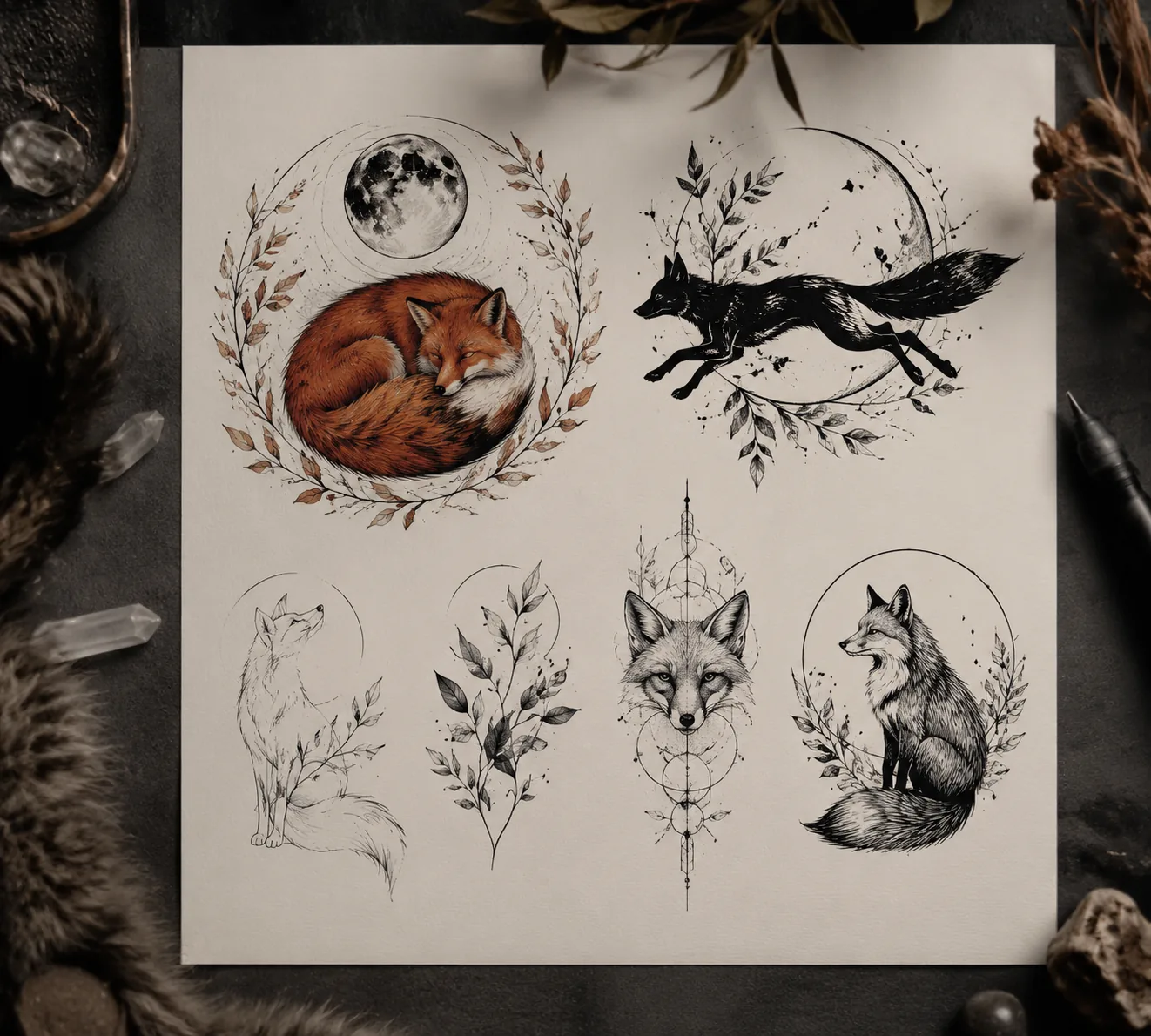
A curled sleeping fox reads as self-protection, conservation of energy, quiet independence. The risk is sentimentality: too round, too soft, and the design becomes a generic cute animal rather than a symbol with edge. A running fox needs length to work. The forearm, calf, or outer thigh gives you the horizontal space for stretched legs and a tail that trails behind. Without that length, a running fox looks compressed and awkward, like a dog in mid-sneeze.
A fox head, cropped and frontal, emphasizes watchfulness. The eyes carry everything here. If your artist blurs the gaze or makes the muzzle too heavy, you lose the alert quality that makes it fox rather than coyote or dog. Request that the artist resolve the eye shape and ear angle before adding any fur texture.
Adding Elements: Flowers, Moon, Smoke
Fox with flowers softens the symbol toward beauty, charm, nature connection. The practical risk is burying the animal. Florals can overgrow the silhouette until the fox becomes a decorative element rather than the subject. Keep the fox larger and higher contrast than the surrounding botanicals.
Moon and night elements shift the symbol toward mystery, nocturnal intelligence, the unseen. Smoke or fire trails can suggest transformation, the fox as shapeshifter. These work best when the secondary element is atmospheric rather than literal. A fox standing in a detailed forest scene often loses focus; a fox with a single moon disc and minimal ground reads more cleanly.
Fox Masks and Cultural Weight
The fox mask, particularly kitsune imagery, carries specific cultural obligations. Japanese folklore recognizes the kitsune as a fox spirit of increasing power and age, often linked to Inari shrines and sometimes to deception, sometimes to protection. If you choose this direction, you are borrowing from a living religious and artistic tradition, not selecting a generic mystical accessory.
Study actual mask shapes: the pointed ears, the narrow eyes, the specific proportions differ from Western cartoon fox faces. Consider whether you want the full nine-tailed kitsune form, which carries connotations of advanced power and age, or a simpler mask. If you are not Japanese or deeply connected to the tradition, some artists recommend avoiding direct religious imagery and choosing a stylized fox that nods to the aesthetic without claiming the specific spiritual role.
For Japanese-inspired work, the surrounding visual language matters. Pair a fox mask with waves, clouds, or peonies in a controlled palette rather than mixing unrelated filler. The cohesion shows you understand the style rather than sampling it.
Style Choices and Longevity
Fine Line
Fine line fox tattoos succeed when the silhouette is simple and the negative space is intentional. A curled body, pointed muzzle, clean tail curve. These age best on areas with less sun exposure and less skin movement: inner forearm, upper arm, shoulder. The danger is over-detail at small sizes. Whiskers, individual fur tufts, and tiny eye highlights blur within a few years. A fine line fox should read as fox from shape alone, not from rendered texture.
Blackwork and Traditional
Blackwork foxes can feel wilder, more aggressive, more nocturnal. The critical technique is negative space in the face and tail. Without light areas, the fox becomes a dark blob, especially as black ink spreads slightly over time. Traditional American style demands bolder shapes and less tiny fur detail than people often request. The fox in traditional work should be readable from across a room.
Color and Watercolor
Orange and red feel natural for foxes, but watercolor and soft color techniques require structure underneath. A common mistake is asking for color without sufficient black or dark line to hold the form. Soft color alone, especially on lighter skin, fades toward a bruised or smudged appearance faster than structured work. If you want the watercolor effect, insist that your artist establish the fox shape in dark line first, then add color as atmosphere rather than definition.
Color choice also shifts meaning. A red fox is the standard expectation. An arctic fox, white or pale grey, suggests different terrain: isolation, cold climate adaptation, camouflage. A black or silver fox reads as rarer, more nocturnal, possibly more occult in tone depending on surrounding elements.
Placement and Movement
The fox is a diagonal animal in life: low body, long tail, alert ears. Centered, symmetrical placements often kill this quality. A fox head dead center on the chest reads as static, almost heraldic. A running fox along the outer thigh or calf follows the muscle line and keeps the sense of motion.
Forearm and calf are strongest for running foxes because they offer length without excessive width. Shoulder and upper arm work for fox heads or curled foxes, where the curve can wrap slightly around the muscle. Rib and thigh placements can hold larger scenes with moon, trees, or atmospheric elements, but require a bigger commitment of time and money.
Small fox tattoos are possible but demand simplification. A tiny fox head with full facial detail will not age cleanly. A curled outline, a tail-focused symbol, or a minimal silhouette is safer at under three inches. For private placement, ankle, hip, or upper rib works well. For public readability, forearm remains the most practical choice.
One technical note on the tail: it is the identifying feature. A fox with a flat or small tail reads as generic canine at glance distance. Ask your artist to exaggerate tail volume and tail tip contrast. The tail anchors the design’s movement and identity.
Working With Your Artist
Bring two references: one for posture and one for style. Do not bring a photograph of someone else’s tattoo and ask for the same thing. Bring source images of real foxes in the pose you want, and separate images of tattoo styles that match your aesthetic goals.
Ask the artist to resolve ears, muzzle, and tail before adding fur texture. If those three elements read correctly, the rest is decoration. If they are wrong, no amount of detail saves the design.
Discuss aging explicitly. Ask which lines will hold at the chosen size, which color areas might blur, and whether the placement you want experiences significant sun exposure or friction from clothing. A fox on the inner forearm ages differently than one on the outer calf or top of the foot.
What to Remember
The fox tattoo rewards restraint. It is a symbol that works through implication rather than declaration. Choose it if you want an animal image that carries intelligence without aggression, survival without victimhood, and presence without noise.
Keep the design alert. The fox’s power is in its watchfulness, its readiness to move. Sleepy, cute, or overly decorative treatments waste that potential. Respect the cultural weight of kitsune imagery if you move in that direction. And trust the silhouette: if the shape reads as fox from ten feet away, the details will only add to something already sound.
Frequently Asked Questions
What does a fox tattoo symbolize?
A fox tattoo usually symbolizes cleverness, independence, adaptability, transformation and instinct. The specific meaning shifts with posture and style: a running fox suggests freedom and quick thinking, while a curled fox emphasizes self-protection and quiet independence.
Is a fox tattoo feminine or masculine?
It can be either. Fine line and floral fox tattoos tend to read softer, while blackwork, traditional, and running fox designs feel sharper and more aggressive. The fox itself carries no fixed gender association in tattoo culture.
Where should I put a fox tattoo?
Forearm and calf work well for running foxes because they offer length. Shoulder and upper arm suit fox heads or curled foxes. Rib and thigh placements can hold larger scenes. For small designs, simplify the face and focus on silhouette rather than detail.
What is the difference between a fox tattoo and a kitsune tattoo?
A fox tattoo uses the animal generally as a symbol of cleverness and adaptability. A kitsune tattoo specifically references Japanese folklore, where the fox spirit carries religious and cultural significance tied to Inari shrines and shapeshifting mythology. Kitsune imagery requires more care and research to handle respectfully.
How do I keep a fox tattoo from looking like a wolf or dog?
Emphasize the tail volume and tail tip, keep the muzzle narrower and more pointed, and ensure the ears are large and alert relative to the head. The silhouette matters more than fur texture. A fox with a flat tail reads as generic canine.