
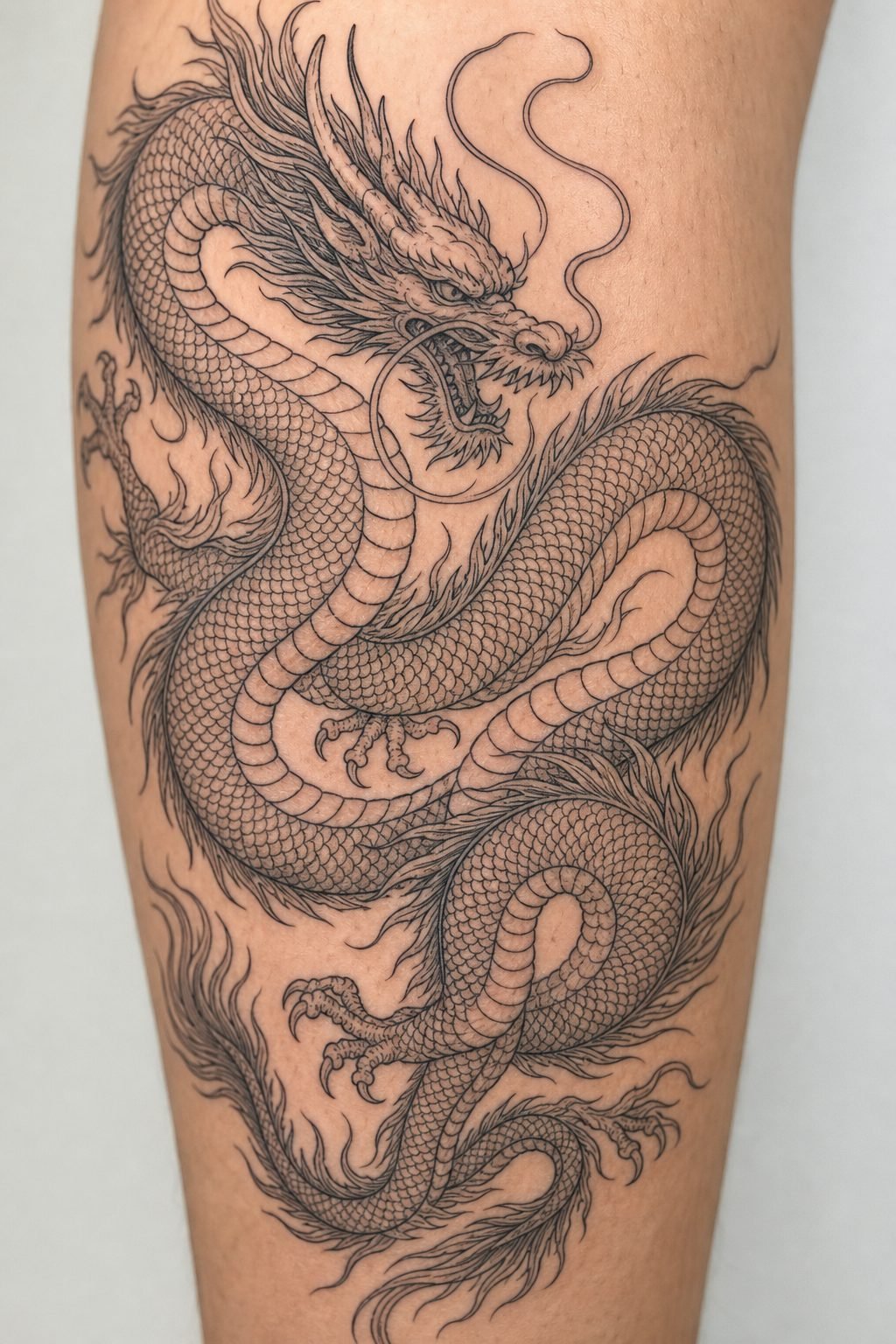
The golden dragon navy tattoo signifies a sailor’s first crossing of the International Date Line, a major navigational milestone in naval tradition. This achievement, known as “Shellback,” marks entry into the world of the Golden Dragon and represents experience, resilience, and the earning of respect among fellow mariners. The dragon itself symbolizes power, wisdom, and protection across Eastern cultures, making it a fitting emblem for this significant rite of passage.
Symbolism & History
The International Date Line crossing has been celebrated in maritime culture for centuries. Sailors who complete this journey earn the title “Shellback” and traditionally receive a certificate commemorating the event. The golden dragon specifically represents the mythical guardian of the eastern seas, connecting the sailor’s achievement to ancient nautical lore.
Historical records suggest these traditions intensified during the age of steam and steel navies, when Pacific deployments became more common. The tattoo evolved from simple commemorative designs to elaborate golden dragons that sailors wore with pride. The color gold holds particular significance, representing not only the dragon’s legendary status but also the value of the experience gained.
The dragon’s symbolic weight extends across multiple naval traditions:
- Power and dominance over the seas
- Wisdom earned through challenging voyages
- Protection for future journeys
- Transformation from novice to experienced mariner
- Connection to the vastness of the Pacific Ocean
Common Variations & Styles
Artistic interpretations of the golden dragon navy tattoo vary considerably based on personal preference, the era of service, and the artist’s approach. Traditional American tattoo styles remain popular, featuring bold lines, limited color palettes, and classic sailor tattoo aesthetics. These designs often incorporate nautical elements like ships, waves, or compasses alongside the dragon figure.
Japanese-inspired designs represent another significant category, drawing from irezumi traditions with flowing scales, dynamic poses, and cloud or water backgrounds. These pieces tend toward larger formats and more intricate detail work. Some sailors choose a more realistic approach, while others prefer stylized or tribal interpretations.
Common accompanying elements include:
- The date of the crossing inscribed beneath or around the dragon
- Coordinates of the crossing location
- Ship name or hull number
- Additional Shellback imagery like King Neptune
- Traditional nautical stars or rope borders
Best Placements
The golden dragon navy tattoo suits several body locations depending on desired visibility and scale. The upper arm and shoulder remain classic choices, offering sufficient canvas for detail while maintaining professional concealment when needed. The chest and back provide larger surfaces for elaborate Japanese-style compositions.
Forearm placements have gained popularity among veterans who wish to display their service more openly. Thigh and calf locations work well for medium-sized pieces and allow for easier coverage. Some sailors choose the upper back or shoulder blade for designs that can be expanded later with additional service-related tattoos.
Consideration of future body changes and aging remains important for any tattoo decision. The golden dragon’s intricate details benefit from placement on skin that experiences minimal stretching and sun exposure over time.
Who Chooses This Tattoo / Personal Meanings
Active duty sailors and naval veterans comprise the primary group seeking this tattoo, though Coast Guard and Merchant Marine personnel with Pacific crossings also participate in the tradition. The design appeals to those who value the ceremonial aspects of maritime culture and wish to permanently mark a defining professional achievement.
Beyond the official milestone, personal meanings often develop. Many recipients describe the tattoo as representing survival through challenging conditions, isolation from family, and the bonds formed with shipmates. The dragon’s fierce imagery resonates with those who faced Pacific storms, equipment failures, or extended deployments.
Family members sometimes choose related designs to honor a sailor’s service, though the traditional golden dragon specifically belongs to those who earned the Shellback status. Some veterans return to the design decades later, adding elements that represent their entire career trajectory.
Similar Symbols
Naval tradition includes several comparable milestone tattoos that sailors often collect alongside the golden dragon. The “Shellback” tattoo itself, frequently depicting King Neptune or a turtle, marks the same achievement with different imagery. The “Golden Shellback” specifically denotes crossing at the intersection of the Equator and International Date Line, an even rarer accomplishment.
The “Blue Nose” recognizes Arctic Circle crossings, while the “Order of the Ditch” commemorates Panama Canal transits. The “Dragon” without gold specification sometimes refers to WestPac (Western Pacific) deployments more generally. These tattoos often appear together on career sailors, creating a visual narrative of their service history.
Non-naval dragon tattoos share some symbolic overlap but lack the specific service-connected meaning. Chinese and Japanese dragon imagery in civilian tattooing emphasizes luck, strength, and spiritual power without the maritime context that defines the golden navy variant.
Final Thoughts
The golden dragon navy tattoo endures as a powerful marker of maritime achievement, connecting modern sailors to centuries of ocean-crossing tradition. Its meaning extends beyond mere decoration to represent genuine transformation, the earning of respect through demonstrated capability, and permanent membership in a community of experienced seafarers. For those who wear it, the golden dragon serves as lifelong proof that they have faced the vast Pacific and returned changed by the experience. Whether rendered in bold traditional style or flowing Japanese composition, this tattoo remains one of naval culture’s most respected and recognizable symbols.
Related Tattoo Meanings
- Labrador Symbolism Tattoo Meaning: Loyalty, Love Devotion
- Ram Tattoo Meaning: Strength, Leadership Aries Symbolism
- Crown of Thorns Tattoo Meaning: Faith, Suffering Strength
- Explore more
Frequently Asked Questions
What does a golden dragon navy tattoo signify when crossing the International Date Line?
A golden dragon tattoo marks a sailor’s first crossing of the International Date Line, also known as the ‘Shellback’ in some contexts, though technically the Dragon is specific to the IDL crossing. It represents initiation into a centuries-old maritime tradition and proves the sailor has ventured into the far reaches of the Pacific Ocean.
Why is the dragon specifically golden in this navy tradition?
The golden color represents the sun and the wealth of experience gained by crossing into the Eastern Hemisphere, while the dragon itself symbolizes the mysterious and powerful nature of the Pacific. Gold also distinguishes this rite from other shellback variations, making it a more prestigious mark among sailors.
Do sailors still get golden dragon tattoos today, or is this tradition dying out?
The tradition persists in modern navies, though tattoo regulations have tightened and some sailors now opt for commemorative certificates or coins instead. Many still seek the tattoo as a permanent badge of honor, especially in U.S. Navy Pacific Fleet deployments and among maritime enthusiasts who value naval heritage.
Is the golden dragon tattoo different from the regular Shellback tattoo?
Yes, they are distinct achievements: the Shellback marks crossing the Equator, while the Golden Dragon specifically marks crossing the International Date Line at 180 degrees longitude. Sailors who have earned both hold significant bragging rights, and some choose combined designs featuring both a turtle and a dragon.









