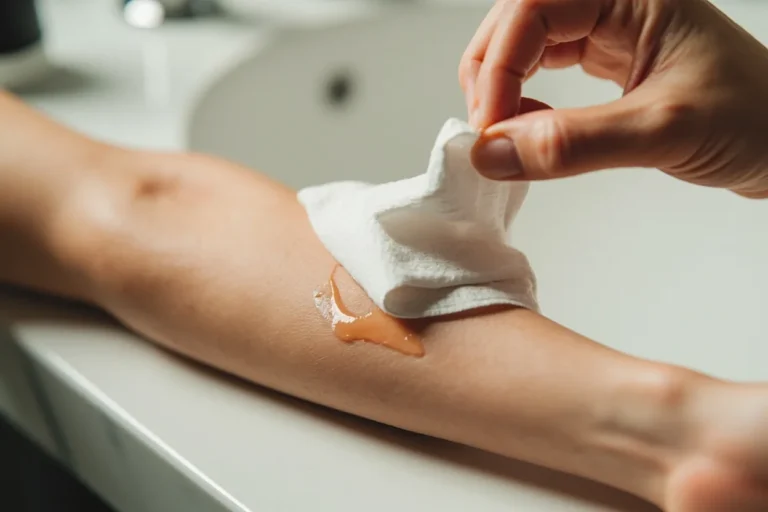
Peel Saniderm off slowly in the shower using warm water and gentle soap, pulling the film back flat against itself rather than lifting it straight up off the skin. This keeps the adhesive from gripping the fresh tattoo underneath and makes the process nearly painless.
When to Take It Off
Timing matters more than most people expect. Saniderm’s first application typically stays on for 24 hours to 3 days, depending on what your artist applied and how much plasma your tattoo is weeping. A second piece, if applied, usually lasts another 3-5 days. The total wear time rarely exceeds a week.
Remove the film sooner if you see these signs:
- Fluid has pooled into large bubbles with no absorption happening
- The adhesive seal has broken and air/bacteria can enter
- Redness spreads beyond the tattoo edges or the area feels hot
- The film is leaking plasma or ink from any edge
Don’t leave Saniderm on longer than recommended thinking you’re “protecting it longer.” Trapped moisture after the weeping phase creates a breeding ground for bacteria, and the adhesive itself can irritate skin if overstayed.
Preparing for Removal
Gather What You Need
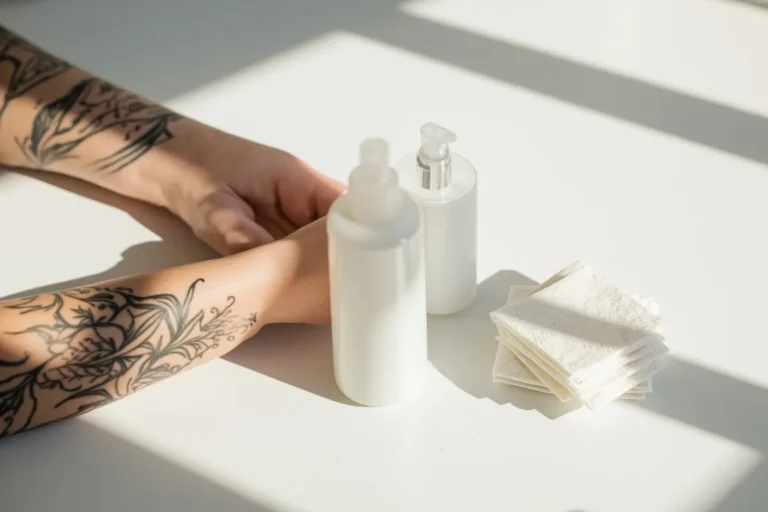
Before you start, have warm running water accessible, unscented liquid soap (Dr. Bronner’s baby unscented, Dove sensitive, or similar), and clean paper towels. Some people keep a small spray bottle of warm water handy for controlled wetting. Avoid washcloths, their texture can snag the film or abrade healing skin.
Soften the Adhesive
Adhesive weakens considerably with warmth and moisture. A 5-10 minute warm shower does the work of several products. Let water run over the Saniderm continuously. The goal isn’t to flood underneath the film but to saturate the outer surface so the glue releases gradually. Room-temperature water won’t cut it, you want genuinely warm, not scalding, against your skin.
The Removal Technique
Here’s where most people go wrong: they grab a corner and pull upward, away from the skin, like ripping off a Band-Aid. That vertical lift stresses the healing dermis, pulls on fresh ink, and hurts significantly more.
Instead, work like this:
- Find a loose edge, usually at a corner where plasma has already started breaking the seal
- Lift just enough to grip between thumb and forefinger
- Pull the film back against itself, keeping it close to the skin surface, almost sliding it off rather than peeling it
- Support the skin directly ahead of the removal line with your other hand, creating counter-tension
- Move in small sections; if resistance increases, wet the area more and wait
For large pieces covering the back, thigh, or chest, you may need to remove in strips rather than one piece. That’s normal. The adhesive varies across the surface, and some areas release easier than others.
What If It Won’t Come Off Cleanly?
Stubborn Adhesive Residue
Saniderm’s medical-grade adhesive sometimes leaves a tacky, grayish film on the skin after the main sheet is gone. Don’t scrub at this. Apply a thin layer of unscented lotion or a small amount of coconut oil, let it sit for 10-15 minutes, then gently wipe with a warm, soapy paper towel. The oil breaks down the adhesive without requiring friction against healing tissue.
Plasma Has Glued the Film Down
When plasma dries between the tattoo and the film, they can fuse. This most commonly happens with heavy blackwork or solid color saturation. Don’t force it. Soak longer, up to 20 minutes of continuous warm water. Gently work the edge with soapy fingertips, letting water seep underneath. The plasma will rehydrate and release. If you’ve tried for 30 minutes and it’s still stuck, call your artist. They’ve dealt with this before.
Immediately After Removal
Once the film is off, wash the tattoo gently with warm water and unscented soap. Use your fingertips, not a loofah or cloth. You’re removing plasma residue, dead skin cells, and adhesive traces, not performing deep cleaning. Rinse thoroughly. Pat dry with a clean paper towel. Let it air-dry for 5-10 minutes before applying aftercare.
Your tattoo will look different now than it did under the film. The surface may appear dull, slightly shiny, or have a light “milky” quality. That’s normal; the top layer of skin is beginning to form. Some redness around the edges is expected for the first 48 hours after removal. Sharp, spreading redness or increasing warmth is not, contact your artist if you see that.
Aftercare Transition
Without Saniderm, you’re switching to traditional aftercare. Most artists recommend a thin layer of fragrance-free lotion (Lubriderm, Curel, or similar) applied 2-3 times daily, or a specialized tattoo aftercare balm. The tattoo needs to breathe, don’t suffocate it under thick ointment.
Expect the healing timeline to shift:
- Days 1-3 under Saniderm: plasma and ink weeping, initial clotting
- Days 3-7 post-removal: light peeling, possible itching, surface dryness
- Week 2: major peeling subsides, color may look muted under new skin
- Weeks 3-4: surface appears healed, deeper layers still remodeling
Keep showers brief and lukewarm for the first week after removal. No swimming, hot tubs, or soaking until the surface has fully closed, typically 2-3 weeks. Sun exposure is your enemy; if the tattoo must be visible, use loose clothing rather than sunscreen until fully healed.
What About Pain and Cost?
Properly removed Saniderm causes minimal discomfort, maybe a mild pulling sensation, comparable to peeling sunburned skin. The pain spikes when people rush, pull vertically, or remove dry adhesive. If you’re anxious, take your normal over-the-counter pain reliever 30 minutes before, though most don’t need it.
Saniderm itself adds $10-30 to your tattoo cost if the artist charges separately, or it’s built into the session price. It’s not typically a major line item. The real value is in reduced scabbing, less clothing irritation, and fewer opportunities to bump or scratch the fresh tattoo. Most artists who use it consider it worth the material cost for the healing quality it provides.
Key Takeaways
- Remove Saniderm in a warm shower, pulling the film back flat against itself rather than lifting upward
- First application: 1-3 days; second application: 3-5 days; total wear rarely exceeds one week
- Soak stubborn adhesive or dried plasma with extended warm water exposure, never force it
- Wash gently after removal, transition to light, unscented lotion or approved aftercare
- Expect peeling and temporary color dullness; protect from sun and soaking until fully healed
Frequently Asked Questions
Can I reapply Saniderm after removing the first piece?
Yes, if your tattoo is still weeping plasma and the skin isn’t irritated. Many artists apply a second piece after the initial 24-hour removal. Clean the area thoroughly, let it dry completely, and apply fresh film within an hour while the skin is still in that window.
Why does my tattoo look cloudy or milky under Saniderm?
That’s usually trapped plasma and lymph fluid mixing with ink residue, not infection. It often looks worse than it is. The cloudiness clears once you wash the tattoo after removal. If the fluid smells foul or the skin around it is increasingly hot, then contact your artist.
Is it normal for Saniderm to hurt when removing?
Mild pulling is normal; sharp pain means you’re going too fast or pulling vertically. Slow down, add more warm water, and adjust your angle so you’re sliding the film off rather than lifting it. The adhesive releases gradually with proper technique.
Can I exercise with Saniderm on?
Light exercise is fine, but avoid anything that causes heavy sweating under the film, sweat has no exit and can irritate the skin. Skip workouts that stretch or rub the tattooed area directly. Gyms are also high-bacteria environments; fresh tattoos are vulnerable even under film.
Related Tattoo Guides
- How to Soothe an Itchy Tattoo: A Complete Aftercare Guide
- How to Tattoo Step by Step: A Complete Guide
- How to Use Tattoo Transfer Paper Without a Thermal Copier
- Explore more