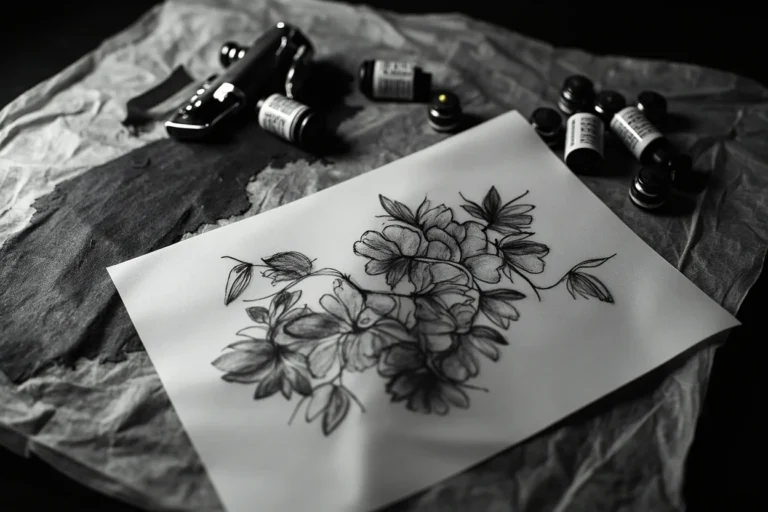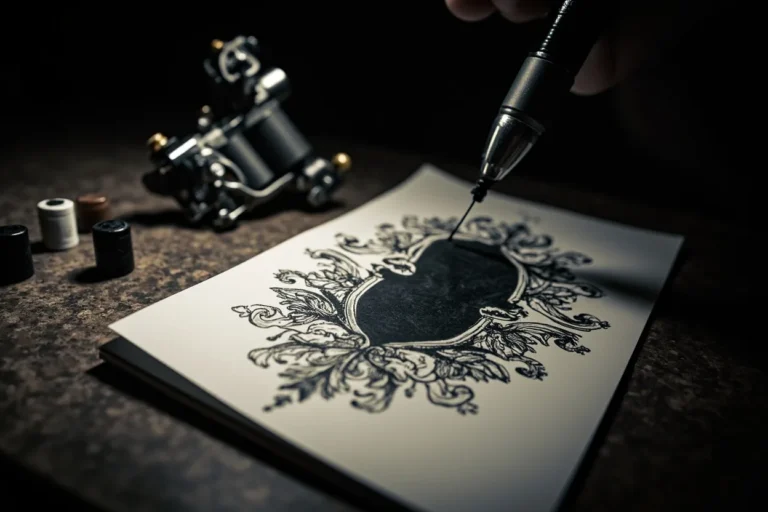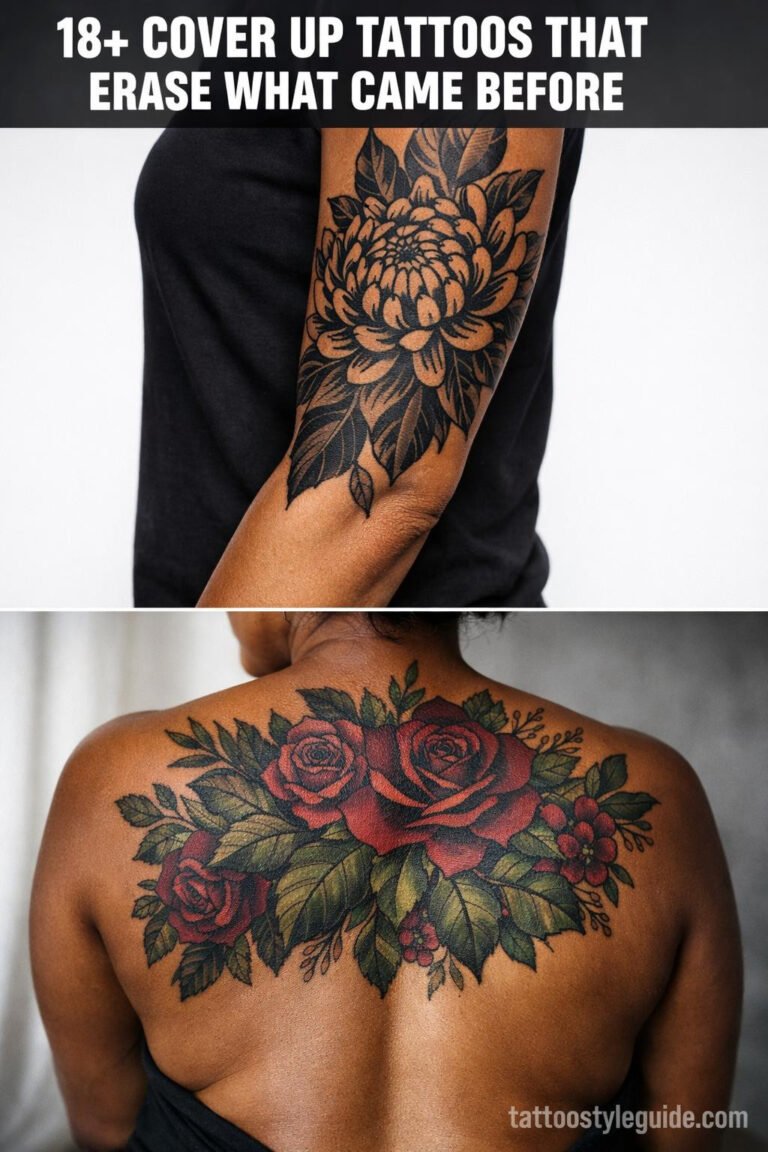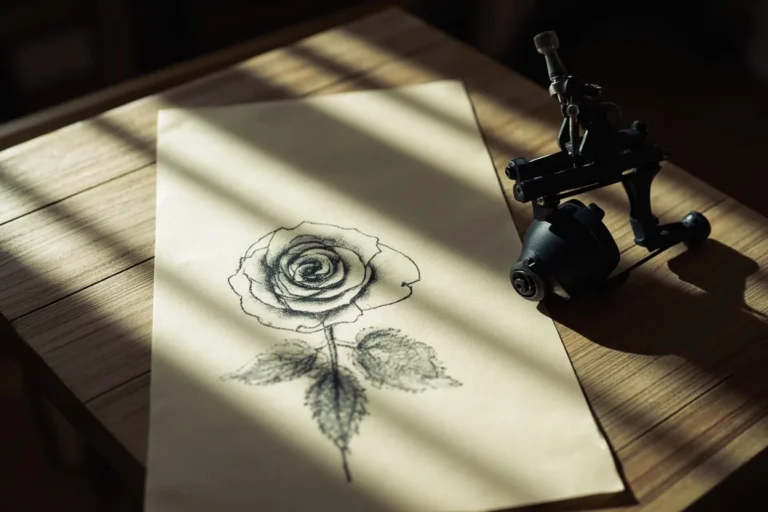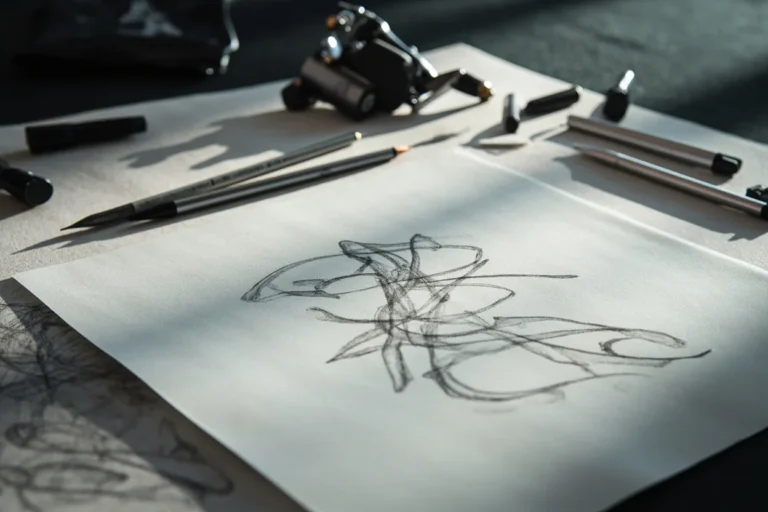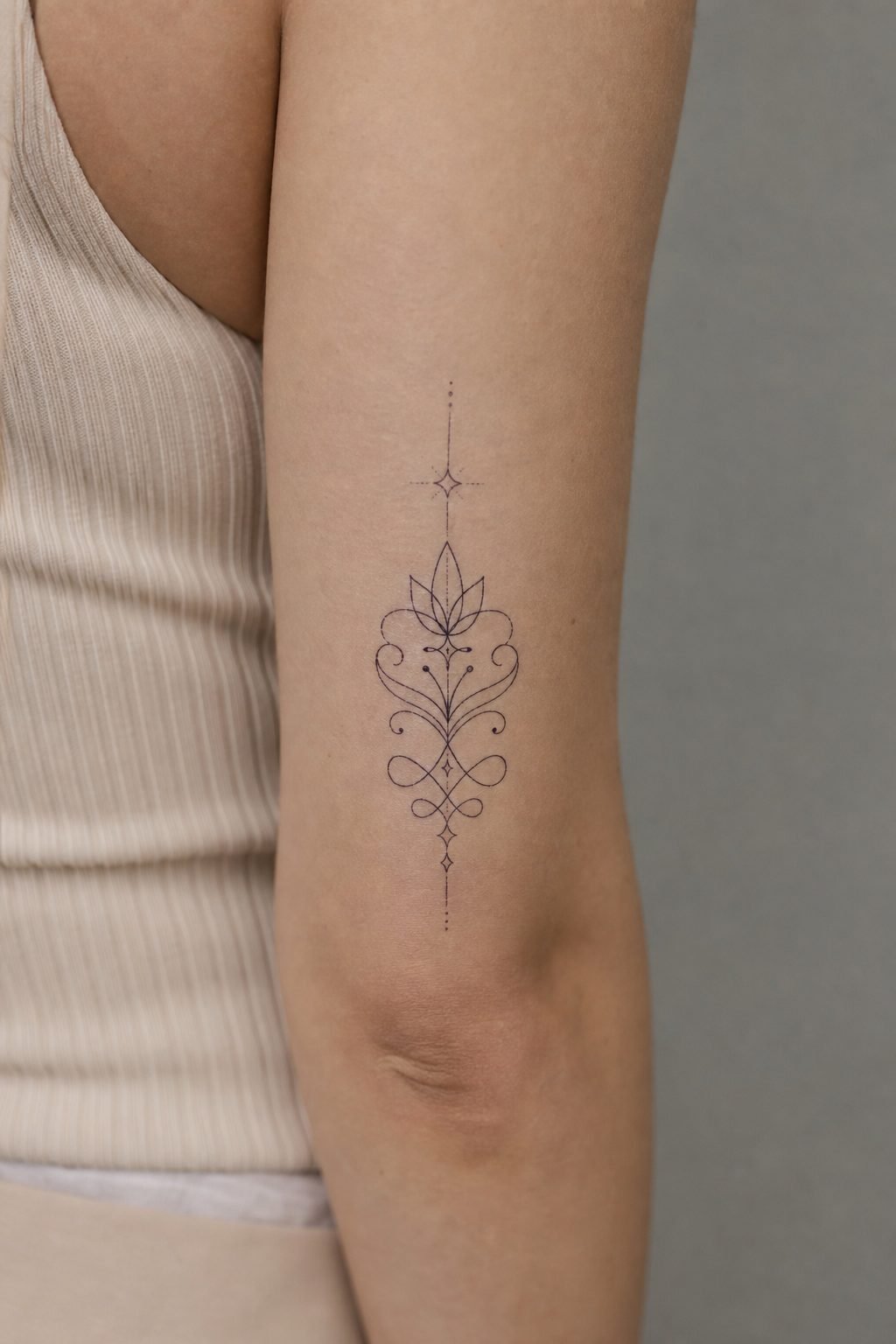
You don’t need a thermal copier to get a clean, workable stencil onto skin. Plenty of working artists prefer hand-transfer methods for custom work, and several reliable techniques exist that give you full control over line weight and placement. The main approaches are manual tracing with hectograph or carbon paper, drawing directly on the stencil sheet, and using a light table or window to transfer your design. Each method suits different design types and workflow preferences, and all of them produce stencils that last through a full session when done correctly.
What You’ll Need
Basic supplies for non-thermal transfer work are inexpensive and available from most tattoo supply distributors. The core items are stencil paper (hectograph or spirit paper, which has a purple or blue dye layer), a ballpoint pen or hard pencil for tracing, and your original artwork on standard paper. A light table or bright window helps enormously for complex designs. Some artists also keep a small spray bottle of green soap and a paper towel handy for cleaning the skin before application.
- Hectograph or spirit-style stencil paper (purple or blue carbon-backed sheets)
- Ballpoint pen, 2H-4H pencil, or stylus with firm pressure
- Original design drawn in dark, clean lines
- Light table, tablet screen, or sunny window for back-lighting
- Stencil transfer gel or stick deodorant for skin application
- Razor and green soap for skin prep
Skip the cheap office carbon paper from big-box stores. The wax coating and inconsistent dye transfer poorly to skin and can cause reactions. Tattoo-specific stencil paper is formulated for skin contact and produces predictable results.
Manual Tracing Method
This is the most straightforward approach and works for any design you can see through your paper. Place your original artwork face-up on a hard surface. Lay the stencil paper on top, dye-side down (the shiny or colored side faces your original). Secure both with tape so nothing shifts during tracing.
Pressure and Tool Choice
Trace every line with consistent, firm pressure using a ballpoint pen or hard pencil. A soft pencil won’t deposit enough force to push the dye through properly. Ballpoint pens are forgiving because they glide smoothly and won’t tear the paper. Work slowly on curves and corners, rushing creates broken lines that you’ll have to interpret later. For areas of solid black in your design, crosshatch or outline the boundary rather than trying to fill it completely; the stencil only needs to guide your needle placement, not replicate every shade.
Checking Your Transfer
Lift a corner periodically to verify the dye is transferring. If lines look faint, increase pressure or check that you’ve got the stencil paper oriented correctly. A faint stencil is worse than none, it’ll wipe away during your first pass with a rinse. Once finished, separate the sheets carefully. Your original remains intact, and the stencil paper now carries a purple or blue mirror of your design.
Light Table and Window Techniques
Complex designs with fine detail, overlapping elements, or light pencil originals benefit enormously from backlighting. A professional light table gives even illumination and a flat work surface, but a tablet screen set to maximum brightness with a white image works in a pinch. In daylight, taping your papers to a sunny window achieves the same effect.
Stack your papers the same way, original on bottom, stencil paper dye-side down on top. The light shining through makes every line visible, so you can trace accurately even through heavier paper stock. This method reduces eye strain and catches details you might miss under normal room lighting. For large designs that exceed your light table, work in sections or use the window method where size isn’t limited.
Drawing Directly on Stencil Paper
Experienced artists often sketch freehand directly onto the stencil sheet, especially for flowing designs that need to adapt to body contours. This skips the tracing step entirely and gives you immediate control over how the design sits on the form. Use a pencil lightly first, then go over your lines with pen to activate the dye layer.
The downside is that mistakes are permanent on the stencil sheet, you can’t erase without disturbing the carbon layer. Work lightly, commit confidently, and keep spare sheets nearby. This method shines for custom lettering, organic shapes, and anything where you want to adjust the design specifically for the client’s anatomy rather than transferring a rigid original.
Applying the Stencil to Skin
Prep the skin by shaving the area and washing with green soap. The surface should be dry but not dehydrated, over-wiping with alcohol strips natural oils and can cause the stencil to adhere poorly or spread.
Transfer Gel vs. Stick Deodorant
Professional stencil transfer gels give the most consistent results. Apply a thin, even layer and let it become tacky before pressing the stencil down. Stick deodorant (the original white solid type, not gel or spray) works in a bind and has been a shop staple for decades. Rub a thin film onto the skin, let it dry slightly, then apply your stencil. Both methods work; gels are cleaner and more predictable, while deodorant is cheap and available anywhere.
Press the stencil firmly and evenly for 30-60 seconds. Peel it back slowly from one corner. If the image is faint or incomplete, don’t try to re-align and press again, wipe the area, re-prep, and make a fresh stencil. Double-pressing a shifted stencil creates ghost lines that confuse your work.
Aftercare for Stencil Longevity
A good stencil should remain readable through several hours of tattooing. To maximize stencil life, avoid over-wiping the skin during your session. Use a light touch with paper towels, patting rather than dragging. Green soap and water rinse gentler than alcohol-based solutions, which dissolve stencil lines faster. Some artists apply a thin layer of petroleum jelly over the stencil after it dries, working in small sections to protect lines they’re not yet tattooing.
Clients should know that stencil residue washes away completely during normal aftercare. The purple or blue marks are not the tattoo itself, if the stencil disappears before the session ends, the artist is working from memory and experience, not from visible guides.
Common Problems and Fixes
- Blurred or smeared lines: Too much transfer gel or deodorant. Apply less and let it tack up longer before pressing.
- Stencil fades within minutes: Skin was too wet or oily during application, or the original tracing was too light. Prep more thoroughly and trace with heavier pressure.
- Lines appear doubled or ghosted: Paper shifted during tracing or application. Secure your papers better and don’t re-press a moved stencil.
- Dye won’t transfer from original to stencil: Check paper orientation, the dye side must face the original, not up. Some papers have a protective interleaf sheet that needs removal.
- Skin reaction to stencil dye: Rare, but switch to a different brand or color. Some clients react to specific dye formulations.
When to Choose Non-Thermal Methods
Thermal copiers excel at reproducing photographs and dense greyscale images quickly. Hand methods outperform them for custom artwork, designs that need scaling or adjustment, and situations where you want deliberate line weight variation. Many artists keep both skills sharp, using thermal for reference-heavy work and hand transfer for original drawings. The manual approach also travels well, no power outlet needed, and supplies weigh almost nothing.
Learning to transfer by hand builds fundamental skills that improve your overall tattooing. You become more sensitive to how designs translate to three-dimensional skin, more adaptable when equipment fails, and more confident in freehand work. These aren’t backup skills; they’re core competencies that plenty of respected artists prefer as their primary method.
Key Takeaways
Manual stencil transfer requires tattoo-specific hectograph or spirit paper, firm consistent tracing pressure, and proper skin preparation. Light tables and windows make complex designs traceable without guesswork. Direct drawing on stencil paper suits custom freehand work but demands confidence since corrections are difficult. Application matters as much as creation, thin, tacky transfer medium and even pressure produce lasting stencils. Problems like blurring, fading, or ghosting have specific causes and fixes. Non-thermal methods aren’t compromises; they offer control and portability that machines don’t match, and developing proficiency with them strengthens your overall technique regardless of what equipment you later add to your setup.
Frequently Asked Questions
Can I use regular carbon paper from an office supply store for tattoo stencils?
No. Office carbon paper uses wax-based coatings and dyes not formulated for skin contact. It transfers unpredictably and can cause irritation. Tattoo-specific stencil paper is manufactured for this purpose and produces reliable, safe results.
How do I know which side of the stencil paper has the dye?
The dye side usually looks slightly shiny or has a visible purple/blue tint. Some brands include a thin protective interleaf sheet between the dye layer and the backing, remove this before tracing. When in doubt, test a small corner on scrap paper.
Why does my stencil disappear so fast during tattooing?
Over-wiping with alcohol, excessive skin moisture during application, or too-light original tracing are the usual causes. Use gentler rinses, ensure skin is dry but not stripped before applying, and trace with firmer pressure.
Is drawing directly on stencil paper harder than tracing?
It requires more confidence since mistakes are permanent, but it offers immediate control for custom work. Start with simpler designs and build up to complex freehand stencil drawing as your comfort grows.
Related Tattoo Guides
- Is Hustle Butter Good for Tattoo Aftercare?
- Ryan Ashley Tattoo Cost: What to Budget For
- Tattoo Cost Range: What to Actually Expect in 2024
- Explore more