Japanese dragon tattoos are worth it when the drawing is clean, the placement fits the body, and the artist knows when to stop. I learned that the hard way on an early dragon reference I almost sized too small for a client, and it would’ve turned to soup fast. Most people get spooked by the subject, not the fundamentals. You do not need a huge backpiece to get strong impact from this theme or blow your whole spend.
- Build a Traditional Japanese Dragon Full Sleeve
- Why does a Japanese Dragon Chest Panel hit so hard?
- Black And Grey Dragon Forearm Tattoo
- Red Ink vs Black on a Japanese Dragon Rib Tattoo
- Irezumi Dragon Backpiece With Clouds
- Layer a Japanese Dragon And Koi Half Sleeve
- Tebori Style Dragon Shoulder Tattoo
- Horiyoshi Energy or Modern Clean Thigh Wrap?
- Build a Traditional Japanese Dragon Full Sleeve
- Why does a Japanese Dragon Chest Panel hit so hard?
- Black And Grey Dragon Forearm Tattoo
- Red Ink vs Black on a Japanese Dragon Rib Tattoo
- Irezumi Dragon Backpiece With Clouds
- Layer a Japanese Dragon And Koi Half Sleeve
- Tebori Style Dragon Shoulder Tattoo
- Horiyoshi Energy or Modern Clean Thigh Wrap?
- Fine Line Dragon Spine Tattoo
- Blackwork Japanese Dragon Calf Tattoo
- Should you put a Japanese Dragon on your hand?
- Pack Blue Into a Japanese Dragon Upper Arm
- Japanese Dragon And Peony Sleeve Tattoo
- Balance a Coiled Dragon Sternum Tattoo
- Japanese Dragon Neck Tattoo With Smoke
- Asian Dragon Collarbone Tattoo
- Hannya Contrast: Japanese Dragon Mask Chest Tattoo
- Dragon Scale Elbow Tattoo
- Map Out a Japanese Dragon Leg Sleeve
1Build a Traditional Japanese Dragon Full Sleeve
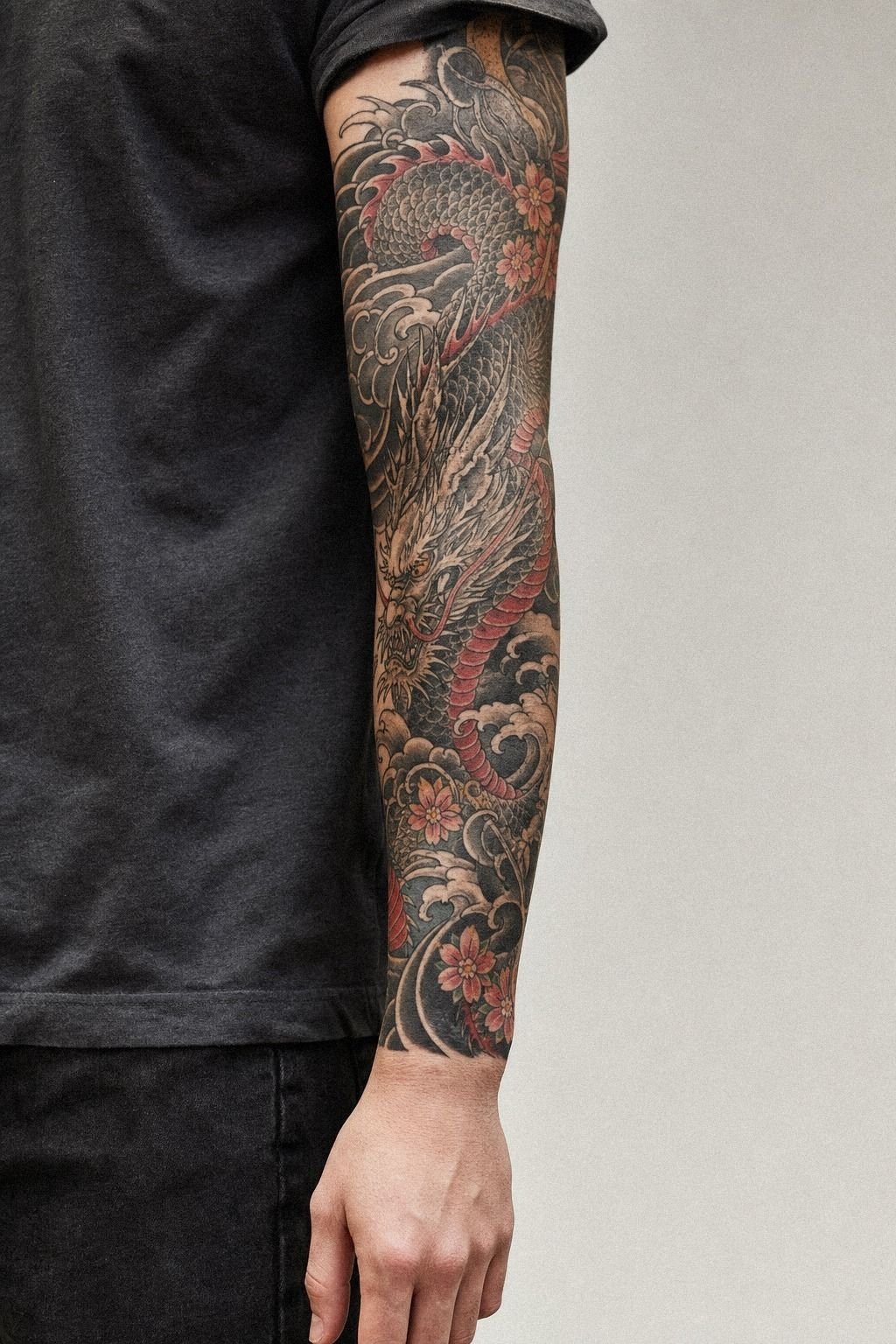
Build this like a real Japanese dragon sleeve, not a sticker trail. On a forearm sleeve, I want the head to land where you can read the eye line fast, then let the body travel with the arm instead of fighting it.
If you keep the lineweight bold and the scales open enough to breathe on skin, you’ll still have shape ten years from now. I like this route for clients who want a classic traditional Japanese dragon feel without jumping straight into a full back commitment.
The photo reads finished, not fresh, and that is the right lesson for you. Saturated black lining.
Soft grey wash tucked into the bends. A little skin break around the whiskers so the face doesn’t flatten out. If you want more examples of that old-school flow, look at the great japanese tattoos guide.
And if your artist wants to cram every scale into a wrist-width panel, I would pass. One clean pull ages better than ten fuzzy ones.
This is also one of the smarter long-game choices if you are thinking about upkeep over time. A sleeve is not cheap, but the visual payoff is huge, touch-ups are usually less annoying than hand work, and the placement gives the drawing enough clearance to heal nice without looking cramped.
2Why does a Japanese Dragon Chest Panel hit so hard?
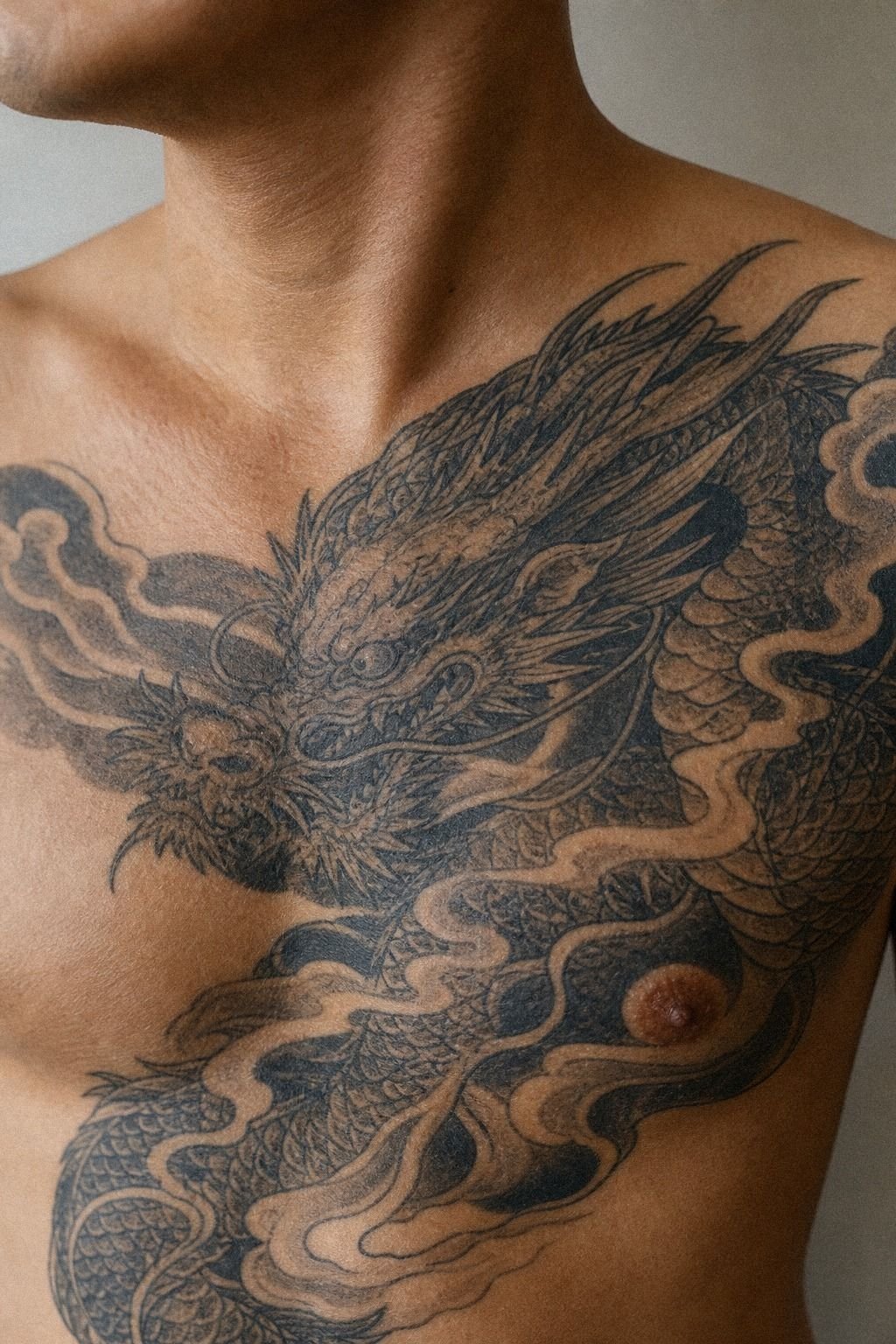
Anchor a chest panel with crispy linework first, then let the texture do the flex.
3Black And Grey Dragon Forearm Tattoo
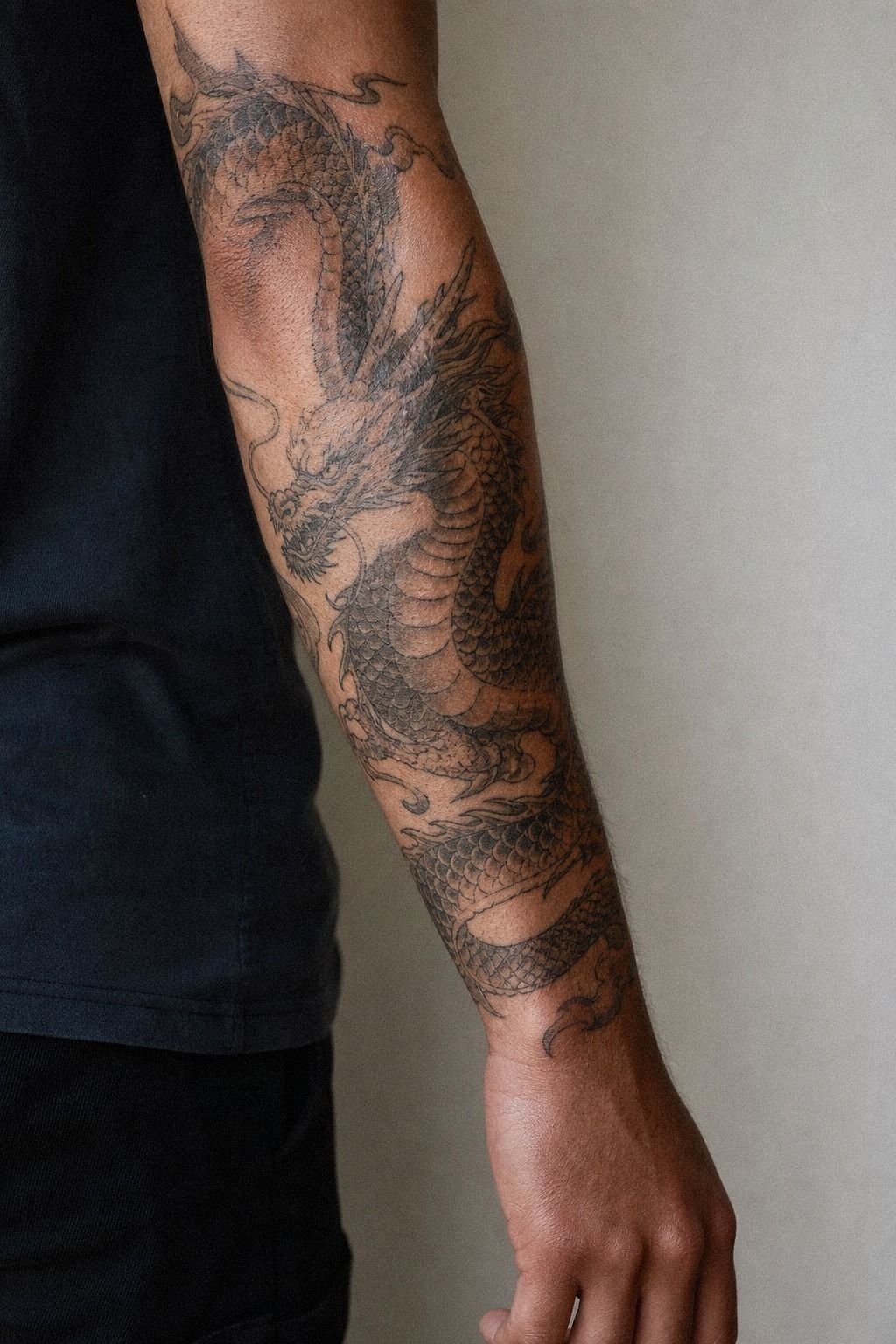
Keep a black and grey dragon on the forearm simple enough that the silhouette carries from wrist to elbow. That’s why this healed piece works.
The body turn is obvious, the grey wash is soft, and the contrast stays pushed so it doesn’t disappear once the shine is gone. Forearm placement is one of the safer bets if you want something that ages cute on you and doesn’t get chewed up by daily friction.
And I like forearms for first-timers because you can sit through them without white-knuckling the chair. Most clients tap this area around a 4 to 6 out of 10, and a strong 5 to 7 inch design often fits in one 2 to 4 hour session.
Want to know why some fine detail still blurs? Read why tattoos blur over time. But don’t confuse soft shading with weak drawing.
The lines still need backbone.
If you want the best payoff-to-readability ratio, forearm work is hard to beat. It is not the lowest quote in the shop, sure, but it often gives you the cleanest day-to-day result because you see it, heal it easily, and do not fight heavy wear.
4Red Ink vs Black on a Japanese Dragon Rib Tattoo
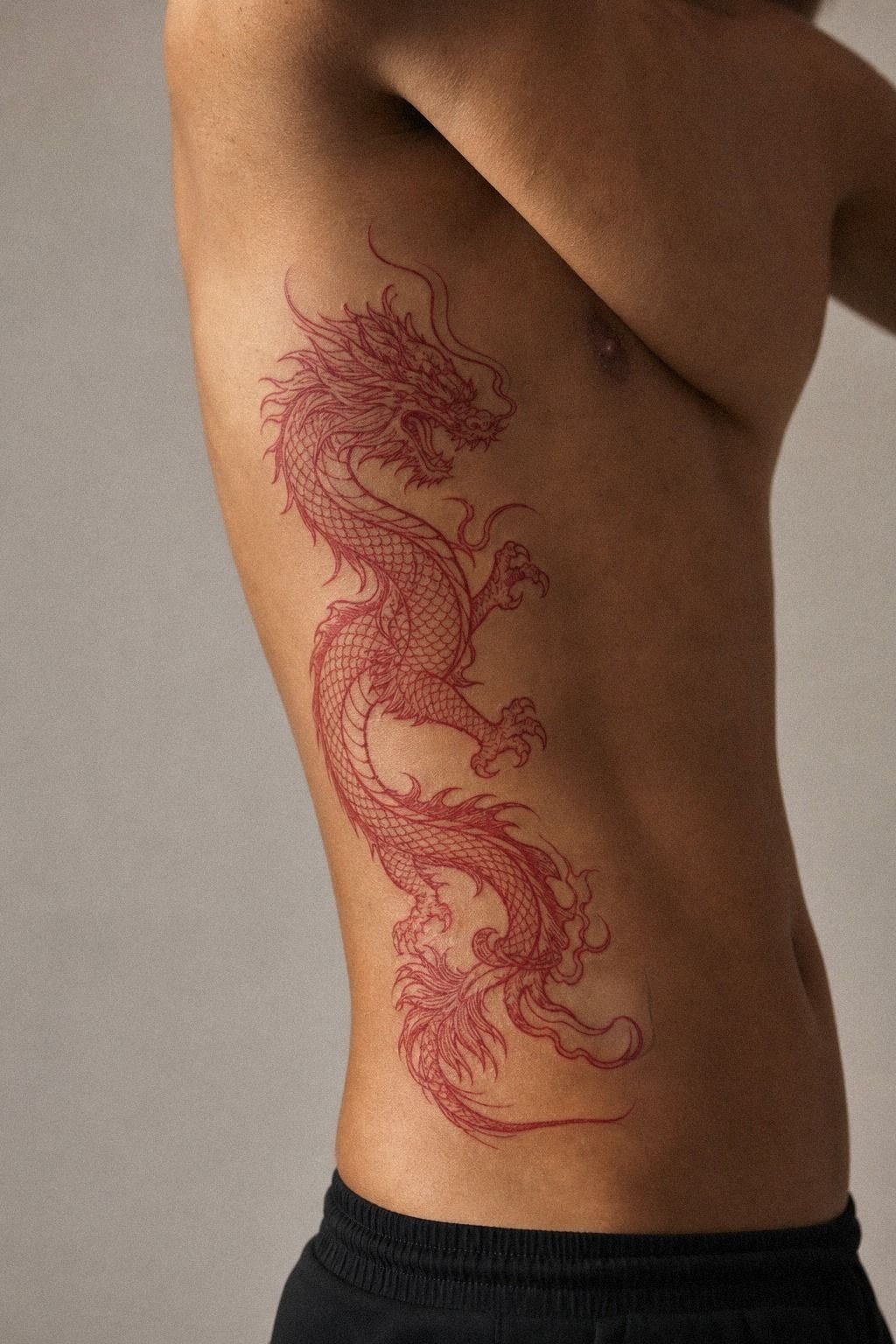
Wrap red ink across the ribs only if you love the placement enough to earn it. Rib tattoos are spicy, full stop, and this kind of long dragon shape works because it follows the side body instead of sitting there like a decal.
I want the head to hit a clean focal point, then let the body taper with the rib line so the motion feels natural on skin. That’s what keeps it elegant instead of awkward.
Red ink can look clean when the artist uses a stable red pigment and anchors the drawing with enough open shape. But I wouldn’t make this your first tattoo unless you know you sit well.
Ribs can hit a 7 to 9 out of 10 for plenty of people, and breathing makes every pass feel louder. For a more beginner-friendly pain map, see where tattoos hurt less.
And yes, sun care matters more here than people think!
Real talk: rib dragons are rarely a cheap choice. The session count climbs because placement pain slows sessions down, healing needs more discipline, and red can need a touch-up if the artist scratches at the skin instead of packing it clean.
5Irezumi Dragon Backpiece With Clouds
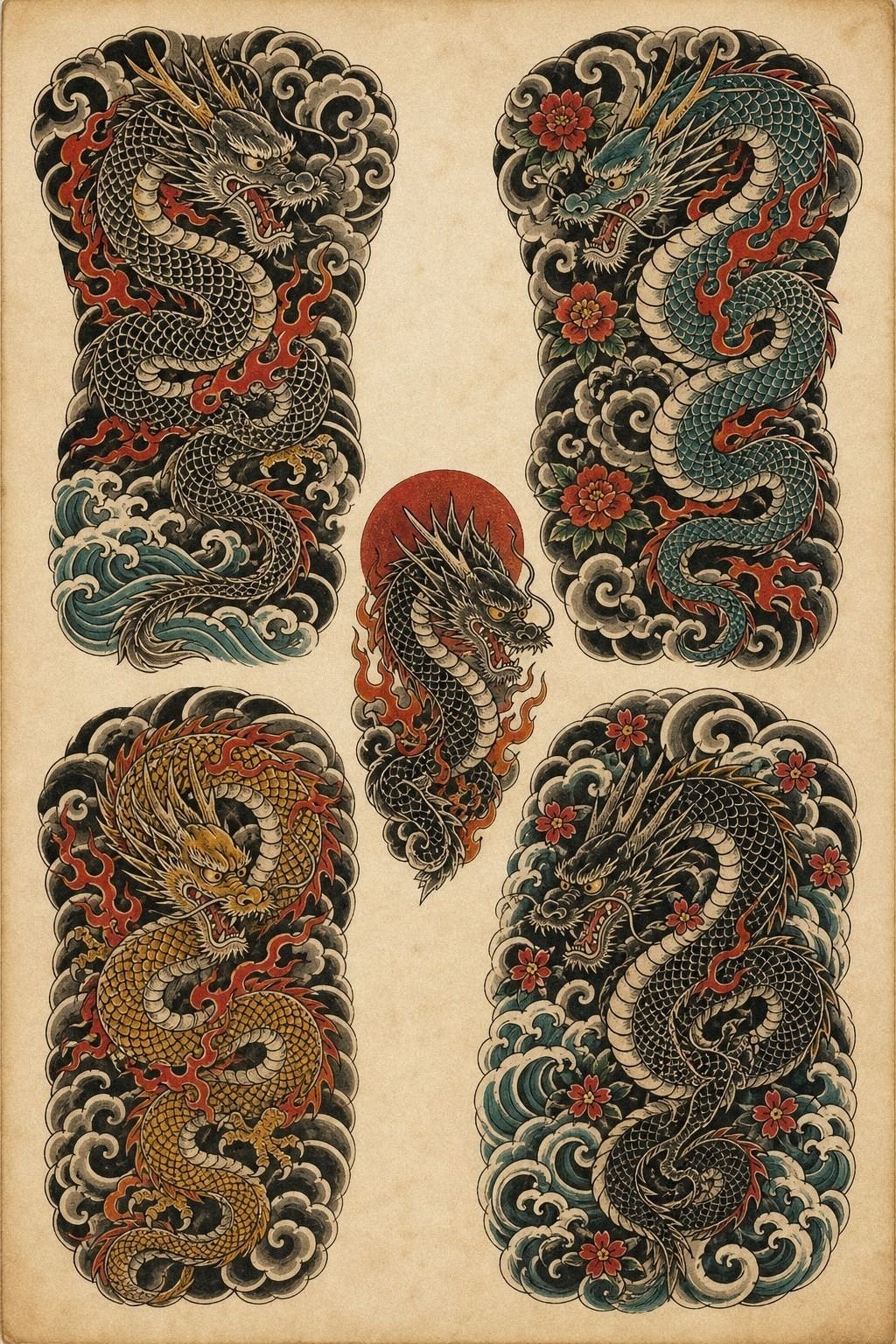
Study the drawing before you book the tattoo. This flash-sheet style image shows exactly what you should be checking in an irezumi dragon plan: how the head turns, how the claws separate, and whether the cloud bars support the body instead of choking it. A good sheet tells you the artist understands structure before the machine ever touches skin.
That’s a green flag you shouldn’t ignore.
I use what I call the Flow-First Rule on big Japanese work. The dragon’s path comes first.
Clouds, wind bars, and background rhythm come second. If those background moves start stealing attention from the body, the tattoo gets noisy.
You can compare that mindset with the ladies japanese tattoos guide even if you are not shopping a feminine build, because the placement logic still translates. But if the flash looks stiff on paper, it won’t magically loosen up on a back.
Big back work is expensive, but this is one of the placements where the spend can be worth it if you want legacy-level impact. The payoff is not speed. It is scale, rhythm, and how the whole piece reads once it settles.
6Layer a Japanese Dragon And Koi Half Sleeve
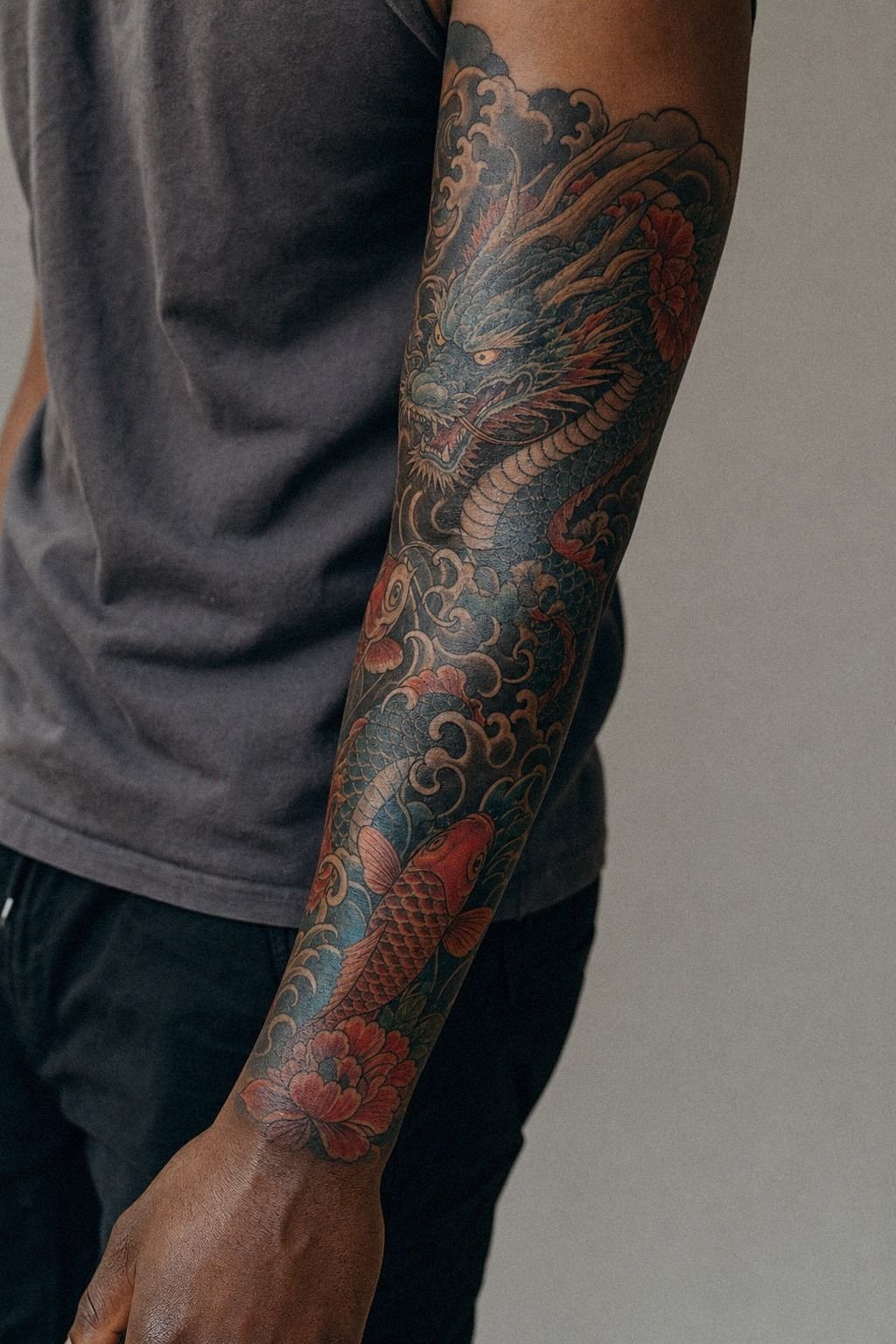
Layer the dragon and koi so each one gets a clear job. A strong dragon and koi half sleeve works when the dragon carries force and the koi handles counterflow, not when both heads are fighting for the same visual lane.
I usually make one subject dominant, then let the secondary one support the movement. That’s how you keep the symbolism rich without turning the arm into soup.
This pairing also needs cleaner editing than Pinterest makes it seem. Waves, whiskers, fins, and scales can get noisy fast, so I want open skin and obvious direction changes. If you like fuller Japanese storytelling, look at 16 japanese tattoos that demand full commitment.
But I would kill half the background before I would shrink the subjects.
From a planning standpoint, combo sleeves can sneak up on you. More symbols usually means more drawing time, more stencil decisions, and a higher final quote than a simpler single-subject half sleeve.
7Tebori Style Dragon Shoulder Tattoo
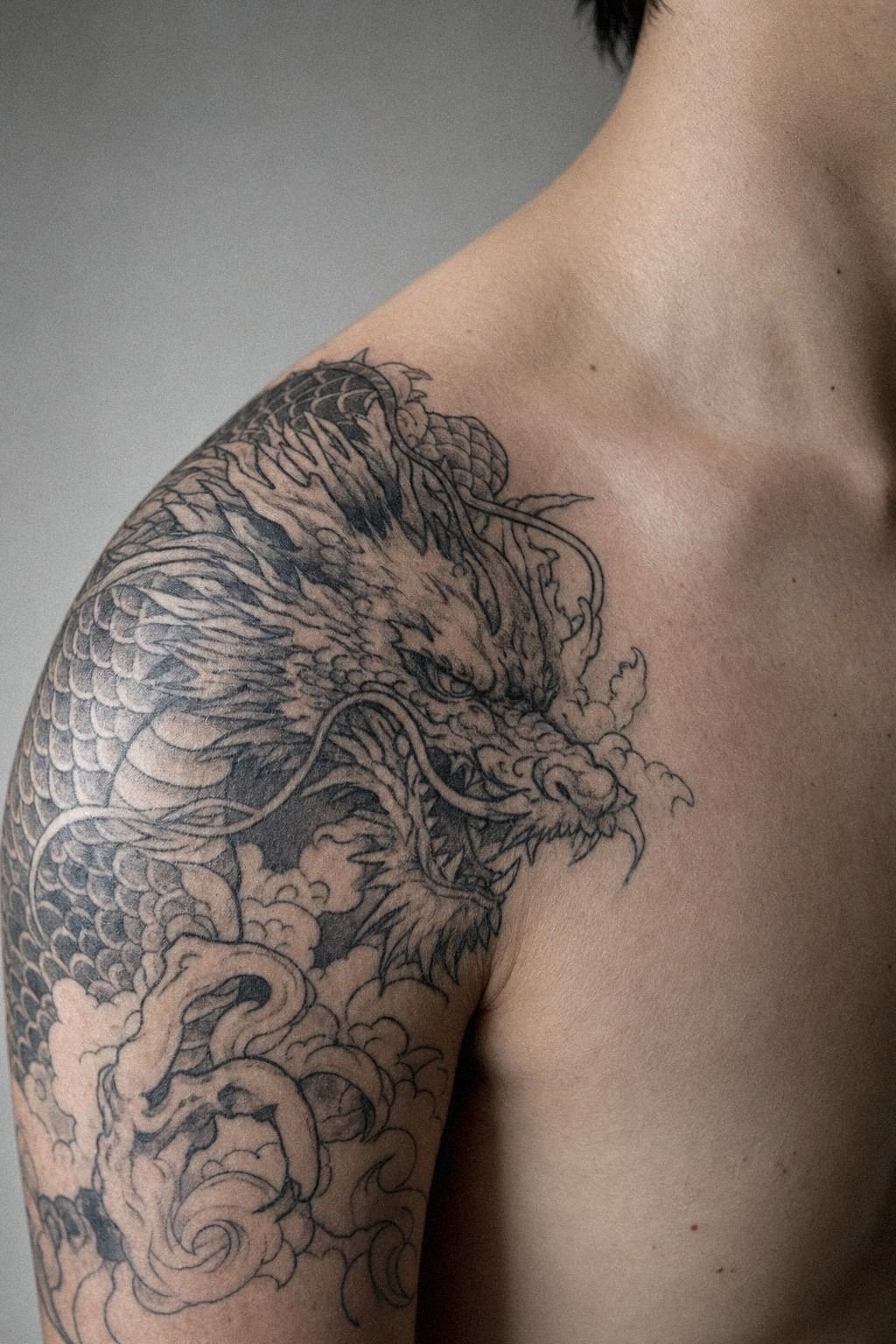
Let the texture stay visible. A tebori-style shoulder dragon should show that hand-laid rhythm in the shading, even when the tattoo was machine built to echo the look.
This macro crop is all about surface quality, and you can almost feel whether the black was packed in one solid pass or scratched at too many times. Shoulders are forgiving enough that you can go richer here without destroying the skin.
I call this the One-Clean-Pull Standard. The outline needs authority.
The fill needs to stay saturated. The soft grey shading needs to heal velvety, not patchy.
Why fake tebori texture if the tattoo doesn’t have the patience behind it? For more Japanese planning, circle back to japanese black gray tattoos.
But I would avoid overworking the cap of the shoulder just to chase darkness.
Shoulders usually give solid payoff for the money because the skin is stable, the pain is manageable, and you can build the piece outward later if your spend grows.
8Horiyoshi Energy or Modern Clean Thigh Wrap?
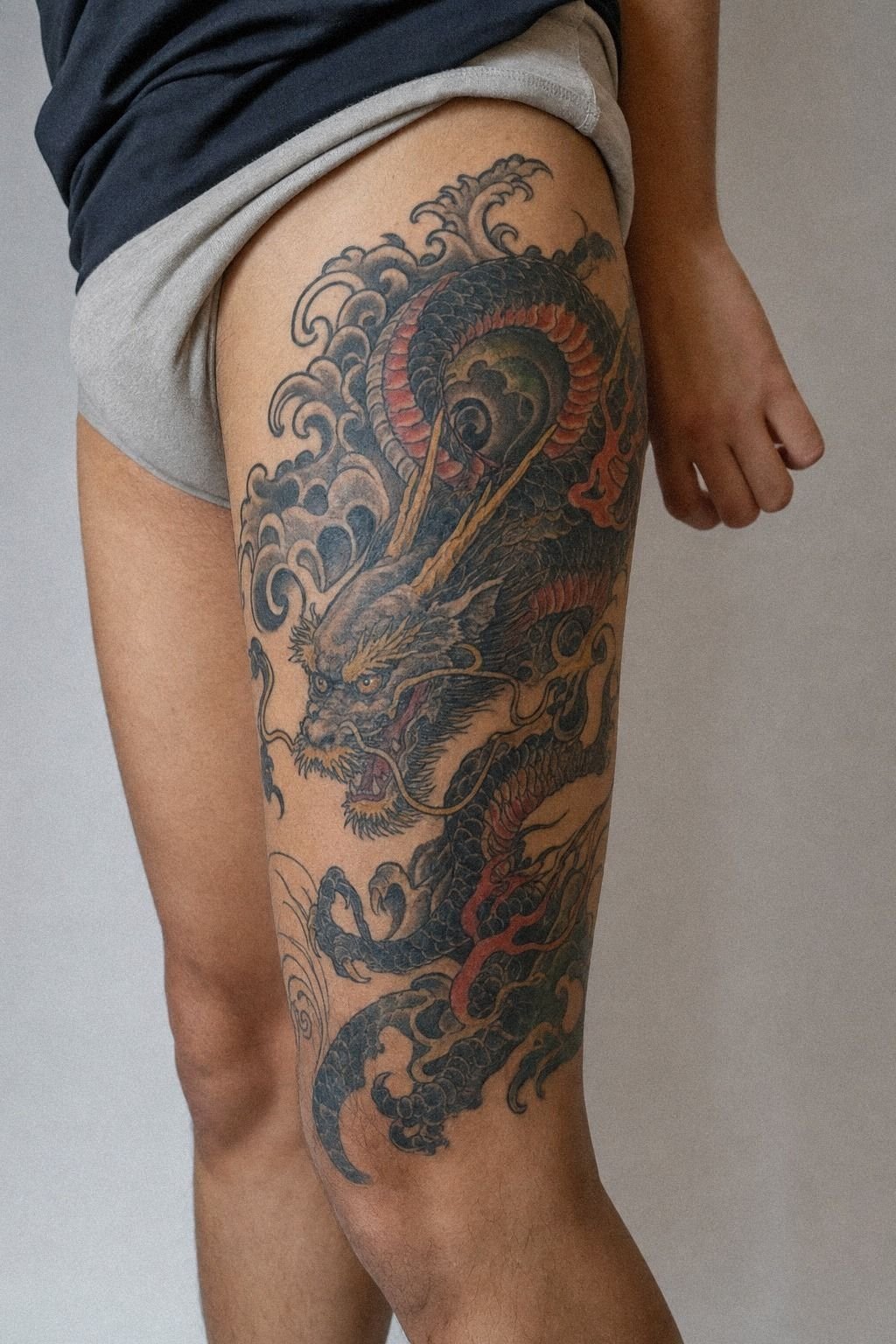
Use the thigh when you want enough runway for a dragon to move without turning every detail microscopic. A thigh wrap gives you broad, smooth skin, which means the body can coil, stretch, and breathe instead of getting pinched into a narrow strip. That matters if you want a dramatic dragon that still heals crisp.
I like the thigh for clients who want a bold Japanese read without hand, neck, or rib drama. Pain is usually moderate, the area ages well, and the extra width lets you keep the scales bigger and the whiskers clearer.
If you want a commitment-heavy layout, 16 japanese tattoos that demand full commitment gives you more placement context. But don’t waste this lane on tiny filler clouds.
On pure payoff, thigh work is strong. The quote is not tiny, sure, but you get a lot of visual drama for the money, and lower touch-up risk than on high-wear zones.
9Fine Line Dragon Spine Tattoo
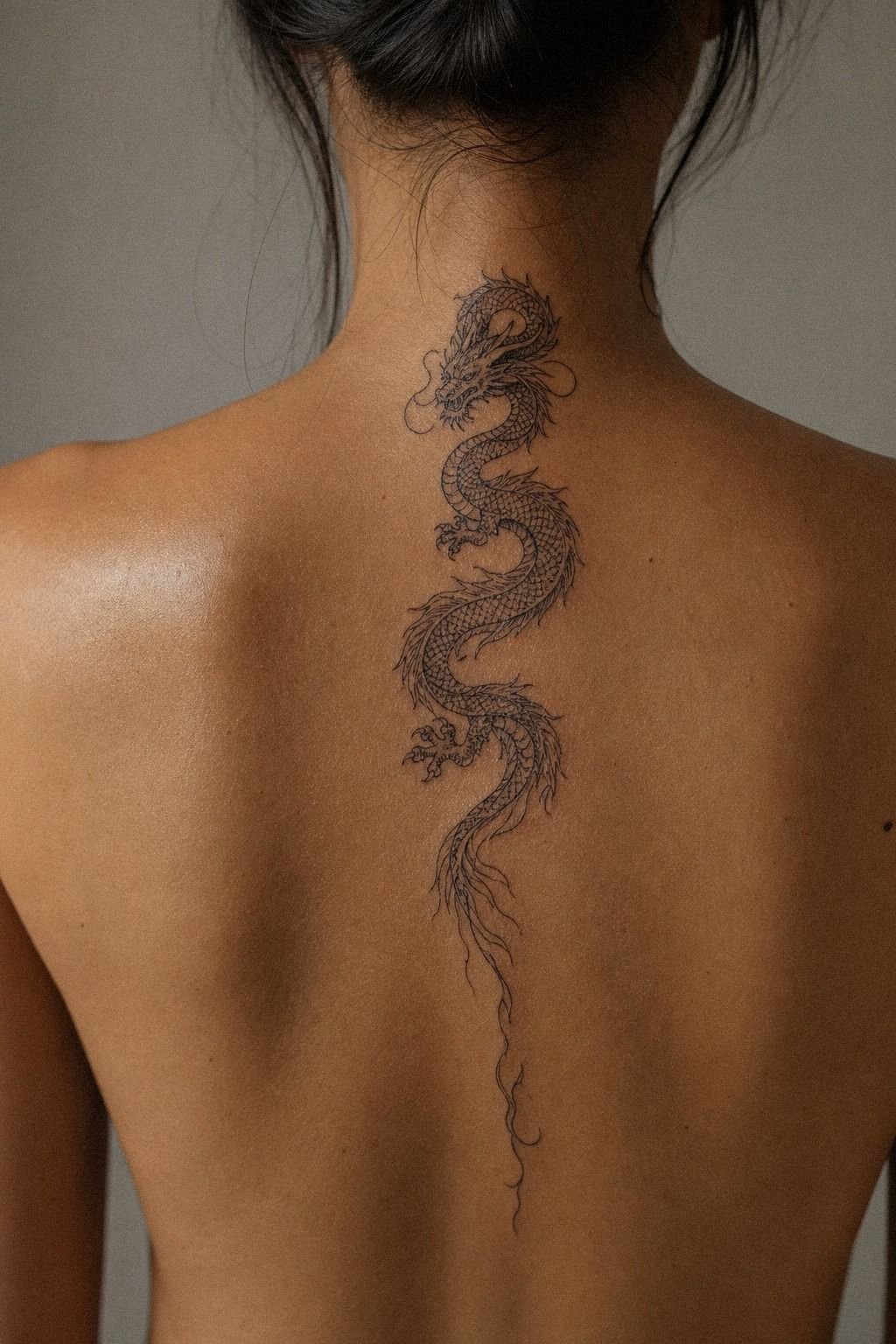
Scale a fine line spine dragon with discipline or don’t do it at all.
10Blackwork Japanese Dragon Calf Tattoo
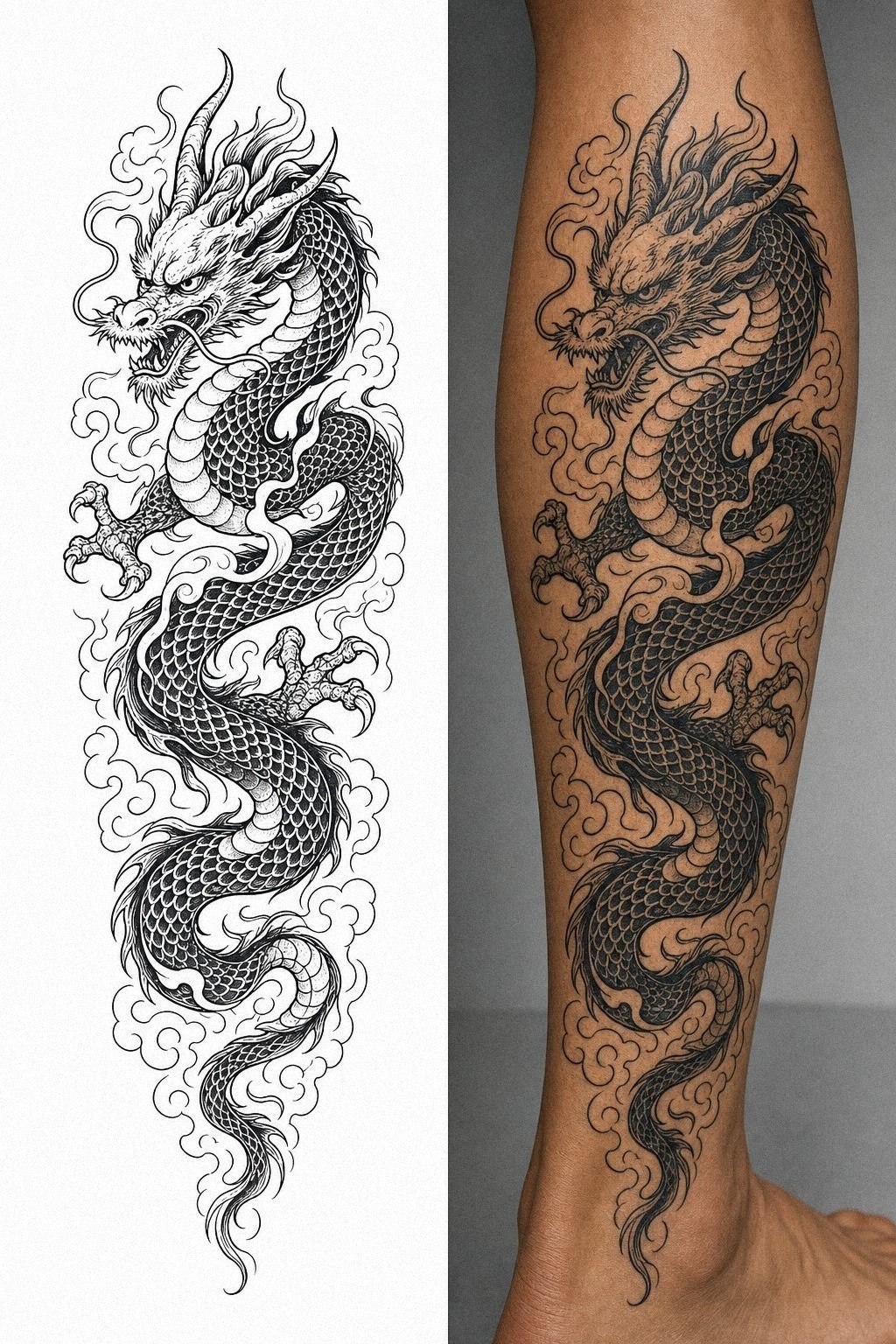
Split the design on paper before you commit it to the calf. This stencil-to-healed view is useful because it shows whether the blackwork dragon still carries once skin texture, hair, and movement come into play.
A calf gives you a long vertical lane, which is perfect for a dragon that needs body turns and claw separation. If the draft already looks muddy on paper, skin won’t save it.
Calves usually sit in the manageable zone for pain, though the back edge can wake you up. I like blackwork here because bold black is your best friend for longevity, and the calf is low-wear compared with hands or feet.
Solid black fill. Open scale pockets. Clear negative skin breaks.
If you want more bold Japanese references, check japanese black gray tattoos. But skip oversized smoke if it eats the whole leg.
This placement often gives a strong return because you get a tall, dramatic tattoo without paying the premium that hand, neck, or rib work can bring.
11Should you put a Japanese Dragon on your hand?
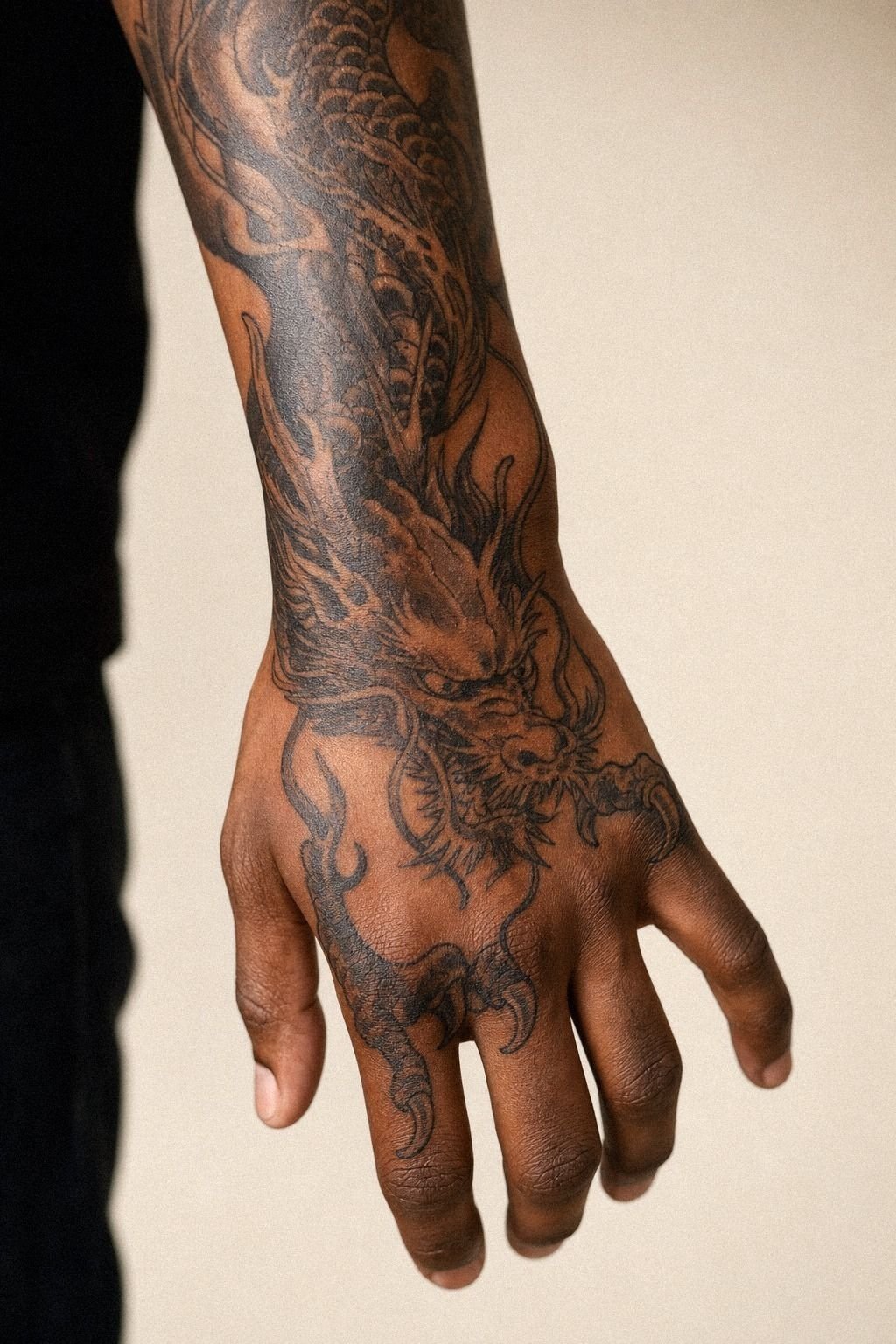
Place a hand dragon only if you accept touch-ups before you even start. The claws can look wicked on a finished hand tattoo, and this editorial crop proves why people keep asking for them, but hands are high-wear and unforgiving.
Skin shifts. Friction is constant. Wash cycles never stop.
So you need a design that stays bold when the little stuff softens.
And I push clients toward thicker hand tattoo lines and fewer tiny texture marks between the knuckles. That’s not me being boring.
That’s me trying to keep you out of the chewed-up stage six months later. Healing can be rough here, and pain usually lands around 6 to 8 out of 10.
Before you commit, read why tattoos blur over time and where tattoos hurt less. But if you want dainty claws on a hand, I won’t fake a yes.
Hands are almost never the best money call. The upfront hit can already be high, then the maintenance shows up later because touch-ups are part of the deal.
12Pack Blue Into a Japanese Dragon Upper Arm
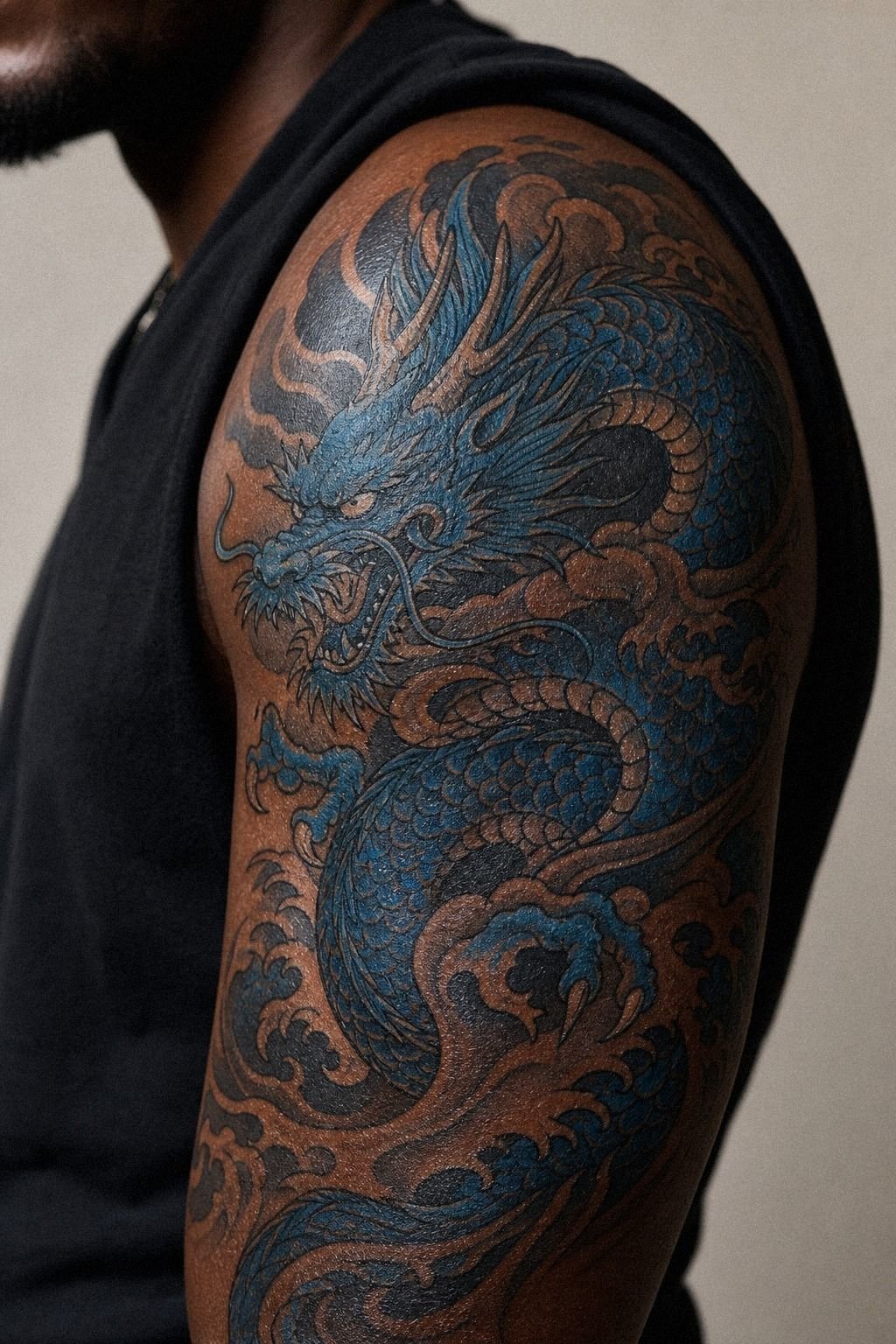
Pack blue only when the drawing is strong enough to carry color with it. A good blue dragon doesn’t rely on color to do all the work. It still needs a hard silhouette, clear horns, and enough black anchor points that the cool tones don’t heal flat or pastel by accident.
Upper arms are friendly for this because the skin is usually stable and the curve helps the body of the dragon roll naturally. I like cooler blues when the artist can keep the saturation solid and resist muddying it with too much background wash.
For broader Japanese references, start with the great japanese tattoos guide. But if the stencil is weak, bright pigment won’t save it.
Color raises the quote in some shops, and blue touch-ups can take extra time if the first pass was not saturated enough. Worth it when the artist is strong. Not when they are timid.
13Japanese Dragon And Peony Sleeve Tattoo
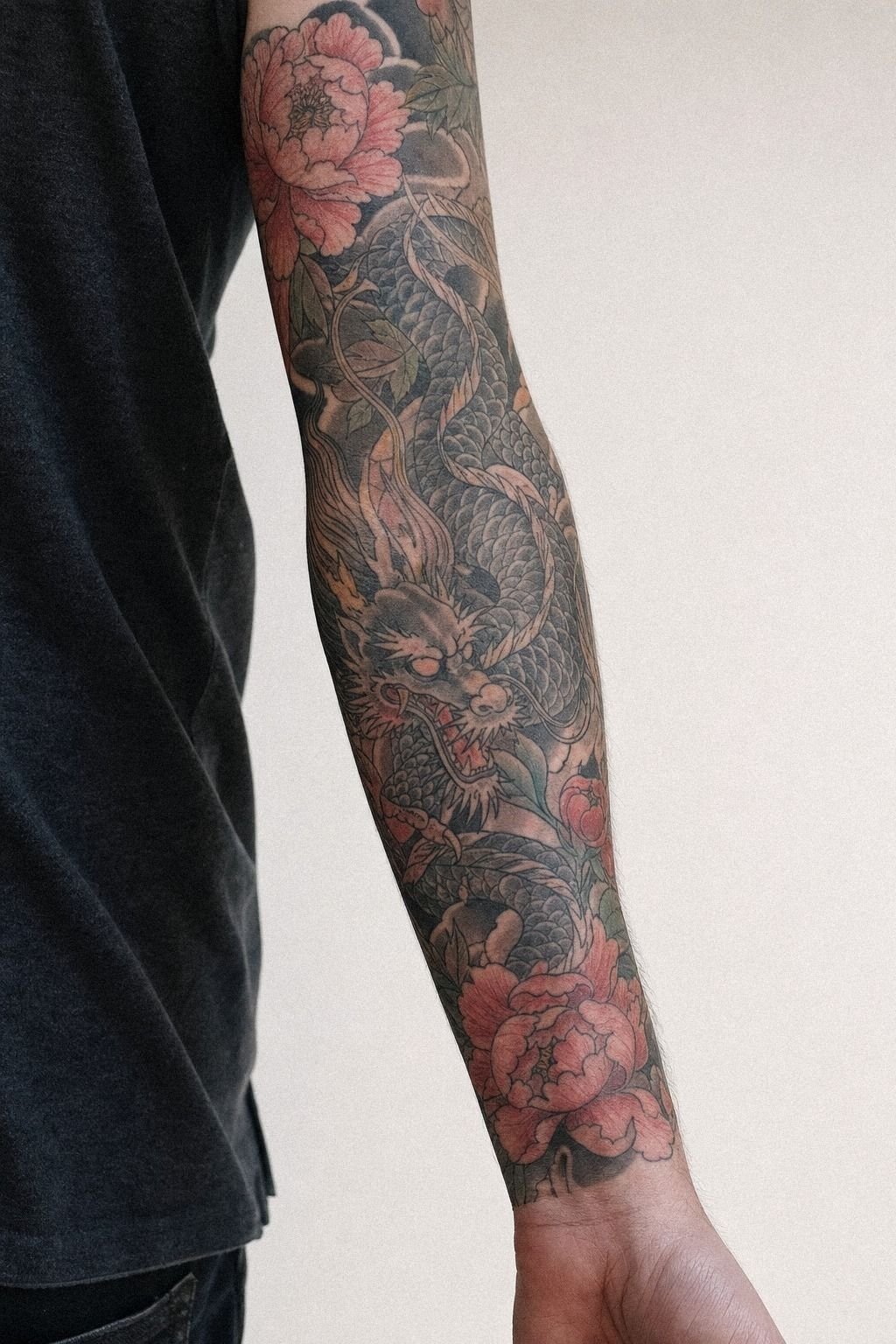
Frame the dragon with peonies when you want contrast that still feels traditional. The healed sleeve in this shot works because the flowers soften the read without making the tattoo precious, and the petals give the eye places to rest between all that movement. Fair skin can make black and grey peony work look extra crisp, but spacing is the whole game here, not skin tone.
That’s what keeps it balanced.
I love this pairing when the artist knows floral rhythm and not just dragon anatomy. Peonies need enough opening in the petals to heal clean, and the peony sleeve parts can’t steal the dragon’s face.
One bold subject. One supporting bloom rhythm.
That’s it. If you like heavier black-and-grey Japanese sleeves, japanese black gray tattoos is worth your time.
But I would pass on micro petals. They blur first.
This is a smart move if you want the sleeve to feel fuller without piling on random filler. You are paying for more drawing, sure, but the finished read is richer and usually more worth it than a stiff dragon alone.
14Balance a Coiled Dragon Sternum Tattoo
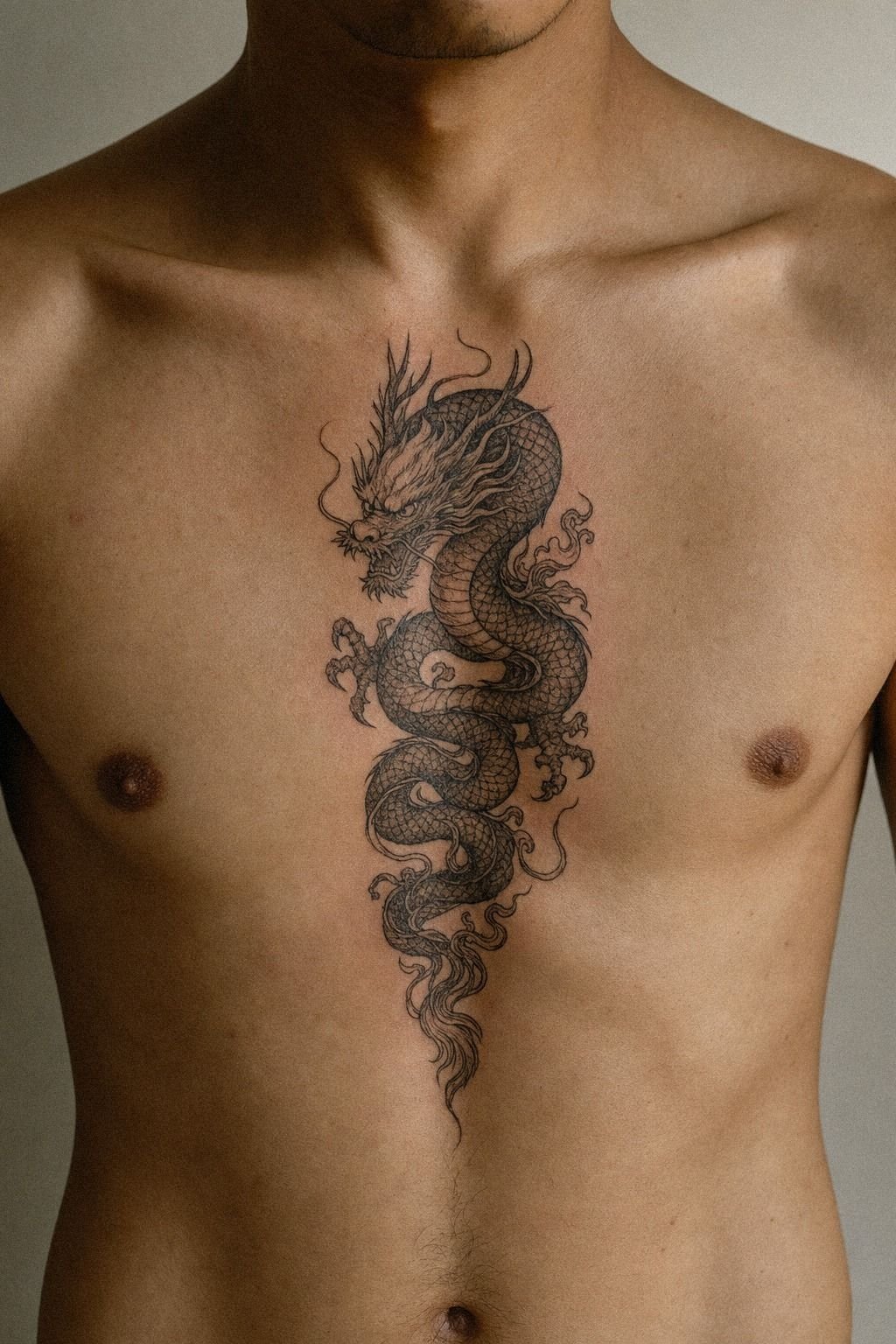
Center a sternum dragon only if the coil is doing real work. A tight sternum dragon can look fierce and elegant at the same time, but only when the body spiral supports the anatomy instead of choking the middle. I want one clean focal point, then enough open skin around it that the shape can breathe.
This placement is spicy. No point sugarcoating it.
The sternum catches every vibration, every wipe, every extra pass, so I push clients toward simpler coils and stronger line hierarchy here. If you are still learning your pain tolerance, where tattoos hurt less is worth a look before you book.
But I would never overload this zone with tiny clouds.
The money question matters too. Sternum dragons can be worth it, but only if you are buying a bold, simplified design that fits the body. Tiny detail for a premium quote is bad payoff here.
15Japanese Dragon Neck Tattoo With Smoke
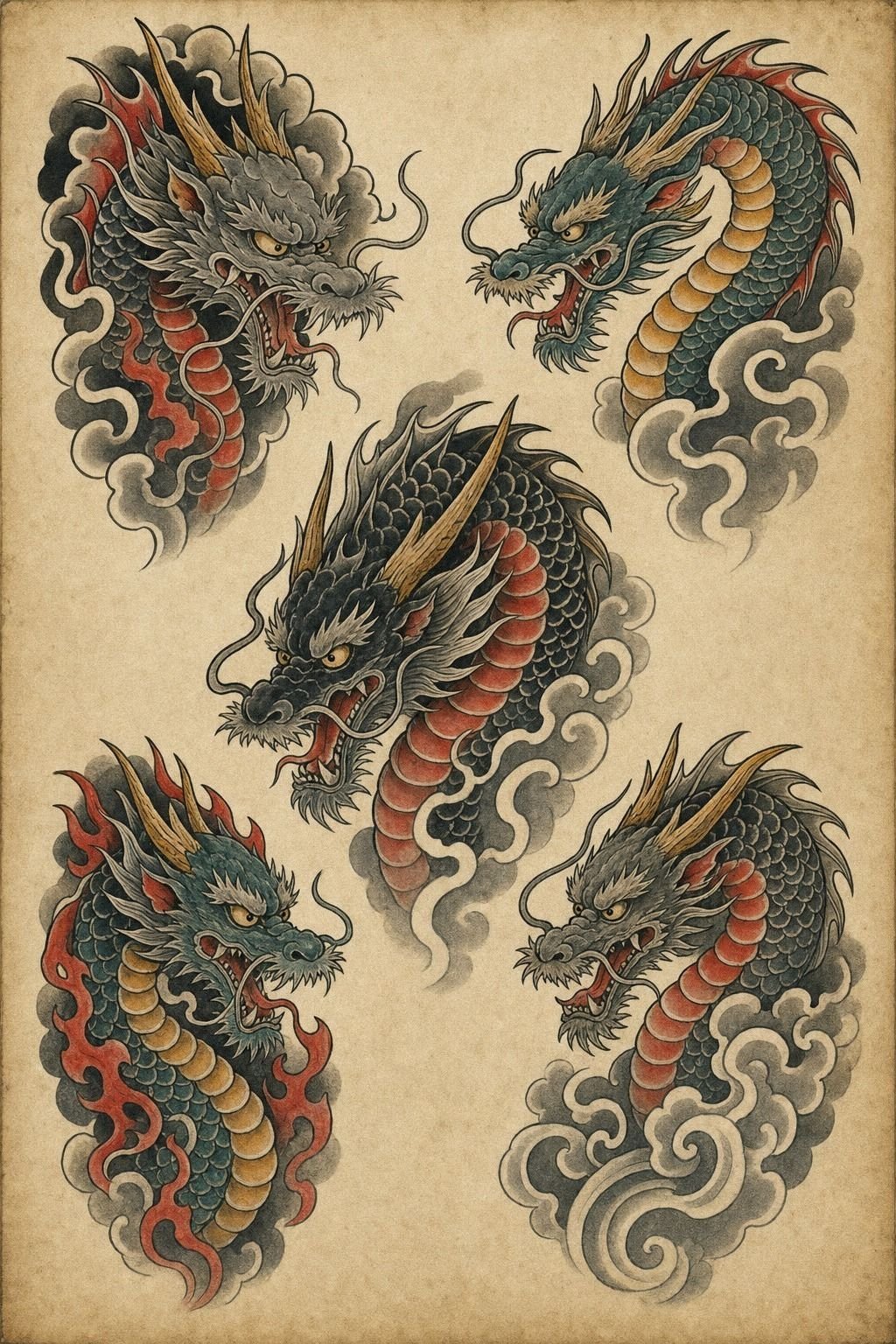
Treat flash like a test, not a guarantee. A neck dragon with smoke needs to look alive even on paper, and this sheet-style image lets you judge whether the smoke is framing the head or just filling gaps.
That’s useful, because neck tattoos don’t give you much forgiveness once they’re on skin. Every inch is visible.
Every shaky line tells on you.
My rule here is the Smoke-Frame Method. Keep the smoke directional. Let the dragon face stay open.
Make the neck tattoo readable from a few feet away, not only in a close-up. If the smoke wraps every edge, the tattoo loses its teeth.
For more commitment-level Japanese ideas, look at 15 yakuza tattoos that demand full body commitment. But I would never force a neck piece on someone who isn’t already tattooed.
Neck work has a real visibility tradeoff too. The quote is not only what you pay in the chair. It is career context, healing stress, and the fact that cheap execution shows instantly.
16Asian Dragon Collarbone Tattoo
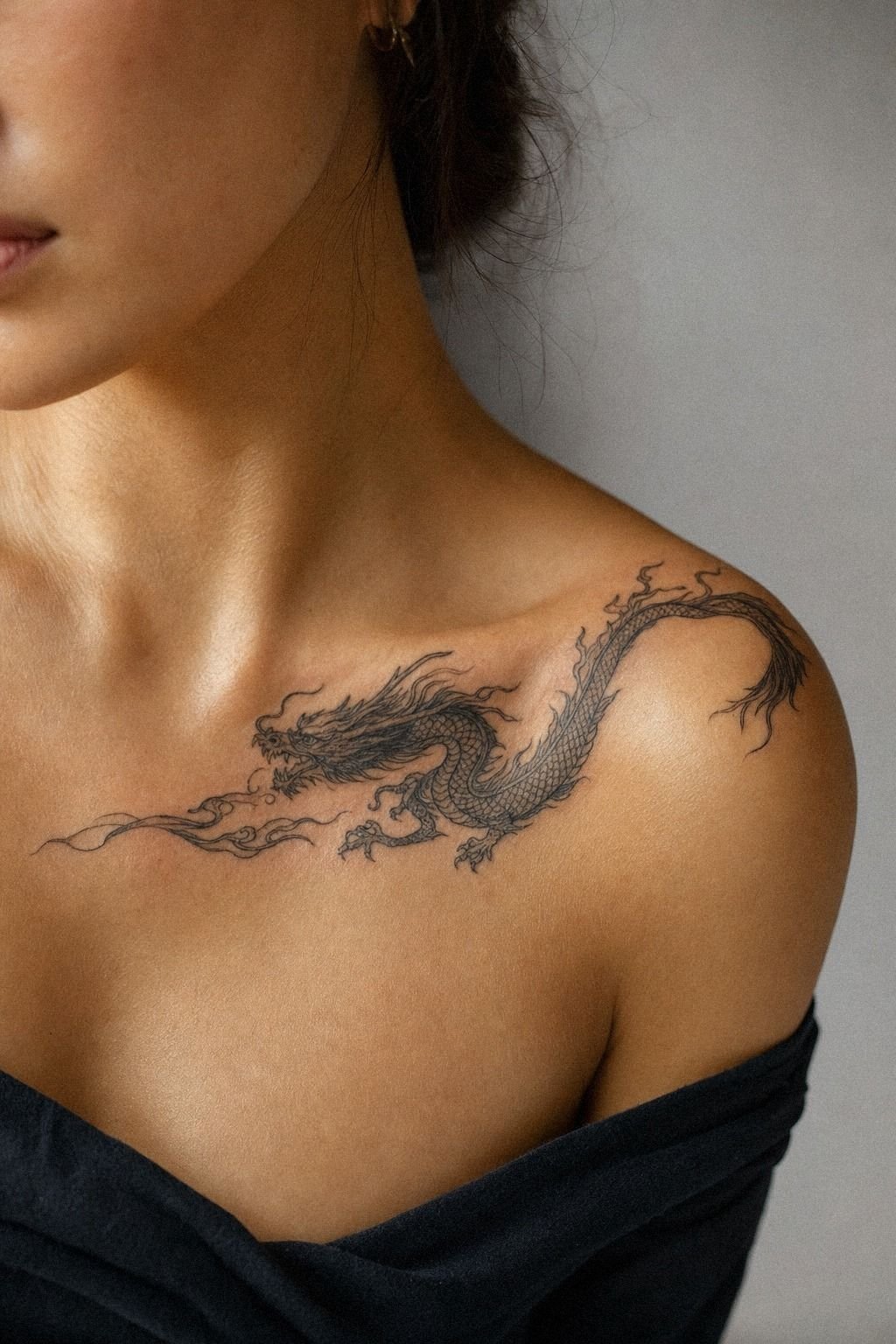
Float the body along the collarbone instead of fighting the bone line. This finished Asian dragon tattoo works because the dragon moves with the clavicle, and the placement keeps the shape elegant without overstuffing the middle. Collarbone tattoos can feel delicate in photos, but the ones that last usually have more line authority than people expect.
That’s the part Pinterest skips.
The collar area can sting, sure, but the bigger issue is scale. Too small, and the horns, whiskers, and claws all start arguing with each other. I like keeping these around 5 to 7 inches so the silhouette stays clean and the tattoo has some air around it.
If you are still comparing style families, great japanese tattoos guide is a strong starting point. And no, this isn’t where I would put micro-detail.
From a money perspective, collarbone pieces can be a sweet spot. You get a sexy, visible placement without the same maintenance you would expect from hands.
17Hannya Contrast: Japanese Dragon Mask Chest Tattoo
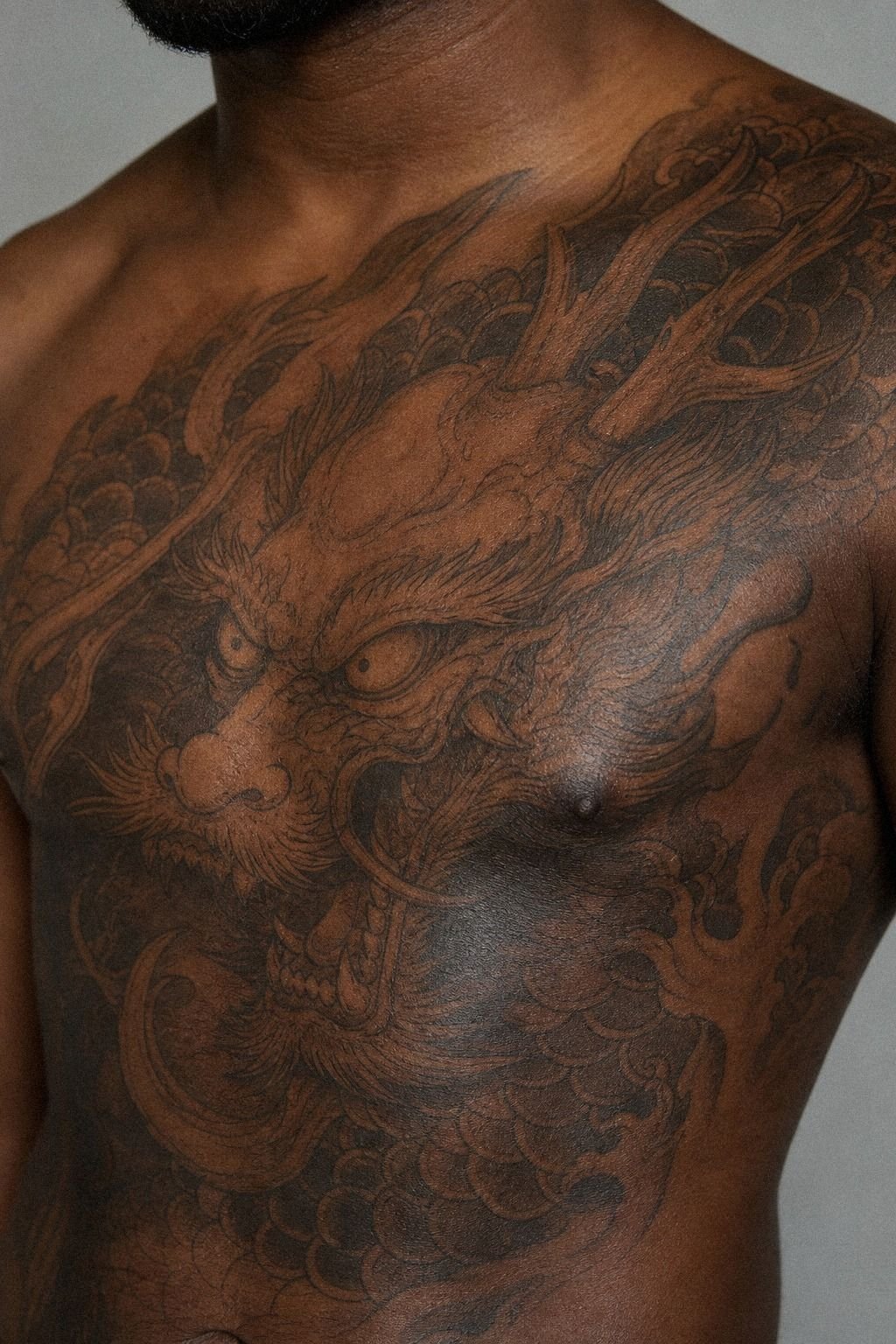
Mix a dragon with mask energy only when both symbols stay readable.
18Dragon Scale Elbow Tattoo
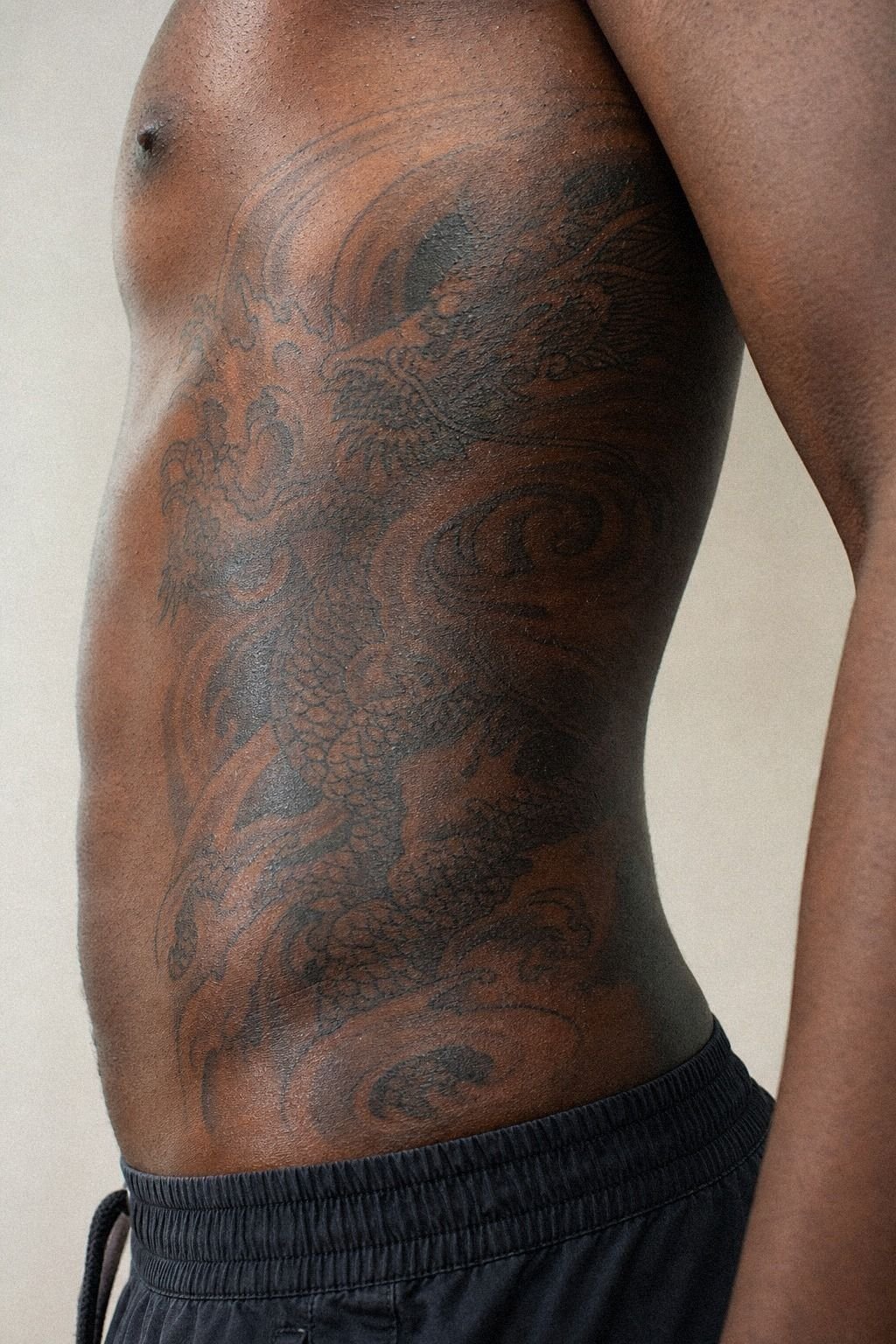
Rein in the scale count when you tattoo over an elbow. This brief says elbow, the photo read leans rib-side, and that kind of mismatch is exactly why you should confirm placement before stencil day.
Either way, scale-heavy texture over a bend needs stronger editing than people think. If every little mark is fighting for attention, the design heals patchy and the bend chews it up.
On a real elbow dragon detail, I would simplify the scale pattern, widen the spacing, and keep the black pockets strategic. Elbows rank high on the spicy list, often right up there with ribs and sternum for some clients. Surface healing is usually 2 to 3 weeks, but the deep settle keeps changing for 2 to 3 months.
For longevity basics, why tattoos blur over time is worth reading. But don’t let anyone tattoo thirty tiny scales across that hinge.
This is not where I would chase cheap savings. Cheap elbow texture gets chewed up, then the touch-up bill wipes out whatever money you thought you saved.
19Map Out a Japanese Dragon Leg Sleeve
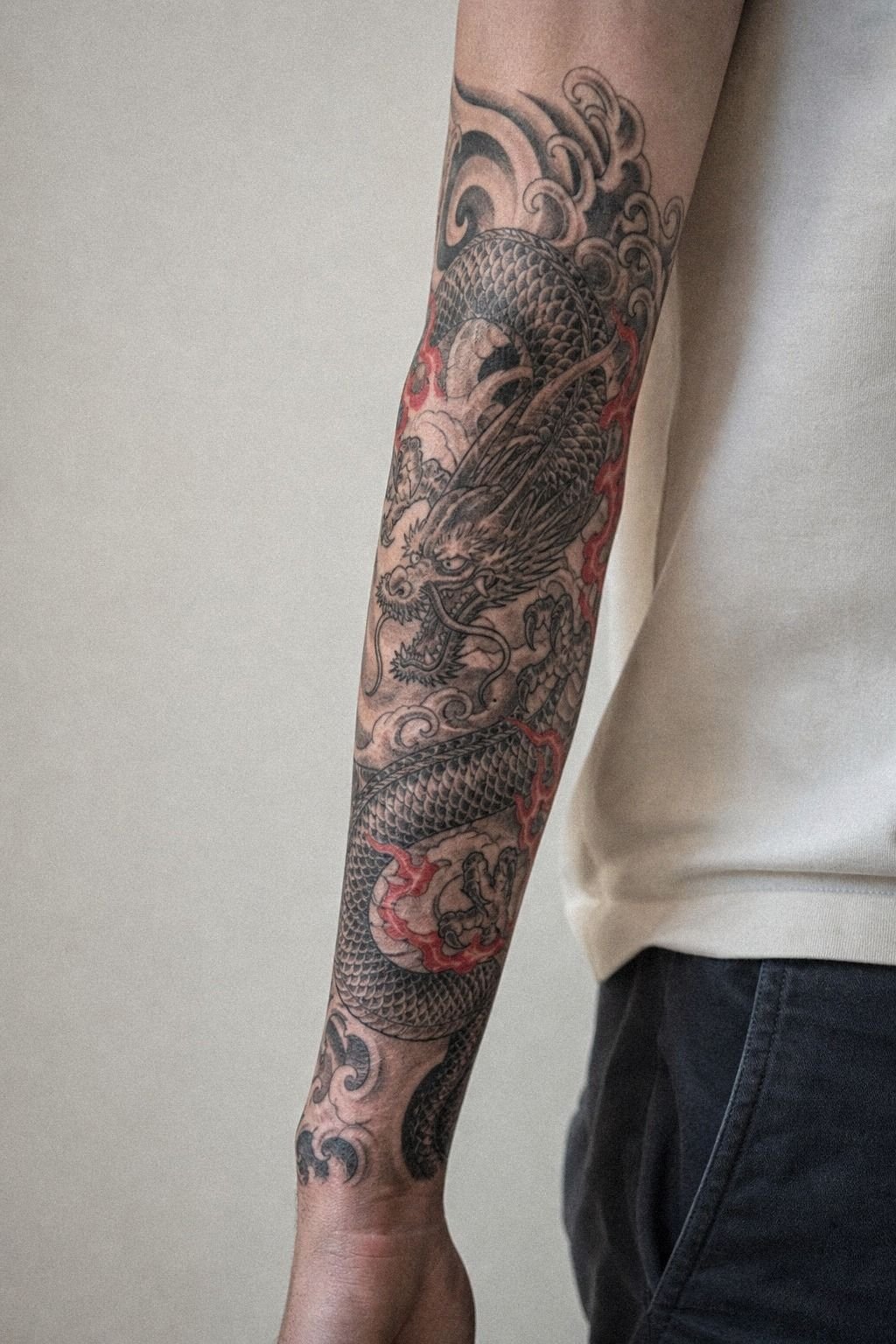
Commit to a leg sleeve only when the whole path makes sense from knee to ankle or thigh to shin.
Marco’s Honest Cost and Longevity Rules for Japanese Dragons
I’ve tattooed enough large-form work to know the dragon isn’t the hard part. The edit is. People come in focused on mythology, references, even whether the horns should bend left or right, and I get it.
That’s the fun part. But the dragon that still looks solid years later usually wins on boring stuff first: placement, lineweight, scale spacing, and whether the artist had the discipline to leave skin open where the eye needed rest.
Here’s the honest frame I use when I’m drawing one for a client. First, I decide what the tattoo needs to say from a normal viewing distance. Is it power? Motion?
Protection? If I can’t answer that in one sentence, the draft is already too busy. Then I pick the body route. Forearm, shoulder, thigh, and calf are forgiving because the dragon has somewhere to move.
Hand, ribs, sternum, and neck can be beautiful, but they punish over-detail and they punish weak commitment even harder.
Money matters, and I tell people that straight. A dragon tattoo can be absolutely worth it, but only when the money is buying clean drawing, calm pacing, and placement that will still read clearly later. The cheapest quote is not the best payoff if the lines are shaky or the scales are packed too tight.
I would rather see you size the piece smarter, cut one background element, and pay for a better artist than force a huge tattoo you cannot really afford.
But longevity is also technical. Bold black usually holds best. Fine line can work, sure, though only when the artist leaves enough clearance between details and doesn’t overwork the skin. Healing matters too.
First few days, it’s an open wound, so treat it like that. Gentle unscented soap. A thin layer of aftercare ointment. No pool, no sun, no picking.
Most tattoos close at the surface in about 2 to 3 weeks, but the deeper settle keeps shifting for 2 to 3 months, sometimes longer if the piece is dense.
I also tell clients not to over-romanticize pain. Outer arm, thigh, and calf are usually chill enough that you can stay present and make good decisions. Ribs, sternum, hands, and elbows are spicier, and the last hour of color or dense black is often the roughest.
Tap out for five rather than pass out on me. Better a clean second session than a tough-guy disaster.
If you keep the concept clear, the linework crispy, and the aftercare boring, a Japanese dragon can age sharp for a very long time.
The Questions I Get Asked Most
How much does a Japanese Dragon Tattoos usually cost?
A Japanese dragon tattoo usually starts around the shop minimum for something tiny, but most good pieces land in the hourly range instead. Typical US rates sit around $100 to $250 an hour, and that adds up fast!
– Forearm piece: 2 to 4 hours – Half sleeve: 4 to 8 hours – Full sleeve or leg build: multiple sessions
Are Japanese Dragon Tattoos a good idea for a first tattoo?
Yes, if you pick the right placement and keep the design clean. Forearm, outer upper arm, and thigh are easier starts than ribs, hands, or sternum, and bolder shapes usually age better.
– Clear silhouette – Tolerable pain zones – Easier healing routine
How do I choose a tattoo artist for Japanese Dragon Tattoos?
Pick an artist with healed Japanese work in their portfolio, not just fresh photos. You want crispy lines, smooth black fills, and dragons that still read clean once the redness is gone.
– Healed examples – Strong drawing flow – Clean studio habits
How much do Japanese Dragon Tattoos hurt?
They hurt, but not all placements hurt the same. Forearm, calf, shoulder, and outer thigh are usually more manageable, while ribs, hands, sternum, and elbows get a lot more spicy.
– Lines: sharper feeling – Shading: dull burn – Color packing: roughest stretch
How long does a Japanese Dragon Tattoos take to heal?
Surface healing is usually about 2 to 3 weeks, while the full settle under the skin often takes 2 to 3 months. Wash gently, use a thin layer of ointment, and keep it out of pools and direct sun.
– Gentle soap – Light moisturizer – No picking flakes
What’s the best placement for Japanese Dragon Tattoos?
Forearm, upper arm, thigh, and calf are the safest bets if you want a dragon that ages well. Those zones give the body of the tattoo enough clearance to move and usually take less daily friction.
– Better long-term read – Lower-wear skin – More forgiving pain level
Where I would Start First
If I had to pick one, I would start with the Traditional Japanese Dragon Full Sleeve Tattoo. It gives the dragon enough runway to stay readable, the long-term payoff is strong, and the healing is less annoying than hand-level wear. Pin that direction for later and start with the great japanese tattoos guide.