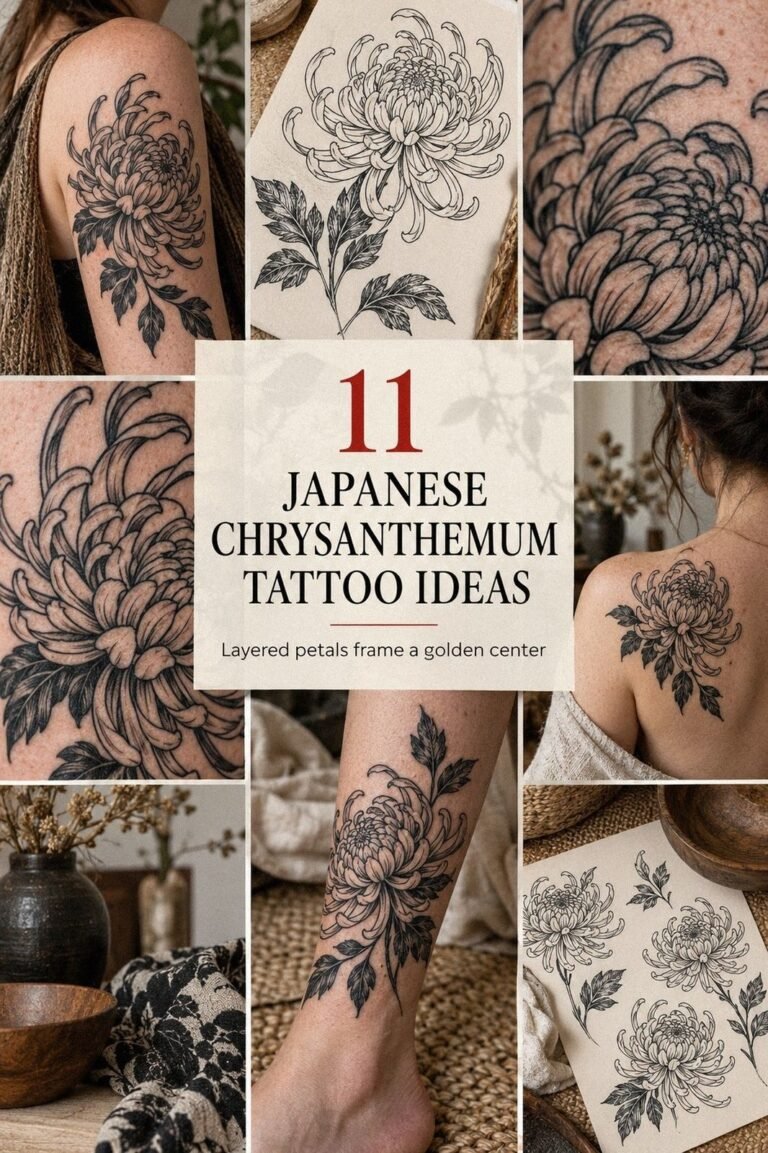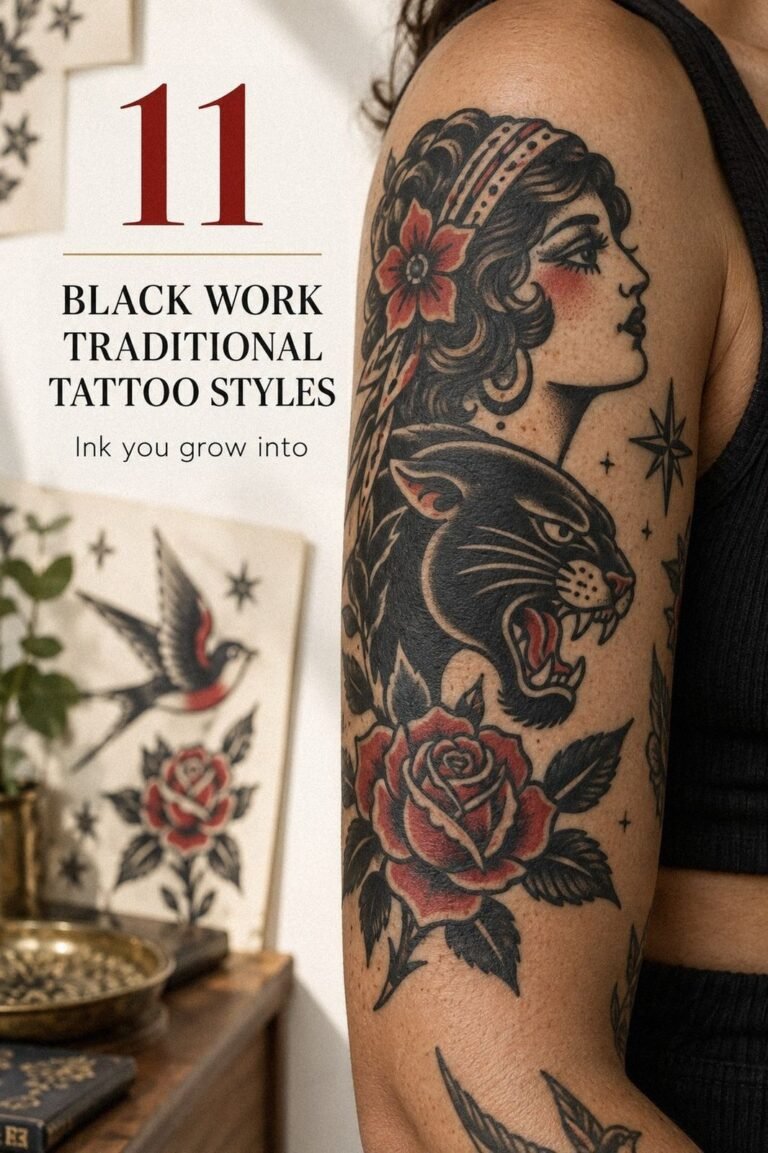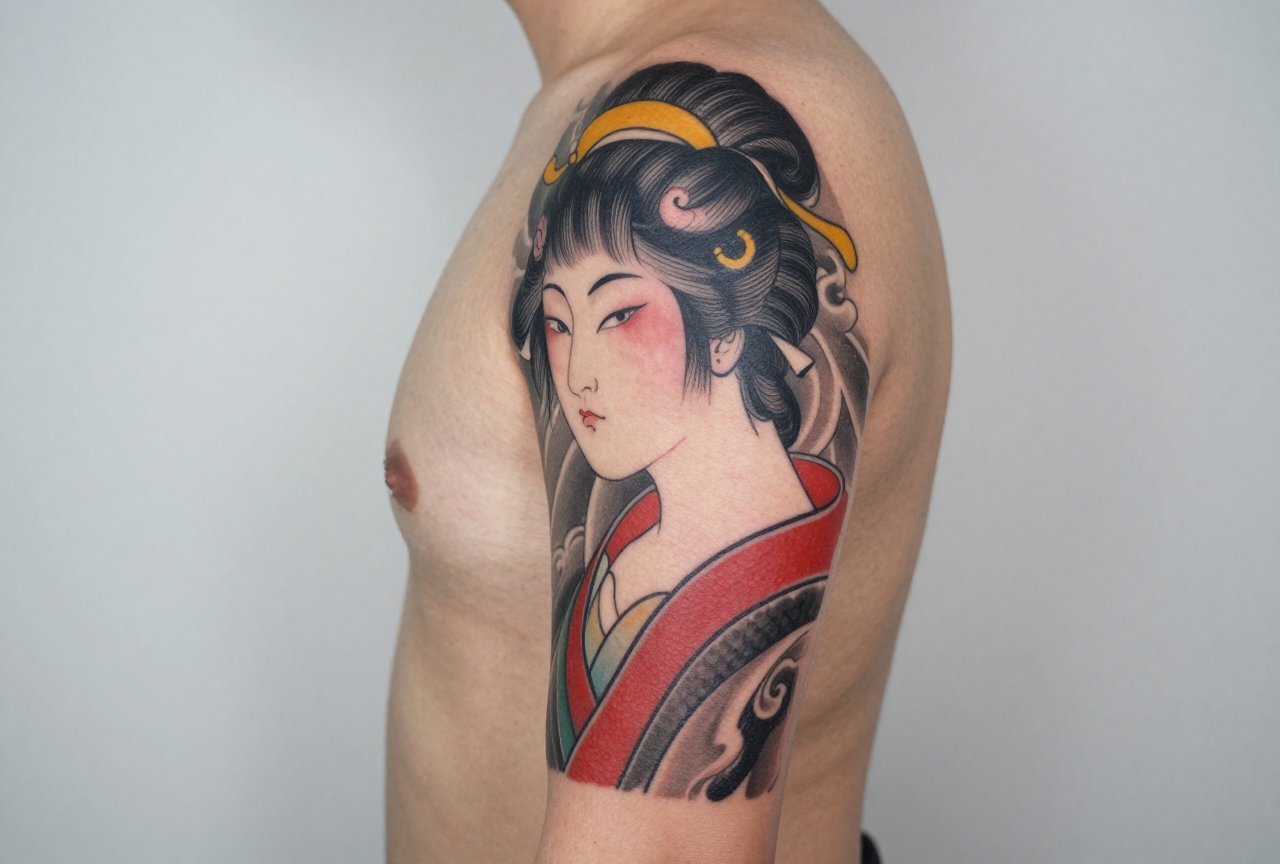
When a woman sits in my chair asking for Japanese work, she’s usually carrying reference photos saved for years, sometimes her grandmother’s kimono pattern, sometimes a screenshot from a movie. Japanese tattooing for women isn’t some watered-down “feminine version” of the real thing. It’s the same bold tradition, adapted to bodies that curve differently, to careers that demand concealment, to personal stories that might want a phoenix instead of a dragon. I’ve tattooed full backs of peonies and koi on mothers of three. I’ve done delicate cherry blossom sleeves that peek from blazers. The style carries weight. You feel it the moment the needle starts buzzing.
Origins & History
Japanese tattooing, irezumi, goes back centuries. The term itself carries baggage; it once marked criminals, then evolved into the elaborate bodysuits we associate with yakuza. But women have always been part of this story, even when history books left them out.
Women in Traditional Japanese Tattooing
Geisha and female entertainers sometimes wore tattoos. Some historians point to horimono on women in the 18th century, often religious symbols, protection marks, or lover’s names rendered in hidden places. The aesthetic was always there. What changed was visibility. In my shop, I see women reclaiming this. They want the full sleeves, the back pieces, the commitment. Not as rebellion, but as inheritance.
From Stigma to Statement
Japan still struggles with tattoo acceptance. Onsens ban them. Some beaches too. But in American shops, Japanese work on women has exploded since the early 2000s. I watched it happen. Clients started bringing in books by Horiyoshi III, asking for monmon cats and hannya masks. The internet opened doors. Now it’s mainstream enough that I have to explain to younger clients: yes, this used to be unusual for women. No, that’s not your problem.
Key Characteristics & Motifs
Japanese tattooing has rules. Not arbitrary ones, visual logic built over hundreds of years. Wind bars. Cloud backgrounds. The way a wave curls around a limb. Break these and the piece looks wrong, even to untrained eyes.
- Flow and movement: Every element should guide the eye. A koi swims upward; a cherry blossom drifts downward. The tattoo follows muscle structure, not fights it.
- Background elements: Wind, water, clouds, or fire fill negative space. Without them, Japanese work looks empty, unfinished.
- Line weight: Bold outlines hold color. I’ve seen delicate linework age poorly on Japanese pieces, the blur turns detail into mud.
- Symbolism: Koi for perseverance. Phoenix for rebirth. Peonies for wealth and honor. Cherry blossoms for life’s fragility. Dragons for wisdom. Hannya for jealous rage transformed.
Women often gravitate toward certain motifs. I don’t push them, clients arrive knowing. But I do notice patterns. Peonies and cherry blossoms cross gender lines easily. Phoenixes appeal to women who’ve survived something. The namakubi (severed head) and fierce masks less commonly, though I’ve done stunning hannya on women who wanted that duality: beautiful and terrifying.
Color vs Black and Grey
This choice changes everything. I’ve watched clients agonize for months. Here’s how I break it down in consultation.
Traditional Color
Red, green, yellow, black. The classic palette. Color Japanese work ages with character. The red stays longest, I’ve seen 15-year-old pieces where the vermillion still pops. Green fades fastest, goes muddy. Yellow becomes skin-tone. The key is saturation. We pack it in. Light color is dead color in five years.
Color works especially well on lighter skin tones. On darker skin, we adjust, deeper reds, more black line to define shapes. I’ve had clients cry happy tears seeing color finally work on their skin after bad experiences elsewhere. It takes a knowledgeable artist.
Black and Grey
More subtle. Reads as elegant, sometimes more “wearable” with professional wardrobes. The shading technique differs, suminagashi water effects, smooth gradients instead of flat color fields. Black and grey ages beautifully if the contrast stays strong. Weak greywash disappears. I tell clients: this style demands touch-ups eventually, more than color does.
Some women choose black and grey for their first large piece, then add color later. It’s a strategy. I’ve done it. The tattoo evolves with them.
Best Placements
Japanese tattooing traditionally follows the body. The munewari chest opening, the full donburi suit. Women adapt this.
- Full back: The canvas. Room for a complete scene, phoenix rising through clouds, koi waterfall, dragon coiling around a peony. I’ve spent 40 hours on backs. The pain is real. The result stops conversations.
- Sleeves (arm or leg): Most common. Easy to conceal or reveal. Arm sleeves flow into chest panels or stay self-contained. Leg sleeves, shichibu or full, look incredible with skirts or shorts, hidden in pants.
- Thigh and hip: Curves beautifully with Japanese flow. Peonies here, wrapping around. Koi swimming upward. The hip bone hurts; we all know it. Clients grip the table.
- Ribs and side: Single motifs work, cherry blossom branches, a single crane. Full Japanese scenes struggle with the narrow space. I steer clients toward simpler compositions here.
- Chest and sternum: Growing in popularity. Central motifs with radiating elements. The sternum itself is brutal. We breathe through it together.
Placement affects healing. Backs and arms heal clean. Legs get irritated from walking. Ribs move with breathing. I warn about this. Realistic expectations prevent panic.
Who It Suits
Japanese tattooing demands commitment. Not just money, though it’s expensive. Time. Pain tolerance. The willingness to be visibly tattooed in ways that prompt questions from strangers.
I’ve tattooed lawyers who keep sleeves hidden under silk blouses. Nurses with phoenixes on their thighs, visible only to themselves and partners. Artists who display everything. The style suits anyone drawn to it, but the scale must match your life. A tiny Japanese motif looks lost. The aesthetic wants room to breathe.
Skin type matters. Very freckled skin competes with background elements. Extremely dark skin needs adjusted color palettes. I discuss this honestly. Better before than after.
Modern Variations
Tradition isn’t frozen. Contemporary artists, many women themselves, push boundaries.
Neo-Japanese and Fusion Styles
I’ve seen Japanese motifs rendered with photorealistic techniques. Watercolor backgrounds behind traditional linework. Geometric patterns integrated with wind bars. Some purists hate this. I find it exciting when done well. The core vocabulary remains recognizable; the grammar changes.
Clients bring me Instagram references from artists in Berlin, Melbourne, Tokyo. The global conversation accelerates everything. I borrow, adapt, credit. We all do.
Personal Symbolism
Women increasingly substitute traditional motifs with personal ones. A client’s actual pet cat rendered as a monmon cat. Family birth flowers replacing standard peonies. The visual language stays Japanese; the content becomes autobiography. I love these pieces. They carry more weight than any flash design.
Choosing an Artist
This matters more than anything I’ve written. Japanese tattooing requires specific knowledge. The rules about background, flow, motif pairing, break them and it’s not Japanese anymore, just vaguely Asian-inspired disappointment.
- Look at healed work: Fresh photos lie. Ask for 5-year-old pieces. Good artists keep them.
- Check backgrounds: Do their wind bars make sense? Do waves curl correctly? Is the negative space handled or ignored?
- Ask about apprenticeship: Real Japanese training matters. Some artists study in Japan. Others learn from those who did. Either works if the work shows it.
- Consultation chemistry: You’ll spend hours together. Multiple sessions. Trust your gut. I’ve seen clients endure artists they disliked for 60 hours. Don’t.
- Price reflects reality: Cheap Japanese work is cheap for reasons. Good artists charge $150-400+ per hour. Full sleeves run thousands. This is normal. This is correct.
I turn down work I’m not right for. Every honest artist does. If someone promises you a full back piece in two sessions for cheap, run. I’ve fixed those disasters. The skin remembers bad decisions.
Final Thoughts
Japanese tattooing for women isn’t a trend. It’s a tradition that finally opened its doors wider. The women in my chair bring stories, divorce, survival, celebration, grief, and we find the images that carry them. The needle hurts. The healing itches. The result becomes part of how you see yourself in mirrors, how you move through rooms, how you remember who you’ve been.
I’ve been doing this long enough to watch cherry blossom sleeves soften and grey, to see koi scales blur slightly at the edges. This is living art. It changes. So do you. The Japanese aesthetic accepts this, mono no aware, the pathos of things. Beauty in impermanence. Even the most permanent mark we can make.
Choose wisely. Sit still. Wear it well.
Frequently Asked Questions
How painful is a Japanese sleeve compared to other tattoo styles?
The pain depends on placement, not style. Japanese sleeves often cover more skin continuously, so you’ll feel more cumulative fatigue. The heavy saturation and solid color packing can feel more intense than delicate linework. We usually break sleeves into multiple sessions, 8 to 15 hours total, so no single session destroys you.
Can I get a Japanese tattoo if I’m not Japanese?
This question comes up constantly. Most working artists I know say yes, with respect. Learn the symbolism. Don’t get religious figures you don’t understand. Choose an artist who actually knows the tradition rather than copying random images. The tattoo community generally welcomes sincere appreciation over appropriation concerns, but ignorance shows in the design.
How do I hide a Japanese back piece for work?
High-necked blouses, structured jackets, and strategic undergarments work. Some clients plan their hair length around upper back visibility. The real challenge is summer, tank tops, wedding dresses, beach trips. I always ask clients to visualize their piece in three outfits before we start. Regret prevention.
What’s the difference between irezumi and horimono?
Technically, irezumi refers to the act of inserting ink, while horimono describes the finished decorative tattoo. In practice, people use them interchangeably. Horimono specifically implies the full traditional bodysuit aesthetic. Most Western artists say Japanese tattooing or Japanese-style and leave the terminology to historians.
Related Style Guides
- Watercolor Tattoo Artists: Style Guide What to Know
- Xxxtentacion Tattoo Ideas: Real Shop Guidance
- Rick and Morty Tattoo Ideas for True Fans
- Explore more