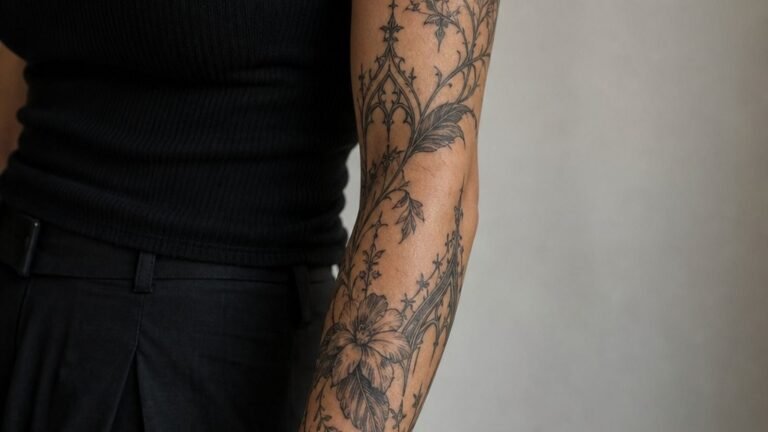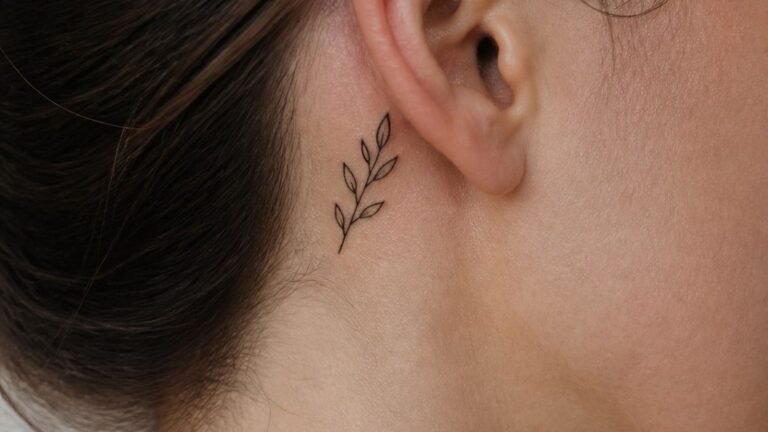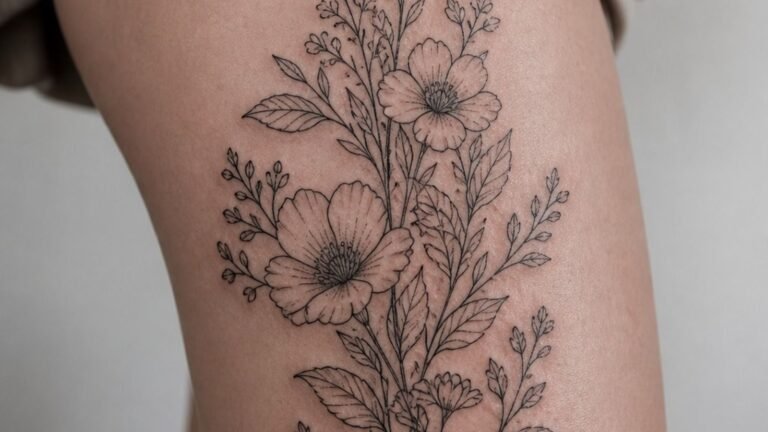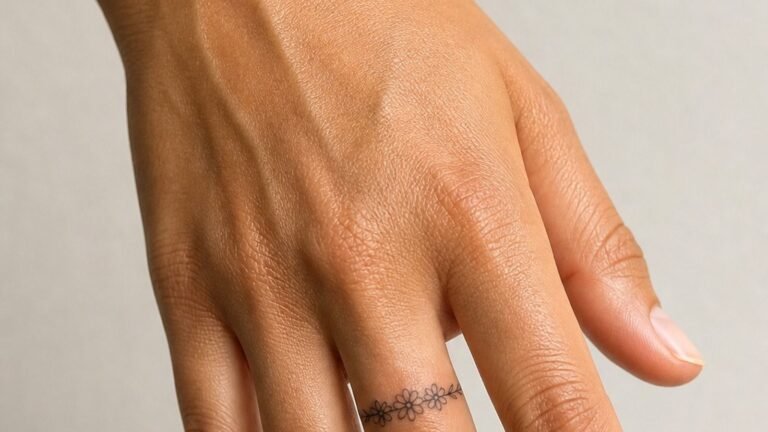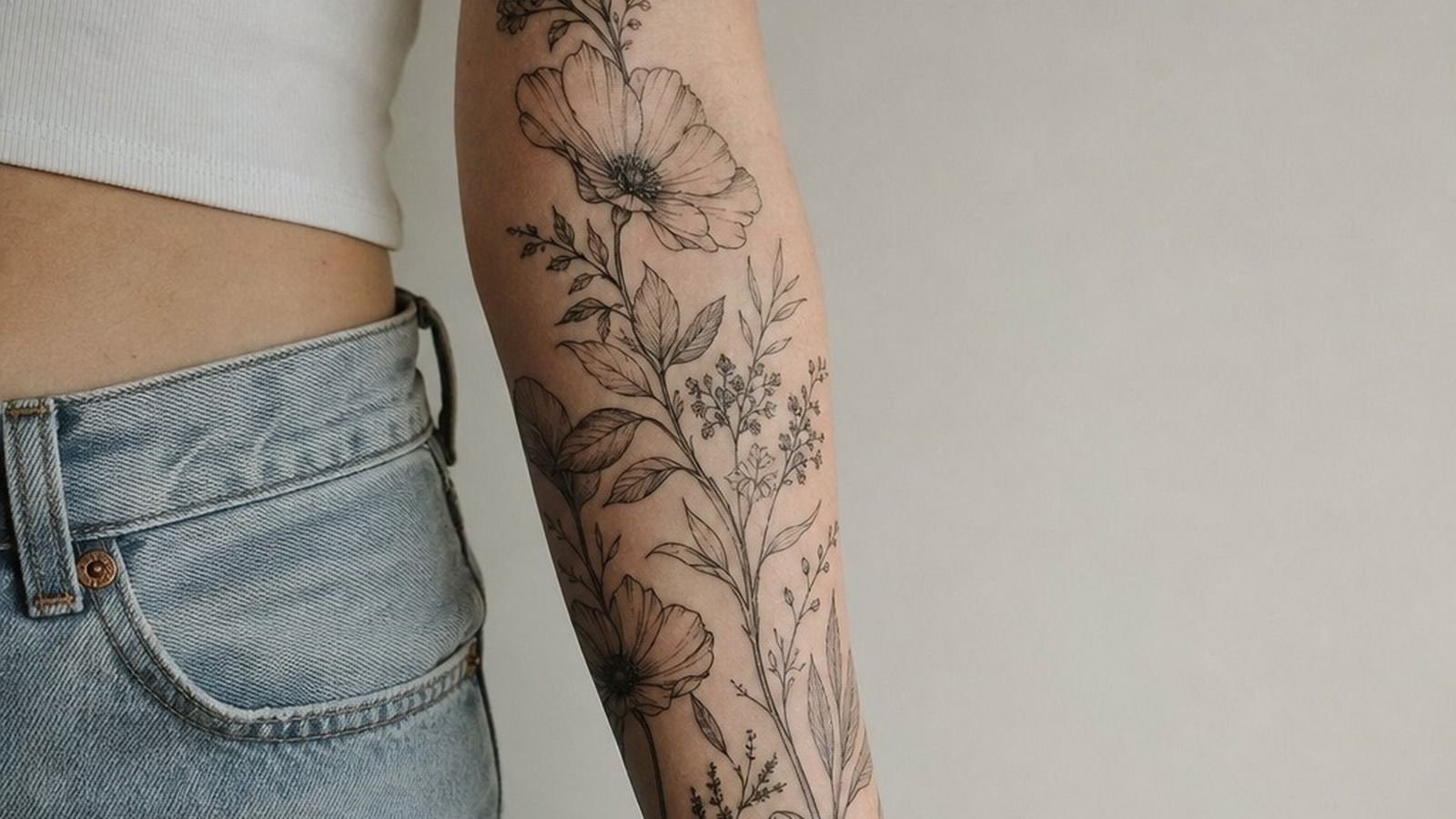
My flower sleeve tattoo started as the patch of forearm skin I’d been saving for a real idea. I got it the week I turned 30, after deciding tiny scattered flowers weren’t enough for me. Years later, the lines still read clean because I gave the design room, contrast, and a patient artist.
- I Chose a Flower Sleeve Tattoo Concept
- I Mapped Blooms Across My Arm
- I Matched Flowers to Personal Meaning
- I Built the Composition Around My Shoulder
- I Selected Linework, Color, and Shading
- I Balanced Focal Blooms With Fine Leaves
- I Checked Pain Across Each Arm Placement
- I Reviewed Floral Sleeve Tattoo References Carefully
- I Planned Sessions for the Full Sleeve
- I Set a Realistic Flower Sleeve Budget
- I Chose an Artist for Botanical Linework
- I Protected the Tattoo Through Every Healing Stage
- I Judged the Finished Sleeve in Motion
1I Chose a Flower Sleeve Tattoo Concept
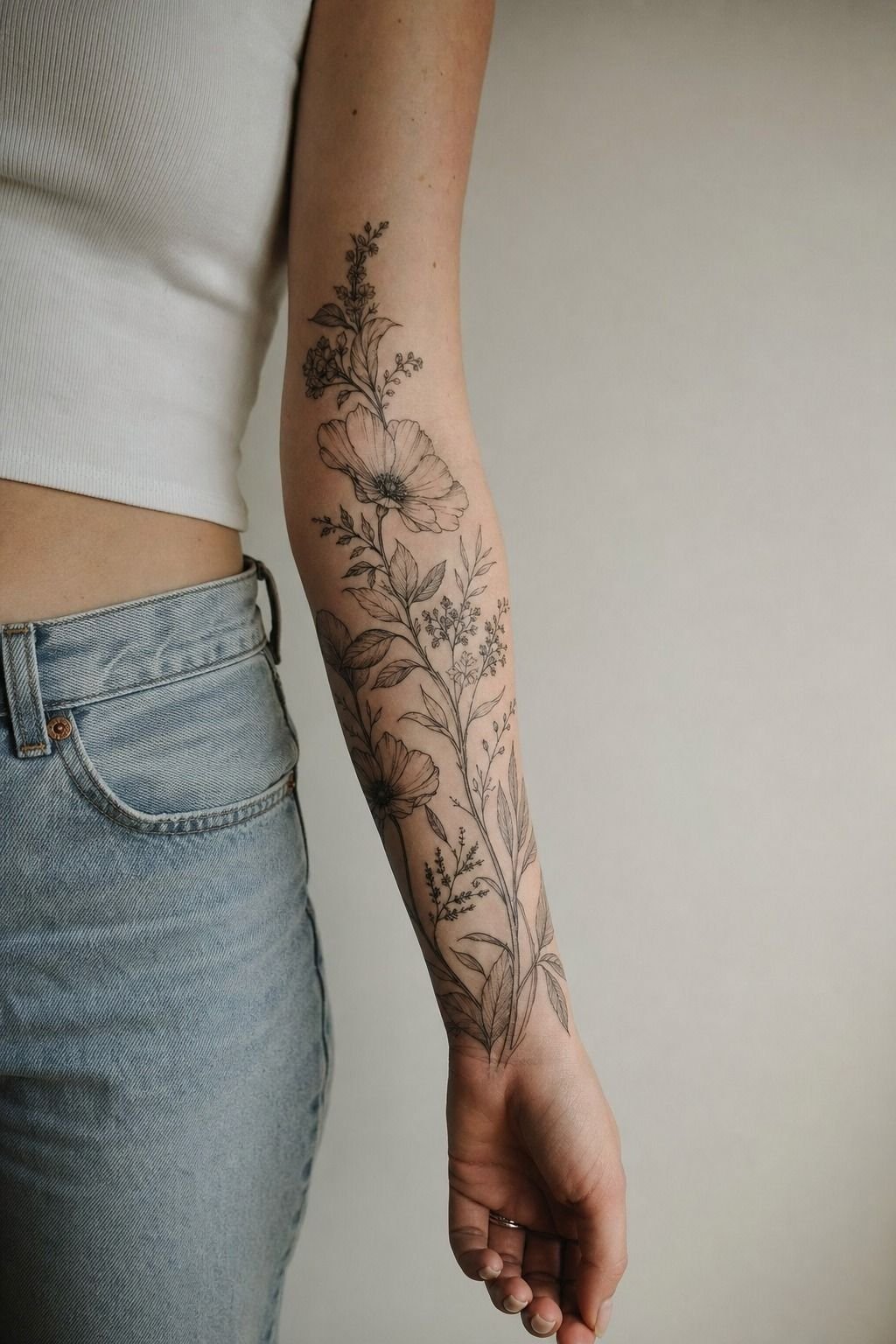
Before this, my arm was bare. No filler, no old cover-up, no half-finished collection fighting for attention. I wanted a botanical fine line sleeve that felt soft up close but still had enough black to read from across the room.
You don’t need every bloom to carry a giant backstory. I picked a few flowers with real weight, then let the rest support the shape. A peony head, long eucalyptus stems, and open buds gave my forearm an organic flow instead of a rigid floral wallpaper effect.
But I skipped the Pinterest-exact collage approach. If you want someone to copy a screenshot pixel for pixel, I’m not your artist. You should bring references for vibe, placement, and line weight, then let the drawing fit your actual arm.
I also looked at patchwork tattoo sleeve ideas before committing. Patchwork can be charming, but I knew I wanted one connected story. That choice made the sleeve feel calm, intentional, and way less likely to look chewed up later.
2I Mapped Blooms Across My Arm
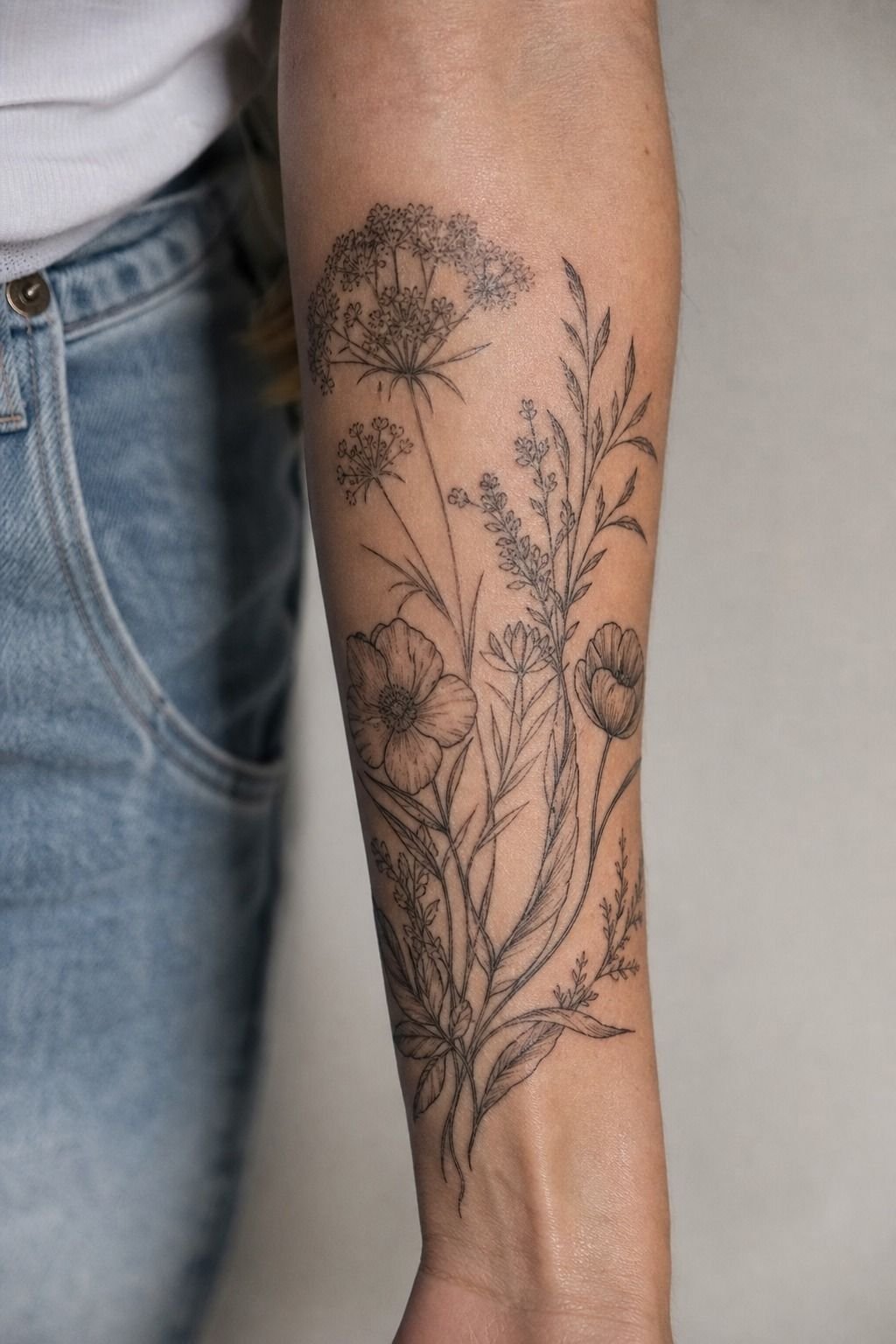
The map mattered more than the individual flowers. I had my artist place the largest bloom on the outer forearm, where you and other people can see it without twisting your wrist into a weird little pose.
For a floral arm sleeve tattoo, I’d start with two focal points, not seven. Mine had one bloom near the upper forearm and one softer flower closer to the wrist, with stems changing direction between them. That stagger keeps your eye moving.
And the empty skin is part of the tattoo. My artist left breathable gaps around the petals so the black lines wouldn’t become soup after years of skin movement and sun exposure. Fine line can age cute on you, but only if it’s allowed to breathe.
I measured the main flower at roughly 3 inches across rather than squeezing it into 1 inch. That size gave the petals room to stay crispy. Tiny detailed roses look delicate on day one, then blur together if every line sits shoulder to shoulder.
3I Matched Flowers to Personal Meaning
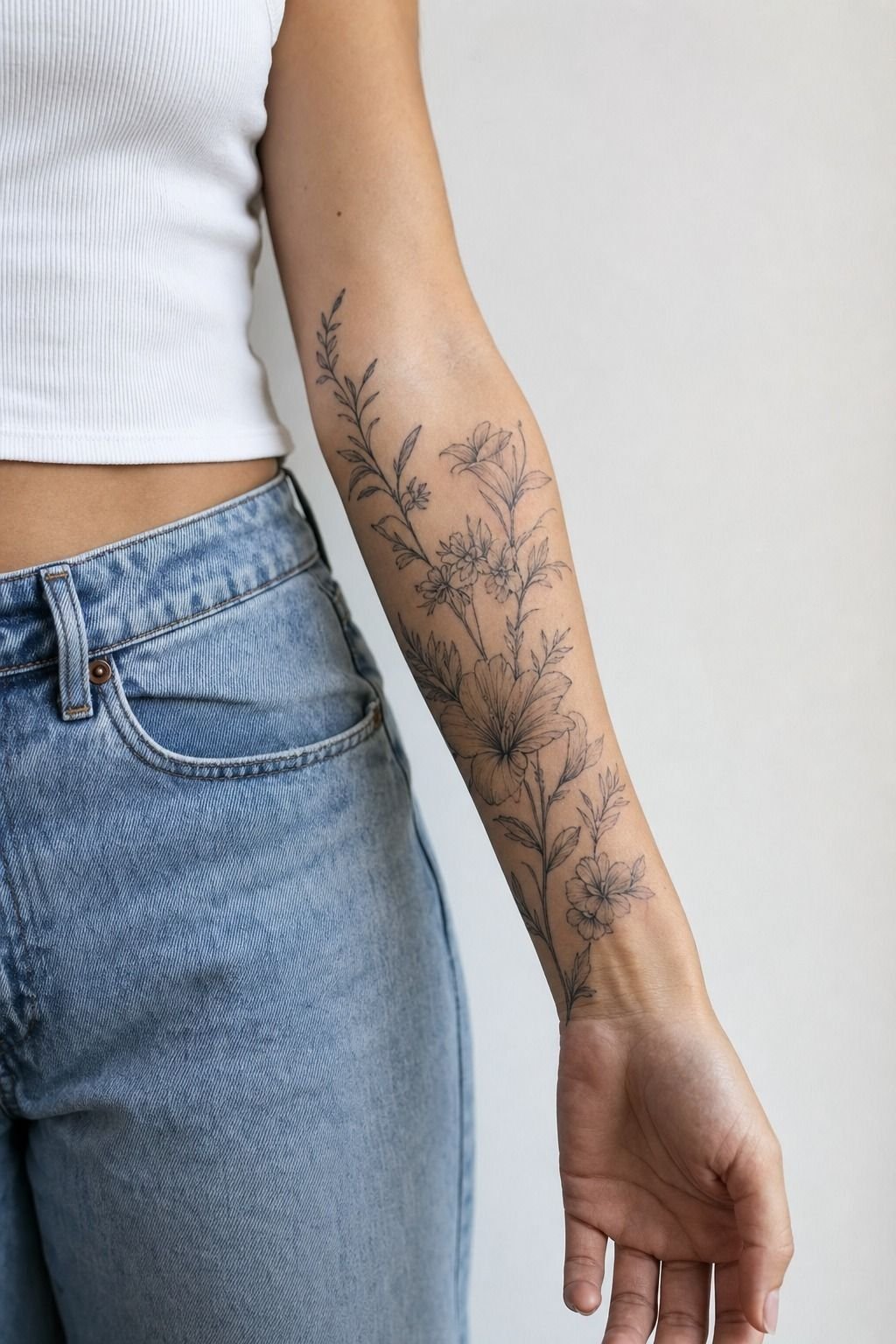
I didn’t build my sleeve from a random bouquet. You can absolutely choose flowers because they look good, but I wanted the piece to feel personal when I looked down at it on an ordinary Tuesday.
A snowdrop gave the design its quiet beginning. If you’re drawn to that flower, read the symbolism behind a snowdrops flower tattoo meaning before you make it the star of your sleeve. The clean bell shape also works beautifully in fine line.
For the middle, I picked a lily stem because its long silhouette helped connect the composition. You can explore lily flower tattoo meaning if you want your floral tattoo design sleeve to say something specific without spelling it out.
I’d skip cramming five symbolic flowers into one palm-sized patch. Your meaning doesn’t disappear because you use fewer elements. It gets clearer.
And your artist gets enough space to draw petals that will still look soft and refined after the initial shine is gone.
4I Built the Composition Around My Shoulder
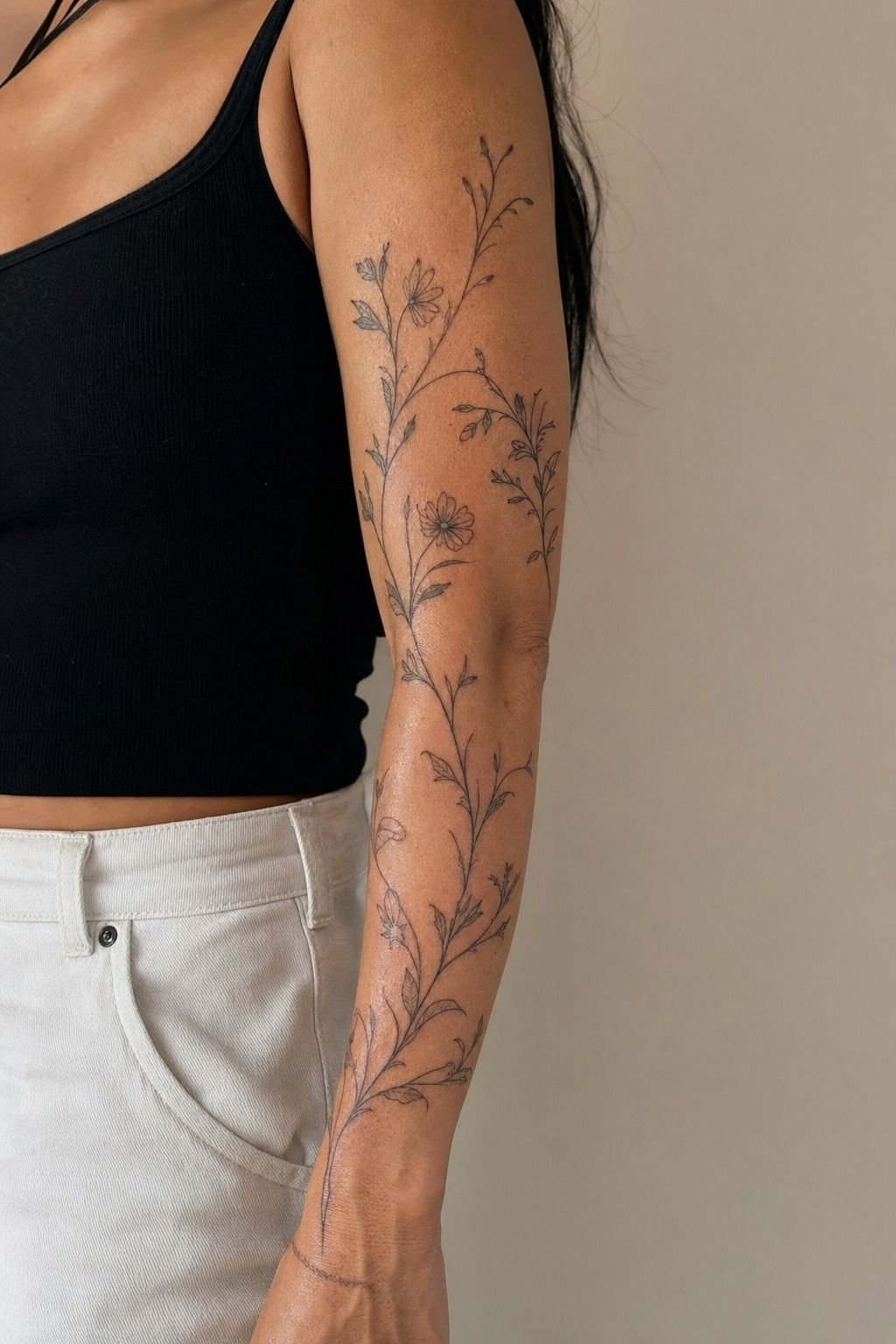
A sleeve isn’t a flat illustration. Your arm turns, flexes, and disappears under a T-shirt sleeve. So I treated the shoulder as the anchor, even though the first session began lower on my arm.
For upper arm tattoos for women, the outside shoulder is a low-wear zone with a broad, forgiving curve. I had the stem line rise toward the deltoid instead of stopping in a hard horizontal band. That little movement makes the whole design feel airy.
My artist used a purple lotus shape near the upper arm because its rounded petals could sit with the body’s natural contour. If that’s your flower, this purple lotus flower tattoo meaning guide is worth reading before you choose it for a permanent spot.
But don’t force a perfect circle around your bicep. It can look tidy in a stencil photo and awkward once your arm hangs naturally.
I wanted mine to flow diagonally, like a plant reaching toward light. That’s what made it feel organic.
5I Selected Linework, Color, and Shading
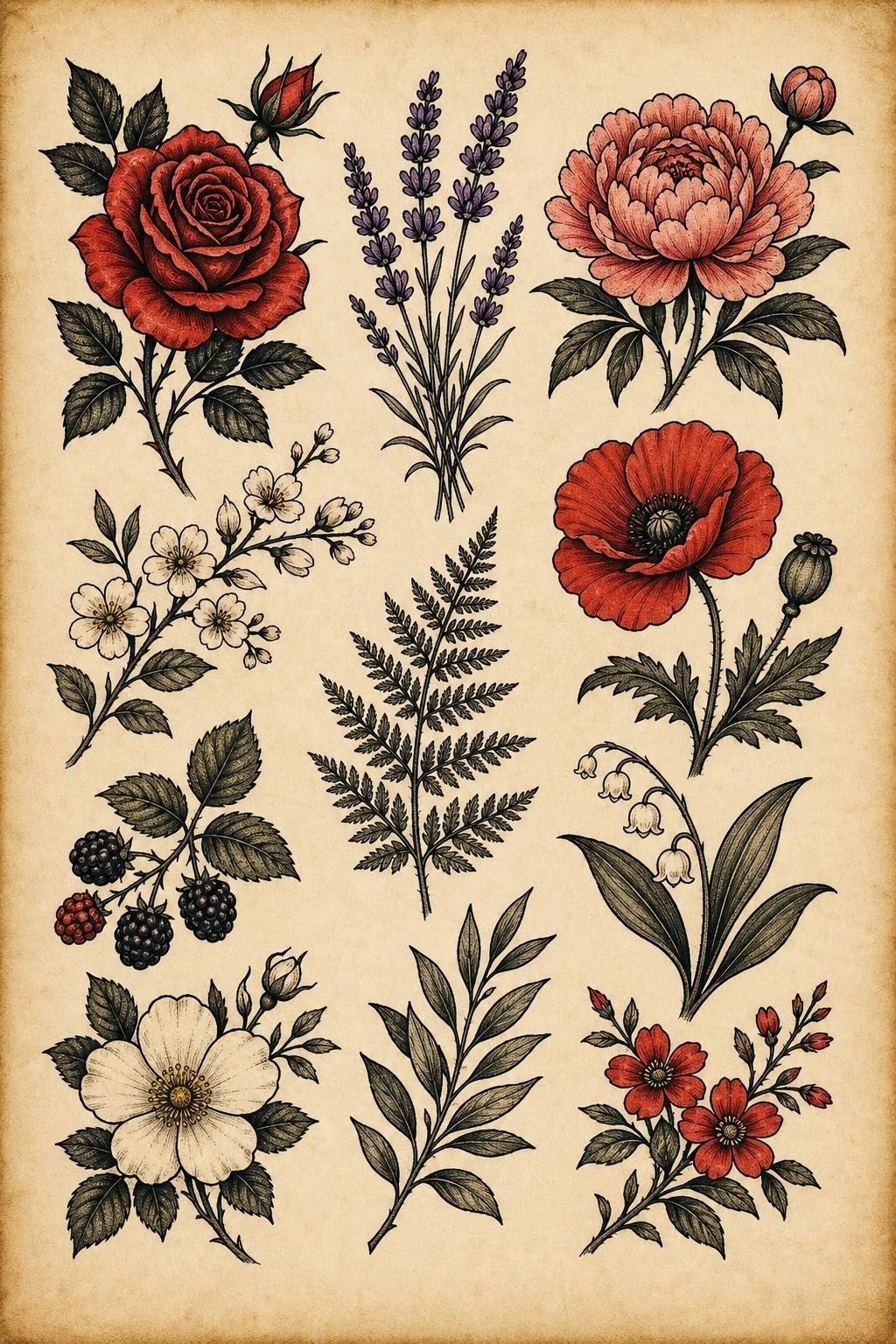
I chose black and grey over pale watercolor color.
6I Balanced Focal Blooms With Fine Leaves
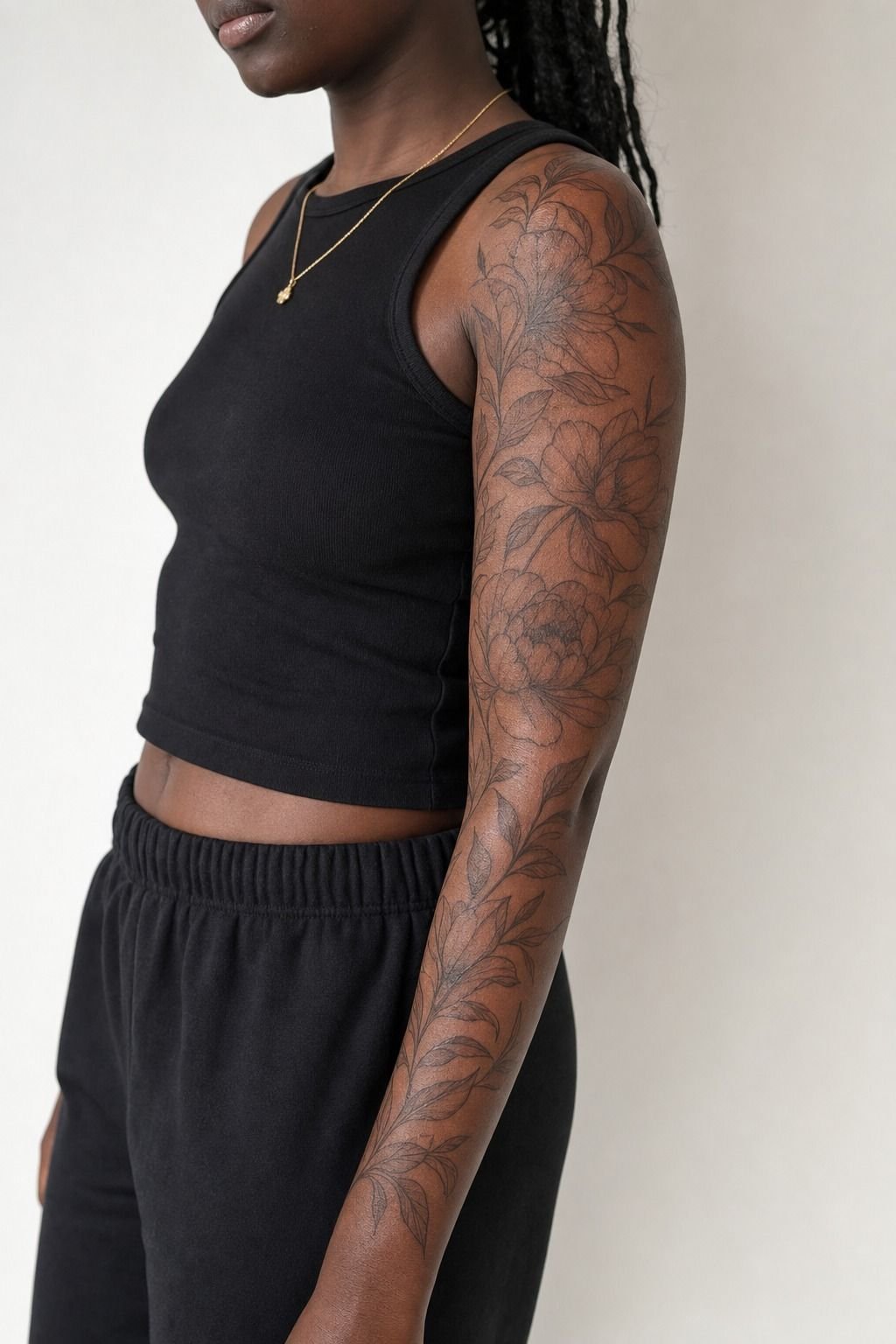
Here’s the Negative-Space Garden Rule I learned while planning: every large bloom needs a quieter area beside it. You need places where your eye can rest, or your sleeve starts looking like a crowded bouquet wrapper.
I used fine leaves as connectors, not filler. A fern frond ran along the inner forearm while a few small olive leaves softened the gap beneath the main flower. Those lighter pieces made the dark petals look more dramatic without making the whole arm busy.
You can see how a floral sleeve needs hierarchy in many Japanese flower tattoo designs too. The style is different from mine, obviously, but the composition lesson holds.
Big form first. Supporting motion second.
But I’d skip adding tiny bees, stars, initials, and random dots just because there’s blank skin. Blank skin is not failure. It’s what lets the tattoo breathe, heal clean, and stay inviting rather than turning into visual noise.
7I Checked Pain Across Each Arm Placement
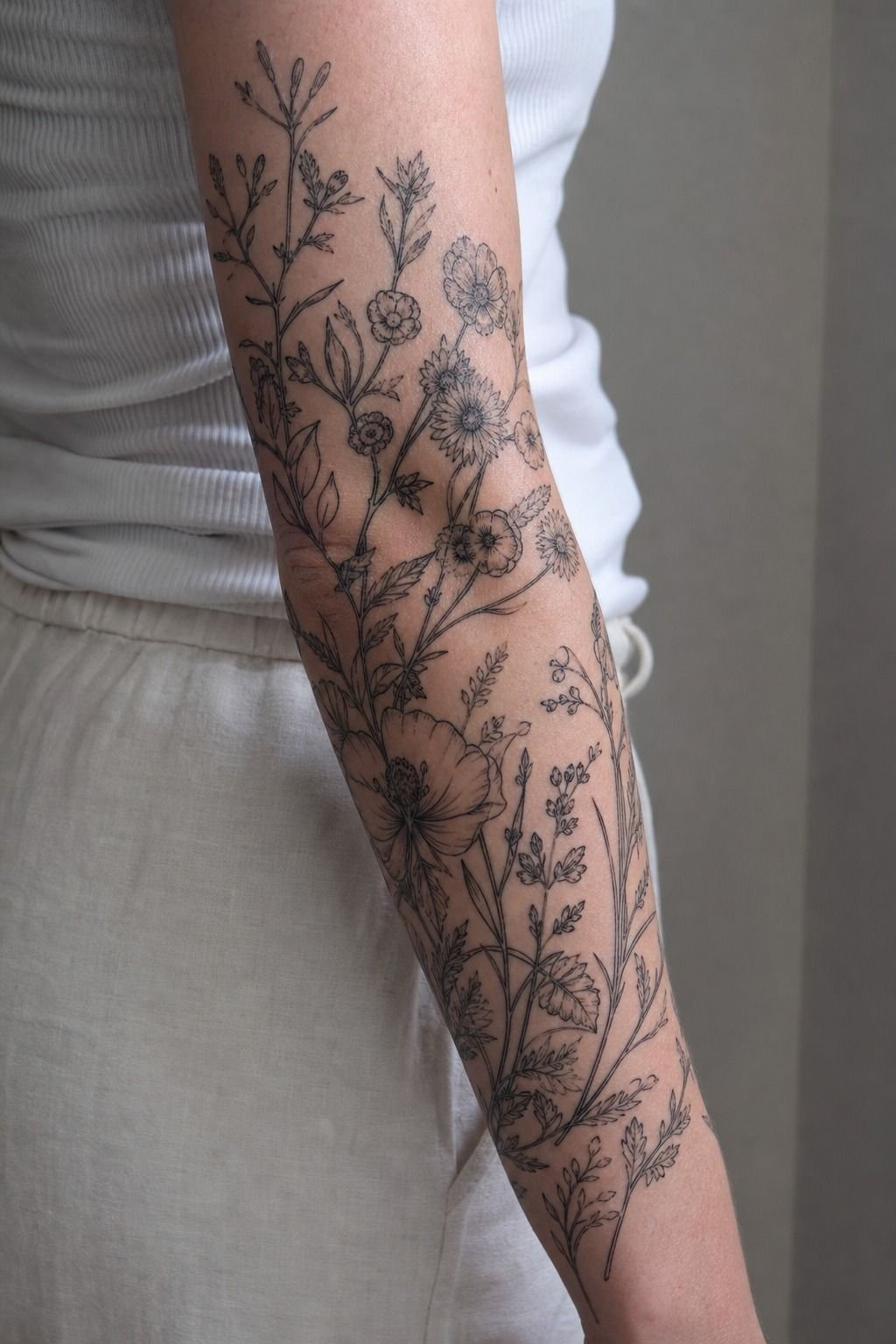
Pain wasn’t a dealbreaker, but I planned around it. Lines feel sharper, shading is a dull burn, and solid color packing is usually the spiciest part. A fine-line flower sleeve gave me breaks between intense sections.
The outer forearm felt pretty chill. The inner forearm was more tender, especially near the wrist crease, and the elbow ditch was rude in a very specific way.
If you’re nervous, tell your artist before the stencil goes on. You’re allowed to tap out for five rather than pass out on them.
You don’t win anything by pretending it doesn’t hurt. Bring water, eat first, and schedule shorter sessions if you know your body gets shaky. My forearm work was manageable because I didn’t try to finish a whole women’s arm sleeve in one heroic day.
8I Reviewed Floral Sleeve Tattoo References Carefully
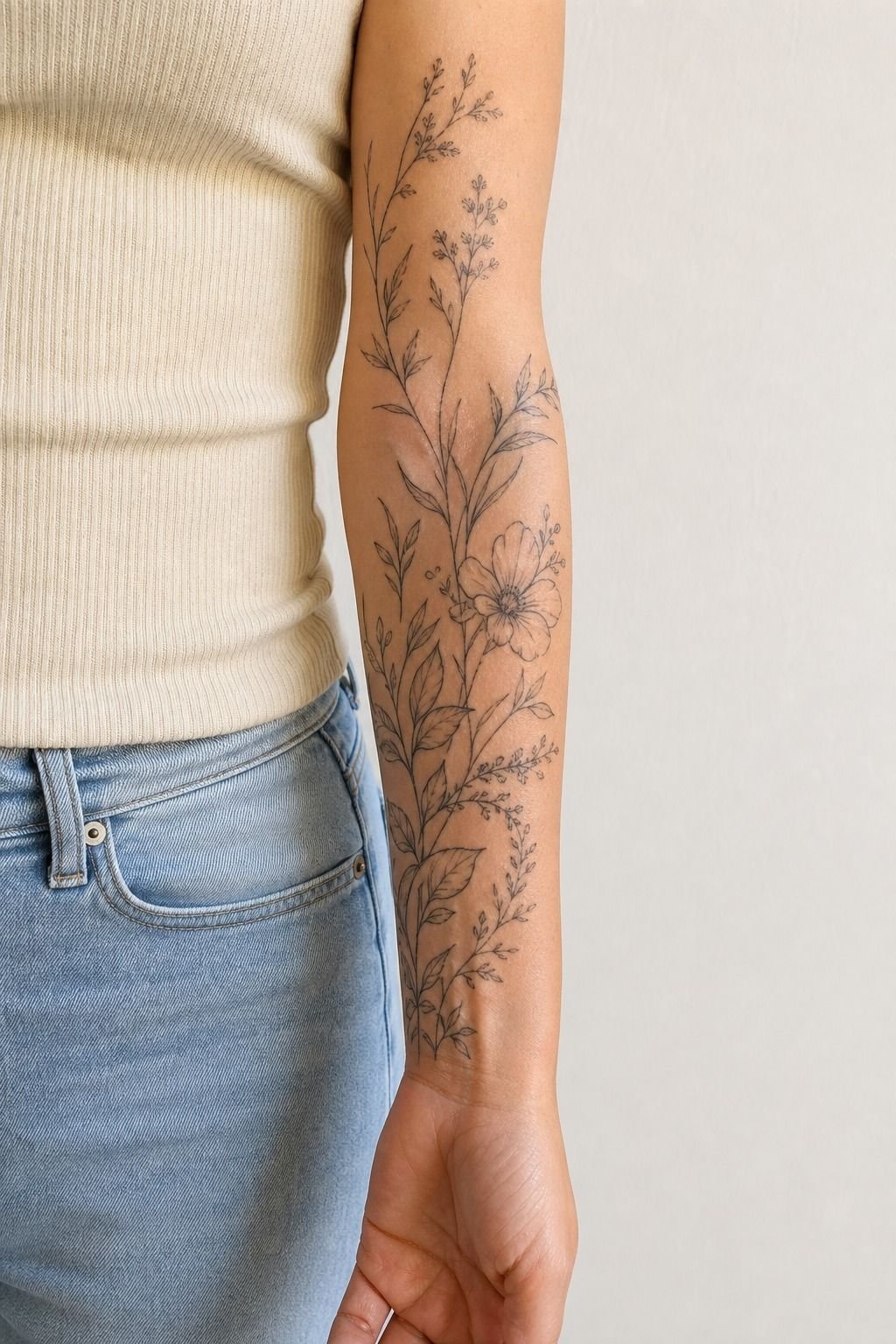
Pinterest is useful, but it can make every sleeve look like it belongs on the same arm.
9I Planned Sessions for the Full Sleeve
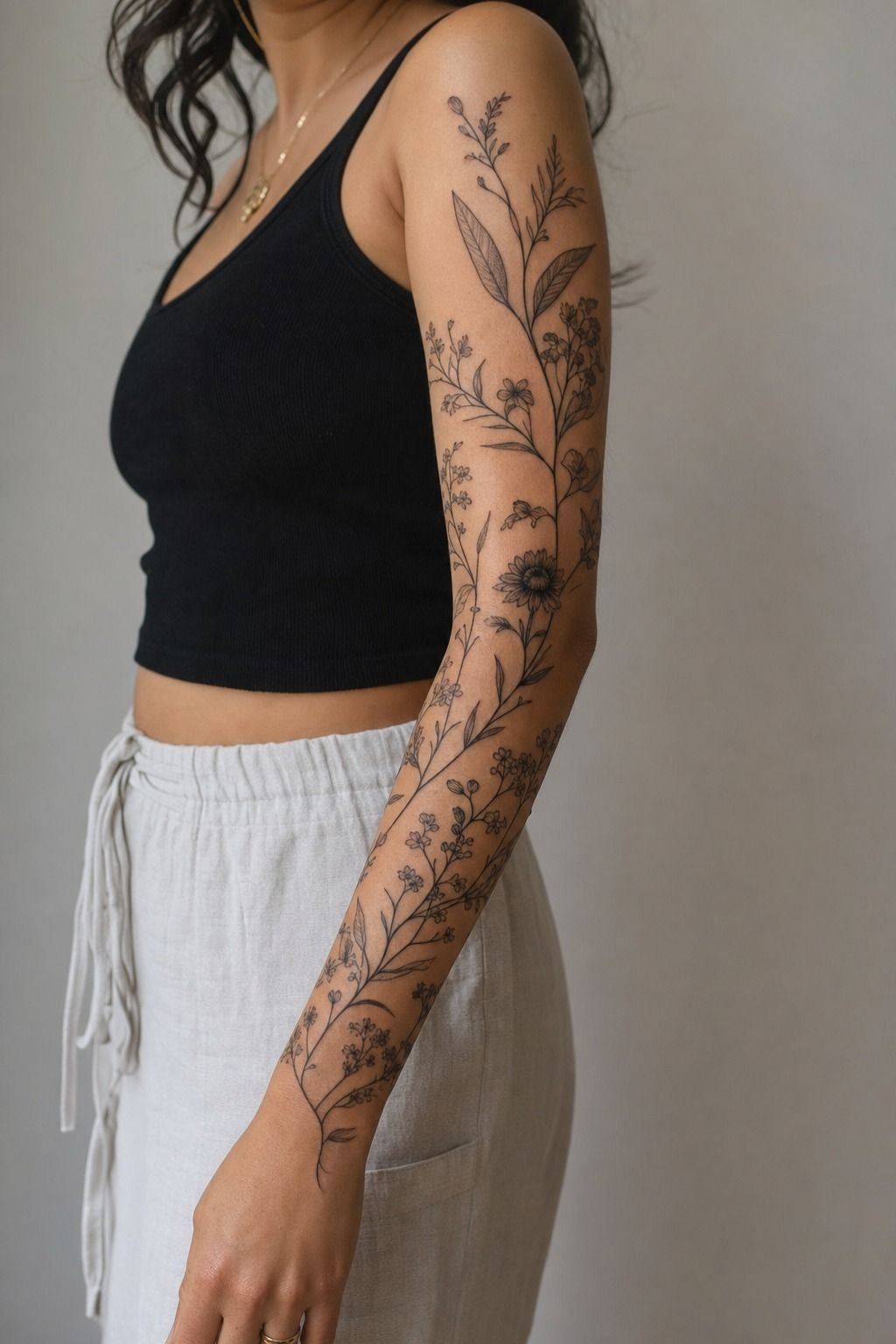
I broke the sleeve into sessions because I wanted my skin to stay calm and my decisions to stay smart. A sleeve looks better when you can step back after each part and see what the arm still needs.
My first session handled the outer forearm focal bloom and the main stem. The next session filled the upper arm and connected leaves. I left the inner forearm for later because that placement was more sensitive and because I wanted to see the healed contrast first.
For you, 2 to 4 sessions can make more sense than one long day, depending on how dense your floral arm sleeve tattoo is. A realistic portrait can take 8 to 15 hours over multiple sessions; fine-line botanicals may move faster, but your artist should set the pace.
If you’re torn between arm and leg placement, compare the body flow in this leg sleeve tattoo guide. The calf gives you a longer vertical canvas, while the arm makes your flowers more visible every day.
10I Set a Realistic Flower Sleeve Budget
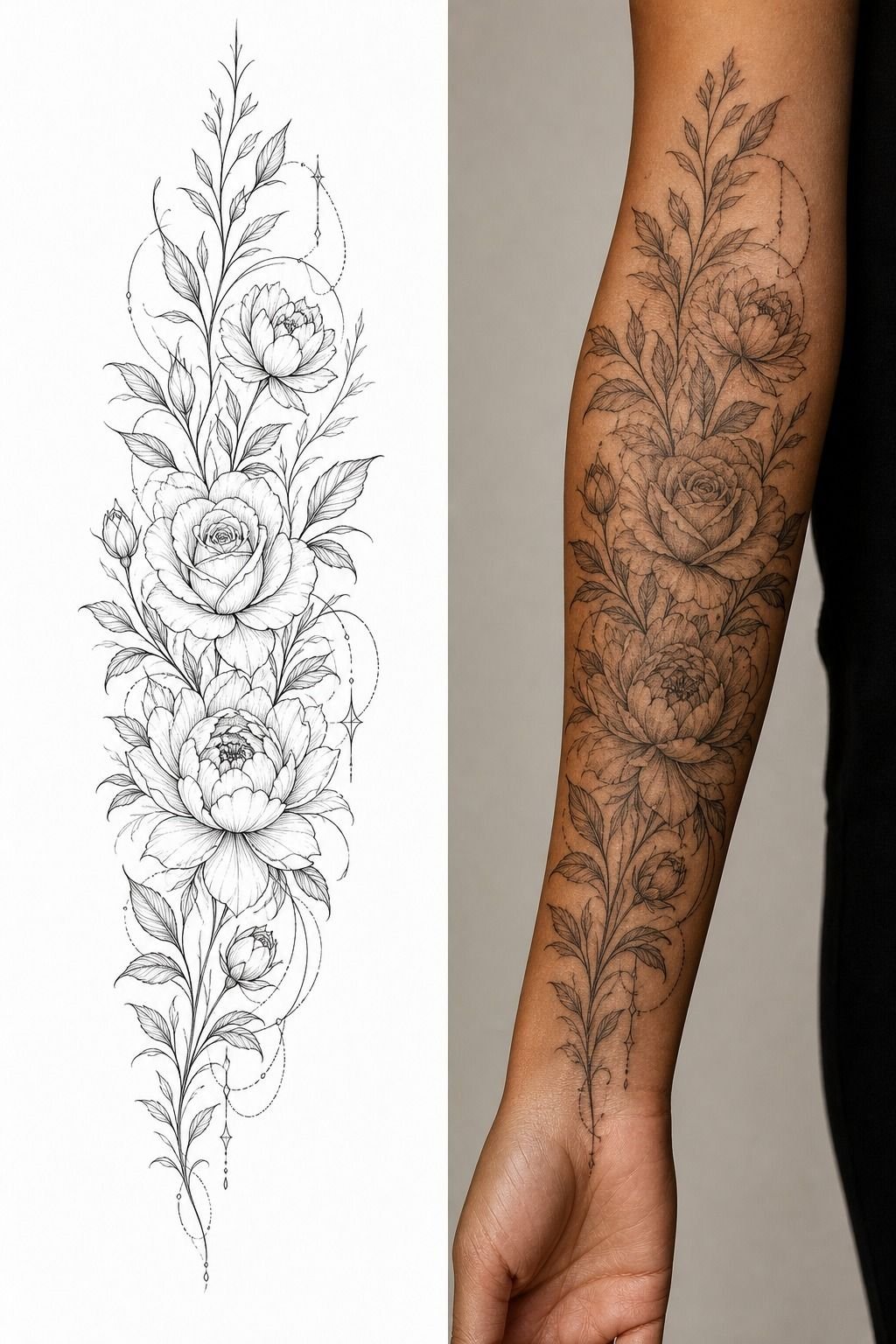
I budgeted for good linework, not the cheapest opening on a booking calendar. A shop minimum in the US is typically about $50 to $100, while many established artists charge roughly $100 to $250 an hour. Your city, artist demand, and sleeve density will change the total.
For my planning, I treated the custom botanical drawing as part of the job, not a free extra. You’re paying for placement knowledge, stencil revisions, sterile setup, and the ability to make a leaf curve with your arm instead of against it.
How much it cost
I didn’t chase an exact dollar promise because that’s not how custom tattoos work. For a clearer breakdown of what affects your quote, use this sleeve tattoo cost guide. Cheap tattoos can get expensive fast when you’re paying someone else to fix weak lines.
11I Chose an Artist for Botanical Linework
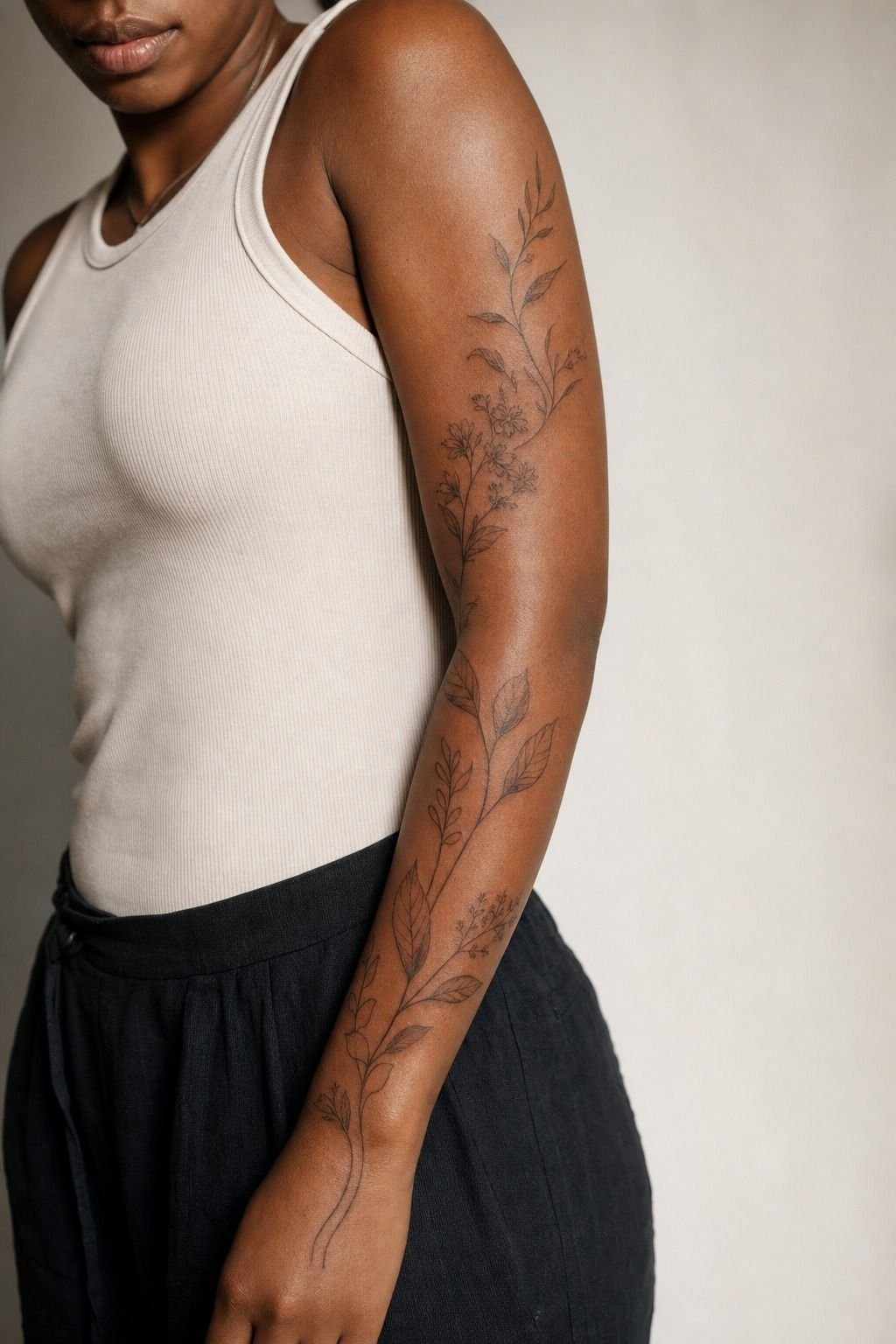
I chose the artist by healed photos first. Fresh fine line can look crisp on almost anyone for a week. Healed work tells you whether their black stays clean, whether their shading goes patchy, and whether their clients’ skin looks overworked.
You should look for healed botanical tattoos, clear close-ups, and consistent line weight across different skin tones. I wanted an artist whose stems were clean without looking stiff. A scratcher can make a flower look fuzzy by trying to fix one line ten times.
The Healed-Photo Filter saved me from a few pretty portfolios. If an artist only posts fresh work, I’d ask directly for healed examples. No drama.
You’re trusting them with skin that has to live with the result.
I also wanted someone comfortable saying no. My artist pushed back when I suggested another tiny flower near the wrist, and she was right.
That size on a wrist was gonna mush out. We bumped it up the forearm, and it ages nicer.
12I Protected the Tattoo Through Every Healing Stage
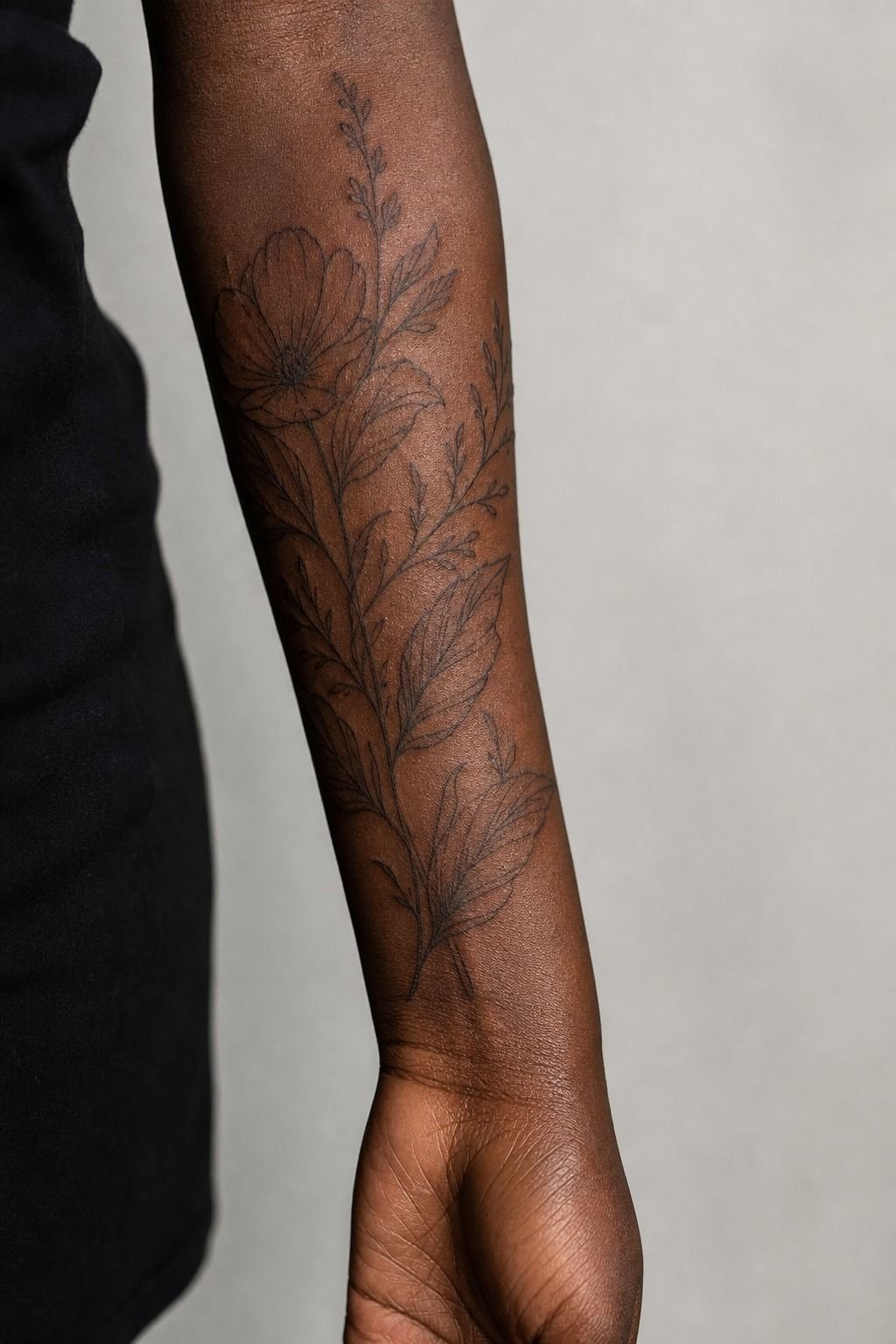
The first few days, your tattoo is an open wound. Treat it like that. I washed mine with gentle unscented soap, patted it dry with a clean paper towel, and used a thin layer of fragrance-free ointment so I didn’t suffocate the skin.
You’ll see peeling around the surface healing stage, usually about 2 to 3 weeks. It can look dull, flaky, and a little weird.
Don’t pick the flakes or you can pull color out. Mine moved into that shiny silver-skin stage before it settled down.
Complete healing takes closer to 2 to 3 months, even when the top looks finished. I skipped pools, hard gym friction, and direct sun while it healed. And I still use sunscreen now, because UV is ruthless on fine lines.
For your own girly sleeve tattoo, loose sleeves and clean bedding matter more than some fancy aftercare shelf. Keep it gentle.
Keep it boring. That’s how the tattoo heals soft, even, and calm.
13I Judged the Finished Sleeve in Motion
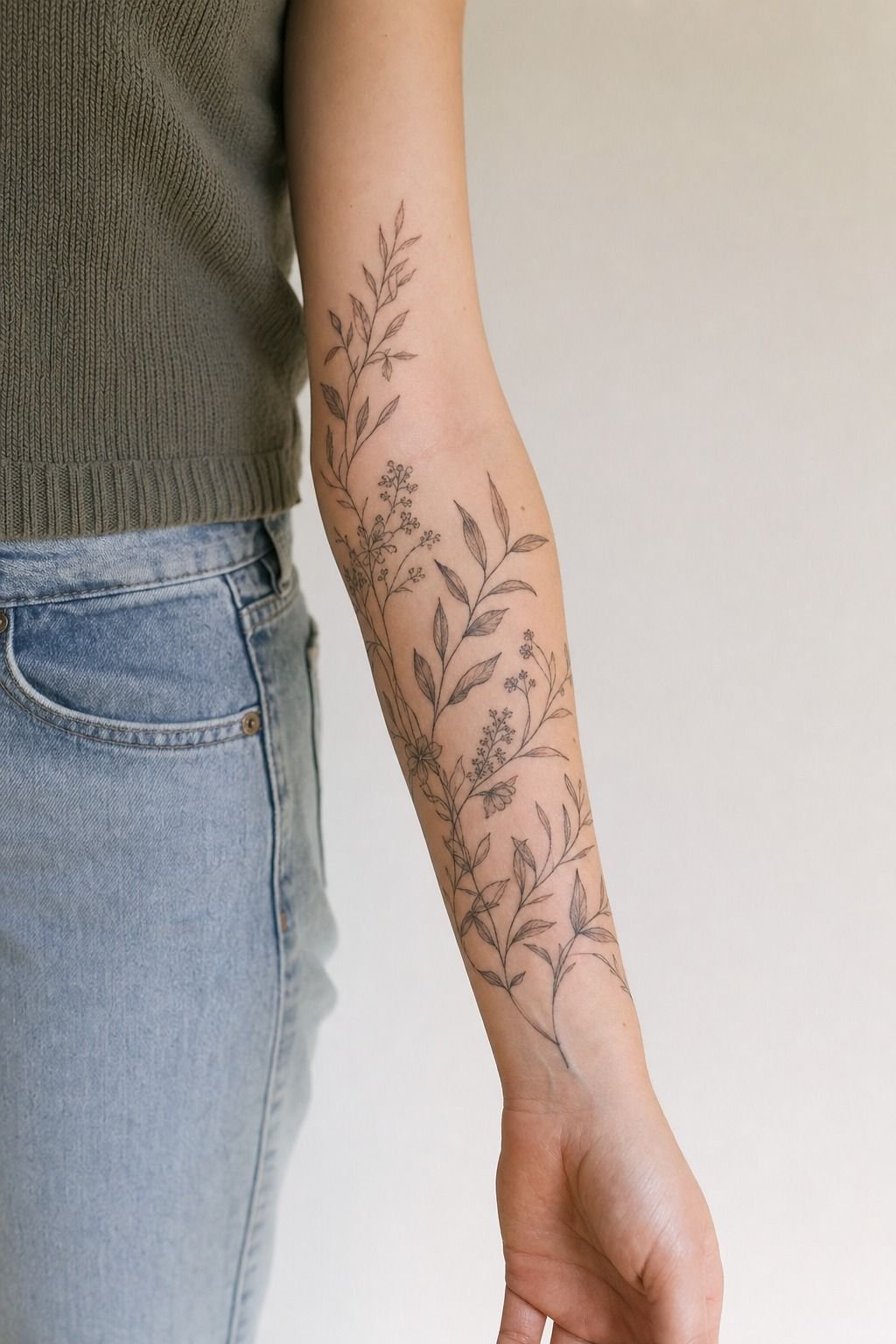
I didn’t decide I loved it from one mirror photo.
What I Learned After Watching It Heal
I’ve tattooed plenty of floral pieces, and I’ve watched clients make the same mistake over and over: they treat “fine line” like it means “make everything tiny.” It doesn’t. Fine line is a tool, not a size requirement. A good flower sleeve uses delicate lines where delicacy helps, then gives the design a darker stem, a shadow pocket, or a solid leaf where it needs backbone.
I also learned that a sleeve needs a point of view. Mine isn’t trying to be every flower I’ve ever liked.
It’s one botanical story, mapped around the arm I have. That sounds obvious, but it changes everything.
When you choose flowers by silhouette and flow first, you’re less likely to panic-add filler later.
And skin changes the plan. Fair, olive, tan, deep brown, deep ebony, all of it deserves reference photos that show healed ink on similar skin. You should never accept “it’ll probably look fine” as an answer.
Ask for proof. Ask how the artist keeps contrast visible.
Ask what they’d simplify.
The honest budget decision is similar. I’d rather see you wait, save, and get one section done clean than rush into a cheap full sleeve.
A tattoo isn’t a print you swap when your taste shifts. It’s skin, movement, sunlight, years. Give it room.
Give it a good artist. Let it become part of you.
What People Always Want to Know
How much does a Flower Sleeve Tattoo usually cost?
A flower sleeve tattoo can start around a $50 to $100 shop minimum for a small piece, while custom work often runs about $100 to $250 per hour in the US. A realistic quote comes after the artist sees your placement and detail level.
– Outer forearm placement – Custom botanical drawing – Multiple-session planning
For more context, check the sleeve tattoo cost guide.
Are Flower Sleeve Tattoo a good idea for a first tattoo?
Yes, especially on the outer forearm or upper arm. Those placements are usually more manageable than ribs, feet, hands, or sternum, and a floral subject lets you build slowly if you don’t want a full sleeve right away.
– Outer arm visibility – Soft black-and-grey flow – Future add-on space
You can begin with one meaningful bloom, then expand only if you still want the connected sleeve.
How do I choose a tattoo artist for Flower Sleeve Tattoo?
Look for healed examples of botanical work, not just fresh photos. Crispy healed linework is what you’re paying for. You should also check that the studio looks clean and that the artist draws for your body instead of copying a reference.
– Healed forearm photos – Consistent black saturation – Clear sanitation process
A strong artist will tell you when your idea needs more space.
How much do Flower Sleeve Tattoo hurt?
Outer forearm, shoulder, and upper arm are generally more tolerable. The wrist, elbow ditch, hands, ribs, feet, and sternum feel spicier because skin is thinner or the area sits close to bone.
– Outer arm, more chill – Inner wrist, sharper – Elbow ditch, dull burn
You’ll be fine if you eat, hydrate, and take breaks when you need them.
How long does a Flower Sleeve Tattoo take to heal?
The surface usually heals in about 2 to 3 weeks, while deeper healing takes roughly 2 to 3 months. Gentle aftercare protects the linework while your skin settles.
– Unscented soap – Thin ointment layer – No picking, pools, or direct sun
Your tattoo may peel like a sunburn. Let it peel. Don’t help it.
What’s the best placement for Flower Sleeve Tattoo?
The outer forearm and upper arm are smart picks for visibility, low wear, and comfortable flow. Those zones give fine lines more room to age well than fingers or the side of the hand.
– Outer forearm, everyday visibility – Upper arm, broad canvas – Shoulder, strong sleeve anchor
If you want a flower with a specific story, sakura symbolism can help shape the concept.
Where I’d Start First
If I had to pick one, I’d start with the outer-forearm focal bloom. It gives your sleeve a readable center without trapping tiny petals in a wrist crease. Pin that placement for later, then let the rest of the flowers grow around it.