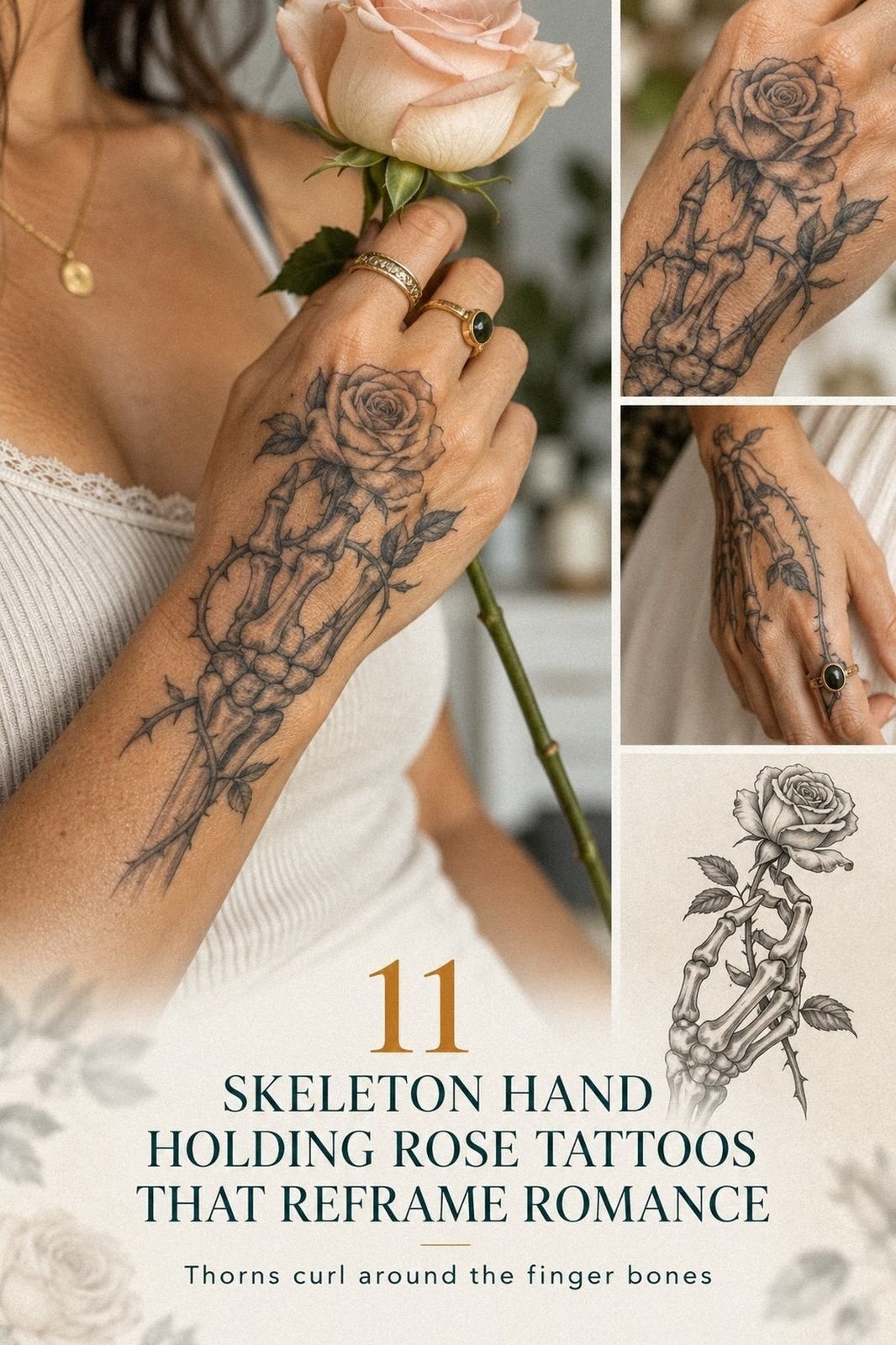
A skeleton hand holding rose tattoo works best when the pose, rose profile, and line weight are planned together. I learned that after a first sketch looked striking on paper but collapsed across real knuckles. Your design can stay intricate and personal if you settle the hand shape before chasing tiny petals.
The goal is crisp, meaningful ink that still reads from a few feet away. Start small, but don’t make it timid!
Your one rule should be simple: build the tattoo around your anatomy, not around a reference that only works on a flat screen. Save a few ideas, compare them at actual size, and let your artist edit the details.
- Start With A Striking Skeleton Hand Pose
- Pick An Intricate Rose And Bone Style
- Place The Rose Between Bony Fingers
- Keep Linework Crisp Around Every Knuckle
- Plan A Flowing Stem Along The Wrist
- Choose A Meaningful Rose And Bone Contrast
- Add Delicate Thorns For Edgy Detail
- Balance Bold Shadows With Graceful Petals
- Match The Design To Your Skin
- Prepare For Detailed Hand Tattoo Sessions
- Protect The Tattoo During Healing
1Start With A Striking Skeleton Hand Pose

Choose the hand gesture before you choose the rose. Your reference should show one bony hand rising from the wrist, with the thumb and fingers curved around a single profile rose. That pose gives your skeleton hand reference a clear silhouette, and it keeps the image expressive instead of muddled.
I’d skip a fully open palm for a first piece. It’s recognizable, but the fingers spread too far and leave the rose floating in the middle. A relaxed grip feels powerful because your eye follows the bones toward the flower.
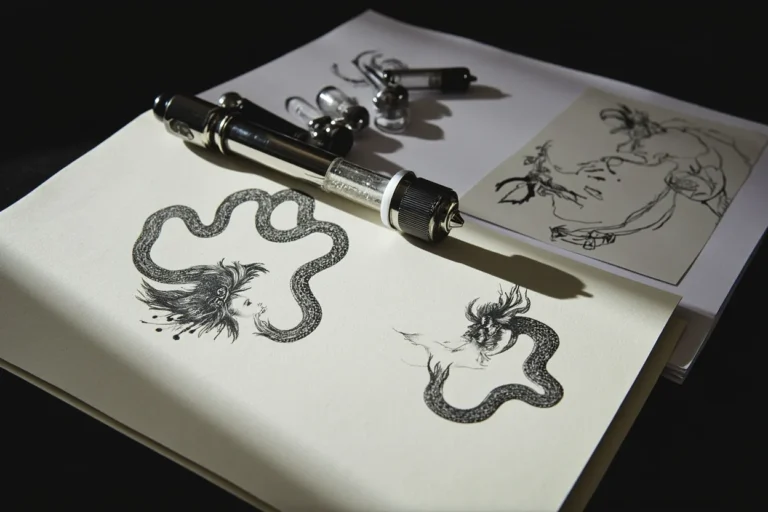
Print or draw the reference at the size you might wear. Your artist can refine the anatomy, but you’ll notice immediately if the wrist feels cramped or the thumb looks stiff. I use Spirit transfer paper for planning because the pale violet guide makes overlaps easy to spot.
Keep the rose slightly above the center of the hand. You want the petals to sit between the fingers, not cover every joint. A single profile bloom gives your skeleton hand holding something design a graceful focal point.
If you’re still deciding whether the bone imagery feels right, read this guide to skeleton hand tattoo meaning. You’ll see how different poses can feel sacred, raw, or haunting without changing the subject. Check the knuckle spacing before you fall in love with any ornamental detail.
2Pick An Intricate Rose And Bone Style

Select one visual language for the entire tattoo. A minimal skeleton can pair with a sleek rose, while an ornate hand may need a classic bloom with stronger contours. The important thing is that the bone structure and petals feel like one expressive idea.
Spirit Transfer Paper And The First Silhouette
A stencil placement check can reveal problems that a digital mockup hides. Place the design where the wrist turns naturally, then check whether the flower still reads when your fingers curl.
Your artist can adjust the thumb, shorten the stem, or open the grip without losing the central idea. That’s why a strong healed portfolio matters. It shows how that artist’s decisions hold up after the skin settles.
Bring your questions to the artist consultation before the appointment. Ask where the smallest marks will sit, how the design will move across the joints, and which details should be removed if the hand becomes crowded.
3Place The Rose Between Bony Fingers

Place the flower where the fingers naturally frame it. Your strongest option is usually the rose tucked between the index and middle fingers, with the thumb crossing below the stem. That arrangement makes the hand appear to hold the bloom instead of hiding it.
Use the knuckles as visual borders. The petals can overlap one joint, but they shouldn’t cross every crease. I’ve seen beautiful sketches lose their clarity because the flower was pushed too low, where the palm folds broke the outline.
A profile rose stencil helps you test this before the appointment. Set it over a printed hand photo, then rotate your wrist through a few normal positions. You’ll notice whether the bloom still reads when you bend your fingers, and you won’t have to guess from a flat sketch.
Your rose should have one dominant outer contour. Add two or three interior petal lines, then stop and look again. More detail isn’t always more intricate; sometimes it just creates a gray knot after healing.
For another hand-centered reference, study snake biting hand tattoo meaning. The subject differs, but the placement lesson is useful: the hand needs a readable gesture before the surrounding symbolism can work. Protect the outer contour above everything else.
You can also compare three dot hand tattoo meaning for a reminder that small marks need intentional spacing. The palm crease should never become an accidental dividing line through the rose.
4Keep Linework Crisp Around Every Knuckle

Treat every knuckle as a moving hinge. Your tattoo artist should avoid placing the finest detail directly across the deepest crease, because repeated bending and friction can soften those lines. Keep the sharpest petal edges on flatter skin whenever the composition allows it.
A knuckle crease can be visually dramatic, but it’s a demanding place for tiny marks. Leave enough open skin around it so the finger structure remains readable.
A single-needle linework approach can look delicate and polished, but it needs restraint. I’d rather see six clean petal marks than fifteen crowded ones. Your skin will carry the design more confidently when the artist leaves small areas of negative space.
Ask how the artist handles hand tattoos after they heal. Fresh ink can look crisp and impressive, while older hand work may show softened edges. Hand tattoo aging is part of the design decision, especially with fine lines and frequent sun exposure.
The bone structure benefits from slightly stronger contours around the joints. That contrast makes the rose feel dainty without making the hand look weak. It’s a graceful balance, and your artist should explain where the line weight changes.
Bring a healed portfolio to the consultation, not only fresh photographs. If you want more examples of clean hand placement, compare the proportions in three dot hand tattoo meaning.
Your first ink deserves evidence, not a rushed promise. Look closely at the healed hand work.
Where Fine Detail Stops Helping
The negative space between petals is part of the drawing. If you fill every gap, the rose may lose its expressive shape and the hand may look heavier than intended. A sharp contour often communicates more than a nest of interior lines.
This is where an artist’s value becomes obvious. You’re paying for artist judgment, not just the ability to reproduce a reference. A restrained edit can be worth more than adding another hour of detail.
Use hand holding rose tattoo references to compare shape, but judge the petal density against your own hand. A rose that looks delicate on someone else may need wider gaps on you.

5Plan A Flowing Stem Along The Wrist

Let the stem guide the eye from the rose toward your wrist. A slim, slightly curved line creates movement, and it keeps the composition from ending abruptly at the palm. Your stem can follow the natural centerline without running directly into the wrist crease.
The wrist centerline gives the stem direction without forcing it into a rigid vertical drop. Your artist should follow the way your hand naturally bends.
A black botanical flash sheet is useful here because you can compare several stem directions at once. Look for a version that bends gently rather than making a rigid vertical drop. Flowing lines suit this subject better than a perfectly straight stem.
Don’t overload the wrist with leaves. One narrow leaf near the lower stem can feel organic and symbolic, while four leaves may compete with the skeleton fingers. I’d choose a sharp thorn or two instead of extra foliage if your goal is an edgy first tattoo.
Ask your artist whether the stem should stop before the wrist crease or cross it. Your choice affects visibility, movement, and future additions. A small gap can make the design feel understated, while a continuous line can look more powerful.
That decision sets the stem direction.
You can browse skeleton tattoos for women for ideas about extending bone imagery without copying another person’s piece. Save only references that match your own hand shape, skin tone, and desired mood. Consider the bone extension before adding more symbols.
6Choose A Meaningful Rose And Bone Contrast

Decide what the rose and bones mean together before you refine the petals. A rose can suggest love, memory, beauty, or resilience.
Bones can bring mortality, survival, ancestry, or a sacred reminder of time. Your tattoo becomes more personal when the rose and bone pairing has a reason.
I’d avoid choosing symbolism because it sounds dramatic online. Write one sentence about what you want to remember, then see whether the image supports it.
A meaningful tattoo doesn’t need a complicated explanation, but you should know why the hand is holding that flower. Keep that meaning sentence short.
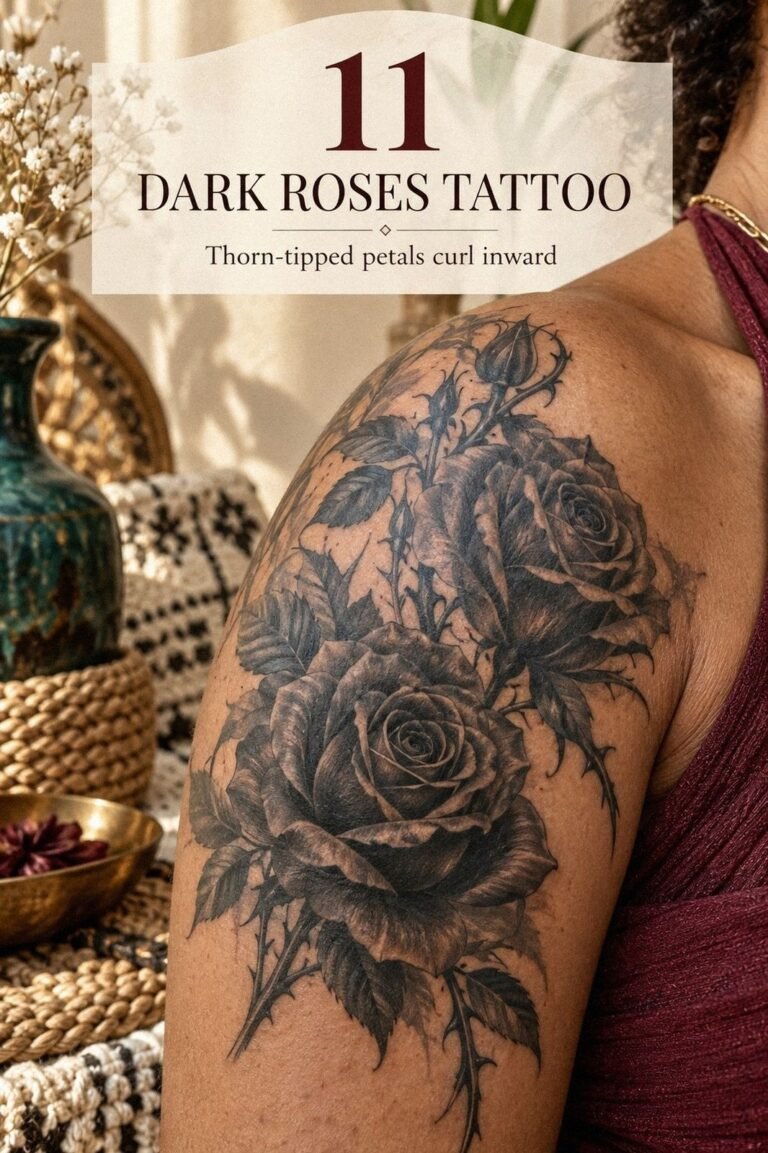
The blackwork shading can make the bone side feel raw while the petals remain delicate. Keep the darkest area near the palm or finger joints, then let the rose carry finer lines. That hierarchy gives your design a clear emotional center.
Your skin tone also affects contrast. On deep ebony skin, open skin breaks and carefully placed black shapes can create a bold, polished result. On lighter skin, subtle gray may show more visibly, but your artist should still prioritize readable structure.
Discuss your skin tone honestly during the consultation.
If you’re weighing a more feminine or masculine direction, don’t let the label decide for you. The same rose can feel fierce, graceful, or timeless depending on the grip, thorns, and line weight. Your meaning should lead the style and protect the personal symbolism.
What This Contrast Can Say
The visual hierarchy can feel romantic, empowering, haunting, or sacred depending on the balance. A firm grip suggests resilience, while a lighter hold may feel graceful and ethereal. Neither interpretation is more meaningful unless it reflects your own story.
Write down the sentence you want the tattoo to remember. That sentence can guide every later choice, including whether the rose should be classic, symbolic, or slightly whimsical. It also helps you reject details that look impressive but don’t belong.
A skeleton hand tattoo meaning guide can offer prompts, but your personal explanation should remain the final authority. Even the grip pressure can change the emotional message.
A tighter hold may look fierce and protective. A relaxed hand can feel romantic, delicate, or wistful. Let the rose symbolism follow your story instead of a trend.
7Add Delicate Thorns For Edgy Detail

Add thorns where they support the stem’s direction. A few sharp points can give the rose a daring edge without turning the hand into a crowded tangle.
Thorns work best when they echo the bone structure. One near the thumb and another lower on the wrist may be enough. An ornate cluster can look expressive in a sketch but lose clarity once the fingers move.
Keep the thorns smaller than the rose’s main contours. They should sharpen the mood, not compete with the bloom. A controlled detail feels more timeless than a dense ring of spikes.
8Balance Bold Shadows With Graceful Petals

Use bold shadows only where they clarify the anatomy. A dark palm hollow, a small shadow beneath the thumb, and selective finger joints can make the skeleton hand feel dimensional. Your petals should stay lighter so the rose remains the first thing people notice.
The solid black accents need clean edges. I’d avoid soft gray haze across the whole hand because it can flatten the design and make the flower disappear. Strong contrast looks more polished when it’s concentrated instead of spread everywhere.
Ask for a healed example of similar shading. Fresh black can look dramatic, but healed work tells you whether the artist’s edges remain crisp.
Your tattoo should still show the difference between bone, petal, and open skin after the surface settles. Pay attention to the palm hollow.
A graceful rose doesn’t mean the hand needs to be gentle. The combination can feel haunting and powerful at once, especially when the fingers grip firmly around the stem. That tension is what makes a skeleton hand holding flower tattoo memorable.
If you’re choosing between fine gray shadows and black shapes, I’d choose fewer black shapes with better placement. You can’t layer clarity over muddy values later.
Your artist should be able to explain every dark section before the needle starts. That contrast map should make sense before the appointment. That contrast matters!
The Boldest Part May Be Open Skin
The open skin breaks may be the most important marks in the entire tattoo. They separate the fingers from the rose, preserve the petal profile, and keep the design readable when you glance at it quickly.
A bold tattoo doesn’t need maximum saturation everywhere. Leaving space can make the dark anatomy feel sharper, the rose more romantic, and the whole piece more stylish. That choice can save money and frustration!
Use three dot hand tattoo meaning as a reminder that spacing can carry meaning. Your saturation plan should show exactly where darkness belongs and where the skin should remain visible.
The darkest values should usually sit near the palm or selected joints. If the rose receives the same weight, it may lose its delicate profile. Keep the darkest values intentional.
9Match The Design To Your Skin
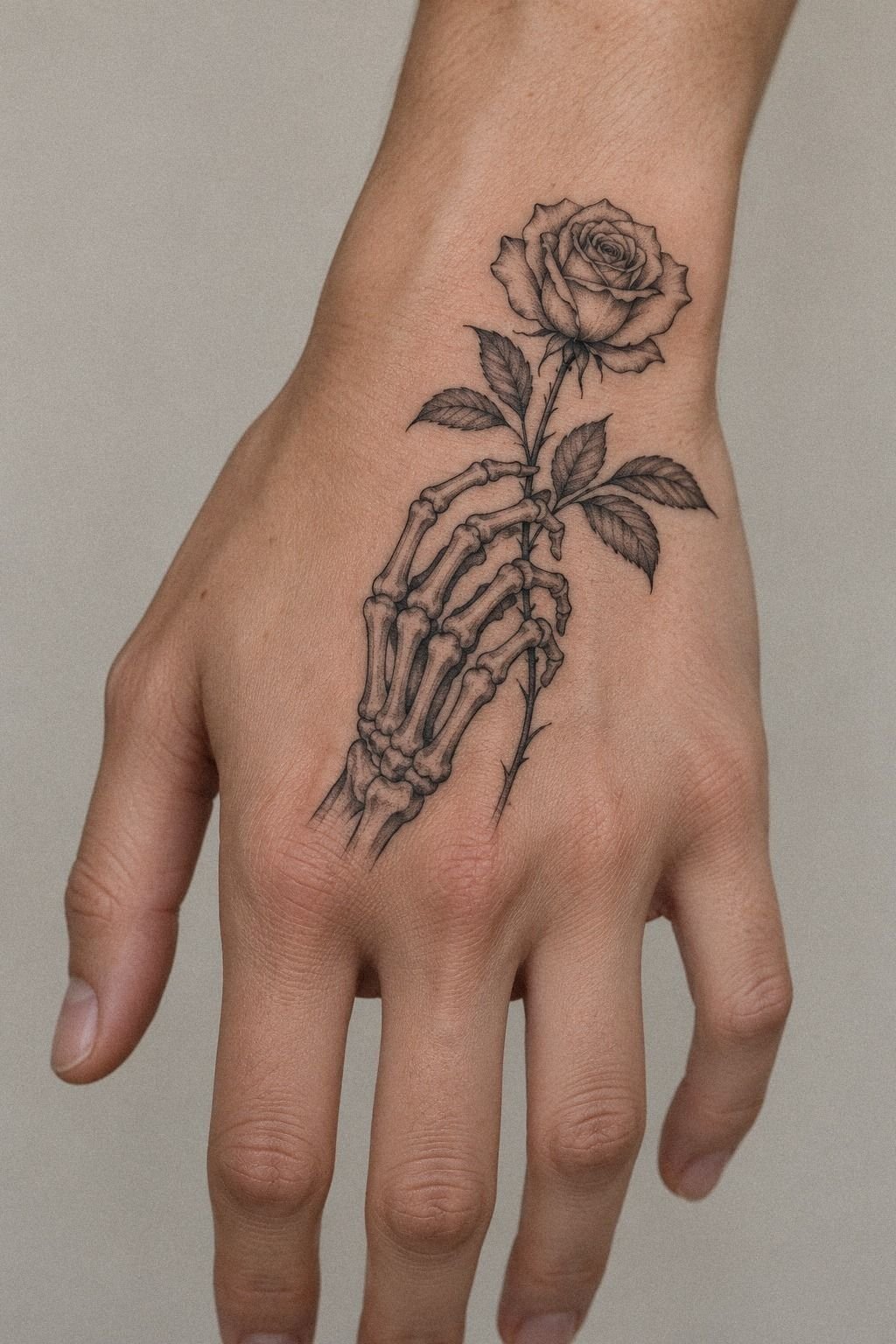
Show your artist clear photographs of your skin in natural light. The goal is an accurate conversation about contrast, healed visibility, and line weight, not a promise based on an edited screen image.
Your artist may adjust the black areas, open more negative space, or simplify the petals so the hand remains readable. A crisp design should respect your skin rather than forcing the same formula onto every person.
Ask how the chosen placement responds to sun exposure, washing, friction, and movement. A striking tattoo still needs practical planning, especially when it sits on a frequently used hand.
10Prepare For Detailed Hand Tattoo Sessions

Prepare a clean reference folder before your appointment. Include the hand pose, profile rose, preferred line weight, and one healed example from the artist. Your printed stencil mockup should be close to the size you’re considering, because tiny design changes can alter the whole balance.
Bring questions about the studio’s hygiene, consent process, touch-up policy, and experience with hands. You don’t need to sound like an expert.
You need clear answers, and you should leave if the process feels rushed or vague. Confirm the studio hygiene standards first.
Cost varies by artist and region, but these are useful US planning references:
Your session may be shorter than a large tattoo, but detail still takes patience. Ask how the artist plans the fingers, palm, and rose so you’ll know whether the design is completed in one appointment or divided. Clarify the expected surface healing time.
If you’re comparing artists, study healed linework rather than social media edits. A hand holding rose tattoo reference can help you describe your concept, but your artist’s own healed work should carry the decision. Build your appointment plan around the artist’s actual process.
Budget Questions Worth Asking
The artist’s hourly rate isn’t the only number that matters. Ask about the minimum charge, deposit, touch-up policy, expected appointment length, and whether a detailed hand design needs a second visit.
A lower quote may not be the best value if the portfolio lacks healed hand work. A higher price can be worth it when the artist has strong anatomy, clean edges, and a careful consultation process. Your budget matters, but so does the cost of correcting a rushed design.
Confirm the touch-up policy before you pay a deposit. Hand tattoos can need small adjustments because the placement experiences friction, washing, and sunlight.
11Protect The Tattoo During Healing

Follow the aftercare instructions your artist gives you, because products and coverings vary. Wash gently with clean hands, avoid picking at flakes, and keep unnecessary friction away from the healing skin.
Do not soak a fresh tattoo in pools, baths, or open water until your artist says it is safe. Direct sun can also affect healing and long-term clarity, so ask when sunscreen can be added.
A little peeling or temporary dullness can be normal, but worsening heat, spreading redness, unusual swelling, or drainage deserves medical advice. When in doubt, contact your artist and a qualified healthcare professional.
The Three-Contrast Rule: Which Detail Deserves The Darkest Ink?
I’ve changed my opinion on first tattoos after seeing too many ambitious sketches lose their structure. A skeleton hand holding a rose doesn’t need every bone, thorn, vein, and petal rendered at the same intensity. It needs a visual order that survives the first glance and still feels personal years later.
That is the three-contrast rule.
My rule is simple: choose three levels of contrast. The darkest level belongs to the hand’s strongest structural points, usually a palm hollow or selected joints. The middle level supports the stem, thorns, and a few petal folds.
The lightest level is open skin, where the design gets its breathing room. If everything is dark, nothing feels bold.
Use structural shadows sparingly.
I also believe the rose should win the first look. That may sound obvious, but many skeleton designs give the bones so much black shading that the flower becomes a tiny afterthought.
I’d rather see a delicate bloom with one clean contour than a technically ambitious rose buried under gray. Reserve the middle value for petal folds.
Your first ink should leave room for confidence. You don’t need to prove that you can tolerate detail, pain, or a long appointment.
You need a tattoo you’ll recognize as yours when the novelty fades. That’s why I’d choose a crisp profile rose, a controlled grip, and fewer interior lines every time!
The strongest version won’t be the one with the most marks. It’ll be the one where your eye knows exactly where to land. That first-glance focal point should be the rose, not a random dark joint.
A Few Things Worth Answering
How much does a skeleton-hand-holding-rose usually cost?
A small US piece usually runs about $100 to $300, with shop minimums near $50 to $100 and hourly rates around $100 to $250. Your artist, region, size, and hand placement all matter, so request a quote after sharing the actual reference.
Are skeleton-hand-holding-rose a good idea for a first tattoo?
Yes, if you’re comfortable with a visible placement and regular aftercare. The subject can stay meaningful, crisp, and personal when the linework isn’t overcrowded. Your artist should show healed hand tattoos, because the visible hand placement experiences friction and sunlight.
How do I choose a tattoo artist for skeleton-hand-holding-rose?
Choose an artist with clean linework, healed photographs, and real hand-placement experience. Your consultation should include hygiene questions, stencil adjustments, and a discussion of how fine lines may age.
A polished portfolio alone isn’t enough. Prioritize healed photographs over fresh promotional shots.
How much do skeleton-hand-holding-rose hurt?
Hands, fingers, feet, ribs, and sternum are commonly more painful because they have less padding and more sensitivity. Your forearm, thigh, and shoulder are often more tolerable.
Pain varies, but a calm artist and a sensible session plan help. Your pain response won’t match anyone else’s exactly.
How long does a skeleton-hand-holding-rose take to heal?
The surface usually settles in about 2 to 3 weeks, while complete healing takes about 2 to 3 months. Your aftercare usually includes gentle washing, light moisturizing, avoiding pools, and protecting the tattoo from direct sun. Treat that healing timeline as a planning estimate.
What’s the best placement for skeleton-hand-holding-rose?
The back of the hand gives you strong visibility, while the wrist allows a longer stem and easier flow. Your artist should consider movement, sun exposure, and line longevity before choosing.
Fingers can look striking, but they’re less forgiving as details soften. The back of the hand usually gives the rose its clearest presence.
Start With Placement Over Detail
If I had to pick one step, I’d start with the hand pose. A clear grip makes every petal and bone easier to read, while extra detail can’t rescue a cramped silhouette. Trust the hand pose before you chase additional detail.
Save your references, ask for a healed portfolio, and let your artist refine the rose around your anatomy. The best value comes from a tattoo that still feels meaningful after the novelty fades. Compare your idea with this snake biting hand tattoo meaning reference, then trust the artist’s healed work over a trend.
A striking skeleton hand holding rose tattoo doesn’t need every possible detail. It needs a clear grip, an expressive bloom, deliberate contrast, and enough open skin to stay readable. Trust that instinct!