Red heart tattoo ideas work best when you stop treating red ink like a novelty and start treating it like a real linework choice. I almost placed my first tiny red piece too small on a wrist, and it would have healed into soup. The good news is simple: size, placement, and artist discipline matter more than trend panic. If you want a red heart tattoo that heals clean, holds shape, and still looks like itself in a few years, start here.
- Tiny Red Heart Wrist Tattoo
- Place a Fine Line Red Heart on the Finger Carefully
- Why Does a Red Ink Heart Work Behind the Ear?
- Tiny Red Heart Wrist Tattoo
- Place a Fine Line Red Heart on the Finger Carefully
- Why Does a Red Ink Heart Work Behind the Ear?
- Corazón Rojo Collarbone Tattoo
- Choose a Minimal Red Heart for the Ankle
- Red Outline Against the Curve of the Ribs
- Micro Red Heart Hand Tattoo
- What Makes a Red Heart With a Dagger Hold Up?
- Red Heart Matching Couple Tattoo
- The Sacred Heart Chest Framework
- Red Heart Flash Tattoo
- Anchor a Watercolor Red Heart on the Shoulder
- Red Heart And Initial Tattoo
- Build a Red Heart Locket for the Forearm
- Red Heart Flame Tattoo
- Patch Texture Against a Solid Red Heart
- Red Heart Pulse Line Tattoo
- Can a Red Heart Work as a Cover-Up?
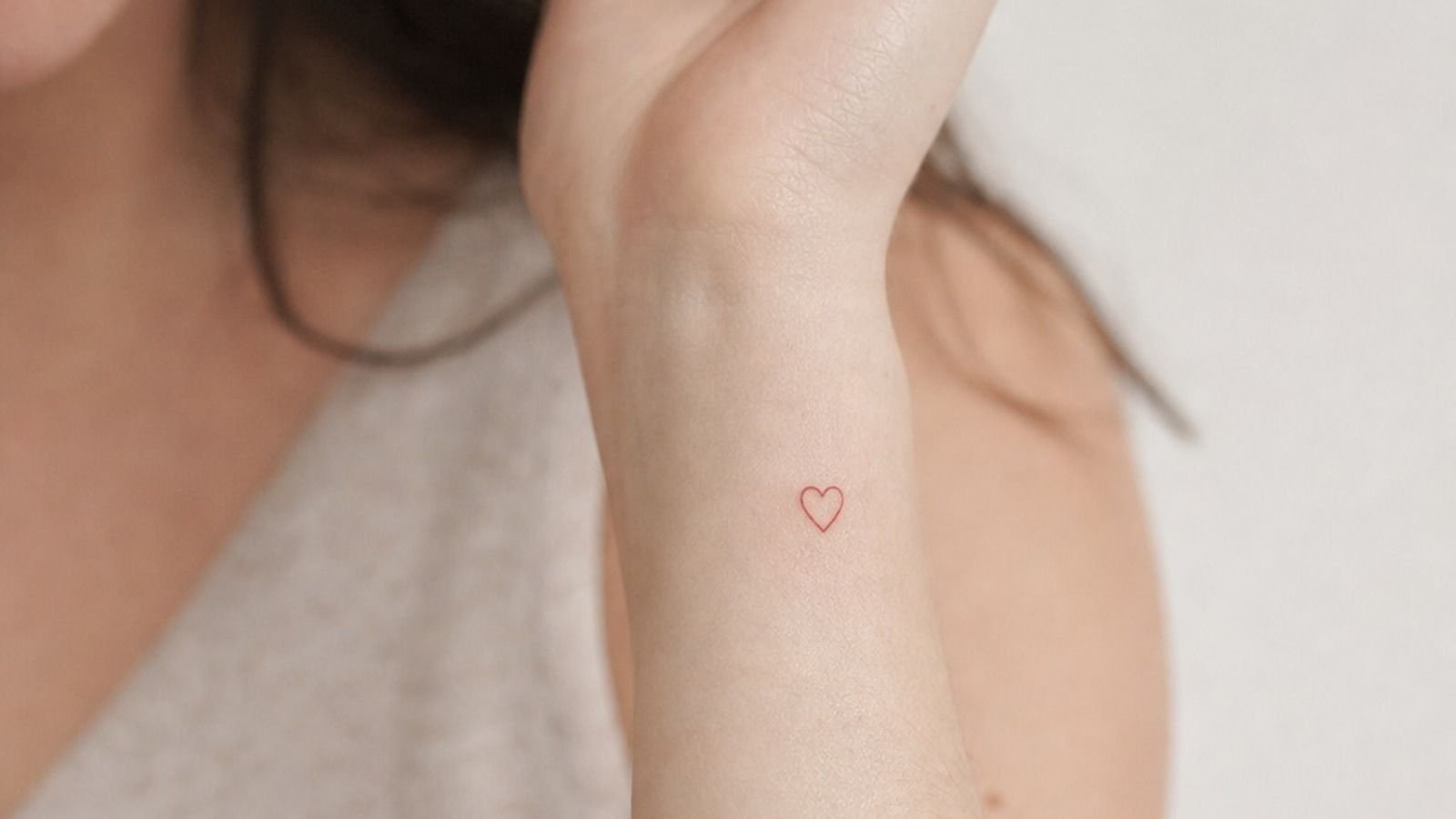
1Tiny Red Heart Wrist Tattoo
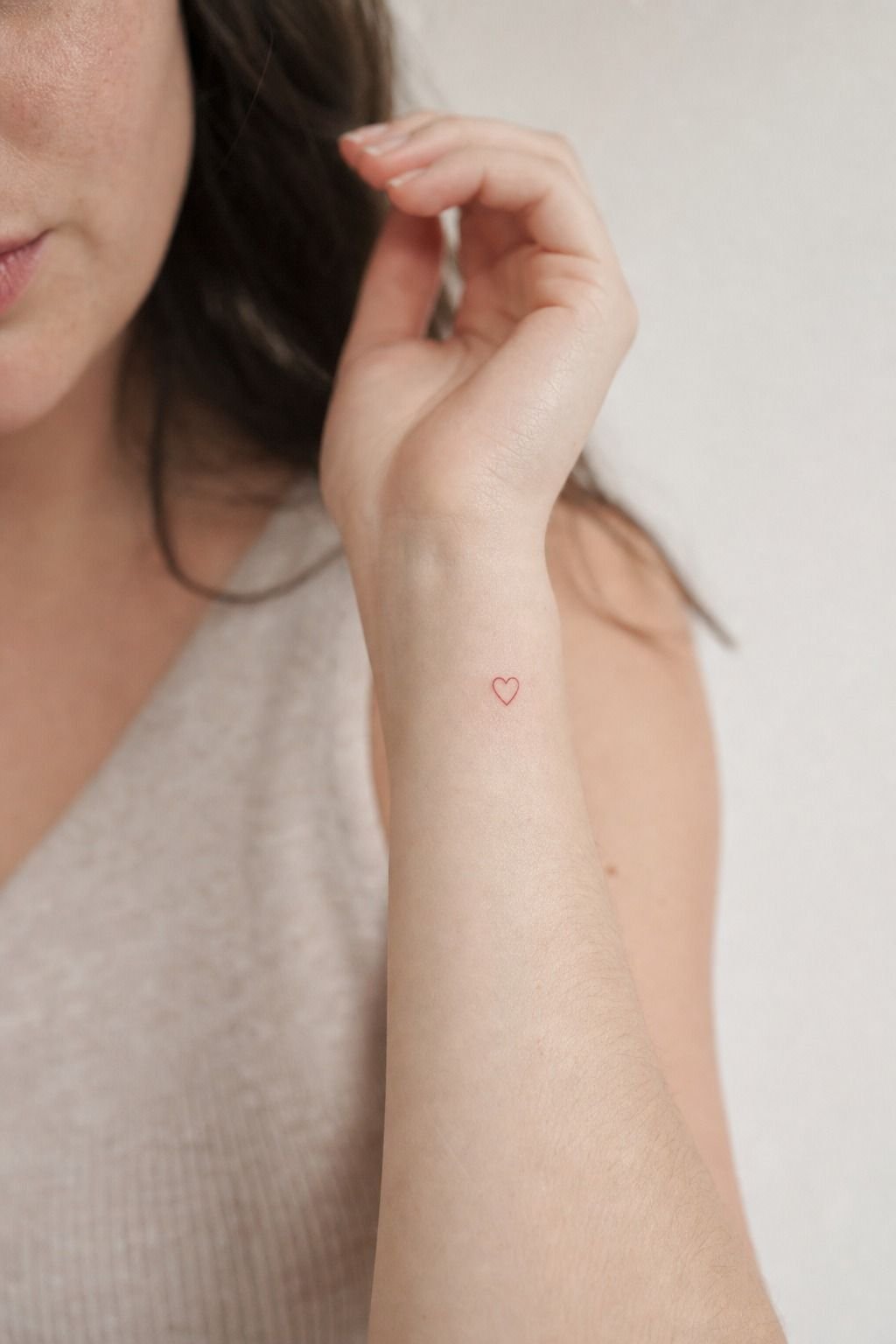
Keep a wrist heart tiny, but not microscopic. On fair cool-pink skin, a single-needle red outline can look crisp and sweet when you give it enough clearance from the bend of the wrist and enough open skin around it. I usually tell clients to think closer to 0.4 to 0.7 inches than sticker-small.
Your wrist is visible all day, so every wobble shows. That means you want stable line weight and one clean pull, not ten fuzzy passes from a scratcher chasing a perfect curve. Does red tattoo ink fade faster? is worth reading before you commit, because sun and friction will test this placement fast.
But here is the part people skip: place it slightly above the crease, not dead on it. A healed red heart there still reads at a glance, ages cuter on you, and will not get chewed up every time your watch strap rubs over it.
Clean. Simple.
Worth it!
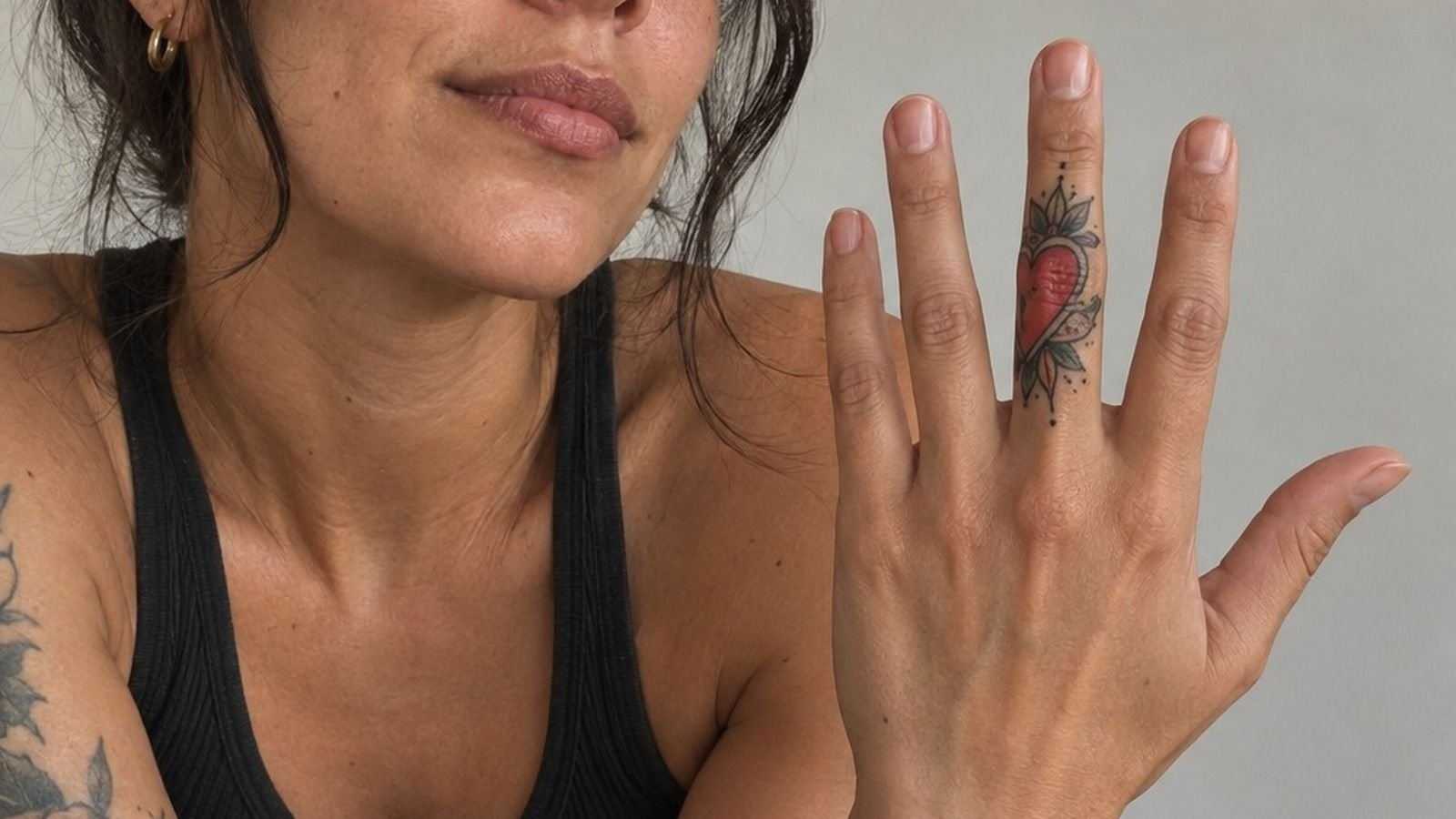
2Place a Fine Line Red Heart on the Finger Carefully
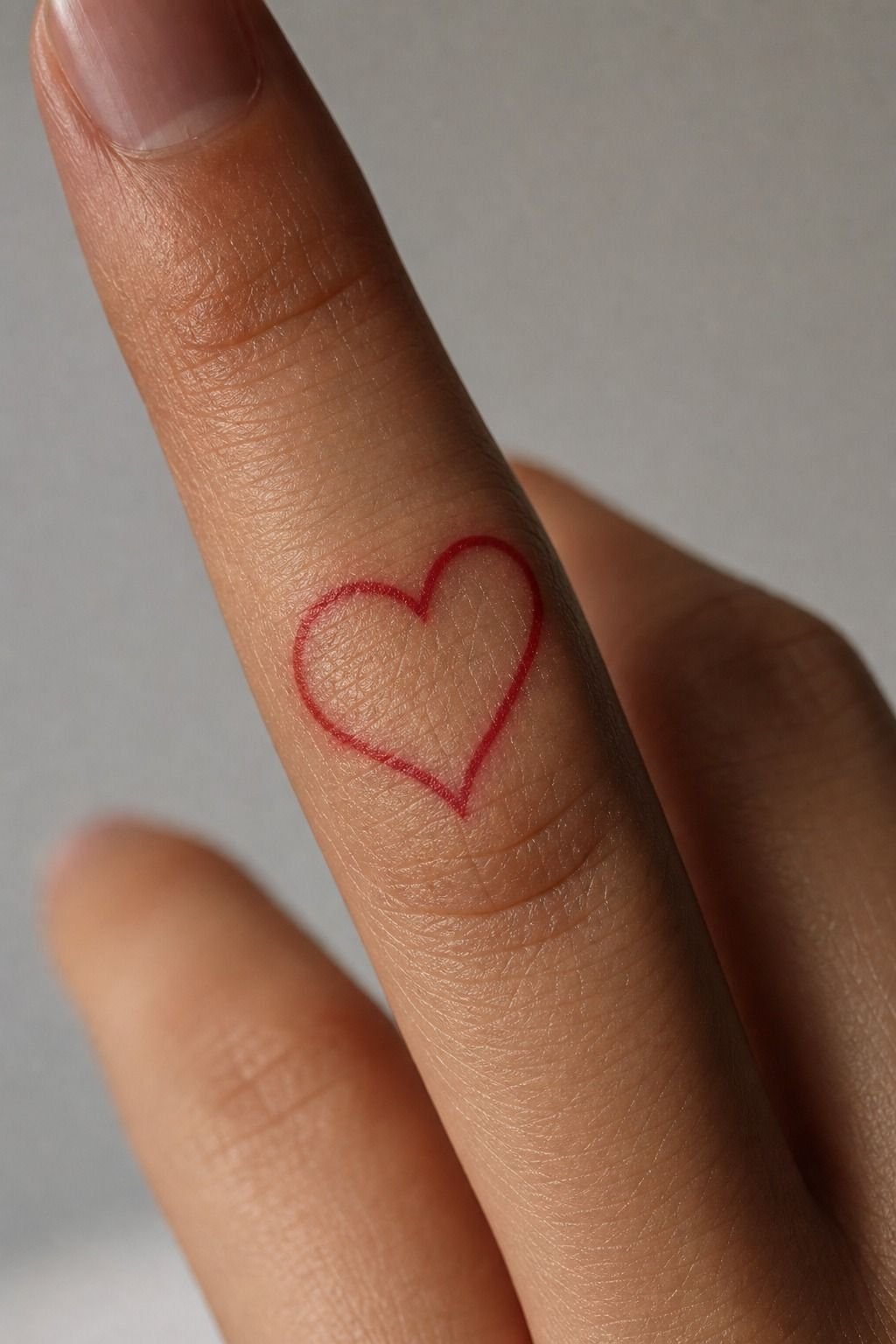
Finger hearts look sharp in macro shots because the tattoo fills most of the frame, but fingers are still a high-wear zone. A fine red contour on medium warm ivory skin can heal nice if the design stays dead simple and the artist keeps the line confident. If you force too much detail into that tiny curve, it’s gonna blur.
You also need honest expectations. Your hand washing, sanitizer, heat, cold, and daily rubbing all work against red ink saturation here, so touch-ups are common and not a sign the tattoo failed.
I tell first-timers this before they book, because finger work is cute, but it isn’t low-maintenance. The red ink allergy guide is also a useful check before paying a deposit.
And if you want the look without the upkeep, bump the same heart to the side of the finger base or the upper hand. A cleaner placement buys you better healing and less fade, while keeping that minimal Love Heart Tattoo vibe people want from this style.
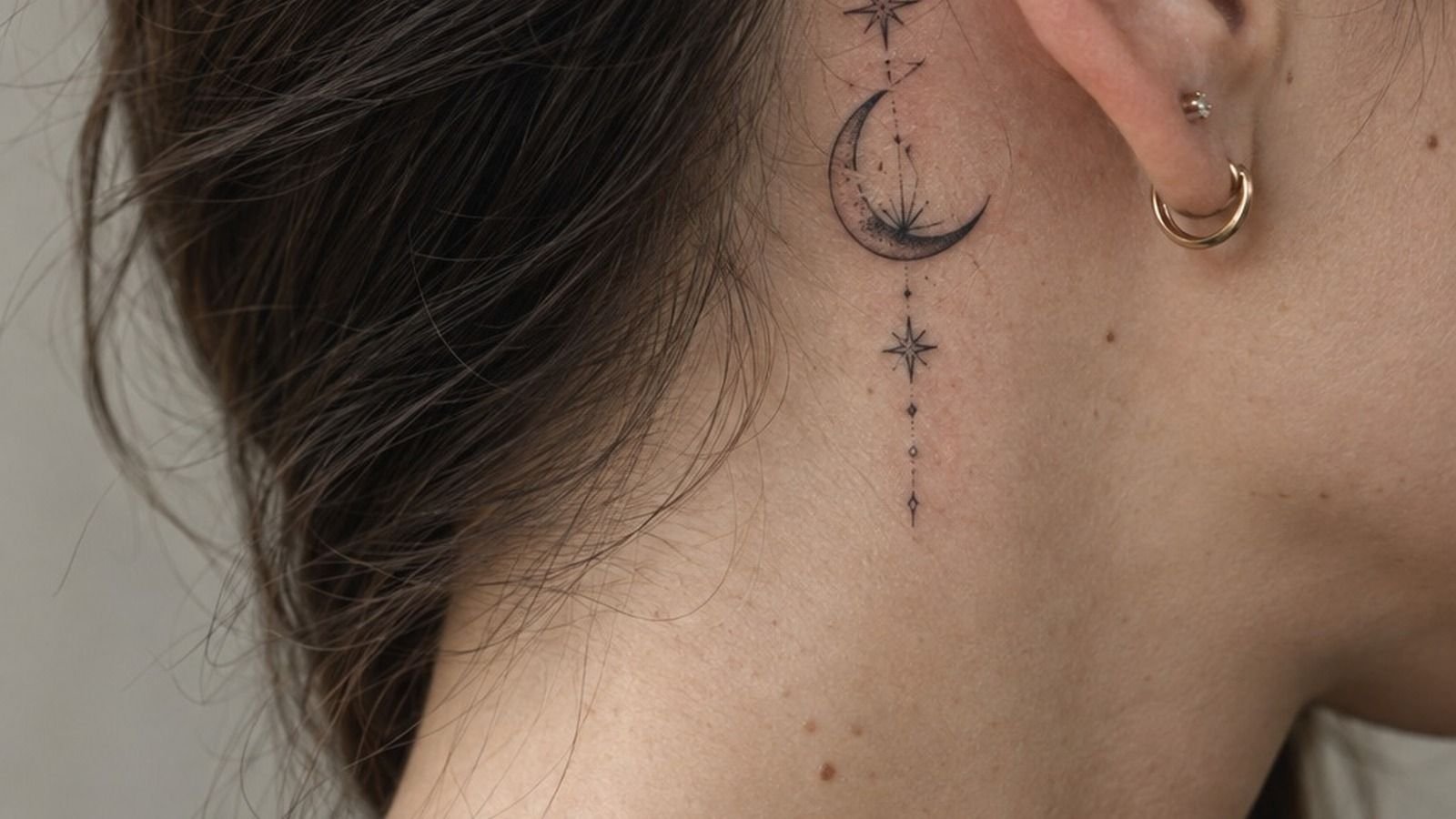
3Why Does a Red Ink Heart Work Behind the Ear?
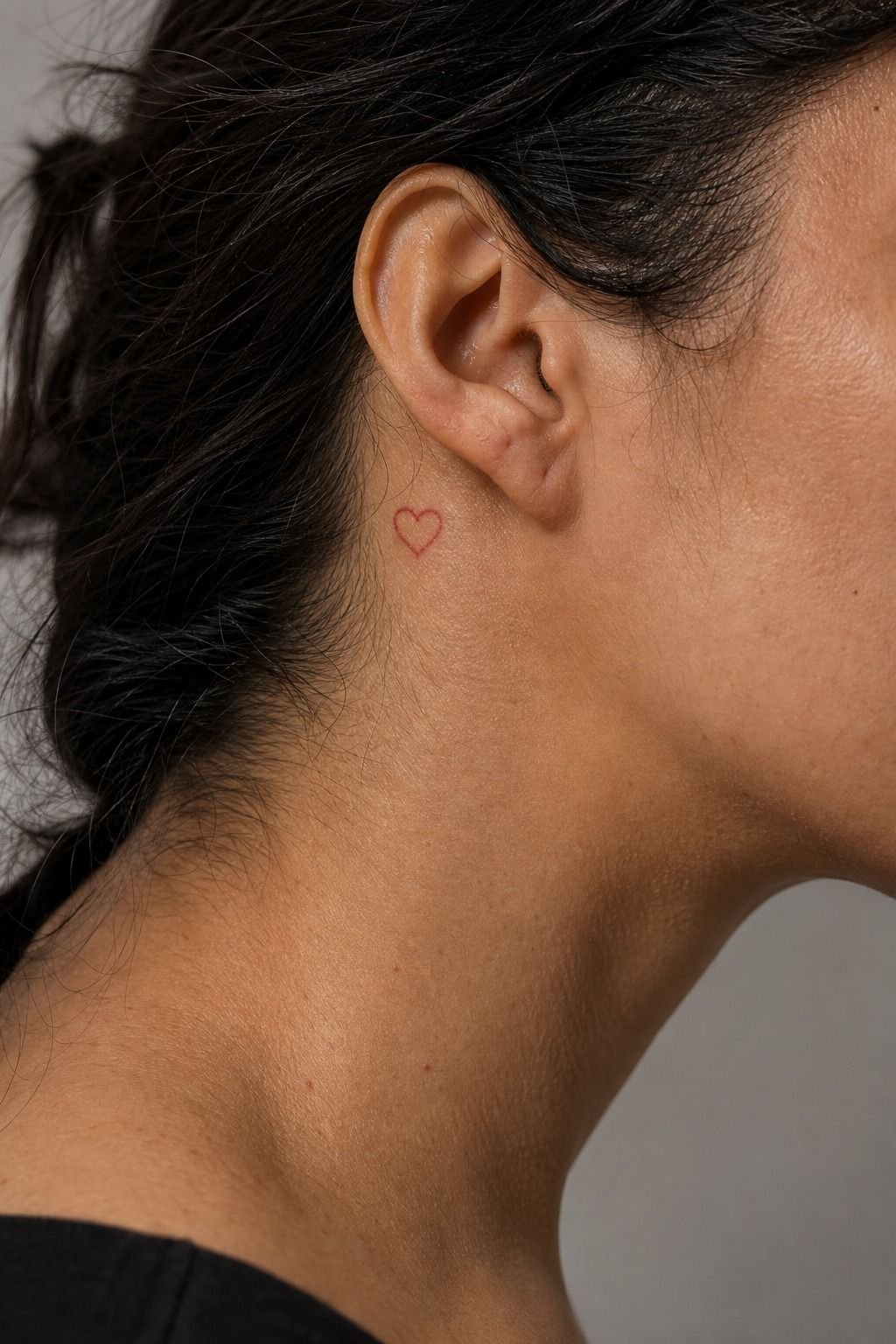
Behind-the-ear red work looks intimate, not loud. On medium olive skin in natural daylight, a healed cherry-red heart tucked just behind the ear can feel personal while still showing when your hair is up. That placement is small, soft, and very Pinterest-friendly, sure, but it also needs disciplined aftercare.
The first few days it is an open wound, treat it like that. Wash with unscented gentle soap, pat dry, and use only a thin layer of ointment so you don’t suffocate it. How long tattoo red healing takes matters more here than people think, because hair products, earbuds, and pillow friction can irritate the skin fast.
If your artist sees any sensitivity history, ask about a patch test for red pigment before you sit. Red ink tattoo allergy is not common for everyone, but red does deserve a more honest conversation than black usually does.
4Corazón Rojo Collarbone Tattoo
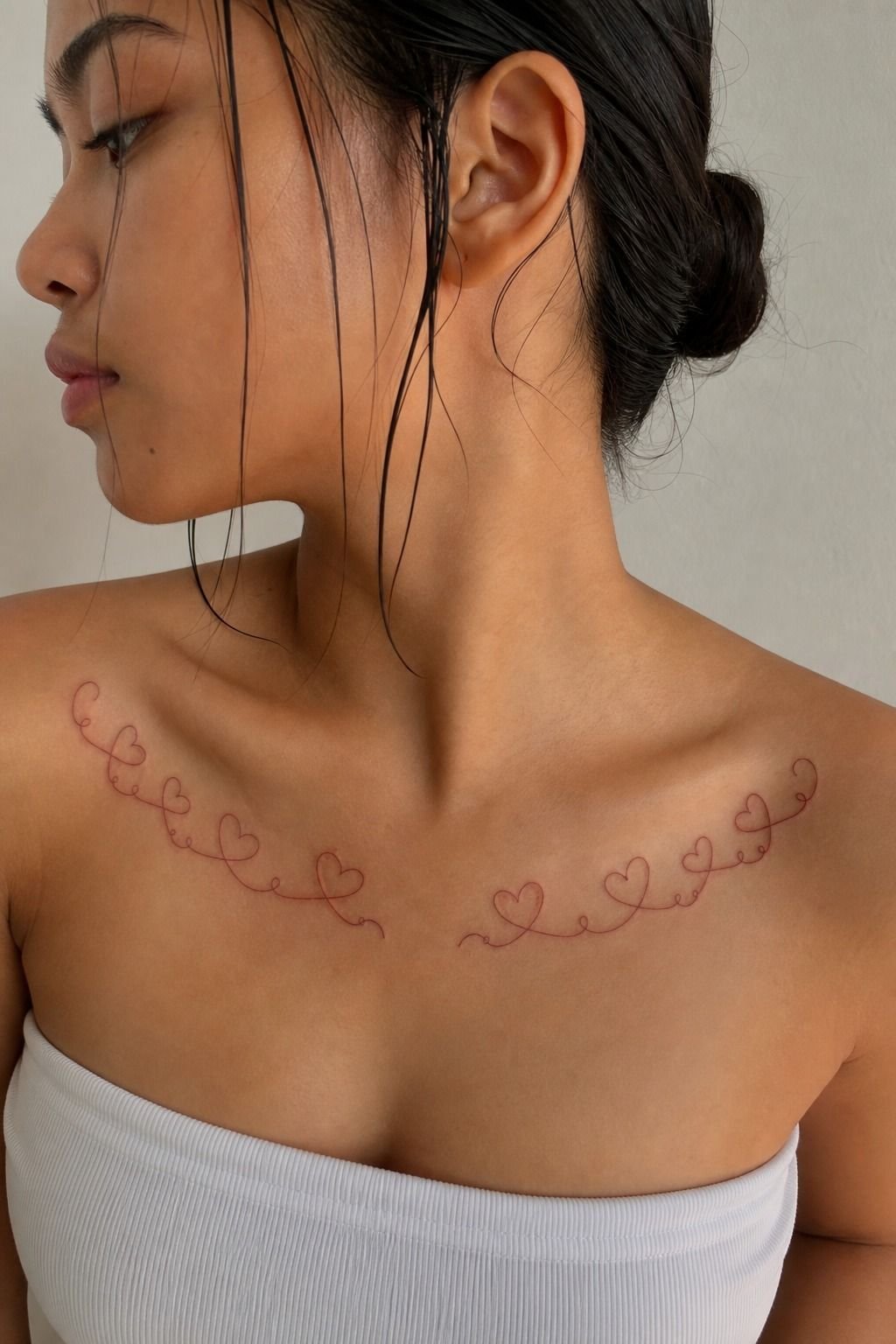
A collarbone heart needs flow. On golden tan skin, a fine red script heart that follows the collarbone line can look elegant because the body already gives you a natural guide. I like this for a Corazon Tattoo when you want something romantic without drifting into sugary.
You do have to respect the anatomy, though. Collarbone skin is thin, the bone sits close, and lines can feel sharper there than they do on an outer forearm. Your artist should map the curve with body-fit stencil placement, then have you stand, sit, and turn before anything goes in.
If you go too centered or too low, the tattoo loses that nice wrap and starts looking pasted on. But when the arc is right, a collarbone placement reads graceful, sexy, and clean from the second it settles. That is why this one keeps getting reused.
Check the red tattoo healing timeline before you plan necklines, workouts, or sun exposure.
5Choose a Minimal Red Heart for the Ankle
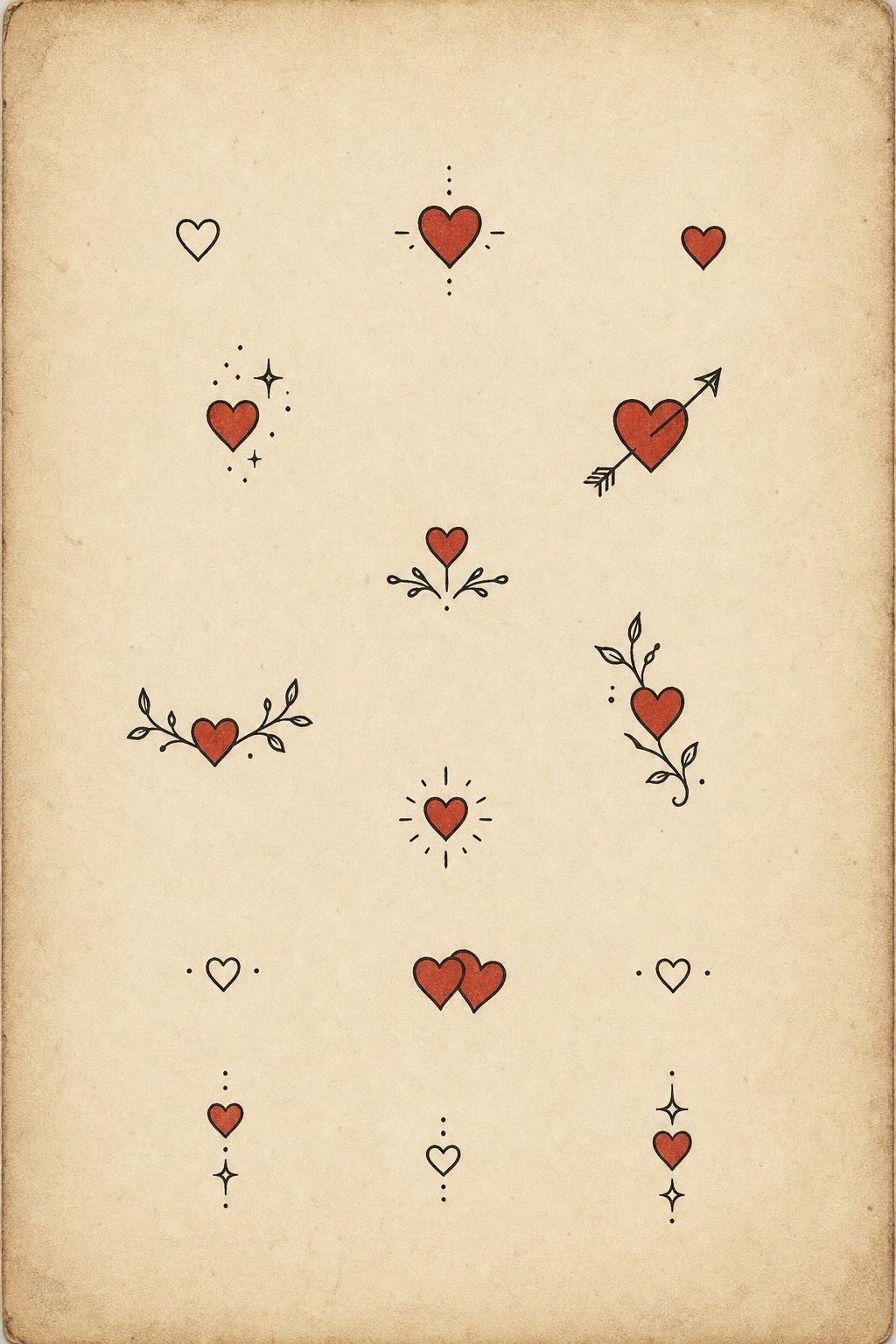
An ankle heart belongs on a flash sheet for a reason. The best versions stay reduced to a tiny red silhouette, no extra petals, no lace, no fussy sparkle clutter. When you see it drawn on aged paper with just a spot of red, that’s already the clue: simplicity is doing the heavy lifting.
Your ankle is cute, but it is not easy mode. Socks, boots, shaving, and sandal straps all hit high-friction skin, so very fine red lines need enough clearance if you want them to stay clean. I would not cram a micro design into the ankle dip just because the stencil looked delicate.
Pick a bolder mini shape than you think you need, and keep it around 0.75 to 1 inch. A minimal flash heart there heals more predictably, looks less fussy later, and avoids the mush-out that turns tiny Heart Tattoo Ideas into regret. If long-term color matters to you, read how red tattoo ink fades before booking.
6Red Outline Against the Curve of the Ribs
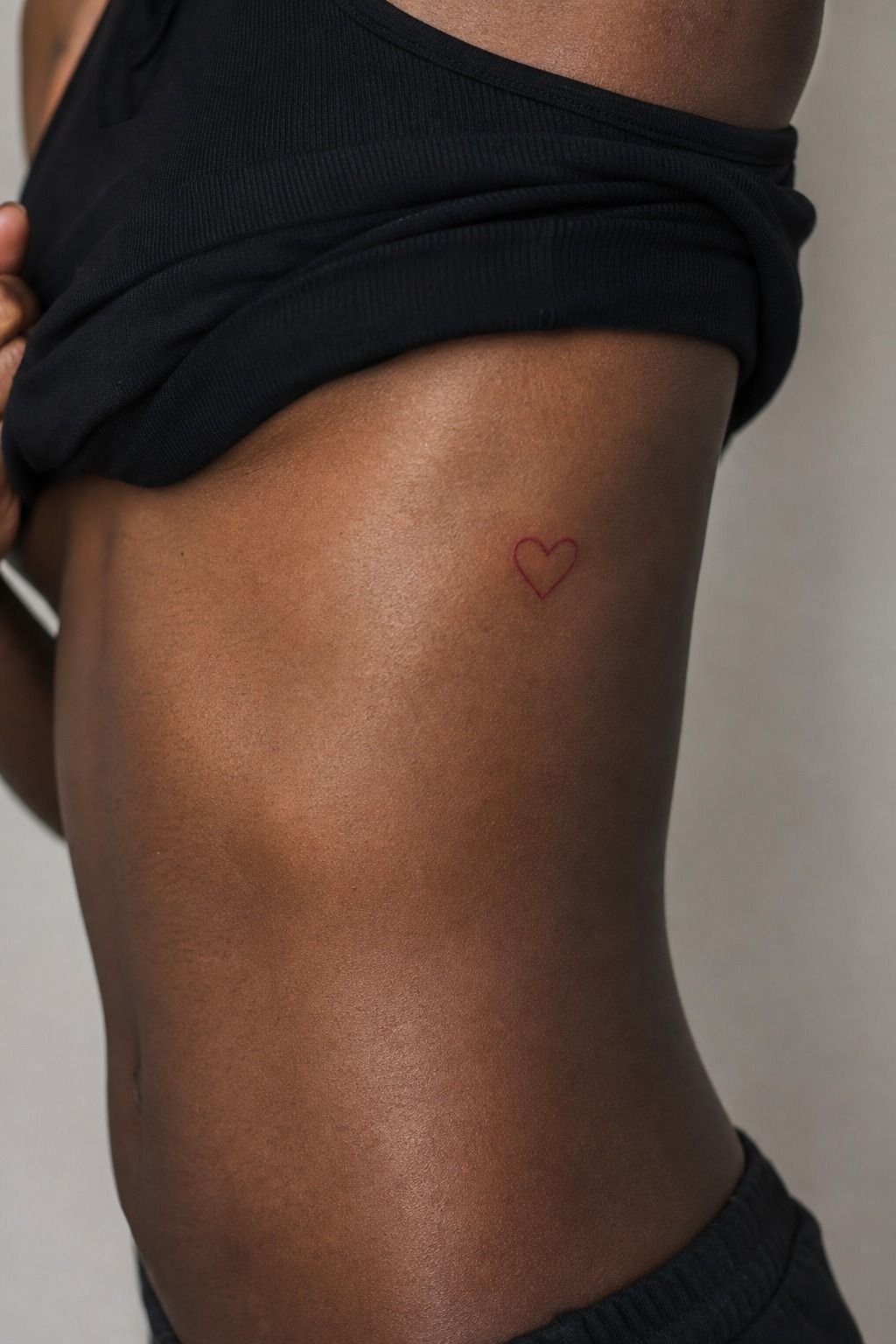
Rib tattoos are spicy. On deep ebony skin, a red outline heart can look striking because the contrast feels soft but still visible, especially when the line is slightly thicker than the client first imagined. I tell people the same thing every time: do not go whisper-thin on ribs if longevity matters.
Breathing moves this whole area, and the session feels sharper than an arm tattoo. Lines feel snappy, the wipe-down stings, and if you tense up, the artist loses the smooth rhythm that keeps crispy linework clean. Tap out for five rather than pass out on me.
Seriously!
And yes, placement matters more than bravery. A mid-rib heart with a little open skin around it heals nicer than one stuffed toward the underboob crease, where bras and sweat make everything harder.
If you love red but want a safer plan, bigger wins here. Compare that choice with the red healing guide while you weigh pain, healing, and aftercare.
7Micro Red Heart Hand Tattoo
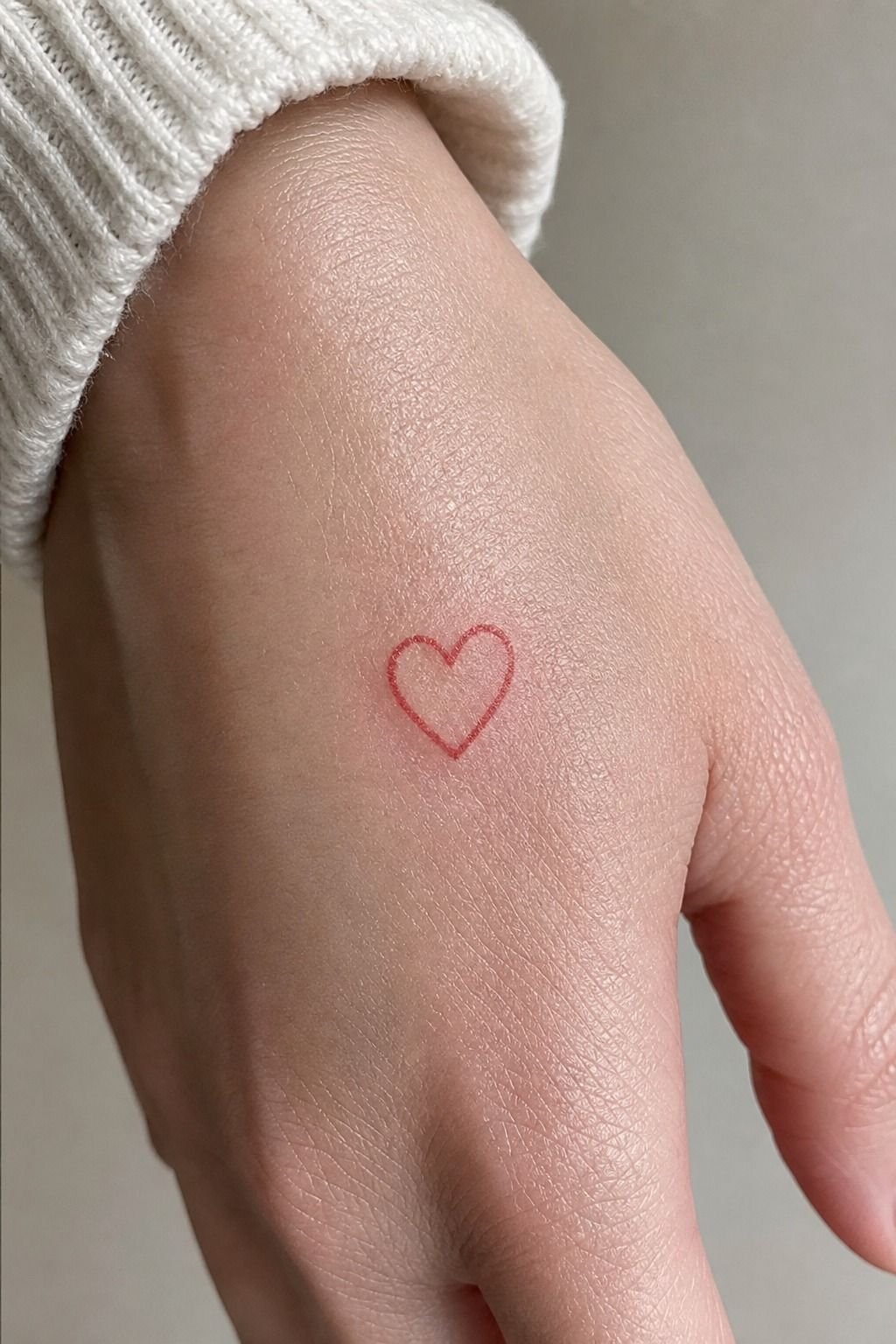
A hand heart sounds simple until you see how much the skin moves. On fair cool-pink skin in a macro close-up, a micro red heart can look super clean because the camera loves fresh linework and smooth texture. Real life is less forgiving, and your artist should say that out loud.
Hands are for people who accept touch-ups. Constant washing, winter cracking, and UV exposure beat on surface-level red ink harder than most placements, so you want a design that still makes sense if the line softens a little. That is why I prefer a slightly chunkier heart over a hairline one.
But if you want the statement, keep it on the upper hand rather than the knuckles. A better-wearing hand placement still gives you that visible Red Tattoo Designs effect, while cutting down on blowout risk and constant edge loss. The tattoo red flags checklist can help you decide whether an artist’s hand work is worth the price.
8What Makes a Red Heart With a Dagger Hold Up?
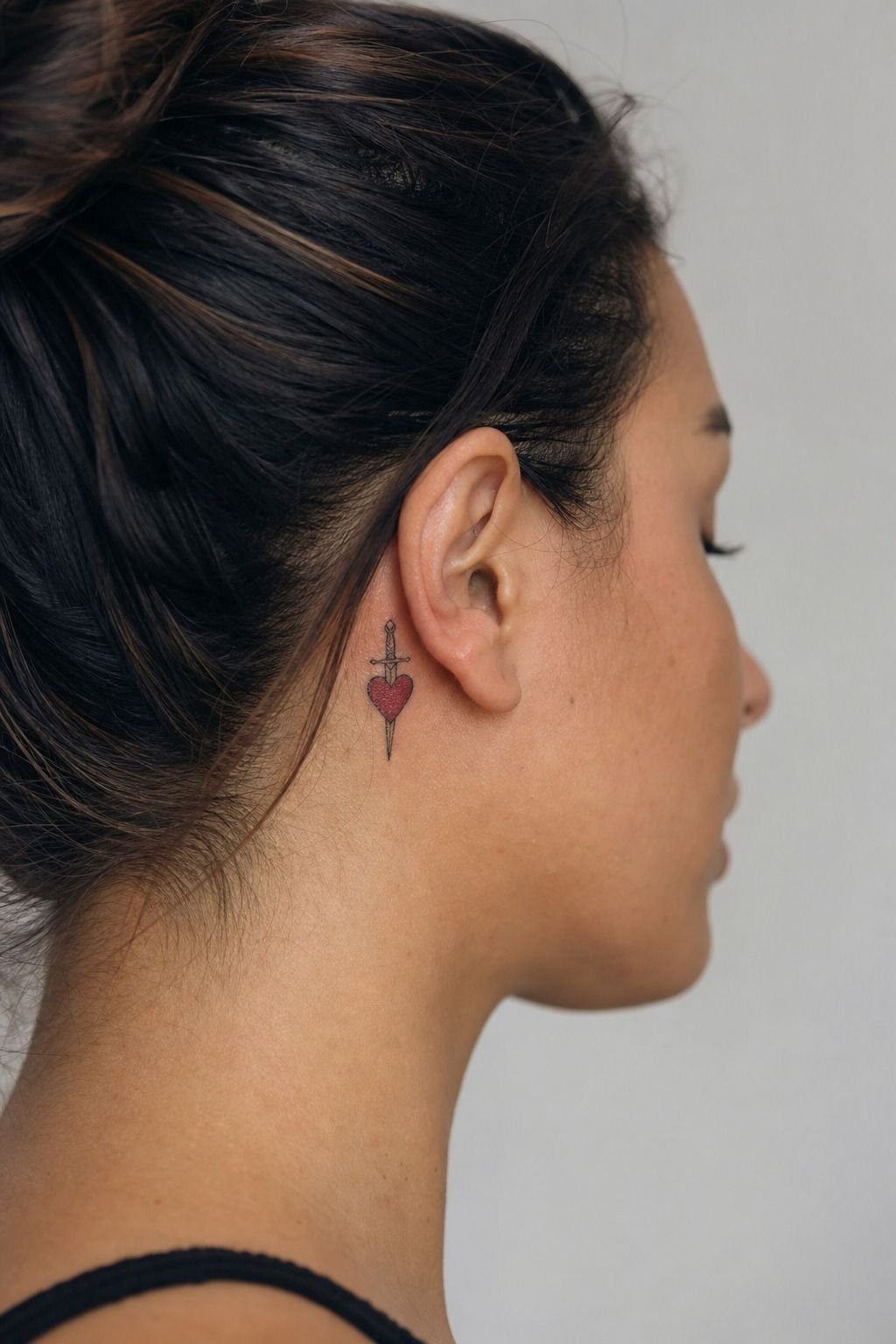
A heart with a dagger changes the mood fast.
9Red Heart Matching Couple Tattoo
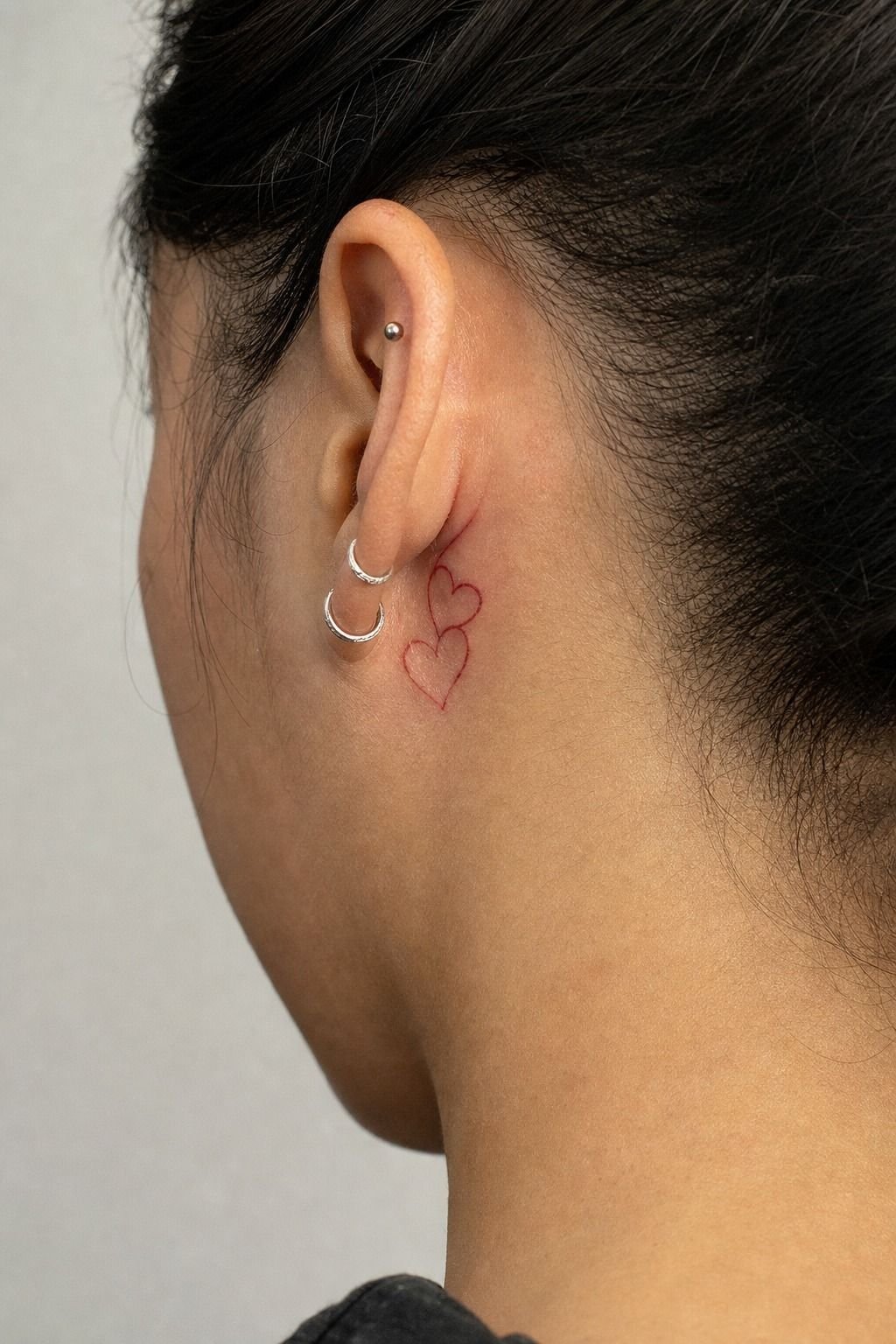
Matching doesn’t have to mean identical clones. If the placement wraps subtly behind the ear on medium olive skin, a paired red heart design can feel connected without screaming couple tattoo the second someone sees it. I like this route when you both want the same theme but not the same exact stamp.
Your artist can keep the shape consistent while changing scale, tilt, or line finish so each tattoo fits the person wearing it. That matters because your ear shape, neck length, and hairline affect anatomical flow more than Pinterest boards admit. Why force a copy-paste when your bodies aren’t copy-paste?
And please do not bring a screenshot and demand exact duplication. References are for vibe only. A custom matching heart heals better and feels more honest, especially if you build it from a shared symbol like red string tattoo meaning instead of chasing a trend.
10The Sacred Heart Chest Framework
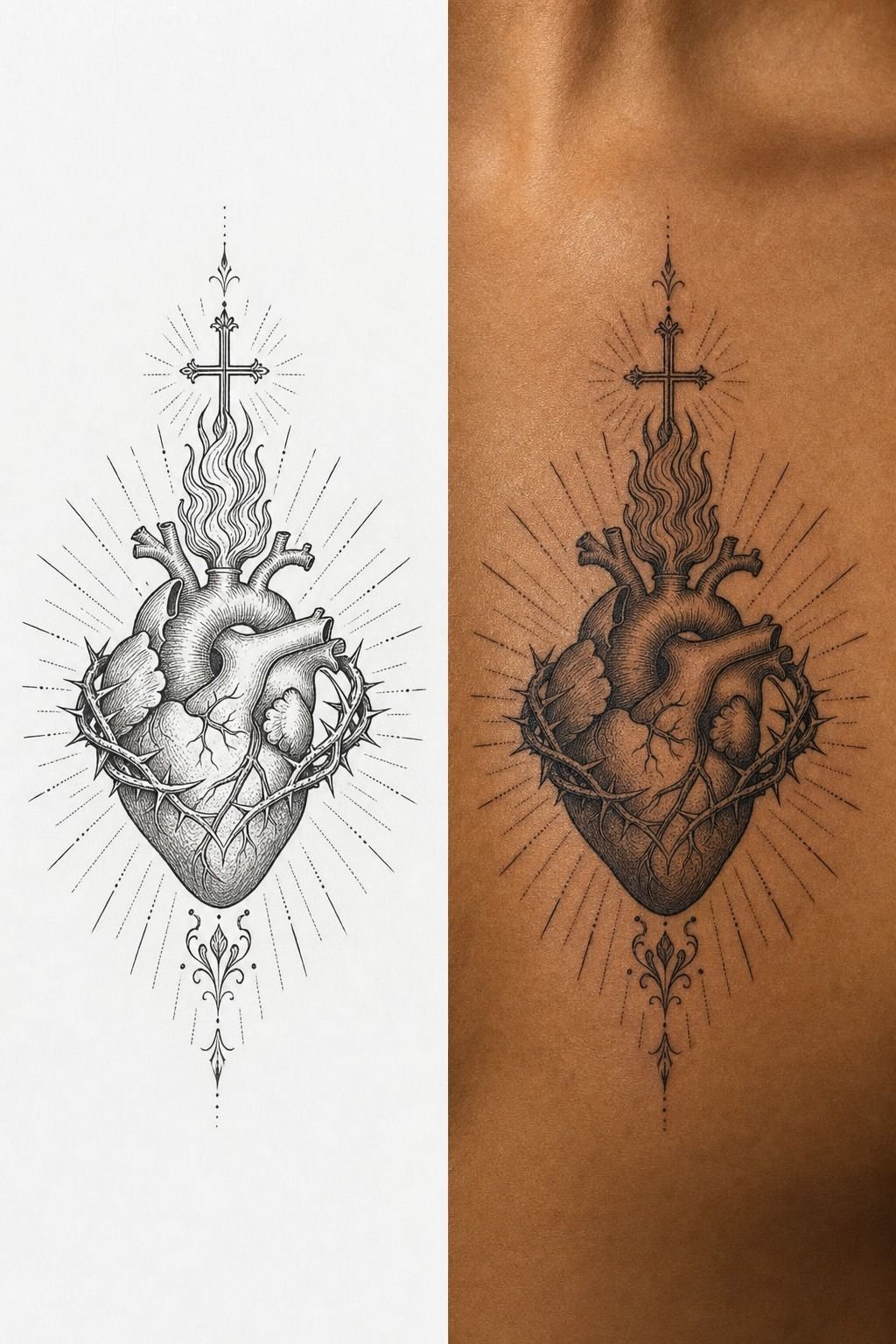
The sacred heart works because it carries weight before the needle even hits skin. In a split view with stencil on one side and healed chest tattoo on the other, a sacred heart line drawing shows you how important layout is before color or shading enters the conversation.
Chest skin gives you more surface, which means you can build rays, flame, thorns, or droplets without turning the center into clutter. I still push contrast hard, though. A sacred heart needs black anchor lines around the red so it doesn’t heal flat, especially if you want the design to read in ten years.
If you’re drawn to the symbolism, start with this sacred heart tattoo meaning guide. A center-chest sacred heart is worth the commitment when the iconography means something to you, not just when you like the look.
11Red Heart Flash Tattoo
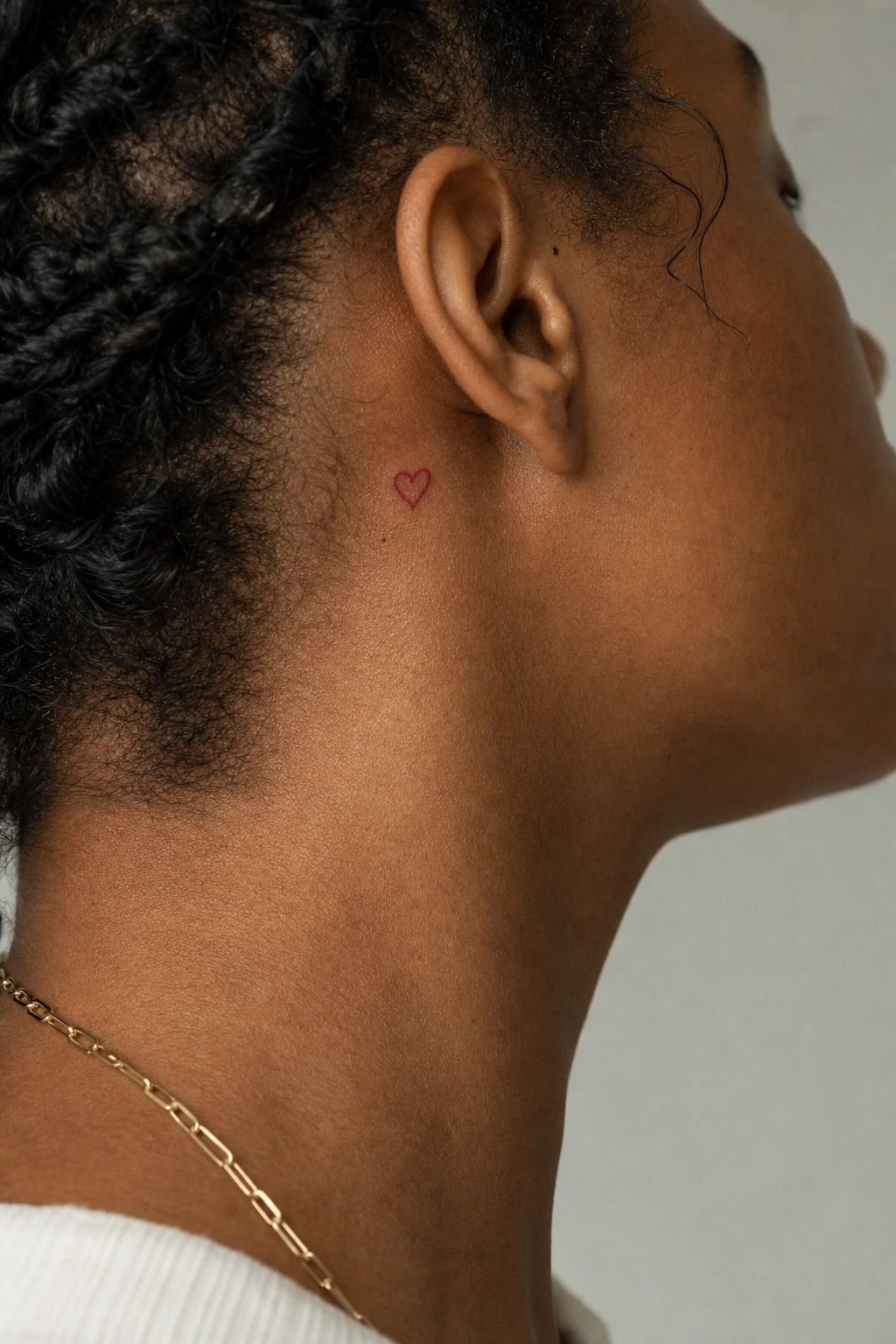
Flash hearts are popular because the decisions are already cleaned up. A small healed piece behind the ear on deep brown skin can look extra polished when the artist is working from tested flash linework instead of improvising a tiny custom drawing on the fly.
Flash is not lazy. Good flash is refined!
You also know what the tattoo is trying to be from the start. One heart. One contour.
One point of focus. That kind of pick-and-stick flash often heals better than over-discussed custom micro tattoos, because the artist has already solved the scale and shape issues.
But pick flash from someone whose portfolio shows healed reds, not just fresh posts under ring lights. A studio-made red flash is a great first tattoo when you want clean execution and less second-guessing. Still, use the red ink fading guide to judge the real upkeep.
12Anchor a Watercolor Red Heart on the Shoulder
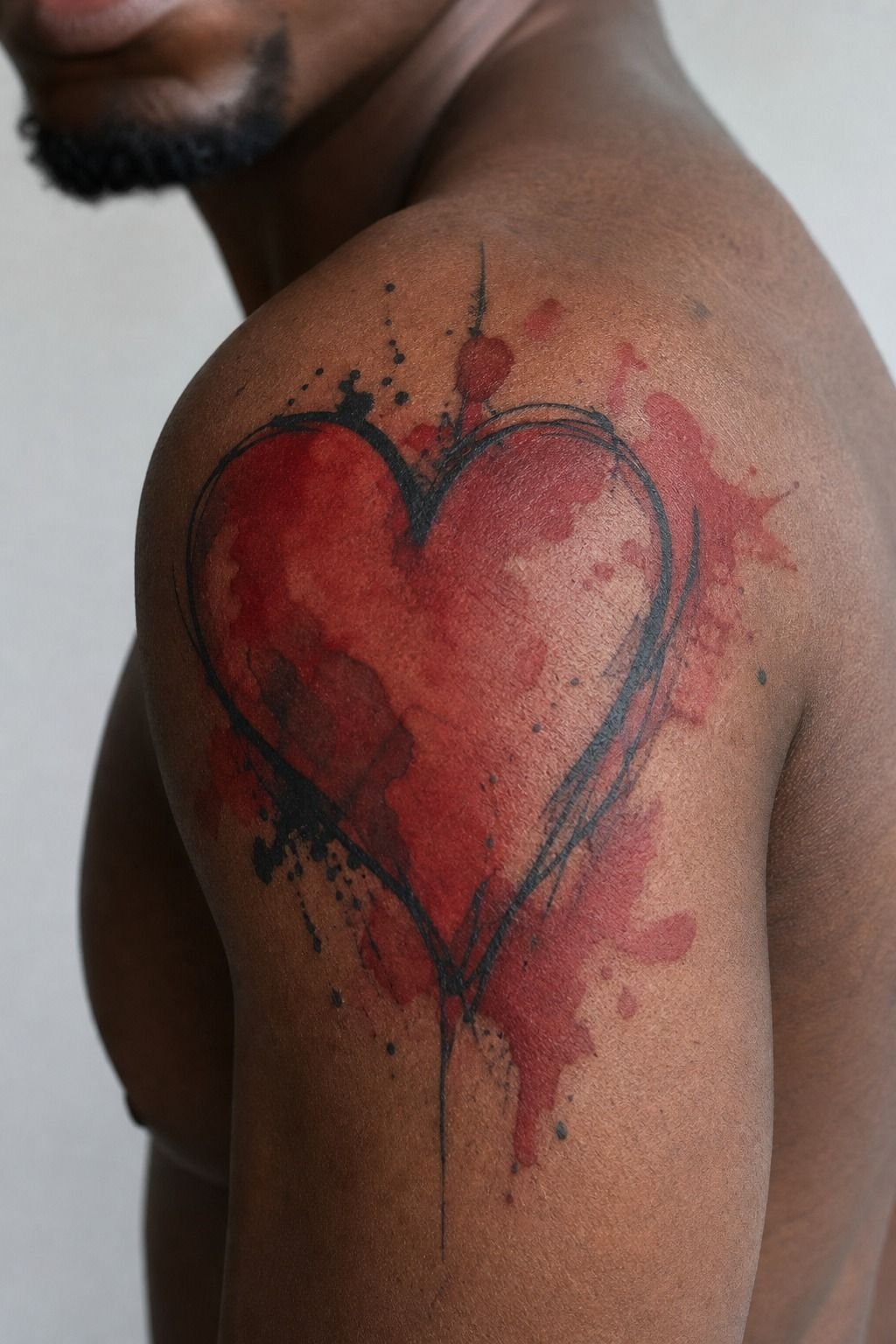
Watercolor hearts only work when they’re anchored with line. On deep ebony skin, a macro shoulder shot of a red watercolor bloom can look rich and soft when the artist gives the color a real outline or a strong black spine to hold it in place. Otherwise it heals too airy.
Shoulders are a solid pick because the skin is more forgiving, the pain is usually chill, and you get enough surface to let the color breathe. I like mag-packed red shading here, done in a solid pass so the skin doesn’t get overworked trying to chase brightness.
If you’re torn between painterly and classic, split the difference. A lined watercolor heart gives you movement without sacrificing readability, and it ages better than those super-faint washes people save and regret later. Before you book, review red ink allergy basics and ask which pigment line your artist uses.
13Red Heart And Initial Tattoo
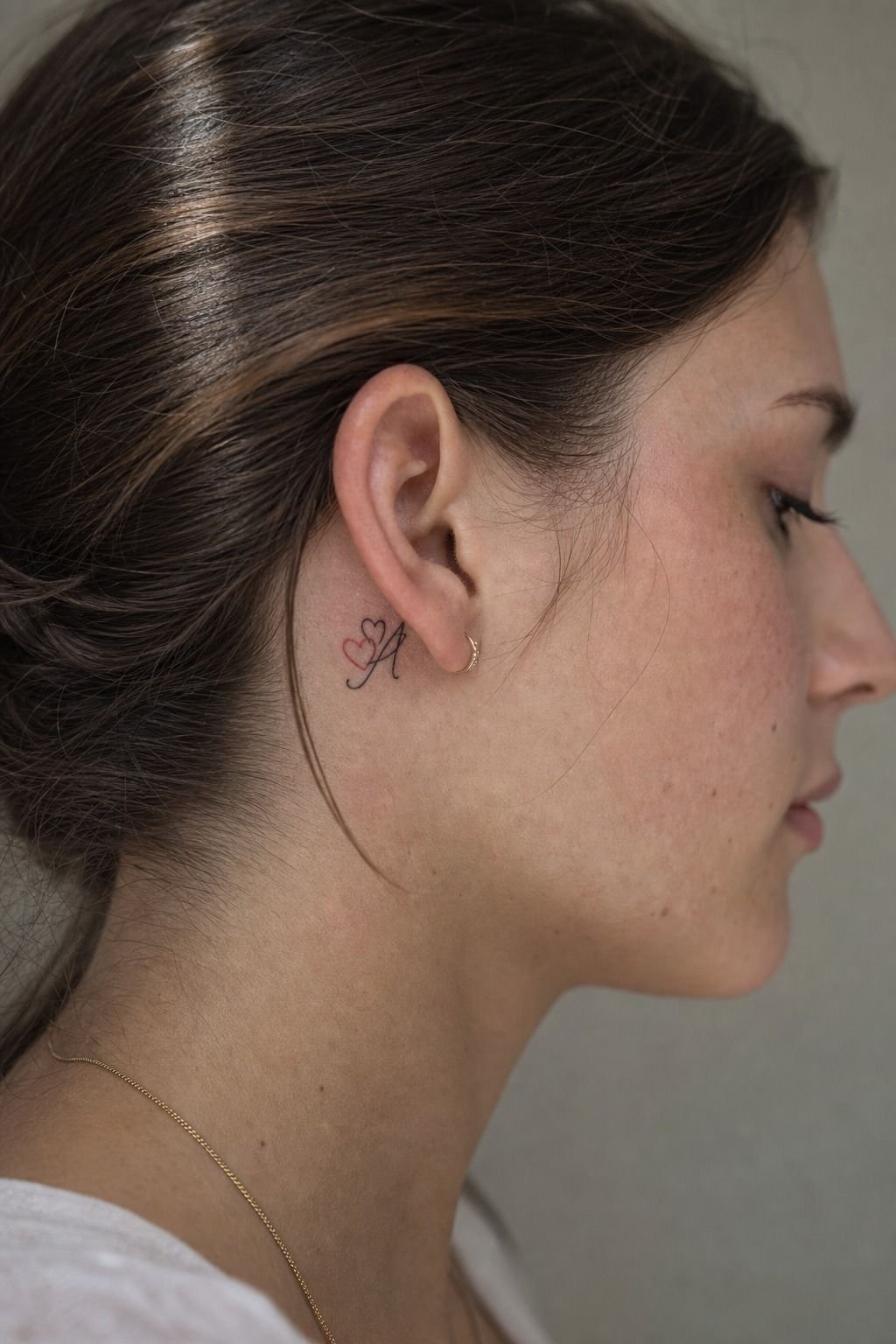
A heart with an initial can go sentimental fast, so editing matters. On fair cool-pink skin behind the ear, a micro red heart monogram looks best when the initial is simple, upright, and clearly secondary to the heart. Tiny script is where good intentions go to die.
Choose one letter with open counters and no extra loops. A clean roman or sans-serif initial heals more predictably than tiny cursive, and you won’t spend the next two years explaining whether that’s an A, an R, or just a blob. I’ve covered enough fuzzy lettering to know better.
And if the letter marks grief or family, keep the design calm rather than ornate. A restrained memorial heart carries more feeling than a busy tribute, which is why this style keeps landing well for meaningful Cherry Heart Tattoo requests too. The red string symbolism guide can help you sharpen the meaning without copying another person’s design.
14Build a Red Heart Locket for the Forearm
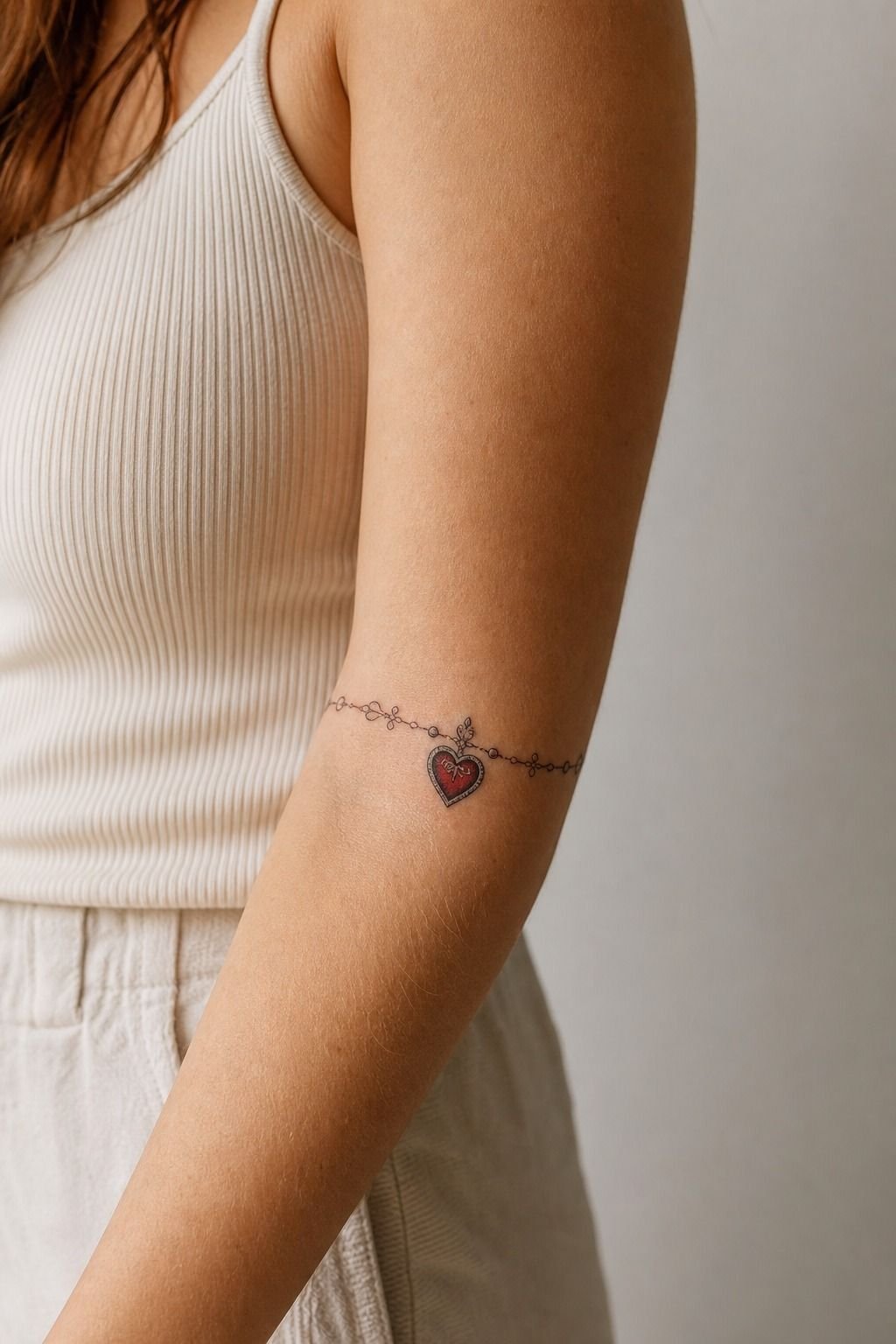
A locket heart has more storytelling range than a plain outline.
15Red Heart Flame Tattoo
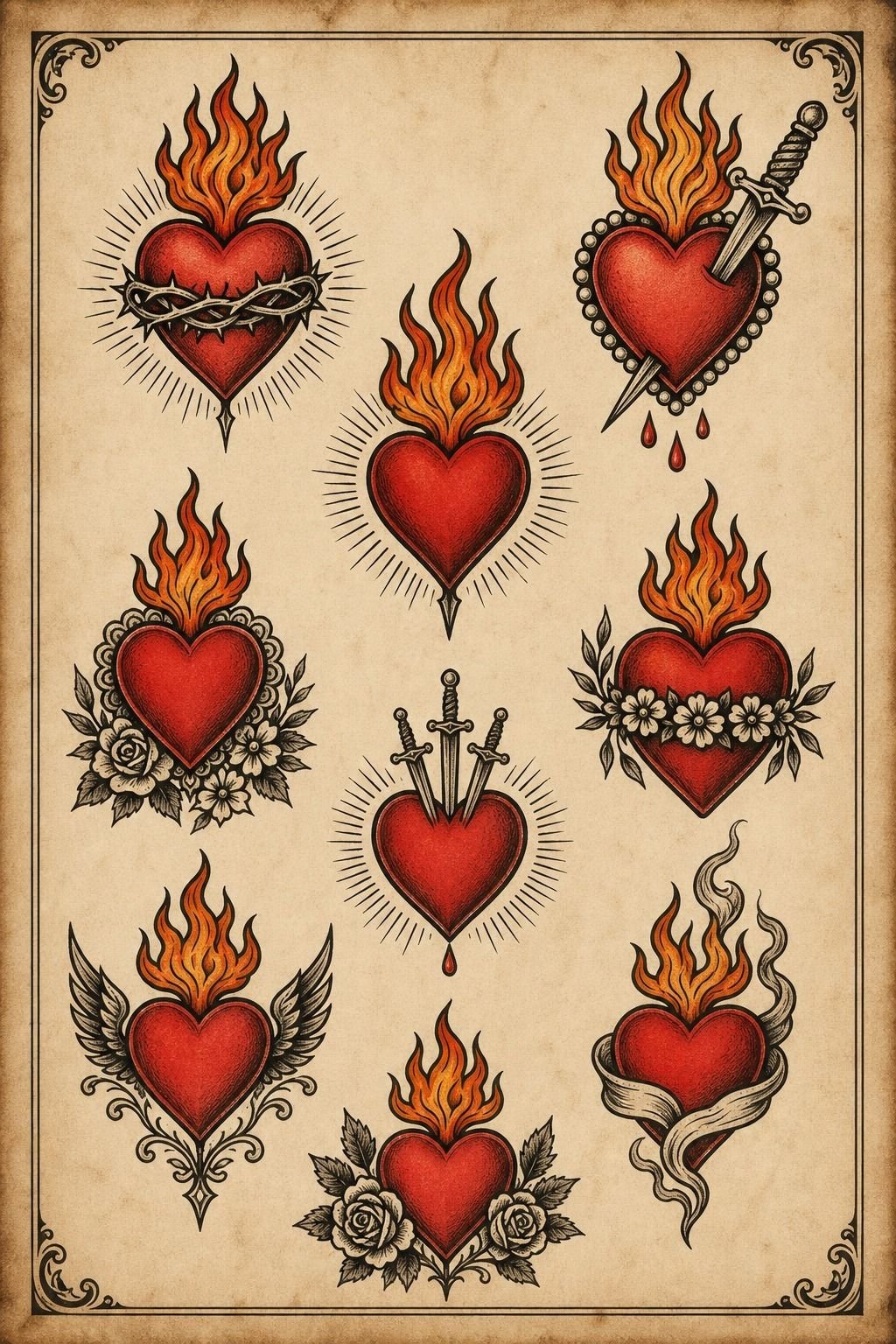
Flame hearts live or die on shape rhythm. On a traditional-style flash sheet, the strongest versions use a clean flaming heart silhouette with simple tongues of fire and one hot red focal point, not a dozen little flicks trying to prove how dynamic the design is.
You want the flame to support the heart, not eat it. That means thicker outer contours, fewer internal marks, and enough black to keep the whole design from going flat once the red-and-black contrast settles.
Bold will hold. Tiny over-drawn flames won’t.
But if you’re choosing between cute and iconic, go iconic. A trad-leaning flame heart ages harder, heals cleaner, and gives you the kind of Love Heart Tattoo with attitude that artists keep reworking because it just works. Check how red ink ages before deciding whether the color upkeep is worth it.
16Patch Texture Against a Solid Red Heart
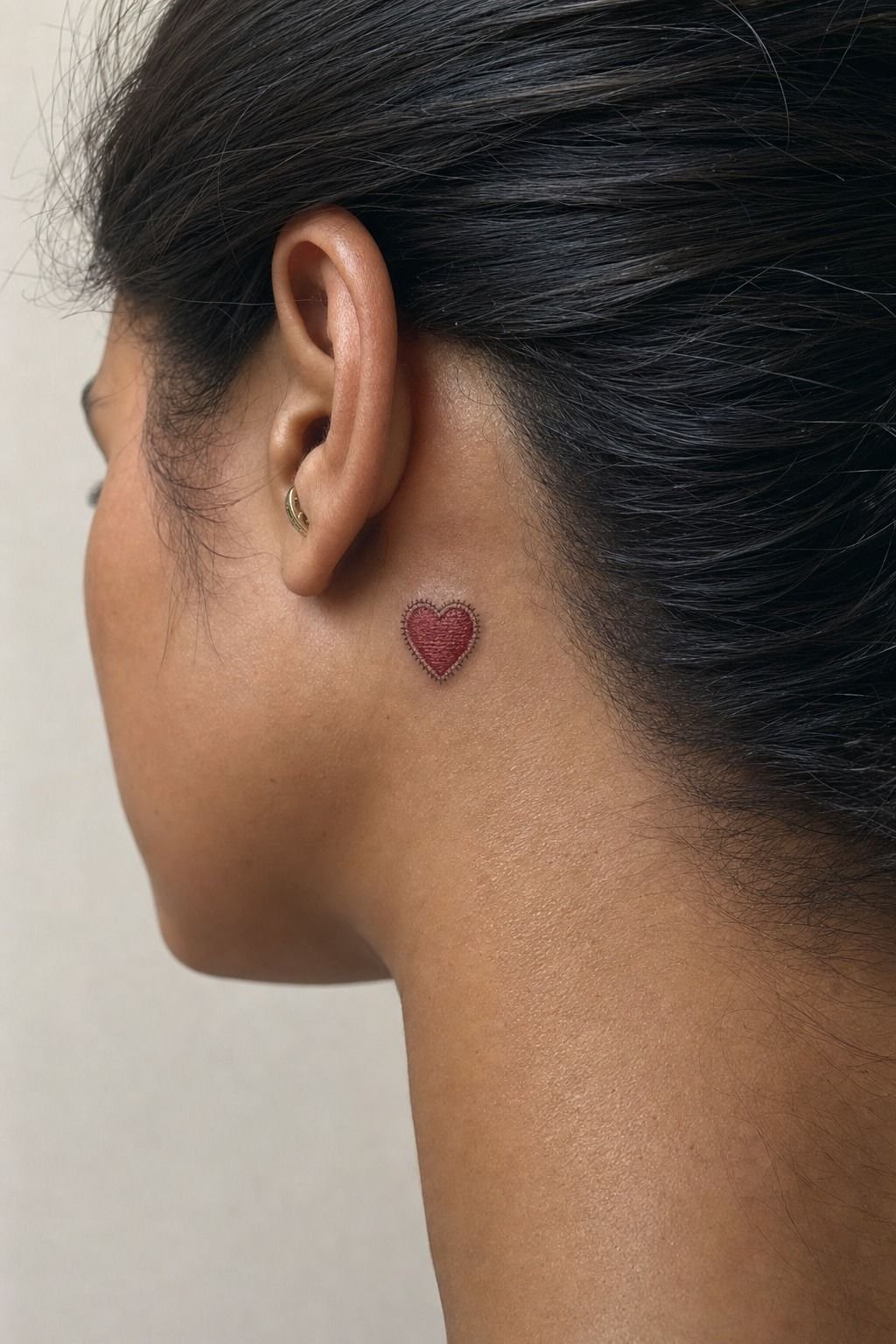
Patch tattoos can be fun if the execution stays honest. On golden tan skin behind the ear, a stitched heart patch effect looks best when the faux thread marks are minimal and the outer heart shape stays obvious. If every edge gets tiny stitch marks, the whole thing turns busy fast.
This is one of those designs that tempts people into making it too clever. I wouldn’t cram three thread colors, shadow lines, and tiny fabric texture into a tiny piece. A cleaner embroidered patch illusion with red, black, and maybe one white highlight gives you the effect without overworking the skin.
And yes, behind the ear keeps it playful. A small patch heart there feels unexpected and wearable, especially if you want something a little crafty-looking without drifting into novelty-for-novelty’s-sake. A quick read of the red tattoo healing timeline will also help you plan for possible touch-up time.
17Red Heart Pulse Line Tattoo
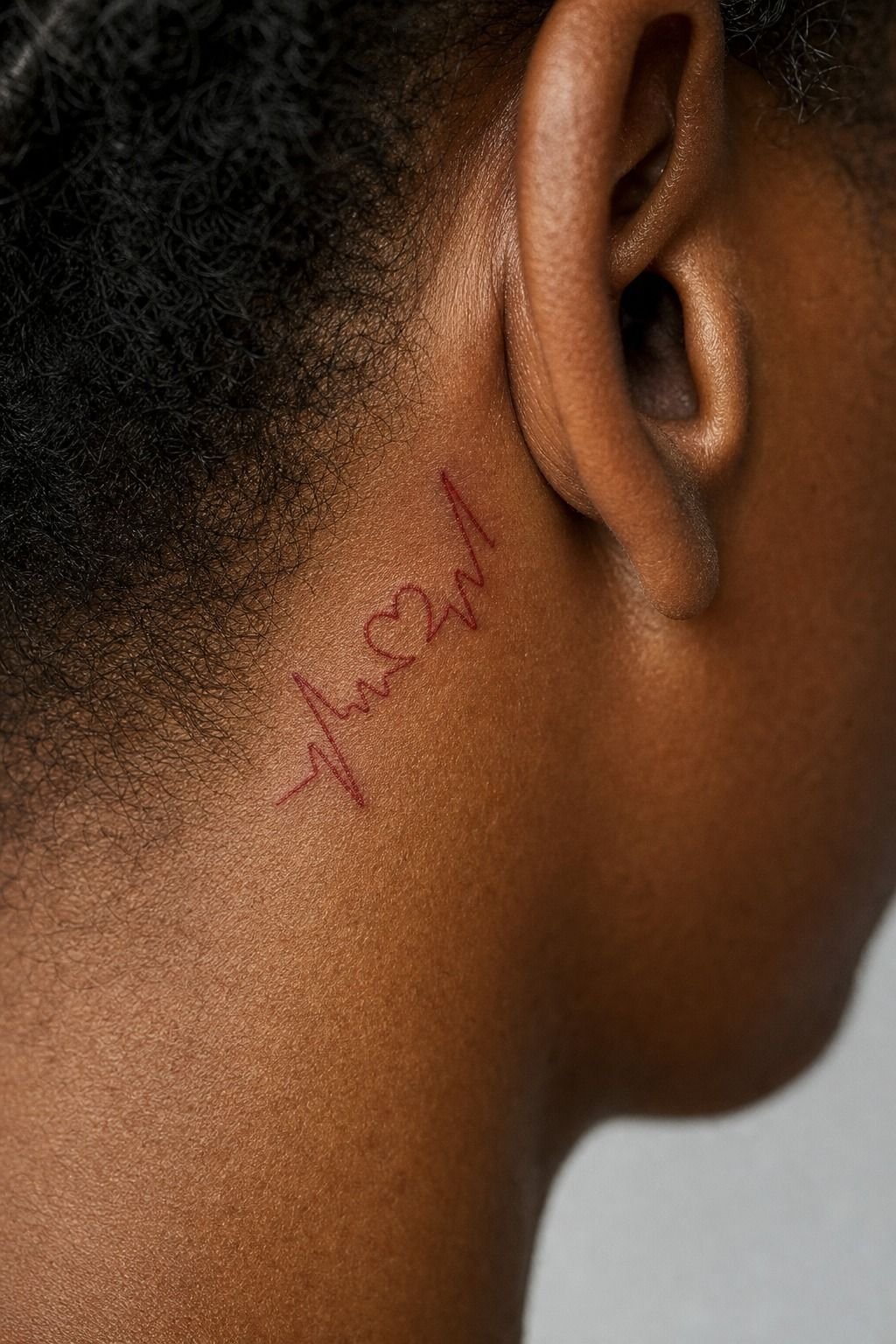
Pulse-line hearts only work when the rhythm is restrained. In a macro behind-the-ear shot on deep brown skin, a heart-and-ECG line can read clean when the line stays thick enough to survive healing and the pulse segment is short, not stretched into a whole hospital monitor.
People love this symbol because it feels personal, but tiny peaks and valleys are exactly where weak tattooers get scratchy. You want confident continuous linework, smooth entry and exit points, and no nervous retracing. Tattoo red flags matter here too, because a bad pulse line never becomes a good one later.
If you’re doing this for love, grief, or a health milestone, let the meaning carry it. A simpler pulse heart will age nicer on you than a complicated one trying to say everything at once.
18Can a Red Heart Work as a Cover-Up?
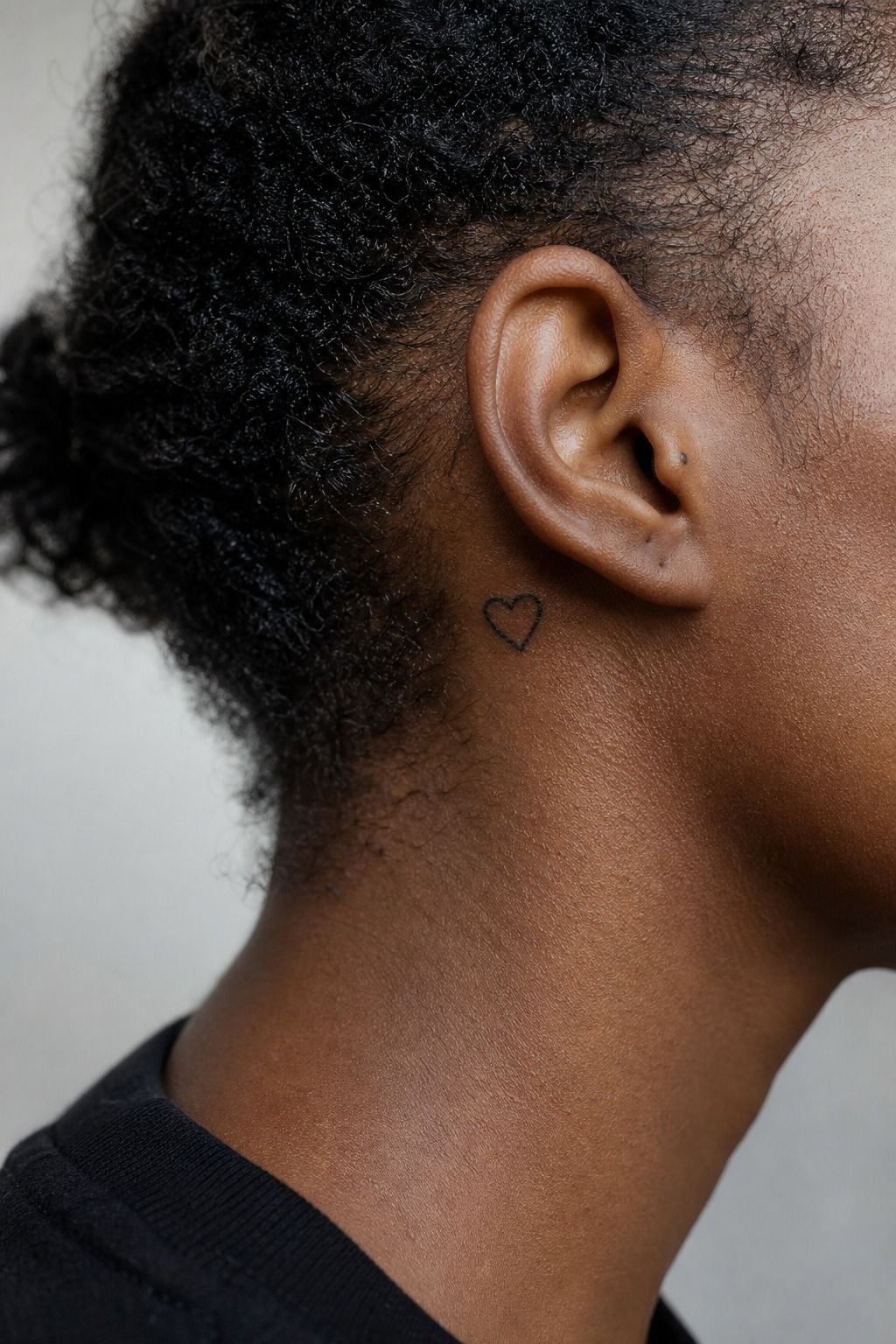
A red heart cover-up needs realism about what red can and can’t do. On deep ebony skin behind the ear, a healed cover-up heart outline can soften an old tiny mark, but red alone won’t magically erase a dark previous tattoo. You need the old pigment, scar texture, and skin tone assessed in person.
Most successful cover-ups use layering. Think black structure, red accent, and a shape slightly bigger than the original so the artist can redirect the eye with camouflage line placement instead of pretending the old tattoo disappeared. That’s the honest version, and it’s the one that heals best.
But don’t let anyone sell you fantasy. A cover-up consultation should include fresh and healed examples, expected limits, and maybe a laser referral first.
If the artist can’t explain the plan clearly, walk. Use the tattoo red flags guide to pressure-test the consultation before you spend more on a cover-up.
The Red Heart Rule I Keep Coming Back To
Most red heart tattoos don’t fail because red is cursed. They fail because people treat a tiny tattoo like it has infinite margin for error.
It doesn’t. If I’m honest, that’s the mistake I see over and over: a client brings in a screenshot, wants it even smaller, wants it on a high-wear zone, and assumes the meaning will somehow protect the linework.
Meaning doesn’t hold ink in place. Good choices do.
Here’s my framework. First, decide whether you want the tattoo to feel intimate, visible, or symbolic.
Intimate usually means behind the ear, ankle, or rib. Visible usually means wrist, hand, or forearm. Symbolic opens the door to sacred hearts, lockets, daggers, initials, and matching variants.
Once you know the job, you can choose the structure. And structure is everything with red.
I push clients toward simple shapes, stronger outlines, and placements that won’t get chewed up right away. That’s not me killing the mood.
It’s me protecting your tattoo. Tiny red hearts can be clean, soft, and super charming, but only when the artist knows how to keep the pigment saturated without overworking the skin. The best ones feel effortless because someone made a lot of disciplined choices before the stencil ever touched you.
If you’re stuck between two options, ask a boring question: what will this look like healed in three months, not fresh in three hours? That question saves people money, touch-ups, and disappointment.
Typical shop minimums in the US land around $50 to $100, and many artists charge about $100 to $250 an hour, so even a tiny tattoo deserves a smart plan. You aren’t paying for five minutes of work.
You’re paying for placement judgment, line control, hygiene, and a design that won’t turn to soup later.
Quick Numbers You Should Know
The Questions I Get Asked Most
How much does a Red Heart Tattoo usually cost?
About $100 to $300 is common for a simple one, though some tiny pieces still hit a shop minimum of $50 to $100. Your price shifts with placement, artist, and whether it’s pure linework, small fill, or a more custom symbol.
Are Red Heart Tattoo a good idea for a first tattoo?
Yes, if you keep the design simple and choose a smart placement. A clean small heart on the forearm, shoulder, or ankle can heal nicely, teach you the aftercare routine, and still feel personal without locking you into a huge first session.
How do I choose a tattoo artist for Red Heart Tattoo?
Look for healed photos, not just fresh ones. You want crispy healed linework, calm red saturation, and a studio that explains hygiene and aftercare clearly. Tattoo red flags will help you spot a scratcher before your deposit is gone.
How much do Red Heart Tattoo hurt?
It depends on placement. A shoulder or outer forearm is usually more chill, while ribs, hands, feet, and sternum are spicier because the skin is thinner and the bone sits closer. Lines feel sharper, and color packing is often the roughest part.
How long does a Red Heart Tattoo take to heal?
Most surface healing takes about 2 to 3 weeks, and full settling is closer to 2 to 3 months. The first aftercare window is simple: wash gently, moisturize lightly, avoid pools, sun, and gym friction, and don’t pick the peeling flakes.
What’s the best placement for Red Heart Tattoo?
For longevity, I like outer forearm, upper arm, and shoulder first. A low-wear placement protects fine red lines better, gives the design enough clearance, and usually hurts less than ribs, fingers, or the center chest.
Where should I look for references without copying someone else’s tattoo?
Use references for mood, not duplication. A custom design conversation with your artist beats a Pinterest-exact copy every time, and resources like does red tattoo ink fade faster help you ask better technical questions before you book.
Where I’d Start First
If I’d pick one, I’d start with the Red Heart Locket Forearm Tattoo. Forearm skin buys you cleaner healing, better readability, and enough length for detail without forcing the line too thin. Pin that one for later and compare it against your artist’s healed work before you book.