Tattoo red flags are easier to spot before you are in the chair. Once the stencil is on, most people go quiet and talk themselves out of doubts they should have trusted. This guide is about catching the warning signs early, while walking away still costs you nothing but a deposit.
Quick answer: The clearest tattoo red flags are visible hygiene shortcuts, no license or training on display, a portfolio with no healed work, pricing that is vague or far below local rates, pressure to book and pay today, and an artist who gets annoyed when you ask about sterilization or aftercare. Any one of those is reason enough to leave.
Hygiene red flags you can see from the doorway
Tattooing breaks the skin barrier, so the studio cleanliness is not a vibe. It is the actual service you are paying for. A clean shop looks organized and smells neutral. A shop that smells like stale smoke, chemicals, or a closed-up garage is telling you something before the artist says a word.
Watch for these specifics once you are inside:
- Needles opened in front of you. Single-use needles and cartridges should come out of sealed sterile packs while you watch. A pack already opened on the tray is a hard stop.
- A sharps container in the room. Used needles belong in a labeled sharps bin, never a regular trash can.
- Fresh gloves and barriers. The artist should glove up after washing hands, and machines, clip cords, bottles, and the armrest should be wrapped in disposable film that gets changed between clients.
- An autoclave if anything is reused. If the artist reuses metal grips or tubes, there must be an on-site autoclave. Reusable tools with no autoclave is a genuine health hazard.
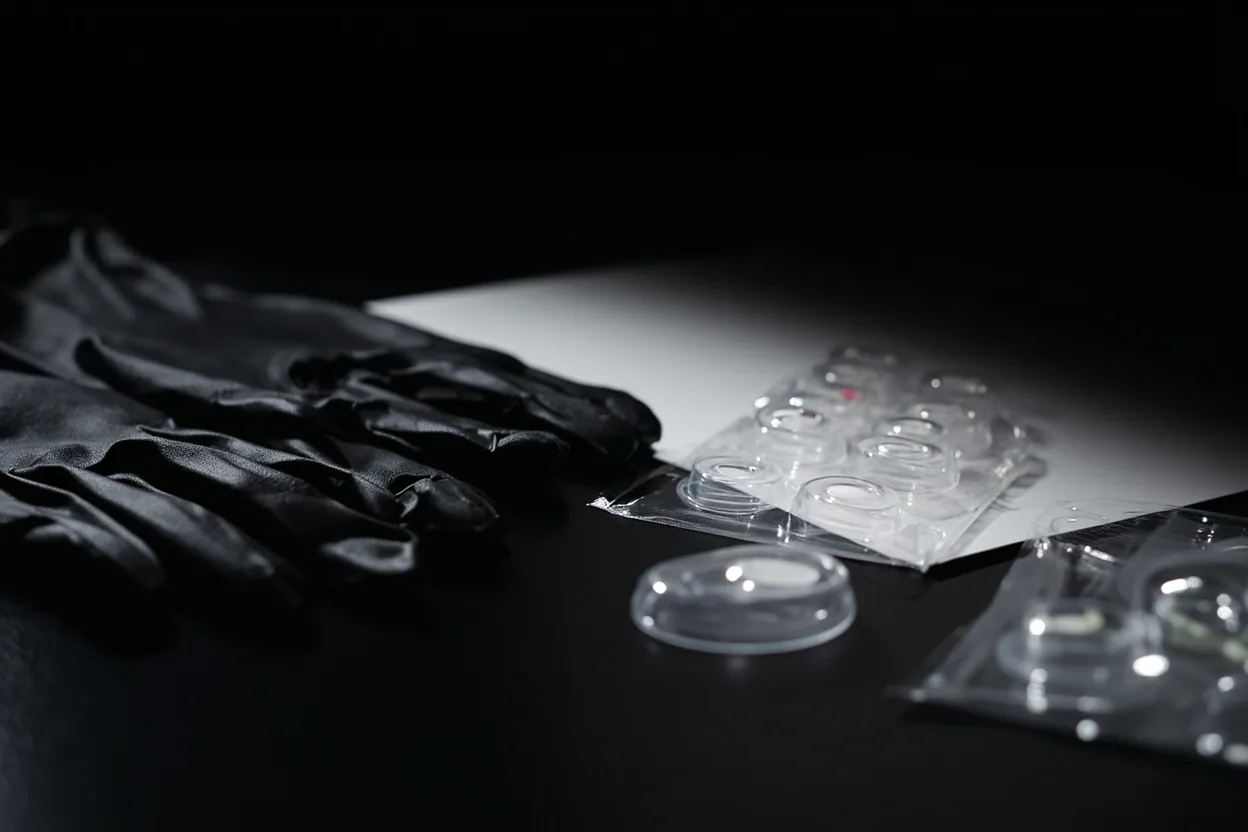
- Single-use ink caps. Ink should be poured fresh into individual caps, never dipped from a shared bottle that touches your skin.
If the setup looks like a living room with a tattoo machine in it, treat that as the answer.
Red flags before booking
A great portfolio means nothing if the autoclave bag is already torn open.
A good studio makes the process clearer and calmer as you go. A bad one gets murkier. Here is how the common warning signs sort out.
| Red flag | What it signals | Keep in mind |
|---|---|---|
| No healed work shown | Portfolio gap | Fresh photos hide blowouts and patchiness |
| No license or permit visible | Possible scratcher | Ask to see it before you sit down |
| Vague or shifting pricing | Budget surprise | Get a written minimum and rate |
| Pressure to book today | Sales tactic, not care | Real artists hold standards, not a countdown |
| Annoyed by safety questions | Communication problem | Dismissal now means dismissal during healing |
License, training, and the questions a pro will not dodge
Legitimate studios usually display their paperwork where clients can see it: a business license, a health permit, individual artist licenses, and bloodborne pathogen training. The exact mix depends on where you live, but the willingness to show it does not.
The red flag is not just missing paperwork. It is the attitude around it. If an artist downplays regulation with something like “licenses are just a money grab, I have been doing this for years,” that is the tell. Ask directly: are you licensed here, and is your bloodborne pathogen training current? A professional answers plainly and often points at the certificate on the wall. Someone working out of a hotel room or a pop-up with no permits is operating outside the rules that exist to keep you safe.
Pricing and pressure
Price reveals whether someone is running a practice or chasing quick cash. Abnormally low prices for a big, complex piece almost always mean cut corners or inexperience. That does not mean expensive is automatically better, but a quote far under every reputable shop in your area should make you cautious, not excited.
The bigger warning is how the money conversation feels. A pro gives you a clear minimum, an hourly or flat rate, and a written deposit policy. A red flag is a quote that keeps changing mid-conversation, a refusal to put anything in writing, or hard pressure to pay in full today or lose your spot. Urgency is a sales tool. Quality work does not need it.
Portfolio and the copied-design problem
A portfolio is the single best read on the skill of an artist, and it is easy to inspect once you know what you are looking at. Strong portfolios show consistent original work in a clear style, plus some healed pieces photographed after the redness is gone.
Weak portfolios lean on flash sheets, heavily filtered photos, or screenshots that are obviously other people’s tattoos. Look closely at the linework. Shaky, fuzzy, or patchy lines in a fresh photo will only get worse as the tattoo settles. Be wary of anyone who claims to do everything when their samples are all one style and you want another. And an artist who is eager to copy a specific design straight off Pinterest, rather than adapt it, is showing you how they work.
Ask to see healed work in the style and placement you want. A confident artist will have it and will happily talk about how their tattoos age. Learning to read a tattoo portfolio properly is the difference between being impressed and being informed.
Communication during healing matters too
How an artist handles your questions before the needle starts predicts how they will handle problems after. The warning signs cluster around dismissal: getting irritated when you ask about aftercare or infection signs, brushing off a placement concern with “don’t worry about it” instead of explaining the technical reason, or handing you nothing in writing beyond “keep it clean.”
Good aftercare guidance is specific, and a good artist gives it without being chased. If basic questions feel like an imposition now, that attitude does not improve once they have your money and you have a healing wound.
What to verify before you commit
Trust the consultation. If it feels rushed, evasive, or unsafe, you do not need to pay to confirm it.
- Confirm single-use needles and on-site sterilization.
- Check for a visible license, permit, and bloodborne pathogen training.
- Get a written quote, rate, and deposit policy.
- Ask for healed work in your style and placement.
- Walk away from pressure, mockery, or dodged safety questions.
Mistakes to avoid
Do not ignore red flags because the artist is popular or hard to book. Reputation does not sterilize a needle. Do not let a studio make basic safety questions feel annoying, and do not stay just because you already traveled or left a small deposit. A lost deposit is cheaper than a bad tattoo or an infection.
If you are still at the planning stage, work through tattoo planning and how to choose a tattoo artist first, then use a proper tattoo consultation guide to pressure-test the studio before you sit down.
Safety source note: This guide keeps safety advice conservative and points readers to primary public-health sources.