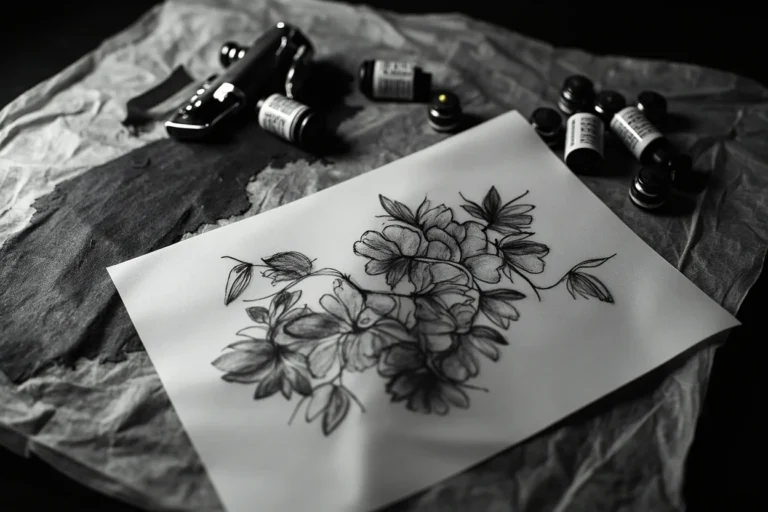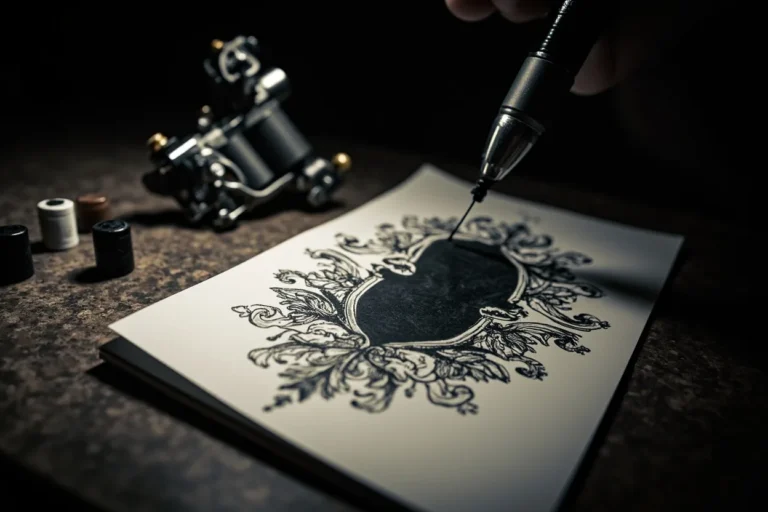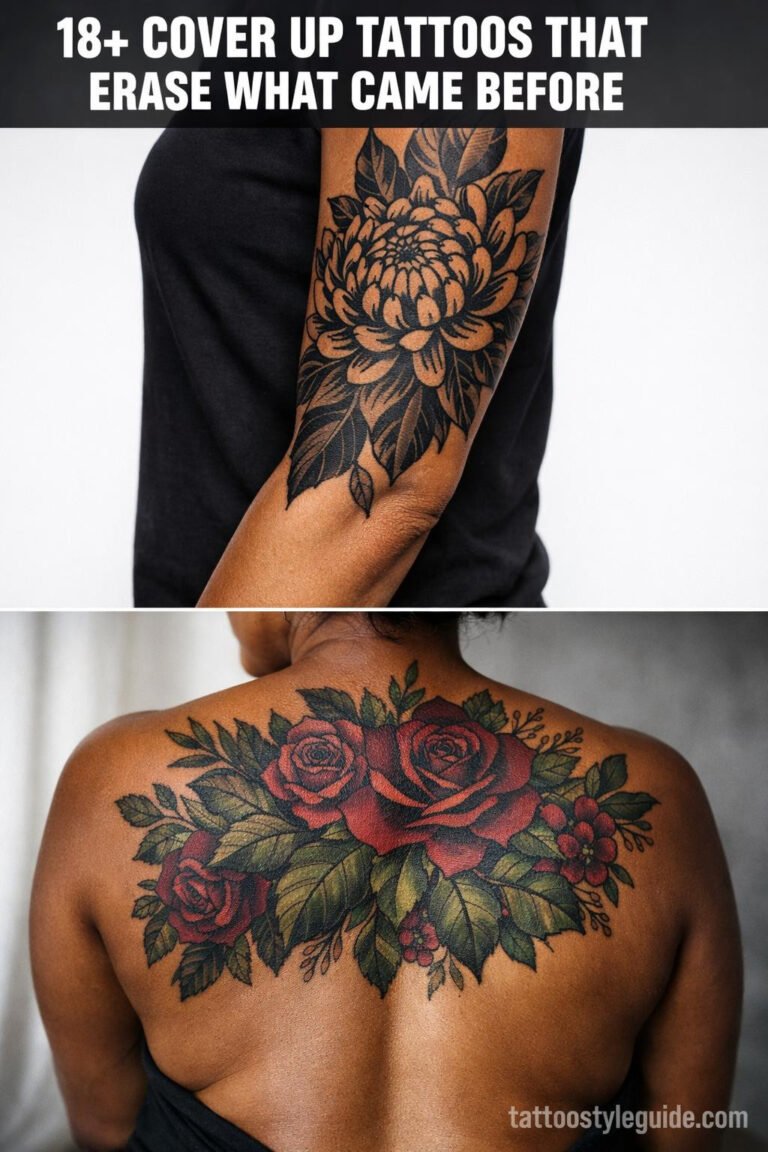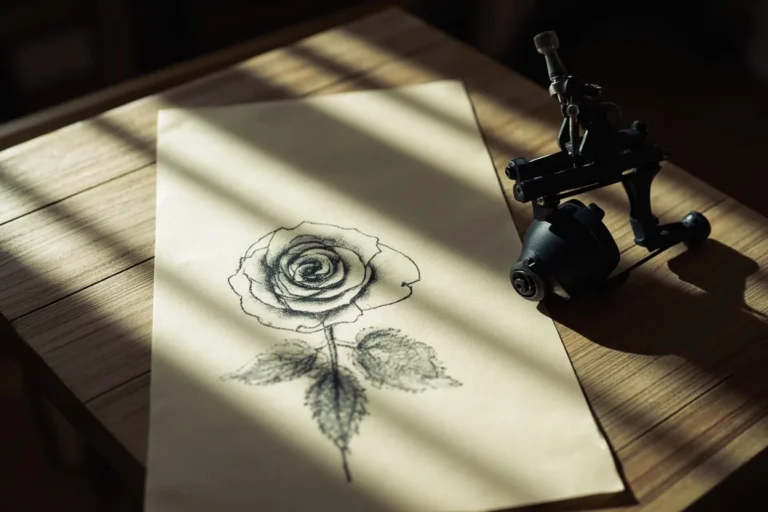
Flash tattoo vs custom tattoo is not a quality contest. Some flash is excellent. Some custom work is confused. The better choice depends on what the tattoo needs to do.
Quick answer: Choose flash if you like the artist’s existing design, want a faster appointment, and do not need deep customization. Choose custom if the tattoo has specific meaning, placement needs, body flow, or a subject that should be drawn for you.
Flash and custom compared
The decision is mostly about fit, originality, and process.
| Option | Best use | Keep in mind |
|---|---|---|
| Flash | Fast, artist-drawn designs | May be repeated |
| Custom | Personal subject or placement | Takes more planning |
| Walk-in flash | Small spontaneous tattoos | Limited changes |
| Custom sleeve | Large body-aware work | Needs commitment |
| Modified flash | Middle ground | Artist rules vary |
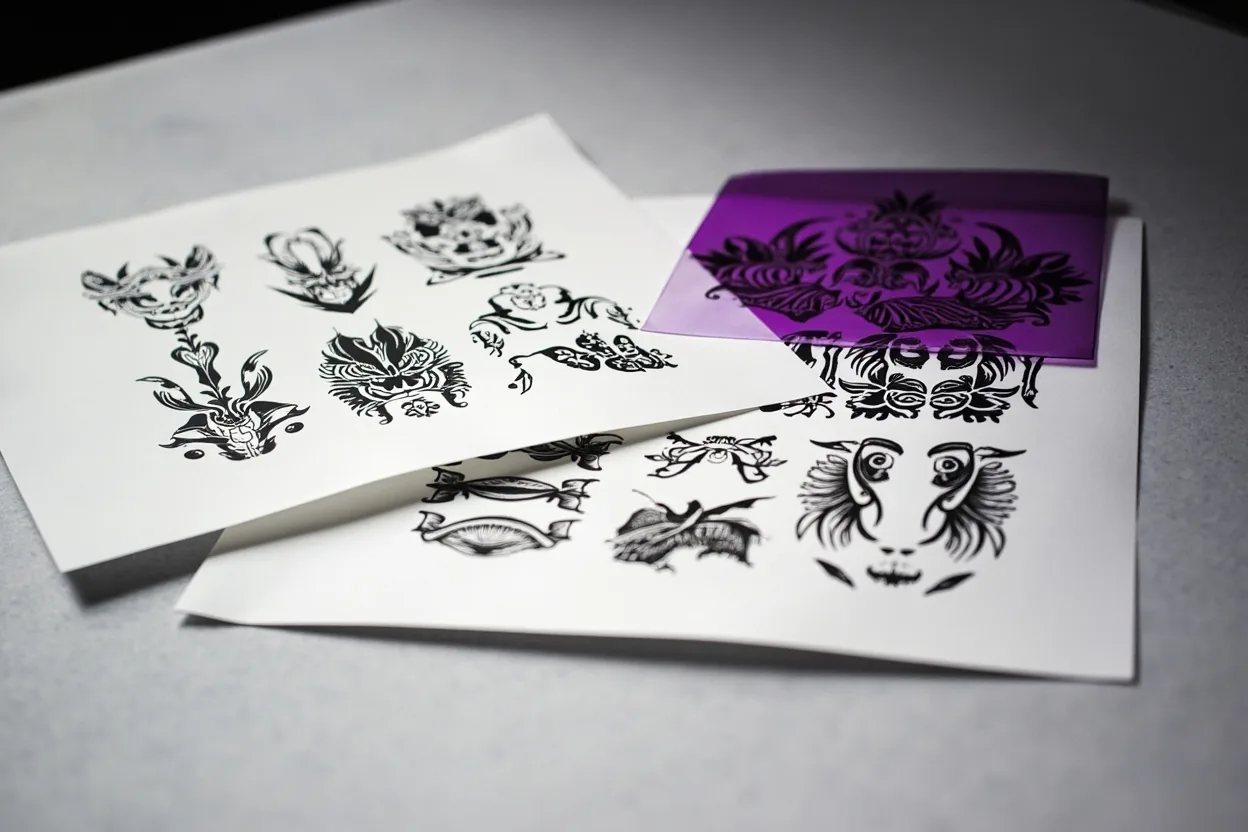
Flash is pre-drawn, priced, and ready to go. You walk in, point at the sheet, and you’re in the chair same day. That’s the whole deal. Custom means you’re sitting down with your artist, building something nobody else has, and you’re paying for that drawing time on top of the tattoo time. Both are legitimate ways to get tattooed. Neither is more serious than the other.
Flash designs are usually built to tattoo well, not just look good on paper. A solid flash artist has already thought about line weight, fill, and how the piece reads at arm’s length. Custom work gives you total control over size, placement, and concept, but it also means trusting your artist to translate your idea into something that actually holds up on skin over ten, twenty years.
What makes this work on real skin
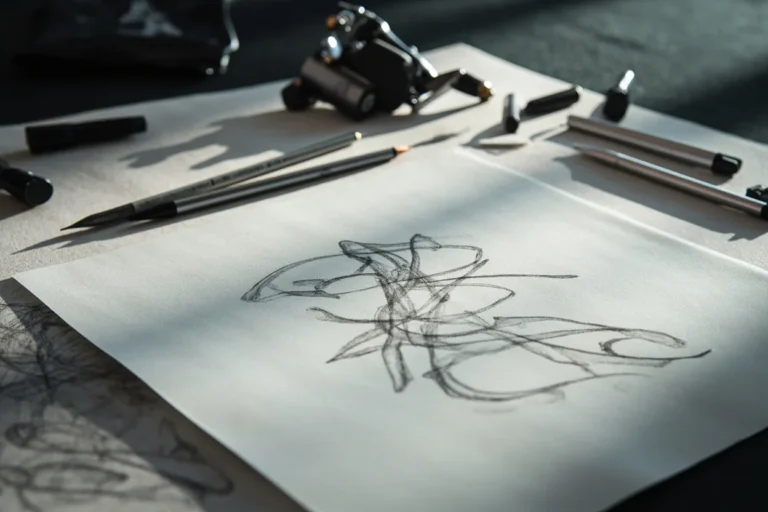
Flash is the artist speaking; custom is both of you in a conversation.
Flash works well when the design is already strong and the placement is straightforward. Traditional flash especially can age beautifully because it was drawn for skin.
Custom work matters more when the tattoo needs to fit a scar, cover old ink, follow a body curve, or carry a specific memory.
Skin is not paper. Flash drawn for a 3-inch placement on a forearm will look completely different stretched across a thigh. Line weight matters hard here. Fine line flash on a high-wear zone like a wrist or finger will fade and blur faster than the same design done bolder on an outer forearm or upper arm. If you’re pulling flash off a sheet, ask your artist if the scale and placement actually make sense for your body.
Custom work lets the artist design around your specific anatomy, which is a real advantage on curved spots like ribs, the ditch, or the back of the knee. A good custom piece follows the muscle line so it moves right when you move. Shading technique matters too. Whip shading heals softer and suits certain styles. Heavy black packing holds longer in areas that see friction. Your artist should be talking through this with you, not just drawing what you described.
Before you book or apply it
Ask the artist what changes are allowed before assuming flash can be redesigned.
- Ask whether the flash is repeatable or one-off.
- Ask if size or placement can change.
- Ask whether custom design requires a deposit.
- Ask when you will see the final drawing.
For flash, you usually don’t need to send anything ahead. Show up clean and hydrated, eat a meal beforehand, and know your placement. If the flash is small, it might be done in thirty minutes. If it’s a larger traditional piece pulled from a flash sheet, block two to three hours. Some shops retire flash once it’s been tattooed so it stays unique. Ask about that policy before you assume you’re getting something one-of-a-kind.
Custom bookings need lead time. Most artists want two weeks to a month minimum to sketch. You’ll likely pay a non-refundable deposit, usually fifty to two hundred dollars depending on the shop, which goes toward your session. Bring clear reference photos, know your size and placement, and have a realistic budget in mind. A detailed thigh piece from a sought-after artist will run differently than flash off a walk-in sheet. Neither is wrong, they’re just different commitments.
Mistakes to avoid
Do not choose custom just because it sounds more special. A clean flash tattoo from the right artist may be stronger.
Do not choose flash if you need a very specific personal symbol or body fit.
Don’t pick flash in a size that won’t hold. Tiny script or intricate linework crammed into a two-inch square will blowout or fade within a few years, especially on the hands, fingers, or feet. Those are spicy spots to get tattooed and the skin there doesn’t grip ink the same way. If you love a flash design but it’s too detailed for the size, talk to your artist about scaling it up or simplifying it. A clean, bold, saturated piece will always outlast something overworked and cramped.
On the custom side, don’t come in with a mood board of fifteen different styles and expect your artist to blend them all. Pick your artist because you love their existing work, then let them do their thing within the concept you’ve agreed on. Micromanaging the sketch kills the piece before it hits skin. Also, don’t skip the touch-up appointment. Custom work with fine line detail or soft black and grey often needs a second pass at six to eight weeks healed to look crispy and read right long-term.