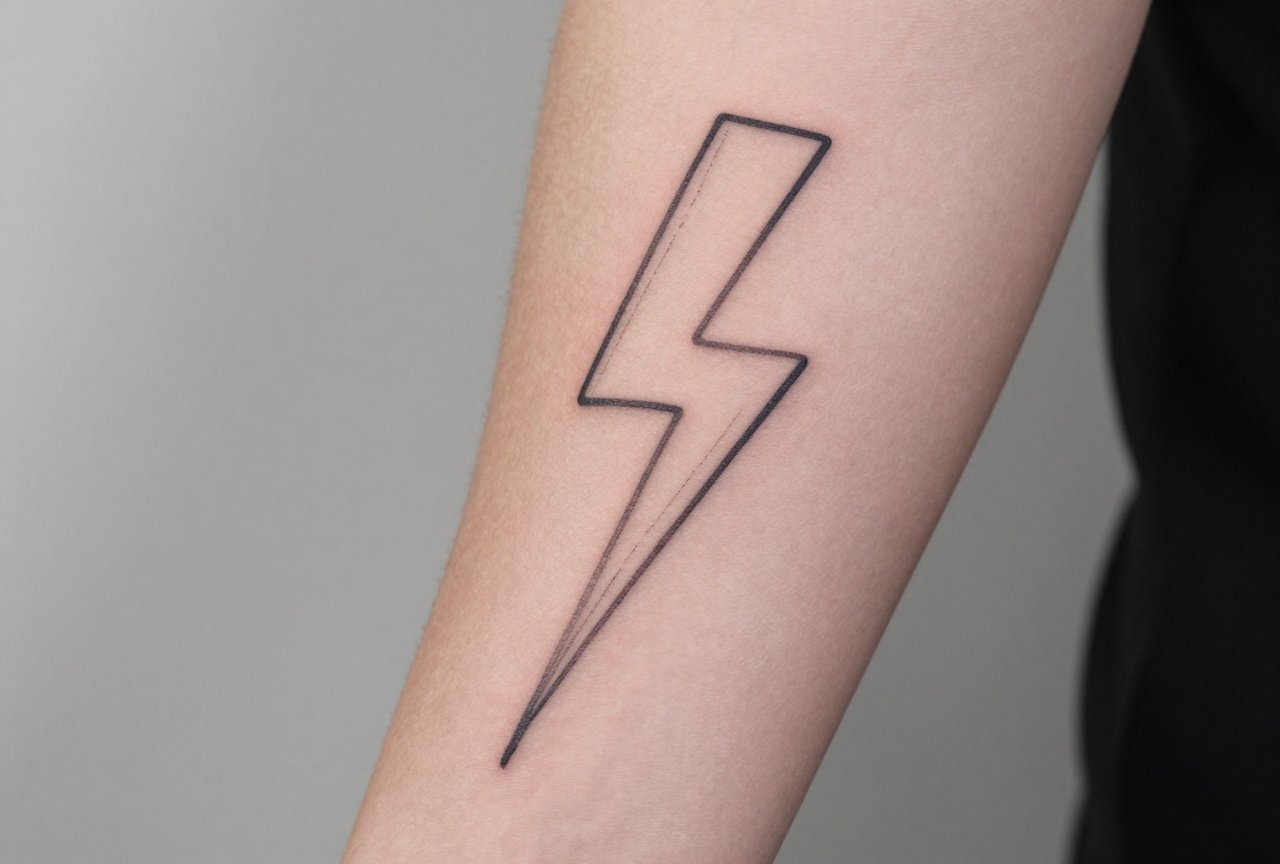
A lightning bolt tattoo primarily represents power, speed, and sudden transformation. It captures that split-second moment when everything changes – illumination striking out of darkness. For many wearers, it marks a pivotal life shift, a burst of personal revelation, or an untamed spirit that refuses to be contained.
Symbolism & History
The lightning bolt carries weight across nearly every civilization. Ancient Greeks wielded it as Zeus’s weapon of authority and judgment. Norse mythology gave Thor his hammer Mjolnir, but the god himself was associated with thunder and the destructive force of storms. In Hindu tradition, Indra’s vajra – a lightning-like weapon – represented unstoppable spiritual power.
Native American cultures often viewed lightning as the voice of thunder beings, carrying messages between worlds. The Navajo connected it to healing rituals and sacred change. In Chinese philosophy, lightning belongs to the element of fire and symbolizes sudden awakening or enlightenment breaking through ignorance.
Modern symbolism has expanded these roots. The bolt now signals:
- Rebellion and nonconformity (think David Bowie’s iconic Aladdin Sane cover)
- Creative inspiration – the “flash” of genius
- Survival and resilience after life’s storms
- Electric energy, passion, and unstoppable drive
Common Variations & Styles
Artists render lightning bolts in dramatically different ways, each carrying subtle shifts in meaning.
Single bold bolt: The classic zigzag in solid black or electric blue. Clean, immediate, unmistakable. Often chosen for its graphic punch and timeless readability.
Storm scene compositions: Lightning cracking through clouds, rain, or shattered landscapes. These emphasize struggle and triumph, the darkness before the flash.
Neo-traditional and American traditional: Thick outlines, limited color palettes, sometimes paired with roses, skulls, or banners bearing dates or names. The bolt becomes part of a larger narrative.
Fine line and minimalist: Delicate, single-needle work that whispers rather than shouts. Often placed for private significance rather than public display.
Color variations: Purple suggests mysticism and magic. Yellow and gold connect to solar energy and divine blessing. Red implies danger, passion, or warning. White or silver can represent purity of purpose or ghostly power.
Double bolts: Parallel lightning strikes, sometimes associated with specific fandoms (Harry Potter’s scar, Flash superhero emblem) or personal duality – two lives, two loves, two forces in balance.
Best Placements
The lightning bolt’s natural vertical or diagonal flow suits certain body areas exceptionally well.
- Forearm: The bolt follows the muscle’s length, visible and declarative. Easy to show or hide with sleeves.
- Ribcage: Dramatic diagonal placement, intimate and protected. Popular for memorial or deeply personal meanings.
- Behind the ear: Small, striking, unexpected. The flash peeking from hair carries surprise energy.
- Calf or thigh: Larger compositions with storm elements. The muscle’s shape complements the bolt’s jagged path.
- Finger or hand: Bold commitment. The “finger gun” gesture gains literal electric charge.
- Along the spine: The body’s own electrical highway. Symbolic and visually arresting with low-back or neck-to-tailbone designs.
Who Chooses This Tattoo / Personal Meanings
Lightning bolt wearers span demographics, but certain stories recur in tattoo studios.
Survivors of sudden loss or trauma: The bolt memorializes the before-and-after moment when life irreversibly changed. Not the storm itself, but the strength found within it.
Artists and innovators: That spark of original thought, the idea that struck from nowhere. Writers, musicians, and entrepreneurs often claim this symbol.
Athletes and competitors: Speed, explosive power, the decisive strike. Sprinters, fighters, and anyone who values first-move advantage.
Spiritual seekers: Kundalini awakening, sudden enlightenment, the divine flash that obliterates old understanding. The bolt as sacred disruption.
Music devotees: Beyond Bowie, lightning permeates rock and metal iconography – AC/DC, Metallica’s “Ride the Lightning,” countless album covers. Fans carry permanent tribute.
LGBTQ+ community members: Reclaimed from historical persecution (“falling like lightning” as slur), the bolt now empowers Pride narratives and defiant self-acceptance.
Similar Symbols
Tattoo collectors sometimes pair lightning with related imagery or choose alternatives that share thematic DNA.
- Thunderclouds: The source and context of lightning. Represents brewing power, emotional depth, the fullness before release.
- Compass or North Star: Another sudden-guidance symbol, but slower and more navigational than explosive.
- Phoenix: Transformation through destruction, but extended over time rather than instantaneous.
- Arrow: Directed force and purpose, lacking lightning’s chaotic natural element.
- Runes (particularly Sowilo): Norse sun/lightning rune carrying victory, success, and solar wheel energy.
- Broken chains or shattered glass: Sudden liberation, the moment of breaking free.
Final Thoughts
The lightning bolt endures because it compresses massive meaning into minimal form. It is nature’s own exclamation point – unignorable, ungovernable, and unforgettable. Whether marking a single powerful second or channeling lifelong electric intensity, this tattoo carries voltage that doesn’t fade. Choose your artist carefully for clean, confident lines; a shaky bolt undermines the very power it promises. Strike true.