I’ve tattooed Marilyn’s face more times than I can count. She’s the most requested Old Hollywood icon in my chair, hands down. There’s something about that combination of vulnerability and power that people want to carry, though I always tell clients, her face is harder to nail than you’d think. Those soft features, that specific smile, the way light hit her cheekbones in the 1950s. Get it wrong and you’ve got a generic blonde. Get it right and it’s timeless. Here’s what actually works after years of doing these in real shops.
Popular Styles
Not every style does Marilyn justice. I’ve seen beautiful pieces and I’ve seen disasters, and the difference usually comes down to picking the right approach for the reference you’re working with.
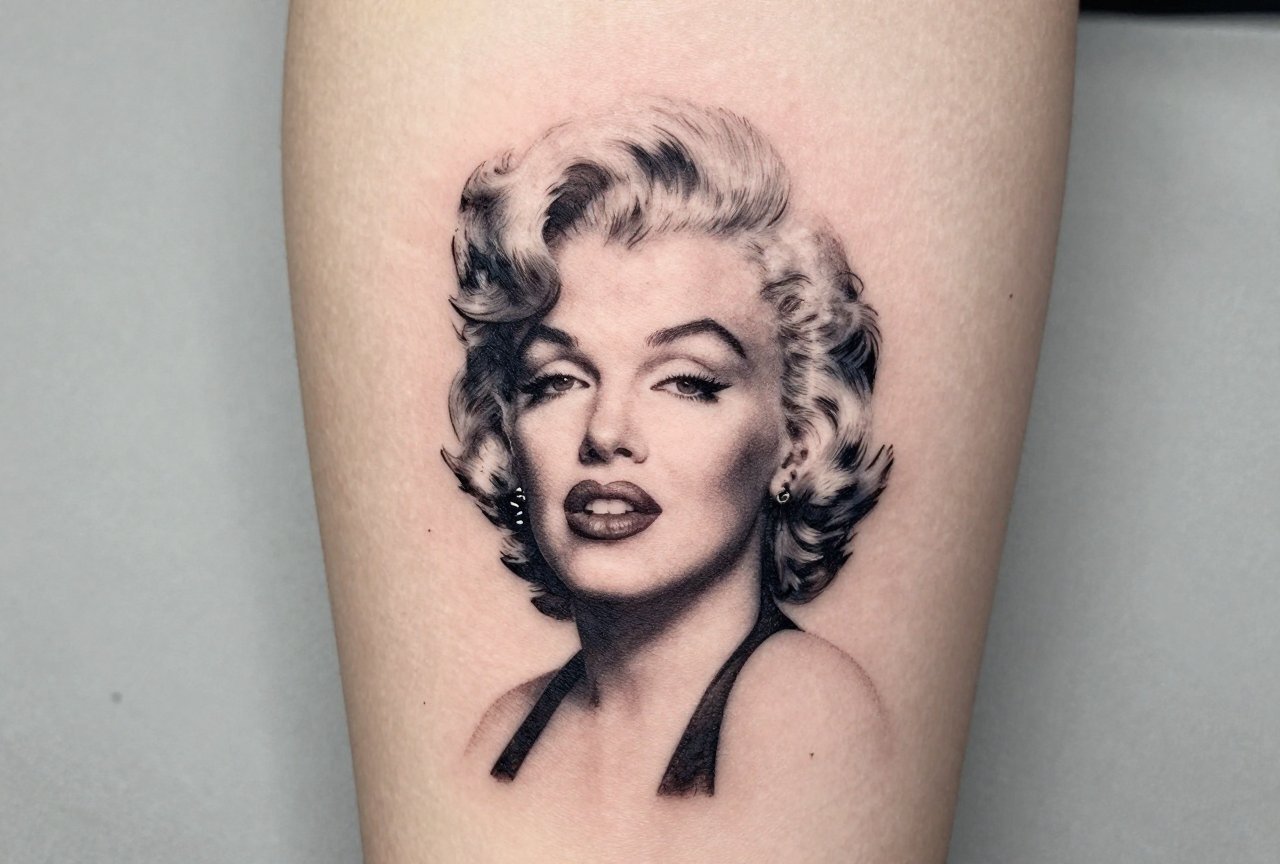
Black and Grey Realism
This is the bread and butter. The George Barris “Last Sitting” photos, the Bert Stern portraits, the Milton Greene shots, they’re all shot in black and white originally, so translating them to skin feels natural. Realism lets you capture that specific softness around her eyes, the slight asymmetry of her smile that made her human instead of just pretty. I did one on a guy’s forearm last year from the Stern sessions, all blown-out whites and deep shadows in her hair. Two years healed and it still reads from across the room. That’s the goal.
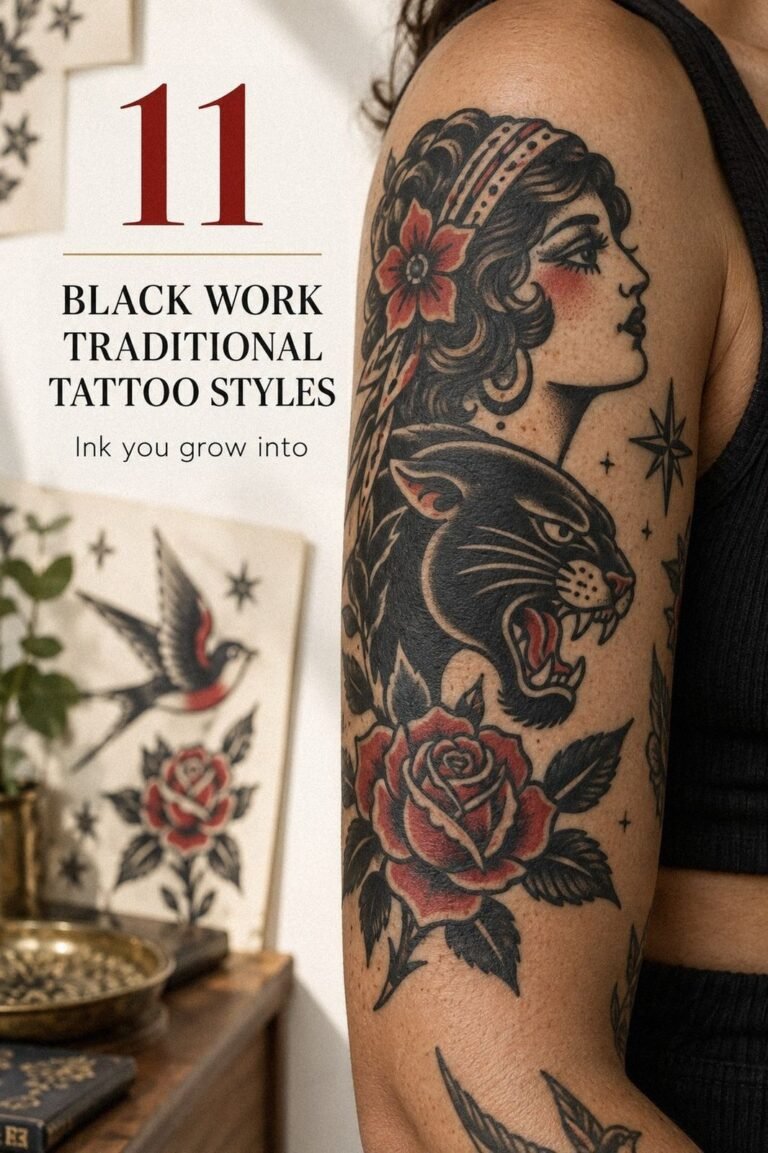
Neo-Traditional and American Traditional
These take more liberties, and that’s not bad. Bold lines, limited color palette, maybe a banner with her name or a quote. The face gets simplified, stronger jaw, bigger eyes, more graphic. I’ve tattooed traditional Marilyns with thick black outlines and maybe three colors: red lips, skin tone, black hair. They hold up better over time than realism in some ways because the bold lines don’t blur as badly. On upper arms, thighs, these look solid for decades.
- Realism: Best for large pieces, needs an artist who specializes in portraits
- Traditional/Neo-Traditional: More forgiving, ages better on smaller scales
- Illustrative: Somewhere between, good for incorporating other elements
- Minimalist line work: Risky with faces, but can work for iconic silhouettes or profiles
Design Ideas
Beyond just her face, there’s a whole language of Marilyn imagery that works in tattoo form. Some of these I’ve done multiple times, others once but they stuck with me.
The Classic Portrait
Full face, three-quarter view, that direct gaze. This is what most people walk in wanting. I always ask: which Marilyn? The 1953 pin-up? The 1962 exhausted beauty? The Some Like It Hot comedian? Each reads differently. The ’62 version hits harder emotionally but needs more technical skill to render those tired eyes without making her look sick. The ’53 version is more forgiving, all bright and open.
Iconic Moments and Symbols
The white dress over the subway grate. That image is so burned into culture that you can do just the dress, just the pose, and people know. I’ve tattooed the billowing skirt alone, no face, on a woman’s ribcage, negative space for the fabric, black and grey for the shadows. The diamonds from Gentlemen Prefer Blondes. The beauty mark, isolated, maybe with “Diamonds Are a Girl’s Best Friend” in script. These work smaller, work as additions to larger pieces, work when you want the reference without the intensity of a portrait.
- Full portrait with signature or quote underneath
- The white dress silhouette with wind effect
- Beauty mark detail with red lips
- Movie still composition with film border elements
- Marilyn paired with roses or broken Hollywood signs for commentary on fame
Best Placements
Where you put Marilyn matters as much as how you render her. Faces need room to breathe. I’ve had clients ask for her on their wrist, their finger, behind the ear, and I have to be honest: that’s how you get a smudge that looks like any blonde woman, or no woman at all.
Thighs are popular, especially outer thigh. Flat surface, good size, easy to show or cover. I’ve done several there. The curve of the muscle can actually complement the curve of her face if the artist accounts for it. Upper arm, outer bicep or shoulder, classic placement for portraits, enough flat area, ages well with sun protection. Ribs work for the committed; they hurt, but the vertical space suits her full figure or a tall portrait composition. I’ve done one full-back piece, Stern photo reference, took three sessions. The client sat like a champion. That’s the placement if you want to go big and have the budget.
- Outer thigh: Flat, spacious, good for medium to large portraits
- Upper arm/shoulder: Traditional, easy to heal, shows well
- Calf: Another flat canvas, less painful than ribs
- Back: For serious collectors, allows maximum detail
- Forearm: Visible, but plan for touch-ups; sun exposure fades faces faster
Color Choices
Most Marilyn tattoos I do are black and grey. That’s the honest truth. Her most famous photographs are monochrome, and there’s something about that era that reads as black and white in our collective memory. But color has its place.
When Color Works
That red mouth. Specific, iconic, worth doing right if you’re going to do it at all. I’ve seen pieces where the whole face is black and grey except the lips, that one shock of red. It’s effective. The pink dress from Diamonds Are a Girl’s Best Friend. The yellow taxi from The Seven Year Itch poster. Color as accent, not overload. Full color realism of her face is possible but tricky, skin tones are hard, and if the artist misses, you get an orange-ish generic face instead of Marilyn specifically.
The Black and Grey Advantage
It ages better. Less pigment variation means less visible fading over time. The contrast stays readable. I’ve got black and grey portraits in my portfolio from eight years ago that still look sharp. Color pieces from the same period need more maintenance. For a face people will recognize, clarity matters more than flash.
- Black and grey: Most timeless, best for portraits
- Selective red: Lips, nails, roses in composition
- Full color: Only with an artist who specializes in color realism
- Blue tones: For the “sad Marilyn” mood, some artists use cool washes
Tips for Choosing
I’ve had enough consultations to know where people go wrong. Here’s what I tell anyone who sits down wanting Marilyn on their skin.
Pick your reference carefully. Not every photo translates to tattoo. High contrast helps. Clear light source. Her face in shadow, half-lit, moody, that’s beautiful in a photo but can become a muddy blur in skin. I always ask clients to bring three options and we talk through what will actually work. The photo with the most emotional connection might not be the most tattooable. That’s a hard conversation sometimes, but it’s better than a disappointing result.
Research your artist. Portrait tattoos are a specialty. I won’t do photorealism of a face unless I’m confident I can nail the likeness; some artists feel the same, some don’t and will take your money anyway. Look at healed work, not just fresh photos. Fresh portraits always look good. The real test is six months, a year, two years. Ask to see healed examples of their portrait work specifically.
- Bring multiple reference photos, let the artist guide you
- Size matters: faces need minimum space for detail, don’t go too small
- Plan for touch-ups, especially on high-movement areas
- Consider the quote or text carefully, font choice changes the whole piece
- Think about whether you want tribute or commentary; Marilyn as icon vs. Marilyn as cautionary tale
Final Thoughts
Marilyn Monroe tattoos carry weight. She’s not just a pretty face, she’s American fame, the cost of it, the gaze of it, the tragedy underneath. I’ve had clients who want her because she’s beautiful and clients who want her because she wasn’t, not really, not underneath. Both are valid. Both need honesty about what you’re asking an artist to render.
The best Marilyn tattoos I’ve done, the ones I’m still proud of years later, came from clients who knew exactly which version of her they needed. They brought good references, trusted me when I said something wouldn’t work, sat still through long sessions, and took care of the healing. The result is skin that carries something specific, not just a celebrity, but a whole conversation about who we put on pedestals and why. That’s worth doing right.
Frequently Asked Questions
How big should a Marilyn Monroe portrait tattoo be?
At minimum, about the size of your palm for just her face. Any smaller and the detail blurs into unrecognizable mush within a few years. For a full figure or detailed composition, think dinner plate or larger. I’ve redone too many tiny portraits that became sad smudges.
Will a Marilyn tattoo look weird as I get older?
All tattoos shift with your body, but faces are unforgiving. Placement matters more than subject here, avoid areas that stretch or sag significantly. I generally advise against throat, hands, or stomach for portrait work. Thighs and upper arms age most gracefully.
How do I know if an artist can actually do a good portrait?
Ask to see healed photos, not just fresh Instagram shots. Any artist doing realism should have years of healed work to show. If they only have fresh photos or make excuses, walk. I’ve been doing portraits for fifteen years and I still show healed examples without being asked.
Can I combine Marilyn with other elements like quotes or flowers?
Absolutely, but be intentional. I’ve done pieces where the quote fights the portrait for attention and both lose. Pick a hierarchy, face first, everything else supports it. Roses work, film strips work, but keep them secondary so her likeness remains the point.
More Tattoo Ideas
- Realistic Portrait Tattoos: A Working Artist s Guide
- Minimalist Hydrangea Tattoo Ideas
- Minimalist Spiderman Tattoo Ideas
- Explore more