I’ve tattooed a lot of flowers over the years, and hydrangeas hit different. They’re not roses, there’s no instant romance read, no thorny drama. A hydrangea is quieter. It clusters. It changes color with the soil. That mutability is what draws people in, and when you strip it down to minimalist form, you get something that feels both personal and timeless. In my chair, I’ve seen clients come in with photos from their grandmother’s garden, or a single dried bloom pressed in a book, wanting that specific softness carried into their skin. The challenge is always the same: how do you keep the fullness of a hydrangea without turning it into a blob of ink?
Popular Styles
Single-Line Work
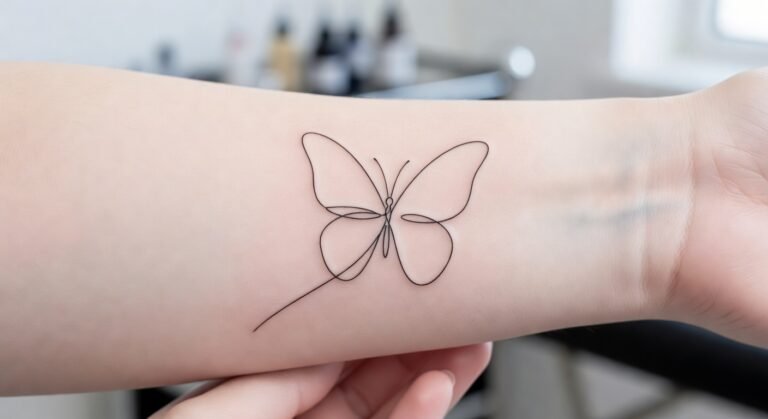
Single-line hydrangeas are having a real moment, and I get why. One continuous stroke traces the rounded silhouette, maybe loops back to suggest a few petals. The magic is in the negative space. What you don’t draw matters as much as what you do. I’ve done these on wrists and collarbones where the line weight stays hair-thin, barely there from across the room, but up close you see the intention. The catch? These age fast if the line blows out. I tell clients: go bigger than you think, at least two inches, or that delicate curve becomes a fuzzy caterpillar in five years.
Fine-Line Botanical
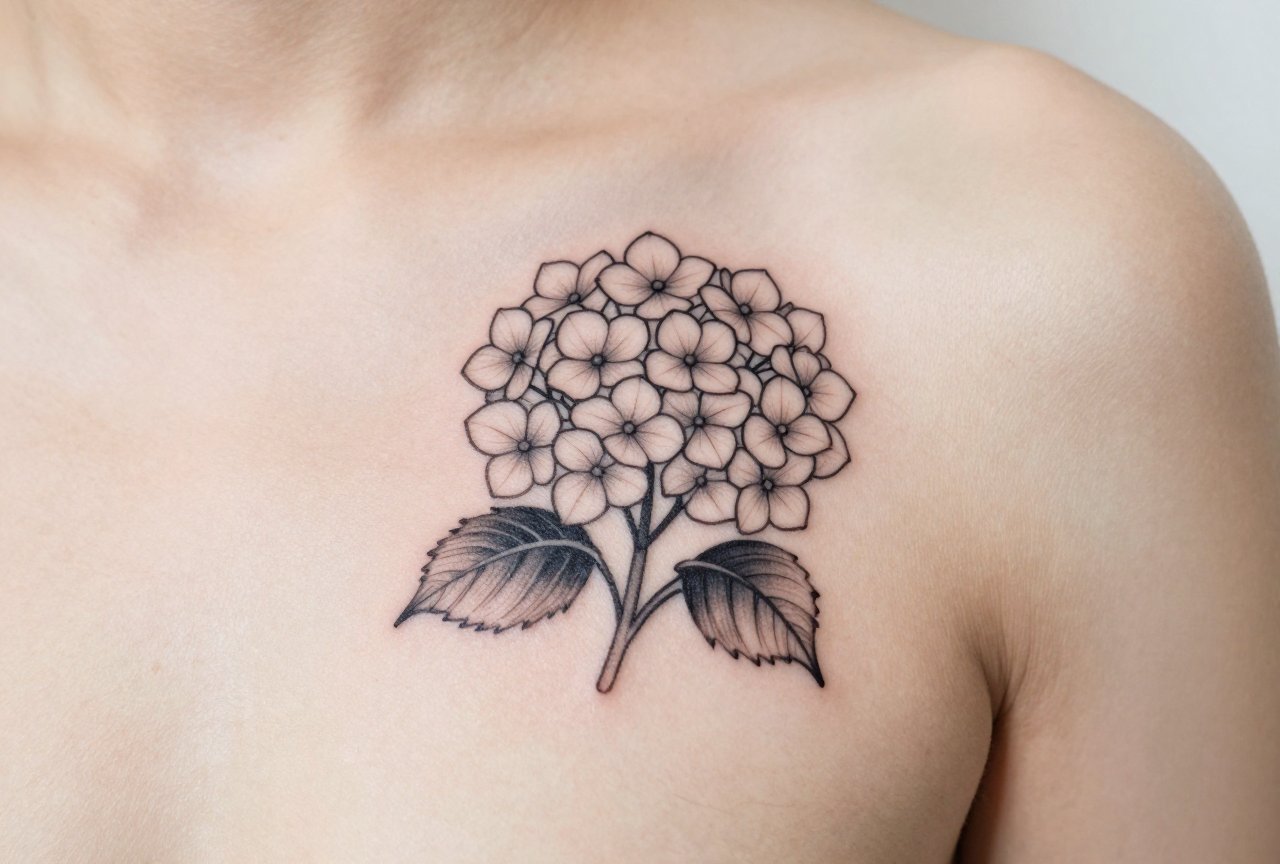
Fine-line takes the single-line idea and adds structure. Think stem, a few individual petals suggested with parallel lines, maybe the tiniest dot cluster for the flower center. This is where I spend most of my time lately. The style lets me play with texture, hydrangea petals have that papery, slightly ruffled quality, and you can hint at it with staggered line weights. A good fine-line hydrangea should feel like a sketch someone made while sitting in the garden, not a technical drawing. We see this a lot on inner forearms and ribs, places where the client wants something beautiful but not shouting.
- Single-line: one continuous stroke, maximum negative space, high risk of blowout if too small
- Fine-line botanical: layered strokes, subtle texture, better aging with proper sizing
- Stippled: dot-work shading for depth without heavy black fill
- Abstract geometric: circular petal clusters broken into triangles or hexagons
Design Ideas
The Cluster vs. The Single Bloom
Real hydrangeas grow in pom-pom clusters, but minimalist translation means choosing. A full cluster reads lush, feminine, connected to abundance. I did one on a client’s shoulder blade last spring, seven tiny blooms, each one just a circle of short strokes, drifting downward like they were heavy with rain. Took two hours. Healed soft. The single bloom, though, that’s for someone who wants the flower as symbol more than specimen. One rounded form, maybe two leaves, done behind the ear or on the ankle. It’s the difference between a garden and a pressed flower in a letter.
Personal Touches That Actually Work
Clients always ask about adding initials, dates, tiny companion elements. My advice: keep it minimal or don’t do it. A hydrangea with a banner underneath? That’s not minimalist anymore. Better: a single stem bending to form the shape of a letter, or a bloom placed where it naturally frames an existing tattoo. I’ve tattooed hydrangeas alongside small bees, with the insect done in the same line weight so nothing competes. Birth flowers work too, hydrangea for June, though honestly most people just love the flower and don’t care about the calendar.
- Cluster of 3-7 blooms for movement and fullness
- Single bloom with two leaves for simplicity
- Stem forming a subtle curve or initial shape
- Companion elements: bee, butterfly, or rain drops in matching style
- Dried/pressed aesthetic: flattened perspective, visible stem texture
Best Placements
Where you put a minimalist hydrangea changes how it reads. Behind the ear, it’s secret, almost like jewelry. On the ribcage, it’s intimate, something for the wearer more than the viewer. I’ve tattooed them on the side of the hand, the inner bicep, the back of the neck where hair hides and reveals. The rounded shape is forgiving, it doesn’t fight body contours the way a rigid geometric piece might.
That said, placement affects longevity. Fingers and feet? We all know the drill. Hydrangea lines on a finger blur fast. The skin there sheds and regenerates aggressively. I did one on a client’s foot years ago, fine-line cluster, looked gorgeous for maybe eight months. Now it’s a soft blue-gray suggestion. She still loves it, but we both knew the deal going in. For something you want crisp long-term, aim for the inner forearm, upper arm, thigh, or shoulder. Places with less sun, less friction, more stable skin.
Size Reality
Minimalist doesn’t mean microscopic. The tiniest hydrangea I’ve done was about an inch wide, tucked behind a client’s ear. It worked because we went heavy on the suggestion, just the rounded outline, no interior detail. Anything smaller and you lose the flower entirely. For a cluster with some interior petal work, I won’t go below two and a half inches. The petals need room to breathe, or they heal into a solid mass.
Color Choices
Here’s where hydrangeas get interesting. In nature, they’re chameleons, blue in acidic soil, pink in alkaline, white as a constant, green as they fade. That range gives clients a lot to work with, but minimalist color needs restraint.
Black and grey is the honest default. It ages clean, works in any style from single-line to stippled, and doesn’t compete with wardrobe or other tattoos. I probably do seventy percent of my hydrangeas this way. When we do add color, I steer toward muted. A dusty blue, not electric. A blush pink, not hot. Watercolor-style splashes behind a fine-line hydrangea can look stunning fresh, but I’ve watched them fade to muddy confusion. Better: a single color wash in the petals, maybe a soft green for the leaves, nothing else. The minimalist ethos is about one or two decisions made well, not a rainbow of effects.
- Black and grey: timeless, clean aging, works with any line style
- Dusty blue: references the classic hydrangea, keep saturation low
- Blush pink: softer, more romantic, pairs well with fine-line
- White ink: subtle on light skin, risky on darker tones, tends to yellow
- Single green accent: just for leaves, keeps focus on bloom
Tips for Choosing
Finding Your Artist
Not every tattooer who does flowers does minimalist well. Look at portfolios for healed photos, not just fresh work. Those crisp lines in the Instagram post? Check back in six months. I show my clients healed examples when they ask, some artists don’t, and that makes me suspicious. You want someone who understands that minimalist is harder, not easier. Every line shows. There’s nowhere to hide a wobble.
The Consultation Conversation
In my shop, I always ask: why this flower, why now, why minimal? The answers shape the design more than any reference photo. Someone mourning a grandmother who grew hydrangeas gets a different approach than someone who just likes the aesthetic. The first might need a stem that suggests rootedness, permanence. The second might want something lighter, more decorative. Neither is wrong, but the tattoo should know what it’s doing.
Bring references, but not too many. Three images max. More than that and you’re asking the artist to average your Pinterest board, which never works. One photo of the actual flower you love. One tattoo style reference. One placement idea. That’s enough. Trust the process from there.
- Check for healed portfolio photos, not just fresh work
- Ask about the artist’s experience with fine-line specifically
- Bring 3 reference images maximum
- Discuss why this flower matters to you, context shapes design
- Plan for touch-ups: minimalist work often needs one at 1-2 years
Final Thoughts
A minimalist hydrangea tattoo done right feels inevitable, like it was always meant to be there. The rounded forms settle into skin in a way that more angular designs don’t. They age with grace if you give them enough space and respect the limits of the style. I’ve watched clients sit in my chair nervous about simplicity, will it be too plain?, and leave understanding that restraint is its own kind of boldness. The hydrangea doesn’t need to shout. It clusters, it persists, it changes color with what’s around it. That’s enough.
Frequently Asked Questions
How small can a minimalist hydrangea tattoo be before it loses detail?
I won’t go below one inch for a single bloom, and two and a half inches for anything with interior petal work. Smaller than that, the lines heal together and you end up with a blue blob instead of a flower.
Do minimalist hydrangea tattoos hurt more in certain spots?
Ribs and feet are rough for most people. The inner forearm and outer upper arm are easier sits. Fine-line work actually stings less than heavy shading, but it takes longer, so the endurance factor evens out.
Can I get a hydrangea tattoo if I have darker skin?
Absolutely. Black and grey fine-line works beautifully on all skin tones. Color is trickier, dusty blues and soft pinks can read subtle or disappear depending on undertone. I always do a color test or steer toward bolder saturation if the client wants color that pops.
How do I keep my fine-line hydrangea from fading fast?
Sunscreen is non-negotiable. Moisturize daily, don’t let it dry out during healing, and plan for a touch-up at the one-year mark. Fine-line tattoos aren’t failure-prone, but they’re honest, they show when you don’t take care of them.
More Tattoo Ideas
- Minimalist Spiderman Tattoo Ideas
- Movie Tattoo Ideas That Actually Work
- Watercolour Tattoo Designs That Actually Work
- Explore more