
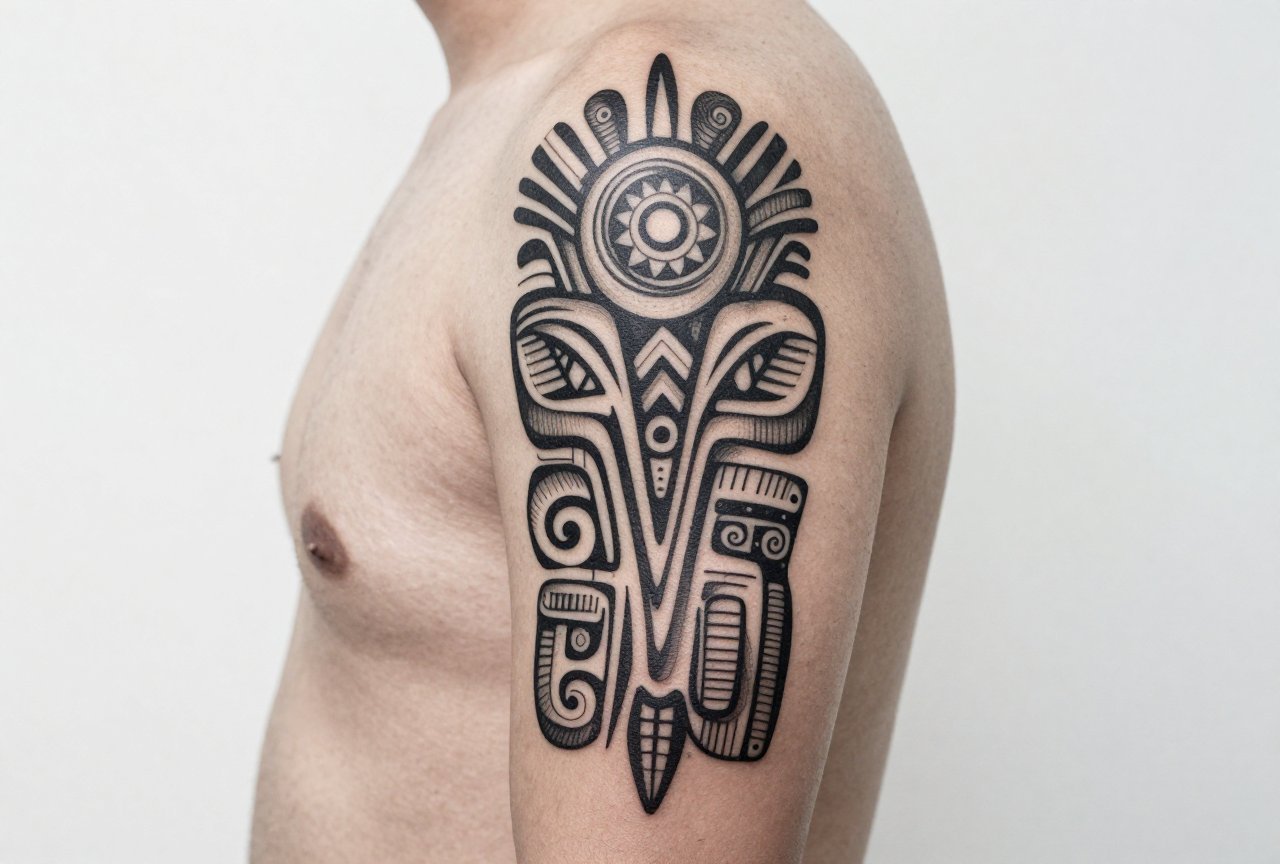
Philippines tribal tattoos, known as batok in the north and by various regional names throughout the archipelago, mean identity, protection, and earned status. These aren’t decorative trends; they were historically earned through bravery, community contribution, and rites of passage. Today, people wear them to honor indigenous heritage, claim personal resilience, or carry protective symbols believed to shield the wearer from harm.
Symbolism & History
I’ve had Filipino clients sit in my chair and explain how their grandmother’s stories about batok shaped their decision. The patterns aren’t random. Each line, dot, and repeating motif carries specific weight rooted in pre-colonial practice.
Pre-Colonial Roots
Before Spanish contact, tattooing flourished across the islands. The Kalinga people of Luzon are most famous for preserving batok through Whang-od, the legendary mambabatok (tattoo artist) who kept hand-tap methods alive. But tattooing existed in Visayas too, early Spanish chroniclers noted the heavily tattooed Visayans, which is actually where the term “Filipino” originates, from “Las Islas Filipinas.” Those tattoos marked warriors who had killed enemies, with each design recording specific battles and head-taken.
Here’s what the core symbols generally represent:
- Fern patterns (or gulay): Fertility, growth, connection to the land
- Centipede/scorpion motifs: Protection, warrior spirit, the ability to strike when threatened
- Rice bundle designs: Prosperity, agricultural blessing, community sustenance
- Mountain/river patterns: Ancestral homeland, the journey of life, returning to origins
- Python scales: Strength, transformation, spiritual guidance
What the Placement Meant
Historically, placement told your story. Chest and throat tattoos were for the boldest warriors, visible, vulnerable, impossible to hide. Arms carried your accomplishments. Full sleeves meant you’d proven yourself repeatedly. Women wore different patterns, often on arms and hands, marking weaving skill, healing knowledge, or social standing. When someone asks for a full chest piece today, I sometimes pause and ask: do you know what that placement signified? Not to gatekeep, but because understanding deepens the wear.
Common Variations & Styles
Not all Filipino tribal looks the same. The archipelago has distinct regional traditions, and modern artists blend these with contemporary techniques.
Regional Distinctions
Kalinga batok uses the thorn of a pomelo tree and a bamboo hammer, creating dense, rhythmic patterns that sit slightly raised on the skin. The lines are less crisp than machine work, there’s a human wobble that makes each piece singular. Visayan designs, from what we can reconstruct from 16th-century accounts, favored more figurative elements: human figures, animals, and narrative scenes alongside geometric borders. Mindanao and the Sulu archipelago had Islamic influences that shifted toward flowing arabesque patterns rather than the hard geometry of northern traditions.
Modern variations I see in shops:
- Strict traditional revival: Hand-tap or machine replication of documented patterns, often researched through anthropological sources
- Neo-tribal fusion: Filipino patterns blended with Polynesian or Micronesian elements, controversial among purists, popular with diaspora clients connecting to broader Austronesian heritage
- Minimalist interpretation: Single repeating motifs scaled small, often behind the ear or on the wrist
- Blackwork sleeves with Filipino accents: Heavy black fill with specific Kalinga or Visayan patterns breaking through as negative space
Line Weight and Aging
Traditional batok lines are bold. Thick. They have to be. Fine tribal work ages poorly, I’ve seen delicate geometric patterns blur into gray mush after five years. The hand-tap method naturally creates slightly heavier, more diffuse lines that settle beautifully. If you’re getting machine work inspired by these patterns, I always push for slightly thicker line weight than you might want initially. Trust the long game.
Best Placements
Where you put this matters, both for meaning and for how the design functions on skin.
Upper arm/shoulder: Classic warrior placement. The curved surface flows with the natural geometry of Kalinga patterns. Easy to show, easy to cover. I’ve done dozens here for first-time clients reconnecting with heritage.
Full chest or pectoral: The most historically significant placement for men. Demands commitment. The skin here moves differently, breathing, muscle flex, so the artist needs to design with that motion in mind. Shading holds well; very fine lines can distort.
Forearm: Visible daily. Good for single-motif pieces or band work. Be aware that inner forearm skin is softer and can fade faster with sun exposure.
Back: Canvas-sized potential. Full back pieces with repeating mountain patterns or centipede motifs flow naturally with the spine’s architecture. The skin here is stable, ages well, but hurts more than you’d expect, thick skin, dense nerve endings.
Legs: Increasingly popular, especially thigh pieces for women who want substantial work without the chest/arm association. Calf skin can be tricky for solid black fill; it sometimes heals patchy and needs touch-ups.
Avoid: fingers, feet, sides of hands. The patterns lose their impact when compressed, and these spots fade fast. I’ve had to explain this to clients who want “just a small one” on the finger. It won’t read as tribal; it’ll read as a smudge.
Who Chooses This Tattoo / Personal Meanings
In my chair, the clients vary more than you’d think.
Diaspora Reconnection
Second and third-generation Filipino-Americans who grew up with vague stories about “the old country.” Often they don’t know their specific tribal origin, Tagalog, Ilocano, Visayan, Mindanaoan, so they choose patterns that speak to them aesthetically, then research later. I had a client from Daly City spend three sessions on a Kalinga-inspired sleeve while learning Kalinga language basics online. The tattoo became the catalyst, not just the symbol.
Non-Filipino Admiration
This is where shop conversations get real. Some artists refuse to do indigenous patterns on non-indigenous clients. Others, including some Filipino artists I respect, will if the person demonstrates genuine research and respect. I fall somewhere in the middle, I ask questions. What do you know about the specific pattern? Why this tradition rather than your own? There’s a difference between appreciation and appropriation, and it usually shows in how someone answers. The ones who’ve done the work, who can name the region and meaning, those are the clients I don’t worry about.
Personal Transformation
People who’ve survived something, illness, violence, profound loss, sometimes gravitate to warrior markings. The centipede especially, believed to protect and strike back at threats. I don’t pry into their stories, but I notice the timing. These tattoos often follow anniversaries, milestones, the end of something hard.
Similar Symbols
Clients sometimes confuse Filipino tribal with Polynesian or Maori work. The similarities are real, all Austronesian peoples share distant tattooing roots, but the differences matter.
- Polynesian (Samoan, Maori, Hawaiian): Generally more figurative, with specific symbols for family, ocean, and rank. The enata human figures don’t appear in Filipino work. Maori ta moko is facial and sacred in ways that Filipino tattooing historically wasn’t.
- Bornean/Iban: Closer cousins to Filipino patterns, especially from the Kalinga region. Shared Austronesian heritage shows in the fern and scorpion motifs. Some diaspora clients blend these intentionally.
- Contemporary blackwork tribal: The 1990s “tribal” that dominated MTV, abstract, aggressive, no cultural meaning. If that’s what you want, say so. Don’t call it Filipino. Artists will respect the honesty.
I’ve also seen clients bring in Southeast Asian Buddhist or Hindu imagery thinking it connects to pre-colonial Philippines. It doesn’t, really. The archipelago had Hindu-Buddhist influence through trade, but indigenous tattooing remained distinct from those symbolic systems.
Final Thoughts
Philippines tribal tattoos carry weight that outlasts the trend cycle. The meaning isn’t automatic, you don’t get ancestral protection by default because you liked a Pinterest image. The meaning comes from the choosing, the research, the sitting through the needle, the living with it. I’ve watched clients transform in the chair from nervous excitement to something quieter, more grounded. That’s the real ritual now, in a world where Whang-od’s apprentices keep the old methods alive and machine artists like me interpret patterns for new bodies and new stories.
If you’re considering this, do the reading. Know if you’re Kalinga, Visayan, or something else entirely. Understand that “Filipino tribal” is a modern umbrella, not a historical category. And find an artist who knows the difference between decorative geometry and pattern with purpose. The skin remembers. Make sure what it remembers is worth keeping.
Frequently Asked Questions
Do I need Filipino ancestry to get a Philippines tribal tattoo?
There’s no rule, but context matters. Many Filipino artists welcome respectful clients of any background who’ve researched the specific patterns and meanings. Others prefer to work only with diaspora clients reconnecting with heritage. Ask your artist directly, and be prepared to explain why this tradition speaks to you.
How painful is hand-tap batok compared to machine tattooing?
Hand-tap feels different, more percussive, less buzzy. Some clients find it more tolerable on bone, others say the repeated tapping builds to a deeper ache. Machine work is faster but can feel more aggressive. Both hurt; neither is gentle.
Will traditional black tribal patterns look good on darker skin tones?
Absolutely. Black ink on melanin-rich skin heals as solid, deep black when done correctly. The contrast is different from lighter skin, less stark, more integrated, but the patterns read beautifully. Find an artist experienced with your specific skin tone, as technique adjustments matter.
How do I find authentic reference material for Filipino tribal patterns?
Start with academic sources: books by anthropologists like Lane Wilcken or Analyn Salvador-Amores. The Field Museum and University of the Philippines have digitized collections. Avoid random Google images, many are modern fusions mislabeled as traditional. Your artist should help verify sources.
Related Tattoo Meanings
- Filipino Tribal Tattoo Meaning
- Gumamela Tattoo Meaning
- Poison Ivy Tattoo Meaning: Danger, Desire, and Resilience
- Explore more









