Filipino tribal tattoos aren’t just patterns. They’re a direct line to one of the oldest tattooing cultures on the planet. These designs come from indigenous groups across the Philippine archipelago, and every line, dot, and geometric shape carried real weight, marking who you were, what you’d done, and where you belonged.
Today people get them to reconnect with Filipino heritage, honor ancestors, or carry that warrior energy forward. The meanings are documented, specific, and worth understanding before you sit in a chair. Here’s the breakdown.
The Core Symbolism: What Filipino Tribal Tattoos Actually Mean
Filipino tribal tattoos traditionally marked identity, status, and spiritual power. Depending on the tribe and the design, a tattoo could signal that you were a warrior who had taken a life in battle, that you belonged to a noble class, or that you carried protection from the spirit world. These weren’t decorative choices. They were biographical records worn on skin.
Common recurring symbols include serpents and crocodiles representing strength and danger, the sun and its rays signifying life force and divine connection, and geometric patterns encoding a person’s lineage. A warrior without tattoos was sometimes considered incomplete, even cowardly. That’s how central this practice was to Philippine indigenous identity.
The Peoples Behind the Ink: Kalinga, Visayan, and Beyond
Every line was a biography, warriors wore their whole life on their skin.
The most documented Filipino tribal tattoo traditions come from specific groups. The Kalinga people of the Cordillera region in northern Luzon are perhaps the most well-known internationally, partly due to the legendary mambabatok Apo Whang-Od, whose handtapped work became globally recognized. Kalinga tattoos marked headhunting achievements and rites of passage for both men and women.
The Visayans of the central Philippines were called Pintados, meaning ‘painted ones,’ by Spanish colonizers who arrived in the 1500s and documented warriors covered head to toe in bold geometric tattoos. The Ifugao, Bontoc, and Igorot peoples each had their own distinct visual languages. These are separate traditions, not one single Filipino tribal style, and that distinction matters when you’re choosing a design.
Popular Design Variations You’ll See in the Chair
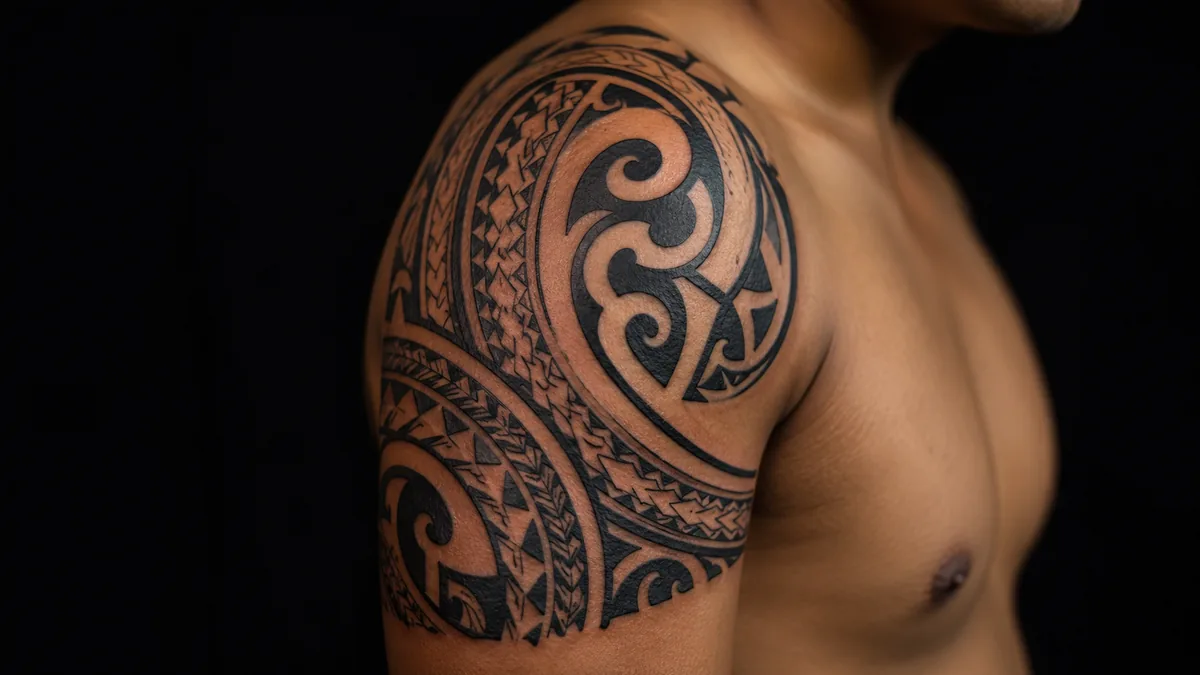
The most common design requests break into a few clear categories. Geometric patterns built on triangles, diamonds, and repeating angular shapes form the backbone of most Filipino tribal work. Centipede motifs, called by the Kalinga term ‘gayaman,’ appear frequently and represent warrior courage. Sun and ray compositions reference both pre-colonial solar deities and modern national pride through the Philippine flag.
Serpent and dragon-like figures, human figures in abstracted form, and fern or plant motifs representing growth also show up regularly. Some clients come in wanting strict historical accuracy, others want a fusion that blends Kalinga handtap aesthetics with bold contemporary linework. Both are valid approaches. Just be clear with your artist about which direction you’re going.
Black and Grey vs. Solid Black: How Color Works Here
Traditional Filipino tribal tattoos were done in solid black. Full stop. The historical method used thorns, citrus thorns, or handmade tools to tap carbon-based pigment into skin. There was no grey wash, no shading gradients. The designs relied entirely on bold solid fills and the negative space between them to create contrast and visual rhythm. That’s a clean, honest aesthetic that holds up for decades.
Modern interpretations sometimes incorporate grey shading to add depth to larger compositions, especially when artists are building sleeve or back-piece work. That’s an artistic choice, not a traditional one. If you want maximum authenticity, go all-black solid fill. It reads strong, ages well, and honors the original visual language. Avoid color. It doesn’t suit this style and pulls the design away from its roots.
Placement, Pain, and How These Age on Skin
Filipino tribal work is bold geometry, which means it’s forgiving on placement compared to fine-line styles. Forearms, upper arms, shoulders, chest, and shins are all excellent real estate. These pieces read from across the room, which is the whole point. Historically, designs covered the torso, thighs, and even the face, but most modern clients stick to arm and chest work for professional reasons.
Pain-wise, the inner arm, ribs, and shin are the spicy zones. Outer upper arm and shoulder are manageable. These designs heal nicely because they use solid black with clean edges, no fine-line fragility. Bold will hold here. Give it three to four weeks to fully settle, keep it moisturized, and avoid sun exposure during healing. Long-term, solid black geometric work is one of the best-aging tattoo styles you can choose.
Who Gets Filipino Tribal Tattoos and How to Make One Yours
The core audience is Filipino-Americans and members of the diaspora reclaiming ancestral identity. Many clients come in knowing their regional heritage, whether Ilocano, Visayan, Cebuano, or Cordilleran, and want designs connected specifically to those roots. Others are non-Filipino clients drawn to the bold geometric aesthetic who respect the cultural weight. Both can work, but the conversation should happen before the appointment.
To make it personal, talk to your artist about specific symbols tied to your family region or values you want to carry. Incorporating your own story, whether military service, family lineage, or a personal milestone, mirrors exactly what these tattoos originally did. Find an artist who specializes in indigenous Filipino work or has studied it seriously. This style deserves craft and cultural awareness, not just someone pulling a template off the internet.