
Powerful Spiritual Tattoo Meaning: Symbolism, Styles & Personalization
Spiritual tattoos occupy a distinctive space in body art. They carry weight beyond decoration, serving as markers of belief, transformation, or interior alignment. Whether you seek protection, remembrance, or a visual anchor for practice, the symbols you choose deserve thoughtful consideration. This guide examines enduring spiritual motifs, how artistic styles reshape their impact, and methods for making any design authentically yours.
Foundational Symbols and Their Resonance
Certain images have traveled across centuries and continents, accumulating layers of interpretation while retaining core associations. Understanding these roots helps you select imagery that genuinely connects with your intentions.
The Lotus and Rising Above
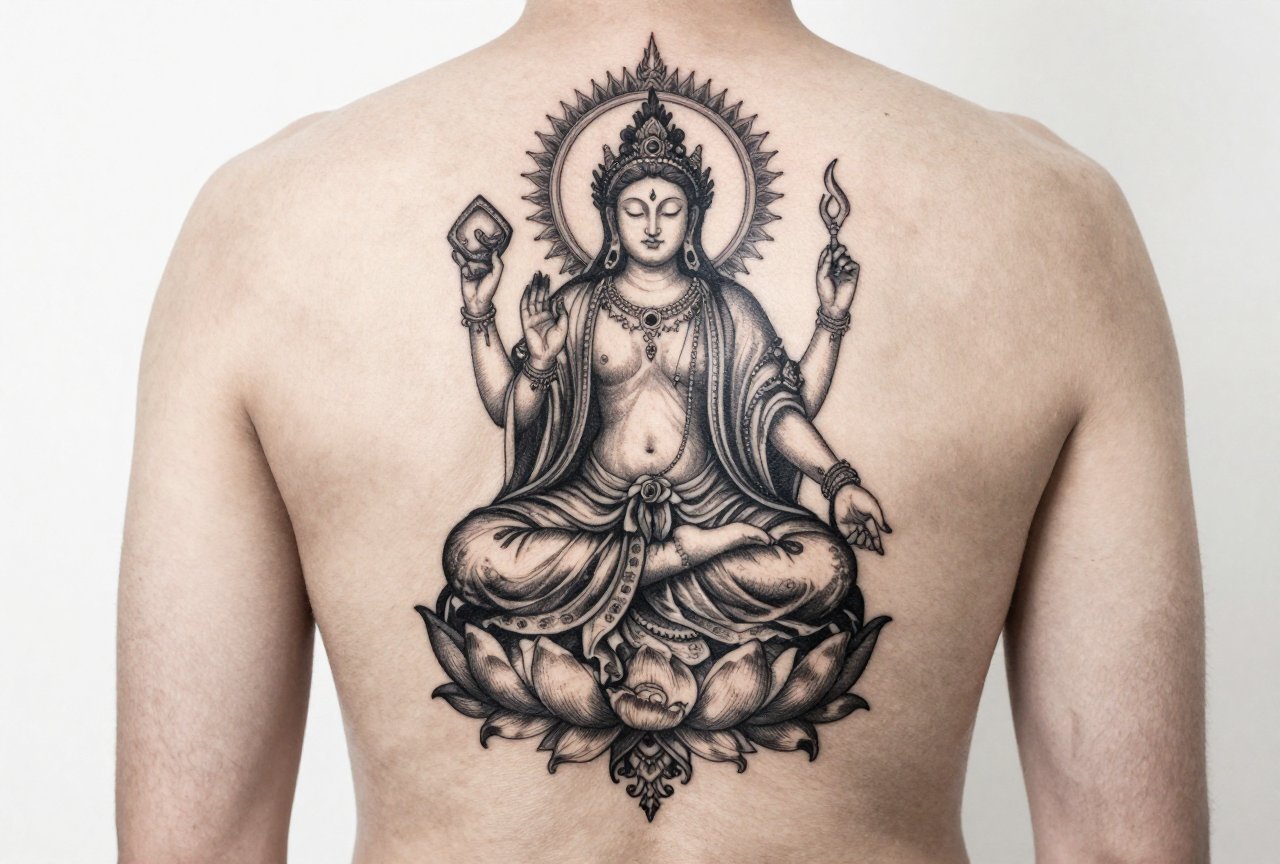
The lotus flower emerges from murky water to bloom untouched by mud. In Buddhist and Hindu traditions, this trajectory mirrors spiritual awakening: the practitioner rises through confusion toward clarity. A lotus rendered with closed petals suggests potential or ongoing practice; fully opened blooms indicate arrival at insight. Placement amplifies this narrative. A lotus ascending the spine traces the subtle energy channels some traditions map along the vertebral column. On the wrist or forearm, it becomes a visible reminder during daily tasks.
The Eye and Vigilant Awareness
The Eye of Providence, the nazar, the Egyptian wedjat: cultures worldwide have developed eye motifs as protective emblems. The common thread is conscious witnessing. An eye tattoo can represent your own commitment to seeing clearly, or invoke guardian presence. Stylization matters enormously here. A realistic eye carries intimacy, almost vulnerability. Geometric or stylized treatments create distance, suggesting universal principle rather than individual gaze. Consider what relationship you want with the symbol’s watchfulness.
The Serpent and Cyclical Renewal
Snakes provoke complex reactions, which makes them potent spiritual material. Ouroboros imagery, the serpent consuming its tail, encapsulates eternal return and self-begetting transformation. In Mesoamerican traditions, feathered serpents bridge earth and sky. Kundalini practice describes coiled serpent energy at the spine’s base. A serpent tattoo might acknowledge shadow, celebrate regeneration, or chart personal metamorphosis. The direction of movement, whether ascending or circular, subtly shifts interpretation.
How Style Transforms Sacred Imagery
The same symbol rendered in different tattoo traditions communicates entirely differently. Style is not mere aesthetic preference; it is interpretive framework.
Traditional and Neo-Traditional Approaches
American and Japanese traditional styles employ bold outlines, limited palettes, and established visual conventions. These constraints lend spiritual symbols the weight of cultural continuity. A traditional mandala or sacred heart carries institutional gravity, as though validated by generations of practice. Neo-traditional work loosens these rules, introducing broader color range and more fluid composition. The result often feels more personal, less doctrinal. You gain individual expression while retaining symbolic legibility.
Blackwork and Sacred Geometry
Blackwork, whether solid saturation or intricate dotwork, strips away chromatic distraction. For spiritual subjects, this austerity can intensify focus. Dotwork mandalas or stippled religious figures invite prolonged viewing; the eye completes patterns that dense black might obscure. Sacred geometry, often executed in precise blackwork, presents mathematical ratios as divine language. The flower of life, Metatron’s cube, or the golden spiral become meditative objects through repetition and scale. Large geometric pieces on the back or chest function almost as architectural elements, body as temple.
Watercolor and Ethereal Treatments
Watercolor-style tattoos, with their apparent spontaneity and bleeding edges, suggest impermanence and emotional immediacy. Applied to spiritual subjects, this technique can evoke mystical experience rather than doctrinal certainty. A watercolor lotus or dissolving om reads as momentary glimpse rather than fixed creed. The risk lies in longevity: watercolor techniques can blur faster than structured alternatives. Discuss with your artist how specific pigments and placement might preserve the effect.
Personalization Without Dilution
The most compelling spiritual tattoos avoid generic application. They result from dialogue between established symbol and individual circumstance.
Integrating Personal Elements
Consider what modifications honor rather than distort a symbol’s essence. Birth flowers woven into a lotus design root universal awakening in specific life. Coordinates or celestial positions from significant dates can orbit a central sacred image. Script in ancestral languages adds layers of belonging. The key is research: understand a symbol’s boundaries before stretching them. Some traditions actively discourage casual adaptation, while others embrace syncretism. Respect for source culture prevents unintentional appropriation.
Placement as Intention
Where you wear a spiritual tattoo shapes its function. Locations visible to others invite witness and conversation; hidden placements maintain private devotion. The sternum, over the heart, suits symbols of core commitment. The back of the neck, where you cannot see it directly, suggests something that guides from behind or above. Hands and fingers make symbols participatory, present in gesture and touch. Consider how the tattoo’s location interacts with your actual spiritual practice. A meditation aid on the inner wrist enters your field of vision naturally in seated practice.
Research and Artist Selection
Spiritual tattooing demands particular diligence in preparation. The subject matter deserves expertise beyond technical competence.
- Study the historical and cultural context of symbols that attract you. Books on religious art, museum collections, and scholarly sources provide deeper grounding than image searches alone.
- Seek artists with demonstrated experience in your chosen style and subject. Portfolios reveal not just technical skill but sensitivity to spiritual content. Some artists specialize in specific traditions; others excel at synthesizing personal symbolism.
- Schedule consultation before committing to design. Discuss your intentions, ask how the artist would approach the symbol, and evaluate whether they listen as much as they advise.
- Request to see healed work, especially for techniques like dotwork or watercolor where aging significantly affects appearance.
- Consider timing. Major spiritual transitions often produce urgent tattoo desires. Allowing some settling time helps distinguish genuine alignment from reactive impulse.
Living With Spiritual Ink
A tattoo’s meaning evolves as you do. The symbol that marked crisis may eventually commemorate survival. What began as external devotion might become internal reminder. This mutability is not failure of the original intention but evidence of living symbolism.
Aftercare extends beyond physical healing. Photograph your tattoo in different lights, at different ages, to observe how it settles into your skin. Some practitioners incorporate their tattoos into ongoing spiritual practice, touching or visualizing them during meditation. Others find that distance from the original impulse allows new significance to emerge.
The most enduring spiritual tattoos balance specificity with openness. Too rigidly personal, they become incomprehensible to anyone including future versions of yourself. Too generic, they fail to anchor your particular journey. The middle path produces symbols that remain legible while continuing to reveal.
Final Thoughts
Spiritual tattooing offers a rare convergence of body, art, and meaning. The symbols available span human history; the styles for rendering them multiply yearly. Your task is not to choose the most impressive or most popular option, but to find genuine correspondence between interior need and exterior form. This requires patience, research, and honest self-assessment. The result, when achieved, becomes part of your embodied life: visible marker of invisible commitment, subject to the same change and persistence that characterize any serious spiritual path.
Frequently Asked Questions
How do I know if a spiritual symbol is appropriate for me to use?
Research the symbol’s origins and any restrictions on its use. Some symbols require initiation or belong to closed traditions. When uncertain, consult practitioners from that tradition or choose alternatives with clearer open usage. Cultural respect matters as much as personal attraction.
What styles work best for small spiritual tattoos?
Fine line and single needle techniques preserve detail at reduced scale. Simple blackwork symbols remain legible longer than intricate color work when miniaturized. Avoid excessive detail below two inches; negative space and bold silhouettes often read more clearly than dense composition.
Can spiritual tattoos be covered or removed if my beliefs change?
Covering is often feasible, though light or large pieces may limit options. Laser removal works on most black and darker pigments, with multiple sessions required. Consider this possibility when choosing initial placement and size. Symbols with personal rather than institutional meaning sometimes adapt more gracefully to evolving belief.
How should I prepare for a consultation about a spiritual tattoo?
Bring visual references from diverse sources, not just tattoo portfolios. Articulate what the symbol represents to you, not just what it is. Be open to the artist’s suggestions about technical execution while maintaining clarity about non-negotiable elements. Ask about their experience with similar subjects and request to see healed examples.









