
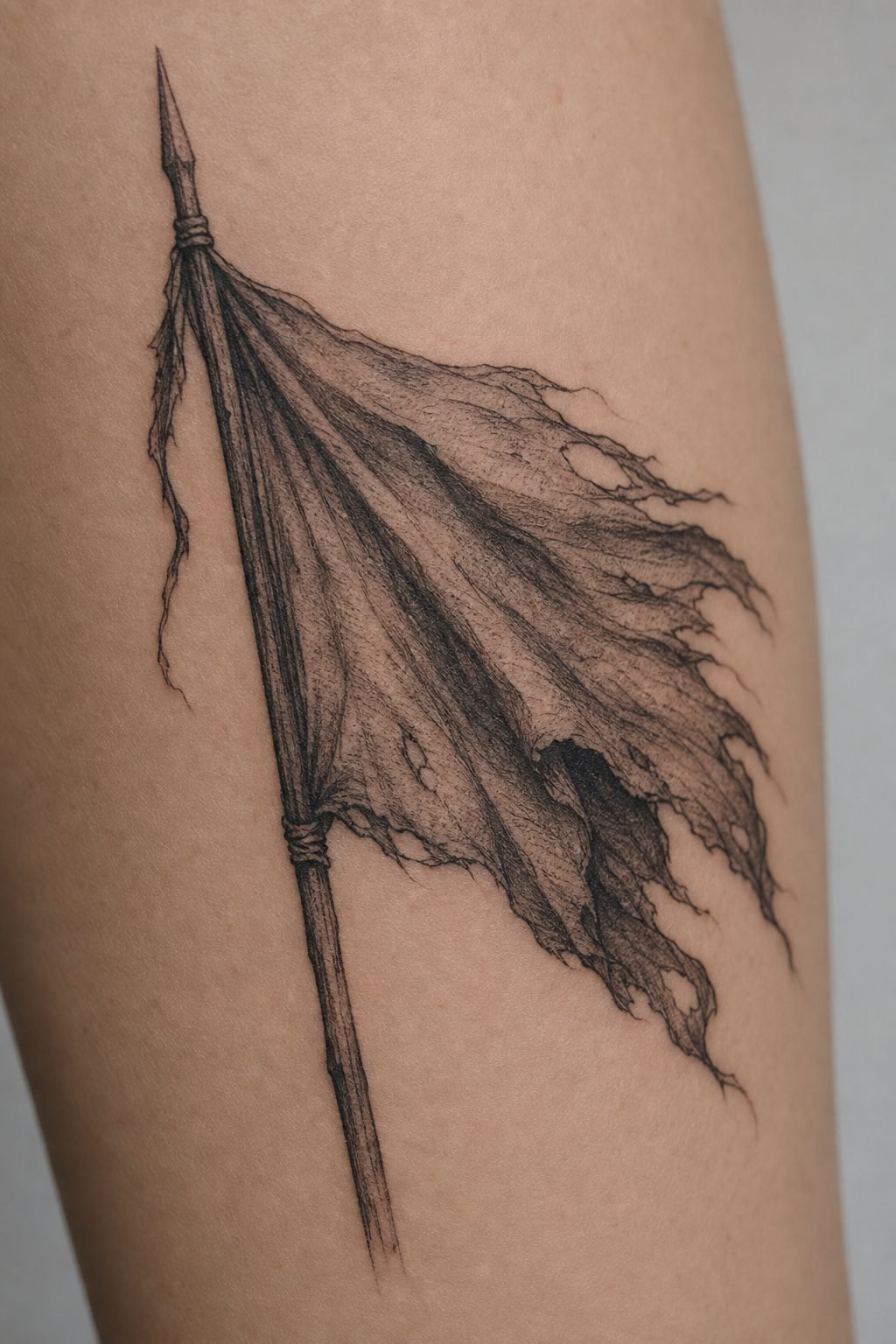
Origins and Historical Context
The Confederate battle flag, commonly called the rebel flag, emerged during the American Civil War as the military banner of the Army of Northern Virginia. Its distinctive blue saltire cross studded with white stars against a red field was designed for battlefield visibility, not as a national emblem. After the war, this particular design faded from official use until a resurgence in the mid-20th century, often linked to Southern regional identity movements and, problematically, to resistance against civil rights legislation.
Understanding this trajectory matters for anyone considering the image permanently on skin. The flag’s meaning has never been static. During the 1950s and 1960s, it became increasingly visible in contexts explicitly opposed to racial integration. Simultaneously, some rural and working-class communities in the South adopted it as a generalized symbol of defiance against perceived federal overreach. These dual threads, resistance and racism, remain inseparable in the flag’s public reception regardless of individual intent.
Regional Variations in Perception
Geography significantly shapes how this symbol reads. In some Southern states, you might encounter the flag displayed at heritage events or motorcycle rallies with claims of ancestral pride. Elsewhere, particularly in urban centers or outside the United States, it functions almost exclusively as a hate symbol associated with white supremacist movements. Tattooing it on your body means carrying all these potential readings into every room you enter, regardless of your personal interpretation.
Symbolism and Interpretive Tensions
Those who choose rebel flag tattoos often cite several stated motivations, though each exists in tension with broader cultural meaning:
- Heritage claims: Ancestral connection to Confederate soldiers, framed as family history rather than political statement
- Regional identity: Generalized Southern cultural pride, often blurred with country music aesthetics and rural working-class aesthetics
- Rebellion archetype: The word “rebel” itself, abstracted from historical specificity into a generic anti-authority stance
- Subcultural affiliation: Association with certain motorcycle clubs, country music scenes, or rural social networks where the symbol functions as group marker
Each of these framings faces substantial critique. Heritage arguments rarely account for the flag’s explicit adoption by segregationist governments and Klan organizations. The “rebel” abstraction requires stripping the symbol of its actual historical content, a move that itself constitutes a political choice. What reads as personal pride in one context becomes threatening in another, and tattooed skin crosses contexts constantly.
The Intent vs. Impact Problem
Individual meaning-making has limits in tattoo culture. Unlike a private keepsake, skin is publicly visible and socially legible. You do not control interpretation. The rebel flag’s established use in documented hate crimes, its presence at the 2017 Charlottesville rally, and its ongoing deployment by white nationalist groups create a interpretive field that personal narrative cannot fully override. This is not about policing expression but about recognizing how symbols function in collective spaces.
Tattoo Styles and Technical Approaches
From a purely technical standpoint, the rebel flag presents specific design challenges and opportunities. Its bold geometry, high contrast, and limited color palette suit certain tattoo traditions particularly well.
Traditional and Neo-Traditional Execution
American traditional style, with its heavy black outlines, limited saturated color, and flat shading, handles the flag’s graphic quality naturally. The blue cross, white stars, and red field translate cleanly into this vocabulary. Neo-traditional approaches allow more dimensional rendering, sometimes incorporating scrollwork, eagles, or other patriotic imagery around the central motif. These compositions often appear on upper arms, chest panels, or as part of larger Southern-themed sleeves.
Realistic and Photographic Rendering
Some artists approach the flag with photorealistic technique, capturing fabric texture, wind movement, and weathering. This requires substantial skill in color saturation and value control. The challenge lies in maintaining the red’s intensity without muddiness, achieving true navy rather than purple-blue, and keeping white stars distinct against dark backgrounds. Realistic flag tattoos typically demand larger scale to preserve detail, often appearing on backs, thighs, or full chest pieces.
Integrated and Modified Designs
Variations attempt to complicate or soften the symbol’s impact. Skulls wearing Confederate caps, crossed rifles with the flag as backdrop, or combinations with state flags (particularly Virginia, Tennessee, or Texas imagery) create narrative density. Some designs incorporate military unit numbers, family names, or dates of ancestral service. Others merge the flag with Christian symbols, a pairing with its own complex history given the religious rhetoric of the Lost Cause mythology.
Placement, Visibility, and Professional Consequences
Where you place this tattoo significantly shapes its social operation. Highly visible locations, face, neck, hands, forearms, broadcast the symbol constantly and cannot be easily concealed for employment or social situations. Even in regions where the flag carries more sympathetic readings, corporate workplaces, healthcare settings, and professional services environments increasingly treat visible rebel flag tattoos as disqualifying.
Concealed placement, upper arms under short sleeves, back, torso, thighs, offers more control over disclosure. However, this itself carries information: choosing to hide a tattoo suggests awareness of its contested status. The decision to conceal or reveal becomes an ongoing social negotiation rather than a settled statement.
- Cover-up considerations: The flag’s strong red and dark blue pigments challenge later modification; these colors resist laser removal and complicate overlay designs
- Aging and distortion: Like all bold color tattoos, edges soften and saturation dulls over decades; the flag’s readability depends on maintaining clear contrast between its three main colors
- Scar tissue and skin type: The red pigments used for the field can heal unevenly on darker skin tones or skin prone to keloid formation
Alternative Symbols and Redirected Intent
For those drawn to Southern heritage, regional pride, or rebel identity without the Confederate flag’s specific historical baggage, several alternatives exist. State flags, particularly those with less contested histories, offer geographic specificity. The Gadsden flag (“Don’t Tread on Me”) provides anti-authority symbolism without the slavery association. Musical imagery, country or blues iconography, can signal cultural affiliation more precisely.
Some choose Civil War-era imagery stripped of flag specificity: unit insignia, period weaponry, or ancestor portraits. These approaches require more explanation but resist immediate categorization. Others shift to natural imagery associated with the South, dogwood, pine, magnolia, river systems, achieving regional identification through non-political vocabulary.
When Heritage Means Accountability
Genealogical connection to Confederate soldiers need not require celebratory display. Many descendants choose research, documentation, and honest acknowledgment of ancestors’ choices within their historical context over symbolic glorification. This approach, harder to tattoo but more intellectually rigorous, recognizes that family history includes participation in systems now universally condemned.
Final Thoughts
The rebel flag tattoo sits at an uncomfortable intersection: personal meaning, collective history, and unavoidable public interpretation. No amount of individual reframing dissolves the symbol’s documented use in movements of racial terror and systematic oppression. The technical skill applied, the personal sincerity claimed, the ancestral connection asserted, none of these neutralize what the flag has been and continues to be in living memory.
Good tattoo decisions require honesty about this triangulation. Ask yourself what you actually want to communicate, whether the symbol does that work effectively, and whether alternative imagery might serve your intent with less collateral damage. The permanence of tattooing demands this level of scrutiny. Skin remembers longer than intention shifts.
If you proceed, do so with full knowledge of what you carry: not just ink and history, but the reactions you will elicit, the doors that may close, the conversations you will repeatedly need to have. The body is not a private canvas. It moves through shared space, and symbols with this weight demand that you account for them, again and again, for as long as you live.
Frequently Asked Questions
Can a rebel flag tattoo ever be purely about heritage without racist implications?
The heritage framing faces significant historical challenges. The flag’s widespread adoption by segregationist governments and white supremacist organizations in the 1950s-1960s, well after the Civil War, created meanings that cannot be separated by individual intent. You may personally intend heritage commemoration, but the symbol’s public history includes explicit use for racial intimidation. No private meaning fully overrides this established context.
How do tattoo artists typically respond to requests for rebel flag designs?
Responses vary substantially by region and individual artist. Some refuse outright based on the symbol’s hate group associations. Others will execute the work but may require placement that can be concealed. A growing number of shops, particularly in urban areas, have explicit policies against Confederate imagery. You should expect to encounter refusal and be prepared to respect it without argument.
What are the best technical approaches for a realistic flag tattoo?
Photorealistic flag rendering requires substantial scale, typically larger than a handspan, to preserve detail. Key technical demands include: maintaining true red saturation without orange drift, achieving navy blue that doesn’t heal toward purple, keeping white stars distinct through careful negative space or bright white ink application, and capturing fabric texture through varied line weight and selective highlight. These challenges make experienced color specialists essential.
How difficult is it to cover up or remove a rebel flag tattoo later?
Cover-up difficulty depends heavily on the original’s color saturation and age. The dark blue and deep red pigments used in most rebel flag tattoos resist both laser removal and overlay techniques. Red pigments, particularly older formulations, can become paradoxically darker under some laser wavelengths. Successful cover-ups typically require larger designs with substantial dark areas, black and grey Japanese imagery, or dense geometric patterns. Complete removal usually requires many sessions with significant expense and incomplete results.









