Red ink tattoos were the one style I kept screenshotting, then talking myself out of. I finally got my first tiny red piece the week I turned 30, and the surprise wasn’t the pain. It was how different the healed red looked once the shine dropped and my skin settled.
Here’s what it looked like before
[IMAGE: clean collarbone skin before tattooing, soft daylight, delicate anatomy view, realistic skin texture, no stencil, calm editorial close-up]
Before I booked it, I’d a clean stretch of collarbone skin I’d been saving because I knew red can go either soft and elegant or patchy fast. I’d seen fresh photos that looked candy bright, but I didn’t trust them.
Fresh tattoos lie a little. Everything looks louder right after the wipe.
So I walked in with screenshots, a lot of questions, and one hard rule for myself. If the design only looked good in a swollen first-day photo, I wasn’t doing it. I wanted something that would still read clean at a glance after the peel, after the silver skin, after normal life hit it.
- I Saved Healed Red Ink Tattoo References
- I Checked Red Ink On My Skin Tone
- I Chose Hazel For Fine Red Linework
- I Picked A Tiny Red Heart Tattoo
- I Tested Red Script On Collarbone Skin
- I Placed A Red Bow Behind My Ear
- I Kept The Baddie Red Ink Razor Thin
- I Added A Meaningful Red Birth Flower
- I Moved The Red Snake To My Hip
- I Asked About Red Ink Allergy Risk
- I Planned Extra Clearance For Red Healing
- I Protected Fresh Red Ink From Sun
- I Checked The Healed Red Tattoo Shade
1I Saved Healed Red Ink Tattoo References
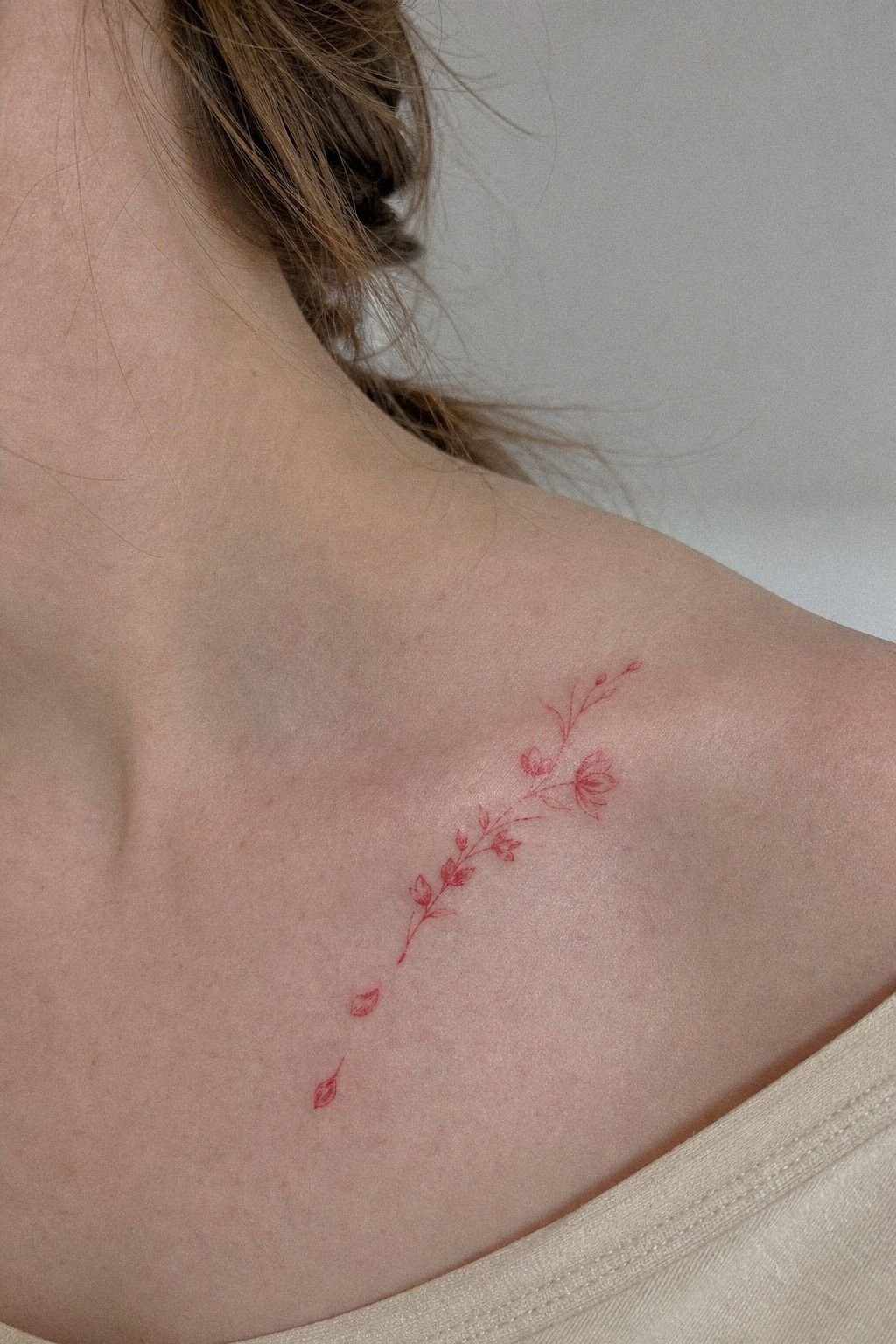
[IMAGE: healed red ink reference board on a phone screen, soft natural daylight, multiple healed tattoo photos, pale skin tones, clean studio feel]
The first thing I did was stop saving fresh tattoos and start saving healed ones. You should do the same if you’re thinking about red ink tattoos, because fresh red always looks louder than the version you’ll wear in six months. On fair cool-pink skin, especially across the collarbone, healed red can shift from cherry to rose faster than people expect.
I made myself compare day-one photos with healed shots in natural daylight, not studio flash. That changed everything.
The pieces I kept loving had crispy lines, simple shapes, and enough contrast to stay legible once the top layer calmed down. If you want a side-by-side on another pale pigment, look at white ink tattoos too, because the same lesson applies.
Healed work tells the truth. Fresh work sells the appointment.
2I Checked Red Ink On My Skin Tone
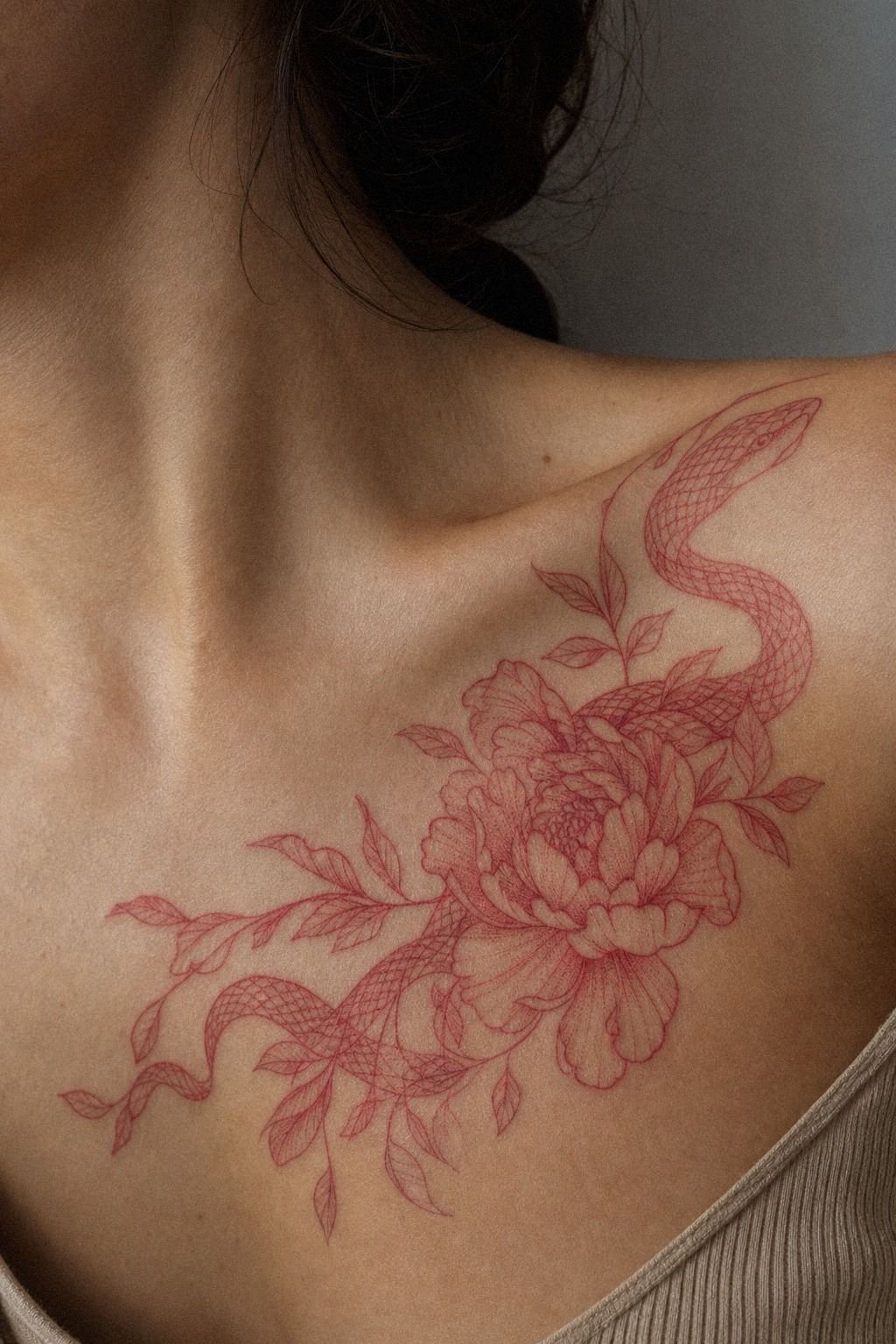
[IMAGE: healed red ink swatches on warm ivory skin, soft scarlet versus bright candy red, gentle daylight, realistic healed texture]
Skin tone matters more with red than Pinterest makes it seem. On medium warm ivory skin, the red I liked most wasn’t neon at all.
It sat closer to a softened scarlet, and that mattered because I wanted the tattoo to heal nice, not scream on day one and flatten later. You should always ask to see healed red on skin that’s close to yours.
Hazel showed me the difference between a bright candy red and a deeper dark red tattoo tone on warm skin, and it clicked fast. The brighter sample looked cute fresh, but the slightly deeper red kept its edge better once the skin settled.
Warm undertones can make a weak red look almost dusty after healing. That is why I checked healed samples before I committed.
If fading is your big worry, does red tattoo ink fade faster breaks that down in plain English.
3I Chose Hazel For Fine Red Linework
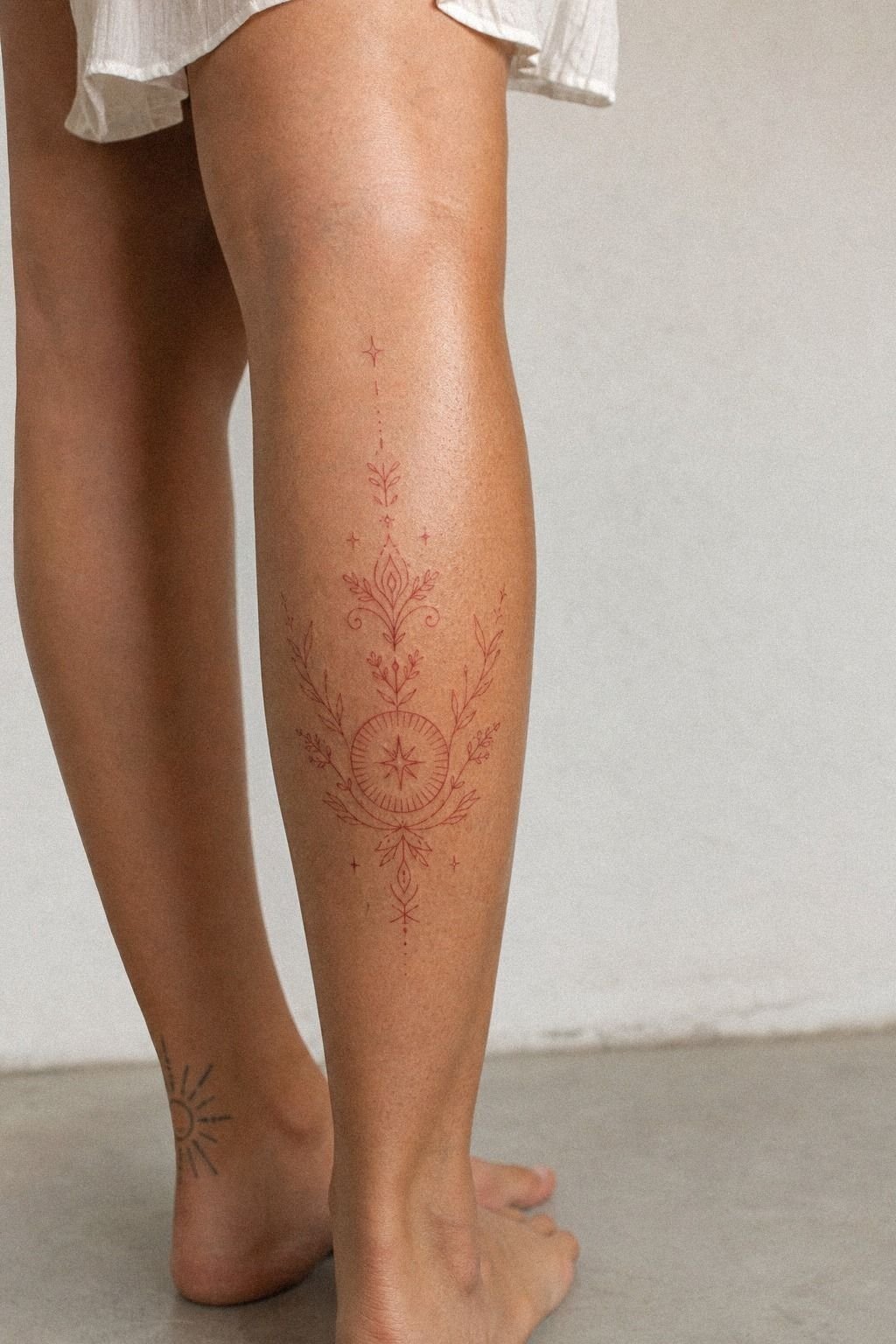
[IMAGE: fine red linework setup at a tattoo station, red ink cap, single needle tools, gloved hands, bright clean light, realistic studio detail]
I picked Hazel because fine red linework needs a steady hand and zero scratcher energy. A soft color still needs confident linework. If the pull is fuzzy, weak, or overworked, red shows it fast.
She also had healed examples that looked clean instead of chewed up. That mattered more than any fresh portfolio reel. I wanted single-pass lines, calm skin, and a tattoo that would age cute on me instead of fading into a pink blur.
4I Picked A Tiny Red Heart Tattoo
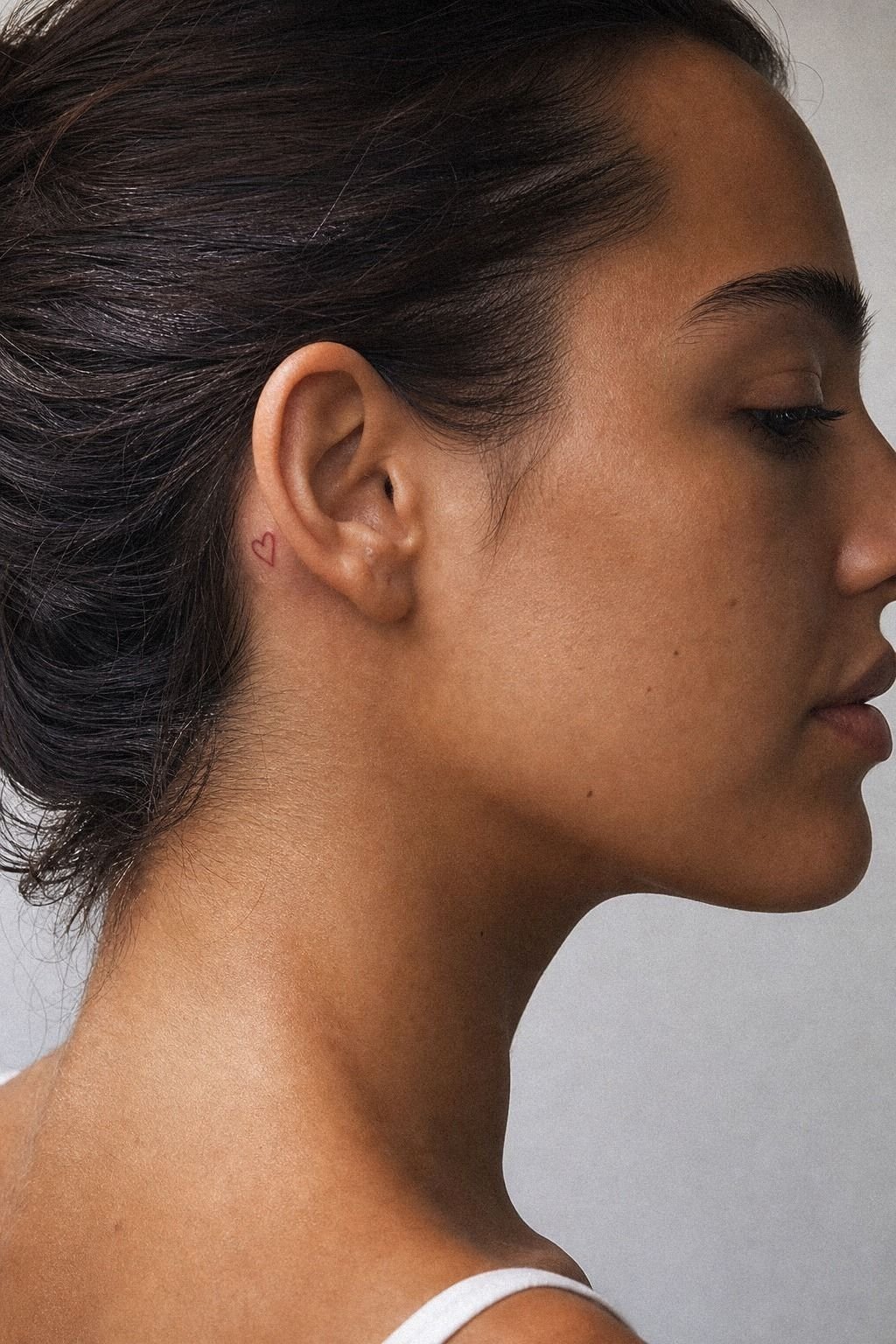
[IMAGE: tiny red heart behind ear on healed skin, delicate placement, crisp line, soft editorial lighting, subtle realistic redness]
I almost put the tiny red heart on my wrist, and I’m glad I didn’t. That size in a high-wear zone is how cute turns to soup. Instead, I looked at the curve behind the ear and the way a tiny red mark can tuck into that anatomy without fighting every hand wash, laptop edge, or watch strap you deal with all week.
The heart itself stayed small, about 0.5 inch, because I wanted it to read like a clean accent instead of a blob. But placement did the heavy lifting.
Behind the ear, it felt more intentional and aged cuter on me than it would have on the wrist. And yes, it was spicy for a minute because the skin is thin there. Still worth it!
If you’re not ready to commit, 20 cute henna tattoos to try before you commit to ink is a smart test run.
5I Tested Red Script On Collarbone Skin
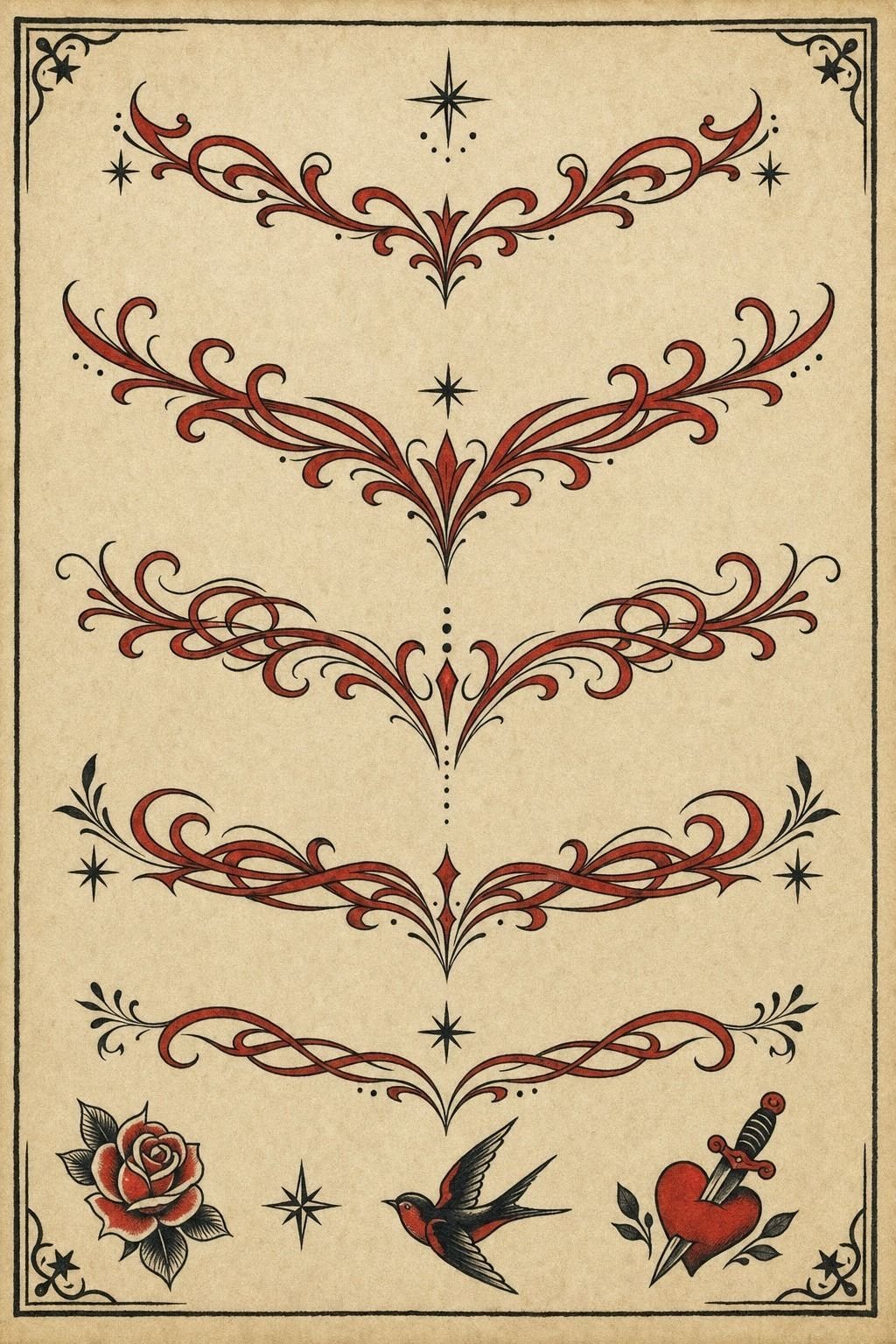
[IMAGE: red script stencil on collarbone before tattooing, elegant cursive test, open counters, delicate anatomy, soft studio light]
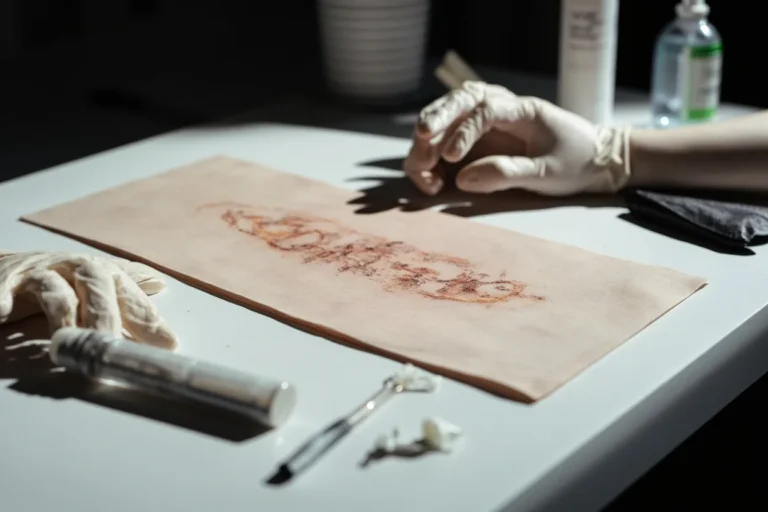
Before I let script touch my collarbone, I tested the idea on paper and on a stencil because script is where red can go wrong fast. The flash looked beautiful on off-white paper, sure, but paper doesn’t swell, peel, or blur.
Skin does. You should always ask how thin the downstrokes can really be before they stop healing clean.
I ended up passing on the tiniest script option because it needed too much detail for the size. That was the right call.
A clean 2.5 to 3 inch word with open counters has a chance to stay readable; a whisper-thin micro script usually doesn’t. But I still loved the look of red on the collarbone, so the test wasn’t wasted.
It taught me the rule I use now: if you need to squint at the stencil, make it bigger or change the design. Why tattoos blur over time explains that drift really well.
6I Placed A Red Bow Behind My Ear
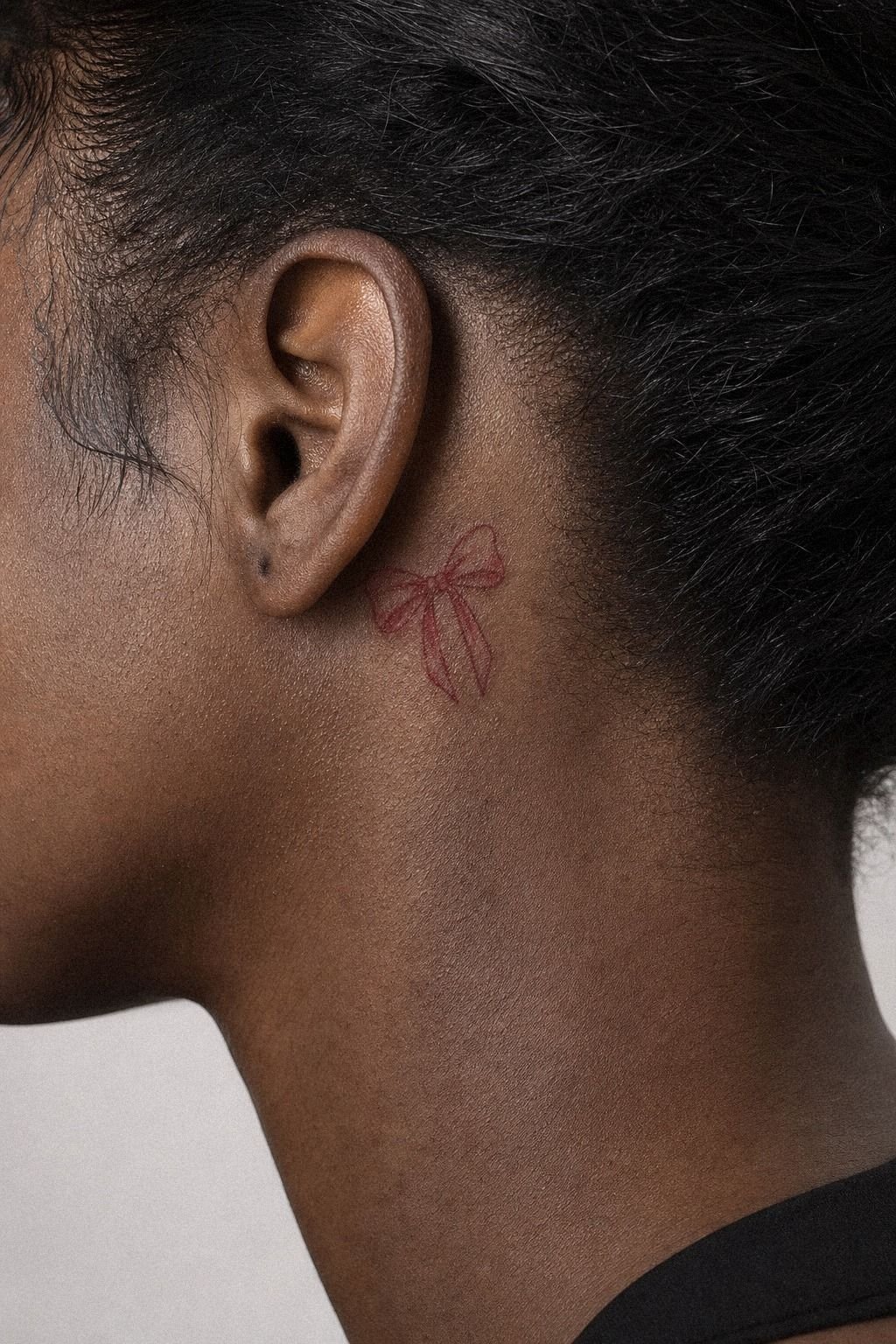
[IMAGE: red bow tattoo behind ear on fresh but clean skin, simple loops, airy open skin, feminine but sharp, realistic tattoo close-up]
The bow won because it suited the placement better than script ever would. A tiny bow gives you open shapes and a clear silhouette, which is exactly what a delicate red tattoo needs in a snug spot like that.
It also kept the vibe playful without getting busy. I would pick a simple bow over tiny ornate script every time for this placement, because the bolder outline has a much better shot at healing smooth and readable.
7I Kept The Baddie Red Ink Razor Thin
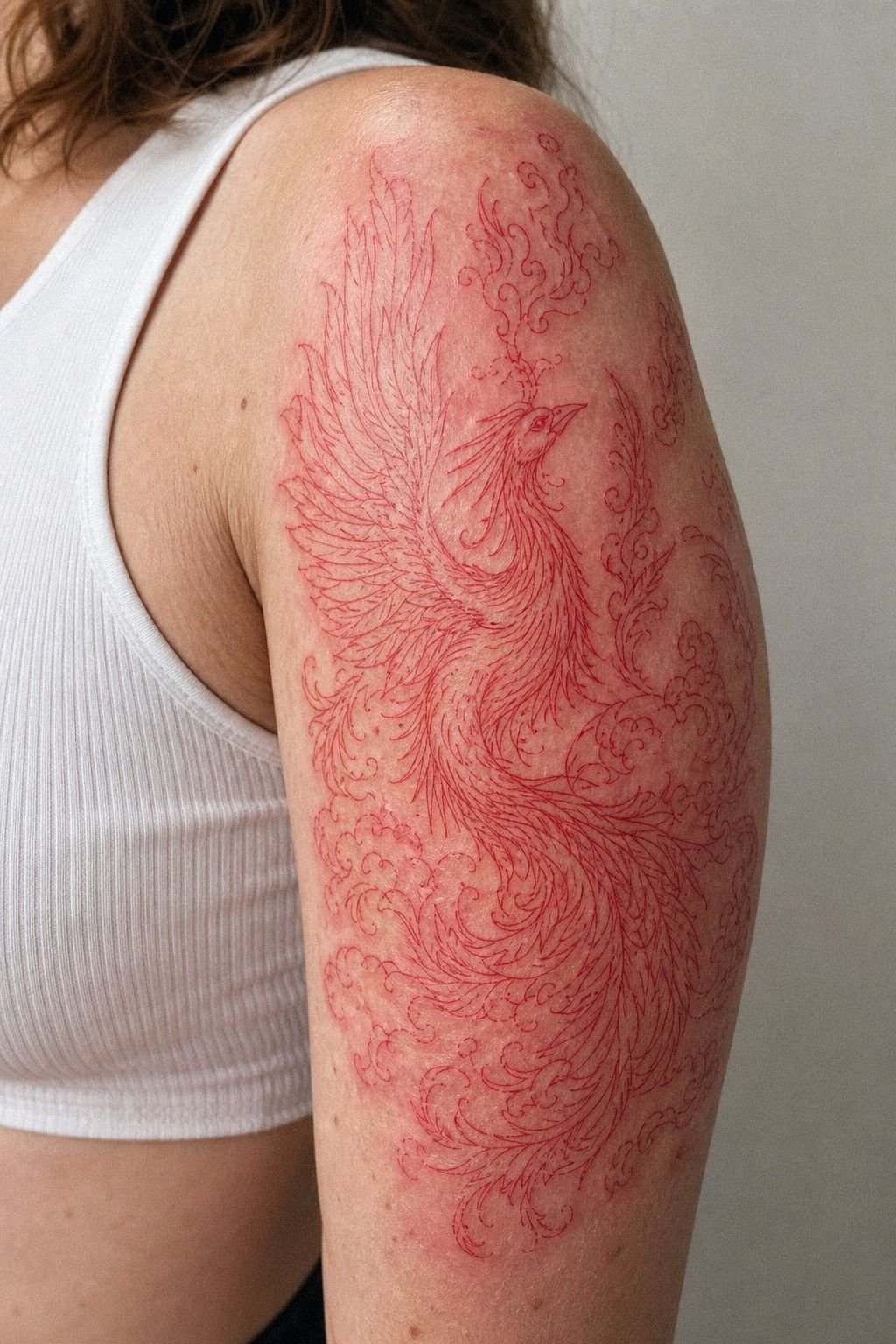
[IMAGE: razor-thin red fine line tattoo on upper arm, delicate but solid line, soft skin texture, clean healed look, minimal design]
This is where I got strict. A baddie tats design only works in red if the line is razor thin but still confident.
Too thick, and it loses that flirtier edge. Too thin and shallow, and it drops out patchy.
The sweet spot is a line that looks delicate up close but was still packed with intention when it went in.
On my upper arm test, Hazel showed me why not every artist should do this style. Red fine line is not just drawing small.
It is pressure control, good needles, and knowing when to stop before the skin gets angry. But the design also needs restraint. No tiny stars, lashes, sparkles, and filler just because Pinterest loves clutter. Keep it clean.
Keep it solid. If your artist’s healed lines wobble, walk. And if you want to understand irritation risks before booking, red ink tattoo allergy should be in your tabs.
8I Added A Meaningful Red Birth Flower
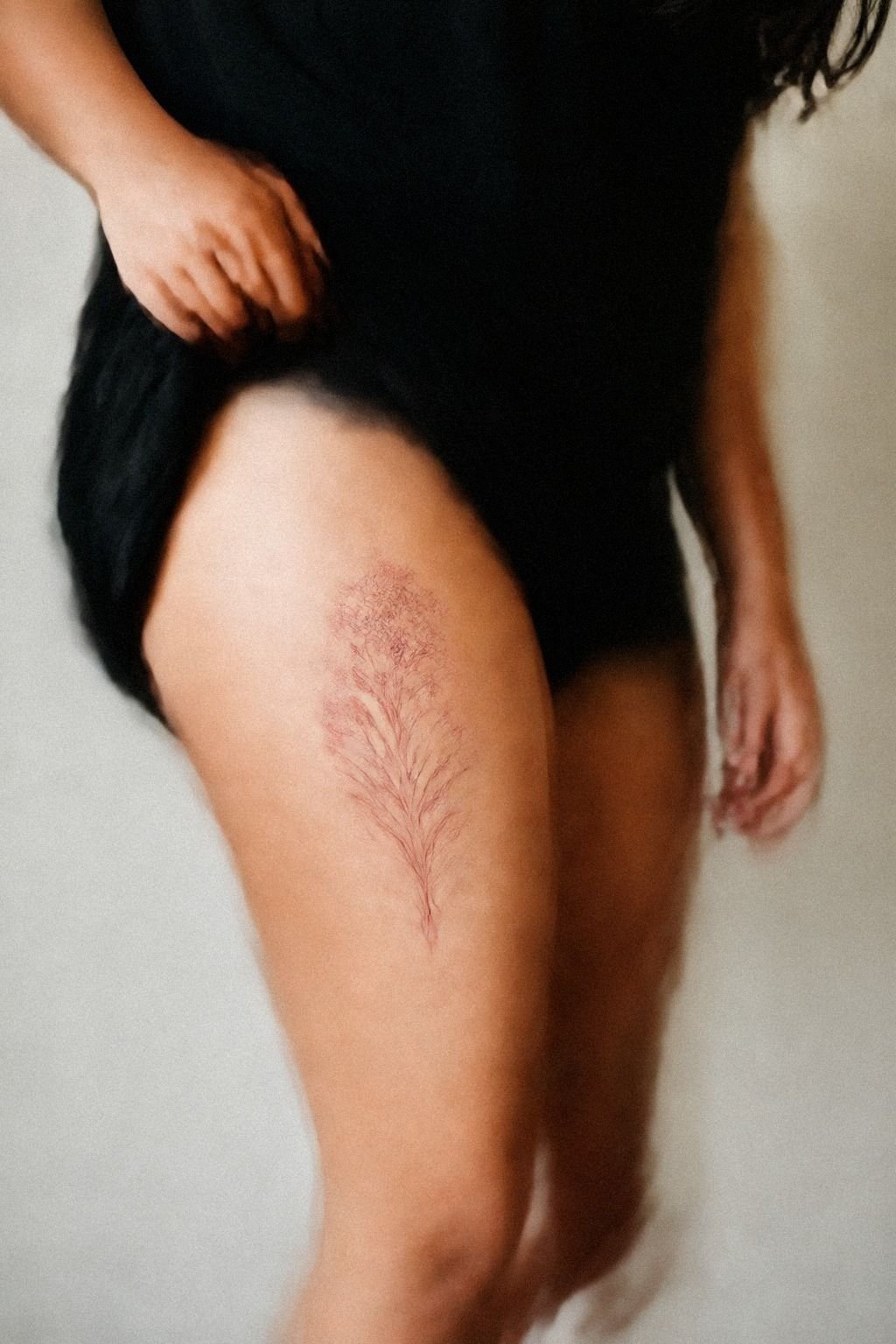
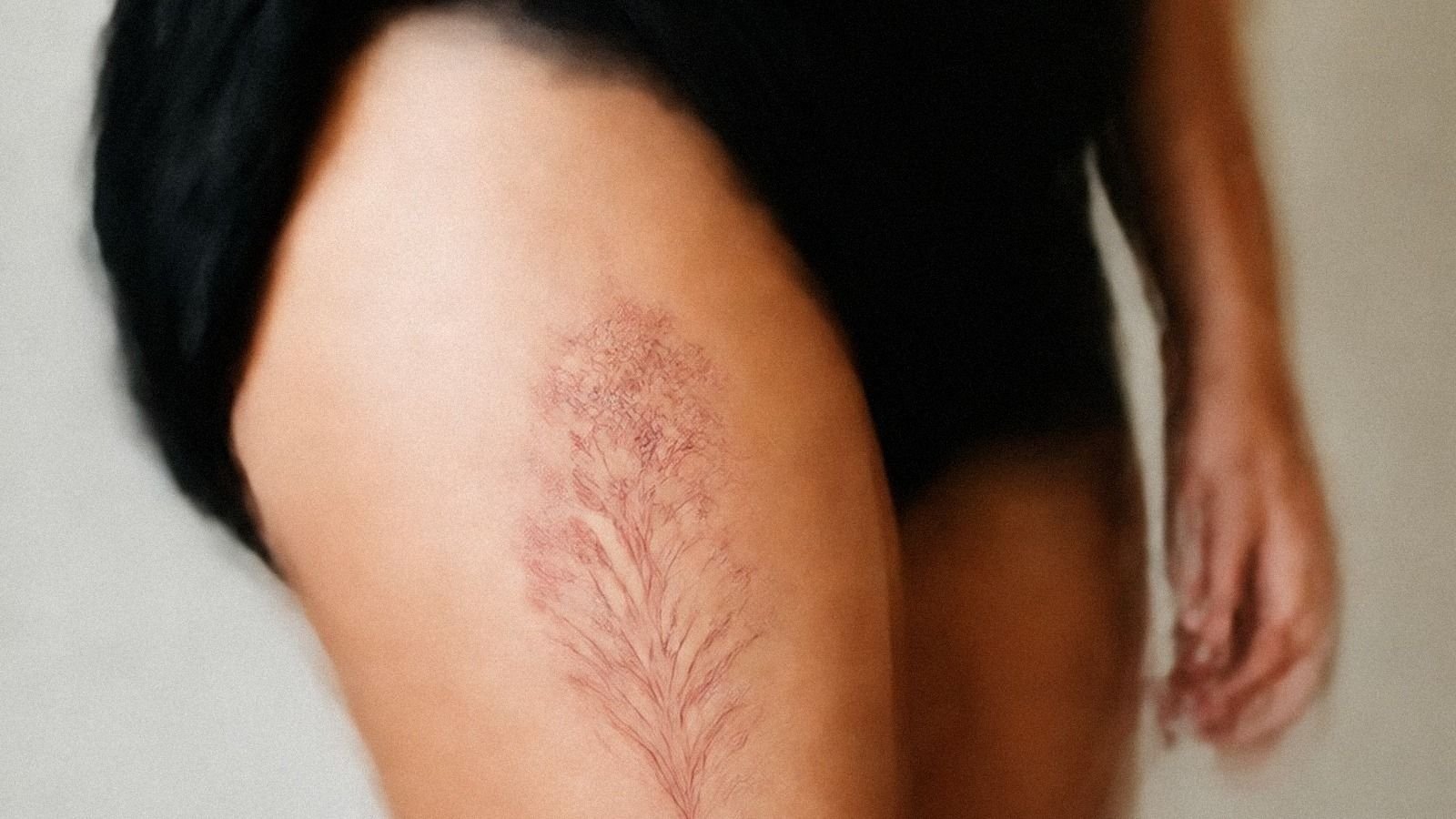
[IMAGE: red birth flower tattoo on thigh with open petals and long stem, soft healed tone, elegant botanical linework, realistic skin]
My birth flower piece taught me that meaningful tattoos still need editing. I loved the idea of a delicate stem and petal shape on the thigh, because thigh skin is forgiving, lower on the pain scale, and gives you enough clearance for petals to stay open. But I didn’t let the symbolism bully the design.
That is where people get into trouble.
We simplified the bloom down to the parts that mattered and left the rest out. The stem stayed about 4 inches long, the petals stayed open, and the red stayed consistent from top to bottom. That balance is why it heals soft instead of muddy.
You should let meaning guide the subject, not every tiny detail inside it. For another piece that keeps movement without turning messy, 15 dragonfly tattoos that capture movement in still ink is a strong example.
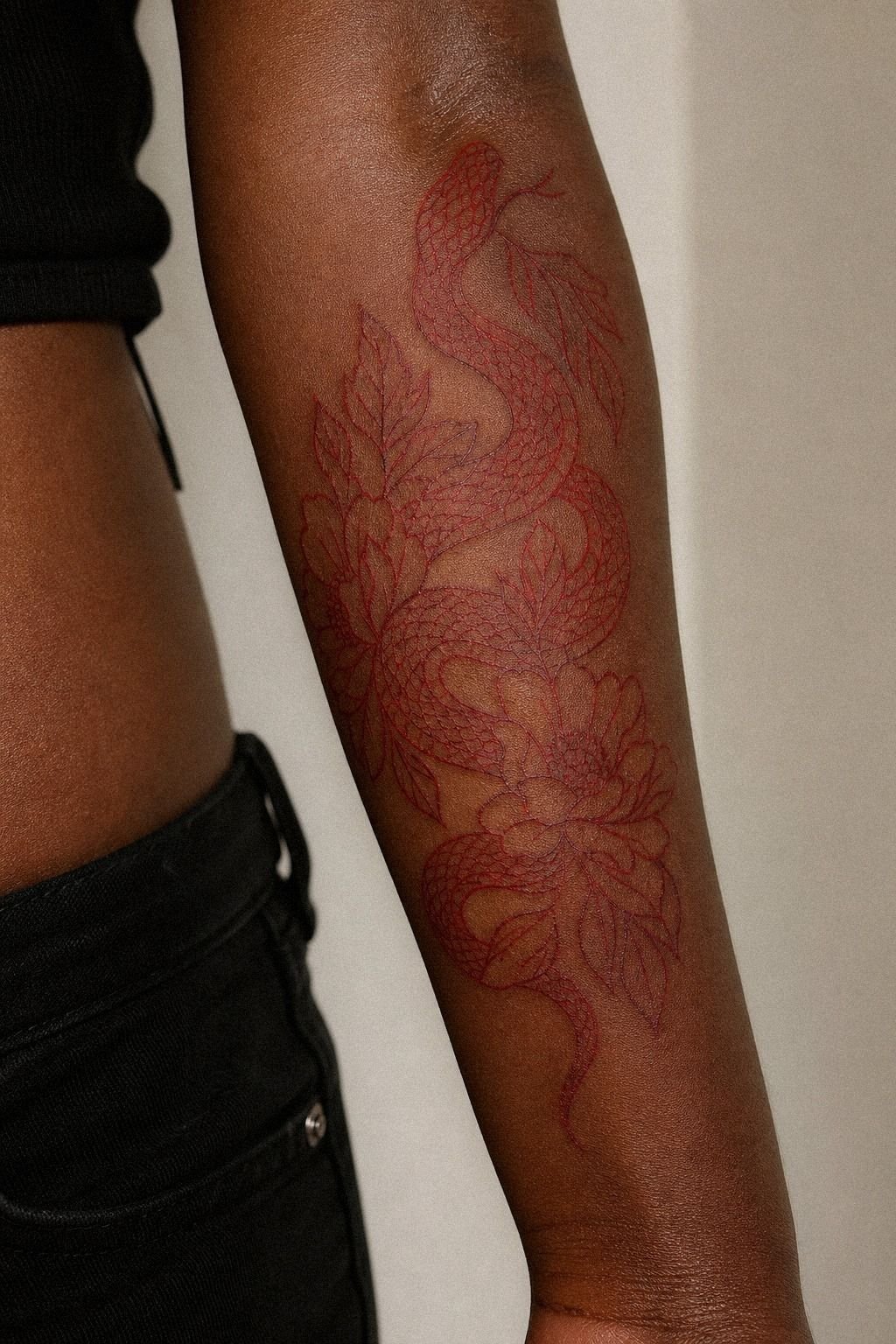
9I Moved The Red Snake To My Hip
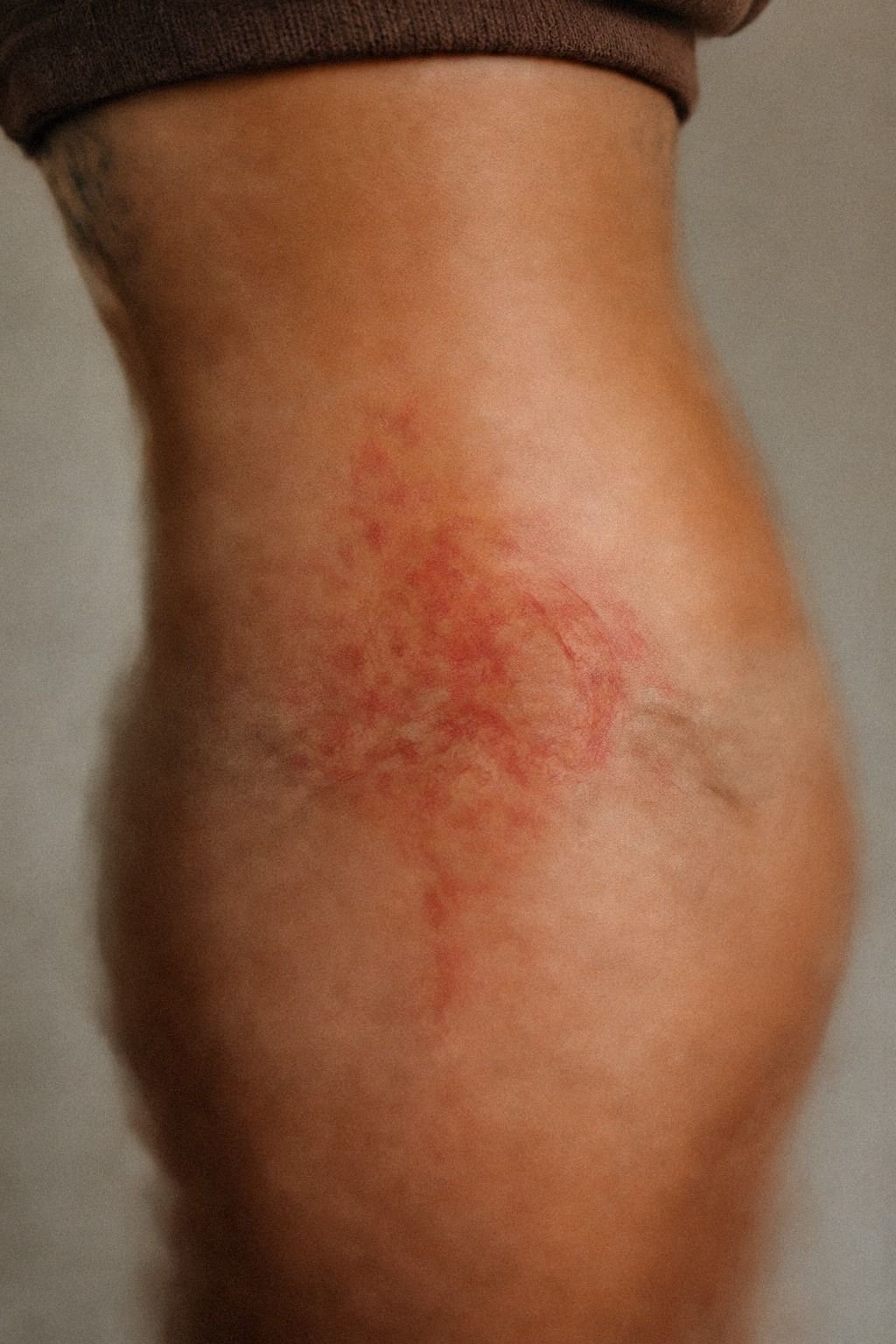
[IMAGE: red snake tattoo on hip with simple flowing curve, clean line, low-wear placement, subtle shadow, realistic healed skin]
I originally wanted the red snake on my ribs because, in my head, that felt edgier. But the hip made more sense for flow, comfort, and healing. A longer snake silhouette needs a placement that lets the body line breathe instead of forcing every curve into a cramped strip.
The hip also bought me a calmer healing window. Less rubbing, less twisting, less daily irritation. That was the smarter move, and smart usually heals prettier than dramatic.
10I Asked About Red Ink Allergy Risk
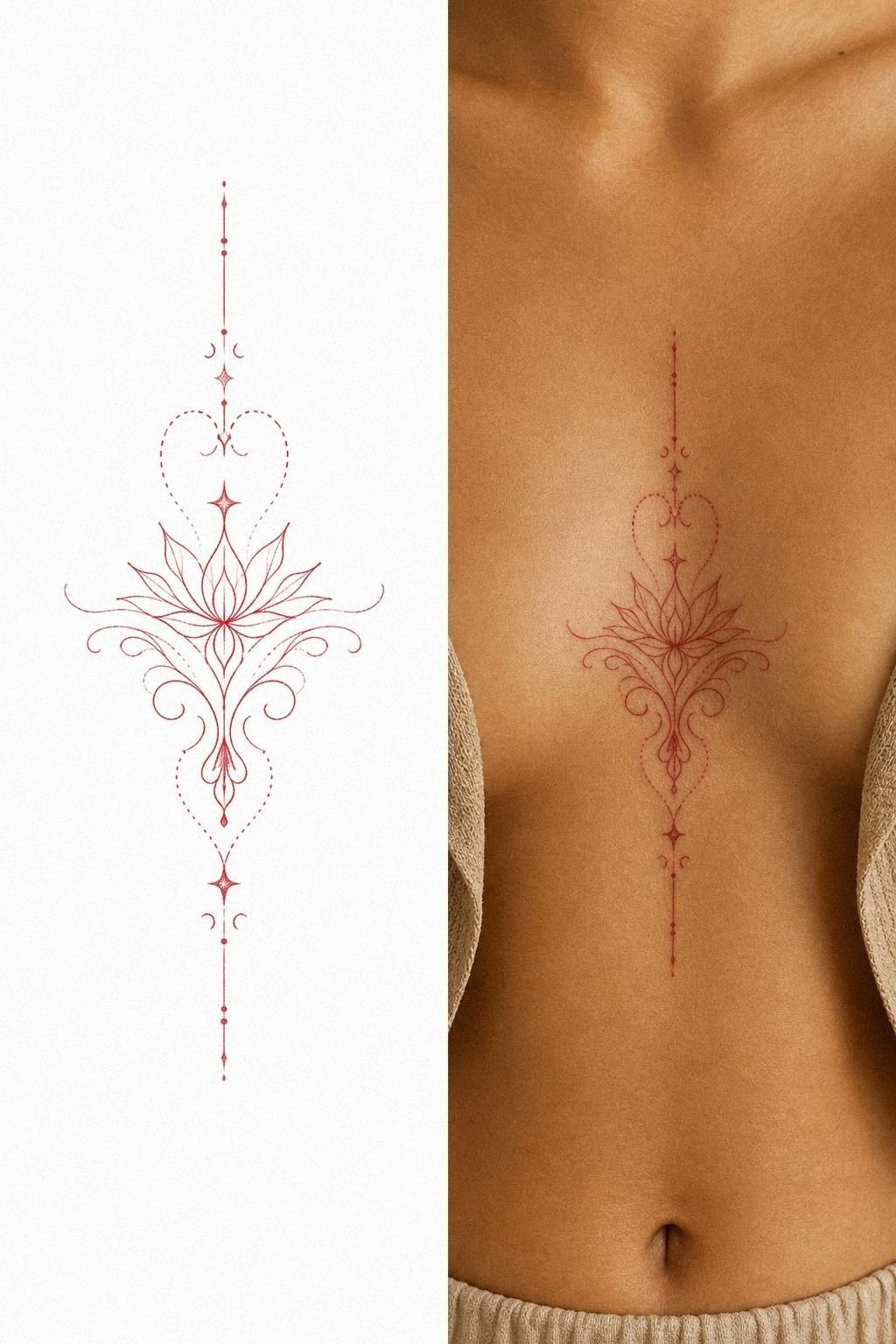
[IMAGE: red ink allergy consult at tattoo desk, healed samples, ink bottle, gloved hand pointing to reference sheet, bright clinical light]
I asked about allergy risk before the needle touched me, not after. You should too, because red has a longer history of sensitivity reactions than black, especially in people who already react to dyes, metals, or some cosmetics. That doesn’t mean red is automatically a bad idea.
It means you don’t get cute and casual about it.
Hazel walked me through the difference between a normal healing phase and a reaction that keeps escalating. A little redness early on is expected.
Weeks of raised, itchy trouble is not. We also compared the stencil on paper to the healed sternum sample, which helped me judge whether I loved the design enough to accept the extra consideration red sometimes needs.
But if you have had weird reactions before, read red ink tattoo allergy first and talk to your artist before you pay a deposit.
11I Planned Extra Clearance For Red Healing
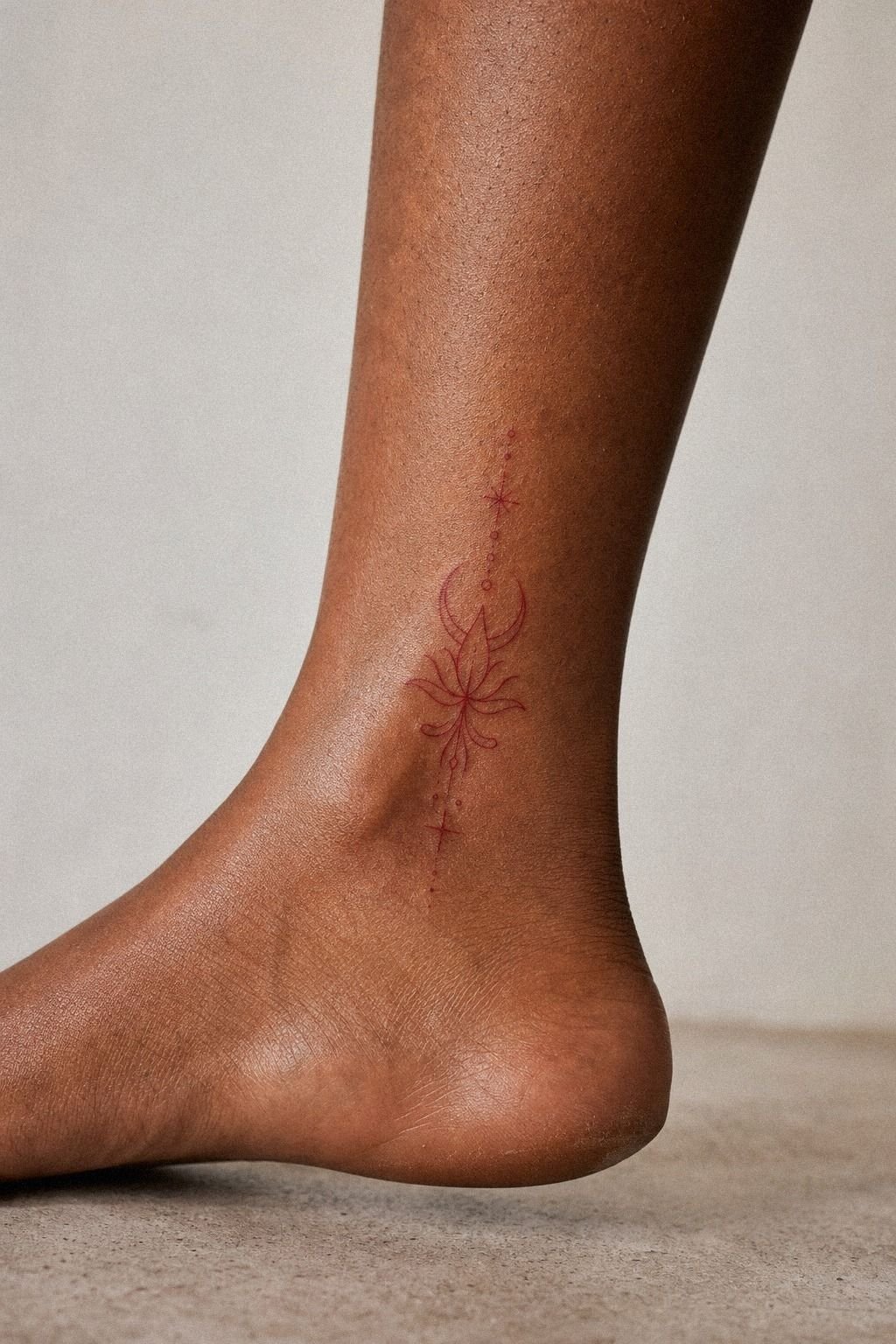
[IMAGE: small red tattoo with extra clearance on forearm, airy design layout, open negative skin, clean healed line, soft daylight]
Tiny red tattoos need more clearance than people think. I planned extra breathing clearance around every curve, because fine red details can swell together fast while the tattoo is fresh.
That extra margin is what keeps a tiny piece from turning to soup later. If a design only works when every line sits right on top of the next one, it’s too tight for red and too tight for healing.
12I Protected Fresh Red Ink From Sun
[IMAGE: fresh red tattoo aftercare with thin ointment layer, clean towel, gentle soap, soft daylight, realistic skin shine]
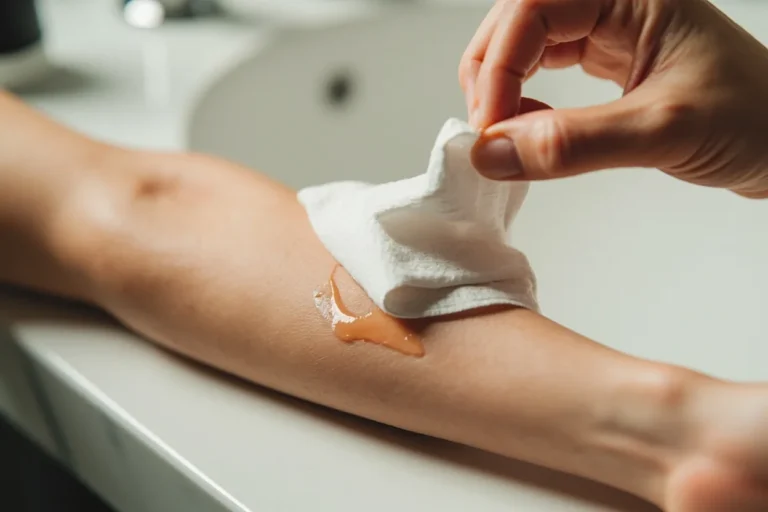
Fresh red hates shortcuts. The first few days, it’s an open wound, so I treated it like that. Gentle unscented soap.
Clean towel. Thin layer of aftercare, not a greasy shellacked mess. You should keep sun, pools, and gym friction off it during the surface healing window, because red can look dull fast if you beat it up early.
On inner forearm skin, the aftercare part was easy until I remembered how often that area hits sunlight without you noticing. Driving.
Walking the dog. Coffee run. Little stuff. I wore loose sleeves and kept the tattoo covered from UV until the top layer was settled, then switched to sunscreen once it was fully closed.
And yes, I’d to baby it for 2 to 3 weeks. That is normal.
If you want a good comparison on fragile-looking pigment, why white ink hurts more and does red tattoo ink fade faster both help.
13I Checked The Healed Red Tattoo Shade
[IMAGE: healed red tattoo shade after silver skin stage, soft cherry-to-rose tone, subtle sheen gone, realistic healed texture]
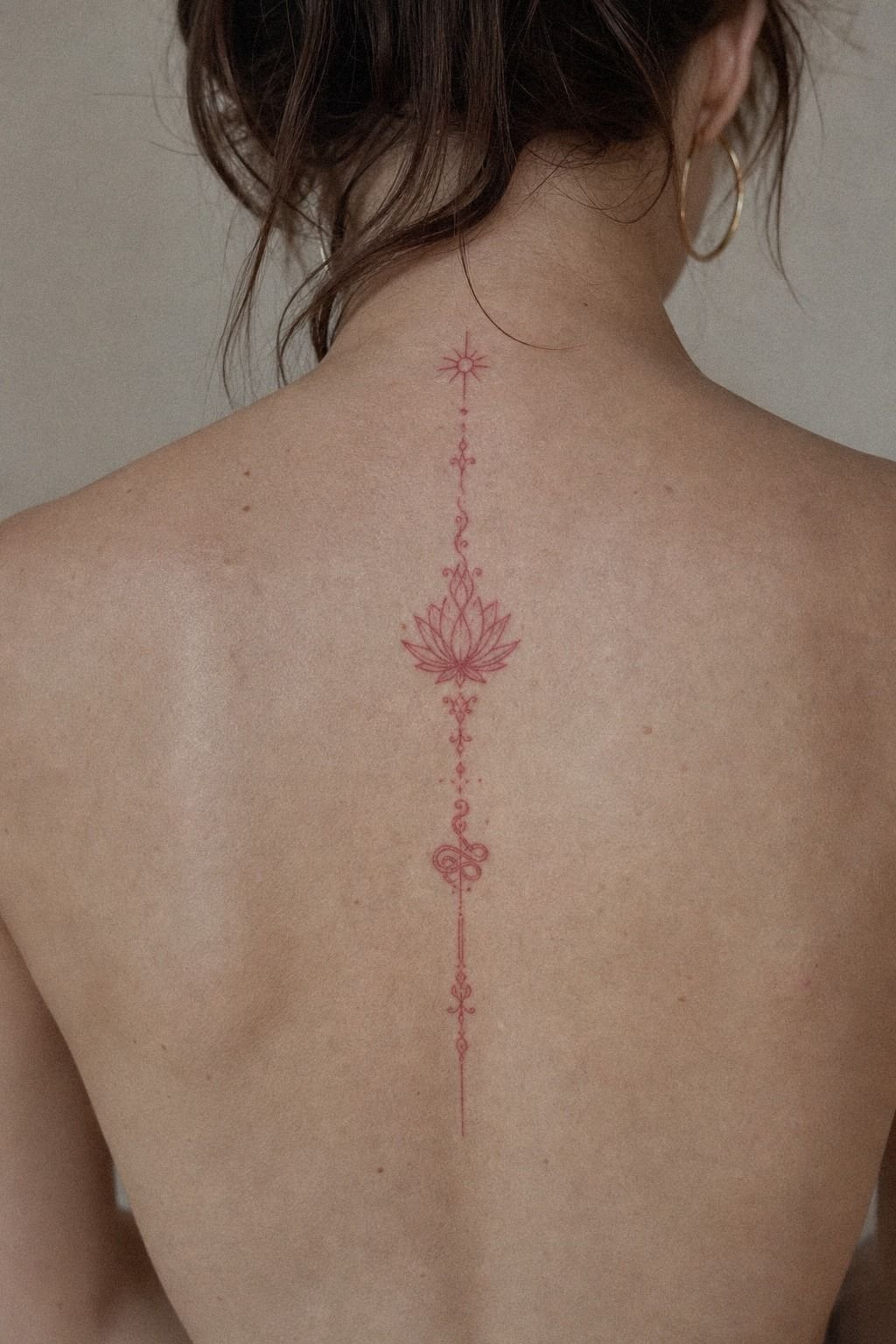
This was the healing detail nobody warned me about. The healed shade matters more than the fresh shade.
My spine piece on fair cool-pink skin didn’t stay the same glossy red it was under the ring light right after the appointment. It softened, warmed, and lost that wet brightness once the silver skin stage passed.
And honestly, that’s why I like it more now. The healed tone looks more expensive, more settled, and less like I chased a trend photo.
You should judge red at the 6 to 8 week mark, not on day three when it’s still shiny and loud. Want the cleanest result?
Build for healing, not for the wipe photo. That is the whole game!
If you’re comparing longevity options, 15 simple tattoos that prove less ink lasts longer and white ink tattoos are both useful contrasts.
How much it cost
[IMAGE: red tattoo pricing examples on a clean studio counter, tiny heart, script, flower, snake references, tidy pricing card, bright daylight]
Red ink work sits inside the same typical US pricing structure as other fine line tattoos, but size and placement change the math fast. My smaller pieces landed near shop minimum, while the larger red tattoo designs were billed closer to hourly because stencil time, placement checks, and delicate linework take focus. You should expect most US shops to start around $50 to $100 minimum, with many artists charging about $100 to $250 per hour depending on city, demand, and specialty.
The most useful question is not “what is the cheapest red tattoo I can get?” It is whether the design is big enough to heal clean for the price you’re paying. A badly planned cheap tattoo is expensive the second you need a cover-up or touch-up.
Real talk, I would rather pay for solid linework once than bargain-shop a delicate red piece twice. That saves money later!
What does healed red really look like?
[IMAGE: healed red tattoo comparison fresh versus settled tone on skin, soft realistic texture, clean lines, subtle color drop, editorial daylight]
Healed red usually drops one notch softer than the first-day photo, and that’s not failure. It is the normal part. Surface healing takes about 2 to 3 weeks, while the deeper settle can take 2 to 3 months, so if you’re judging the shade too early, you’re reading a tattoo that’s still mid-process.
And placement changes the final vibe too. Low-wear zones like the outer arm, thigh, calf, and upper back usually keep red looking cleaner for longer. High-wear zones like fingers, feet, and hands are for people who already accept touch-ups.
The Patch-Test Rule
[IMAGE: patch-test style red ink consult with tiny sample marks on skin and artist notes, clinical clean setup, realistic daylight]
My rule now is simple. If you have reactive skin, a history of rashes, or you have had trouble with dye-heavy cosmetics, treat red like a deliberate choice instead of a casual one.
Talk to your artist. Ask what brand they use.
Ask what healed red they have seen on skin like yours.
But don’t spiral yourself out of a tattoo you still want. Plenty of people wear red for years with zero issue.
The point of the rule is not fear. It is clarity, and clarity keeps you from making rushed choices just because a trend photo hit your feed at midnight.
The Healed-First Rule
[IMAGE: healed-first red tattoo mindset collage of red bow, flower, and snake fully healed, soft skin texture, calm tones, clean outlines]
This is the part I wish more first-timers heard. I don’t judge a red tattoo by the wipe, the fresh photo, or the first compliments. I judge it by whether the line is still clean after the peel, whether the red stayed even, and whether the design still feels intentional once the shine is gone.
That healed-first mindset changes every decision. You size up tiny details. You pick lower-friction placements when you can.
You stop asking whether a red tattoo looks pretty today and start asking if it will still feel like you next year. I have seen people chase the loudest version of red and end up disappointed because they designed for day one.
Why would you build for the shortest stage?
For me, red is best when it’s used with restraint. A tiny heart, a bow, a stem, a snake that’s not trying to show off every scale.
Bold will hold, sure, but simple will hold too when the artist knows what they are doing. And if your artist is honest, they will tell you when a design is too fussy for the size instead of forcing it through.
That is who you book.
There is also a confidence piece here. Once I accepted that healed red would look softer, I stopped chasing brightness and started chasing fit.
Does the line suit your skin tone? Does the placement avoid constant friction? Can the shape stay legible from a few feet away?
Those questions made me happier with my tattoo than any first-day photo ever could. That is the detail nobody warned me about, and now it’s the first thing I tell people.
What People Always Want to Know
[IMAGE: red ink tattoo FAQ visual with healed red examples on arm, thigh, and behind ear, clean daylight, realistic skin, simple layout]
How much does a Red Ink Tattoos usually cost?
About $100 to $300 is common for a small to medium red tattoo in the US, though shop minimums can be $50 to $100 and hourly rates often sit around $100 to $250.
– Small placement, lower time – Delicate linework, higher skill ask – City and artist demand, big price swing
Are Red Ink Tattoos a good idea for a first tattoo?
Yes, they can be a good first tattoo if you keep the design simple and place it in a lower-friction spot like the outer arm, thigh, or calf. You want clean linework, not a tiny over-detailed idea that heals into soup.
– Simple subject – Low-wear placement – Healed portfolio check first
How do I choose a tattoo artist for Red Ink Tattoos?
Choose an artist with healed red work in their portfolio, not just fresh photos. You should also check whether their lines stay crisp, whether the skin looks calm after healing, and whether the studio hygiene feels locked in.
– Healed photos in daylight – Fine line specialty or soft illustrative red work – Clean station and clear aftercare guidance
If you’re comparing reaction risk while you vet artists, red ink tattoo allergy is worth a read.
How much do Red Ink Tattoos hurt?
Pain depends mostly on placement. Outer arm, thigh, and calf are usually more tolerable, while ribs, sternum, feet, and hands are spicier because the skin is thinner and bone sits closer.
– Lines, sharper sting – Shading, duller burn – Color packing, spiciest stretch
How long does a Red Ink Tattoos take to heal?
Surface healing usually takes 2 to 3 weeks, and the deeper settle can take 2 to 3 months. Wash it with gentle unscented soap, keep aftercare light, and avoid sun, pools, and picking while it peels.
– Thin ointment layer – Clean hands only – No peeling flakes picked off
What’s the best placement for Red Ink Tattoos?
The best placements are usually outer arm, thigh, calf, or upper back because the skin takes linework well and daily friction is lower. For a tiny accent, behind the ear can work too, but you still need a design simple enough to age clean.
– Low-wear zones – Enough clearance for the line – Size matched to the anatomy
For more on fading and longevity, does red tattoo ink fade faster and why tattoos blur over time are solid follow-ups.
Start With The Low-Wear Red Rule
[IMAGE: low-wear red tattoo placement on outer thigh, soft healed red linework, elegant shape, clean realistic skin, subtle daylight]
If I’d to pick one, I would start with the birth flower on the thigh. Low friction gives fine red linework a fair shot, and that matters more than chasing the flashiest placement. Save the dramatic spot for later, once you know how your skin heals.