
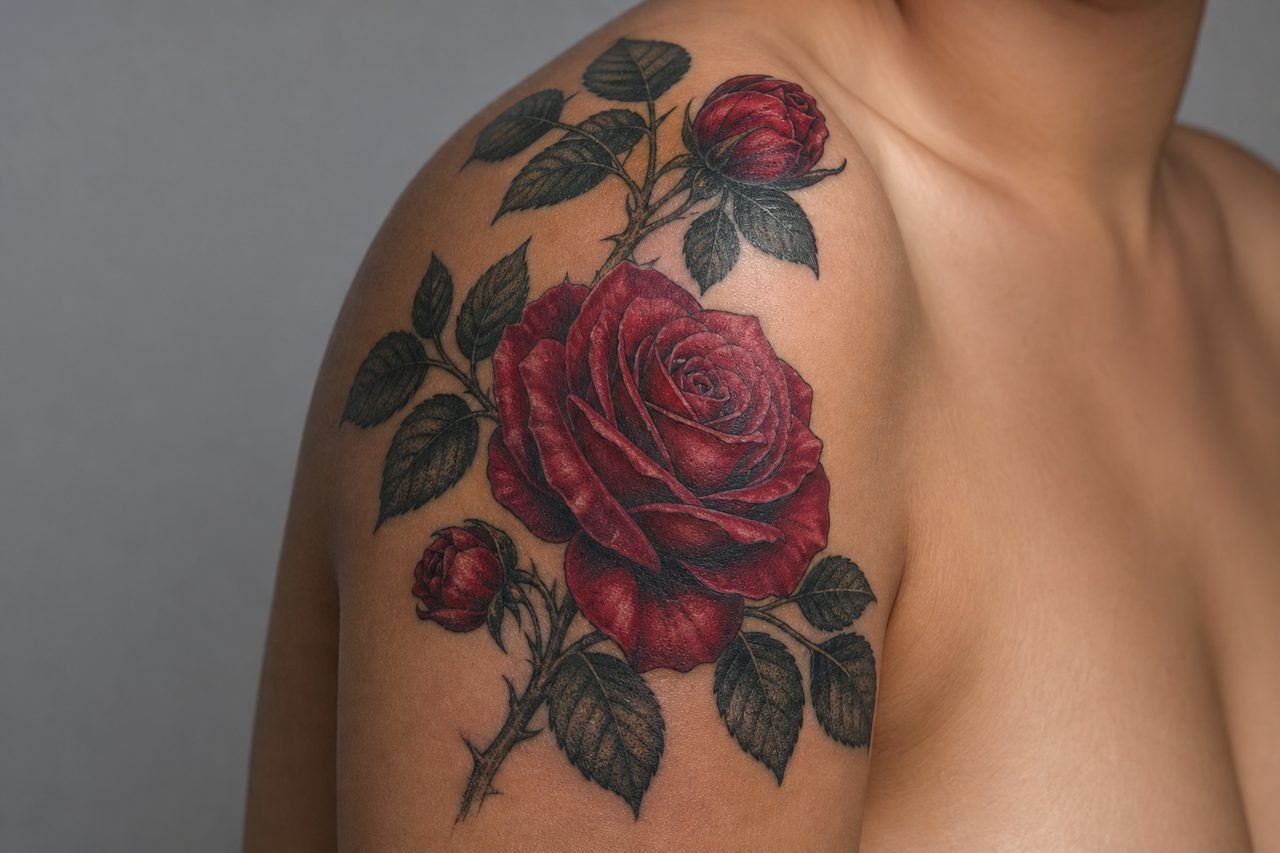
A rose tattoo colour meaning depends entirely on the hue you choose: red roses traditionally symbolize passionate love and deep respect, while white roses represent purity and new beginnings. Yellow roses speak to friendship and joy, pink roses convey admiration and gratitude, and black roses often signify rebirth, loss, or gothic elegance. Understanding these colour codes helps you select ink that genuinely reflects your personal story and intentions.
Symbolism & History
Roses have carried symbolic weight across cultures for thousands of years. In ancient Greece, the rose was linked to Aphrodite, goddess of love. During the Victorian era, floriography, or the language of flowers, became a sophisticated way to communicate emotions that society often suppressed. This historical context makes the rose tattoo particularly rich with layered meaning.
Colour adds another dimension to this already potent symbol. The meaning of a rose tattoo shifts dramatically depending on which shade you select:
- Red: Romantic love, desire, courage, and sacrifice. The most universally recognized rose colour, often chosen to honor a partner or commemorate a profound emotional bond.
- White: Innocence, purity, spiritual devotion, and fresh starts. Popular for memorial pieces or to mark significant life transitions.
- Yellow: Platonic affection, happiness, and optimism. Ideal for celebrating friendships or overcoming personal struggles with positivity.
- Pink: Grace, gentleness, thankfulness, and youthful sweetness. Frequently selected to express appreciation toward family members or mentors.
- Black: Death, farewell, major transformation, or rebellion against conventional beauty. Also associated with anarchist movements and gothic subcultures.
- Blue: The unattainable, mystery, and imagination. Since blue roses do not occur naturally, they represent striving for the impossible or deeply personal fantasy.
- Purple: Enchantment, royalty, and love at first sight. Carries an air of mysticism and regal elegance.
- Orange: Enthusiasm, fascination, and passionate pride. Bridges the gap between red’s romance and yellow’s warmth.
Combining colours in a single design can merge these meanings, creating a narrative unique to the wearer. A red rose with blackened edges might represent love surviving through darkness, for instance.
Common Variations & Styles
The artistic approach to a rose tattoo further shapes its impact and interpretation. Different styles emphasize distinct emotional tones:
- Traditional American: Bold outlines, saturated colours, and minimal shading. This style amplifies the rose as a timeless emblem of devotion and resilience.
- Realism: Photographic detail with subtle colour gradations. Creates an intimate, almost fragile quality that suits memorial or deeply personal pieces.
- Black and grey: Stripped of colour, the focus shifts entirely to form and shadow. Often chosen for somber reflections or to emphasize universal human experiences beyond specific emotions.
- Neo-traditional: Bold palettes with decorative elements, jewels, or geometric frames. Allows for highly personalized colour storytelling.
- Watercolour: Splashed, bleeding pigments without hard outlines. Suggests fluidity, emotional intensity, and the ephemeral nature of beauty.
- Minimalist line work: Single-needle techniques with limited colour. Appeals to those seeking understated elegance and modern simplicity.
Adding complementary imagery, daggers, skulls, clocks, or names, layers additional meaning onto your chosen colour palette.
Best Placements
Where you place a rose tattoo influences how others perceive its significance and how privately you carry its meaning. Smaller, single-colour roses work beautifully on wrists, behind ears, or along collarbones for visible yet delicate statements. Forearms and shoulders provide excellent canvas space for multi-colour compositions with intricate shading. The chest and ribcage remain popular for larger pieces with profound emotional weight, particularly memorial tattoos. Thighs and calves offer substantial room for detailed realism while maintaining easy concealment. Hand and finger placements have gained traction for tiny, bold-colour roses, though these locations face faster fading and require more frequent touch-ups.
Who Chooses This Tattoo / Personal Meanings
Rose colour tattoos attract an extraordinarily diverse range of people precisely because the symbolism is so adaptable. Partners often select matching red roses to solidify commitment. Survivors of hardship frequently choose yellow or orange blooms to celebrate resilience and renewed optimism. Parents may ink soft pink roses for children, while those grieving losses gravitate toward white or black variations. Members of alternative communities embrace black roses as subcultural identifiers. Artists and dreamers select blue or purple roses to signal creative individuality.
Ultimately, personal meaning overrides traditional interpretation. Someone might choose a black rose not for mourning but because it matches their aesthetic vision. The colour becomes a starting point for conversation rather than a rigid dictionary entry.
Similar Symbols
If rose colour symbolism resonates but you seek alternatives, consider these related botanical and symbolic tattoos:
- Peonies: Prosperity, honor, and bashful romance. Offer softer, more voluminous floral forms.
- Lotus flowers: Spiritual awakening and emergence from adversity. Strong Eastern philosophical associations.
- Cherry blossoms: Transient beauty and the preciousness of life. Deeply rooted in Japanese cultural tradition.
- Daggers through roses: The coexistence of beauty and pain, or protection of something delicate.
- Snakes entwined with roses: Temptation, transformation, and the dangerous side of passion.
- Hourglasses with roses: The inevitable passage of time and the fading of earthly pleasures.
Final Thoughts
Selecting a rose tattoo colour meaning requires honest reflection on what you want your skin to communicate for years to come. Whether drawn to classic red romance, enigmatic black transformation, or friendship’s sunny yellow, the rose offers a vocabulary of colour that speaks across generations and cultures. Work closely with a skilled tattoo artist who understands colour theory and how pigments age on skin to ensure your chosen shade maintains its intended emotional resonance. The most compelling rose tattoos marry traditional symbolism with individual narrative, creating art that feels both timeless and unmistakably yours.









