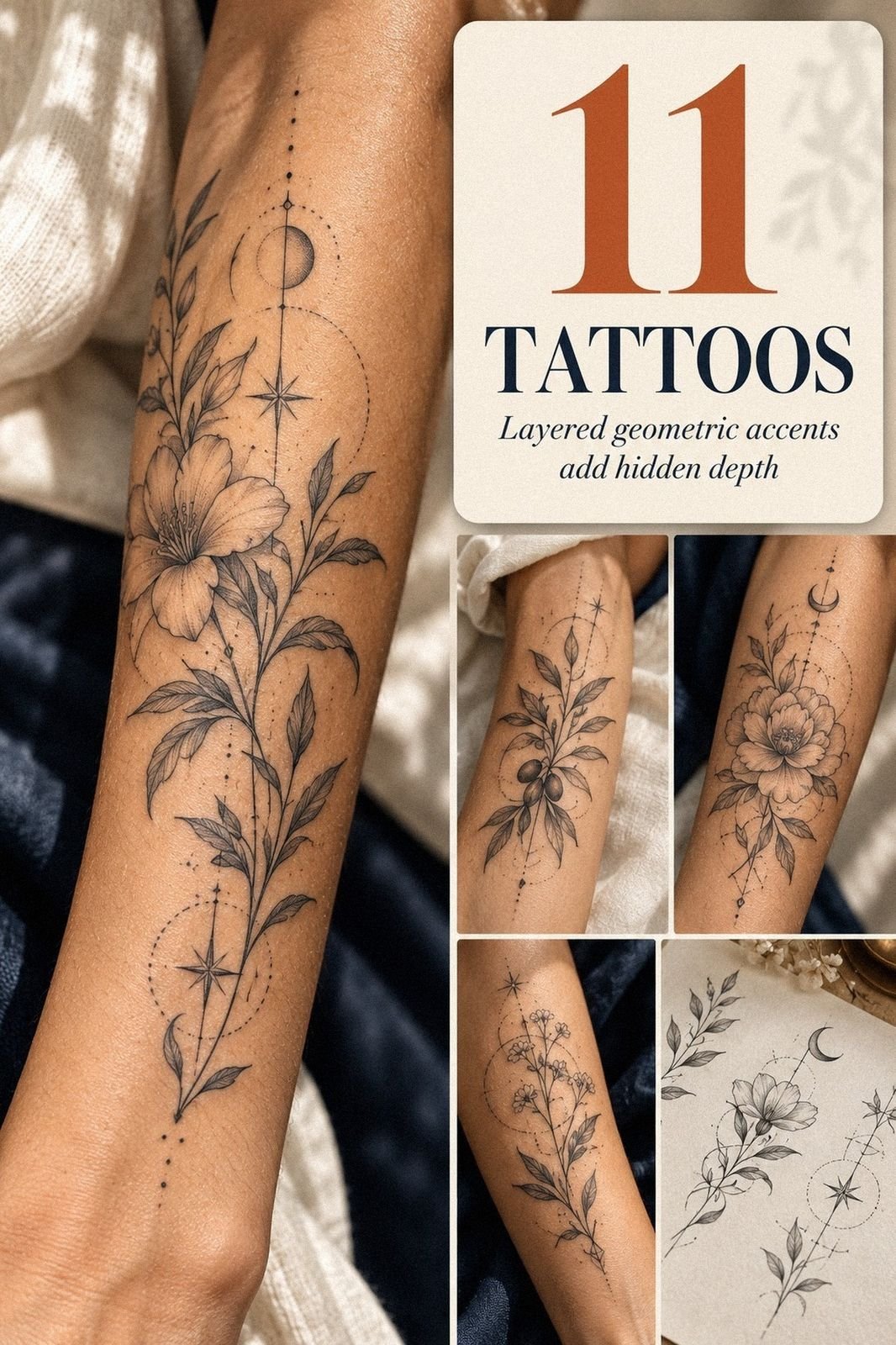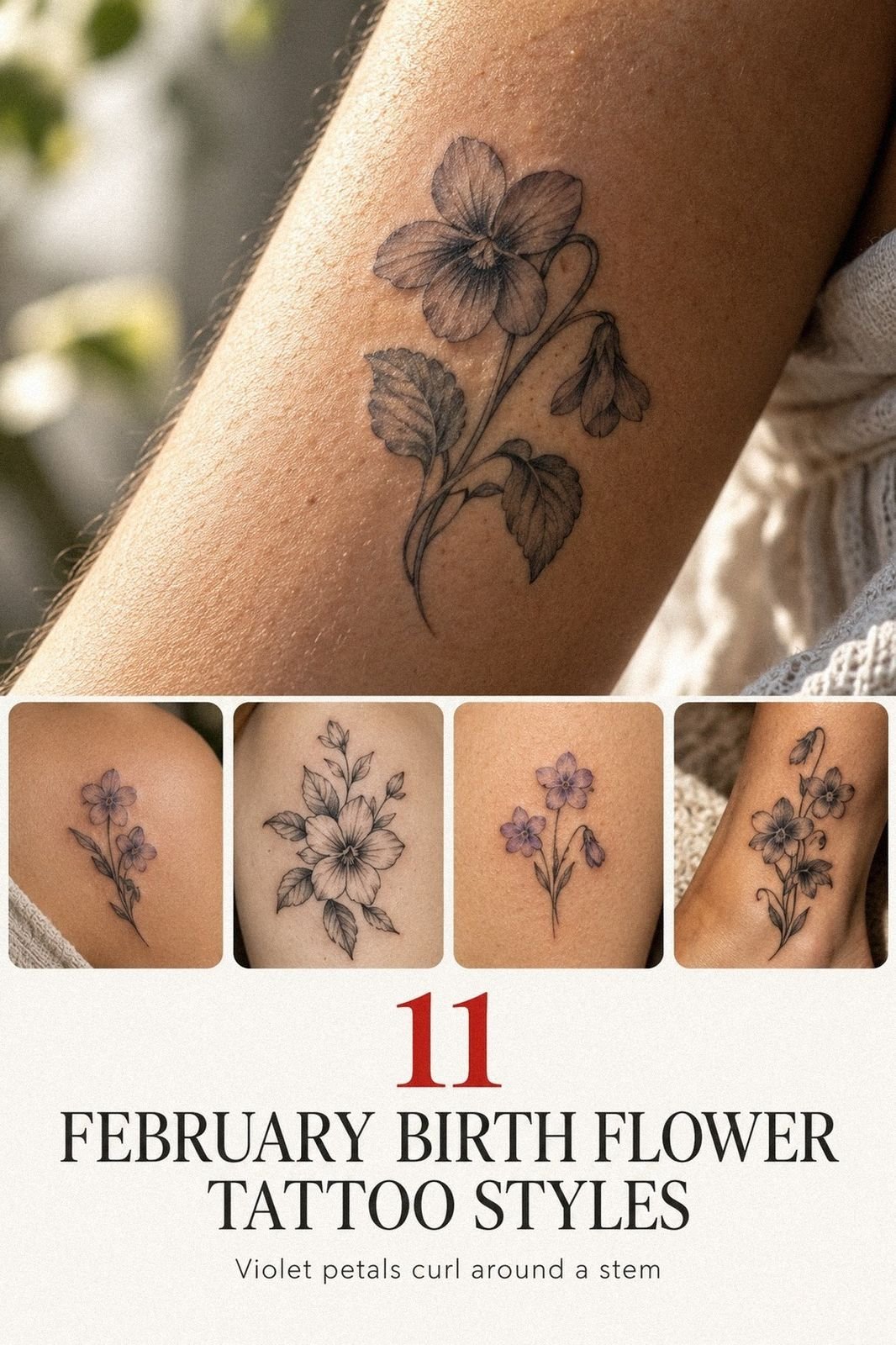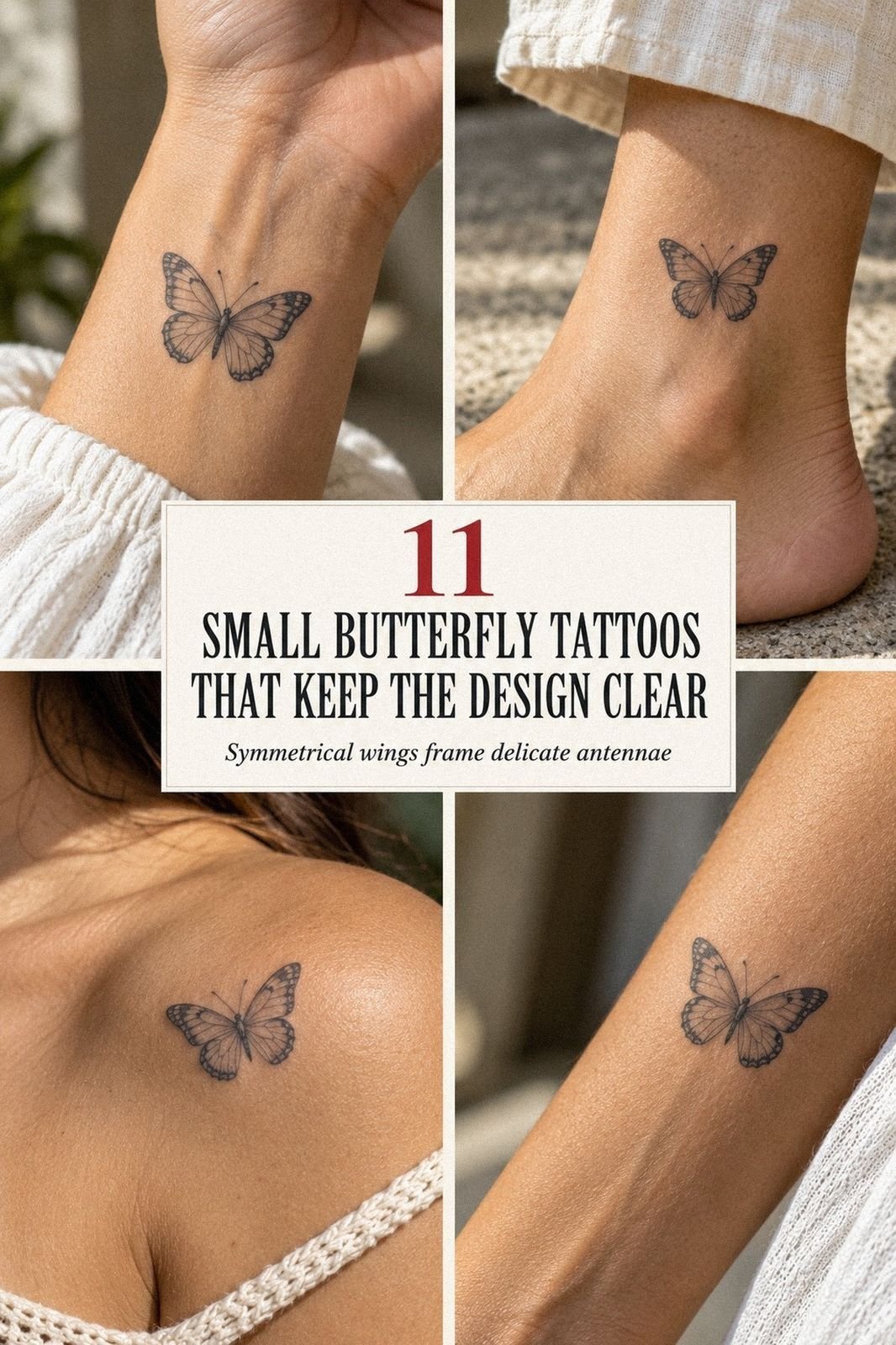
Side foot tattoos can heal clean and stay readable, but your design has to respect shoes, movement, and thin skin. I’ve seen tiny details get chewed up because someone chose the edge of the foot without planning for friction. Start simple. Give the ink room to breathe.
- Start with a botanical side-foot tattoo
- Pick fine-line ankle-to-foot lettering placement
- Place a tiny crescent along the foot edge
- Choose blackwork symbols for bold side-foot ink
- Plan floral vines around the outer foot
- Match meaningful initials across both side feet
- Keep fine-red ink away from high-friction zones
- Select watercolor flowers with linework anchors
- Map an inner-foot quote before booking
- Test ankle tattoo scale against walking shoes
- Choose a vertical design for narrow foot surfaces
- Plan pain breaks for bony foot placement
- Place a small memorial symbol beside the arch
- Pick Japanese-inspired waves for the outer foot
- Keep lettering readable on curved foot skin
- Plan aftercare around socks and daily walking
- Choose black-and-grey shading for side-foot depth
- Book an artist experienced with foot tattoos
- Protect fresh side-foot ink during healing
1Start with a botanical side-foot tattoo
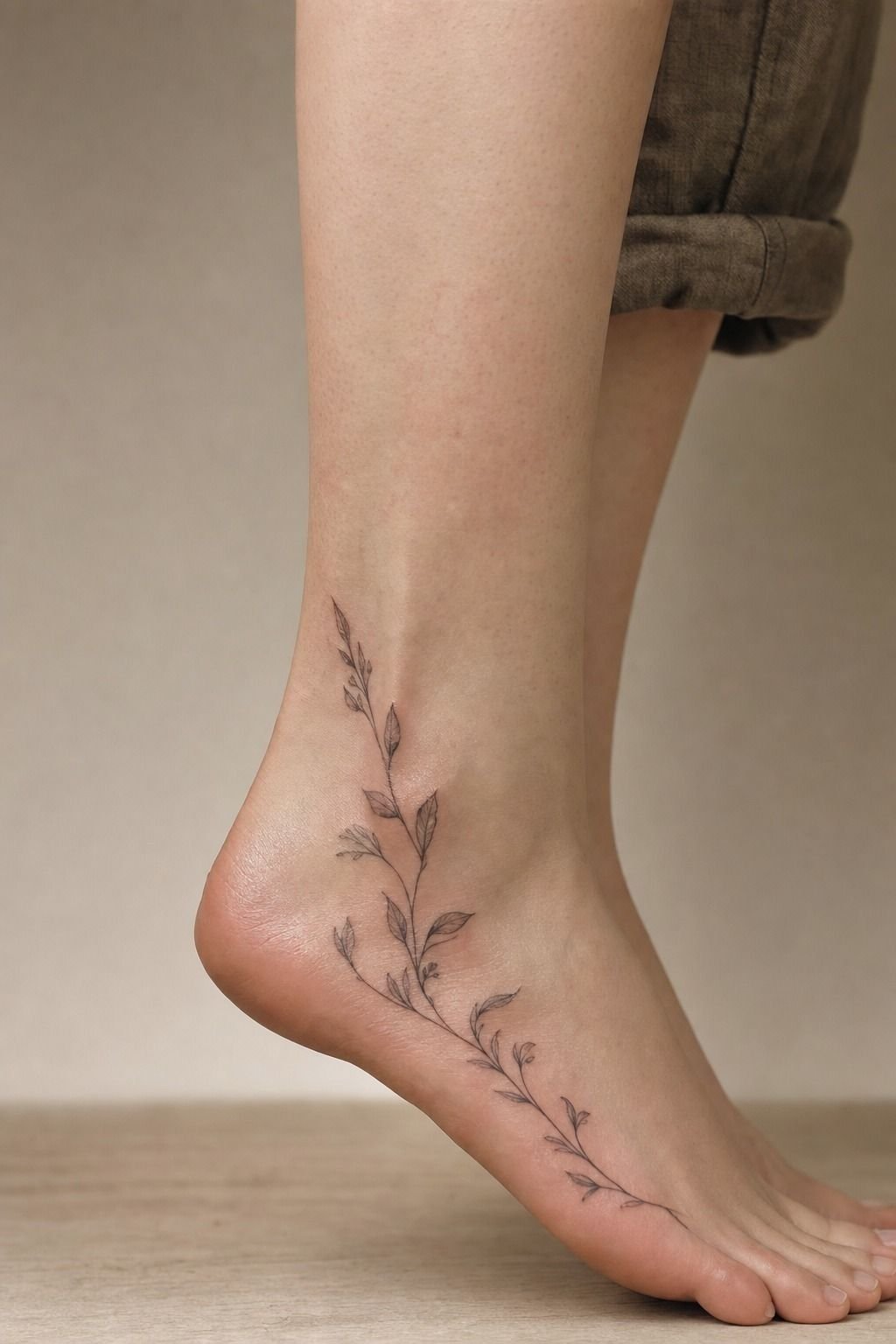
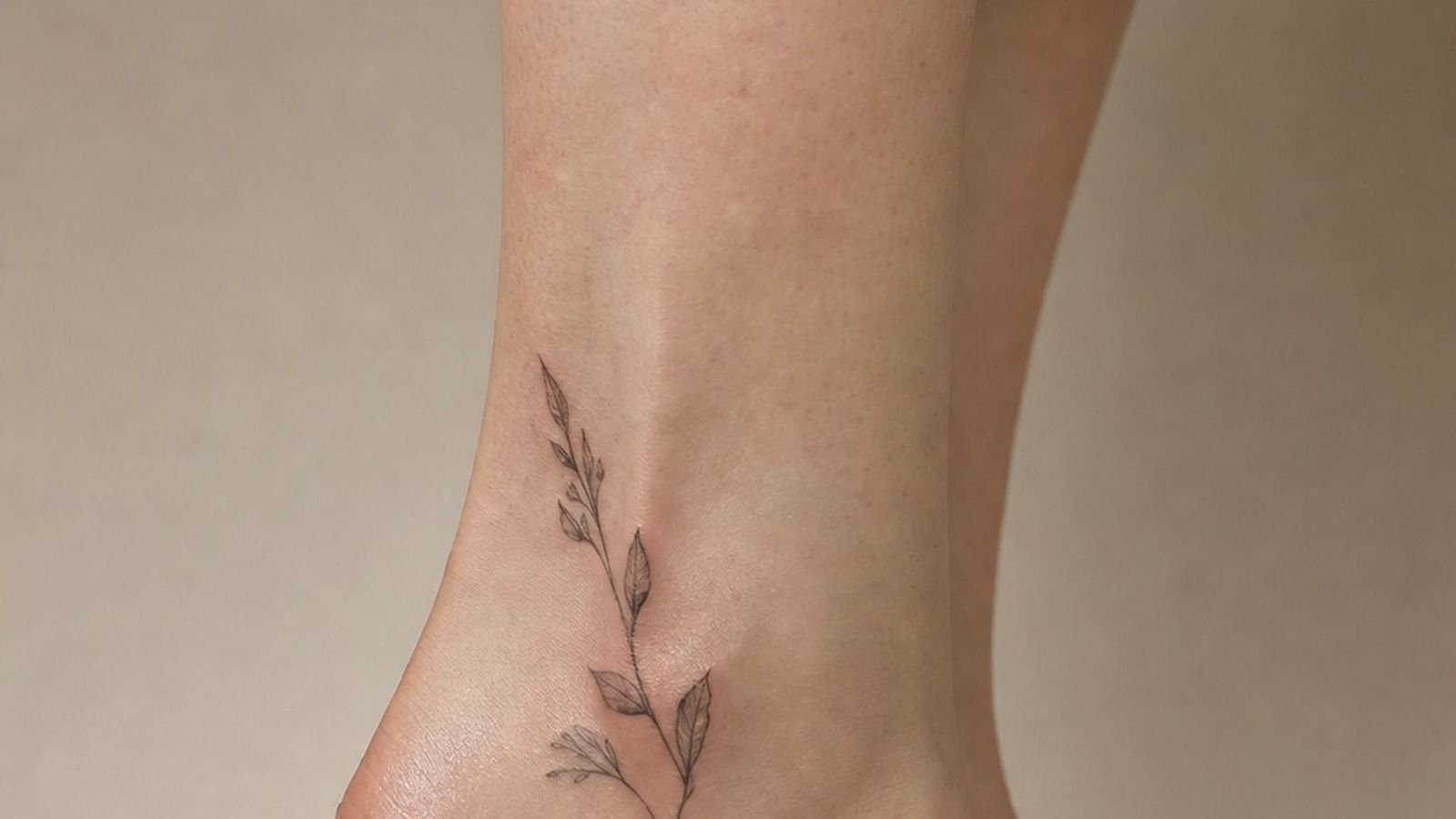
Start with one botanical stem that follows your outer ankle into the side of your foot. You’ll get a soft, organic flow without forcing a whole bouquet into a narrow strip of skin. A single-needle black ink stem with three leaves reads clean on fair, cool-pink skin and gives your artist enough open skin to keep every pull crispy.
Keep the leaves at least 1/4 inch apart where you can. I’d skip ultra-tiny petals here, because they’ll crowd each other as your skin moves and the tattoo ages.
Your floral tattoo should flow with your ankle bone, not fight it. Side tattoos for women can help you compare that same body-led flow.
2Pick fine-line ankle-to-foot lettering placement
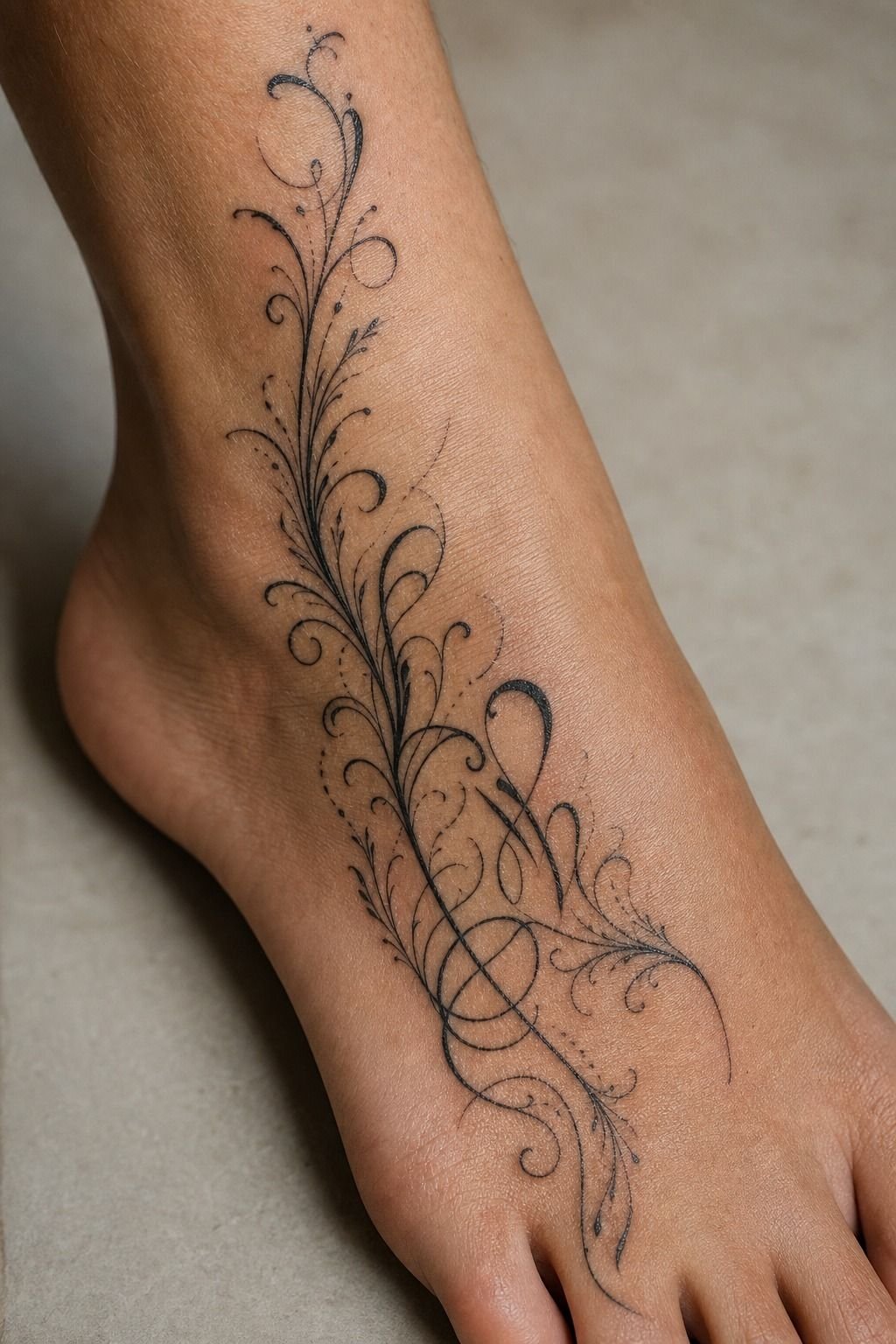
Pick lettering that travels from the ankle toward the foot instead of wrapping tightly around the curve. You want your script to read when you’re standing, not only when your foot is pointed for a photo. Single-needle lettering looks refined on warm ivory skin, but it needs clean spacing between every letter.
Ask your artist to stencil it while you’re standing and while you’re sitting. Your ankle flexes more than you think. I’d choose a short word, date, or two-word phrase over a full quote, because tight cursive on this placement can turn into soup later.
And yes, bigger usually heals nicer!
3Place a tiny crescent along the foot edge
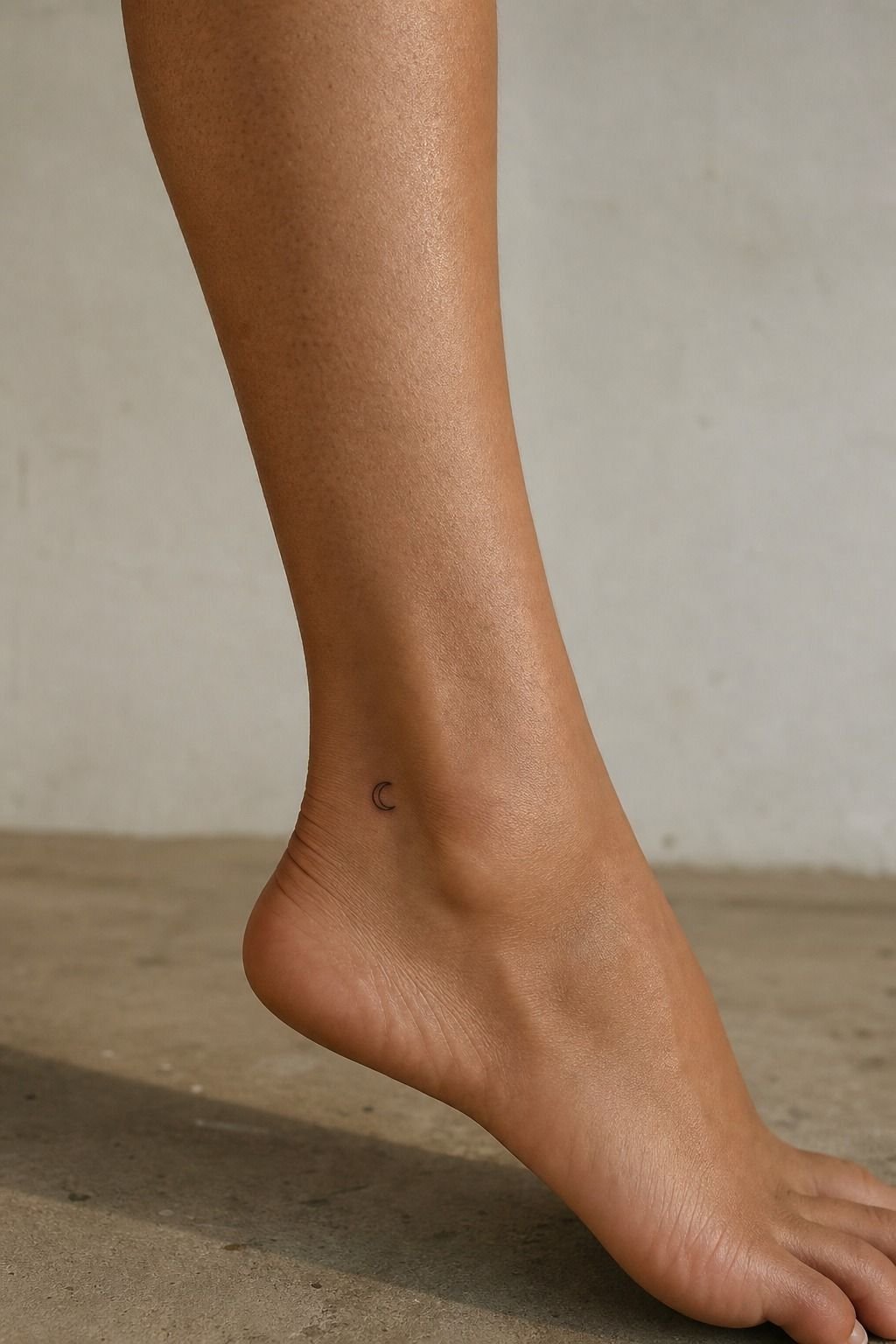
Place a small crescent just above the outer edge, where the foot begins to rise toward the ankle.
4Choose blackwork symbols for bold side-foot ink
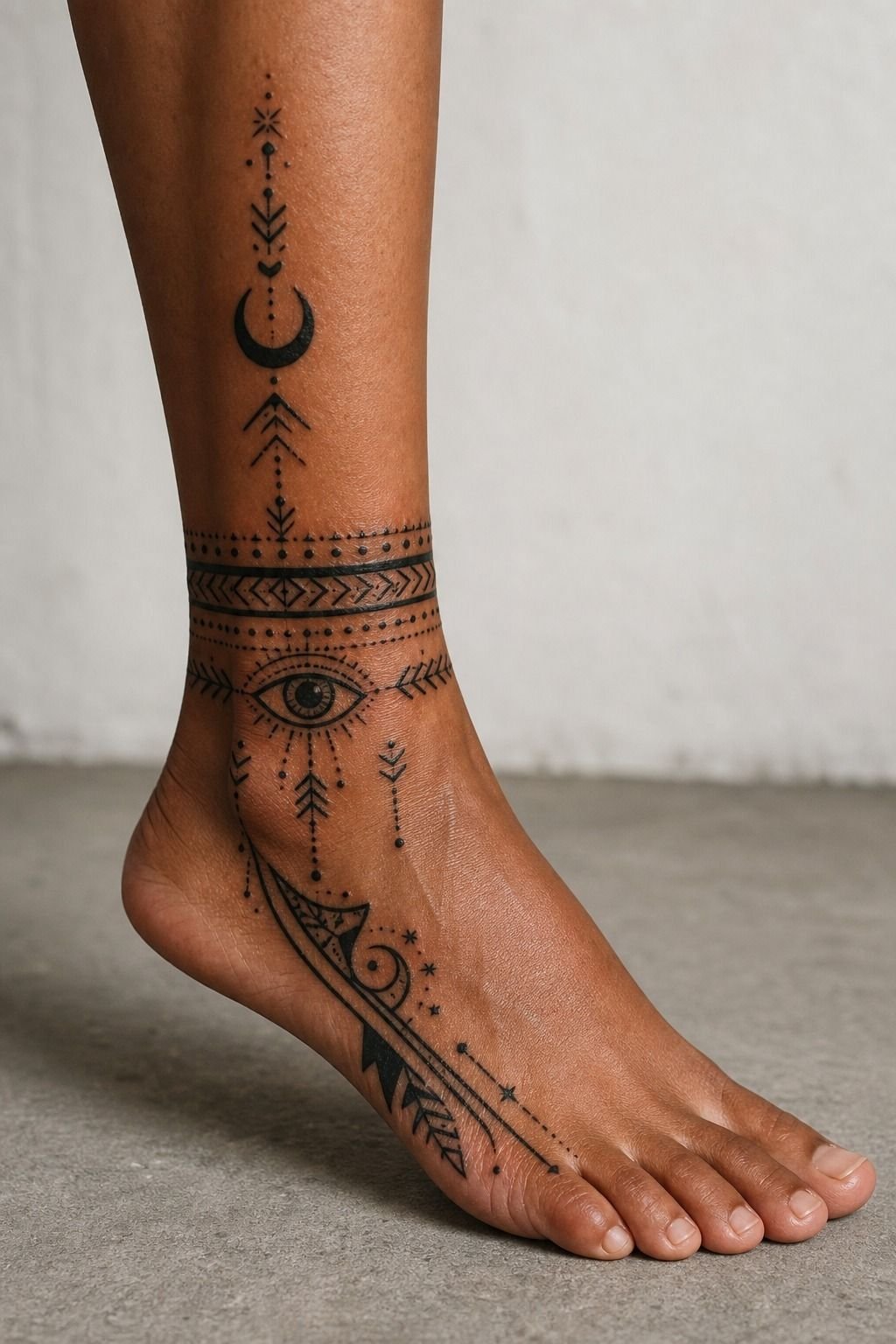
Choose blackwork if you want side-foot ink that reads from across the room. A black sun, protective eye, thorned heart, or abstract symbol can wrap the ankle bone with enough contrast to hold up. Solid black fill is your best friend for longevity, especially on golden tan skin where crisp shape matters more than tiny interior detail.
Tell your artist you want bold shapes and intentional negative space. I’d skip a delicate blackwork mandala here, because the outer foot is too narrow for all those tiny breaks.
Bold will hold. Your tattoo should look clean at arm’s length, not only under a phone camera.
5Plan floral vines around the outer foot
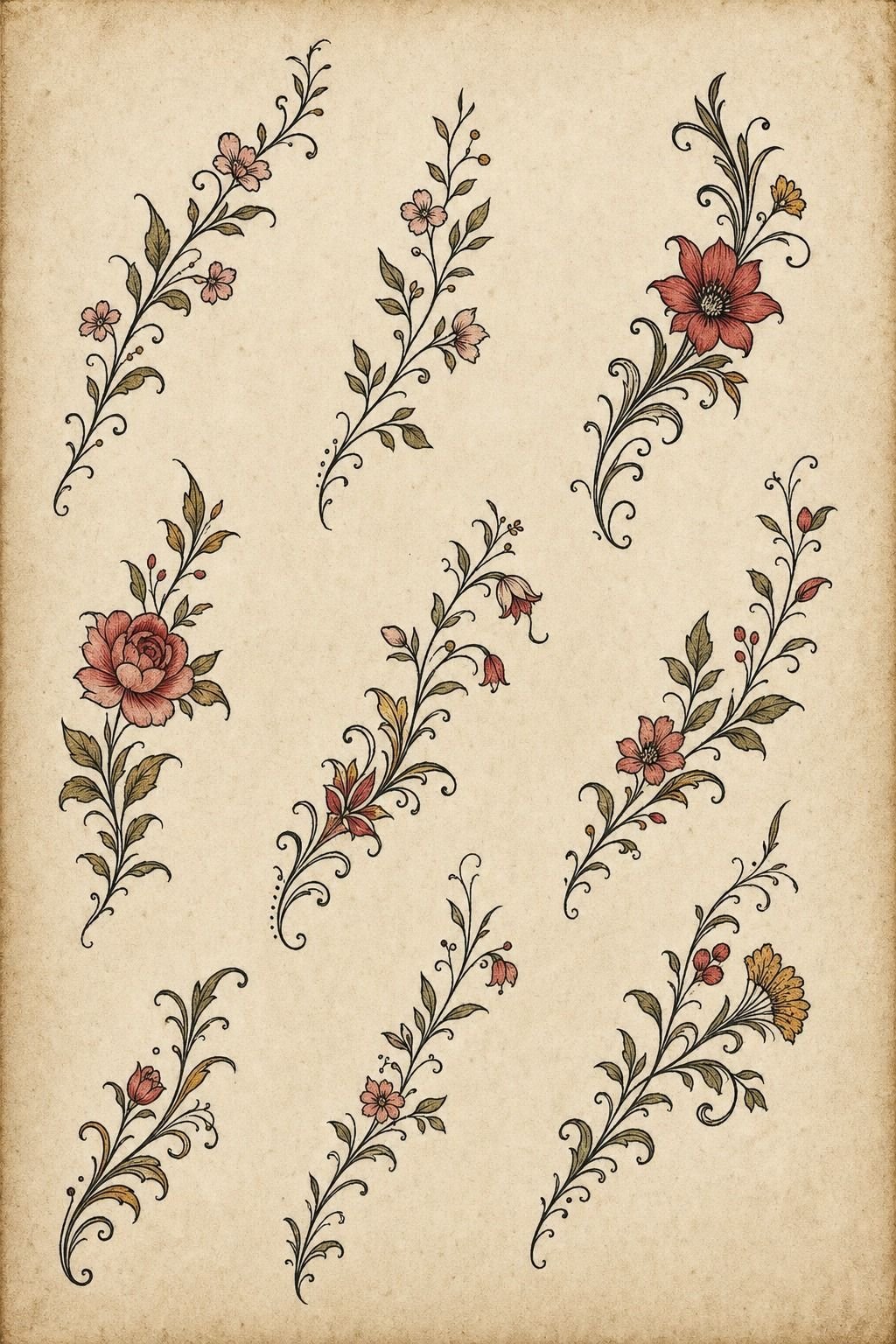
Plan the vine on paper before it ever touches your skin.
6Match meaningful initials across both side feet
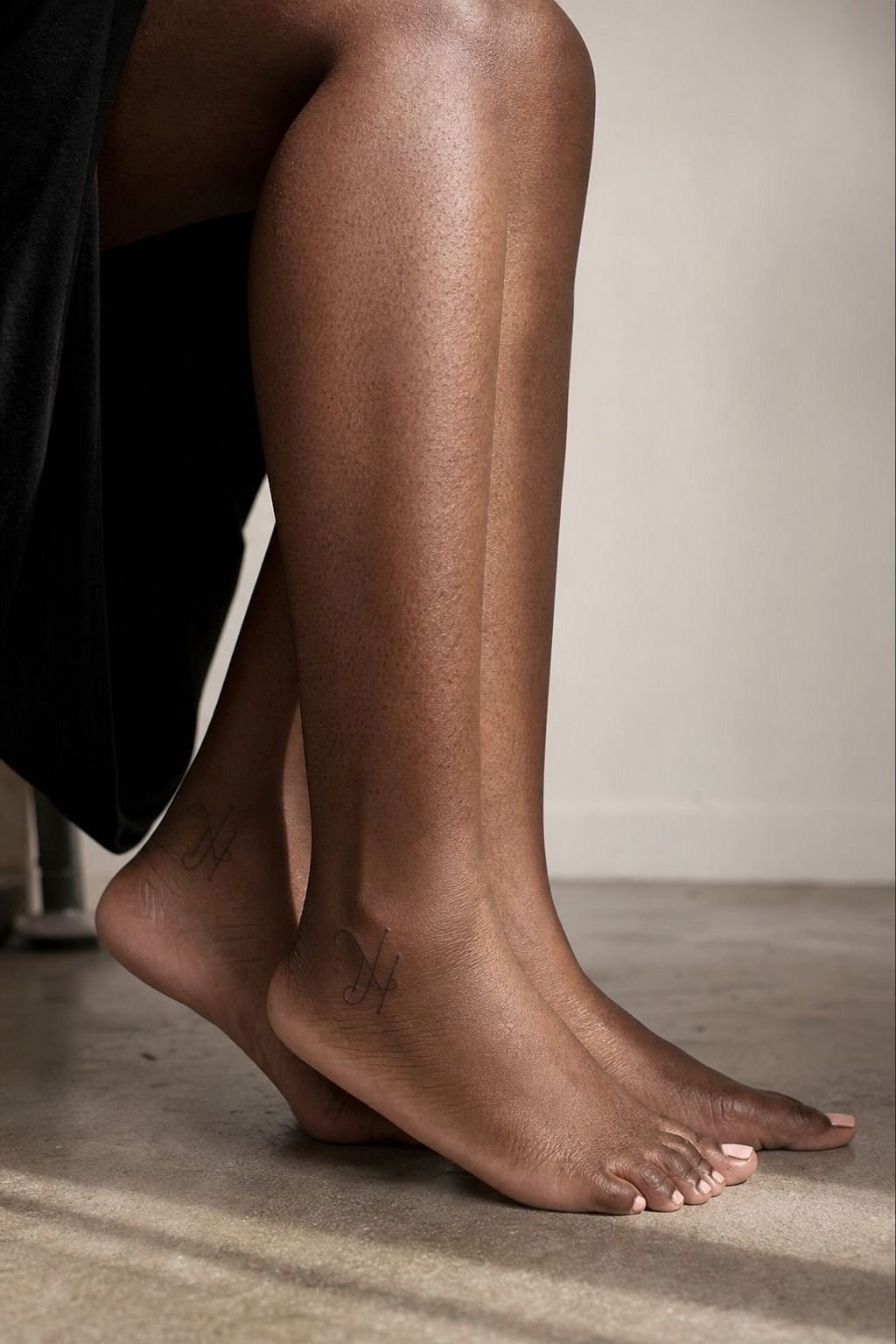
Match initials across both feet only if each side can stand on its own. You might put one initial near each outer ankle, or use a pair of small serif letters that angle inward when your feet are together. Fine-line initials on deep ebony skin need enough weight to stay visible, so ask for confident lines rather than faint grey marks.
Keep the letters around 3/4 to 1 inch tall. That size still feels intimate, but it won’t disappear into the skin texture. I’d avoid placing both initials on the lowest outer edges, because socks and shoe collars will rub them nonstop.
Why tattoos blur over time is worth reading before you commit to microscopic type.
7Keep fine-red ink away from high-friction zones
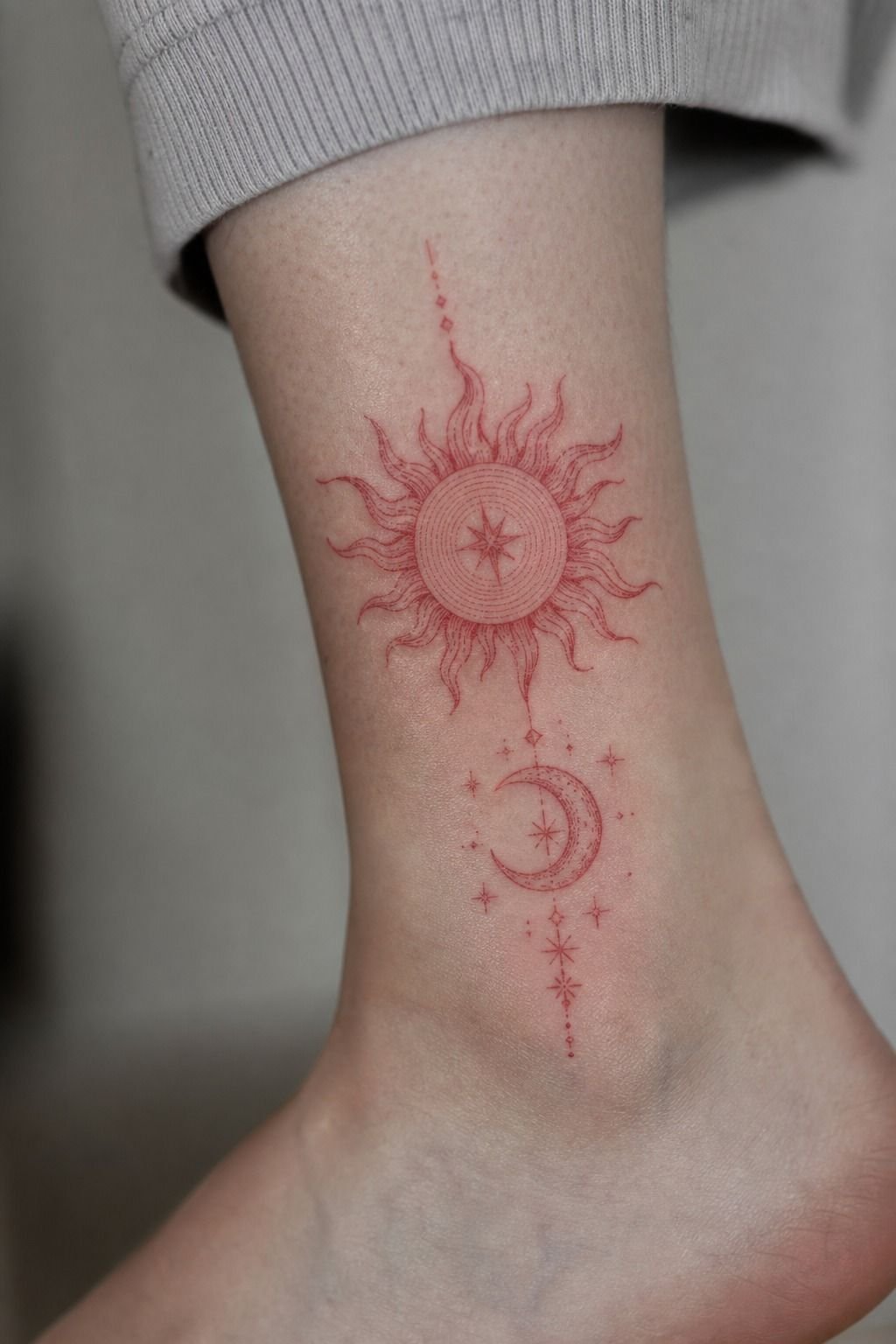
Keep fine red ink above the shoe line if you want it to stay bright. Red can be gorgeous as a tiny heart, bow, flower outline, or word, but the outer edge of your foot gets rubbed, sweated on, and exposed to sun. Red tattoo pigment needs clean healing and realistic expectations.
Place it on the ankle-side skin, not the part your sneaker collar hits every day. You’ll also want to ask whether your artist has healed photos of red work, not just fresh studio shots. But don’t expect red to behave like black.
Color is spice, and black is still the longevity workhorse.
8Select watercolor flowers with linework anchors
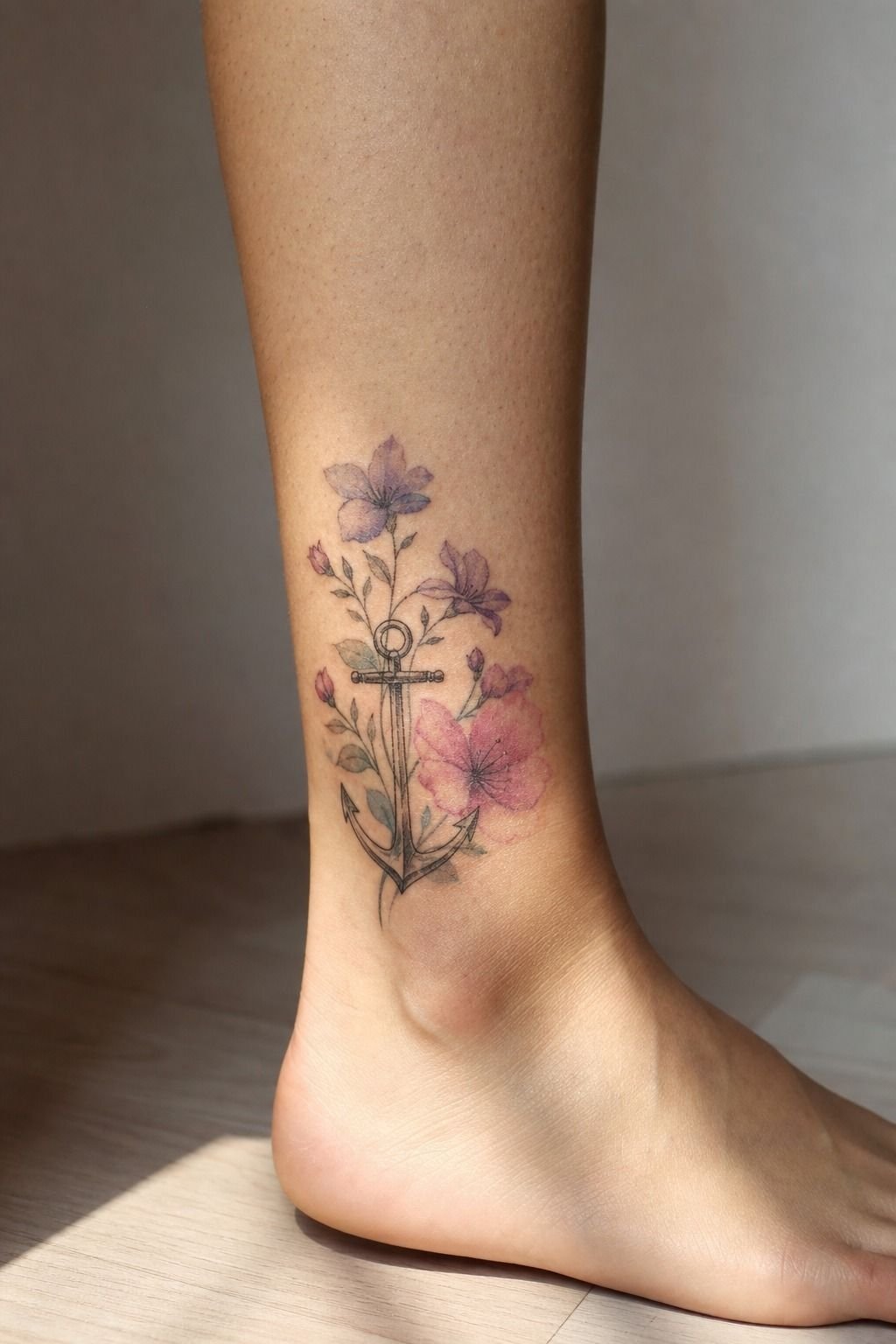
Select watercolor flowers only when they’re anchored with linework. A soft wash of pink, violet, or blue around a black stem can look gentle and captivating on warm ivory skin, but loose color alone often heals flat. Watercolor floral ink needs a crisp black outline or a few solid black details to keep its structure.
I like one flower with a wash trailing behind it, not five overlapping blooms. Your artist can use whip shade and diluted color for softness without overworking the skin.
And keep the design above the hardest shoe-rub zone. A watercolor foot tattoo can age cute on you, but only if the bones of it are solid.
9Map an inner-foot quote before booking
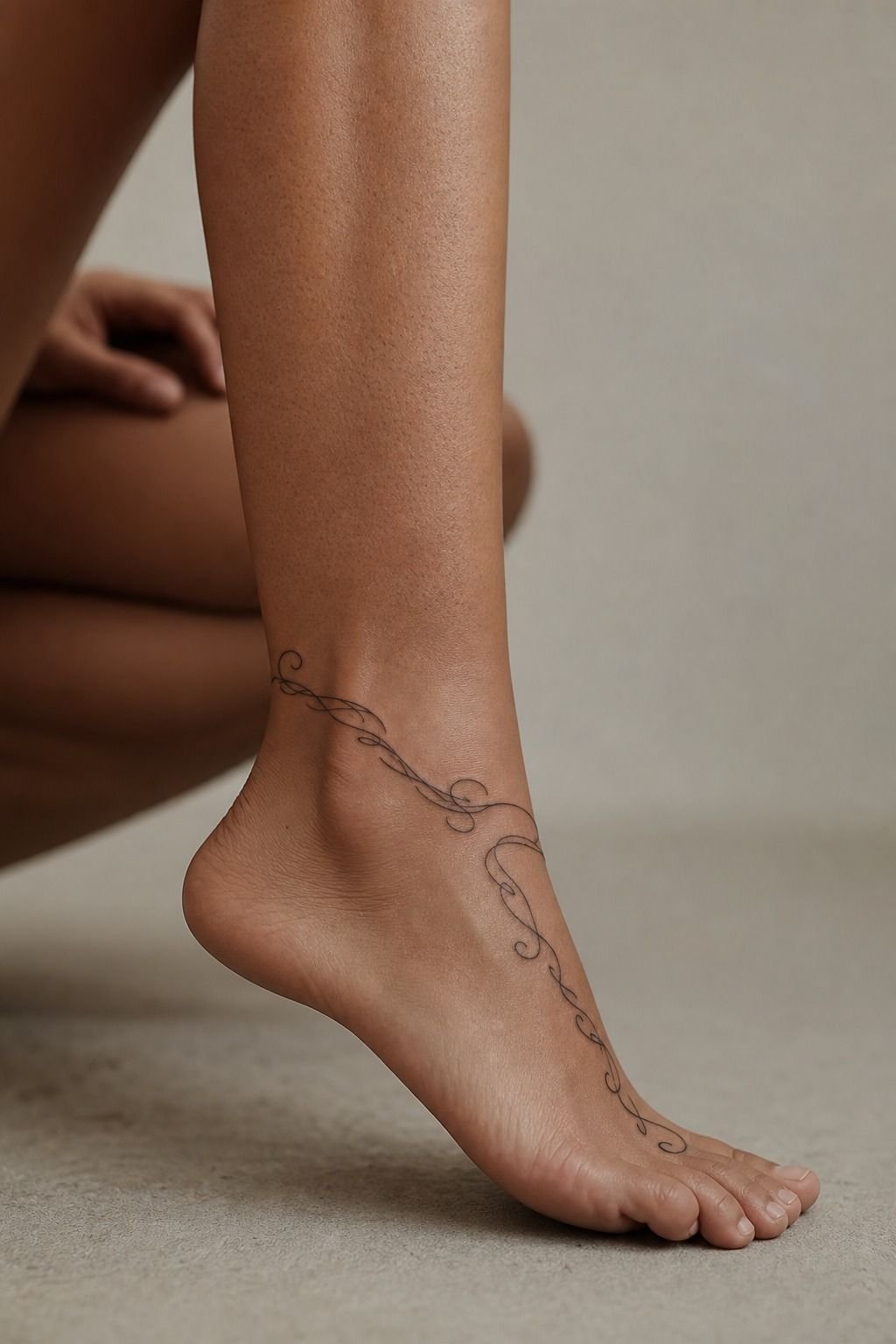
Map your quote with a stencil while you’re standing, walking a few steps, and flexing your foot. The inner foot curves hard, so a sentence that looks straight on paper can buckle once it’s on your skin. Black script lettering should sit above the arch rather than dropping into the sole-side edge.
Pick four to six words max. You’ll get a more readable tattoo and a calmer composition. I’d skip thin, looping calligraphy with long flourishes, because it can look scratchy once the skin stretches.
Side tattoos offer a useful comparison if you’re deciding whether your quote needs more breathing room.
10Test ankle tattoo scale against walking shoes
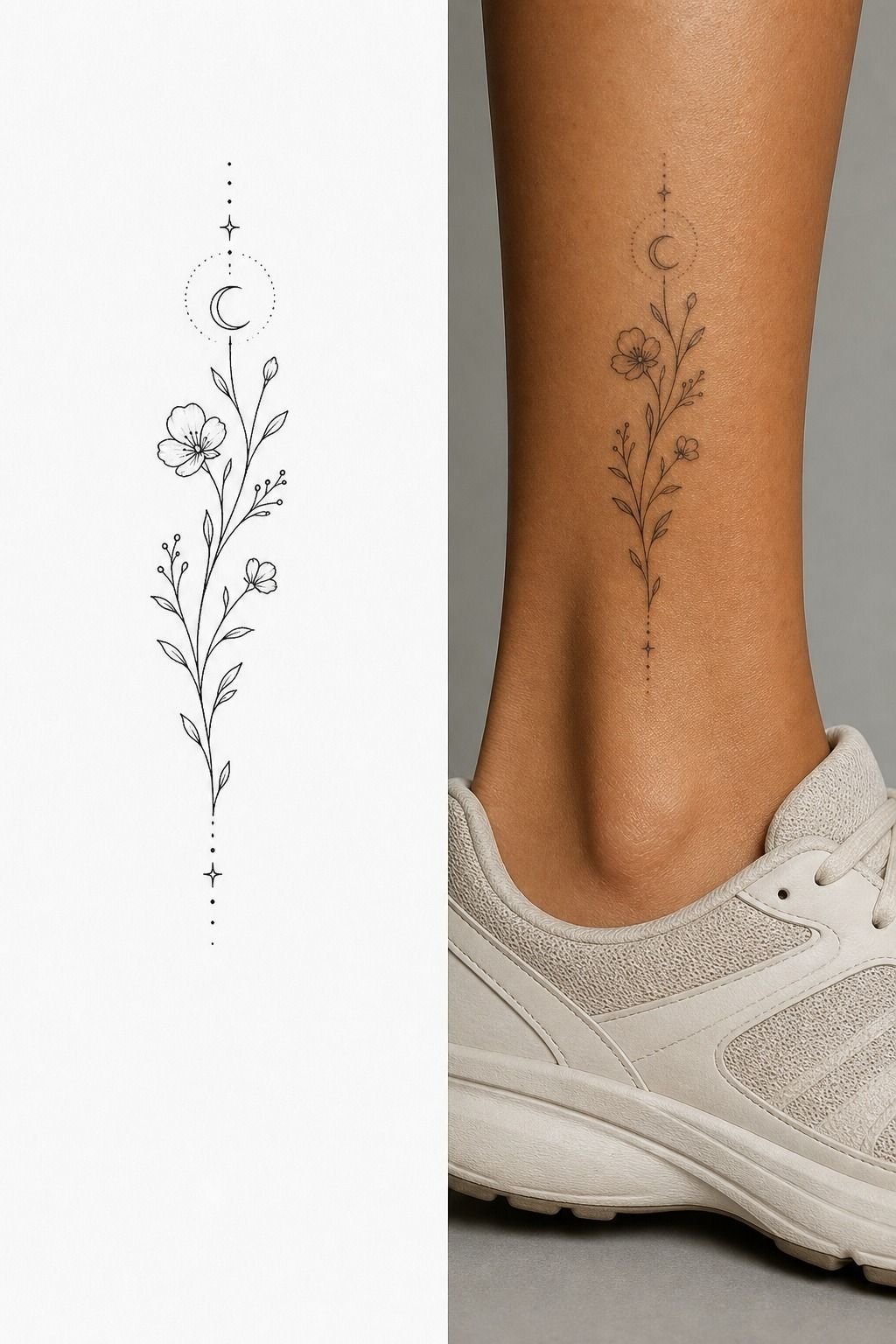
Test your stencil against the shoes you wear most.
11Choose a vertical design for narrow foot surfaces
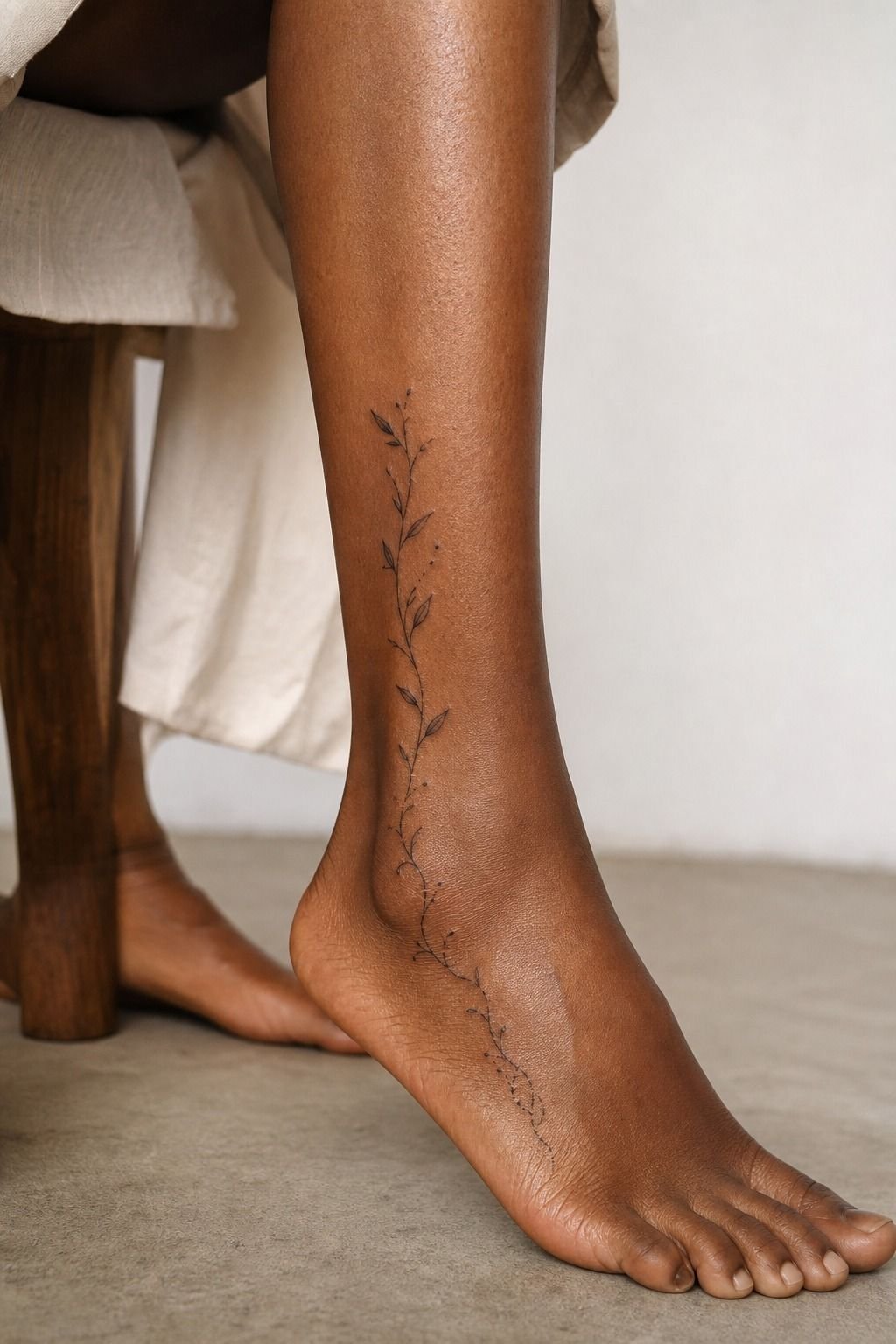
Choose vertical designs for a narrow foot surface. A tiny dagger, stem, snake, match, feather, or slim ornamental shape can run with the ankle instead of spreading sideways into shoe territory. Fine-line vertical flash on deep brown skin needs clear contrast, so ask your artist to avoid weak, dusty grey lines.
Keep the widest point near the ankle, then taper down. You’ll get an elegant silhouette that still reads when your foot is flat on the ground. But don’t force a wide butterfly across this area.
It’ll either get too small or take up more skin than you planned. Small doesn’t have to mean cramped.
12Plan pain breaks for bony foot placement
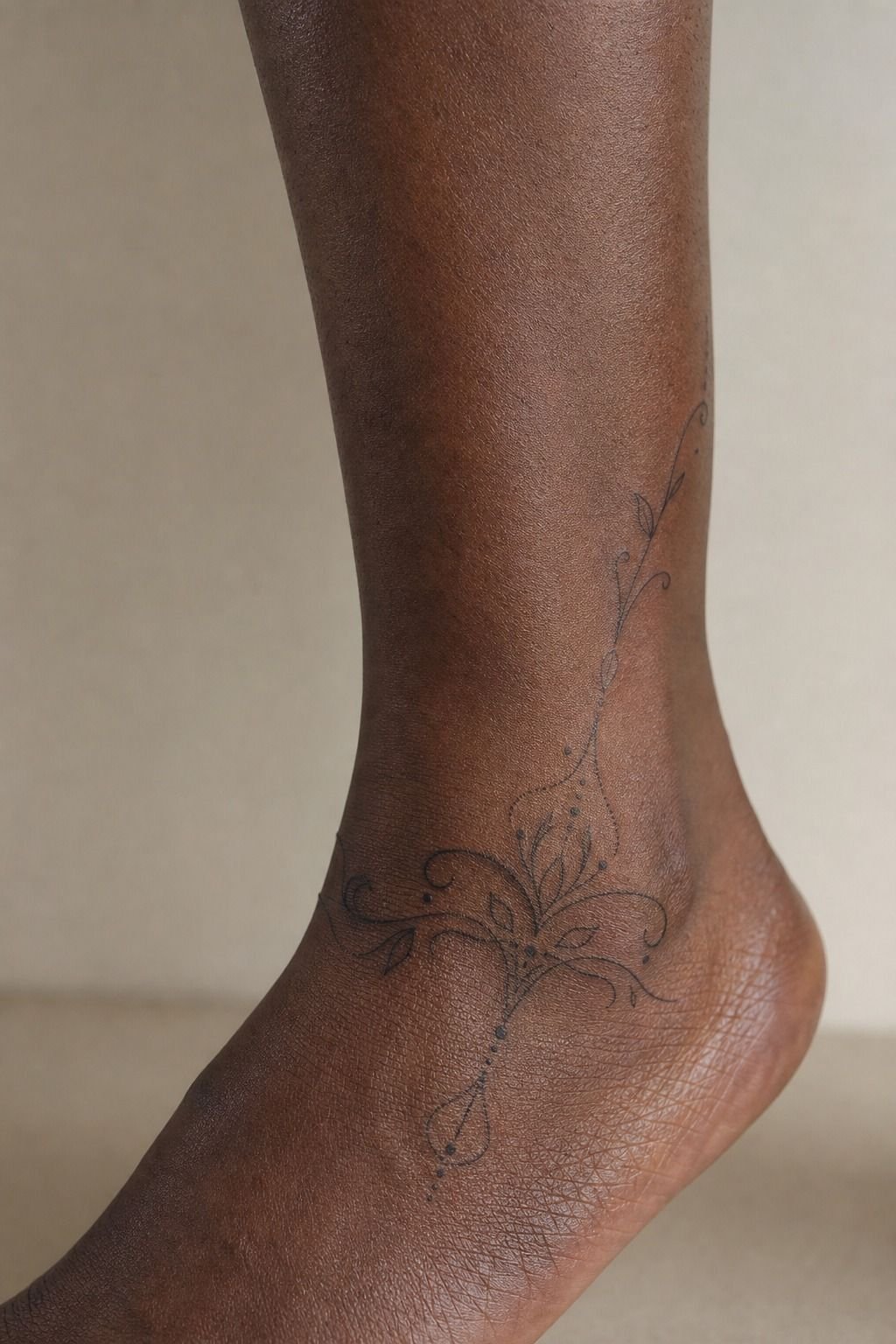
Plan pain breaks before your appointment, not after you’re shaking in the chair. Foot tattoos are spicy because the skin is thin, the bones sit close, and you’ll feel every line more sharply than you would on an outer arm. Numbing cream is a conversation for your artist, not something to apply without asking.
Eat beforehand, bring water, and wear loose slides for the trip home. Lines feel sharper, shading is a dull burn, and color packing is usually the spiciest part.
But you don’t need to prove anything. Tap out for five rather than pass out on me! Where tattoos hurt less gives you an honest placement comparison.
13Place a small memorial symbol beside the arch
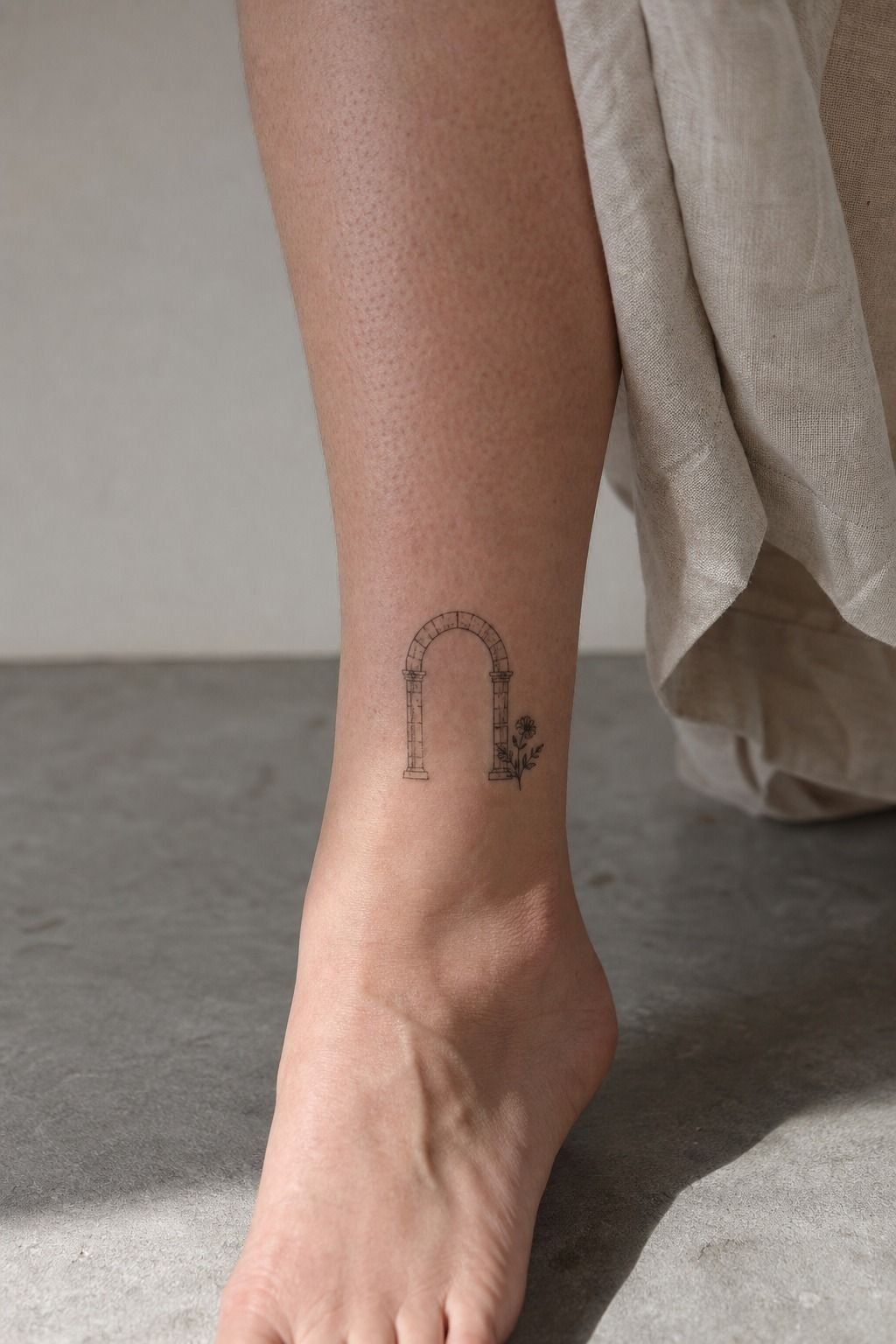
Place a memorial symbol beside the arch, where you can keep it personal without putting it on the most punishing edge of the foot.
14Pick Japanese-inspired waves for the outer foot
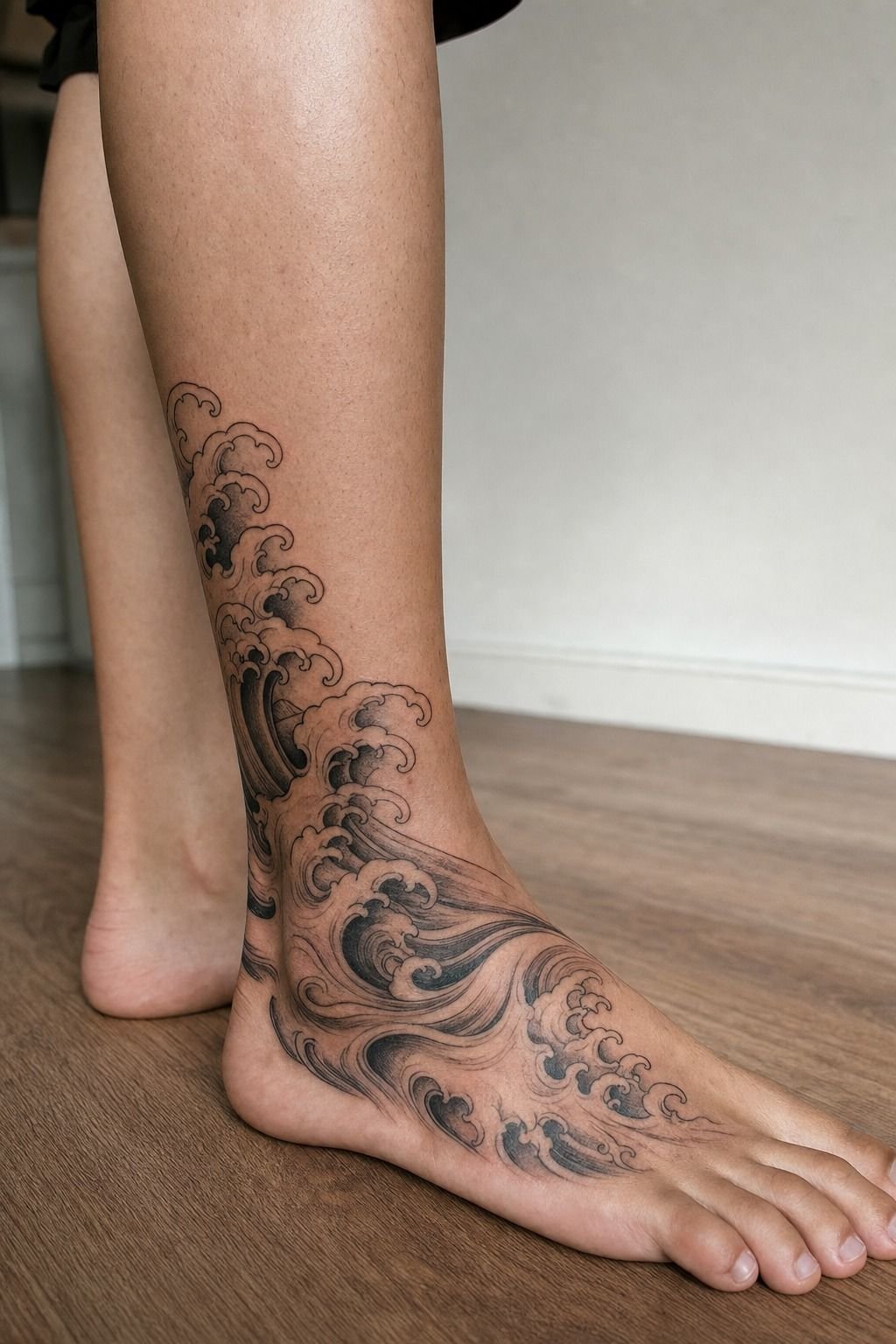
Pick Japanese-inspired waves if you want movement with stronger linework. A compact wave can curl from the outer ankle toward the foot, using black and grey rather than a pile of tiny foam details. Japanese wave linework should have thick-to-thin contrast so it stays bold and recognizable.
Keep the wave simple enough that each crest has room. You’ll want an artist who understands the visual language, not someone tracing a random wave clip-art image.
Marco would tell you the same thing: flow matters. And if you’re drawn to more body-led Japanese work, compare side hip tattoos before deciding how large you want to go.
15Keep lettering readable on curved foot skin

Keep lettering readable by choosing a typeface with open counters and clean spacing. A flash sheet may show blackletter, serif, typewriter, and script options, but the foot doesn’t forgive fussy fonts. Serif lettering flash is usually a stronger call than hairline cursive for this curve.
Ask for a stencil at the final size, then take a photo while your foot is relaxed. Can you read it without zooming in?
If not, your tattoo needs to go bigger or get simpler. I’d choose a short black serif word over white ink lettering here, because white can fade fast and won’t give you the same contrast.
White ink tattoos explain that tradeoff.
16Plan aftercare around socks and daily walking
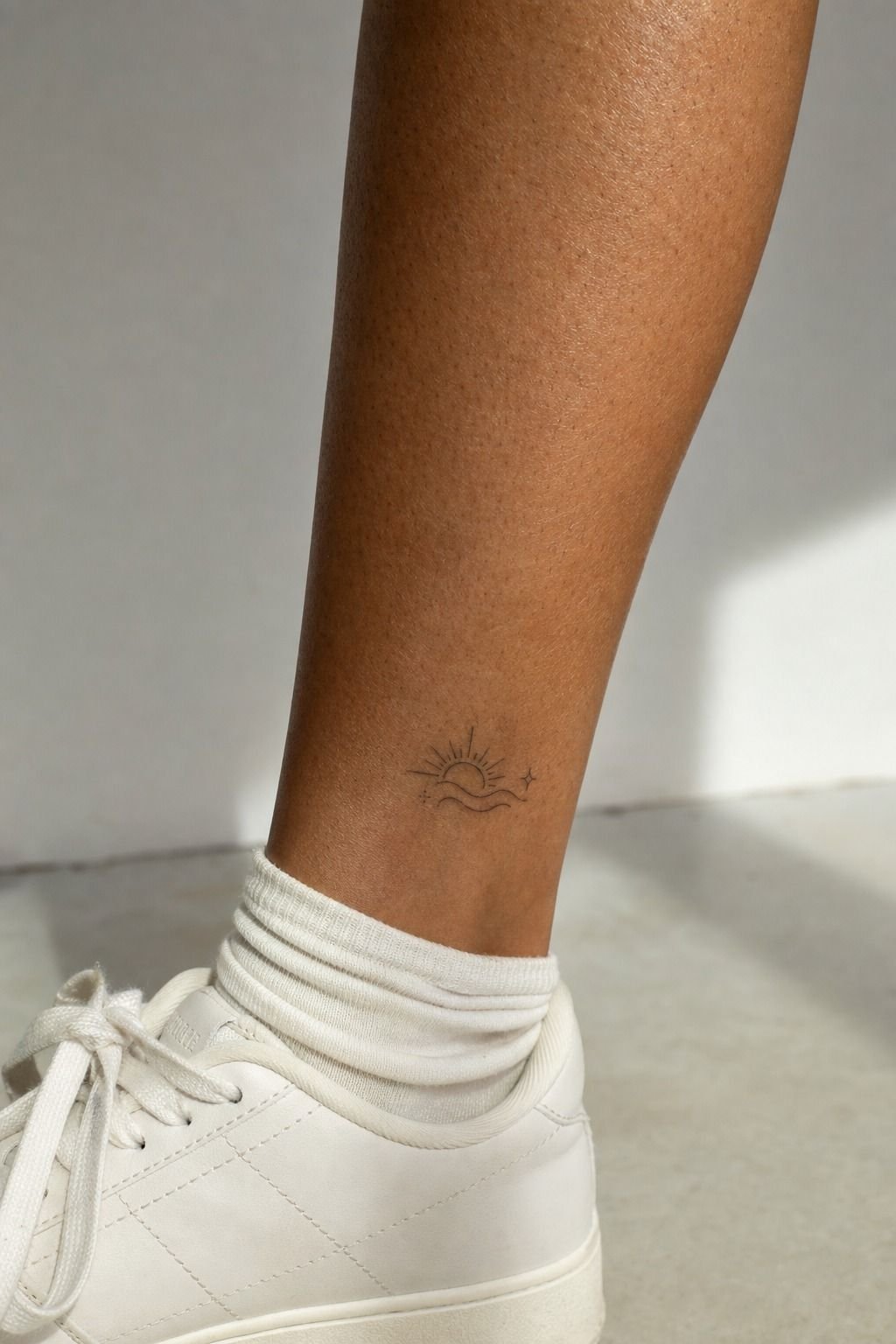
Plan your aftercare around real life, especially socks, commuting, workouts, and shoes.
17Choose black-and-grey shading for side-foot depth
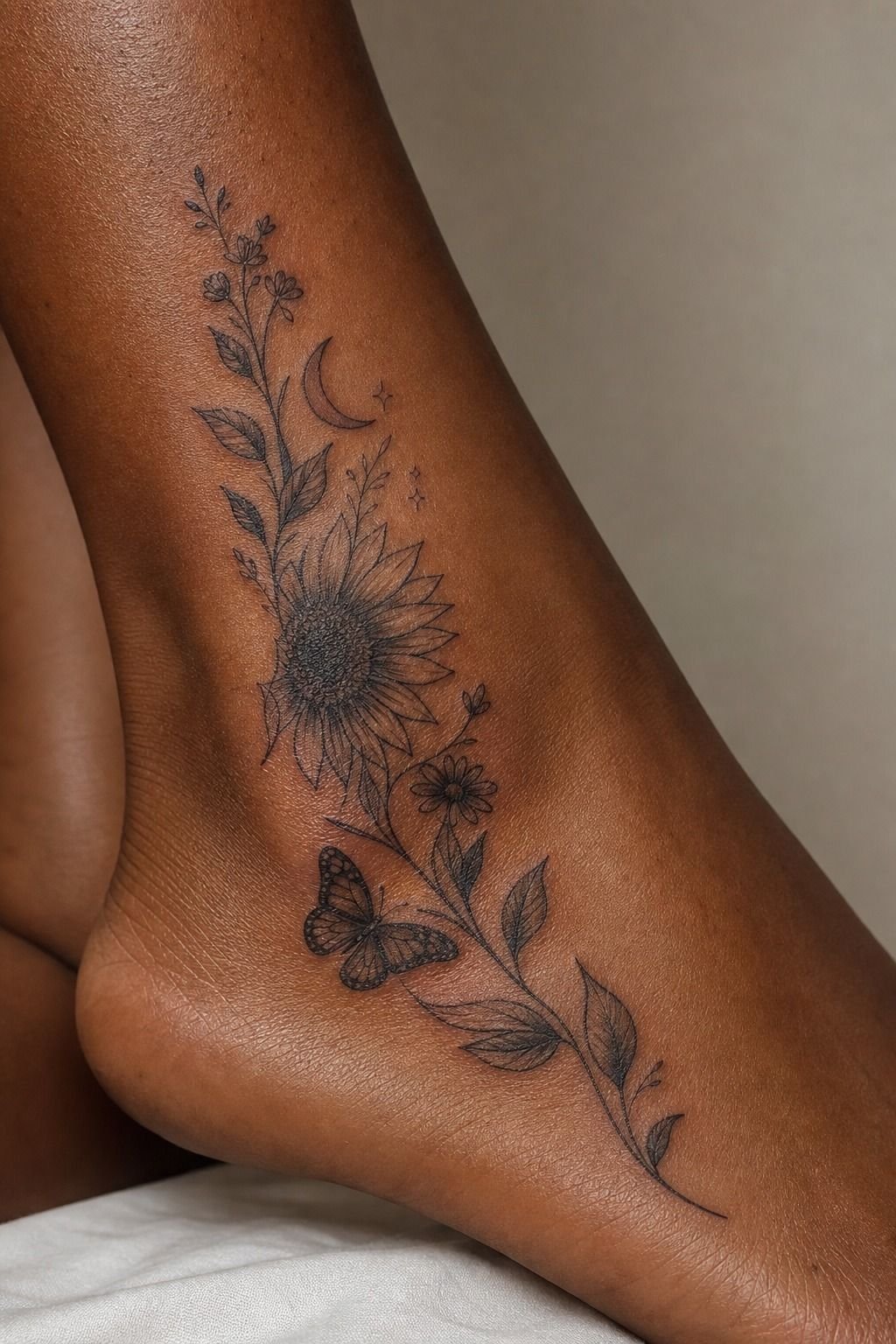
Choose black-and-grey shading when you want depth without turning the foot into a dark block. A flower, moth, shell, or small animal can get soft dimension from pepper shading and grey wash while keeping the outline clean. Grey wash shading should be soft so it heals velvety, not patchy.
Ask your artist to push the contrast at the focal point, then fade outward. You’ll get more dimension than a plain outline, but less maintenance than packed color.
I’d skip dense micro-realism on this spot. Foot skin moves, shoes rub, and tiny realistic details can lose their punch.
Black-and-grey ages with more grace.
18Book an artist experienced with foot tattoos
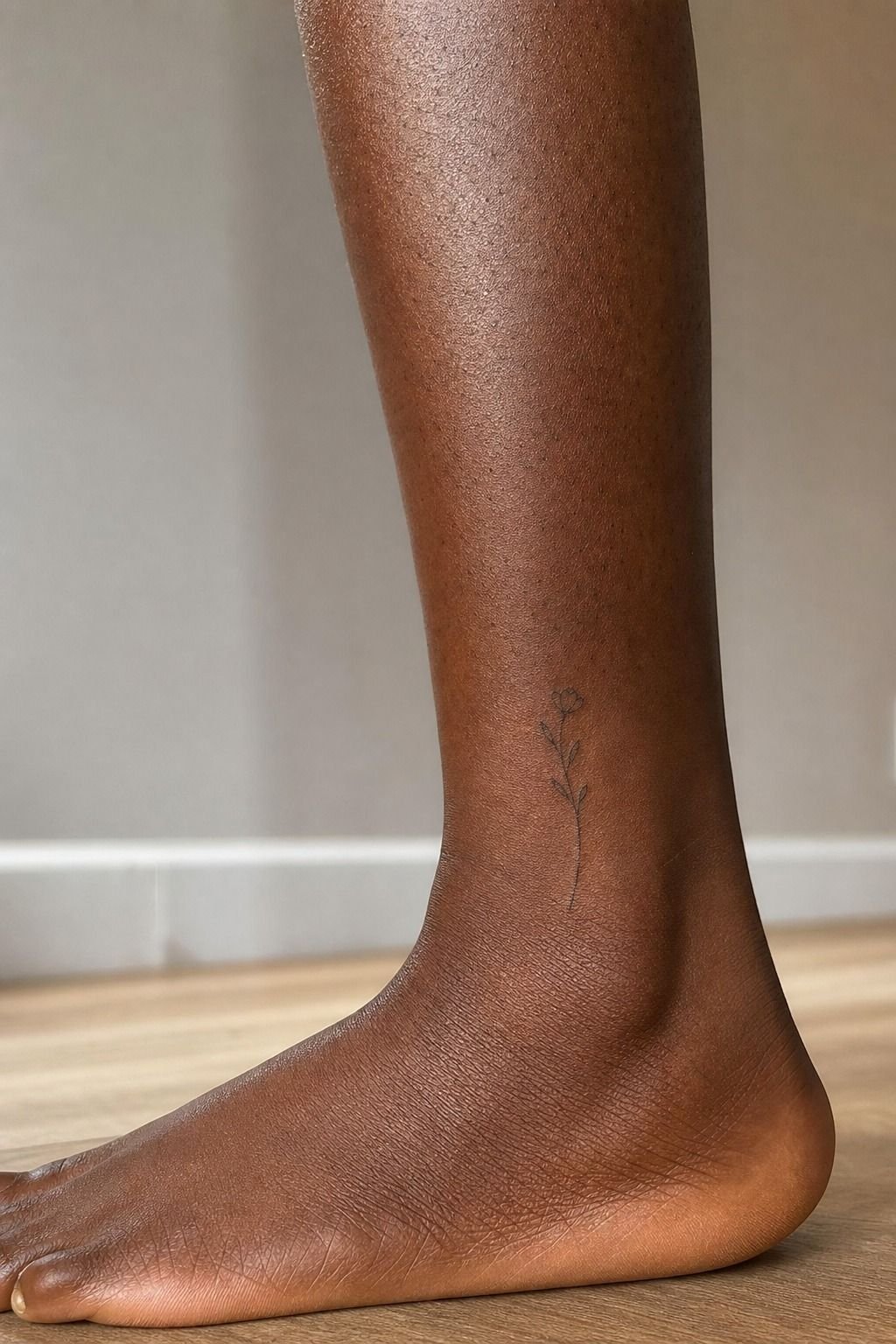
Book an artist who can show healed foot tattoos, not just fresh ankle photos under studio lights.
19Protect fresh side-foot ink during healing
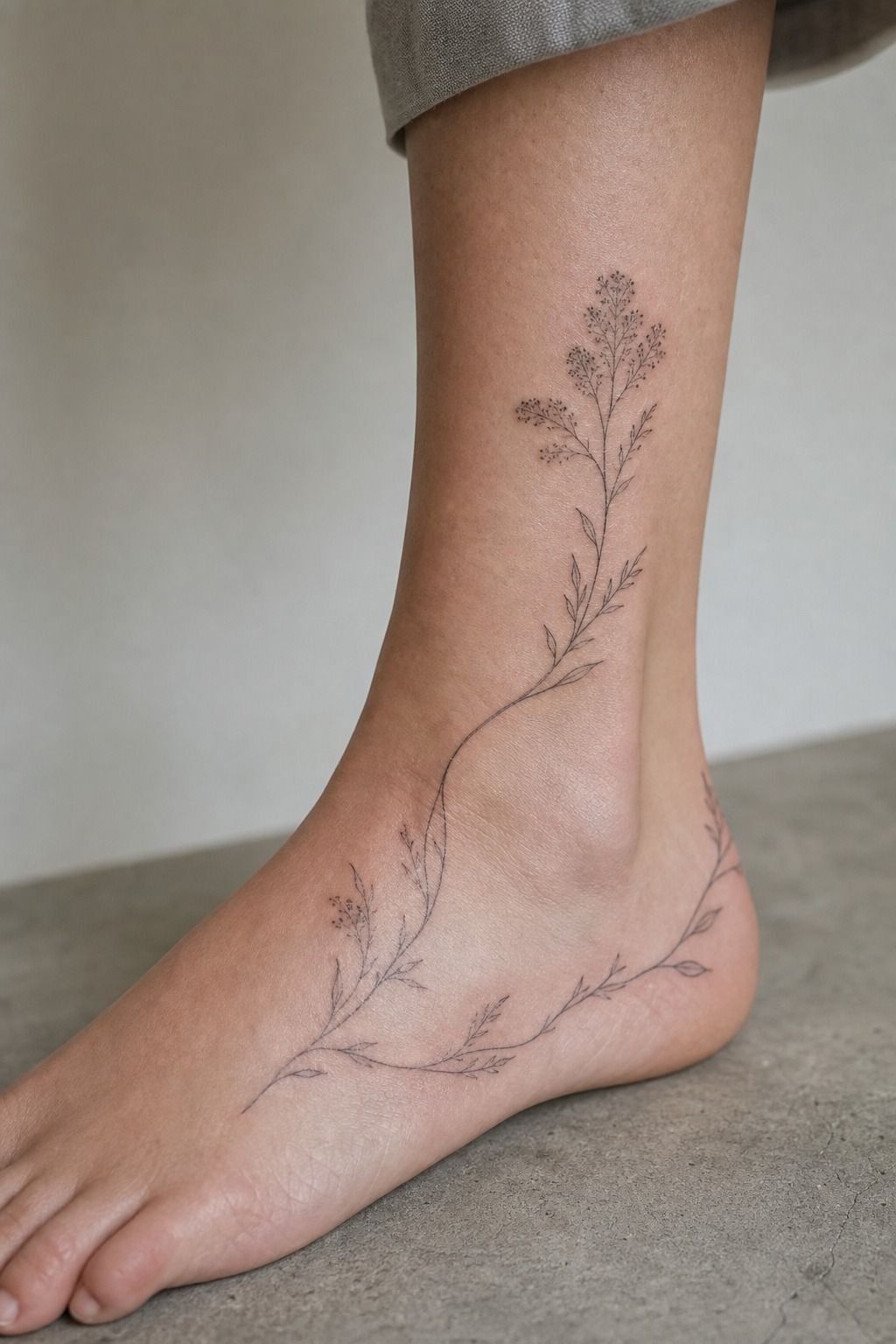
Protect fresh side-foot ink with boring, consistent care. Clean hands.
Gentle soap. A light ointment layer.
Loose footwear. That’s the whole job. Unscented liquid soap and clean cotton socks are more useful than a drawer full of tattoo products.
You’ll likely see peeling during the first 2 to 3 weeks, then a shiny silver-skin stage while the deeper layers settle. But don’t mistake silver skin for fully healed skin. Give it 2 to 3 months before judging the final result or booking a touch-up.
Sun is what quietly wrecks tattoos, so use sunscreen once the surface is fully healed.
The Footwear Reality Check
I tell clients this before we start: a side-foot tattoo has to live with your life, not just your Pinterest board. You walk on it.
You wear socks over it. You wedge it into sneakers, sandals, boots, and whatever you grabbed when you were late. That doesn’t make the placement bad.
It means you have to design with some common sense.
I’ve seen the same mistake more than once. Someone wants a whisper-thin quote wrapped low around the foot, plus tiny stars, plus a little red heart.
It’s charming fresh. Six months later, the shoe line has rubbed it, the tiny details have softened, and they’re frustrated because nobody explained the wear.
I don’t blame them. Most people aren’t thinking about friction while they’re excited to get tattooed.
Here’s my decision rule: choose the part of the design you care about most, then protect it with scale and placement. If it’s lettering, make it larger and move it above the shoe collar. If it’s a botanical design, give the leaves open skin between them.
If it’s a memorial symbol, keep the silhouette simple enough to read in ten years. Your skin isn’t paper, and that’s the whole point. It moves, heals, fades, and carries the tattoo with you.
And honestly, the strongest side-foot tattoos aren’t overloaded. They’re calm.
A clean black stem. A crescent with room around it. One word in a typeface that doesn’t beg for attention.
That restraint is what makes the tattoo feel timeless, even when your style changes.
A Few Things Worth Answering
How much does a Side Foot Tattoos usually cost?
A side foot tattoo usually costs about $100 to $300 for a small design, depending on size, city, and artist. Shop minimums often run $50 to $100, while US tattoo rates commonly land around $100 to $250 per hour.
– Small fine-line symbol – Short lettering placement – Custom stencil adjustment
Are Side Foot Tattoos a good idea for a first tattoo?
Yes, if you choose a simple design and accept that the foot can be spicy. Clean linework gives you a readable first tattoo without committing to a huge piece. You’ll have an easy time seeing it, but shoes will affect healing.
– One clear symbol – Black ink contrast – Loose footwear plan
How do I choose a tattoo artist for Side Foot Tattoos?
Choose an artist with healed examples of the exact style you want. Healed work proves more than fresh photos, especially for fine line, red ink, or lettering. You should also see clean studio practices and confident stencil placement.
– Crisp healed lines – Foot or ankle examples – Licensed, clean studio
How much do Side Foot Tattoos hurt?
Side foot tattoos usually hurt more than outer-arm or thigh tattoos because the skin is thin and close to bone. Short sessions make the experience easier to manage. You’ll feel lines sharply, then shading as a dull burn.
– Bony outer foot – Sensitive ankle curve – Five-minute pain breaks
How long does a Side Foot Tattoos take to heal?
The surface typically heals in 2 to 3 weeks, while deeper settling can take 2 to 3 months. Gentle aftercare protects your lines while you walk and wear socks. You’ll need to avoid pools, sun, picking, and tight friction.
– Unscented soap – Thin ointment layer – Clean loose socks
What’s the best placement for Side Foot Tattoos?
The best placement is usually the outer ankle-to-foot transition, slightly above your usual shoe line. Low-wear skin gives your tattoo a better shot at aging cleanly. You’ll get visibility without putting every line directly into sneaker friction.
– Outer ankle curve – Upper arch-side skin – Vertical ankle flow
Where I’d Start First
If I had to pick one step, I’d start with testing the stencil against your walking shoes. A gorgeous design placed inside constant sneaker friction will heal rough and need maintenance. Protect the placement first.
Then let the tattoo do its job.