
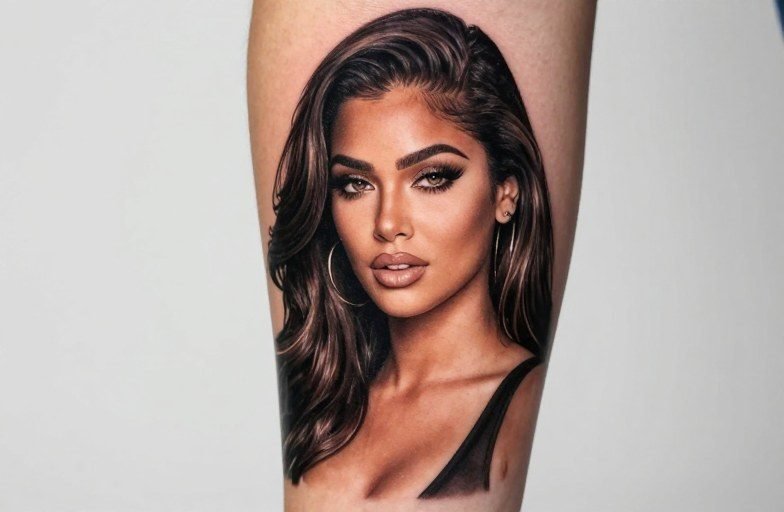
A Simi Collins tattoo typically combines a semicolon with a Collins-style cross or faith element, creating a layered symbol of survival, continuation, and spiritual resilience. The semicolon represents choosing to continue one’s story rather than ending it, while the cross or faith component grounds that survival in religious or spiritual conviction. Together, they form a design that speaks to people who have walked through dark periods and credit their faith or inner strength with carrying them forward.
Religious & Spiritual Angles
The spiritual weight of this design comes from how deliberately the two symbols interlock. The semicolon, popularized by mental health awareness campaigns, sits where a period could have ended a sentence, just as the wearer chose to continue living. Layering that with a cross or other faith symbol reframes survival as something supported by divine presence or spiritual discipline rather than sheer willpower alone.
Christian Interpretations
Within Christian tattooing, the cross element often draws from simple line-work traditions, think the plain wooden crosses common in prison and military tattooing, or the more ornate Celtic and Orthodox variants. Some wearers position the semicolon at the base of the cross, suggesting the continuation of faith itself after crisis. Others wrap the semicolon into the crossbar, making the two symbols literally inseparable. The design rarely includes Jesus’s corpus; the focus stays on the empty cross as symbol of hope and ongoing redemption.
Non-Denominational Spirituality
Not everyone attaching faith meaning to this tattoo identifies with organized religion. The “Collins” element sometimes appears as an abstract anchor, an infinity loop, or even a mountain silhouette, symbols of stability and endurance without doctrinal specificity. These versions attract people who describe their survival as supported by “something bigger than myself” without naming it conventionally. The semicolon still carries its core meaning, but the companion symbol broadens to encompass whatever the wearer understood as their lifeline during difficult periods.
Best Placements
Where this tattoo lives on the body changes how it’s read and how well it holds up over time. The semicolon’s small scale means it can work almost anywhere, but adding the Collins cross element demands more space and cleaner skin.
- Inner forearm: The most common placement, visible enough for personal reminder but easy to cover. The relatively flat skin here takes line-work well and ages predictably.
- Behind the ear: Popular for smaller, more private versions. The curved surface makes precise line-work harder; choose an artist experienced with this tricky canvas.
- Ribcage: Offers meaningful real estate for larger compositions combining semicolon, cross, and script. The floating sensation of rib tattoos suits the theme of being carried through difficulty.
- Ankle or wrist: Classic semicolon locations that work for minimal Collins elements. These high-movement areas blur faster than you’d expect.
- Upper chest/shoulder: Strong choice for larger cross designs with the semicolon integrated at the intersection. The stable skin here preserves detail for years.
Scale Considerations
The semicolon’s power is its smallness, one punctuation mark carrying enormous weight. Enlarge it too much and the design becomes a comma with a dot, losing recognition. Most successful Simi Collins tattoos keep the semicolon under an inch tall, letting the cross or companion element provide the visual anchor. Artists often use the cross’s vertical line to create the semicolon’s body, literally building continuation into the structure of faith.
How It Ages on Skin
Semicolon tattoos face specific aging challenges because of their fine detail and high contrast. The dot above the semicolon, barely a few millimeters across, can soften to an unrecognizable blur within five to seven years on sun-exposed skin. The cross element, if rendered in bold single-line work, typically outlasts the punctuation mark it accompanies.
Line weight matters enormously here. Hair-thin semicolons look crisp for eighteen months, then degrade into grey smudges. Experienced artists build the dot with slightly heavier saturation than seems necessary, anticipating the natural spread of ink under skin. The cross benefits from consistent line weight throughout, variable thickness that looks dynamic fresh often ages unevenly, with thin sections disappearing while bold areas hold.
Black ink outperforms color in this design’s longevity. The semicolon’s readability depends on sharp contrast; any color shift in the dot or comma-body compromises the symbol’s immediate recognition. If you want color, restrict it to the cross background or surrounding decorative elements, keeping the core symbols in solid black.
Common Variations & Styles
The basic formula, semicolon plus faith symbol, has generated dozens of regional and stylistic variants. Some stay minimal; others become elaborate compositions.
Script-Integrated Designs
Adding words complicates the visual balance but deepens personal meaning. Common phrases include “continued,” “my story isn’t over,” or scripture references like Philippians 4:13. The most successful script versions treat the text as secondary, wrapping around or beneath the symbol pair rather than competing with it. Lettering style should match the cross’s character: traditional serif fonts with ornate crosses, clean sans-serif with modern minimalist versions.
Floral and Nature Additions
Lotus flowers, vines, or mountain imagery sometimes accompany the core symbols, each carrying its own resilience connotation. These work best when they physically support the central design, roots wrapping the cross base, vines climbing the semicolon’s stem, rather than floating nearby as disconnected decoration. The lotus specifically resonates because of its mud-to-bloom growth pattern, paralleling the semicolon’s emergence from darkness.
Color vs Black and Grey
The choice between color and black-and-grey shapes both immediate impact and long-term appearance. Black and grey dominates this design category for good reason: the semicolon’s dot must read instantly as punctuation, and greywash or single-needle black achieves that clarity. Color introduces variables that age unpredictably, reds warm to orange, blues can grey out, yellows often disappear entirely into lighter skin tones.
When color does appear, it’s typically strategic: a thin red line representing the blood of Christ in explicitly religious versions, or soft watercolor backgrounds that don’t compete with the symbol’s silhouette. Watercolor techniques specifically challenge this design because the semicolon’s precision contradicts the style’s intentional bleeding and soft edges. Artists who execute this combination successfully usually render the core symbols in solid black first, then add color washes around, never through, the central image.
Skin tone influences color choices more than most people anticipate. On darker skin, bright colors require heavier saturation to remain visible, which can blur faster than lighter applications. Black and grey adapts across all skin tones with minimal adjustment, another reason for its prevalence in Simi Collins work.
History & Cultural Roots
The semicolon’s tattoo meaning emerged from Project Semicolon, founded in 2013 by Amy Bleuel as a mental health awareness and suicide prevention initiative. The organization encouraged people to draw or tattoo semicolons as public declarations that their stories continued. This origin is documented and specific, unlike many tattoo symbols whose histories blur into speculation.
The “Collins” addition’s history is less traceable. The name often links to contemporary Christian music artists or pastors who popularized combining the semicolon with faith symbols, though no single origin point is definitively established. Some trace it to social media sharing among church communities around 2015-2016, where congregants began posting semicolon-cross combinations as testimony to faith-sustained survival. The design spread through these networks before entering mainstream tattoo shop request books.
Cross tattoos themselves carry vastly older lineage, from Coptic Christian marking practices through medieval pilgrimage tattoos to modern prison and military traditions. The Simi Collins design represents a recent synthesis, perhaps fifteen years old at most, drawing on this deep cross history while attaching it to very contemporary mental health discourse. That recency matters: unlike symbols with centuries of accumulated meaning, this tattoo’s significance is still actively being shaped by the people who wear it.
Key Takeaways
A Simi Collins tattoo merges mental health survival symbolism with spiritual or faith-based grounding, creating a personally meaningful but publicly readable declaration. The design succeeds when the semicolon remains legible at small scale and the companion element genuinely reflects the wearer’s specific beliefs rather than defaulting to generic cross imagery. Placement on flatter, less sun-exposed skin preserves detail; black and grey execution outlasts color alternatives. The tattoo’s relative newness means its meaning continues evolving, wearers today are actively defining what this combination represents for future generations.
Frequently Asked Questions
Does a Simi Collins tattoo have to be religious?
No. While many designs incorporate a cross, the ‘Collins’ element can represent any anchor or source of strength, family, nature, or personal philosophy. The core meaning centers on continuation supported by something beyond oneself, however each wearer defines that.
How small can a Simi Collins tattoo be while still reading clearly?
Most artists recommend at least three-quarters inch height for the semicolon portion to preserve the dot’s definition. Smaller than that, and the punctuation mark becomes unrecognizable within a few years as ink naturally spreads under skin.
What’s the typical cost range for this tattoo?
A simple black semicolon with small cross element runs $80-$150 at most shops. Elaborate versions with script, color, or significant size increase to $200-$400. The design’s simplicity means you’re paying for precision and placement expertise rather than extensive session time.
Can this tattoo be covered or modified later if my beliefs change?
The semicolon’s small size and common placement make it relatively coverable, an experienced artist can often integrate it into a larger design or obscure it with strategic blackwork. The cross element, if bold and simple, may be harder to transform without significant expansion of the tattoo’s overall size.
Related Tattoo Meanings
- Sisyphus Tattoo Meaning: Endless Struggle Quiet Defiance
- Snake Biting Hand Tattoo Meaning: Symbolism Significance
- Snow Leopard Tattoo Meaning: Solitude, Stealth, and Mountain Strength
- Explore more









