
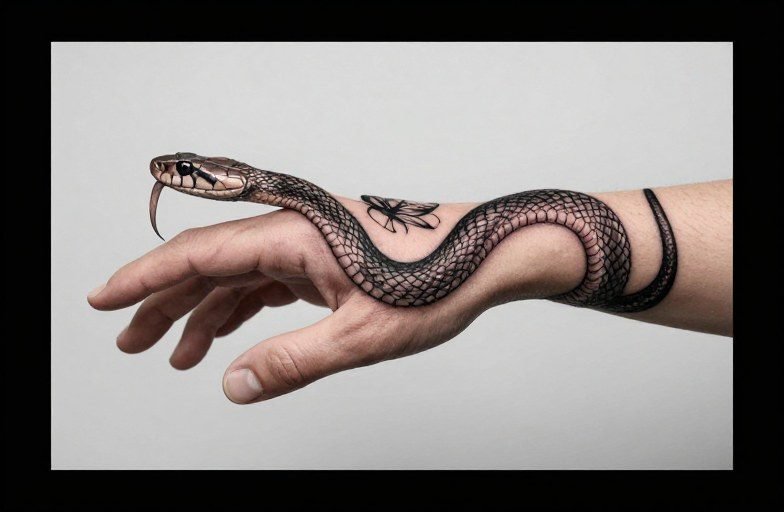
A snake biting hand tattoo typically represents the moment of consequence, when curiosity, trust, or overreach meets its price. The image captures a specific, tense interaction: the hand, symbolizing action and agency, being punished by the serpent, long associated with hidden knowledge, temptation, and renewal. Depending on context, it can read as a warning against naivety, an embrace of necessary risk, or a marker of survival through painful transformation.
Symbolism & Core Meaning
The Bite as Threshold
The bite itself is the critical detail. A coiled snake or passing serpent carries different weight than the strike. The biting hand motif freezes the instant of contact, pain as initiation. In many symbolic traditions, venom functions as both poison and medicine; the same substance that destroys also transforms. The tattoo can signal that the wearer has undergone, or willingly courts, a destructive experience that yields something new.
Hand placement amplifies this. Hands do things. They reach, take, touch, work. A snake biting the hand implicates the wearer’s own agency in whatever harm or change occurs. The image asks: did you reach into the garden, or did the snake come to you? That ambiguity lets the symbol stretch across many personal narratives.
Common Interpretive Threads
- Knowledge purchased through pain: The serpent as bringer of forbidden awareness, the hand as the instrument that sought it out
- Self-sabotage or betrayal: The snake sometimes reads as one’s own destructive patterns, turned against the self
- Protection and warning: A visible signal that the wearer has been bitten before, carries the antibodies, won’t be caught again
- Transformation: Shedding skin requires the old self to die; the bite initiates that death
Similar & Related Symbols
Snake imagery clusters with several related motifs that tattoo collectors often consider alongside the biting hand.
Close Variants
The ouroboros, serpent consuming its tail, cycles endlessly through destruction and renewal, but lacks the specific human vulnerability of the bitten hand. Snake and apple compositions keep the garden narrative explicit, while the biting hand abstracts it to any situation where reaching proves costly. Snake through skull or snake and dagger share the danger motif but shift agency: the dagger kills, the skull is already dead. The biting hand preserves living tension.
Contrast Symbols
Butterfly or phoenix transformation imagery tends toward optimism; the snake bite admits that change hurts, that you may have brought it on yourself. Koi swimming upstream frame struggle as noble persistence; the snake bite frames it as sudden, venomous, possibly undeserved. These aren’t better or worse, just different emotional registers that attract different people.
Who Chooses This Tattoo
Certain life contexts draw people toward this specific image. Not everyone who gets it is working through identical experiences, but patterns emerge in placement, style, and accompanying elements.
Placement and Scale
The hand is already the most visible, socially exposed placement short of the face. Adding a striking snake there broadcasts the symbol constantly. People who choose this often want the reminder visible, to themselves, to others, to the world that first impressions of innocence or harmlessness may be wrong. Some extend the composition up the forearm, letting the snake’s body coil toward the elbow while the bite remains at the hand; this creates narrative movement, the strike as climax.
Style choices matter too. Heavy blackwork with aggressive fangs reads darker, more defensive. Fineline with minimal blood, more decorative serpent, can suggest elegance, the bite almost beautiful. Neo-traditional with bold color keeps the image legible as it ages, which matters enormously on hands where ink degrades fastest.
Common Accompanying Elements
- Roses or flowers near the bite: beauty and pain intertwined, or the garden context made explicit
- Clocks or hourglasses: time running out, the irreversible moment
- Specific hand gestures: open palm suggests vulnerability; clenched fist, defiance even in being struck
- Text banners: names, dates, or short phrases that anchor the symbol to particular events
Mythology & Folklore
Serpent-human interactions thread through global myth, though the specific biting hand motif has particular resonance in certain traditions.
Western and Mediterranean Roots
The biblical serpent in Eden is often linked to this imagery, though the text describes deception rather than physical bite. Later artistic tradition, medieval and Renaissance depictions, sometimes showed the serpent striking or coiling more aggressively. The ancient Greek rod of Asclepius, with its single serpent, connected snakes to healing and secret knowledge; the bite that sickens and the venom that cures are twinned. Some trace the hand-bitten motif to the story of Cleopatra’s asp, though that was arm or breast, not hand specifically.
Global Parallels
Norse mythology features Jörmungandr, the world-serpent, whose eventual bite on Thor kills the god even as Thor kills the snake, a mutual destruction that resonates with the hand motif’s sense of necessary but costly confrontation. In some West African and diaspora traditions, serpents serve as intermediaries between worlds; the bite can mark someone as chosen, unwillingly initiated. Hindu and Buddhist imagery often depicts nagas, serpent beings, as guardians of treasure, reaching for which provokes their strike.
History & Cultural Roots
The image’s tattoo history is shorter than its symbolic history, but still stretches back further than many assume.
Sailor and Counterculture Adoption
Traditional American tattooing in the early-to-mid twentieth century used snakes frequently, though more often coiled, daggered, or paired with skulls. The specific hand-bite composition gained visibility through the 1960s-70s counterculture, when tattooing expanded beyond military and maritime circles into broader working-class and artistic communities. Ed Hardy’s Japanese-influenced serpents and the bolder European traditional styles both contributed visual vocabulary that contemporary artists still draw on.
Contemporary Evolution
Since the 1990s, the motif has proliferated across styles: photorealistic black-and-grey, graphic neo-traditional, delicate single-needle work. The hand placement, once rare due to social stigma and technical difficulty (hand skin is thin, vascular, prone to blowout and rapid fading), became more common as tattooing normalized socially and artists refined techniques for challenging areas. Today’s versions often mix historical references with personal narrative in ways that would have been unusual fifty years ago.
Personal & Modern Meanings
Beyond inherited symbolism, people currently choosing this tattoo report several consistent personal frameworks.
Addiction and Recovery
For some, the snake represents a substance or behavior that bit back after seeming manageable, controllable, even pleasurable. The hand that reached, that used, that kept going back. Recovery narratives sometimes use the image as scar replacement or as marker: the bite happened, the venom didn’t kill, the antibodies exist now. The visibility on the hand serves as constant reminder and, paradoxically, as reclamation of the same hand for healthier action.
Relationship and Betrayal
Others frame the snake as specific person or system: the trusted source that proved poisonous. The hand that extended in friendship, employment, love, family loyalty. Unlike more abstract betrayal symbols, the biting hand keeps the wearer’s own agency visible, you reached, you were bitten, you survived. Some add healing elements post-betrayal; others keep the wound fresh-looking, unhealed in ink if not in life.
Creative and Professional Risk
A smaller but notable group uses the image to mark career pivots or creative commitments that cost something stable and secure. The hand that left the conventional path, that reached for something uncertain, that got struck for its trouble. The snake here is less enemy than gatekeeper: the bite proves you showed up, you tried, you paid the entry fee.
What to Remember
Hand tattoos fade faster than almost anywhere else on the body. The constant use, sun exposure, and thin skin mean you’ll need touch-ups, possibly significant ones, within a few years. Bold lines and limited fine detail age better here; intricate scale work or subtle greywash will blur sooner than you’d like. Budget for maintenance.
The social visibility is real. Even in increasingly tattoo-friendly cultures, hands remain hard to cover for formal contexts. The snake biting hand specifically carries confrontational energy, some viewers will read it as aggressive or dark regardless of your personal intent. Make sure that reading is acceptable to you, or that you’re prepared to carry and explain it.
Symbolically, the image works best with some specificity. A generic snake biting a generic hand risks becoming decorative rather than meaningful. Consider what kind of snake, what kind of hand gesture, what accompanies the strike. The more particular the composition, the more it communicates rather than merely decorating.
Finally, the meaning you bring matters more than any inherited symbolism, but inherited symbolism shapes what others see. The tension between those two, private meaning and public reading, is itself part of what this tattoo captures. The hand reaches out, the world interprets, the bite lands somewhere between.
Frequently Asked Questions
Does a snake biting hand tattoo always mean something negative?
Not necessarily. While the image contains pain and danger, many wearers frame it as survival, necessary transformation, or earned knowledge. The negativity depends on what the snake and the bite represent to the individual.
Which hand is better for this tattoo, left or right?
Right hands are more commonly tattooed simply because most people are right-handed and want the visibility, but there’s no symbolic rule. Some choose their dominant hand to emphasize agency in the reaching, or their non-dominant to suggest vulnerability.
How painful is getting a hand tattoo compared to other placements?
Hand tattoos rank among the more painful due to thin skin, numerous nerve endings, and proximity to bone. The fingers and knuckles in particular are intense. Most experienced collectors place hands in their top tier of discomfort.
Will a snake biting hand tattoo affect job prospects?
Potentially yes, depending on industry and location. Customer-facing roles in conservative fields may still view visible hand tattoos negatively. Some people use makeup or gloves for formal contexts, but covering hands daily is impractical for many careers.
Related Tattoo Meanings
- Spoon Tattoo Meaning: Symbolism, Styles Placement
- Tarantula Tattoo Meaning: Symbolism, Design Placement Guide
- Words Two Meanings Tattoo Meaning: Double Meaning Word Ink
- Explore more









