
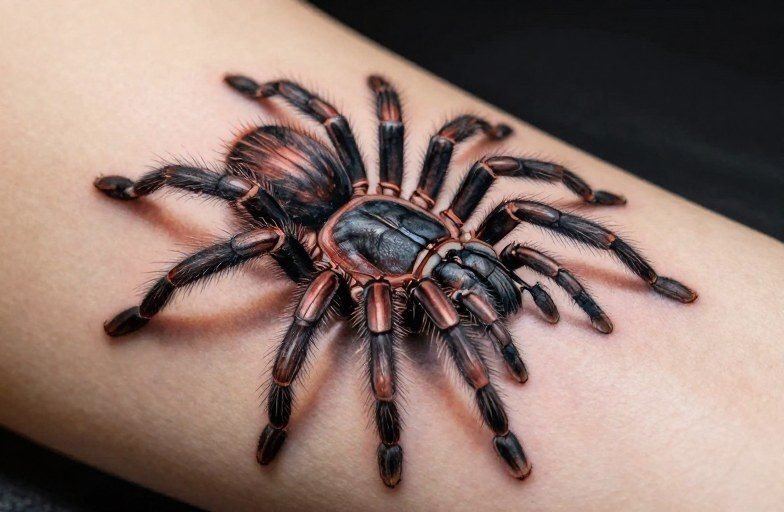
A tarantula tattoo most commonly represents patience, transformation, and the quiet power of waiting for the right moment. Unlike the aggressive spider imagery you might expect, the tarantula carries a slower, more deliberate energy, think ambush predator, not frantic web-weaver. For many, it becomes a symbol of protecting personal boundaries or moving through life with calculated confidence.
Similar & Related Symbols
Spider tattoos in general overlap with tarantula imagery, but the distinction matters. Web-spinning spiders like black widows or orb-weavers emphasize interconnectedness, fate, and creative construction. The tarantula, being a ground-dwelling hunter, shifts the symbolism toward earthiness, self-reliance, and raw physical presence.
Other Arachnids and Insects
Scorpions share the tarantula’s venomous reputation but lean harder into danger, betrayal, or astrological significance. Beetles and scarabs carry rebirth and solar energy. Mantis tattoos overlap with the tarantula’s patience symbolism but add spiritual stillness. If you want the predator aspect without the eight-legged form, consider snake imagery, though snakes flow where tarantulas anchor.
Cross-Cultural Overlaps
- Native American spider figures (Grandmother Spider) emphasize creation and storytelling, quite different from the tarantula’s solitary hunt
- West African Anansi traditions focus on trickery and wisdom through webs
- Japanese jorōgumo folklore blends seduction and danger, sometimes with spider imagery
- Mesoamerican traditions often linked spiders to weaving and time, not to tarantulas specifically
The tarantula stands somewhat apart from these web-centric traditions. Its meaning is more modern, more personal, less culturally inherited.
Color vs Black and Grey
Color choices dramatically shift how a tarantula tattoo reads visually and symbolically.
Naturalistic Color
Species-accurate coloration, Mexican red-knee’s orange and black, cobalt blue’s iridescent legs, pinktoe’s soft rose, grounds the tattoo in biological reality. These pieces celebrate the animal itself, often chosen by keepers, biologists, or anyone who respects the creature beyond its shock value. Natural color demands a skilled artist; tarantula hairs and iridescence are notoriously difficult to render. Expect longer sessions and higher cost for this approach.
Black and Grey
Stripped of color, the tarantula becomes more sculptural, more about form and shadow. This approach ages cleaner, especially for smaller pieces where color would muddy over time. Black and grey also leans into the darker symbolic associations: mortality, the uncanny, things that exist in margins and corners. The contrast between soft hair texture and hard carapace shows beautifully in monochrome.
Some artists split the difference with limited color accents, a red knee patch, a blue leg flash, adding focal points without overwhelming the design’s longevity.
Personal & Modern Meanings
Contemporary tarantula tattoos rarely draw from ancient tradition. Instead, they accumulate meaning through individual experience and subcultural association.
From the Keeper Community
Tarantula keeping has grown substantially as a hobby, and tattoos often mark years of care for a specific animal or the community itself. These pieces might incorporate a species the person raised, a rehousing tool, or a catch cup, visual shorthand that reads clearly to other keepers and obscurely to outsiders. The meaning here is membership, dedication to a niche pursuit, and respect for misunderstood animals.
Broader Personal Symbolism
- Patience as active strategy, not passive waiting
- Defense of territory, tarantulas rarely attack but display threat postures when disturbed
- Shedding and growth, since tarantulas molt throughout their lives
- Comfort with being unsettling to others, owning the role of outsider
- Feminine power without softness, particularly for women rejecting traditional spider imagery
The tarantula’s slow movement also resonates with people recovering from high-stress periods, representing a deliberate pace after chaos.
Design Tips & Pairings
Successful tarantula tattoos require specific technical decisions that general spider designs don’t.
Anatomical Accuracy vs Stylization
Realistic tarantulas need eight legs plus pedipalps (the smaller appendages near the mouth), two body segments, and correct eye placement. Stylized versions can reduce legs, merge body segments, or exaggerate features, common in American traditional or neo-traditional approaches. Both work, but mixing realism with stylization within one piece usually fails. Choose a lane and commit.
Hair texture is the defining challenge. Realistic pieces need fine stippling or whip-shading to suggest the urticating hairs. Smooth, hairless tarantulas look like generic spiders and lose the specific identification.
Common Pairings
- Skulls: mortality, the predator-prey cycle, Mexican cultural contexts
- Flora: desert roses, succulents, or dry grasses to establish habitat
- Geometric frames: contrasting organic form with structure
- Moon phases: nocturnal behavior, cyclical shedding
- Glass terrarium elements: keeper identity, domestication of wildness
Avoid pairing with webs unless the species is known for web-building, most tarantulas don’t spin capture webs, and the combination signals the artist didn’t research.
Best Placements
The tarantula’s leg span creates unique placement opportunities and constraints.
Where the Legs Work
Forearms and calves allow the natural leg spread to wrap slightly around the limb, creating dimensional movement. The spider appears to cling, which suits the tarantula’s climbing behavior. Thighs offer large, flat planes for detailed carapace work. Shoulder caps let front legs extend toward the collarbone, a classic but effective composition.
Hands and feet are problematic. The tarantula’s leg count means each digit competes for space; fingers distort the proportions. Neck placements suffer similar compression, and the hair detail required doesn’t hold well in that high-movement area.
Scaling Considerations
Minimum effective size for a readable tarantula is roughly palm-sized. Below that, leg separation becomes impossible, and the piece reads as a generic spider blob. Large back pieces or ribs allow for life-size or larger specimens, which can be stunning but require significant sitting time for the hair detail.
How It Ages on Skin
Tarantula tattoos face specific aging challenges that simpler designs avoid.
The Hair Problem
Fine hair lines blur fastest. Single-needle stippling that looks crisp at six months can soften to a grey haze by year five. Artists using whip-shading for hair texture get better longevity, as the technique creates slightly heavier deposits that hold definition longer. White ink highlights on hairs are particularly short-lived, often yellowing or disappearing entirely within two to three years on most skin types.
Contrast and Line Weight
The jointed legs need consistent line weight to read as segmented. Blowout in leg joints destroys the anatomical logic quickly. Solid black carapace with negative-space hair lines ages better than attempting to shade the entire body, too much similar grey tone causes the form to flatten and merge.
Color saturation varies by pigment. The orange in Mexican red-knees holds reasonably well; blues and purples common in other species fade faster, shifting toward grey-green. Plan for touch-ups if you choose an iridescent species reference.
The Takeaway
A tarantula tattoo works best when chosen for specific, personal reasons rather than generic edginess. The design demands technical respect, accurate anatomy, thoughtful placement, and aging-aware technique. If you’re marking years in the keeper hobby, claiming patience as a practiced virtue, or simply drawn to the form’s unsettling beauty, the tarantula offers substance beneath its surface shock. Find an artist who has rendered arachnids before, or is at least willing to study reference photos seriously. This is not a design that forgives lazy research, from the wearer or the person holding the machine.
Frequently Asked Questions
Do tarantula tattoos always have negative or scary meanings?
Not at all. While they can read as dark or intimidating, many people choose them for patience, personal growth through molting, or connection to the tarantula keeping community. The meaning depends entirely on your intent and context.
How much detail can I realistically get in a small tarantula tattoo?
Less than you probably want. Below palm-sized, leg separation and hair texture become nearly impossible. For small placements, consider a stylized or simplified approach rather than attempting realism that will blur into indistinct grey.
Is a tarantula tattoo culturally appropriative?
Generally no. Unlike some spider imagery tied to specific Indigenous traditions, the tarantula itself lacks deep cultural ownership. However, combining it with specific symbols, Day of the Dead motifs, certain geometric patterns, requires checking that element’s origins separately.
What’s the most common mistake people make with tarantula tattoo designs?
Adding a capture web. Most tarantula species don’t build webs to catch prey; they’re ambush or active hunters. Including a classic spiral web is a tell that the design wasn’t researched, and it reads as generic spider rather than specific tarantula to knowledgeable viewers.
Related Tattoo Meanings
- Tasmanian Devil Tattoo Meaning: Ferocity, Resilience, and Untamed Spir
- English Tattoo Meaning: Language, Heritage, and Ink
- Perseverance Tattoo Meaning: Symbols of Endurance
- Explore more









