
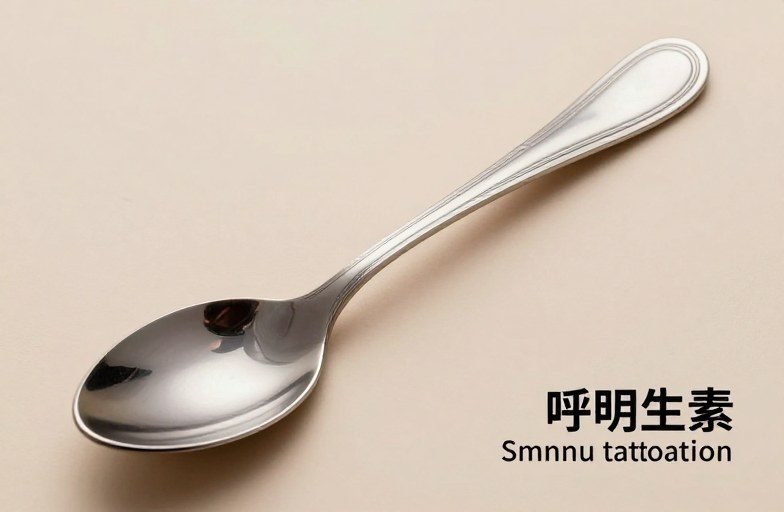
A spoon tattoo most commonly represents nourishment, survival, and the basic human need to be fed, physically, emotionally, or spiritually. Beyond its everyday utility, the spoon carries weight as a symbol of resilience in recovery communities, particularly for those who’ve battled eating disorders or addiction. It also surfaces in folk magic and spiritual traditions as a tool of protection and provision, making it a surprisingly versatile image for body art.
Religious & Spiritual Angles
Spoons appear in several spiritual frameworks as instruments of care and divine provision. Their meaning shifts depending on the tradition and how the tattoo is composed.
Christian and Abrahamic Contexts
In Christian imagery, the spoon connects to the concept of “daily bread” and God’s provision. Some link it to the spoon used in Eucharistic preparation, though this is more commonly associated with the paten or chalice. A spoon paired with bread or a simple cross can emphasize sustenance through faith. The image works quietly, no dramatic crucifixion scene, just the humble tool of being fed.
Pagan and Folk Traditions
Wooden spoons feature in various folk practices as protective objects. In some European traditions, a spoon hung near a doorway was thought to ward off ill intent. A tattoo drawing on this might show a worn wooden spoon with natural grain, perhaps bound with twine or herbs. The spoon here becomes an amulet, a permanent carrying of that protective intention.
Color vs Black and Grey
The choice between color and monochrome changes how a spoon tattoo reads, both visually and symbolically.
Black and Grey Realism
Shaded spoons in black and grey excel at showing material texture, oxidized silver, worn wood, the soft reflection of light on curved metal. This approach suits the tattoo’s more somber meanings: survival, scarcity, the stark reality of needing to eat. Strong contrast between deep blacks and skin-tone highlights gives the spoon weight and gravity. Over time, black and grey holds up well; the fine lines of engraved patterns on a spoon handle may soften but remain readable.
Color Applications
Color opens different doors. A bright ceramic spoon with hand-painted florals suggests domestic warmth, grandmother’s kitchen, the comfort of being cared for. Metallic greens and blues can evoke the patina of aged copper cookware. For those in recovery, a spoon in warm gold tones might represent the reward of nourishment reclaimed. Be aware that yellows and light reds fade fastest on most skin tones, and watercolor-style backgrounds behind a spoon often blur within five to seven years.
Best Placements
Where a spoon tattoo sits on the body shapes its intimacy and visibility.
- Forearm: The most common choice. Visible enough for personal reminder, easy to show or cover. The straight handle of a spoon follows the forearm’s natural line well.
- Ribcage: Popular for larger pieces with accompanying elements, perhaps a spoon with a quote or botanicals. The curve of the ribcage can echo the bowl of the spoon.
- Behind the ear: A small spoon here reads as quiet, almost secret. Best kept simple: a tiny outline or minimal blackwork.
- Thigh: Offers space for detail, ornate Victorian silver, a wooden spoon with visible grain, or a spoon integrated into a larger food or kitchen-themed composition.
- Collarbone: A horizontal spoon placement here draws the eye and makes a statement. The bone provides a firm surface for clean line work.
Consider how the spoon’s orientation affects the design. Vertical placement emphasizes the handle and can suggest a tool ready for use. Horizontal placement highlights the bowl and reads more as an object being presented or offered.
Mythology & Folklore
Spoons carry folklore weight that many people don’t recognize.
The Wooden Spoon in European Tradition
Across several European cultures, the wooden spoon was sometimes linked to household spirits and ancestral presence. A spoon left in a pot might be an offering; a spoon carved from a specific tree could carry that tree’s associated properties. Tattoo imagery drawing on this often shows a rough-carved spoon with bark texture remaining, suggesting something handmade and rooted.
Spoons as Transformation Tools
Fairy tales frequently feature magical spoons that change food or fortune. This motif, often linked to stories of resourceful younger siblings or clever servants, positions the spoon as an agent of change rather than passive tool. A tattoo referencing this might show a spoon with an impossible reflection, or food that becomes something else within the bowl.
Common Variations & Styles
The basic spoon shape adapts across tattoo genres with very different results.
- Traditional/Americana: Bold outlines, limited color palette, perhaps a spoon crossed with a fork or knife in a diner-style arrangement. Often paired with banners carrying words like “EAT” or “FEED.”
- Neo-traditional: More elaborate ornamentation on the handle, snake heads, gemstones, art nouveau curves. Allows for rich jewel tones and decorative excess.
- Fine line and single needle: Delicate, precise, often very small. A thin silver spoon on a wrist, or a tiny wooden spoon behind an ankle bone. Requires a steady hand and heals with less room for error.
- Blackwork and ornamental: The spoon becomes a frame for patterns, dotwork mandalas in the bowl, geometric repeats along the handle. The object itself becomes secondary to the decoration.
- Biomechanical: Rare but striking, the spoon as prosthetic, as merged flesh and metal, questioning where the body ends and the tool begins.
Some choose to pair the spoon with specific foods: a spoon in honey suggests sweetness and preservation; a spoon with empty space around it emphasizes absence, hunger, or the act of waiting.
Personal & Modern Meanings
Contemporary spoon tattoos often carry meanings developed outside traditional symbolism.
Recovery and Mental Health
The spoon has become a recognized, if unofficial, symbol in eating disorder recovery communities. “Spoon theory”, originating in chronic illness communities, also uses the spoon as a unit of limited daily energy. Some people tattoo a spoon to mark their relationship with either or both frameworks. These pieces tend toward simplicity: a single clean outline, sometimes with a date or small word nearby.
Domestic Labor and Care Work
A spoon can acknowledge the invisible work of feeding others, mothers, nurses, cooks, anyone whose care takes material form. This meaning often shows in compositions where the spoon is worn, bent, or oversized relative to other elements, suggesting prolonged use and accumulated effort.
Final Thoughts
The spoon’s power as a tattoo subject comes from its ordinariness. Everyone has used one; everyone has needed what it provides. That universal familiarity lets the symbol carry personal weight without requiring explanation. A spoon can mark survival or celebration, scarcity or abundance, depending on what the holder brings to it.
If you’re considering this design, think about the specific spoon you want, not generic silverware, but a particular material, wear pattern, and context. A battered camping spoon tells a different story than a polished serving spoon at a holiday table. The more concrete your reference, the more your tattoo will feel like yours rather than a borrowed symbol. And in a subject this simple, that specificity makes all the difference between a generic kitchen utensil and a permanent mark of meaning.
Frequently Asked Questions
Does a spoon tattoo always mean eating disorder recovery?
No. While spoons appear in some recovery communities, the symbol predates that usage and carries many other meanings, spiritual provision, domestic labor, folk magic, or simple appreciation for food and nourishment. Context and accompanying elements usually clarify the wearer’s intent.
How well do spoon tattoos age over time?
Simple spoon outlines with strong contrast age best. Fine engraved details on the handle may blur after several years, especially on high-movement areas like wrists. Black and grey generally holds crisper than color, though bold traditional color with thick outlines also lasts well.
What’s the most unique way to personalize a spoon tattoo?
Base the design on an actual spoon from your life, your grandmother’s wooden stirring spoon, a bent camping spoon from a specific trip, a measuring spoon from a kitchen you worked in. The wear patterns, material texture, and personal history transform a generic symbol into something irreplaceable.
Can a spoon tattoo work as part of a larger food or kitchen-themed sleeve?
Absolutely. Spoons integrate naturally with cooking imagery, pots, knives, ingredients, flames. They also work well as transitional pieces between larger elements, their narrow handles bridging gaps and their bowls providing focal points. Consider scale carefully so the spoon doesn’t get lost among bolder surrounding designs.
Related Tattoo Meanings
- Fork Tattoo Meaning: Symbolism, Styles Why People Get One
- Spqr Tattoo Meaning: Roman Identity, Rebellion, and Ink
- Stag Skull Tattoo Meaning: Symbolism, Design Aging
- Explore more









