I’ve been tattooing long enough to watch fads blow through like weather systems. One year it’s all mandalas and geometric wolves, the next it’s tiny red flags and patchwork sleeves. But American tattoo culture has its own stubborn spine, certain images and styles keep coming back because they actually mean something here. Not Instagram meaning. Real meaning, the kind that makes a client sit still for three hours without checking their phone. Let me walk you through what I’m actually putting on people in 2024, from Miami to Seattle to my current chair in Austin.
Popular Styles Across American Shops
Walk into any decent shop in this country and you’ll find the same handful of styles dominating the books. Not because artists are boring, because these techniques work on skin, they age well, and they’ve earned their place through decades of American tattoo history.
Traditional Americana
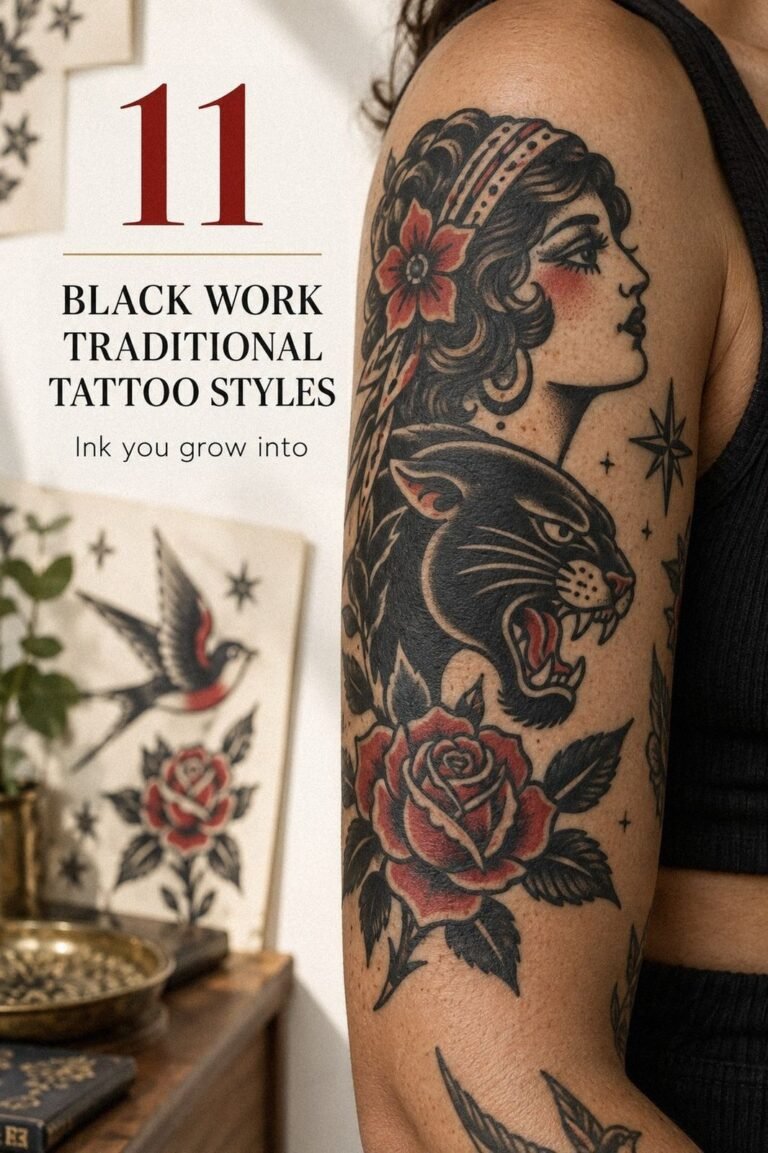
This is the bread and butter. Bold black outlines, limited color palette, simple imagery that reads from across a room. Eagles, roses, daggers, pin-up girls, ships. I did a classic swallow on a guy’s hand last Tuesday, his grandfather had the same one from a Navy shop in San Diego, 1958. That’s the power of this style. It doesn’t need explaining. The lines stay crisp for decades if you don’t blast them in the sun, and even when they soften, they look intentional, not blown out.
Black and Gray Realism
Chicano culture gave us this, and it’s everywhere now. Portraits, religious imagery, soft shading that mimics photography. The trick is finding an artist who understands how gray wash heals, because what looks smooth and creamy fresh can turn muddy if the tones aren’t balanced. I tell clients: realism lives or dies on the artist’s understanding of skin as a medium, not paper. Too dark, and it heals like a bruise. Too light, and it disappears in two years.
Fine Line and Single Needle
This one’s exploded with younger clients, especially on the coasts. Delicate florals, tiny text, minimalist symbols. I do a lot of these now, wrists, collarbones, behind ears. The catch? They don’t last like bold work. I make sure every client knows: fine line looks stunning fresh, but in five years you’ll want a touch-up. Some people are fine with that. Others aren’t. Better to know before you sit down.
Design Ideas That Actually Hold Up
Trendy designs flood Pinterest and TikTok, but I filter everything through one question: how will this look in ten years? Here are the ideas I keep returning to because they work.
- Botanicals and nature motifs, Leaves, wildflowers, trees. They wrap around body parts naturally, age gracefully, and carry personal meaning without being literal. I did a California poppy sleeve last month that flowed with the client’s arm muscle.
- Animals with personal significance, Not spirit animals. Actual animals: a client’s first dog, a deer from a specific hunt with their father, a hawk they watched daily from their porch. The specificity makes it stick.
- Text and lettering, Hand-drawn only. I won’t touch computer fonts. Script needs to breathe, needs variation in line weight, needs to be readable at one inch and one foot. Grandma’s signature. A kid’s handwriting. That works.
- Abstract and ornamental, For clients who want the feeling of ink without the literal image. Dotwork mandalas (though the trend has cooled), ornamental frames, abstract brush strokes. These age better than most people expect because they don’t rely on fine detail to communicate.
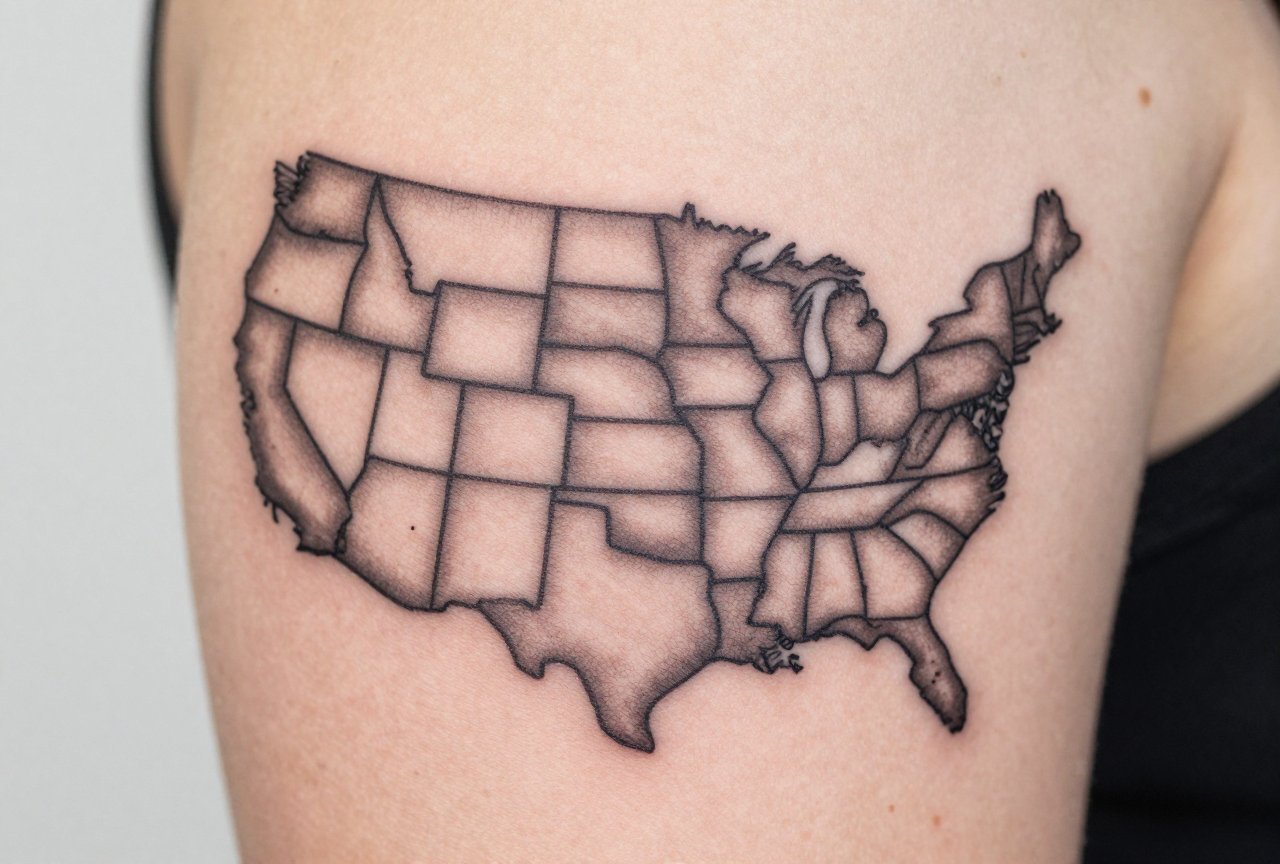
- American landmarks and regional pride, Route 66, specific mountain ranges, state flowers. I see this constantly in my shop: Texans with bluebonnets, Coloradans with fourteeners, Arizonans with saguaro silhouettes. It’s specific, not generic.
Best Placements for American Lifestyles
Placement is half the tattoo. I watch clients point to spots on their own bodies like they’re picking produce, with no sense of how the image will move, stretch, or show. Here’s what experience has taught me.
Visible but Professional
Forearms below the elbow, hands, necks, these are mainstream now in ways they weren’t fifteen years ago. But I still ask: what do you do for work? A teacher in Portland might be fine with a full forearm piece. A banker in Charlotte might not. I don’t judge either way, but I want you thinking past next weekend.
Hidden or Revealable
Ribs, upper thighs, upper arms under short sleeves, back of calves. These spots let you control the narrative. I have a client who’s a trial lawyer, full back piece, nothing visible in a suit. Another is a software engineer with hand tattoos and zero concerns. Both are valid; both need different planning.
Areas That Age Poorly
Stomachs stretch. Feet fade fast from friction and sun. Inner fingers? I’ve watched beautiful work disappear in two years. I won’t refuse these spots, but I’ll talk you through the reality. Some people want the experience more than the permanence. That’s okay too, as long as it’s informed.
Color Choices: What Works on American Skin
I tattoo every shade of human skin, and color behaves differently on all of them. This isn’t talked about enough in online inspiration boards.
On lighter skin, bright colors pop initially but can fade to pastels if not protected from sun. I push clients toward deeper saturation than they think they want, what looks almost too bold fresh will settle to perfect in six months. On darker skin, black and gray read with incredible depth, and certain colors, deep reds, purples, emerald greens, can be stunning if the artist knows how to build them. Yellow and light orange? I rarely use them alone; they need darker surrounding values to register.
The American sun is brutal. I don’t care if you’re in Maine or Arizona, UV is tattoo enemy number one. I tell every color client: invest in good sunscreen, or invest in touch-ups. There’s no third option.
Tips for Choosing Your Design
After thousands of consultations, I’ve seen what leads to happy clients and what leads to cover-ups. Here’s my honest advice.
- Bring references, not prescriptions, I love when clients show me five images and explain what they respond to in each. I hate when they hand me a picture and say “exactly this.” Your tattoo should be yours, not a copy of someone else’s.
- Wait on the big ones, If you want a full sleeve, start with a piece that could grow into one. I’ve seen too many people commit to a complete design before they understand how tattooing feels, how their skin heals, how their taste evolves.
- Consider the artist’s specialty, I turn down work outside my strengths. A good artist will. Don’t take it personally; take it as integrity. Find someone whose healed portfolio matches what you want.
- Think about the story you’ll tell, Not because tattoos need deep meaning, but because you’ll be asked. “I liked how it looked” is a complete answer. So is “It reminds me of my sister.” Know your answer, whatever it is.
- Budget realistically, Good work isn’t cheap. Cheap work isn’t good. I see cover-ups of $50 tattoos that will cost $800 to fix. The math is simple.
Final Thoughts
American tattoo culture is a weird, beautiful mix of military tradition, Chicano artistry, punk rebellion, and Instagram aesthetics. What unites it is skin, the actual living, sweating, sun-damaged, stretching organ we work on. Every tattoo I do becomes part of someone’s body in ways I can’t fully predict. That’s the humbling part. That’s the part that keeps me honest.
If you’re looking for tattoo ideas in the USA, start with what’s around you. The landscape you drive through. The music you grew up on. The people who shaped you. Then find an artist who listens more than they talk, who shows you healed work, who isn’t rushing you out the door. The best tattoos I’ve ever done weren’t the most technically perfect, they were the ones where the client and I both felt like we made something that belonged.
Frequently Asked Questions
How much should I expect to pay for a quality tattoo in the US?
Most established artists charge $150-$250 per hour in smaller cities, $200-$400 in major metros. A palm-sized piece might run $300-$600. Full day sessions can reach $1,500-$2,500. Never bargain shop, this is permanent.
Is it okay to bring my own design, or should I let the artist create it?
Bring inspiration, but trust your artist to adapt it for your body. A design that works on paper rarely translates directly to skin without adjustment for flow, scale, and how it’ll age.
How long should I wait between getting multiple tattoos?
Let each piece heal fully before tattooing nearby skin, usually 3-4 weeks minimum. I’ve seen people try to rush sleeve sessions and the irritation slows everything down. Your skin needs recovery time.
What’s the most common mistake people make with their first tattoo?
Going too small. Tiny details blur over time, and first-timers often choose dainty designs that won’t last. I encourage slightly bolder choices than your comfort zone, your future self will thank you.
More Tattoo Ideas
- Voodoo Tattoo Ideas That Actually Work on Skin
- American Traditional Tattoos: A Working Artist s Guide
- American Traditional Animals: A Working Artist s Guide
- Explore more