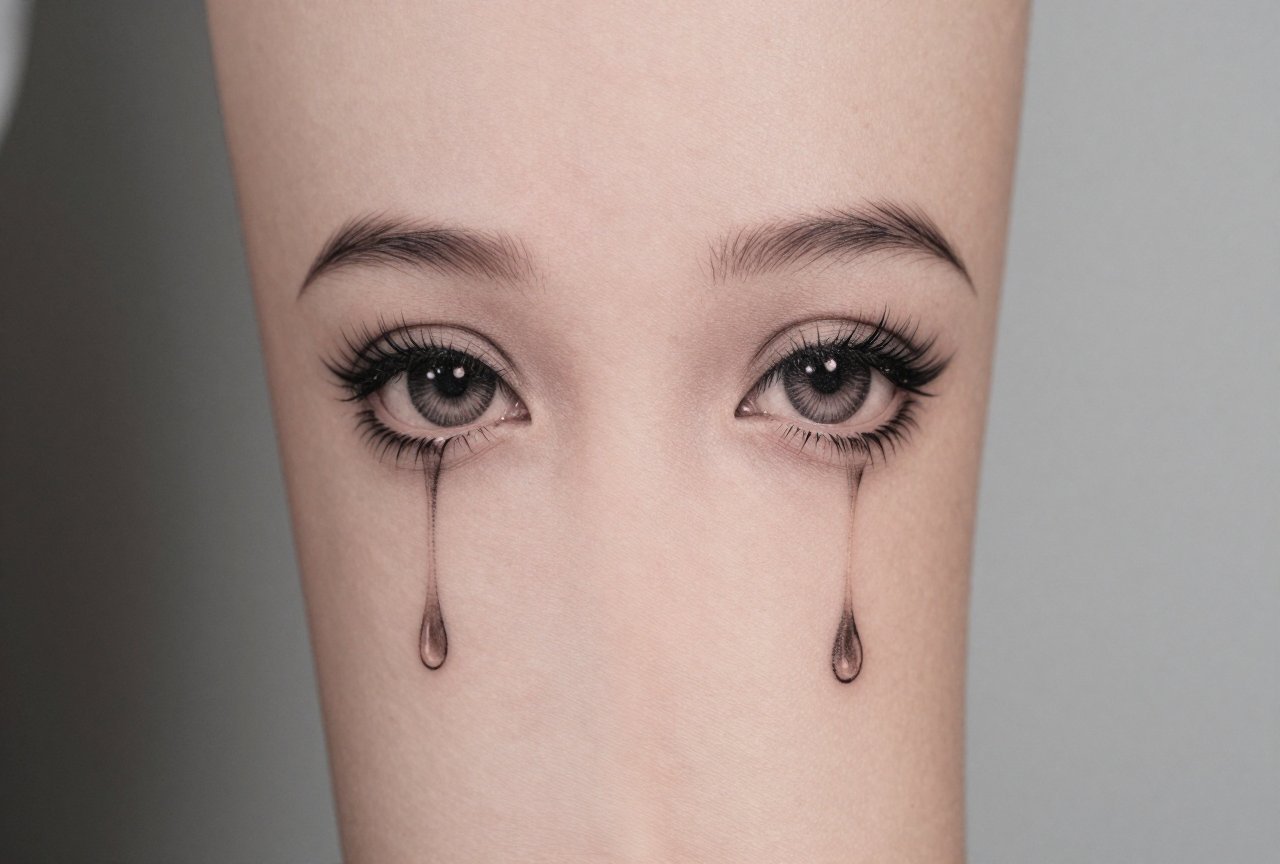
A teardrop tattoo most commonly symbolizes loss, grief, or hardship, though its meaning shifts dramatically based on placement, number of drops, cultural context, and personal intent. What began as a recognizable symbol within specific communities has evolved into a widely adopted design that carries everything from memorial significance to declarations of personal struggle and resilience.
Symbolism & History
The teardrop’s power lies in its immediate visual recognition. A single falling drop distills complex emotion into a simple, universal image. Historically, teardrop tattoos emerged in American prisons during the mid-20th century, where they often marked time served, lives taken, or losses endured. Outside those origins, the symbol traveled through Chicano tattoo culture, hip-hop aesthetics, and eventually mainstream visibility.
Today the meaning has fragmented considerably. For many wearers, the prison associations have faded entirely, replaced by personal narratives of:
- Mourning a deceased loved one, family member, or friend
- Surviving trauma, addiction, or abusive relationships
- Marking a period of incarceration or personal transformation
- Signifying a violent act or guilt carried
- Commemorating a life-changing loss or near-death experience
The teardrop’s ambiguity is both its risk and its appeal. A wearer might choose it precisely because observers cannot know its meaning without asking, creating a private burden made visible.
Common Variations & Styles
Artistic choices dramatically alter a teardrop tattoo’s interpretation. Understanding these variations helps both prospective wearers and those reading the symbol.
- Empty or outlined teardrop: Often represents attempted murder, a lost loved one, or grief without resolution
- Filled or solid black teardrop: Frequently indicates a completed act, time served, or confirmed loss
- Multiple teardrops: Each drop may represent separate losses, years incarcerated, or cumulative grief
- Teardrop with initials or dates: Memorial adaptation, explicitly personalizing the symbol
- Colored teardrops: Red for bloodshed or love lost, blue for loyalty or sorrow, green for growth after hardship
- Stylized or ornamental versions: Incorporating roses, clocks, or religious imagery to soften or redirect the meaning
Contemporary tattoo artists frequently render teardrops in fine-line, blackwork, or neo-traditional styles, deliberately distancing the design from its rougher historical associations. A delicate, single-needle teardrop beneath an eye reads differently than a heavy black prison-style drop.
Best Placements
Placement transforms meaning more than almost any other tattoo element. The face remains the most loaded location, particularly near the eye where the teardrop appears to fall from the wearer’s own grief.
- Under the eye (traditional): Highest visibility, strongest historical associations, most likely to be misread by strangers
- Temple or cheekbone: Slightly removed from prison tradition while maintaining facial intensity
- Neck or throat: Visible commitment, associated with vulnerability and speaking one’s truth
- Hands or fingers: Personal reminder, easily displayed or concealed
- Chest over the heart: Intimate memorial, private grief made physically central
- Behind the ear or hairline: Subtle placement for those wanting personal significance without public scrutiny
Facial teardrops demand the most consideration. Employment, social perception, and misinterpretation risks increase substantially with this placement. Many artists will discuss these implications extensively before proceeding.
Who Chooses This Tattoo / Personal Meanings
Contemporary wearers span demographics that would surprise the symbol’s originators. Military veterans mark fallen comrades. Parents memorialize children. Recovering addicts celebrate survival. Former gang members document transformation. The unifying thread is not background but experience of profound loss or change.
Personal meanings frequently include:
- Surviving a suicide attempt and choosing to live
- Outliving a sibling or partner
- Leaving behind a destructive past or identity
- Honoring victims of violence the wearer survived
- Marking religious conversion or spiritual rebirth
Some choose teardrops specifically to reclaim the symbol from its darker associations, deliberately wearing it as grief rather than threat. This reclamation mirrors broader tattoo culture’s pattern of absorbing and transforming subcultural imagery.
Similar Symbols
Those drawn to teardrop imagery often explore related symbols with overlapping emotional territory. Understanding alternatives helps refine personal expression.
- Single tear on a face or portrait: Classical artistic motif, grief without criminal associations
- Broken chains or birds in flight: Liberation and transformation rather than mourning
- Hourglasses with dripping sand: Time passing, mortality, impermanence
- Rain clouds or storm imagery: Hardship endured, emotional weather survived
- Crying eye (Eye of Providence style): Divine witness to suffering, spiritual grief
- Japanese namida or tear-shaped jewels: Cross-cultural sorrow with aesthetic distance from Western prison traditions
These alternatives allow similar emotional weight with different cultural baggage, particularly valuable for those concerned about misinterpretation.
Final Thoughts
The teardrop tattoo endures because it performs a rare function: making private pain publicly legible without fully explaining it. Whether worn as memorial, penance, survival marker, or reclaimed symbol, it demands that viewers acknowledge something difficult happened. For prospective wearers, the essential consideration is not whether the design looks compelling, but whether its layered history aligns with the story they intend to tell. Consult experienced artists, consider placement carefully, and choose variation deliberately. A symbol this loaded deserves intentional commitment.