
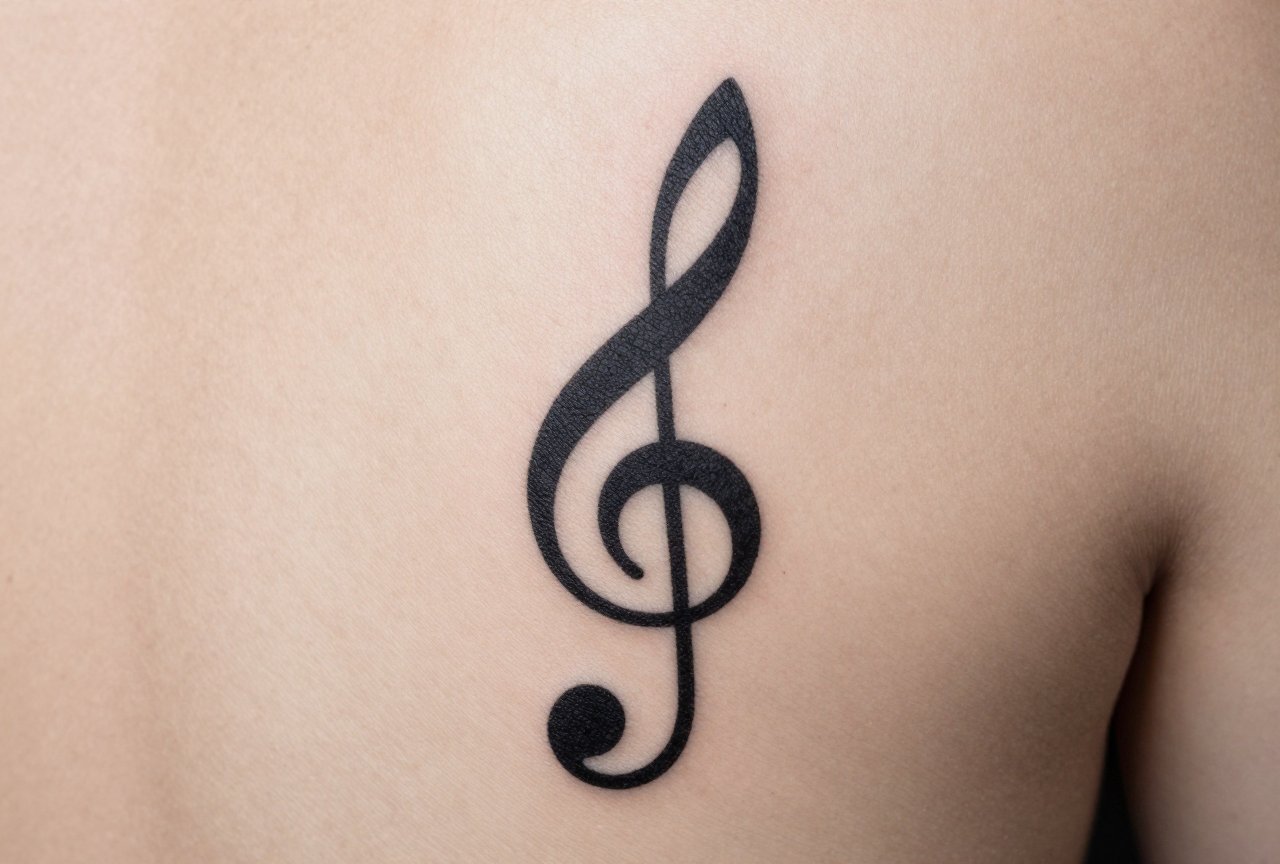
The treble clef tattoo means love for music, personal identity tied to sound, and often marks a powerful moment in someone’s life. It’s one of those symbols that reads instantly to almost anyone, yet holds intensely private meaning for the person wearing it. I’ve tattooed this design on everyone from conservatory students to grieving parents to kids who just picked up their first guitar.
Symbolism & History
Where the Symbol Comes From
The treble clef evolved from the letter G. That curl wraps around the G line on the staff, anchoring pitch for centuries of Western music. When someone gets this tattooed, they’re connecting to something older than most national flags. I see clients light up explaining this lineage, they’re not just getting a pretty swirl, they’re wearing the actual tool that made Beethoven possible, that made their favorite song possible.
The symbol carries weight beyond mechanics. It represents the audible made visible. For many, that’s spiritual territory. I’ve had people cry in my chair talking about how music was the only constant during chaotic childhoods, how a specific album pulled them through depression, how their grandmother’s piano still echoes in their head. The treble clef becomes shorthand for all of that.
What It Communicates Without Words
Wearing a treble clef signals membership. Other musicians notice. I’ve watched strangers bond over visible music tattoos in my shop lobby, drummers pointing at wrist clefs, violinists comparing placements. It’s a flag that says “this matters to me” without the awkwardness of saying it aloud.
- Passion and dedication to craft
- Connection to specific memories or people
- Identity as a musician, even if not professional
- Healing or survival through music
- Rebellion against silence or suppression
Common Variations & Styles
Line Work vs. Decorative Approaches
The simplest treble clef tattoos are single-needle or fine-line blackwork, clean, fast, readable forever. These age beautifully on fingers and wrists where detail tends to blur. I’ve done hundreds of these, usually about twenty minutes of steady buzzing, and they heal with minimal fuss.
Then there’s the ornamental explosion. Clefs wrapped in roses, dissolving into sound waves, merging with heartbeats on EKG lines, transforming into birds or breaking apart into notes. One client had me weave her deceased father’s actual handwriting, “keep singing”, through the curve. That piece took three hours and still makes me pause when I see photos.
Color Choices and Their Weight
Black dominates, but color carries specific meaning. Red for passion, grief, or specific bands. Watercolor splashes behind the clef suggest movement and improvisation. One regular client got ultraviolet ink that only shows under club lights, he’s a DJ, so it made sense for his actual environment.
Metallic gold or silver ink exists but I steer most people away. It fades muddy, heals patchy, and rarely looks like the reference photo. Better to commit to bold black that stays legible at fifty.
Best Placements
Finger placement is iconic, visible when you play, subtle when you don’t. The side of the finger between knuckle and nail bed is popular but brutal to heal. Constant movement, constant washing, constant bumping against everything. I warn everyone: finger tattoos need touch-ups, sometimes multiple. Still, for working musicians, that placement feels non-negotiable.
Behind the ear works beautifully for the clef’s vertical flow. Follows the natural curve, peekable with certain hairstyles, hideable for conservative workplaces. Ribs offer space for larger compositions with notes and lyrics flowing outward. Wrists are straightforward, socially acceptable, easy to show or cover.
Ankles and feet happen but I’m less enthusiastic, shoes rub, healing sucks, and the symbol loses some of its immediate recognition when vertical. I’ve done them, but I always have the conversation first.
- Finger: High commitment, frequent touch-ups, maximum visibility for players
- Behind ear: Elegant, personal, follows natural anatomy
- Wrist: Versatile, heals well, easy to expand later
- Ribs/ribs: Canvas for larger musical narratives
- Forearm: Bold statement, room for surrounding elements
Who Chooses This Tattoo / Personal Meanings
The Professional Musician
These clients usually know exactly what they want. Specific placement for instrument ergonomics, specific size for stage visibility. A cellist needs her finger tattoo positioned so it doesn’t interfere with string contact. A trumpet player wants his forearm piece visible when he raises the horn. They bring reference recordings, sometimes sheet music of personally meaningful compositions. I once tattooed a composer with the clef that opened his first performed symphony. That’s not decoration. That’s autobiography.
The Non-Player Who Loves Music
This group surprises me most. People who can’t read notation, who’ve never touched an instrument, but who structure their entire emotional lives around recorded sound. They describe playlists for every mood, concerts that altered their trajectory, songs that felt like they were written inside their skull. The treble clef becomes their tattoo because no lyric feels universal enough, no album cover feels timeless enough. The symbol outlasts band breakups and genre shifts.
I’ve tattooed parents with clefs incorporating their children’s birth dates in note values. Survivors of illness who played music through treatment. Couples with matching clefs that interlock only when they stand together, cheesy to some, but they always grin explaining it.
Similar Symbols
The bass clef appears less frequently but carries its own gravity, deeper registers, rhythm section identity, often chosen by bassists and cellists who want distinction from the more common treble. Some clients get both, one on each wrist, representing range and completeness.
Whole notes and eighth notes work as standalone designs but lack the immediate recognition. The staff itself, five parallel lines, reads as music to most people but feels abstract without the clef anchor. I’ve seen the G-clef combined with headphones, with vintage microphones, with broken chains transforming into flying notes. Each variation tells a more specific story.
The infinity symbol merged with a treble clef has trended hard, sometimes feeling generic, sometimes genuinely meaningful when a client explains their specific loop, music as endless, love as endless, grief as endless. I judge less now after fifteen years. The story matters more than my aesthetic preference.
Final Thoughts
The treble clef tattoo endures because it compresses enormous feeling into elegant geometry. It doesn’t demand explanation but rewards curiosity. It ages well in simple form and expands beautifully into complex personal narratives. In my chair, I’ve watched it mark graduations from music school, memorials for lost bandmates, declarations of identity that took decades to claim.
If you’re considering one, bring your specific music. Not just the idea of music, your actual song, your actual moment, your actual reason. The best treble clef tattoos I’ve done came from clients who could articulate exactly why that swirl of lines belonged on their particular skin. The symbol is universal. Your reason won’t be. That’s where the real art lives.
Frequently Asked Questions
Does a treble clef tattoo have to mean I’m a professional musician?
Not at all. Most people I’ve tattooed with this symbol don’t play anything professionally. The clef represents love for music in all its forms, listening, remembering, surviving through sound. Your relationship with music is what matters, not your technical skill.
Will a small treble clef tattoo blur over time?
Fine line work anywhere can soften with age, but the clef’s bold curves actually hold up well. I recommend minimum size of about two inches for longevity, and solid black over delicate shading for finger or wrist placements that see constant movement.
Can I combine a treble clef with lyrics or other symbols?
Absolutely, and this is where the design gets personal. I’ve incorporated handwritten lyrics, birth dates rendered as note values, sound waves from actual recordings, and instruments that curve into the clef shape. Bring your ideas, good artists love solving that puzzle.
Is the treble clef too common to feel special?
The symbol is recognizable, sure, but your specific story isn’t. I’ve tattooed the same basic design on dozens of people, and each one meant something completely different. The meaning lives in why you chose it, not in chasing rarity for its own sake.
Related Tattoo Meanings
- Triskele Tattoo Meaning: Triple Spiral Symbolism History
- Two Dots Tattoo Meaning: Symbolism, Styles Personal Stories
- Two Face Tattoo Meaning: Duality, Conflict Inner Truth
- Explore more









