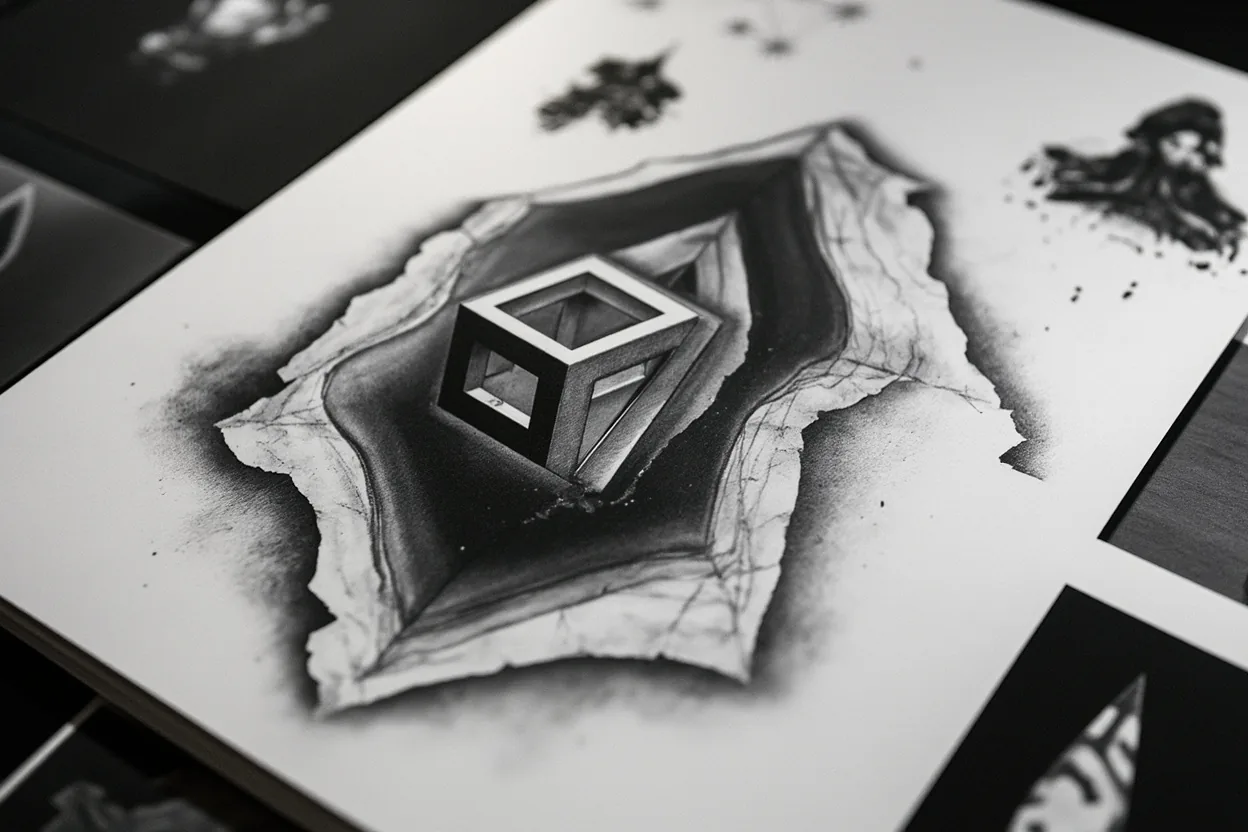
A 3D tattoo is not simply a realistic tattoo with a shadow added. It is an illusion built from skin texture, light direction, body curvature, and the angle at which people will actually see it. Done well, it can look carved into the skin, lifted off the body, or folded through space. Done poorly, it looks like a sticker with a drop shadow that never quite convinces.
Quick answer: A strong 3D tattoo uses controlled shadows, a single believable light source, clean edges, and placement that supports the illusion. You need an artist with healed realism or optical illusion work in their portfolio, not just impressive drawings on paper.
What 3D Tattoo Types Actually Require
Not all 3D tattoos work the same way, and each approach asks something different of both the artist and your skin. Understanding these distinctions helps you choose a concept that has a chance of holding up.
Torn skin and open wound illusions
These designs create the appearance of flesh peeled back to reveal something beneath: gears, bone, fire, text. They depend on sharp contrast between the “wound” edges and the revealed interior. The risk is that the concept itself can feel generic if copied from common reference images. The shadow under the lifted skin must be consistent and dark enough; otherwise the flatness returns immediately.
Realistic objects and creatures
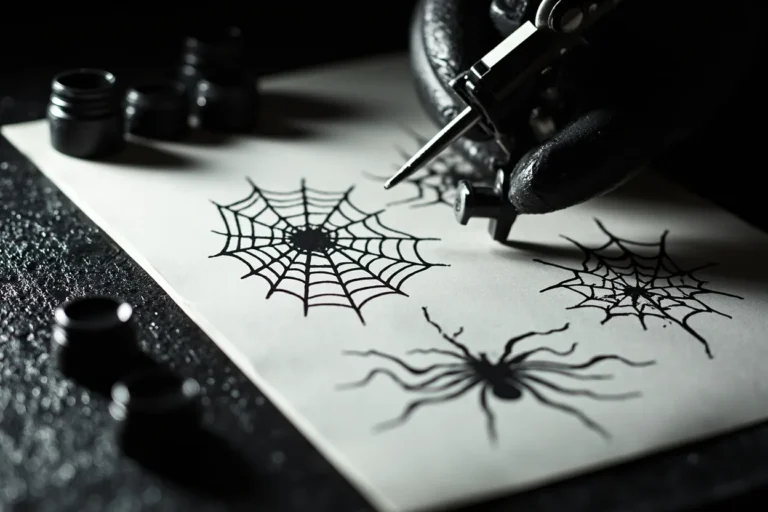
A spider, watch, rose, or eye rendered to look as if it sits on or emerges from the skin. These require accurate proportion, a single light source that matches how the object would actually cast shadow, and enough negative space around the object to sell the separation. The artist needs to understand how the object occupies three dimensions, not just how it photographs.
Geometric and architectural illusions
Impossible shapes, stairs that ascend into the skin, cubes that penetrate the body. These live and die by line precision. A line that drifts even slightly during healing or from minor weight change can collapse the entire spatial trick. Bold line weight helps, but too bold and the geometry looks cartoonish rather than dimensional.
Biomechanical work
Often linked to the H.R. Giger-influenced tradition, these large-scale pieces suggest machinery under the skin. They demand enormous commitment, extensive coverage, and an artist who can maintain mechanical logic across multiple sessions and body contours. The skill threshold is high, and the cost reflects that.
Small symbolic 3D
Tiny hearts, butterflies, or letters with shadow behind them. These are the most fragile. Small shadows blur within a few years. The detail that reads as depth at one inch becomes a grey blob at conversation distance. If you want longevity, scale up or simplify.
What Makes the Illusion Believable
The entire trick rests on shadow control. A 3D tattoo needs one clear, consistent light source. If shadows point in competing directions, the eye refuses the depth. This sounds obvious, but you will see conflicting light sources in mediocre work: a cast shadow going left while a form shadow suggests light from above.
Edges must be purposeful. Some boundaries need crisp contrast to suggest a hard plane change. Others need soft fade to suggest roundness or atmospheric depth. A uniform outline around every element flattens the image back to two dimensions. Similarly, shading that becomes muddy or overworked destroys the illusion of clean spatial separation.
Placement is not an afterthought; it is part of the design itself. A cube, a rip, an eye, or a floating object must sit on a body part that does not distort the illusion every time you move. The forearm has relatively stable planes. The stomach, the inner thigh, and the side of the torso do not. Skin shifts, fat redistributes, and the perspective you paid for warps into something unintended.
Color versus black and grey matters here. Black and grey 3D relies on value range alone to create depth. Color 3D adds the complication of hue temperature: warm colors advance, cool colors recede. A color realism artist must understand both value and temperature, which narrows the field of capable practitioners further.
Where to Place 3D Work for the Longest Life
Forearm, upper arm, shoulder, calf, and thigh offer the most practical surfaces for 3D work. They provide relatively flat, stable areas with enough room for the shadow structure to breathe. The back and chest can work for larger pieces, though the chest has more movement from breathing and muscle flex than people often account for.
Hands and fingers are risky. The skin is thin, mobile, and subject to constant friction and sun exposure. A tiny shadow that looked clever on day one can become a grey smudge fast. The same applies to feet and ankles, though the calf just above the ankle is often workable if the design is sized appropriately.
Consider your viewing angle. Some 3D tattoos are composed for a single photograph from one side and look less convincing in normal, mobile life. Ask yourself whether you can live with the tattoo when you are not controlling the camera angle. A strong 3D tattoo should read from multiple reasonable viewpoints, not just one Instagram perspective.
How 3D Tattoos Age and What You Can Do
3D tattoos age by losing contrast. The soft grey shadow expands through natural diffusion in the dermis. Fine highlight gaps close. Tiny details merge. This does not mean 3D tattoos are a mistake; it means they need initial scale and structural clarity to survive the process.
Geometric illusions can age better than soft realism if the line work is bold enough and the spacing between elements is generous. Realistic object tattoos need strong darks and preserved negative space. Without those dark anchors, the mid-tones wash together and the object flattens.
Sun exposure accelerates the degradation significantly. UV radiation breaks down pigment particles and causes the lighter tones to fade faster than the darks, which compresses your value range. A compressed value range means less depth. If you invest in 3D work, invest in sun protection too.
Weight fluctuation affects 3D tattoos more than simpler styles because the illusion depends on spatial relationships. When skin stretches or contracts, the geometry shifts. The cube that sat perfectly on your forearm at one weight may look skewed after significant change. This is not a reason to avoid 3D, but it is a reason to choose placement carefully and maintain stable body composition when possible.
Ask the artist how the design will read at two feet away, not just under a studio light or through a camera lens. A tattoo that only works as a close-up photograph is not a strong tattoo. It is a performance for social media that you wear in real space.
Finding an Artist Who Can Actually Execute
Look for healed examples of realism, shadow control, or optical illusion tattoos. Fresh work is insufficient because the entire trick depends on contrast after healing. An artist whose portfolio is all fresh photos, all taken from the same angle, under the same lighting, is not showing you the full picture.
Ask whether the artist will redraw the concept for your specific body part rather than transfer a flat image. A 3D tattoo copied from a screen often ignores the curve of the placement, the way light actually falls on that area of your body, and the movement patterns of that skin. Custom drawing for the body is not a luxury here; it is a requirement for the illusion to function.
If an artist cannot explain light direction, shadow softness, edge quality, and scale in plain language, keep looking. This is not the place to gamble on a cheap walk-in or a friend with a machine. The technical demands are specific and unforgiving.
Ask about their shading approach. Smooth gradients for soft roundness, whip shading for texture, stippling for controlled tone: each has a place in 3D work, and the artist should know which serves your specific design. An artist who only has one shading speed and depth is not prepared for the range 3D requires.
Artist brief: Ask for healed examples, one clear light direction, and a version of the design drawn for the exact body part, not a flat copy from an image search.
What to Remember
3D tattoos live or die by placement and skin quality. The illusion only works on flat, stable surfaces. Without a specialist in realism and shadow control, you are likely to get a blurry, flat result in five years rather than the spatial trick you imagined. The investment in the right artist, the right placement, and the right scale is what separates convincing 3D work from expensive disappointment.
Be honest about your maintenance too. Sun protection, stable weight, and occasional touch-ups are part of owning detailed work. If you want a tattoo you can ignore completely, 3D is probably not the category for you. The effect demands attention, both in the choosing and in the keeping.
Finally, resist the pressure to make every 3D tattoo a spectacle. Sometimes a restrained shadow on a well-placed object is more convincing than an elaborate torn-skin scene with gears and fire. The best 3D work often whispers rather than shouts. Your eye believes it because the technical foundations are solid, not because the concept is loud.
Frequently Asked Questions
Do 3D tattoos age well?
They can age well when they have enough size, strong contrast, and a simple shadow structure. Tiny 3D tattoos usually lose the effect faster because small shadows blur and details merge. Sun protection and stable weight help preserve the illusion.
Where should I get a 3D tattoo?
Forearm, upper arm, shoulder, calf, thigh, chest, and back are the safest placements for most 3D work. Avoid hands, fingers, feet, and areas with heavy skin movement like the stomach and inner thigh.
Are 3D tattoos more expensive?
Usually yes, because they require realism, shadow control, and custom placement work from a specialist artist. The technical demands are higher than simpler styles, and the time investment reflects that.
How do I know if an artist can do 3D work?
Ask for healed photos of their 3D or realism pieces, not just fresh work. They should be able to explain light direction, shadow softness, and how they will adapt the design to your specific body part. If they cannot, keep looking.
What is the biggest mistake people make with 3D tattoos?
Choosing a small size or a high-movement placement, and failing to account for how the tattoo will look from normal viewing distance rather than just in a close-up photograph.