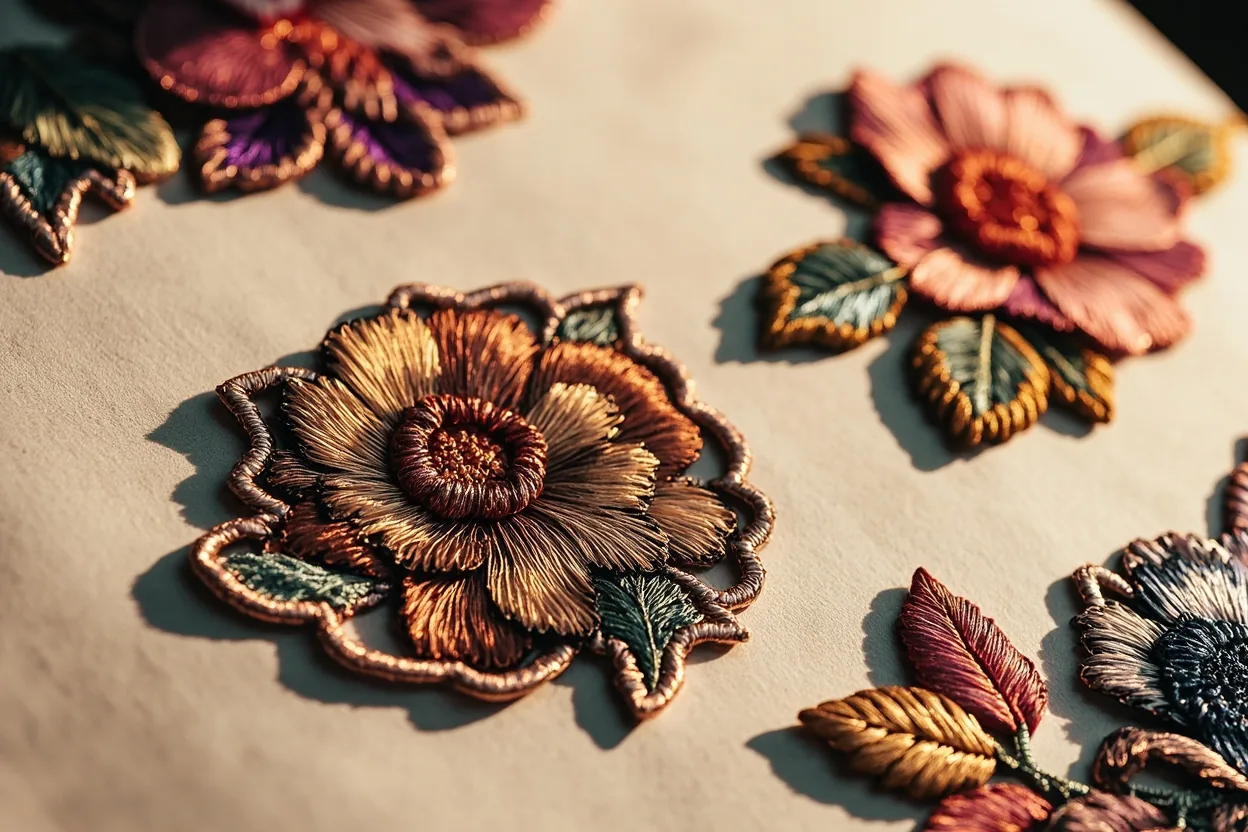
Patch tattoo style is built to look like an embroidered patch sitting on the skin. The effect comes from thread texture, raised borders, controlled shadows and color packed tightly enough to feel like fabric instead of a normal flat tattoo.
Quick answer: Patch tattoos work best at medium size or larger, with bold borders, clear thread texture and a placement that lets the shadow sell the raised effect. Choose an artist who has healed patch tattoos, not just bright color work.
How the Illusion Works
A convincing patch tattoo does not copy embroidery thread for thread. Skin is not fabric. The artist has to translate the look of stitches into marks that heal cleanly and read as texture from a normal viewing distance.
The border carries most of the weight. A thick, slightly raised-looking edge, usually with a darker outline or a subtle shadow beneath it, creates the sense that the patch is sitting on top of the skin rather than sinking into it. Without this separation, the tattoo reads as flat color with lines inside it.
Thread texture comes next. The best patch tattoos suggest stitches through groups of parallel lines, short dashes, or crosshatched fill rather than attempting to draw every individual thread. Too many tiny lines collapse into gray after healing. The artist needs to know which marks will stay distinct at six months and which will blur together.
Color packing matters more than in many styles. Patch tattoos often use saturated, almost artificial-looking color to mimic the dyed thread of real patches. Pastels and muted tones tend to lose the fabric effect because actual embroidery thread is rarely subtle. The color also needs enough contrast between adjacent areas so the stitch pattern remains visible even when the linework softens.
Design Choices That Hold Up
Classic embroidered patch
Military-style patches, club emblems, and souvenir badges translate naturally. These designs already have strong borders, limited color areas, and readable text or symbols. They work well on the upper arm, thigh, or calf where the surface is relatively flat and the viewer sees the tattoo from a consistent angle.
Sticker-style patch
This variant adds a drop shadow to suggest a peelable edge. The shadow has to be consistent in direction and soft enough to look like cast light, not a second outline. Placements on the outer forearm or shoulder work because the shadow reads correctly under most lighting conditions.
Logo and emblem patches
Original designs age better than copied logos. A personal emblem, a meaningful object, or a phrase inside a patch border becomes yours in a way a borrowed brand mark does not. If you bring reference from an actual patch, use it for the border logic, the color relationships, and the density of stitching. Ask the artist to redraw it for skin rather than reproducing it directly.
Animal and nature subjects
Fur, scales, and feathers fight the stitch texture if both are rendered in detail. The solution is usually to simplify the natural texture into flat color blocks separated by stitch lines, or to keep the animal graphic and let the patch effect dominate. A fox rendered with every hair strand plus crosshatched thread will look busy and heal poorly.
Small patch tattoos
Ankle and wrist patches are possible only if radically simplified. The stitch lines need room to breathe. At two inches across, individual thread marks become indistinguishable from shading. If you want a small patch, plan for bold shapes and a strong border rather than intricate embroidery detail.
Placement and the Raised Effect
The patch illusion depends partly on the viewer believing the tattoo is an object resting on the body. Flat, stable surfaces help this. The upper arm, outer forearm, thigh, calf, and shoulder blade are reliable because they do not distort much with normal movement and they catch light predictably.
Curved or high-motion areas break the effect. Elbows, knees, fingers, and the sides of the torso warp the border and shift the shadow logic every time you move. A patch on an elbow will look like a distorted sticker, not a believable badge.
If you want multiple patch tattoos, leave space between them. Overlapping shadows or crowded borders make each piece fight for attention. A scattered collection with breathing room reads as individual objects. A dense cluster reads as patterned noise.
Finding the Right Artist
This is not a style every color artist can execute. Bright, smooth color packing is a different skill from the tight, directional linework that suggests thread. Look for artists who show healed patch tattoos specifically, not just fresh pieces with bold color.
When you review a portfolio, check for:
- Healed photos at six months or longer. Fresh patch tattoos often look sharper than they will remain. The true test is whether the stitch texture still reads after the initial healing swelling subsides and the lines settle.
- Consistent line weight in the border. A wobbly or uneven outline destroys the raised effect immediately.
- Logical shadow placement. If the tattoo has a drop shadow, it should point one direction and match the light source implied by the rest of the design.
- Simplified stitch density. If every fresh photo shows microscopic thread lines, assume those will blur. Look for artists who leave space between marks.
Ask directly about their experience with this style. An artist who has done five or ten patch tattoos will have opinions about what heals well and what does not. An artist who has never tried it but is willing to experiment is a risk you should weigh carefully.
Healing and Long-Term Care
Patch tattoos heal like any dense color piece, but the linework density creates specific risks. The parallel lines that create thread texture can fall out or blow out if overworked. Follow your artist’s aftercare instructions precisely, and avoid soaking the tattoo during the first two weeks.
Sunscreen matters more than most people expect. The bright, saturated colors that sell the fabric effect are also the first to fade under UV exposure. A patch tattoo left unprotected will keep its border longer than its color, which turns the embroidered illusion into a colored outline with gray fill.
Touch-ups are normal. The tiny lines that read as stitches are often the first to soften. Plan for a refresh session at one to two years if you want the texture to stay crisp. The border and main color blocks usually last longer.
Before You Decide
Patch tattoos are visually striking but technically demanding. The style rewards patience in design and realism about placement. A medium-sized original emblem on a flat surface, done by an artist with healed examples, gives you the best chance of a tattoo that still looks like fabric in five years.
Be wary of trends. The patch look has circulated widely on social media, and some artists are reproducing the same handful of popular designs. A custom emblem drawn for your body and your story will outlast any borrowed image. The patch effect is a technique, not a replacement for meaning.
Finally, trust the process of simplification. The best patch tattoos often look slightly bolder in the stencil than you expected. That boldness is what survives healing. The intricate thread detail you loved in the reference photo would likely have become a soft gray blur. The artist’s job is to give you the impression of embroidery, not the embroidery itself.
Frequently Asked Questions
What is a patch tattoo?
A patch tattoo is a tattoo designed to look like an embroidered fabric patch, using raised borders, thread-like linework, and shadow effects to create the illusion of a separate object sitting on the skin.
Do patch tattoos age well?
They can age well if the design is large enough, the stitch texture is simplified rather than microscopic, and the border remains strong. Tiny patch tattoos lose their texture faster because fine lines blur together over time.
Where do patch tattoos look best?
Upper arm, outer forearm, thigh, calf, and shoulder blade are the safest placements because they offer flat, stable surfaces that do not distort the raised illusion with movement.
How do I choose an artist for a patch tattoo?
Look for healed photos of patch tattoos specifically, not just fresh bold color work. Ask about their experience with embroidery-style linework, and check that they understand how stitch density heals over time.